World
‘I don’t want to die’ in Afghanistan
Gay person desperate to leave Kabul with family
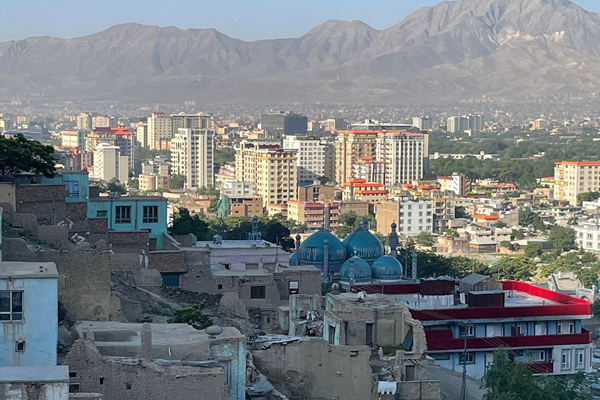
A gay person in Afghanistan says the Taliban will kill them if they and their family don’t leave the country.
“I don’t want to die,” they told the Washington Blade on Tuesday during a telephone interview from Kabul, the Afghan capital. “I have a lot of dreams in my life.”
The person, 25, said their mother and sister are currently living with a relative after they fled their home when the Taliban came into their neighborhood. The Blade is withholding their name and gender identity in order to protect their identity.
“I’m 100 percent sure that my life is not safe any more … they will definitely kill me,” they said. “Being gay is not a good thing in Afghanistan.”
The Taliban entered Kabul on Aug. 15 and toppled then-President Ashraf Ghani’s government.
Dr. Ahmad Qais Munhazim, an assistant professor of global studies at Thomas Jefferson University in Philadelphia who is originally from Afghanistan, in an op-ed the Blade published last month wrote the Taliban hanged men in soccer fields who had been accused of having same-sex relationships when they controlled the country from 1996-2001. A Taliban judge in July said the group would once again execute people if it were to return to power in Afghanistan.
“People were going to work, people were going to school,” said the person when the Blade asked them what Kabul was like before the Taliban regained control. “We were living in freedom. We never thought we would be under pressure.”
“I’m scared,” they added. “I can’t go outside … everything has totally changed. Nobody is happy here.”
They told the Blade that men have repeatedly raped them and threatened to kill them. They said the perpetrators have also told them they would report them to the Taliban.
“They are still doing this because they think we have another pervert,” they told the Blade. “They will kill you. They will cut off your hand, your nose.”
Taliban ‘will definitely kill me’
The U.S. evacuated more than 123,000 people — including upwards of 6,000 American citizens — from Afghanistan since the Taliban regained control of the country until American military operations ended on Aug. 30. Dozens of members of Congress have urged the U.S. to evacuate LGBTQ Afghans from the country, but it remains unclear how many of them have been able to leave.
Canada thus far is the only country that has specifically said it would offer refuge to LGBTQ Afghans. Immigration Equality, the Toronto-based Rainbow Railroad, ILGA Asia and other groups continue to try to assist LGBTQ people who remain in Afghanistan.
The person with whom the Blade spoke said Immigration Equality has contacted them. They also said they have reached out to American and European politicians, but they said “we can’t help you.”
“I texted everywhere,” they said. “I called everywhere.”
“I’m just trying … to leave as soon as possible Afghanistan because of the situation I’m facing,” they added. “I’m getting death threats from people and now it’s especially hard for me … I’m suffering. My mom is suffering. My sister is suffering.”
They added the current situation in Afghanistan is “very difficult, not just for me, but for everyone who is facing these kinds of issues.”
“I’m 100 percent sure that my life is not safe any more … they will definitely kill me,” they said. “Being gay is not a good thing in Afghanistan.”






Switzerland
Swiss government backs nationwide conversion therapy ban
Several cantons have already prohibited widely discredited practice
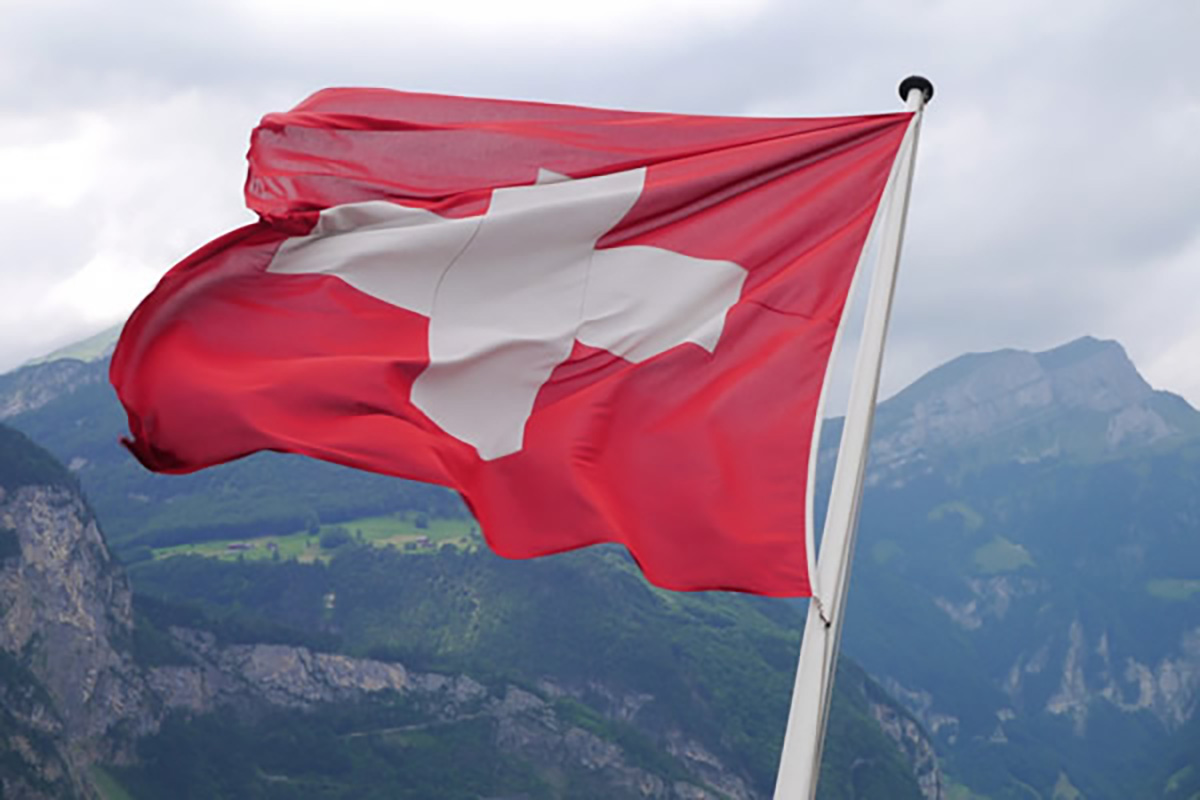
The Swiss government has said it supports a nationwide ban on so-called conversion therapy.
The Swiss Broadcasting Corporation on its website notes the government officially announced its position in a report it published on Wednesday.
Neuchâtel in 2023 became the first Swiss canton to ban conversion therapy.
Lawmakers in Valais and Vaud have also prohibited the widely discredited practice in their respective cantons. Bern and Geneva are among the other cantons in which lawmakers have considered similar prohibitions.
The European Commission earlier this year said all European Union countries should ban conversion therapy.
Switzerland is not a member of the EU, but lawmakers in neighboring Germany in 2020 passed a law that prohibits conversion therapy for minors and for adults who have not consented to undergoing the widely discredited practice.
Several EU countries — Belgium, Cyprus, France, Malta, Norway, Portugal, and Spain — have banned conversion therapy outright.
The Dutch Senate in June approved a bill that would ban conversion therapy in the Netherlands. The lower house of the country’s parliament approved the measure in September 2025.
Greece in 2022 banned conversion therapy for minors.
Bulgaria
Top Bulgarian court rules government must legally recognize trans people
Decision caps off decade-long legal fight
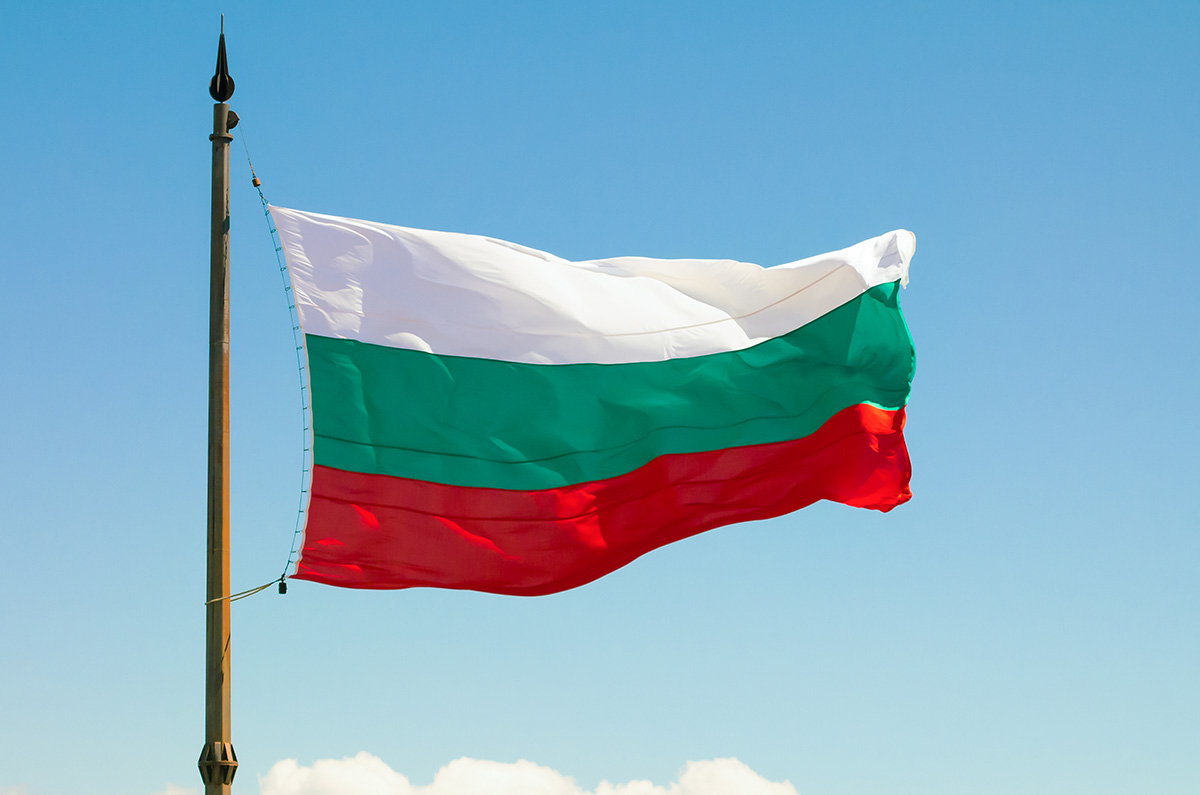
Bulgaria’s top court has ruled the country’s government must allow transgender people to legally change their name and gender on ID documents.
A trans woman from Bulgaria who moved to Italy, had tried to change her gender and name on her Bulgarian ID documents, but courts in the country denied her requests for nearly a decade.
The Bulgarian Supreme Court of Cassation in a 2023 ruling essentially banned trans people from legally changing their name and gender on ID documents.
The EU Court of Justice in Luxembourg, which is the European Union’s highest court, in March ruled in the “Shipova” case that member states must allow trans people to legally change their name and gender on ID documents. The lead plaintiff in the “Shipova” case is among the four litigants in the Bulgarian Supreme Court of Cassation case.
Two Bulgarian advocacy groups — Bilitis and Deystvie — along with TGEU – Trans Europe and Central Asia and ILGA-Europe in a joint statement they issued on Tuesday noted the Bulgarian Supreme Court of Cassation’s July 22 decision “aligns Bulgarian practice with the Court of Justice of the EU, enabling changes to gender markers, names, and personal identification numbers.”
“The judges also concluded that EU law requires Bulgaria to establish a legal procedure for legal gender recognition, which is necessary so that Bulgarian trans citizens can travel and reside freely inside the EU,” they added.
Bulgaria has been a member of the EU since 2007.
The country borders Romania, Serbia, North Macedonia, Greece, and Turkey.
“We are very glad to see that the judges of the Supreme Court clearly stated that it is actually a matter of rule of law for Bulgaria to respect the universal equality and the dignity of all human beings, including trans people for whom human rights-based legal gender recognition procedures are an indispensable element,” said Denitsa Lyubenova, co-chair of Deystvie who represented the four plaintiffs in the Bulgarian courts and the lead litigant in the “Shipova” case at the EU Court of Justice. “The government needs to act swiftly now to put in place an LGR procedure that is fully in line with European human rights case law, which means without any conditions requiring proof of medical, surgical or hormonal treatment.”
The groups also urged the Bulgarian government to codify the ruling into law.
“While lower courts are expected to follow this ruling directly, a court decision is not a substitute for law,” they said. “Bulgaria still needs a fast, transparent, and accessible legal gender recognition procedure written into legislation, not left to case-by-case court precedent. TGEU – Trans Europe and Central Asia, Bilitis, Deystvie, and ILGA-Europe call on the Bulgarian government to start that legislative process now, with meaningful involvement from civil society.”
France
Prominent French activist attacked outside Paris bar
Pierre Picavet hospitalized with internal bleeding, head injury

French prosecutors say a man shouted anti-gay slurs at a prominent activist before he attacked him in Paris on Saturday.
Media reports indicate Pierre Picavet, a police officer who is the president of FLAG!, a group within the French Justice and Interior Ministries that defends LGBTQ rights, was attacked as he left a bar in Paris’s Marais neighborhood.
The Marais since the 1980s has been center of the French capital’s LGBTQ community.
France 24 reported Picavet’s assailant struck him with a bottle. The attack left Picavet hospitalized with internal bleeding, a head wound, and other injuries.
“When I get better, when my wounds have healed, I will continue the fight,” Picavet told Radio France on Monday. “I am particularly shocked, but it tells me that there is still work to do.”
Paris Mayor Emmanuel Grégoire is among those who condemned the attack.
STOP Homophobia (STOP homophobie), a French group that fights against anti-LGBTQ violence, on its social media pages published a picture of Picavet in the hospital.
“As a long-standing partner of FLAG!, STOP Homophobia wishes to express its solidarity with Pierre Picavet, his loved ones, and the entire association,” said the group. “STOP Homophobia condemns this assault in the strongest possible terms and reiterates that anti-LGBT violence remains a reality — even in spaces where everyone should be able to move freely and live out their sexual orientation or gender identity without fear of attack.”
STOP Homophobia also praised a bystander who came to Picavet’s aid after the attack, and the first responders and law enforcement personnel who responded.
“STOP Homophobia extends its full support to Pierre, his family, his loved ones, and the entire FLAG! team, and wishes him a full recovery,” said the group.
Reports indicate the assailant, who was born in 2006, was scheduled to appear in a Paris court on Monday at 1:30 p.m. local time.

‘Here the Whole Time’ delivers queer coming-of-age comedy

Pentagon expands testosterone screening as trans troops face hormone therapy restrictions

Calendar: September 4-10

Swiss government backs nationwide conversion therapy ban

Gloria Steinem dies at 92

Beloved D.C. ‘Old Catholic’ Bishop Charles Braun dies at 86

Blade welcomes fall intern

Top Bulgarian court rules government must legally recognize trans people

Markey’s primary win deemed success for LGBTQ activists

Lou Chibbaro Jr. documentary wins award from NLGJA
-

 Obituary5 days ago
Beloved D.C. ‘Old Catholic’ Bishop Charles Braun dies at 86
-
District of Columbia5 days ago
Blade welcomes fall intern
-
Bulgaria4 days ago
Top Bulgarian court rules government must legally recognize trans people
-
2026 Midterm Elections4 days ago
Markey’s primary win deemed success for LGBTQ activists