Local
Roem challenger opposes marriage equality
Christopher Stone is a US Air Force veteran
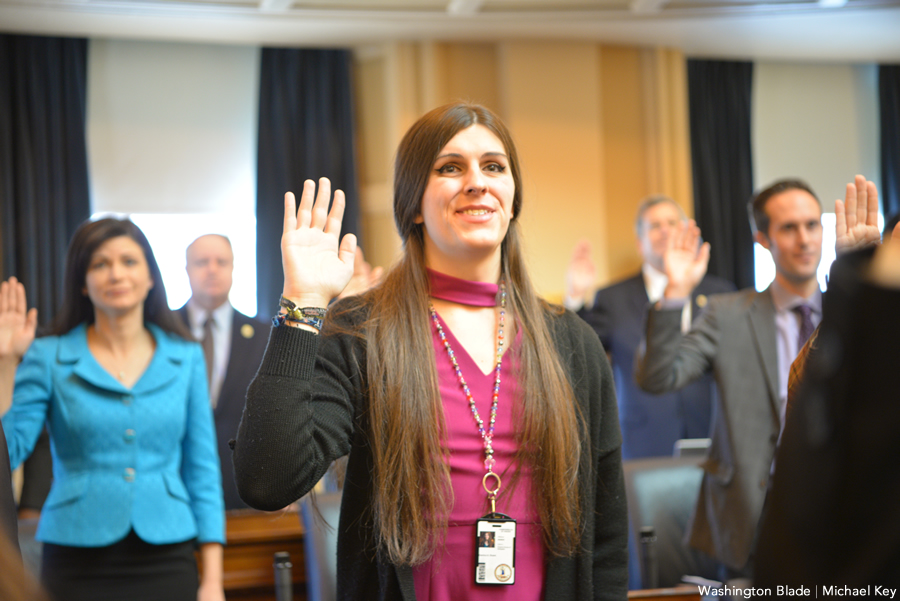
A Republican who is challenging Virginia state Del. Danica Roem (D-Manassas) stated in a recent interview that she “over-promised and under-delivered” on a core campaign pledge to reduce congestion along Route 28.
Christopher Stone, the Republican nominee who Roem will face in her reelection bid this November, told the Washington Blade the bottom line is Route 28 still isn’t “fixed.”
“You campaigned for it in 2017, in 2019 and in 2021,” he argued. “And you can’t say you’ve done anything other than a study.”
Roem defended her infrastructure record, saying while a study had to be conducted, some improvements were already completed, such as reduced traffic signals at key busy intersections. She said these changes have reduced wait times and pollution from idling engines.
“That speeds up the commute without anyone having to lose their business, front property or homes. And we know from the study’s data that my plan will make your commute quicker, safer and greener,” Roem told the Blade. “Christopher Stone has no plan for fixing Route 28.”
Stone, however, challenged “improved light signaling” doesn’t necessarily “fix” or widen Route 28 to address commuter concerns. Roem pointed out the widening of Route 28 in Centreville is currently underway.
“I voted last year for authorization for the widening to go forward,” she said. “It is happening right before your very eyes in Centreville. You cannot tell me in good faith that we have not done anything to fix 28. It is being done right now.”
She added she is currently “chasing down the dollars” to bring further infrastructure to Manassas Park.
Expanded Medicaid, LGBTQ rights among Roem’s legislative victories
Roem in 2017 became the first openly transgender person elected and seated in a state legislature in the U.S.
Her four years in office have been busy ones. She has either sponsored or co-sponsored legislation that addressed discrimination, expanded Medicaid and helped make Virginia more inclusive.
LGBTQ Victory Fund Vice President of Political Programs Sean Meloy said Roem’s record clearly shows “she’s fulfilling her campaign promises and striving to create a more inclusive Virginia.” Meloy noted Roem has done considerable work — expanding healthcare and passing numerous LGBTQ-friendly bills — for her constituents since her 2017 election.
“While Del. Roem is hard at work, her opponent has decried mask mandates, supports extremist protesters in Loudoun County and called for an investigation of the 2020 election,” Meloy said. “Virginia voters are savvy, and they know when a candidate has their backs — which is why they’ve elected Del. Roem twice and will reelect her once again this November.”
Stone said he’s running for office because he felt laws the General Assembly has passed in the last few years benefitted “special interests” and not Virginians as a whole.
Stone and his wife moved to Prince William County from Fairfax County in 2013 because they were planning on having children and a friend said it was a good place to raise them. They now have two children who are 5 and 6-years-old, and the eldest is in his second year in the county’s school system.
“And she loves it,” Stone said proudly, especially now that she gets to return to in-person classes even though she has to wear a mask.
Stone, a U.S. Air Force veteran and former graduate school professor, said his wife encouraged him to run for office “and stop complaining.” He was concerned that LGBTQ laws in particular were too narrowly focused and not written with the interests of most Virginians in mind.
“A lot of people that I talk to are concerned that the way the laws are written you are protecting one group and infringing upon the constitutional freedoms of another,” he said, adding that allowing for exemptions for religious beliefs could be one way to make the laws more equitable.
“But you don’t just ignore those people,” he added. “You accommodate both sides. I don’t like laws aimed at a single group or giving protections to one side. That is how a lot of people see LGBTQ laws.”
Stone also discussed his opposition to marriage and adoption rights for same-sex couples, stating judges shouldn’t legislate from the bench.
He pointed out the U.S. Supreme Court’s 1857 decision in the Dred Scott case, which said slaves and their descendants were not American citizens, as an example of the harm judges “legislating from the bench” could do. The 13th and 14th Amendments overturned the ruling. But Roem, a life-long Virginian, pointed out Brown v. Board of Education and Loving v. Virginia were two court cases with Virginia ties that made the state and the country a step more inclusive.
“If you have marriage equality, you can’t possibly tell an LGBTQ couple that they can’t adopt children,” Roem said. “What a horrible thing to tell any loving parent. We already litigated the hell out of this.”
For Roem, times have changed and so have the people of Virginia.
“If you are exclusionary like my challenger, then you are going to lose,” she said. “The people of the 13th district aren’t putting up with this any more.”




The Comings & Goings column is about sharing the professional successes of our community. We want to recognize those landing new jobs, new clients for their business, joining boards of organizations and other achievements. Please share your successes with us at [email protected].
The Comings & Goings column also invites LGBTQ+ college students to share their successes with us. If you have been elected to a student government position, landed an exciting internship, or are graduating and beginning your career with a new job, let us know so we can share your success.
Congratulations to Jaime Christopher Pierce on their appointment to serve as a member of the Virginia Governor’s LGBTQ+ Advisory Board. Pierce was sworn in on Sept. 3 by Greg Parks, clerk of the Alexandria Circuit Court.
Pierce currently serves as vice chair of the Alexandria City LGBTQIA+ Task Force and as a member of the Alexandria Pride planning committee. They previously served on the board of directors of Equality Virginia.
Upon being sworn in, Pierce said, “Public service has been a central part of my life for more than 30 years, and this appointment gives me an opportunity to serve the Commonwealth in a different and very personal way. My career has allowed me to work with people and communities throughout Virginia, and I hope to bring that experience, along with my own lived experience and my involvement in the LGBTQ+ community, to the work of the Board.” They added, “Having Greg administer the oath makes the occasion even more meaningful because of his own historic role as Virginia’s first openly gay elected circuit court clerk.”
Pierce also serves as Circuit Court Services Manager for the Department of Judicial Services, at the Office of the Executive Secretary of the Supreme Court of Virginia. They began their career in Virginia’s judiciary in 1994 as a deputy clerk with the Virginia Beach Circuit Court and have since held several professional and leadership positions within the court system. Pierce is a member of the National Association for Court Management (NACM) and the Mid-Atlantic Association for Court Management. At the national level, Pierce participated in the workgroup that developed the National Association for Court Management’s Diversity, Equity, and Inclusion Guide, a resource designed to help court professionals advance inclusive practices and strengthen access, fairness and belonging within the justice system.
Pierce earned a degree in Criminal Justice from Liberty University, and a certificate in Paralegal Studies from Norfolk State University.
Maryland
Md. groups receive state grants to fight hate crimes
Pride Center of Maryland among recipients
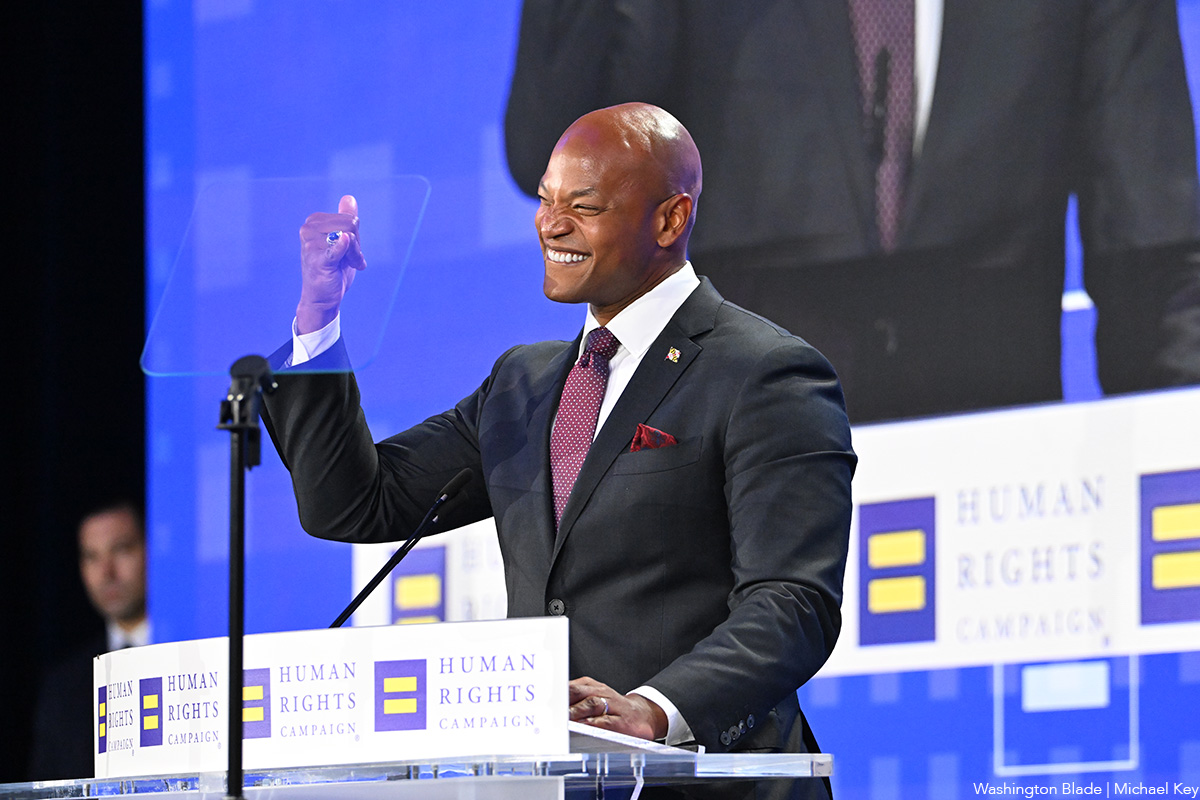
Maryland Gov. Wes Moore and the Governor’s Office of Crime Prevention and Policy are awarding a total of $10 million in grants in the 2027 fiscal year to nonprofit organizations that work to prevent hate crimes in the state.
The funds will be used to support those who feel targeted or discriminated against because of their race, religion, sexual orientation, gender identity, or disability status.
The Pride Center of Maryland is among the recipients. Churches, synagogues, mosques, and LGBTQ organizations are all eligible to receive grants
“The safety and security of all Marylanders is my top priority, so we are drawing a hard line because we have no tolerance for hate,” said Moore, according to media reports. “We are committed to protecting and ensuring safe and sacred spaces stay that way by investing in non-profit organizations, houses of worship, and community centers to protect and honor every community that makes our state so diverse and special.”
“Protection Against Hate Crime funding has strengthened the Pride Center of Maryland’s ability to protect, educate, and support the communities we serve … at a time of heightened concern associated with the Trump administration’s anti-LGBTQ/SGL (same-gender-loving) policies and pressures,” Pride Center of Maryland CEO Cleo Manago said. “PAHC funding helps us do more than improve physical security — it strengthens our community’s knowledge, preparedness, connection to resources, and ability to respond to hate with greater awareness and support.”
Maryland’s hate crimes law includes both sexual orientation and gender identity. The state’s nondiscrimination statute is also LGBTQ-inclusive.
District of Columbia
Blade welcomes fall intern
Alexis McLean is student at University of North Florida
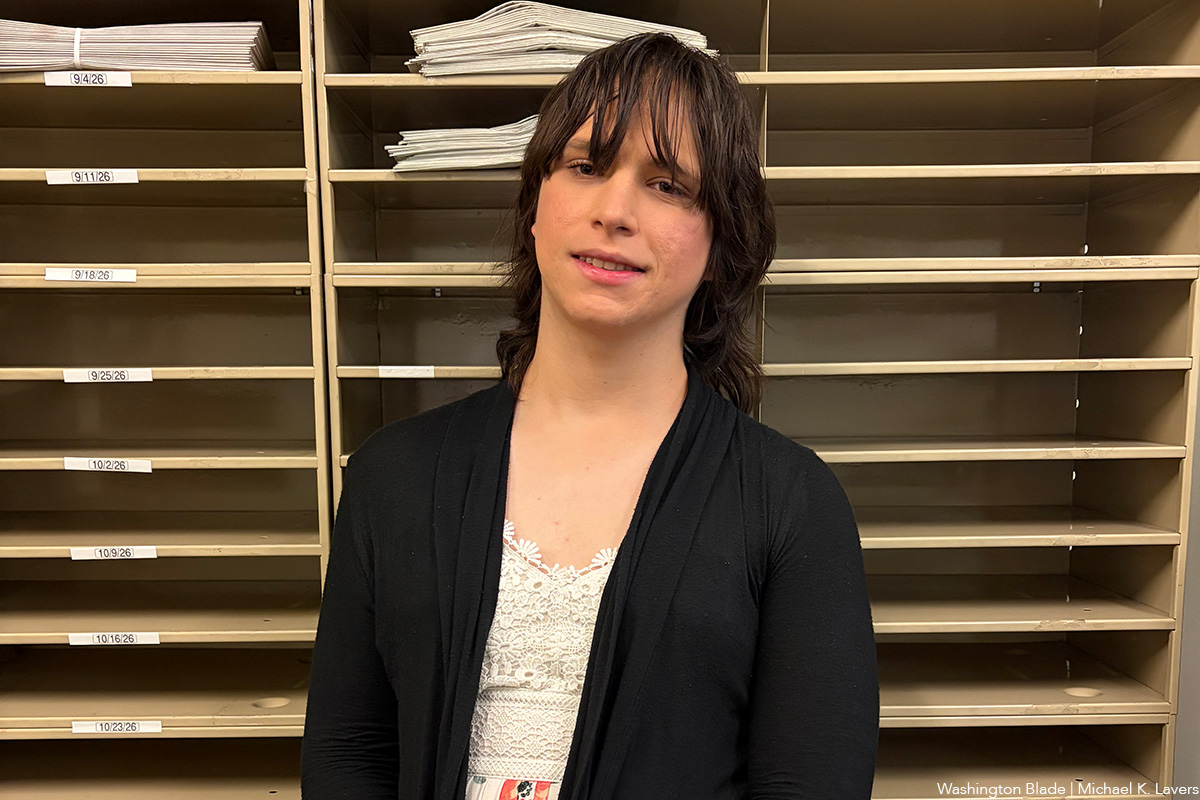
The Washington Blade this week welcomed Alexis McLean as its fall intern.
Alexis is studying political science at the University of North Florida in Jacksonville, Fla. She is interning with the Blade as part of a continued partnership with the Washington Center.
“I am looking forward to spending my time in the fall with the Washington Blade, as this is a new experience for me,” said Alexis. “I have not experienced any journalist jobs in the past so this would be my first time, and I am excited to better my writing and communications skills with this internship.”
Alexis’s internship with the Blade ends in early December.

Dozens detained after Turkish authorities raid LGBTQ groups, businesses

PHOTOS: SMYAL Fall Brunch

Dolly Parton biography puts her hardships into context

‘Thelma and Louise’ remains landmark of unspoken queer rebellion

Comings & Goings

PHOTOS: SUNFESTIVAL

Gloria Steinem’s life of substance and consequence

How Dolly became a folk saint for Appalachian queers

Remembering the LGBTQ heroes of 9/11 terrorist attacks