National
Despite ‘relentless attacks,’ optimism for future of LGBTQ movement
National LGBTQ Task Force leaders address Creating Change Conference
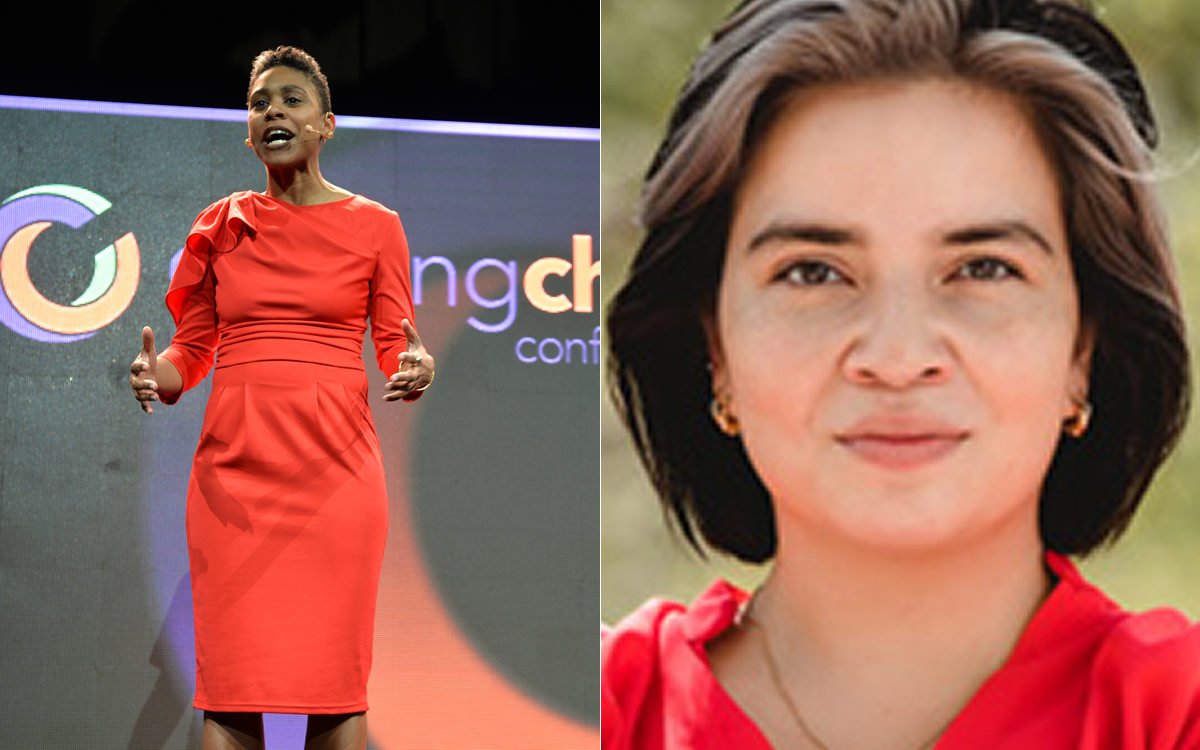
Despite being hit with an unprecedented 300 or more anti-LGBTQ bills introduced in U.S. state legislatures over the past two years, the nation’s LGBTQ community at the same time has seen some important advances and there is reason for optimism, according to a March 19 LGBTQ State of the Movement address delivered by two key movement leaders.
Kierra Johnson and Mayra Hidalgo Salazar, executive director and deputy executive director of the National LGBTQ Task Force, offered a detailed assessment of where things stand today for LGBTQ people in the United States during the organization’s 22nd Annual Creating Change Conference, which was held virtually March 19-20.
Since it began in 1987, Task Force officials have said the Creating Change Conference has served as the LGBTQ movement’s preeminent organizing, skills-building, and networking event.
Johnson and Salazar said the political attacks on LGBTQ rights and other progressive causes coming in the midst of the COVID-19 pandemic have forced LGBTQ leaders and activists to adopt new strategies for responding to the attacks.
“We are doing this in the face of storms that have kept coming,” Salazar said. “In just the last year, there have been relentless attacks to gut voting rights, the right to protest, abortion access, and trans youth health and rights,” she stated in the address delivered jointly by the two women.
“There have been 100 anti-trans bills and over 300 anti-LGBTQ bills considered in state legislatures across the nation,” she continued, adding that a record number of deportations of immigrants, a “barrage” of racial injustice in the U.S. and abroad, and new and ongoing wars and conflicts, “have left many of us feeling afraid, disconnected, and powerless.”
Johnson continued those thoughts by saying, “We know that you are tired. Many of you are afraid and rightfully so…But I know that I’m talking to a group of people who know that these events, these feelings, they’re no reason to stop the work – anything but,” Johnson said. “These are the reasons we do the work. This is why what we do is so important, why you are showing up today, and tomorrow and it is the difference between the light at the end of the tunnel going out entirely and growing brighter and nearer for us and for generations to come.”
Salazar cited what she called optimistic data showing that more people are coming out as LGBTQ than ever before at an earlier age, with young people identifying in greater numbers as bisexual and nonbinary.
“Now some of you may be wondering, is there something in the water?” she continued. “Of course, the answer is no! But more people coming out and the fluidity in how they identify has everything to do with the work you and we have done and do every single day to build a world where people can embrace themselves – and be embraced – in every aspect of their lives.”
As a further sign of optimism, Johnson noted the political climate for LGBTQ people coming from the White House has changed for the better since January 2021.
“After four years of relentless attacks on LGBTQ+ rights, the Biden-Harris administration has brought more LGBTQ+ visibility and begun undoing the damage of Trump’s anti-LGBTQ policies – from protecting the civil rights of every LGBTQ+ person, to ensuring that LGBTQ+ Americans are leaders at every level of the federal government,” Johnson said.
“Together with you, we have successfully backed more queer, women, people of color candidates to join the White House than ever before,” Johnson told conference participants.
Among the LGBTQ White House appointees, she and Salazar said, are Gina Ortiz Jones, a lesbian and Iraq war veteran serving as the U.S. Undersecretary of the Air Force; Pete Buttigieg, who is serving as the first openly gay Cabinet Secretary confirmed by the U.S. Senate; Admiral Dr. Rachel Levine, who is serving as director of the U.S. Public Health Service at the Department of Health and Human Services and who became the first openly transgender person ever confirmed by the U.S. Senate; Reggie Greer, a Black gay man serving as White House Director of Priority Placement and Senior Adviser on LGBTQ+ Engagement; Ambassador Chantale Yokmin Wong, the U.S. Director of the Asian Development Bank who became the first out lesbian and first LGBTQ person of color with the rank of ambassador in U.S. history; and Mehgan Maury, a former National LGBTQ Task Force official now serving as Senior Adviser to the Director of the U.S. Census Bureau and the first nonbinary member of the Biden administration.
“Contrary to what many would have us believe, we have also made progress in the states,” Johnson stated in her remarks. She and Salazar pointed to bills providing various types of LGBTQ supportive services or protections that have passed in New Jersey, Oregon, Colorado, Washington State, and New Mexico in the past two years.
“And finally, to those of you – advocates, organizers, change makers – in Florida, Georgia, Ohio, Texas and Michigan – thank you for your tireless work and non-stop efforts to stop the devastating bills ravaging their way through your state legislatures and making their way to the desks of your governors,” Johnson said.
“You are showing the country and the world that trans kids matter, that Black Lives Matter, that saying Trans and Bi and Lesbian and Gay matters,” added Johnson. “While we’ve had some setbacks in these sessions, the work you’ve done means those losses are temporary. You are building long-term sustainable power,” Johnson said.
“Together we will use all the tools in our toolbox – from the streets to the courts to the pews and pulpits, to the media to the ballot box – to overturn and overcome these wretched attacks and take back our democracy from extremists who will do anything to sustain the status quo or worse, roll back the gains we’ve won,” according to Johnson.
Following is the text of the full remarks delivered by Kierra Johnson and Mayra Hidalgo Salazar in their LGBTQ State of the Movement Address on March 19 before the Creating Change Conference as provided by the National LGBTQ Task Force:
Johnson: Welcome to the State of the Movement 2022. Convening virtually was not what we envisioned for Creating Change this year. Like you, last spring we were hopeful that we would soon turn a corner and leave our COVID-19 lives behind. Then Delta and Omicron dished a dose of reality that was more devastating than we thought possible. We saw the light at the end of the tunnel, and then swiftly the tunnel got longer, until the light was all but impossible to see.
Johnson: We are now beginning our third year under the cloud of a global pandemic. While we’ve necessarily become pros at adapting to these changing conditions: moving the work forward, getting our kids to school, taking care of elders, navigating other health crises and wearing masks everywhere we go, COVID continues to have a deep impact on our health and well-being and on our community’s ability to fight back. Like you, we also hold the tension of trying to stay focused on how we show up in our work to build a different world, while acknowledging the challenges of shouldering sickness, the passing of friends and family, and the frustration of dreams deferred.
Salazar: And, because we are brilliant, creative and resourceful, we also found new and beautiful ways of building and being in community – like virtual events with magical moments we only dreamed possible, became reality.
Salazar: We are doing this in the face of storms that have kept coming. In just the last year, there have been relentless attacks to gut voting rights, the right to protest, abortion access, and trans youth health and rights. There have been 100 anti-trans bills and over 300 anti LGBTQ bills considered in state legislatures across the nation. And if that wasn’t enough to overwhelm us, the record deportations of immigrants under the Biden administration, the barrage of racial injustice here at home and abroad, and new and ongoing wars and conflicts, have left many of us feeling afraid, disconnected, and powerless. At any given moment, we are experiencing changes moving at an unbearable pace.
Johnson: We know that you are tired. Many of you are afraid and rightfully so. Be tired. Be angry. Be frustrated, confused, sad, be ALL of those things. But I know that I’m talking to a group of people who know that these events, these feelings; they’re not a reason to stop the work — anything but. These are the reasons we do the work. This is why what we do is so important, why you are showing up today, and tomorrow and it is the difference between the light at the end of the tunnel going out entirely, and growing brighter and nearer for us and for generations to come.” Congresswoman Ocasio Cortez recently reminded us that a resigned cynical working class that has given up is exactly what our opponents want. But she also reminds us that things are changing and that it is up to us to share good news and enjoy the good news and remind each other that we are having success and we are winning.
Salazar: Data is showing us that more people are coming out as LGBTQ than ever before and they are coming out earlier, with young people identifying in higher numbers as bisexual and nonbinary. Now some of you may be wondering, is there something in the water?! Of course, the answer is no! But more people coming out and the fluidity in how they identify has everything to do with the work you and we have done and do every single day to build a world where people can embrace themselves—and be embraced—in every facet of their lives.
Johnson: After four years of relentless attacks on LGBTQ+ rights, the Biden-Harris administration has brought more LGBTQ+ visibility and begun undoing the damage of Trump’s anti-LGBTQ policies— from protecting the civil rights of every LGBTQ+ person, to ensuring that LGBTQ+ Americans are leaders at every level of the federal government Together with you, we have successfully backed more queer, women, people of color candidates to join the White House than ever before including:
Salazar: Gina Ortiz Jones, a gay woman and Iraq veteran serves as the 27th U.S. Under Secretary of the Air Force – she identifies as an Ilocano, a member of a Filipino ethnolinguistic group. KJ: Secretary of Transportation Pete Buttigieg, who is the first openly gay Cabinet Secretary confirmed by the U.S. Senate MHS: Admiral Dr. Rachel Levine, Head of U.S public health efforts at the Department of Health and Human Services, who is the first openly transgender person ever confirmed by the U.S. Senate.
Johnson: Reggie Greer, a Black gay man now serves as White House Director of Priority Placement and Senior Advisor on LGBTQ+ Engagement. MHS: Ambassador Chantale Yokmin Wong U.S. Director of the Asian Development Bank, the first out lesbian and first LGBTQ person of color with the rank of ambassador in U.S. history.
Johnson: AND our own Mehgan Maury, who led our Queer the Census campaign and now serves as Senior Advisor to Director Robert Santos at the Census Bureau, the first non-binary member of the administration’s team.
Salazar: And we need more action, support, and resources from the White House to address the escalating attacks on our humanity and our rights. We need progress that goes beyond the pre[1]Trump status quo. The rights of LGBTQ+ people must be solidified to capture the full breadth of our experiences and face the onslaught of growing racism, xenophobia, homophobia and transphobia. MHS: And there is a bill in congress right now — The Equality Act – that if passed would move us forward in holding elected officials accountable at the federal level and in every state, expanding and protecting the civil rights of LGBTQ people, people of color and women.
Johnson: With each year more cross-movement, cross issue, cross community partnerships are created, and they are deepening. Whether creating new messages and frames to engage the community and address the state attacks on LGBTQ people, to creating interfaith strategies to assert a progressive religious and spiritual perspective to beat back discriminatory religious exemptions, to inspiring and supporting more BIPOC, Young People and Queer people to vote Commented [MS1]: i don’t want to uplift this as a win, especially while we are at/on the brink of another war Commented [MS2]: moving and advocate directly with legislators, we are fortifying our foundation for the hard work ahead!
Johnson: Contrary to what many would have us believe, we have also made progress in the states! New Jersey enacted a law that adds gender nonbinary to medical data collection. Oregon passed a law to add LGBTQ people to priority populations definition for workforce development programs and increases funding. Colorado passed a bill to support older people from diverse, racial, cultural, socioeconomic, gender and ability groups in community planning; health services and infrastructure.
Salazar: Washington State passed two bills – one that preserves a person’s ability to access abortion care, making the language trans-inclusive. And another that makes incarcerated folx medical records confidential, including for trans-affirming care and gender identity. New Mexico passed a bill to stop LGBTQ people from being blamed for people assaulting or murdering them, barring use of the so-called Panic defense.
Johnson: And finally, to those of you—advocates, organizers, change makers—in Florida, Georgia, Ohio, Texas and Michigan – thank you for your tireless work and non-stop efforts to stop the devastating bills ravaging their way through your state legislatures and making their way to the desks of your Governors. You are showing the country and the world that trans kids matter, that Black lives matter, that saying Trans and Bi and Lesbian and GAY matters. While we’ve had some setbacks in these sessions, the work you’ve done means those losses are temporary. You are building long term sustainable power. Together we will use all the tools in our toolbox— from the streets to the courts to the pews & pulpits, to the media to the ballot box—to overturn and overcome these wretched attacks and take back our democracy from extremists who will do anything to sustain the status quo or worse roll back the gains we’ve won.
Salazar: We are far from powerless. From weighing in on presidential appointments to engaging with civil rights leaders on strategies to ensure that our communities have access to the right to vote. We have been connecting with national and state partners, advising hill staff and Members of Congress and engaging LGBTQ people in a range of issues including the Equality Act and the Texas abortion ban. We have won protections in the workplace and nondiscrimination policies continue to pass in cities and states across the country. Actors, Athletes and musicians are exclaiming their pride and queering the media at every turn igniting a new force of queer and allied activism. Carl Nassib, Kal Penn, Tommy Dorfman, Hikaru Utada, Kehlani and Billy Porter are just a few of the celebrities that have come out in the last year as trans, non-binary, queer, HIV positive, and Pansexual. They are showing up and out as queer pop icons, public figures for a new generation looking for themselves boldly reflected in media, culture and politics. We must remember how we got here. We must celebrate our successes as forward momentum. We have much to be proud of…But we are FAR from done.
Salazar: In January of this year, Gov. Kristi Noem (R-SD) signed into law the first anti-trans bill of 2022. In doing so, she banned transgender girls from playing school sports. From there it has
been almost impossible to keep up with the barrage of attacks. Arizona, Alabama, Indiana, Kentucky, Oklahoma, New Hampshire and South Dakota and just a few of the states that introduced measures that target trans and nonbinary youth, their families and their communities.
Johnson: As if that wasn’t enough, in addition to the unabated and unrelenting state attacks on LGBTQ+ legislation, our communities have also been hit with attacks on reproductive rights, voting rights, and the erasure of the history and impact of BIPOC people in this country. In states across the country, the legislature has waged a triple threat of bad bills targeting our access to information, bodily autonomy, and ability to participate in our democracy. These are the foundation of personal, community and political power!
Salazar: The far-right has bemoaned for years that progressives have been trying to “censor” them, it is indeed the far-right taking steps to censor content of all kinds – from critical race theory to LGBTQ inclusive curricula, effectively erasing the diversity of people in this country and any accurate or inclusive understanding of our shared history. Book bans, which seem like an outdated tactic of fascist dictators, are back in style. The simple act of have a rainbow flag or Black Lives Matter sticker on your classroom door, meant to communicate a safe space, is now off the table. Imagine how our young people must feel as they are stripped of the symbols and information that made them feel safe and affirmed.
Johnson: Access to our most basic right to engage in our democracy is also at stake. The right to vote, our right to protest is being suppressed, curtained, blocked and gerrymandered at every turn.
Salazar: Finally, our self-determination and personal agency is also being threatened. Given the sharp rise in anti-LGBTQ laws passed over the last 8 years and what we are seeing now, it is no surprise we’re now experiencing what the American Medical Association has declared “an epidemic of violence against the transgender community,” most notably the skyrocketing rate of murders against trans women of color. The ability to make decision about who you are, how you walk through the world in your truth and have control over your own body are at the core of the anti-trans bills mentioned above and all the attempts to restrict abortion rights and access to reproductive related healthcare.
Johnson: If this feels familiar there is a reason – 40 years ago it was gay & lesbian teachers that were being targeted — today it’s trans kids and their parents.
Salazar: 40 years ago, it was Anita Bryant who was pulling out worn out tropes about “grooming” – and today it is Governors like DeSantis and Abbott recycling these tropes to spread misinformation about our community.
Johnson: 20 years ago, it was gay, lesbian and bisexual people being accused of trying to destroy the sanctity of (Christian) marriage and today it is loving families and allies of LGBTQ youth being accused of taking away “parental rights” when working for the safety and futures of all youth.
Johnson: Any historian or longtime Movement activist will tell you this cycle Is just that – a constant, sometimes subtle, sometimes direct, concerted effort to use queer people, reproductive freedom and democracy as the bait to push the buttons of conscious and unconscious homophobia, transphobia, sexism, misogyny, racism, Christian hegemony and classism in our country.
Johnson: This is our time, our opportunity to commit to building deeply and broadly across movements. To collaborate across issues and communities. We cannot win if we continue to organize in silos and ignore the WHOLE chess board. There is an opportunity to build intersectional partnerships, engage a larger base, and create solutions that have greater impact on more people. We must fight back. Now, for the remainder of this important election year, in every state facing anti-LGBTQ, anti-choice and anti-voting rights legislation.
Johnson: There is a lot at stake in this time but where there are challenges there are opportunities for us to learn, grow and succeed! Our political success will only ever be temporary if we’re not invested in building the power of the people. We win because more and more people are in coalition with us. But we know from the movements that came before ours that to hold onto those successes, our institutions and those in power must be willing to take action with us and we must be vigilant in holding them accountable.
Salazar: Today we are launching Queer the Vote and commit to building a robust and connected base of voters working across issues across communities to rebuild and strengthen our democracy. It is critical that queer people and our allies mobilize to take action, build power and create change whether that’s contacting your elected officials, providing testimony, or donating money and resources. And of course, above all else, if you are eligible, make sure you are registered to vote and turn out at the polls. Claim your power, use your voice, support your community and Queer the Vote!
The kind of change we imagine can take generations, and the Task Force is in this for the long haul – we’ve been at it for almost 50 years, and we won’t stop until we are all free. The pathway to liberation is long and if we are going to make it we must remember what we are working towards. We are organizing for our civil rights. We are demanding that our full humanity is honored and affirmed. And we are fighting for our democracy.
Johnson: We have already imagined the world we want…the world we deserve. Now we must have courage to act with and for our community to bring it into existence. The theme of CC22 is Remixed. A remix: a piece of media which has been altered or contorted from its original state by adding, removing, and/or changing pieces of the item. Our 2022 Creating Change theme Remixed refers not only to having pivoted from an in-person event to a digital one. Remixed is also a vision for how we can evolve as a movement. We have an opportunity to experiment and to play. To be responsive to what is new while benefiting from the wisdom, expertise, and talent of the past. I can’t wait to get back into the studio with you! We look forward to creating new sounds, covering some old tunes and remixing a new movement for the future…by us and for us. Forever together, we are powerful!
Johnson: Be You, Be Well and enjoy the rest of your Creating Change ‘22 remixed experience!
Salazar: Sea tú. Y que lo pasen delicioso. [Be you. And have a delicious time.]





2026 Midterm Elections
Chris Pappas wins NH Democratic Senate primary
Gay congressman running to succeed retiring U.S. Sen. Jeanne Shaheen

New Hampshire Congressman Chris Pappas on Tuesday won the Democratic primary in the race to succeed retiring U.S. Sen. Jeanne Shaheen (D-N.H.) in the U.S. Senate.
Pappas defeated Karishma Manzur, who was his primary challenger, by a 61.8-36.1 percent margin.
The gay congressman will face off against former U.S. Sen. John E. Sununu, who defeated former U.S. Sen. Scott Brown in the Republican primary.
“Tonight’s victory sends a clear message that voters are looking for leaders who will fight for their rights, their freedoms, and to be treated with dignity and respect,” said Human Rights Campaign President Kelley Robinson in a statement.
She campaigned for Pappas in Manchester, New Hampshire’s largest city, on Aug. 30.
“Chris Pappas has delivered results, stood up for equality, and showed up for the people he serves,” said Robinson in her statement. “HRC was proud to mobilize Equality Voters across New Hampshire to help power this win. We don’t have a second to waste between now and November. We look forward to continuing our work with Rep. Pappas as he drives toward victory in November so he can help return a pro-equality majority to the United States Senate.”
A poll the University of New Hampshire Survey Center released on Aug. 26 showed Sununu ahead of Pappas by a 45-43 percent margin if they were to face off in the general election. The margin of error is +/-2.1 percent.
Pappas would become the first openly gay man elected to the U.S. Senate if he were to win in November.
Georgia
Everton Blair makes history as first openly gay congressman from Ga.
Former Gwinnett County Board of Education member to serve remainder of David Scott’s term
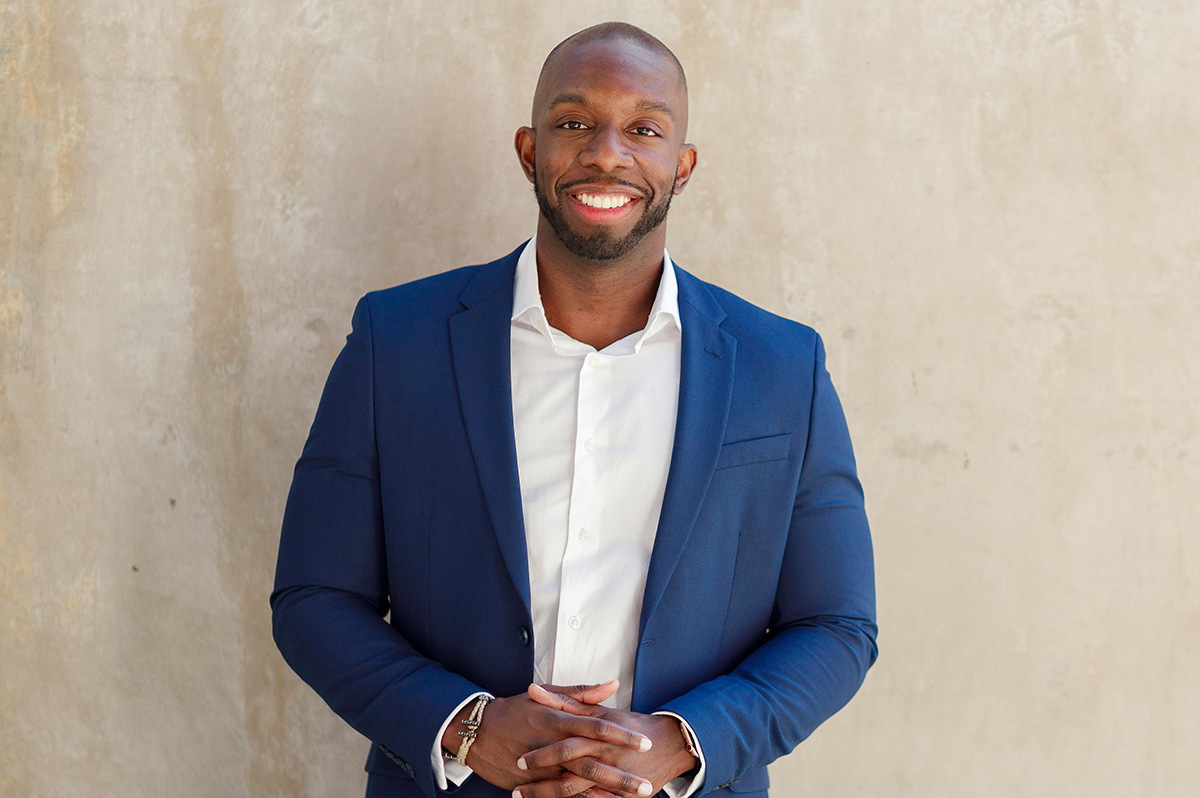
Georgia made history last week when Everton Blair, Jr., was sworn into the U.S. House of Representatives, becoming the state’s first openly LGBTQ member of Congress and the latest LGBTQ addition to the chamber.
Blair, who represents Georgia’s 13th Congressional District, was sworn in on Sept. 1 after winning a special election to fill the vacancy left by the late-Congressman David Scott. Blair defeated Marcye Scott, the late congressman’s daughter, in the Aug. 25 runoff, winning 53.2 percent of the vote to Scott’s 46.8 percent.
He will serve the remainder of Scott’s term through Jan. 3, 2027. Blair is not running in the November general election for a full term.
Blair brings a progressive platform to Congress.
The 34 year-old supports Medicare for All, a Green New Deal, raising the minimum wage, and universal gun background checks. His campaign platform also included positions on LGBTQ rights, reproductive freedom, workers’ rights, climate, and gun violence.
Since joining the House, Blair has joined the Congressional Black Caucus and Congressional Progressive Caucus. He is also a co-chair of the Congressional Equality Caucus.
Before joining the House, Blair served on the Gwinnett County Board of Education, where he became the first Black member and youngest-ever member elected to the board, as well as its first openly gay member. He was later unanimously selected as chair.
Blair also served as a fellow in President Barack Obama’s White House Initiative on Educational Excellence that focused on improving academic outcomes and expanding opportunities for minority students.
The son of Jamaican immigrants, Blair was born and raised in Georgia’s 13th Congressional District. He earned a bachelor’s degree in applied mathematics from Harvard University, a master’s degree in policy, organization, and leadership from Stanford University, and a Doctor of Education Leadership degree from Harvard.
Blair’s campaign received endorsements from a number of organizations, including the LGBTQ+ Victory Fund and progressive Democratic groups such as Future Democrats.
The Equality PAC, a political action committee dedicated to electing openly LGBTQ candidates to office, celebrated Blair’s victory and provided a statement to the Washington Blade about the historic nature of his election.
“This is a historic election for Georgia, the South, and our entire country,” Equality PAC said in an email. “Everton Blair brings a strong record of public service and a deep commitment to making government work for working families.”
The group said Blair would “fight to lower costs, expand access to quality health care, create economic opportunity, and ensure every community has a voice in Washington.”
“At the same time, Everton understands the importance of standing up for equality and defending the rights and freedoms of LGBTQ Americans and every community facing discrimination,” Equality PAC said. “His historic election as Georgia’s first openly LGBTQ Member of Congress and the first openly LGBTQ man elected from the South is a powerful reminder of how far our country has come — and how much work remains.”
Equality PAC said it was “proud to welcome Everton to the House” and looked forward to working with him.
U.S. Military/Pentagon
Pentagon expands testosterone screening as trans troops face hormone therapy restrictions
Defense Department says updated guidelines to be issued shortly

The Pentagon has announced that new clinical guidance will be released establishing mandatory testosterone deficiency screening for active-duty and reserve cisgender male service members ages 30 and older, advancing a policy that expands hormone-related care for cisgender troops.
The Defense Department said the existing clinical guidelines, which are not currently available on the Defense Health Agency’s website, are being updated and that the final guidance will be issued shortly.
The announcement comes amid a wave of anti-transgender policies from both the DoD and the Trump-Vance administration, which continue to prohibit trans men from receiving the same treatment.
Under the forthcoming guidance, men ages 30 and older will be forced to undergo testosterone blood tests as part of their medical care. Younger male service members will be tested if they request screening or if clinicians identify warning signs of low testosterone.
The new guidelines formalize a screening program Defense Secretary Pete Hegseth announced in July, when he said the Pentagon would begin testing service members to ensure that “you have the right testosterone levels to operate at your absolute best.”
“Taking care of your long-term health means ensuring you remain strong, resilient, and capable — not just for your next deployment, but for the rest of your life, so you can thrive long after you take off the uniform,” Hegseth said at the time.
The Defense Health Agency’s clinical guidance says the program is intended to address “hormonal and energy-availability issues.” Hegseth said in July that testosterone replacement therapy would remain voluntary for service members if treatment is recommended.
The Food and Drug Administration is also scheduled to hold a meeting later this month with experts to discuss the medical use of testosterone.
The Pentagon’s push to routinely test testosterone levels runs counter to current medical guidance, which generally recommends considering testosterone therapy only for men who have symptoms consistent with low testosterone and have documented low hormone levels on two separate blood tests.
Testosterone is a sex hormone naturally produced by people of all sexes. It plays a role in regulating muscle mass, bone density, and sex drive. Testosterone levels in men naturally decline with age and have been associated with symptoms including erectile dysfunction, low libido, mood changes and weight gain, although experts continue to debate when testosterone therapy is medically appropriate.
The policy has drawn scrutiny from LGBTQ advocates because the Pentagon and Hegseth have simultaneously cited hormone therapy as part of the rationale for removing trans service members from the military.
Under President Donald Trump’s 2025 executive order, “Prioritizing Military Excellence and Readiness,” the military has moved to bar trans people diagnosed with gender dysphoria from serving and has begun formal administrative separation proceedings against trans personnel.
The Pentagon continues to pursue implementation of the trans military ban as litigation over the policy proceeds. As a result, some trans service members have had their gender-affirming hormone therapy halted even as the Pentagon expands testosterone screening and potential treatment for cisgender service members.
SPARTA Pride, a nonpartisan nonprofit organization made up of trans service members, veterans and their allies, criticized the disparity to the Washington Blade when Hegseth first announced the screening program.
“If hormone therapy helps warfighters perform at their best, then it cannot simultaneously be used as evidence that transgender service members are unfit to serve,” said Kara Corcoran, executive director of SPARTA Pride. “The same class of evidence-based medical treatment cannot be characterized as readiness-enhancing for one group and readiness-destroying for another.”
On June 1, the U.S. Court of Appeals for the D.C. Circuit ruled that trans service members already serving in the military could continue to do so while allowing the armed services to continue refusing to enlist new trans recruits.
The Blade reached out to the Pentagon when the testosterone screening program was first announced in July, asking why cisgender service members could receive testosterone therapy while transgender service members could not. The Pentagon did not respond.

PHOTOS: SUNFESTIVAL

Gloria Steinem’s life of substance and consequence

Nominate your favorites for the Blade’s 25th annual Best Of LGBTQ DC Awards

Grindr settles UK lawsuit over claims it shared users’ personal information

Md. groups receive state grants to fight hate crimes

‘Here the Whole Time’ delivers queer coming-of-age comedy

Blade Foundation to host fundraiser in Rehoboth on Sept. 12

Actress takes on bisexual ‘Ma’ Rainey in new Round House production

New book examines fashionista Audrey Smaltz’s fabulous life

Everton Blair makes history as first openly gay congressman from Ga.
-

 Movies3 days ago
‘Here the Whole Time’ delivers queer coming-of-age comedy
-
Out & About2 days ago
Blade Foundation to host fundraiser in Rehoboth on Sept. 12
-
Theater2 days ago
Actress takes on bisexual ‘Ma’ Rainey in new Round House production
-
Books2 days ago
New book examines fashionista Audrey Smaltz’s fabulous life