Maryland
Md. gubernatorial candidates face off in July 19 primary
Republican Gov. Larry Hogan’s term ends in January
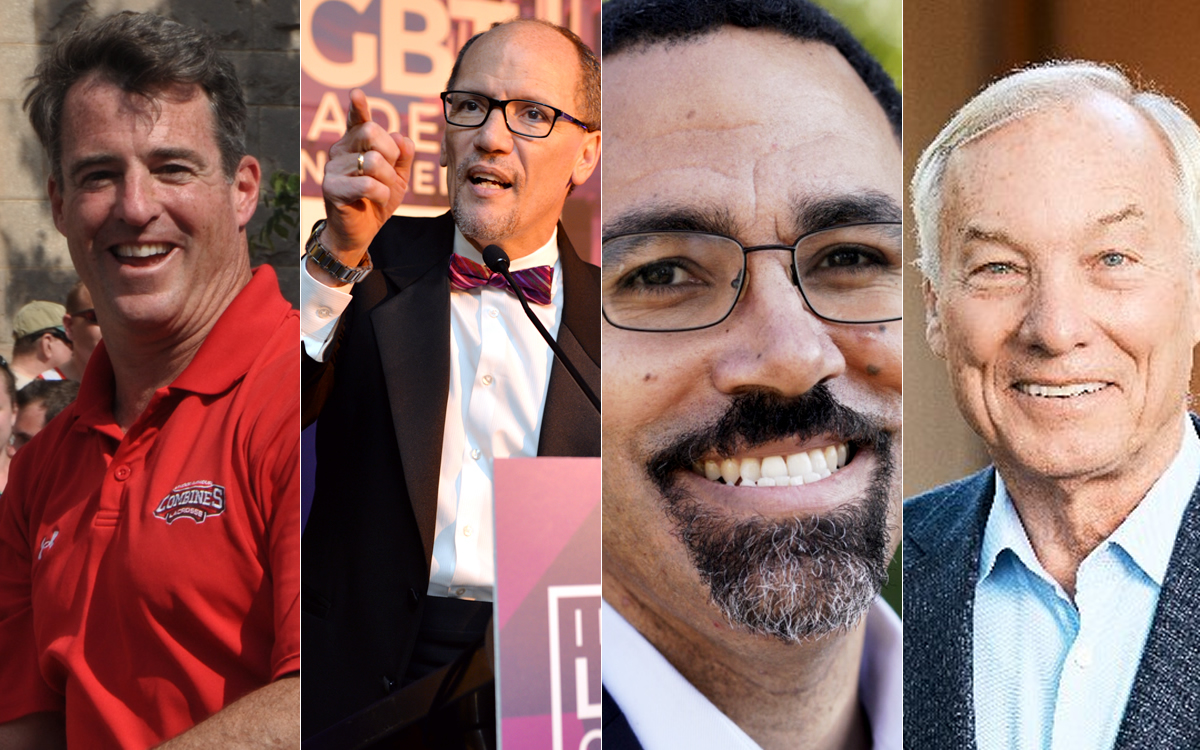
The Washington Blade this week details the LGBTQ-specific positions of the candidates who hope to succeed Republican Maryland Gov. Larry Hogan.
The primary election will take place on July 19.
DEMOCRATS:
PETER FRANCHOT
State Comptroller Peter Franchot has served in his current position since 2007. He served in the Maryland House of Delegates for more than two decades before ousting his Democratic predecessor in 2006.
Alongside his running mate, former Prince George’s County Council member Monique Anderson-Walker, Franchot has campaigned on promises of enacting a more efficient, transparent and equitable state government that will be prepared to champion multiple progressive causes.
When asked about his approach to issues surrounding LGBTQ rights in Maryland, Franchot told the Blade that providing equitable opportunities for underserved groups like the LGBTQ community was a focus of his bid for the governor’s office.
“I am committed to ensuring that all Marylanders have the resources to thrive and enjoy all the benefits our state has to offer,” Franchot told the Blade. “I was the first candidate to publish an agenda dedicated to addressing injustices and supporting historically marginalized communities.”
Should he succeed, a Franchot administration, he said, would be ready to implement a number of plans his campaign has already drafted.
“I will ensure our curriculums educate students on our modern world and ensure that all of our public schools will be equipped with mental health professionals,” Franchot said. “I will also appoint a Secretary of Diversity, Equity and Inclusion. This person will be responsible for identifying bias, disparate impacts, or inadequate attention to existing inequity and will issue a public report with action items to hold our government responsible for addressing these challenges. I am committed to ensuring that members of the LGBTQ+ community are part of my administration, and I will also increase funding for grassroots organizations that are filling in the gaps to provide support and care for the LGBTQ+ community.”
DOUG GANSLER
Former Attorney General Doug Gansler served in his statewide role from 2007 to 2015.
Running alongside former Hyattsville Mayor Candace Hollingsworth, Gansler has consistently pointed to his progressive record on issues of social justice and environmental protection.
In fighting for what he sees as social justice for constituents, Gansler has garnered a well-recorded history of using his governmental power to advocate for the LGBTQ community.
Gansler in 2010 affirmed his support for LGBTQ rights by issuing an opinion that Maryland would recognize same-sex marriages performed outside the state that, at the time, did not allow such. In response, some state lawmakers in Annapolis initiated an unsuccessful attempt to impeach him from his position.
“I am and always have been [an advocate] and I don’t waver, and I will always do that going forward as governor,” Gansler said.
As he pursues his party’s nomination for the governorship, Gansler told the Blade that representation of the LGBTQ community in his administration as well as experience in using government pathways to protect them would be key components of addressing LGBTQ issues – components, he says, he is willing and able to pursue.
“I think having folks in government who are representative, I think, is important,” Gansler said. “I think making sure we enforce the laws and don’t let any abridgement of the laws occur and pass more protective laws and make sure that, should hate crimes and hate speech and behavior targeted toward the LGBTQ community get enhanced that we lead.”
RALPH JAFFE
Retired educator Ralph Jaffe has centered his campaign around a promise to root out corruption in Maryland government.
“My real goal – I’m in this to win – but there’s a more important objective and that is I want to create a new standard of behavior for politicians in the future,” Jaffe said.
As part of his campaign alongside running mate Mark Greben, Jaffe has campaigned on a set of five principles: Refusing all campaign contributions, only serving one term in office if elected, serving without pay, being truthful with constituents and having no dealings with or connections to professional lobbyists.
Jaffe has proposed the elimination of the Public Service Commission, the Maryland Department of Education, the Maryland Stadium Authority and the Maryland Vehicle Emissions Inspection Program in favor of fiscal responsibility and more localized control as well as opposing all attempts by the state’s General Assembly to raise residents’ taxes.
Jaffe told the Blade that his involvement in such change, spanning back three decades, was one that he characterized as a movement – one that has taken time to cultivate and has allowed for.
“It takes time. We have made a lot of progress and I’m pleased with the progress we have made,” he said.
When addressing his support for matters of LGBTQ equality, Jaffe told the Blade that he believes members of the community deserve equal respect and status.
“I believe that any person in this country who is a human being in this country should be treated equally, that’s it,” Jaffe said.
TOM PEREZ
Former Democratic National Committee Chair and U.S. and Maryland Labor Secretary Tom Perez has sought to use his profile to establish himself as a top contender in the Democratic primary.
Perez, alongside his running mate, former Baltimore City Council member Shannon Sneed, has branded himself as a “get stuff done” Democrat. Perez, who is leaning on his experience as a civil rights attorney, now seeks to enact, among other things, reforms in areas that include police reform, voting rights, marijuana laws and gender equity.
A spokesperson for the Perez campaign told the Blade that as LGBTQ rights have come under greater uncertainty, Perez is looking forward to doing more to continue being a champion for the community.
“Throughout June we celebrate the amazing achievements of our LGBTQ+ communities and recommit ourselves to protecting the rights of our LGBTQ+ family, friends and neighbors so we can build stronger, more inclusive communities across Maryland – and beyond,” Perez wrote on Twitter on June 1.
WES MOORE
Combat veteran, small business owner and former Robin Hood Foundation CEO Wes Moore has sought to use his campaign to call into focus equity gaps in Maryland in hopes of becoming the Democratic nominee.
Through his campaign, Moore has leaned on his experiences of humble beginnings as well as military and entrepreneurial experience to influence his policy stances on issues affecting veterans and others.
Moore has expressed his support for the LGBTQ community and his intention to address related issues should he be elected to office.
Moore’s plans, should he become the next governor, include collaboration with the Maryland LGBTQ Affairs Commission and the community in future discussion, identifying LGBTQ businesses for the state to more easily contract, supporting and implementing prospective and newly-enacted legislation like the Safe Schools Act and Trans Health Equity Act and denying harmful legislation from being enacted or enforced.
Moore and his running mate, former state Del. Aruna Miller, reaffirmed their support for LGBTQ rights in a policy statement their campaign released.
“The only way to make Maryland truly inclusive and welcoming is to ensure we fiercely support and advance the rights of the LGBTQ+ community, especially at a time where this community remains under attack,” Moore and Miller said in the statement. “The Moore-Miller administration will always be champions for LGBTQ+ Marylanders, protecting their rights and ensuring they have access to the tools and resources they need at all intersections of life to prosper and thrive.”
ASHWANI JAIN
Former Obama administration official and federal government staffer Ashwani Jain has operated a gubernatorial campaign founded in grassroots principles reminiscent of those that U.S. Sen. Bernie Sanders (I-Vt.) and others have implemented.
Refusing campaign contributions from political action committees (PACs) and what the campaign defines as “developers, businesses … or polluters,” Jain has sought to define the campaign using resident-exclusive organizing and detailed policy plans released early in the campaign cycle.
At 32 years old, Jain would be the youngest governor in the nation if he were elected alongside running mate LaTrece Hawkins Lytes.
On LGBTQ issues, Jain issued a policy statement affirming his commitment to fighting anti-LGBTQ discrimination if he were to win.
“To those who feel marginalized for their sexual orientation, gender identity or gender expression, I want to assure you that you are welcome in Maryland — and you make us stronger!” Jain wrote.
Jain’s policy on LGBTQ issues includes proposals including a prohibition on discrimination in housing and jury selection and introducing legislation to protect individuals’ and couples’ access to surrogacy, adoption, foster care, health insurance application. Jain has also called for state non-discrimination laws to be reformed to omit religious exemptions.
“We as a society must ensure we always provide equal access to all state-run services; protect all from any type of discrimination; and provide appropriate training to all state agencies and departments,” Jain wrote.
JON BARON
Jon Baron has previously served as a congressional staffer and an official in the Clinton, Bush and Obama White Houses, drafting programs and policies related to issues that include technology companies and social spending.
Running alongside Maryland Business Roundtable for Education Senior Director of Communications and Public Affairs Natalie Williams, Baron has sought to bring his experience in crafting policy and programs on various issues to the role of Maryland governor.
While he did not respond to request for comment regarding policies LGBTQ-related policies he would implement if elected governor, Baron has previously expressed support for the community as part of his campaign platform.
“This month and every month, we celebrate the enormous contributions the LGBTQ+ community has made to our state – and reaffirm our commitment to ensuring LGBTQ+ rights are protected in Maryland and across the country,” Baron wrote on Twitter on June 1.
JOHN KING
Former U.S. Secretary of Education and current University of Maryland Professor John King has sought to make his plans for and experience in education a cornerstone of his campaign.
With his running mate, Women’s Law Center of Maryland Executive Director Michelle Siri, King has leaned on such educational experience as he has crafted education proposals and plans to implement expanded student debt relief in the state. King has also publicly spoken to his support of the LGBTQ community.
In an op-ed the Blade published last month, King described his plans to support the LGBTQ community in his state should he be elected. These included expanding LGBTQ-related health services, implementing anti-discrimination policies in education and long-term care facilities, introducing further violence prevention and intervention programs aimed at protecting LGBTQ individuals and investment in LGBTQ-owned businesses.
“This Pride Month and beyond, LGBTQ+ Americans need more than empty allyship from politicians, governments, and corporations — they need someone who will stand with them and provide tangible support,” King wrote. “I’m running for governor to be a real defender, ally, and advocate for LGBTQ+ Marylanders, and to make our state a safe place for all Americans to live.”
JEROME SEGAL
Jerome Segal, author and founder of the organization Bread and Roses, has used his candidacy to emphasize what he sees as the importance of understanding national history and the power the governor’s office in Maryland.
Running alongside Galena Town Councilman Justinian Dispenza, Segal has proposed guaranteed paid, basic employment of at least 32 hours per week, intergovernmental personnel sharing programs between Maryland and foreign countries, progressive tax transformation and introducing legislation for a four-day work week. Segal told the Blade that with regards to LGBTQ rights he respects an individual’s right to privacy and is willing to support both statewide and national codification of the right to privacy to protect the community.
“My view is actually that what we should do is amend the Constitution,” he said. “We should put in there a specific right to privacy and expand on it if we want to but just having an explicit right to privacy in the Constitution will mean that right-wing people on the court can’t say that you guys just invented the right to privacy and it’s not in the Constitution because we’ll make it explicit and we’ll put it in the Constitution.”
REPUBLICANS:
KELLY SCHULZ
Former Labor and Commerce Secretary Kelly Schulz has received Hogan’s endorsement in the Republican primary and has cemented her status in recent polling as a top contender for the party’s nomination.
Schulz and her running mate Maryland Air National Guard Col. Jeff Woolford, have vowed to advocate for statewide tax cuts and resist any effort made by the state legislature to raise residents’ taxes.
A cornerstone of Schulz’s campaign is her parental bill of rights, aimed at increasing parental involvement in the operations and functioning of Maryland schools.
“We need to be able to make sure that every public school is working regardless of the zip code our children live in,” Schulz said at a debate on education on Monday. “We need to be able to make sure that it’s functioning. That’s why, several months ago, I introduced the parental bill of rights to be able to make sure that parents are empowered in their educational options for their children.”
Schulz has not responded to requests for comment about her campaign’s LGBTQ-specific platform.
DAN COX
Endorsed by former President Donald Trump, state Del. Dan Cox has represented District 4 in the House of Delegates since 2019.
Running alongside Naval Academy Law Professor Gordana Schifanelli, Cox’s policy stances have mirrored much of those championed by the former president and his allies on the national stage. Cox has used his staunchly right-wing policy stances to attempt to separate himself from Schulz.
Cox as recently as last October has sought to amend an education bill to restrict what he has referred to as “classroom indoctrination” regarding gender identity instruction in grades K through 3.
“The intent of protecting our children from classroom indoctrination is something we should all agree on at that age,” Cox said.
ROBIN FICKER
Realtor Robin Ficker has been politically active in recent years through the proposal of multiple ballot initiatives in Maryland. He also practiced law as a defense attorney prior to his disbarment earlier this year.
Alongside running mate LeRoy Yegge, Jr., Ficker’s campaign has rested heavily on the promise of eliminating two cents from the state’s sales tax. The ticket has also proposed the creation of a jobs strike force that would aim to respond to the expansion of large companies and induce them into relocating new operations and employment openings to Maryland.
“We should have those jobs here, but the Maryland Department of Commerce has been asleep,” Ficker said in a debate Monday night. “I’m not going to be asleep as your governor; I’m going to be helping you get jobs.”
Ficker has not publicly commented about LGBTQ issues.
JOE WERNER
Joe Werner practices as a family law attorney in D.C. He has also run for the House of Delegates in previous elections.
With running mate Minh Thanh Luong, Werner has expressed support for charter schools and a number of conservative initiatives, including opposing abortion access after 15 weeks of pregnancy and reducing economic regulation. He has also called for a temporary suspension to gas taxes following sharp increases in global oil and gas prices.
While Werner had previously identified as a Democrat in past elections, he has said he feels his ideological moderation is a positive aspect for Marylanders to consider when evaluating his candidacy.
“I feel I’m more of a Marylander moderate,” Werner said in an interview with the Maryland State Bar Association on Tuesday. “I feel like I represent the people right, I will think about what’s helping the people, not just what’s helping the special interests and that’s why I think I would be the best candidate.”
Werner has not publicly commented about LGBTQ issues and did not respond to a request for comment.




Maryland
Girlfriends charged with Silver Spring murder to go on trial in 2027
Prosecutors charged both women with killing mother of one of them

Two women identified as a couple who are charged with the May 22, 2026, murder of the mother one of them in her Silver Spring home and who were arrested three weeks later in Ohio are scheduled to go on trial for murder April 19, 2027.
According to online records filed with Montgomery County Circuit Court in Rockville, Vanessa Tjongarero-Henderson, 29, of Clarksburg, Md., and Samantha Raebel, 36, of Phoenix are being held without bond in the Montgomery County Correctional Facility until the time of their trial.
Statements from Montgomery County police show the two women were arrested June 10 in Genoa, Ohio, after fleeing from the scene of the murder in Silver Spring. Police statements and court records show they were extradited back to Maryland in July, where prosecutors with the Montgomery County State’s Attorney’s Office obtained indictments against them for murder.
Earlier statements from Montgomery County police say their investigation into the murder led to their decision to initially charge the two women with first-degree murder for the death of Hilde Henderson, 67, who was Tjongarero-Henderson’s mother.
“Through the course of the investigation, detectives identified Henderson’s daughter, Vanessa Tjongarero-Henderson, and Vanessa’s girlfriend, Raebel, as the suspects,” one of the police statements says. It says police obtained arrest warrants for both women and launched a nationwide search seeking help from the public in in locating them.
One of the police statements says an autopsy determined the cause of Hilde Henderson’s death was blunt-force trauma injuries brought about by a murder. Police and the State’s Attorney’s Office, which is prosecuting the case, have yet to disclose whether they have determined a motive for the murder.
Court records show that prior to the start of the April 19, 2027, trial a “motion” hearing was scheduled for Oct. 30, 2026, a pre-trail conference was scheduled for Feb. 12, 2027, and another motion hearing and a status hearing were scheduled for March 12, 2027.
Court records also show that Tjongarero-Henderson is being represented by attorneys with the Montgomery County court system’s public defender service. The records show that Raebel initially had been represented by a public defender service attorney, but updated records show Aug. 14 is listed as the “removal date” for that attorney.
The docket shows that on Aug. 20, two new attorneys with the prominent D.C. law firm of Covington & Burling made their official appearance as her attorneys in the murder case. One of them, Daniel Solomon, told the Washington Blade in response to an inquiry that the defense has no comment at this time on the case.
He confirmed that Covington & Burling is representing Raebel on a no-cost, pro bono bass.
The office of the Montgomery County public defender service didn’t immediately respond to a phone message from the Blade asking for a comment on the Tjongarero-Henderson case.
Congress
Chris Van Hollen says the Democratic Party needs change. Is he the one to lead it?
Senator is backing anti-establishment Democrats across the country
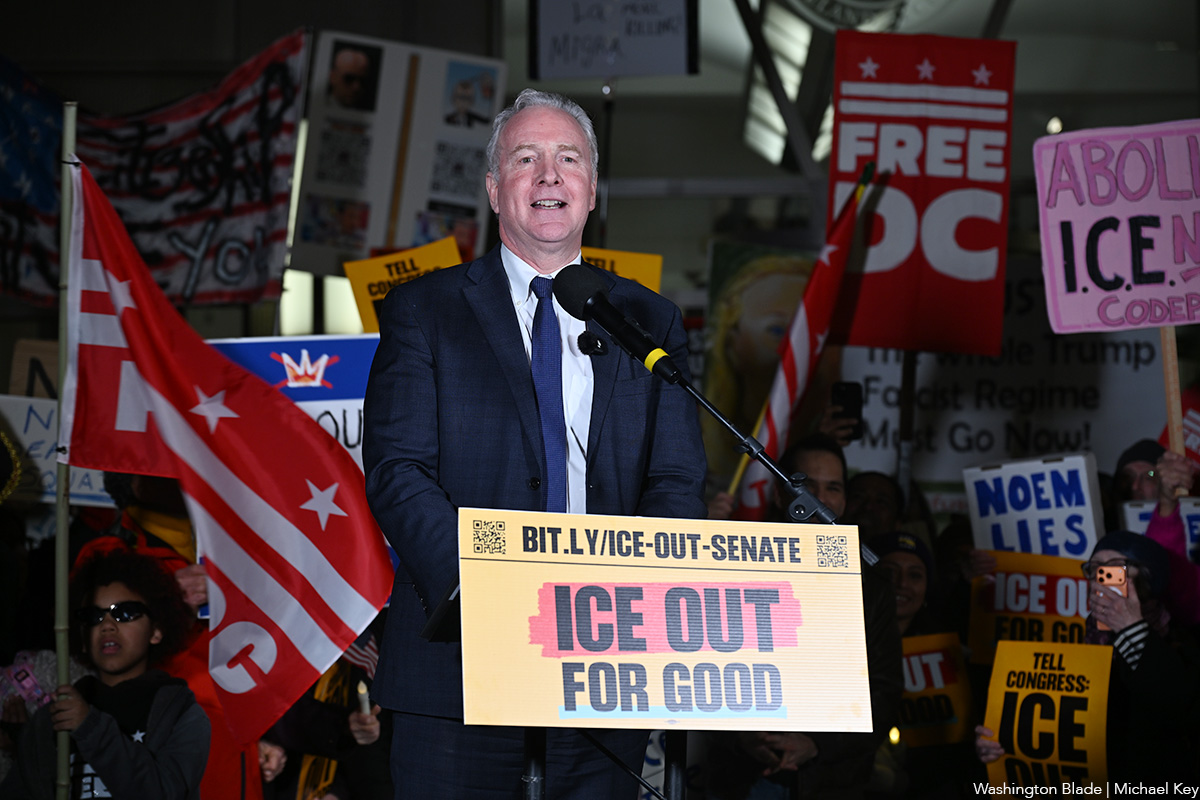
By LEE O. SANDERLIN | The Democratic Party is having something of an identity crisis — losing to President Donald Trump twice in three elections will do that.
Should the party embrace anti-establishment figures who espouse progressive policy ideas like Medicare for all and rhetoric about unrigging the economy for the 1 percent? Or should Democrats try to appeal to moderates who want to return to semi-normalcy in a time of political upheaval?
Although he’s been in Congress since 2002, with key leadership roles throughout his tenure, Maryland Sen. Chris Van Hollen, 67, counts himself firmly in the anti-establishment camp.
The rest of this article can be found on the Baltimore Banner’s website.
Maryland
Anne Arundel schools updates gender identity regulation following Trump administration threats
District facing federal lawsuit, White House threats over guidelines
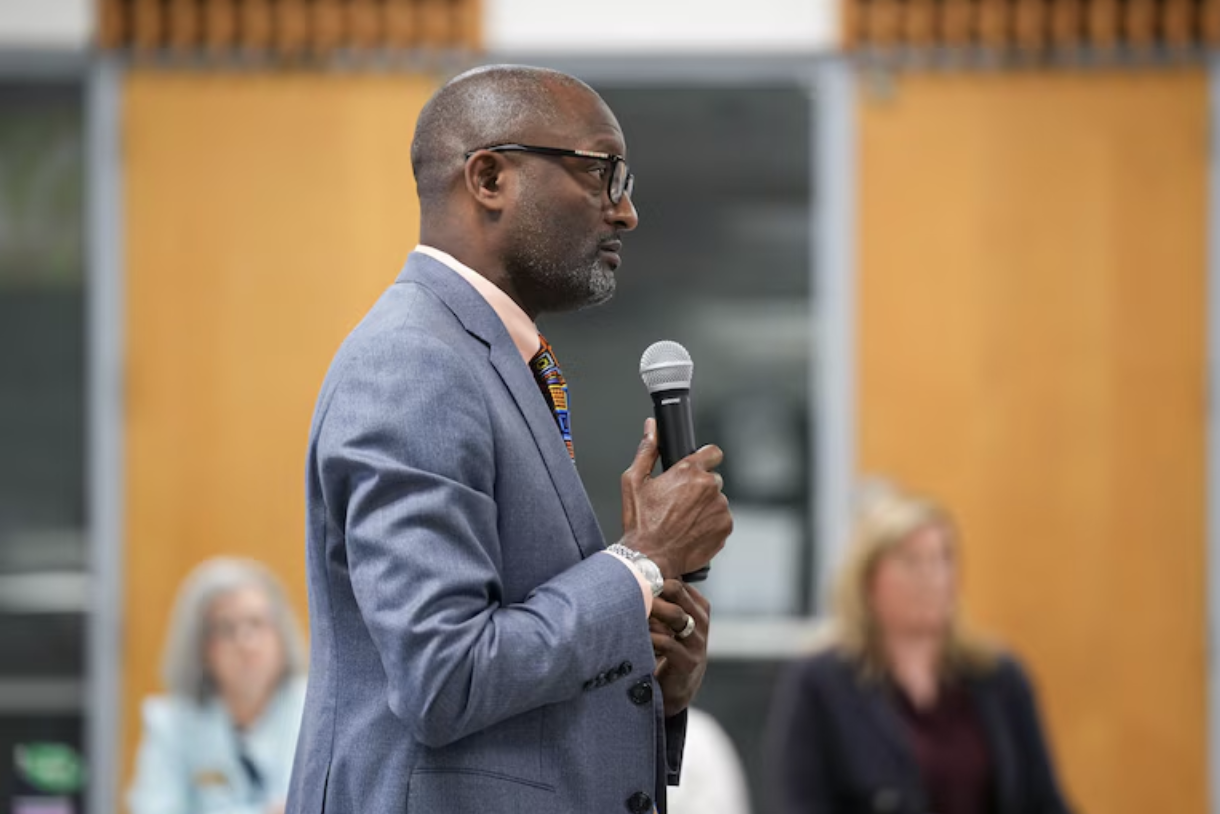
By JESSICA CALEFATI | Under pressure from the Trump-Vance administration, Anne Arundel County Public Schools Supt. Mark Bedell announced Wednesday the district had updated a regulation intended to protect transgender students’ right to be called by their chosen name.
The revised language makes clear that district rules on gender identity do not block parents’ rights under the Family Educational Rights and Privacy Act as the federal government alleged last month, and that a student’s gender identity will not be treated as confidential medical information.
“No policy, guideline, or practice may limit or otherwise interfere with parental rights under FERPA,” Bedell wrote in a Wednesday letter to the community. “This includes any information maintained in education records that relates to gender identity, transgender status, sexual orientation, preferred name, or preferred pronouns.”
The rest of this article can be read on the Baltimore Banner’s website.

ICE arrests Milo Yiannopoulos in New Orleans

San Francisco, long a queer safe haven, remains competitive for homebuyers

For LGBTQ youth starting with nothing, Pride House in Florida offers help

Archuleta to host book signing in Rehoboth Beach

Actor Tim Curry dies at 80

Proposed Indian foreign funding law overhaul could further pressure LGBTQ groups

Two awesome, affordable rides

Advocates honored at Engendered Spirit Awards

Gay-owned pizzeria in Dupont Circle burglarized