Delaware
Sarah McBride seeks reelection to Delaware Senate
Incumbent renews commitment to reforming healthcare, education

Sarah McBride, who currently represents Delaware’s 1st State Senate District, is seeking reelection this fall as her first term comes to a close. McBride made headlines in 2020 when she became the first openly transgender state senator in the nation’s history, and for the past two years has worked to reform social services and on healthcare legislation in the Delaware Senate.
When seeking election for the first time in 2020, McBride campaigned on a platform of paid family and medical leave for working Delawareans. Two years later, McBride told the Blade that developing these policies – and, more specifically, passing the Healthy Delaware Families Act earlier this year – has been the highlight of her time in the General Assembly.
As a sponsor of the bill, McBride wanted to “help lead the effort to pass paid family and medical leave” in Delaware, and spearheaded the creation of a statewide program that enabled employees to receive up to 12 weeks of paid leave for various personal, medical, and family events.
“A lot of observers laughed at the possibility of Delaware passing paid leave,” McBride recalled, “but we were able to work together to build a coalition … [and pass] the largest expansion of the social safety net in modern Delaware history.”
McBride also pointed to the General Assembly’s passage of a $15 minimum wage, protection over statewide reproductive healthcare, and creation of “the most significant gun safety package in state history” as successes of her first term. “There’s still so much more that we need to do,” she emphasized.
More recently, The Digital Citizenship Education Act – a youth media literacy campaign McBride sponsored – was signed into law by Gov. John Carney on Aug. 29. McBride noted that her work on the bill was linked to her experiences being sworn into the Delaware Senate on the heels of the Jan. 6 insurrection in the U.S. Capitol.
“In the days and weeks after the insurrection, some of my colleagues and I began having conversations about what more Delaware needed to do to heal our nation,” McBride said. “One of the ideas that my colleagues and I had was to introduce The Digital Citizenship Act to provide young people with the tools necessary to identify fact from fiction, hard reporting from opinion, and news from advertisements online.”
The bill will require the Department of Education to uphold standards of evidence-based media literacy in public and charter school classrooms across the state.
“We think of young people as digital natives who are able to seamlessly navigate the internet with an effortlessness that eludes many adults, but the reality is that young people, like all people, struggle with this increasingly complicated world and identifying what is true,” she added.
McBride is seated in a firmly blue district, but this year’s election still comes with intrigue: the state has recently redrawn its legislative districts, meaning this year McBride will be campaigning to roughly a third of her voters for the very first time.
“I’m talking and reaching those new-to-the-first-Senate-district voters to make sure that they understand that this change is occurring, and that to ensure that they have information,” she noted. “Making sure that we’re reaching those newer voters in this district is going to be critical over the next few months.”
On Aug. 23, LGBTQ Victory Fund, an organization that advocates for the election of LGBTQ leaders in public offices across the country, endorsed McBride for the 2022 election. The District 1 general election is slated to be held Nov. 8, and McBride currently does not face opposition from a Republican nominee.
Reflecting on her time serving Delaware and her plans yet to come, McBride emphasized her responsibility to work against efforts from “far right-wing politicians and judges to roll back the clock on our progress and rescind critical rights for many, many people in this country.”
Further, McBride noted that, through reelection, she hopes to continue developing and expanding protections that promote the wellbeing of residents throughout the First State.
“I think more than anything else, seeing what people deem to be impossible not just become possible, but a reality here in Delaware has only motivated me to seek reelection and fight even harder for the remaining issues that Delaware needs to address,” McBride said. “I am ending my first term even more hopeful than when I began it.
Voter registration for the general election is open now through Election Day. To find out how to register, visit the state’s Department of Elections website.




Delaware
Michael Smith could make history as Delaware’s first LGBTQ treasurer
Promises to defend state from Trump administration

With experience as an economist, legislative staffer, and nonprofit director, Michael Smith is looking to protect Delaware from the Trump administration and become Delaware’s first openly LGBTQ treasurer.
With a master’s degree in economics from the University of Alabama, Smith has worked as an economist at Secretariat Economist and Cornerstone Research. He previously interned at the Progressive Policy Institute.
“I think my work in economic and financial analysis has given me a lot of experience and know-how about what the treasurer role can and should be,” said Smith.
Smith also worked in the Delaware House Democratic Caucus in Dover, working with state representatives to improve the quality of life of Delawareans.
“I got to see where the rubber meets the road and how we can have policies that positively affect everyday working Delawareans.” said Smith.
In 2024, Smith narrowly lost a race to represent District 21 by 30 votes. He said that this loss gave him the itch to make a positive impact on the community.
Smith also founded and directed Powering Our Future, a nonprofit that promoted clean energy infrastructure throughout New Castle County.
“We helped people across Delaware reduce their energy bills and specifically try to encourage energy efficiency and electrification,” said Smith.
According to Smith, affordability is the biggest issue to voters, especially with the rising cost of utility bills.
“Everyone is worried about the affordability crisis. The cost of living is just incredibly high.”
“I’ve been knocking on doors for months now, and every time I hear people say: ‘My utility bill has gone up 75 percent. My property taxes are going through the roof. I can’t afford health care. I can’t afford to save for my children’s college or my own retirement.’”
“The treasurer cannot solve all those problems. But what we can do is we can help people save for them and their family’s future,” said Smith.
Smith talked about his goal to increase awareness around Delaware EARNS, a state sponsored Roth IRA geared toward people who don’t have access to a traditional employer-sponsored retirement plan.
“There’s roughly 150,000 Delawareans who could take advantage of it,” said Smith. “These are people who are the backbone of Delaware’s economy, whether they are working for small businesses, certain nonprofits, or working the gig economy,” said Smith.
Smith said that many people working for companies such as Doordash and Lyft are not saving for the future but that they could be doing so in a tax-advantaged way through Delaware EARNS.
“I think there’s some work that needs to be done to make a clear on-ramp for the self-employed and for those gig workers to get enrolled,” said Smith.
“Right now, we just passed our 10,000th account, which is fantastic, but there’s a lot of room left to grow.”
Smith also spoke of his plans to build on the Aspire 529 College Savings Plan, a project that helps traditionally underserved students finance their college education in ways that traditional 529 plans don’t.
Smith said that Delaware needs a treasurer who will work to protect the first state from the Trump administration, and he says is ready to step up to the plate.
“I think we need someone who’s willing to speak out and try to work with state treasurers, comptrollers, and other elected officials across the country to push back over the next two years.”
“We have a president in Washington, D.C., who is working with his Republican cronies in Congress to attack blue states like ours and threaten our federal funding.”
“I think that the best form of resistance is resilience,” said Smith.

Smith identifies as pansexual, having come out 10 years ago in college. He said that he is proud of the representation Delaware already has, from Rep. Sarah McBride to Travis McDermott, the mayor of Newark.
“I would love to partner with our attorney general, our governor, and our General Assembly to defend our LGBTQ+ citizens and residents as much as possible,” said Smith.
“I’d be honored to be Delaware’s first openly LGBTQ+ treasurer,” said Smith.
Mike Ramone, the Republican nominee for treasurer, has described Delaware as being in a ‘financial crisis.’The Blade asked Smith to respond to Ramone’s statement.
“I would disagree with Mike Ramone. I think Delaware is in a very strong financial shape, with the caveat of our state employee health benefits, which needs to be more well funded.”
Michael Smith will face Ted Lauzen and Mike Miller on the ballot for the Sept. 15 primary.
(Editor’s note: An earlier version of this story reported that Smith worked as an economist at the Progressive Policy Institute. He actually worked as an intern there while in college. The Blade regrets the error.)
Delaware
Delaware fines Rehoboth bar $15,000 for discriminating against trans woman
Hideout told patron she had to use men’s room due to gender marker on driver’s license

The Delaware Human and Civil Rights Commission voted to fine Hideout Arcade Bar & Grille $15,000 last month due to a discrimination complaint filed by a trans woman over her use of the bathroom.
Katie Sorber, a transgender woman, said that on April 5, 2023, she was stopped by employees and told she could only use the men’s bathroom due to the “male” gender marker on her driver’s license. This occurred after Sorber presented her ID upon entering the bar and ordering a drink.
Sorber took to Facebook to complain about her experience at the bar after she was told to use the men’s bathroom.
On April 12, 2023, Sorber returned to the Hideout but was barred from entering due to her post on social media.
Following Sorber’s post, Bryan Derrickson, the owner of Hideout Arcade Bar & Grille, allegedly began enforcing a policy in which patrons had to use the bathroom that corresponded to the gender marker on their ID.
Derrickson was ordered to pay $10,000 to Sorber, $5,000 to the Special Administration Fund, as well as conduct anti-discrimination training with employees, remove the ban on Sorber from the establishment, and revise the bar’s bathroom policy.
The commission ruled that the bar and Derrickson had wrongfully discriminated against Sorber on the basis of her gender.
Derrickson’s explanations for the denial included safety concerns, a third-party patron complaint, and a reference to the health code. The panel found this to be inconsistent and lacking factual support upon cross-examination.
The case was evaluated under the Delaware Equal Accommodations Law, which explicitly prohibits discrimination and retaliation in places of public accommodation based on gender identity.
This was the second time that the bar has been fined for discriminating against a transgender woman. The bar received a $2,000 penalty in September of last year for denying a transgender woman entry in 2023.
Half of the fine went to Kathy Carpenter Brown, the trans woman who experienced the discrimination. Brown is the founder of TransLiance, an LGBTQ+ advocacy group in Delaware.
Delaware
Democrat Maureen ‘Mo’ Madden takes on longtime GOP stronghold in Delaware’s 38th
Out lesbian candidate for state House focused on infrastructure needs, voting rights
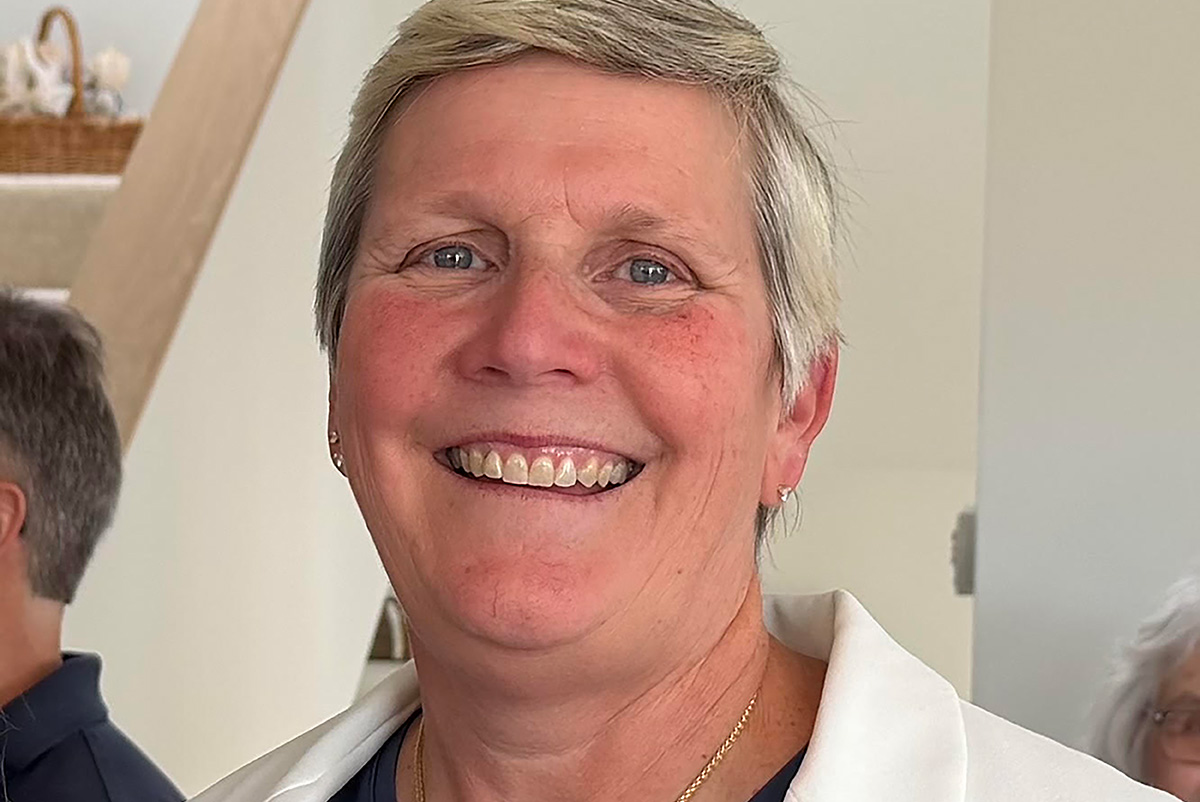
Democrat Maureen “Mo” Madden is running for the Delaware House of Representatives in the 38th District, seeking to win a seat that has been held by Republicans for more than two decades.
The race opened up after Republican state Rep. Ron Gray announced in April that he would not seek reelection after seven terms in the General Assembly.
Gray was first elected in 2012 and represents communities including Bethany Beach, Fenwick Island, Selbyville and Ocean View. Madden, a Dagsboro resident, filed to run for the seat in 2025.
Madden is a retired federal civil servant who spent nearly 23 years at NASA and more than seven years at the National Oceanic and Atmospheric Administration. She holds a master’s degree in physics and previously worked in leadership at NOAA.
She said her professional experience taught her the importance of working collaboratively, something she believes would translate to the legislature.
“Advocating, negotiating, and collaborating are all skills that a legislator needs,” she said. “You learn to collaborate. You learn to negotiate. You learn to advocate for your budget, for your team, and for your projects.”
Madden said her decision to run began after she and her wife moved to the area and she noticed the lack of Democratic candidates on the ballot in her district.
“Somebody’s got to do it, and I’ve got time. I’m retired,” said Madden.
She acknowledged the difficulty of running as a Democrat in the district, which has been represented by Republicans since 2002.
Madden said one of the biggest concerns she hears from residents is the rapid growth of Sussex County.
“We have a massive amount of growth and a massive amount of development,” said Madden.
Madden said the growth has placed additional pressure on roads, schools, emergency services, as well as water and sewer infrastructure.
“We need to find a way to bring more money down here for the school system and for the infrastructure that we need,” she said.
She also raised concerns about the impact of new developments on existing neighborhoods, particularly in regard to flooding and drainage.
“Something needs to be done,” said Madden.
Madden also pointed to climate change as a factor affecting the region.She said the state will need to work on both addressing development and preparing communities for increasingly severe weather.
“We have to work both sides of it,” Madden said.
Madden said improving infrastructure would be a priority if she is elected, particularly roads and other infrastructure that affect residents’ daily lives.
“I want to increase the safety of my neighbors,” she said.
Madden also said she wants to address infrastructure needs related to water and sewer service, as well as the availability of health care in the rapidly growing coastal region.
Madden said protecting voting rights would be another priority in the legislature.
“The right to vote is one of the biggest things that we have here in a democracy,” she said.
She said that she supports early voting, mail-in voting, and same-day registration, as well as restoring voting rights to people who have completed felony sentences.
“You should not lose a constitutional right because you’ve been in jail,” said Madden.
“Protecting the right to vote is how I will defend democracy when I get to the state House,” she said.
Madden said she would also support efforts to enshrine certain rights in the Delaware Constitution, including reproductive rights, voting rights, and the right to marriage.
“Those three protections of our freedoms that are right now under attack need to be more secure in the Delaware State Constitution,” she said.
As an openly lesbian candidate, Madden said LGBTQ+ rights are important to her, particularly the treatment of young transgender people.
She said she is concerned about efforts to restrict transgender students’ participation in sports and other policies affecting transgender people.
“They are picking on the most vulnerable of the most vulnerable,” said Madden.
She said she hopes voters will view LGBTQ+ people as part of their communities rather than as fundamentally different from their neighbors.
“We’re your neighbors. We’re your friends. We’re your family,” she said.
Madden will face Republican Carlie Carey in the general election on Nov. 3.

Pentagon expands testosterone screening as trans troops face hormone therapy restrictions

Calendar: September 4-10

Swiss government backs nationwide conversion therapy ban

Gloria Steinem dies at 92

The mastery of love

Prominent French activist attacked outside Paris bar

Whitman-Walker’s 40th Walk & 5k Run to End HIV set for Sept. 19

Shooting outside gay bar in Ariz. leaves three dead

Gay men linked to 2006 Wone murder failing to make lawsuit settlement payment

PHOTOS: Miss Gay Old Bay
-

 France5 days ago
Prominent French activist attacked outside Paris bar
-
District of Columbia4 days ago
Whitman-Walker’s 40th Walk & 5k Run to End HIV set for Sept. 19
-

 Arizona4 days ago
Shooting outside gay bar in Ariz. leaves three dead
-
District of Columbia4 days ago
Gay men linked to 2006 Wone murder failing to make lawsuit settlement payment