World
Out in the World: LGBTQ news from Europe and Asia
Qatar has detained a man with HIV who is a dual British and Mexican citizen
AUSTRALIA

As the 46th Sydney Gay and Lesbian Mardi Gras ended its two week long celebrations with the annual massive Mardi Gras parade on Oxford Street this past weekend, this year’s celebration marred by the murder of a gay couple that jarred the country’s entire LGBTQ community, the parade came to a halt on Saturday in a powerful act of remembrance for the couple, Jesse Baird and Luke Davies.
In its annual float, Qantas Airways paid tribute to Davies who worked for the carrier as a flight attendant. A Qantas spokesperson confirmed that Davies’ name was added prominently on the side of the Qantas float, and Executive Manager Crew Leeanne Langridge in a statement said that Davies “was a much-loved member of the Qantas cabin crew community in Brisbane and Sydney.
“He had a passion for travel, life, his family and friends and the customers that he served. He will be deeply missed. The whole team at Qantas are thinking of Luke and Jesse’s loved ones,” Lanridge said.
The Star Observer, the country’s largest queer news media outlet, reported that a New South Wales police officer, Beaumont Lamarre-Condon, who reportedly once dated Baird, a Network 10 reporter and a sports official who umpired in AFL matches in the Northern Football and Netball League, has been charged with their murders.
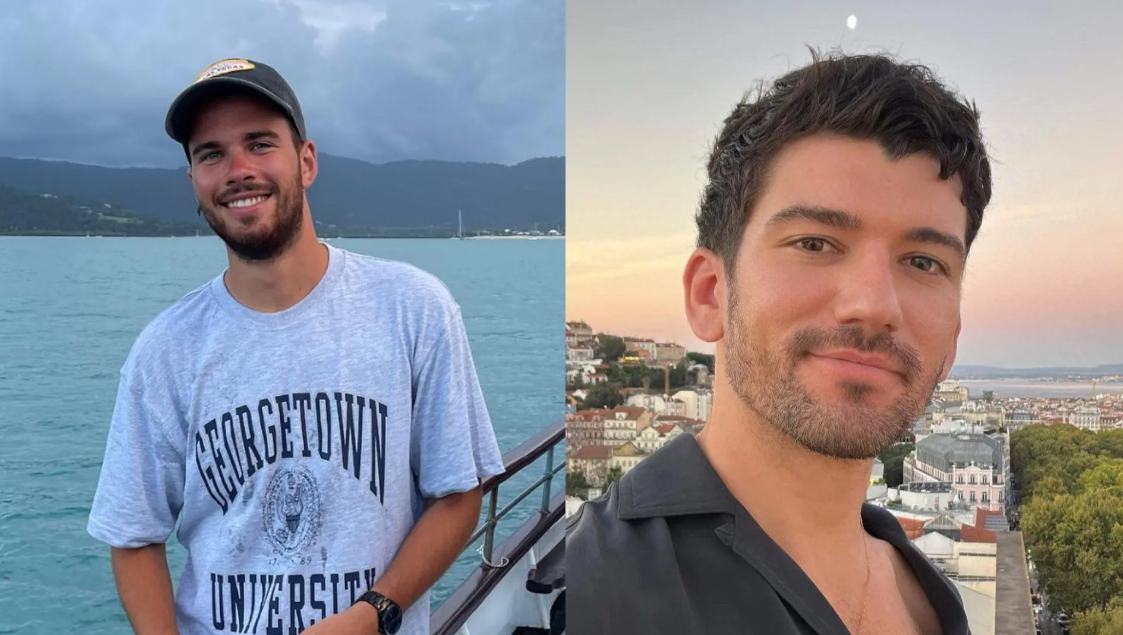
Lamarre-Condon is accused of shooting them dead with his police-issued sidearm at Baird’s home in Paddington, Sydney. The couple’s remains were found at a property at Bungonia, near Goulburn, around 115 miles south of Sydney on Feb. 27, 2024.
The murder of the couple caused the Sydney Gay and Lesbian Mardi Gras organizers to uninvite police from the iconic Mardi Gras parade the BBC reported.
The parade’s board said the decision to exclude police, who have taken part in the annual march for over two decades, was “not taken lightly” but that it was essential to create a safe environment “to protest, celebrate” and “honor and grieve those we’ve lost.”
Sydney’s Mardi Gras parade has a complex history of both LGBTQ activism and police brutality, after the first march in 1978 resulted in dozens of people being beaten and arrested by local officers, the BBC noted.
CHINA

A Chinese transgender activist is facing deportation back to mainland China as she is scheduled for release on Sunday from Siu Lam Psychiatric Center, a psychiatric detention institution where Hong Kong authorities usually hold trans detainees.
Lai Ke, also known as Xiran, was convicted of using “forged” documents to attempt to travel from China to Toronto via Hong Kong last year. Lai was detained at Hong Kong International Airport on May 3, 2023, while transferring to a flight to Toronto having begun her journey in Shanghai.
Lai was convicted in a Hong Kong court on June 16, 2023, and sentenced to 15 months in prison, which she served at the Siu Lam Psychiatric Center. A release notice from the Siu Lam Psychiatric Center seen by Amnesty International states that Lai is due to be released early for good behavior on March 2. As Lai is not a resident of Hong Kong, she is subject to being deported to mainland China under Section 19 of the Hong Kong Immigration Ordinance.
“Time is of the essence to prevent Lai Ke from being unlawfully deported to mainland China, where she would be at grave risk of serious human rights violations — including arbitrary detention, unfair trial, and even torture and other ill-treatment — due to both her transgender identity and her activism,” Sarah Brooks, the deputy regional director for Asia for Amnesty International said.
“To return her given these risks would be an abandonment of Hong Kong’s obligations under international law.”
Lai had been a vocal advocate for trans rights in China alongside her partner. According to her friends, her partner was imprisoned in China in June 2023 on account of her own activism and her trans identity.
While serving her sentence, Lai has been denied access to the medication she was taking as a part of her hormone replacement therapy and held in solitary confinement for complaining about the denial of her medical treatment, her friends added.
“There is a very real risk that Lai Ke will face persecution — including further imprisonment — if she is returned to mainland China,” said Brooks.
PHILIPPINES
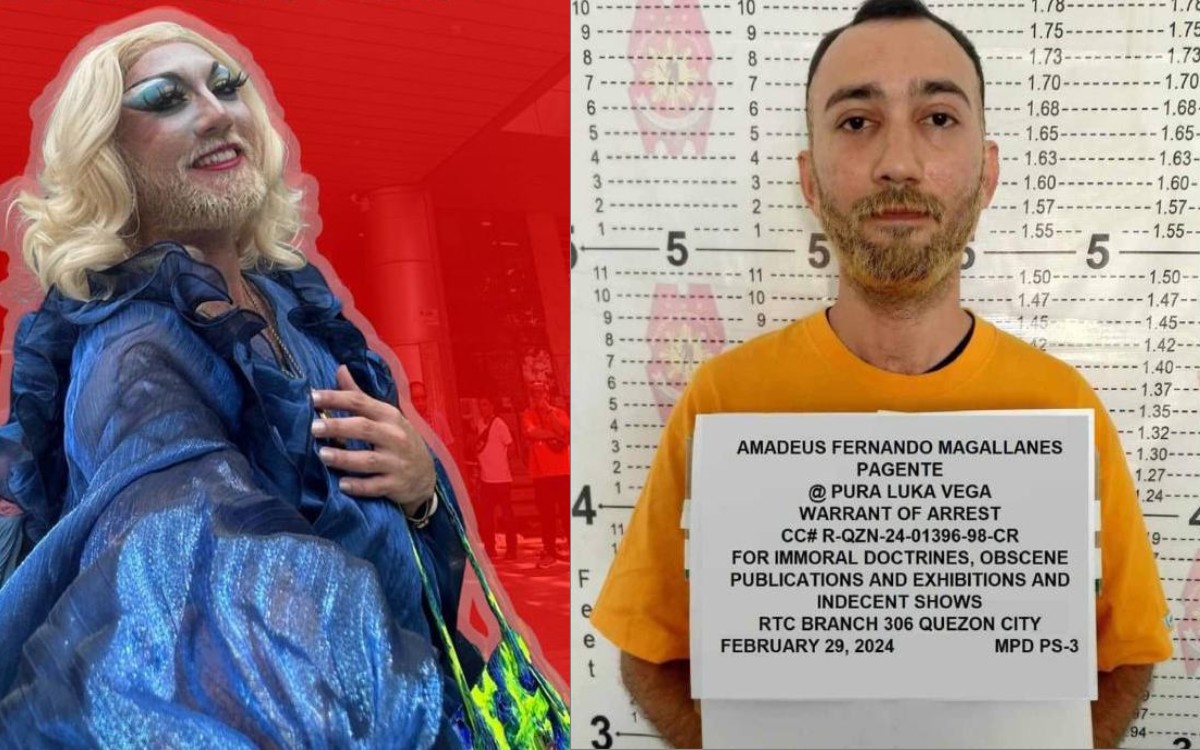
A 33-year-old drag queen who had been incarcerated in a Manila jail last fall for allegedly violating the Catholic-majority country’s obscenity laws for his performance dressed as Jesus Christ, performing a rock version of the Lord’s Prayer in Tagalog, was arrested again this past week.
Investigators from the Manila Police District, charged Amadeus Fernando Pagente, who performs under the stage/drag name Pura Luka Vega, for six counts of alleged violation of Article 201 including immoral doctrines, obscene publications and exhibitions and indecent shows. The arrest of the drag artist on Feb. 29 was due to a warrant issued by a court in Quezon City.
Supporters and fans raised the bail of 720,000 Philippine pesos, ($12,852.55) and Pagente was released on March 1. In a post on X, formerly Twitter, the drag artist thanked his benefactors writing: “The fight still goes on, life still goes on. I am very grateful to those who helped me with my bail. To my drag sisters who tirelessly helped me and organized fund raising for legal fees, thank you very much. Thank you.”
These latest charges stem from a complaint issued by the Kapisanan ng Social Media Broadcasters ng Pilipinas, a broadcast media organization, on behalf of Philippines for Jesus Movement.
This is the second time the Philippines for Jesus Movement, comprising Protestant church leaders, has registered a criminal complaint with prosecutors against the drag performer. He was accused of violating obscenity laws for his performance dressed as Jesus Christ, performing a rock version of the Lord’s Prayer in Tagalog last August. He was incarcerated and then later released.
At the time Pagente told Agence France-Presse: “The arrest shows the degree of homophobia” in the Philippines. “I understand that people call my performance blasphemous, offensive or regrettable. However, they shouldn’t tell me how I practice my faith or how I do my drag.”
Ryan Thoreson, a specialist at the Human Rights Watch’s LGBT rights program, also called for the charges against Pagente to be dropped. “Freedom of expression includes artistic expression that offends, satirizes or challenges religious beliefs,” Thoreson told the BBC.
UKRAINE
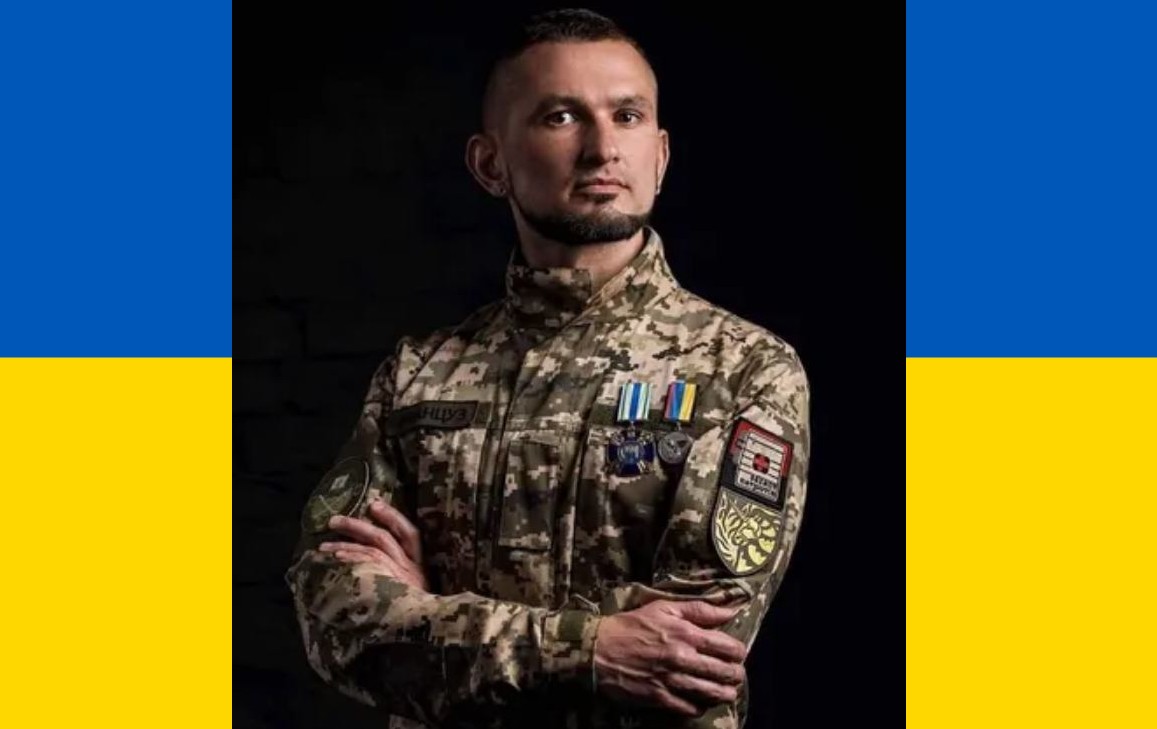
A Ukrainian army combat medic was stripped of honors awarded to his unit by the Ukrainian Orthodox Church after the church leadership was informed that he was gay.
Viktor Pylypenko, a medic with 1st mechanized battalion, 72nd Black Zaporozhians Brigade medical corps, along with his fellow servicemembers were awarded medals for “sacrifice and love to Ukraine” by the Ukrainian Orthodox Church of the Kyiv Patriarchate’s Patriarch Filaret for their actions and deeds serving in the Donbas region against the Russian invaders.
Pylypenko who serves as an openly gay soldier together with the commander of the medical corps, Yurii Lytvynenko, arrived from Donbas to receive the medals from Filaret. The patriarch personally thanked Pylypenko for his service.
According to the Ukrainian news website obozrevatel.com, that after receiving the award, the soldier published a post on his Facebook page thanking Filaret for the award, thinking that in this way the UOC changed its attitude towards the LGBTQ community.
“I am sincerely glad that Patriarch Filaret took such a step and thanked me, an openly gay man and human rights activist, for the protection. He gave me a medal with his signature and seal. He and the Kyiv Patriarchate headed by him have radically changed their position on LGBTQ+ people and no longer consider us ‘sinful’ or the cause of the coronavirus,” Pylypenko wrote.
On Feb. 25 the church responded in its own Facebook post calling Pylypenko’s post a falsehood:
“Among the distinguished military personnel of the medical point was Victor Pylypenko. Unfortunately, on his social media pages, he posted false information about Patriarch Filaret awarding him a distinction as openly gay for human rights and that Patriarch Filaret and the Kyiv Patriarchate radically changed their negative position on LGBT.
This is an outright lie and manipulation.
Taking into account the efforts of the dark forces to distort the consistent position of the upc of the Kyiv Patriarchate, we want to officially state:
1. Soldier Victor Pilipenko received a thank you from the church, exclusively as a defender of Ukraine, not as an LGBT activist, at the submission of his fellow soldiers from the combat unit of the heroic 72nd Brigade of the Black Zaporozhye. Patriarch Filaret did not personally award the Pilipenkoví medal and did not know about his sinful tendencies.
2. Holy Patriarch Filaret and the Ukrainian Orthodox Church of the Kyiv Patriarchate, based on the foundations of the Holy Scriptures, the thousand-year teaching of the Orthodox Church, invariably occupies a principled negative position on Sodom sin, condemns propaganda t. zv ‘same-sex marriages.’ Homosexual sex relationships are a false distortion of the God-given nature of man. As said in the Bible, the Lord Himself for the sins of people destroyed Sodom and Homorrah. The patriarch repeatedly stated it publicly and in court proved the legality of such his right.
3. We thank warrior Victor Pilipenko (as well as all our defenders for defending our liberty and territorial integrity) for his military service, but we do not divide his sinful likeness and LGBT agitation. We inform that due to open propaganda of sinful ideology and the denial of the existence of God, consider the church award to Victor Pilipenko from 08.02.2024 Order no. 27468 — revoked.
The Apostle Paul in the first letter to the Corinthians warned: ‘he deceive yourself: Neither prostitutes, nor idolosuluzeliji, nor adulterous, nor malakí̈, nor mužoložcí, nor thieves, nor lehvari, nor drunkards, nor lihoslovci, nor predators — the kingdom of God will not inherit. And such were some of you; but washed, but sanctified, but justified in the name of our Lord Jesus Christ and by the Spirit of our God’ (1 Cor. 6, 9-11).
Based on the foundations of Christian evangelical love for all, sinners in particular, desiring them salvation, we urge everyone to repent of their personal sins.
Then the church’s press service said: “We would like to inform you that in view of the open propaganda of a sinful ideology and the denial of the existence of God, the church award to Viktor Pylypenko is hereby revoked.”
Pilipenko then accused the Kyiv Patriarchate of awarding the medals as a PR campaign:
“I wrote words of gratitude to Filaret, naively imagining that he deliberately awarded me and showed his colleagues a Christian, undoubtedly noble gesture, a signpost to reconciliation and mutual respect for gays, atheists, and people of other faiths. But everything turned out to be more prosaic: Filaret was just handing out his awards as a PR campaign for his denomination.”
Outrage from his fellow soldiers and others has been building regarding the Kyiv Patriarchate’s actions.
Ilia Krotenko, a fighter with the 72nd Black Zaporozhians Brigade, emphasized that the “trinkets” handed out by the church are worthless.
“In connection with the absolutely disgusting act of the UOC-Kyiv Patriarchate and Patriarch Filaret, who took away the award from war veteran Viktor Pylypenko only because he is openly gay, I also refuse a similar award of my own,” he wrote.
SLOVENIA
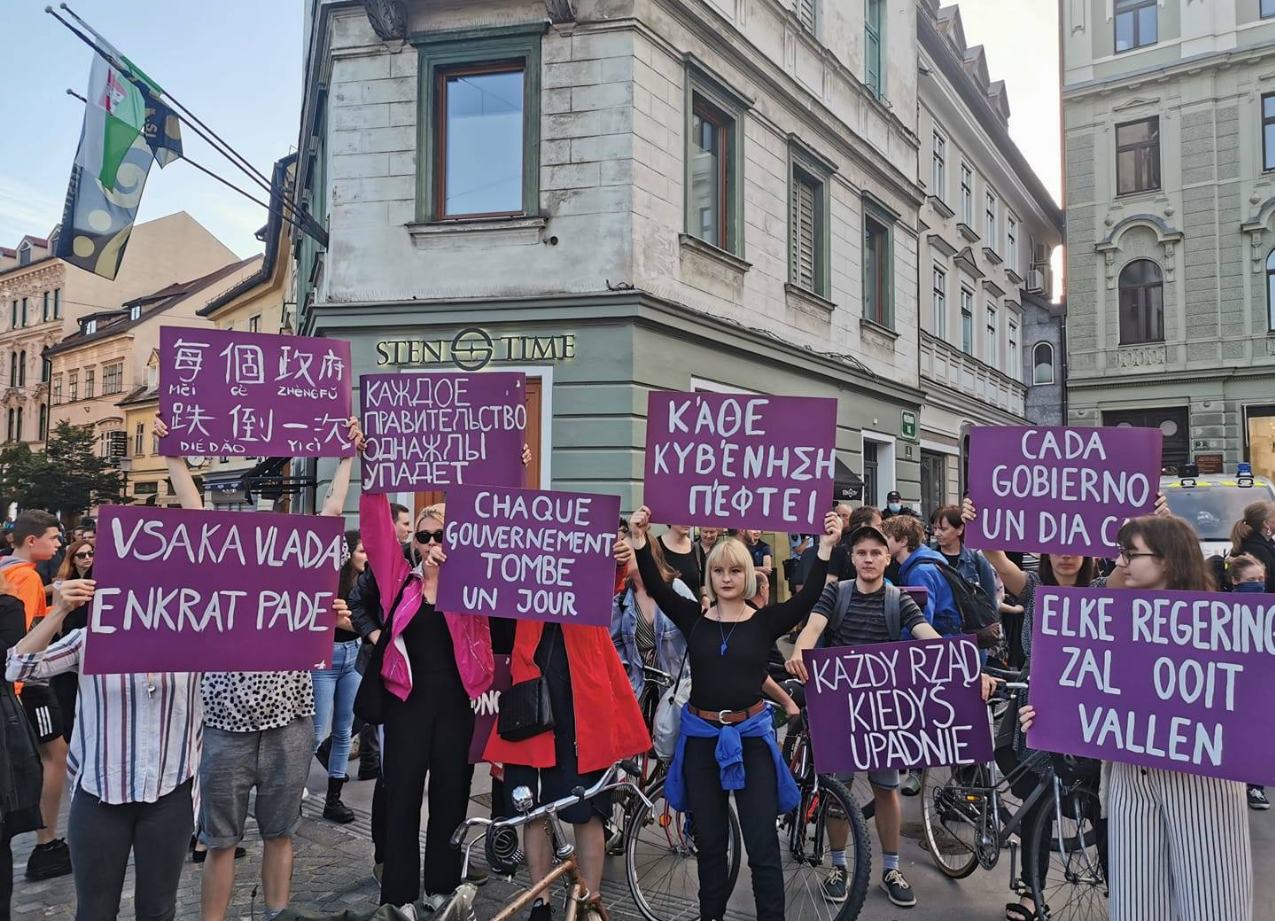
Activists from across Europe, including Slovenia, Spain, France and Poland formed an alliance to launch a petition to collect over 300,000 signatures as a first step towards laying the groundwork to ensure that in Europe, reproductive rights are safeguarded and accessible for each and every woman.
This event marks a pivotal moment where voices from diverse European nations unite to advocate for reproductive rights, underscoring the collective resolve to ensure the safety and accessibility of abortion services across the continent.
Nika Kovac, founding director of the 8th of March Research Institute, part of the new alliance, said, “The need to kick off the petition is driven by a deep concern over the erosion of reproductive rights, as witnessed in various parts of the world, including the United States and Poland. We are dedicated to creating a network of friends united by shared values of empathy and solidarity. The key to change is international solidarity.”
“The freedom to choose our body is a common value in every single country of Europe. We are here to demand that it also becomes a right that everyone has in practice,” she added.
Though a large majority of Europeans support abortion, the values of women’s bodily autonomy and their freedom to choose are not shared by all governments and state laws. In a significant number of EU countries, legal and access restrictions prove to be a considerable hurdle for those who need it the most. Slovenia has proven to be a significant outlier, being the only European country to enshrine the right to abortion in its constitution with France currently trying to do the same.
“Ban on abortion kills women, ban on abortion ruins lives and the lack of access to abortion kills women and ruins lives,” said Marta Lempart, founder of Polish Women’s Strike, who has been the loudest advocate for reproductive rights in the country.
“In my country, women die in state hospitals because they are denied abortions. Each time it happens, we cry and protest and say ‘not one more’ but today I am not here to cry and shout but to say that we can get through it. You will never walk alone.”
“In many countries, abortions are legal but not free, so, it’s only for rich people; Also, in many countries abortions are legal, but women are intimidated, and humiliated for accessing a health service. This should not be happening. We need solidarity as we need to protect women not only in Poland but across Europe.”
Alice Coffin, who leads permanent action against patriarchal structures that harm French society and is a member of the alliance, said, “While Poland is infamous for severely restricted access to abortion, populist far-right parties with the same agenda are emerging across the continent. Their anti-abortion agenda is rarely in the forefront of their public communication but it becomes an important policy point if they achieve power. However, there is widespread public opposition to these measures.”
She added, “The French Senate is due to vote on including abortion in its constitution on Wednesday, Feb. 28. The president of the Senate is opposed. The Vatican has expressed its anger. But we have every hope that it will come to pass. So, abortion is an issue that will be very much on the political and media agenda in France over the next few days.”
The petition will actively be distributed among various individuals across multiple countries to ensure wide reach and engagement with the aim of gathering an initial 300,000 signatures. With this petition, the coalition hopes to build momentum and support for the substantive changes they aim to achieve.
The initiative represents a powerful, united front of committed individuals and organizations, and was attended by prominent feminist activists including Nika Kovač who has been one of the initiators of the #MeToo movement in Slovenia; Lempart, activist, and founder of the Polish Women’s Strike, who has been the loudest advocate for reproductive rights in a country with an almost total ban on abortions and has organized the biggest pro reproductive rights protests in the history of Poland; Alice Coffin, renowned feminist and author from France; Silvia Casalino, activist from France, along with Dr. Imma Clarà, director of the Spanish organization L’Associació; LGBTQ activist and researcher Kika Fumero; feminist activist and journalist Cristina Fallarás who launched the Spanish #MeToo movement. #Cuéntalo (Spain) participated in the petition launch.
The coalition’s political stance stems from a fundamental disagreement with the reality that women in Europe still face life-threatening risks due to lack of access to safe abortion services.
The coalition’s overall goal is to safeguard and advance abortion rights across Europe, ensuring that all women have access to the safe, respectful and legal healthcare services they deserve.
QATAR
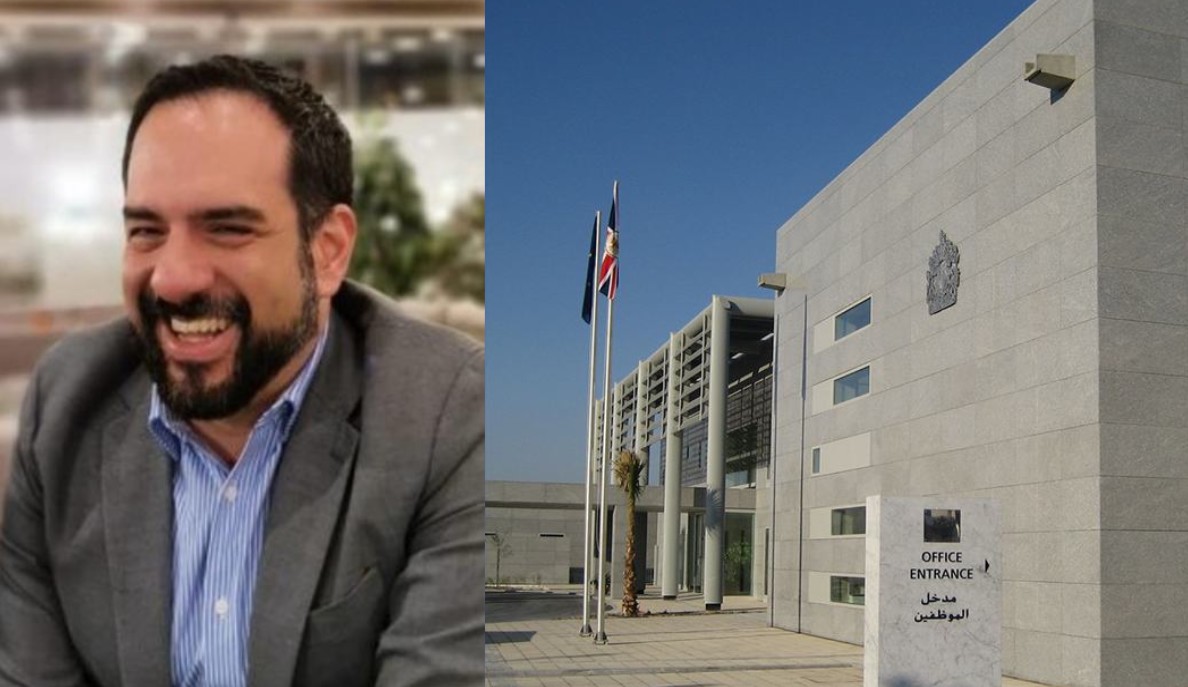
An HIV positive openly gay dual British and Mexican citizen is being held because of his sexuality in this peninsular Arab country bordering the Persian Gulf. Manuel Guerrero Aviña, 44-year-old Qatar Airways employee, has been imprisoned since Feb. 4 after responding to a false Grindr text.
PinkNewsUK reported according to his brother Enrique Aviña, who is leading the campaign QatarFreeManuel, his brother is being imprisoned because of his sexuality, and has been denied access to antiretroviral medicines.
“Qatar police used a false Grindr profile to contact Manuel and invite him to participate in a meeting with other people from the LGBT community in the city of Doha,” Enrique Aviña told British newspaper the Mirror.
“Manuel was supposed to meet a person he thought he had arranged an appointment with on the night of Feb. 4 but instead encountered police officers who were waiting to arrest him.”
“He has been denied the right to a lawyer and has been forced to sign documents in Arabic without a translator to assist him. Even worse, he has been prevented access to antiretroviral medicines he needs to be able to live with HIV, which constitutes an act of torture and puts his life at risk,” Enrique Aviña said.
PinkNewsUk also reported because Aviña registered as a British national when he was hired by Qatar Airlines and moved there to work, the Mexican Embassy in Qatar said, the British Embassy is dealing with his case, but Mexican consular officers been in contact with his family.
“With regards to the case of Manuel Guerrero Aviña, who has Mexican and British nationality and is currently under arrest in Doha, the Mexican Embassy in Qatar confirms it has been following developments since it was informed about the detention,” an embassy statement read.
“It has been in constant contact with his relatives and has confirmed Manuel has legal representation.”
A spokesperson for the UK Foreign Office told PinkNewsUK: “We are providing consular assistance to a British man who is detained in Qatar and are supporting his family.”
Additional reporting from the Star Observer, ABC News Australia, the BBC, Agence France-Presse, Obozrevatel.com, Kyiv Post and PinkNewsUK.





Afghanistan
ICC unseals arrest warrants for Taliban officials accused of persecuting LGBTQ people, women
‘For LGBTIQ+ people, this matters enormously’
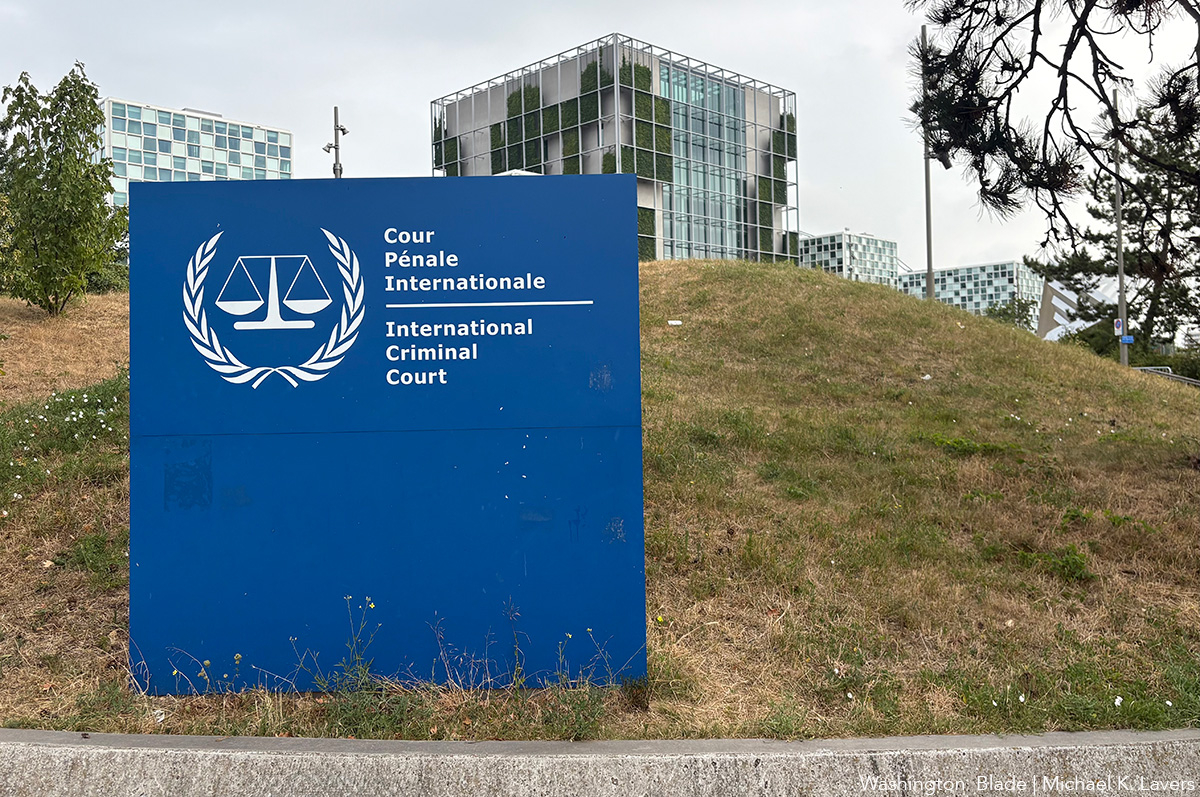
The International Criminal Court this week unsealed arrest warrants for four Taliban officials in Afghanistan accused of targeting LGBTQ people, women, and others who defy the group’s strict gender norms.
The warrants the ICC unsealed on Oct. 5 are for Hibatullah Akhundzada, the Taliban’s supreme leader, and Chief Justice Abdul Hakim Haqqani. The ICC also unsealed warrants for Education Minister Habibullah Agda and Higher Education Minister Neda Mohammad Nadim.
The ICC last year announced warrants for Akhundzada and Haqqani, as the Washington Blade previously reported.
“In the warrants of arrest, the (Pre-Trial) Chamber (II), in line with current developments in international law, found that the definition of ‘gender’ in the Rome Statute necessitates an interpretation that goes beyond a purely biological conception of sex,” reads the ICC’s Oct. 5 announcement. “It considered that it requires acknowledging the socially constructed roles, behaviors, expectations, and hierarchies traditionally associated with individuals on the basis of their sex. The Chamber considered that these societal constructs, commonly referred to as ‘gender norms,’ form part of the contextual lens through which acts amounting to gender-based persecution under article 7(1)(h) must be assessed.”
“It found that there are reasonable grounds to believe that the four suspects are criminally responsible for having ordered, induced or solicited the crime against humanity of persecution, under article 7(1)(h) of the Rome Statute, on gender grounds against girls, women, and other persons non-conforming with the Taliban’s policy on gender, gender identity or expression; and on political grounds against persons perceived as ‘allies of girls and women,’” it adds. “These crimes are believed to have been committed on the territory of Afghanistan since the Taliban seized power on Aug. 15, 2021, and have continued until at least Jan. 20, 2025.”
The Rome Statute established the ICC, which is in the Dutch city of The Hague, in 2002 after 60 countries ratified it.
The U.S. is among the countries that do not recognize the ICC. Secretary of State Marco Rubio on Friday announced U.S. sanctions against the ICC, which he described as a “rogue court.”
Then-ICC Chief Prosecutor Karim Khan in January 2025 announced a request for warrants against Taliban officials over their treatment of women and other groups since they regained control of Afghanistan in 2021. It marked the first time the ICC specifically named LGBTQ people as victims in a gender persecution case before it.
A report that Outright International released in 2023 notes Taliban officials have systematically targeted LGBTQ people — especially gay men and transgender women.
Taliban officials have subjected them to physical and sexual assault as well as arbitrary detention. The Outright International report also notes Taliban authorities have carried out public floggings for alleged same-sex sexual relations, and have collected intelligence on LGBTQ activists and community members.
Artemis Akbary, executive director of the Afghanistan LGBTIQ Organization, on Oct. 5 described the additional arrest warrants as “huge.”
“For LGBTIQ+ people, this matters enormously,” he said. “It strengthens the understanding that gender persecution can also capture persecution based on non-conformity with imposed gender roles, identities, and expressions.”
“This is an important development for accountability in Afghanistan, and potentially far beyond it,” added Akbary.
Central America
Alianza para la Inclusión fortalece la defensa de derechos LGBTQ en Centroamérica
Se implementa el proyecto en Guatemala, El Salvador y Honduras
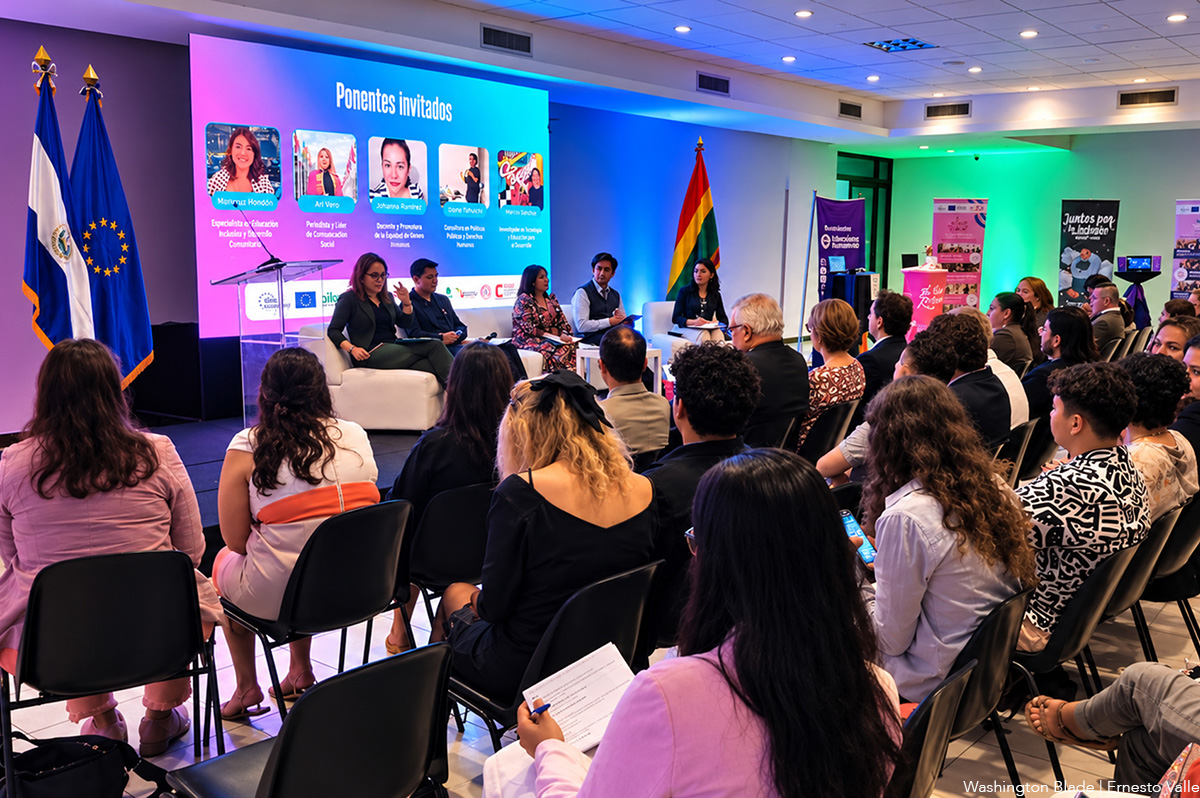
Promover, proteger y defender los derechos humanos de las personas LGBTQ en Centroamérica es el propósito del proyecto “Alianza para la Inclusión: hacia la promoción de derechos LGBTIQ+ en Centroamérica”, una iniciativa subvencionada por la Unión Europea, Global Gateway, Oikos Cooperação e Desenvolvimento y Camões — Instituto da Cooperação e da Língua, que articula esfuerzos en Guatemala, El Salvador y Honduras.
El proyecto, cuya implementación se desarrolla entre 2025 y 2028, busca fortalecer a organizaciones, liderazgos comunitarios y redes regionales frente a contextos marcados por la discriminación, la violencia y la reducción del espacio cívico.
A través de procesos de formación, atención integral, protección, fortalecimiento organizativo, incidencia y articulación regional, la iniciativa procura generar condiciones más seguras y dignas para que las personas LGBTQ puedan ejercer plenamente sus derechos.
Formación y fortalecimiento de liderazgos
Durante los primeros 18 meses de ejecución, el proyecto ha desarrollado acciones de formación y acompañamiento, otorgado subvenciones a colectivos comunitarios, impulsado estrategias de seguridad integral y respaldado procesos regionales de articulación e incidencia.
Uno de los resultados reportados es la participación de 489 personas LGBTQ de Guatemala, El Salvador y Honduras en procesos formativos relacionados con la desnaturalización de la violencia, organización e incidencia. Asimismo, 41 personas líderes LGBTQ de El Salvador y Guatemala fortalecieron sus capacidades para la formulación de proyectos.
Para Pedro Campos, coordinador de Oikos — Cooperação e Desenvolvimento en El Salvador, estos procesos tienen una dimensión que trasciende lo técnico.
“Desde hoy estamos cada día más convencidas y convencidos de que la gestión de proyectos más que técnica o administrativa es esencialmente humana. Nunca debemos olvidar que la persona en toda su diversidad es el centro de nuestro quehacer. Y si un día la empatía y el amor nos abandonan, habremos perdido la esencia de nuestro trabajo”.
La formación también ha significado una oportunidad para fortalecer liderazgos comunitarios. Josh Hernández, persona no binaria y codirectore de Espacios Seguros El Salvador, destaca el impacto que tuvo su participación.
“Esta experiencia me ha fortalecido como activista y como parte de una organización comunitaria, y me ha permitido ampliar mi visión y soñar con nuevas actividades que contribuyan a construir una cultura de paz en nuestra sociedad salvadoreña”, comenta Hernández.
Atención integral para personas LGBTQ en situación de vulnerabilidad
En El Salvador, uno de los componentes del proyecto se ha enfocado en brindar atención integral a personas que enfrentan situaciones de violencia, discriminación o vulnerabilidad.
A través de COMCAVIS TRANS, el proyecto permitió atender a 128 personas, mediante servicios psicosociales, legales y de resguardo temporal en su albergue.
La atención incluyó orientación para activar mecanismos de denuncia y medidas de protección, además de contención emocional, manejo de crisis y acompañamiento para la estabilización de condiciones básicas.
La experiencia también se ha extendido a Honduras. Loren López, directora ejecutiva de la Asociación de Mujeres Lesbianas y Bisexuales LITOS, resaltó el valor de generar espacios seguros para mujeres lesbianas, bisexuales y personas LTBQ (lesbianas, trans, bisexuales y queer).
“Me quedo con la satisfacción de haber contribuido a crear espacios donde una mujer LTBQ+ pueda sentirse segura, escuchada y reconocida, sin tener que esconder quién es. Esta experiencia fortaleció a LITOS y nos dejó nuevas herramientas y posibilidades para seguir trabajando por los derechos y la eliminación de la discriminación”, agrega López.
La seguridad integral como herramienta de protección
En contextos donde quienes defienden derechos pueden enfrentar diferentes tipos de riesgos, el proyecto ha incorporado la seguridad integral como un componente fundamental.
Durante 2026, 140 personas LGBTQ pertenecientes a seis organizaciones participaron en procesos de formación sobre seguridad integral, abordando dimensiones físicas, digitales y emocionales.
Como resultado, seis organizaciones elaboraron y consolidaron sus propios planes de seguridad integral, incorporando medidas de prevención y respuesta ante riesgos físicos y digitales, con especial énfasis en la protección de información sensible, el uso seguro de plataformas digitales y la gestión de incidentes en entornos virtuales.
Incidencia para transformar políticas y garantizar derechos
La iniciativa también ha acompañado procesos de incidencia y litigio estratégico en Guatemala.
La Asociación LAMBDA, junto con la Comisión Presidencial por la Paz y los Derechos Humanos (COPADEH), acompañó una consulta nacional con personas LGBTQ para contribuir a la elaboración de una Estrategia Nacional para las personas LGBTQ, cuyo proceso se encontraba en elaboración y cuya aprobación se esperaba para finales de 2026.
Asimismo, en julio de 2026 fue presentada ante la Corte Constitucional de Guatemala una acción de inconstitucionalidad como parte de una estrategia nacional de litigio estratégico orientada a la aprobación del matrimonio igualitario. Al cierre de la actualización de resultados de este año, el proceso permanecía pendiente de resolución.
El acompañamiento jurídico también ha permitido apoyar procesos individuales relacionados con el reconocimiento de la identidad.
Uno de estos casos es el de Paula Escobar, mujer trans guatemalteca acompañada por LAMBDA en el proceso de cambio de nombre en sus documentos de identidad.
“Ha sido el paso más grande de mi vida, pues me libró de momentos incómodos y de dar explicaciones para ser reconocida como la mujer que soy”.
De acuerdo con el testimonio, la organización se encargó de la gestión legal y aproximadamente seis meses después obtuvo una respuesta favorable.
Redes regionales para ampliar el alcance de la defensa de derechos
La articulación regional constituye otro de los componentes del proyecto. La iniciativa ha apoyado a redes latinoamericanas que buscan fortalecer y posicionar el trabajo de organizaciones LGBTQ.
Entre ellas se encuentra la Alianza Centroamericana y del Caribe de Hombres Trans, que articula organizaciones y personas transmasculinas de Guatemala, El Salvador, Honduras, Costa Rica y Panamá.
Durante su primer año, ALICAHT desarrolló su Plan Estratégico y Reglamento Interno 2025-2030, además de su identidad gráfica y sitio web.
Otro proceso regional respaldado fue el III Congreso Regional de CORPORA en Libertad, realizado en Guatemala en diciembre de 2025. El encuentro reunió esfuerzos orientados a fortalecer la defensa, promoción y garantía de los derechos humanos de las personas LGBTQ privadas y exprivadas de libertad en América Latina y el Caribe.
El espacio permitió fortalecer la articulación regional y compartir experiencias y estrategias frente a los desafíos que enfrentan las personas LGBTQ dentro y fuera de los sistemas penitenciarios.
Ari Vera, fundadora de CORPORA, ha destacado la importancia del trabajo en red como una herramienta para generar transformaciones y fortalecer las capacidades colectivas.
Inclusión más allá de las palabras
Durante el Foro “El Impacto de Incluir”, uno de los planteamientos centrales fue que la inclusión requiere transformaciones concretas y no únicamente el uso de conceptos o siglas.
Jason García, técnico PMA de Monitoreo, Evaluación y Aprendizaje para Oikos El Salvador, señaló una de las barreras que persisten en los proyectos. “Una de las barreras en los proyectos es que son binarios y no se reconocen las otras identidades”.
Desde esta perspectiva, un proyecto inclusivo no se limita a utilizar la palabra inclusión o incorporar las siglas LGBTQ, sino que requiere revisar prácticas, metodologías, mecanismos de participación y formas de reconocer la diversidad.
Como parte de este proceso también se preparó una guía práctica que sistematiza instrumentos y mecanismos del Sistema Internacional de Derechos Humanos, destacando su importancia histórica en la ampliación y protección de derechos.
La compilación fue presentada en la X Conferencia de la Red ILGA LAC y en el 18º Encuentro de la Red Centroamericana de Intercambio Académico en Derechos Internacionales, realizado en la Universidad de El Salvador.
Cooperación centrada en las personas
Los resultados alcanzados durante los primeros 18 meses reflejan una estrategia que combina formación, atención directa, protección, fortalecimiento institucional, incidencia y construcción de redes.
Para la Unión Europea, colocar a las personas en el centro constituye un elemento fundamental de la cooperación. Duccio Bandini, embajador de la Unión Europea en El Salvador, expresó “Desde la Unión Europea seguiremos apostando para una cooperación que pone en el centro a las personas. Porque el verdadero impacto de influir se mide en vidas transformadas, en derechos conquistados y en sociedades que celebran con orgullo su diversidad”.
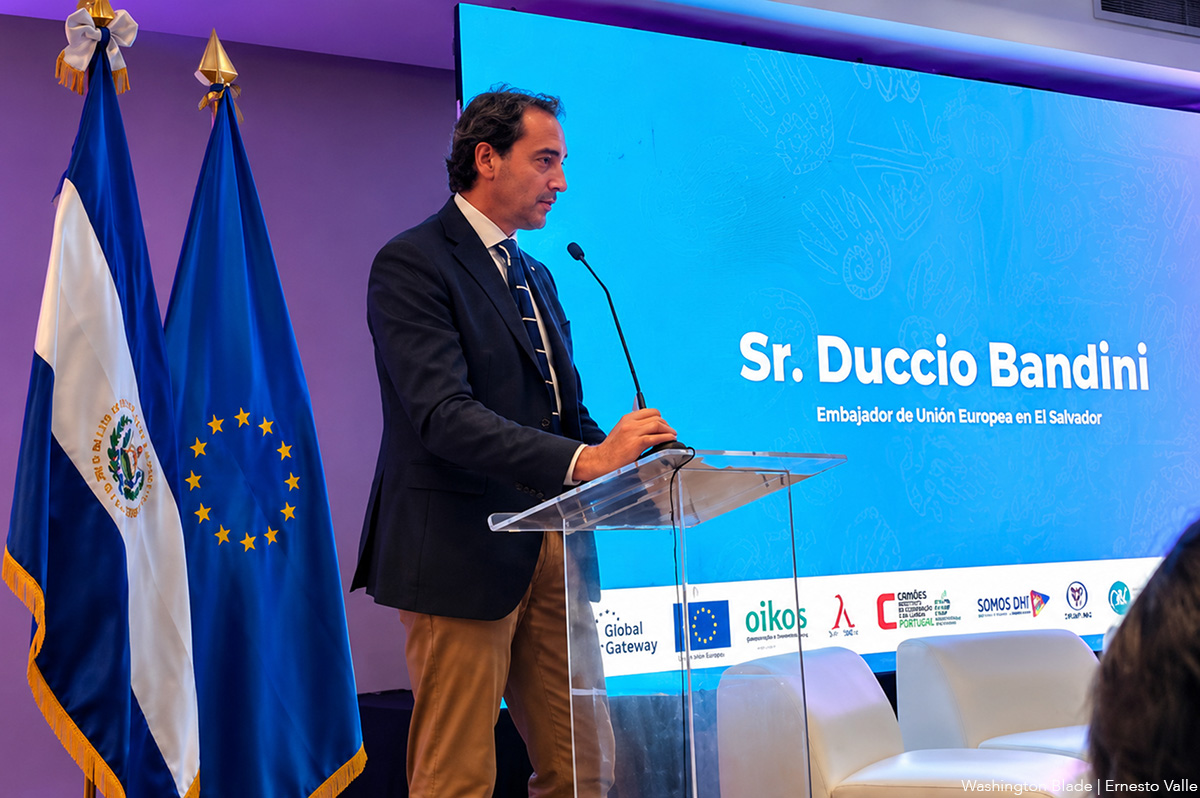
Con una implementación prevista hasta 2028, la Alianza para la Inclusión continúa articulando organizaciones nacionales y redes latinoamericanas para fortalecer capacidades y generar herramientas que permitan a las personas y organizaciones LGBTQ enfrentar los desafíos de sus contextos y avanzar en la promoción, protección y defensa de los derechos humanos.
Más allá de las cifras y los productos alcanzados, el proyecto coloca en el centro una premisa: la inclusión se construye cuando las personas pueden participar, organizarse, defender sus derechos y vivir su identidad con dignidad y seguridad.
Brazil
Transgender woman elected to Brazilian Chamber of Deputies
Thabatta Pimenta is first trans person from northeast Brazil elected to Congress

SÃO PAULO — Voters in Brazil’s Rio Grande do Norte state on Sunday elected a transgender woman to the country’s Chamber of Deputies.
Natal Municipal Councilwoman Thabatta Pimenta, who is a member of the Green Party, won with 92,743 votes. She is the first trans woman from northeast Brazil elected to the country’s Congress.
Pimenta became emotional when she was speaking to her supporters after she won. Her brother Ryan, who has cerebral palsy, was by her side.
“This victory belongs to the people of Rio Grande do Norte,” she said. “It is a victory built from the ground up … the people themselves rose up, and you saw the result: today they elected the first female travesti federal deputy from northeast Brazil.”
Pimenta will join Erika Hilton, a travesti member of the leftist Socialism and Liberty (PSOL) party who was a sex worker before her election to the São Paulo Municipal Council, and Duda Salabert, a trans woman and fellow PSOL member from Minas Gerais state, in the Chamber of Deputies.
Hilton on Sunday won re-election with 1,596,472 votes, the most any female member of Congress has received in Brazilian history. Dudabert also won re-election with 215,192 votes.
“Thank you Minas Gerais,” said Dudabert on social media after she won re-election.
❤️ REELEITA!!! Obrigada Minas Gerais! Com muito trabalho, aumentamos nossa votação! Muito orgulho em ser, pela segunda eleição consecutiva, a terceira candidatura mais votada de Minas Gerais para o cargo de deputada federal. E mostramos novamente que é possível fazer uma campanha “lixo zero”- sem imprimir santinhos, bandeiras ou adesivos. Muito feliz! Obrigada Minas ! Obrigada Brasil
— Duda Salabert 5️⃣0️⃣5️⃣0️⃣ (@DudaSalabert) October 5, 2026
Five openly bisexual Chamber of Deputies candidates also won their races on Sunday.
• Guilherme Cortez, a PSOL member in São Paulo state
• Dandara Tonatzin, a member of President Luiz Inácio Lula da Silva’s Workers’ Party in Minas Gerais
• Anielle Franco, a Workers’ Party member in Rio de Janeiro state
• Maria Marighella, a Workers’ Party member in Bahia state
• Giovana Mondardo, a Brazilian Communist Party member in Santa Catalina state
Fabio Félix, a gay PSOL member of the Chamber of Deputies who represents the Federal District in which Brasília, the country’s capital, is located won re-election with 224,224 votes. Rick Azevedo, a gay PSOL member from Rio de Janeiro state, won his Chamber of Deputies race.
Daiana Santos, a lesbian Brazilian Communist Party member who represents Rio Grande do Sul state in the Chamber of Deputies, won re-election with 114,315 votes.
Two lesbian women won their Chamber of Deputies campaigns.
• Rosa Amorin, a Workers’ Party member from Pernambuco state
• Bella Gonçalves, a Workers’ Party member from Minas Gerais who is a member of the Belo Horizonte Municipal Council
Samanda de Lula, a lesbian Workers’ Party member, will represent Rio Grande do Norte in the Brazilian Senate.
Rio de Janeiro Municipal Councilwoman Mônica Benício, who is a PSOL member, came up short in her bid for the Senate. Her then-partner, Rio de Janeiro Municipal Councilwoman Marielle Franco, and her driver, Anderson Gomes, were assassinated on March 14, 2018.
Fabiano Contarato, a gay senator from Espíritu Santo who is a member of the Workers’ Party, also lost his re-election bid.
“I receive the election results with respect and serenity,” he said on social media. “The popular will is sovereign, and democracy must always be respected.”
Jean Wyllys is a gay former member of the Chamber of Deputies who previously represented Rio de Janeiro state. He resigned in 2019 and fled Brazil after he received death threats. Wyllys this year ran to represent São Paulo state in the Chamber of Deputies, but he did not win his race.
VoteLGBT, an organization that seeks to increase LGBTQ representation in Brazilian politics, noted 529 openly LGBTQ candidates ran in the election. The group on Sunday more than 30 of them won their races across the country.
Natasha Ferreira, a Workers’ Party member, became the first travesti elected to public office in Rio Grande do Sul when she won a seat in the state’s Legislative Assembly. Voters in other states across the country also elected more than 20 LGBTQ candidates to their respective Legislative Assemblies.
• Keka Bagno, a bisexual PSOL member, was elected to the Federal District Legislative Chamber
• Açucena, a lesbian Workers’ Party member, was elected to the Espíritu Santo Legislative Assembly
• Fabricio Rosa, a gay Workers’ Party member, was elected to the Goiás Legislative Assembly
• Iza Lourença, a bisexual PSOL member, was elected to the Minas Gerais Legislative Assembly
• Tiago Botelho, a gay Workers’ Party member, was elected to the Minas Gerais Legislative Assembly
• Flávio Brasileiro, a gay Workers’ Party member, was elected to the Paraíba Legislative Assembly
• Dani Balbi, a trans Brazilian Communist Party member, was elected to the Rio de Janeiro Legislative Assembly
• Verônica Lima, a lesbian Workers’ Party member, was elected to the Rio de Janeiro Legislative Assembly
• Dani Monteiro, a bisexual PSOL member, was elected to the Rio de Janeiro Legislative Assembly
• Jean Volpato, a gay Workers’ Party member, was elected to the Santa Catarina Legislative Assembly
• Linda Brasil, a trans PSOL member, was elected to the Sergipe Legislative Assembly
• Sofia Favero, a trans PSOL member, was elected to the São Paulo Legislative Assembly
• Paula Nunes dos Santos, a bisexual PSOL member, was elected to the São Paulo Legislative Assembly
• Ediane Maria, a bisexual PSOL member, was elected to the São Paulo Legislative Assembly
• Monica das Pretas, a bisexual PSOL member, was elected to the São Paulo Legislative Assembly
• Duda Hidalgo, a bisexual Workers’ Party member, was elected to the São Paulo Legislative Assembly
• Rodrigo Mar, a bisexual Workers’ Party member, was elected to the São Paulo Legislative Assembly
• Thainara Faria, a bisexual Workers’ Party member, was elected to the São Paulo Legislative Assembly
• Keit Lima, a bisexual PSOL member, was elected to the São Paulo Legislative Assembly
Lula and Sen. Flávio Bolsonaro, whose father is former President Jair Bolsonaro, will face off in the presidential election’s second round on Oct. 25.

Center for Black Equity honors leaders, activists at BE. Gala

In ‘The Lost Brontë,’ a complicated lie can lead to danger

CAMP Rehoboth Block Party returns Oct. 18

Essential queer horror classics for Halloween

Solidarity beyond the parade: the actual cost of Pride

10 years later, we still can’t shake Barry Jenkins’s ‘Moonlight’

‘Some Like It Hot’ a wild ride at renovated Bernard Family Theatre

D.C.’s LGBTQ homeless facilities face possible hit from Trump funding cuts

Trump uses anti-trans slur against Democratic Senate candidate

Calif. GOP gubernatorial candidate ad ‘disgusting attempt to exploit lesbian intimacy’
-

 Movies4 days ago
10 years later, we still can’t shake Barry Jenkins’s ‘Moonlight’
-
Theater4 days ago
‘Some Like It Hot’ a wild ride at renovated Bernard Family Theatre
-
District of Columbia4 days ago
D.C.’s LGBTQ homeless facilities face possible hit from Trump funding cuts
-
2026 Midterm Elections4 days ago
Trump uses anti-trans slur against Democratic Senate candidate