Books
‘90s club kids will love Mark Ronson’s new book
‘Night People’ part esoteric hip-hop discography, part biography
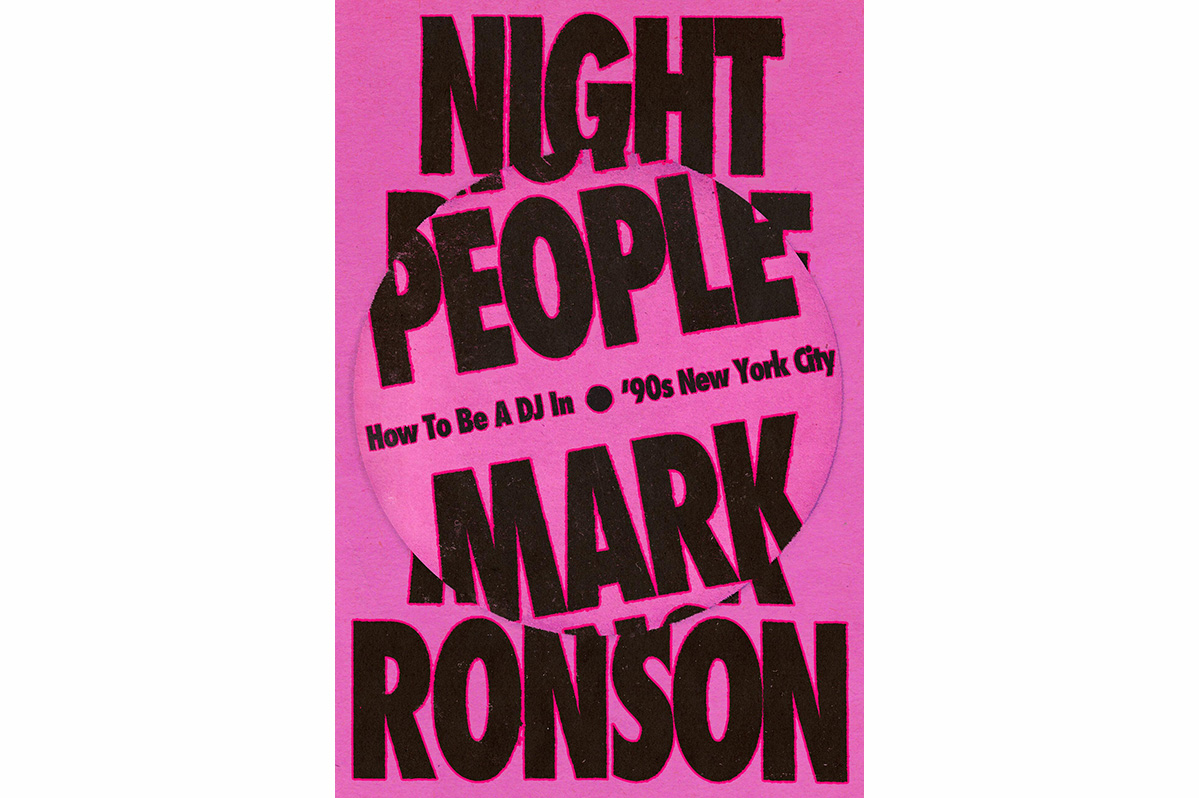
‘Night People’
By Mark Ronson
c.2025, Grand Central
$29/256 pages
You just can’t hold still.
The music starts and your hips shake, your shoulders bounce, your fingers tickle the sky to match a beat. Your air guitar is on-point, your head bops and your toes tap. You can’t help it. As in the new memoir, “Night People” by Mark Ronson, you just gotta dance.

With a mother who swanned around with rock bands, a father who founded a music publishing company, and a stepfather who founded the band, Foreigner, it was natural that Mark Ronson would fall into a music career of some sort. He says he was only 10 years old when he realized the awesome power of music.
As a pre-teen, he liked to mix music in his stepfather’s studio. As a teenager, he formed a band with Sean Lennon that didn’t quite catch on. In the fall of his senior year of high school, Ronson began sneaking into Manhattan clubs to listen to music, dance, and find drugs. It was there that he noticed the alchemy that the DJs created and he searched for someone who’d teach him how to do that, too. He became obsessed.
Finding a gig in a New York club, though, was not easy.
Ronson worked a few semi-regular nights around New York City, and at various private parties to hone his skills. His mother purchased for him the electronic equipment he needed, turntables, and amps. He befriended guys who taught him where to get music demos and what to look for at distributor offices, and he glad-handed other DJs, club owners, and music artists.
That, and the rush he got when the dance floor was packed, made the job glamorous. But sometimes, attendance was low, DJ booths were located in undesirable places, and that totally killed the vibe.
Some people, he says, are mostly day people. For others, though, sunlight is something to be endured. Nighttime is when they when they feel most alive.
Part esoteric hip-hop discography, part biography, part SNL’s Stefan, and part cultural history, “Night People” likely has a narrow audience. If you weren’t deep into clubbing back in the day, you can just stop here. If you were ages 15 to 30, 30 years ago, and you never missed club night then, keep reading. This is your book.
Author Mark Ronson talks the talk, which can be good for anyone who knows the highs of a jam-packed club and the thrill of being recognized for skills with a turntable. That can be fun, but it may also be too detailed: mixology is an extremely heavy subject here. Many of the tunes he names were hits only in the clubs and only briefly, and many of the people he name-drops are long gone. Readers may find themselves not particularly caring. Heavy sigh.
This isn’t a bad book, but it’s absolutely not for everyone. If you weren’t into clubbing, pass and you won’t miss a thing. If you were a die-hard club kid back then, though, “Night People” will make your eyes dance.
Want more? Then check out “What Doesn’t Kill Me Makes Me Weirder and Harder to Relate To” by Mary Lucia (University of Minnesota Press). It’s Lucia’s tale of being a rock DJ in Minneapolis-St. Paul, life with legions of listeners, and not being listened to by authorities for over three harrowing, terrifying years while she was stalked by a deranged fan.
The Blade may receive commissions from qualifying purchases made via this post.






Books
New book examines Trump cuts to LGBTQ healthcare
‘Aftershocks’ details impact of policy shifts on HIV response, broader public health

As LGBTQ and HIV advocates continue to grapple with the Trump administration’s attacks on healthcare, a new book offers a timely look at what happens when public health systems — and the democratic institutions that sustain them — are pushed to their limits.
The book, “Aftershocks: Trump 2.0, Public Health, and Our Better Angels,” was written by Dr. José M. Zuniga, president/CEO of Fast-Track Health. Zuniga is a globally recognized public health leader with more than three decades of experience advancing responses to HIV, communicable and non-communicable diseases, and the health impacts of climate change. He is also editor-in-chief of the Journal of Fast-Track Health.
The book covers the first year of the second Trump administration. It chronicles the impact of federal policy shifts and budget cuts on the HIV response and public health more broadly, including for LGBTQ communities. Drawing from policy analysis, frontline insight, and lived experience, the author reveal how decades of hard-won progress became vulnerable through Project 2025 and DOGE, but also a paralysis in the HIV and public health communities following the outcome of the 2024 elections.
“In other words, we were caught flat-footed when our opposition had a detailed plan to create chaos and disruption,” Zuniga says. “Thus, the book also offers Horizons 2028 as an antidote to Project 2025 as a starting point for a wide-ranging conversation about how we will build back better given the baseline pre-Trump 2.0 was already imperfect.”
Below is an excerpt from the book.
What Could Not Be Left Unsaid
Let me begin with a simple truth: I did not set out to write this book. Like many in the public health community, I set out daily to do the work of scaling prevention, expanding access to care, strengthening health systems, and ensuring that dignity, equity, and justice are operational realities. Writing, for me, has always been in service of action: policy briefs to shape decisions, editorials to provoke accountability, reports to document progress or failure, and books to synthesize experience into insight that can guide public health action. But Aftershocks is something different; it is not merely an analysis. Instead, it is a record of rupture, of response, and of what it means to continue when the ground beneath your work begins to shift.
This book was written because something changed, and that change came into sharp relief during the beginning days of the second Trump administration, including the erosion of norms, the weaponization of rhetoric, and the recalibration of governance itself. The change was not limited to policy reversals or budget cuts, though there were many. Moreover, it was not confined to rhetoric, though language played a central role. The change was structural and moral: a redefinition of how power understood its obligations to people, to evidence, and to truth itself. And for those of us working in public health, the effects were immediate and personal. We experienced a purposeful disruption of the public health ecosystem and a direct repudiation of the “health for all” principle that guides our work….
Writing this book was, unexpectedly, an act of catharsis. Not because it resolved anything, but because it created space to process what would otherwise have been overwhelming… Amid what many in the public health community experienced as both individual and collective trauma, documenting itself was stabilizing, allowing reflection without detachment and critique without disengagement. But catharsis alone is insufficient. This book is not an exercise in lament; it is also a response. If the period it chronicles is defined by disruption, then its purpose is to offer direction. Where Project 2025 represented a blueprint for ideological capture of institutions, language, and governance, this book offers a counterpoint: Horizons 2028…
Horizons 2028 is grounded in a simple premise: that the future of public health – and of democratic governance more broadly – depends on rebuilding systems that are resilient to political volatility. That means strengthening not only federal capacity, but subnational leadership. It means embedding community-led accountability into data systems. It means aligning health outcomes with social determinants and recognizing that equity is not an endpoint but a continuous process of adjustment and correction. It means treating global engagement not as optional, but as essential to national well-being. In other words, it is a roadmap not for returning to what was, but for building what is required…
I write as an Independent. Not in the sense of detachment, but in the sense of accountability to evidence, to outcomes, and to the people whose lives depend on both… Independence does not mean neutrality in the face of harm; it means refusing to filter reality through partisan allegiance. Importantly, it also means being guided by a consistent commitment to equity, dignity, and justice. These are not abstract values… They are tested in moments of crisis, when the gap between principle and practice becomes most apparent. They demand accountability not only for what is said, but for what is done – and for what is allowed to persist unchallenged. And they require the courage to name harm clearly, even when doing so is inconvenient or politically unwelcome.
That commitment shapes the analysis that follows, but it is also what makes the writing difficult. Because to document harm is to confront it. To trace its origins is to name decisions and their consequences. And to do so honestly is to risk being read as partisan in a landscape where truth itself has become politicized. But the alternative – silence, or false equivalence – is not acceptable. Not when the stakes are as high as they are. There is, however, a thread that runs through this book that resists cynicism, is not optimism, at least not in the conventional sense, but is something quieter and more durable: a belief that even in moments of rupture, there remains a capacity – within institutions, within communities, within individuals – to reorient toward something better.
The Blade may receive commissions from qualifying purchases made via this post.
Books
Exploring Renée Richards’s life through lens of a trans author
Surprises await in new book about pioneering tennis star
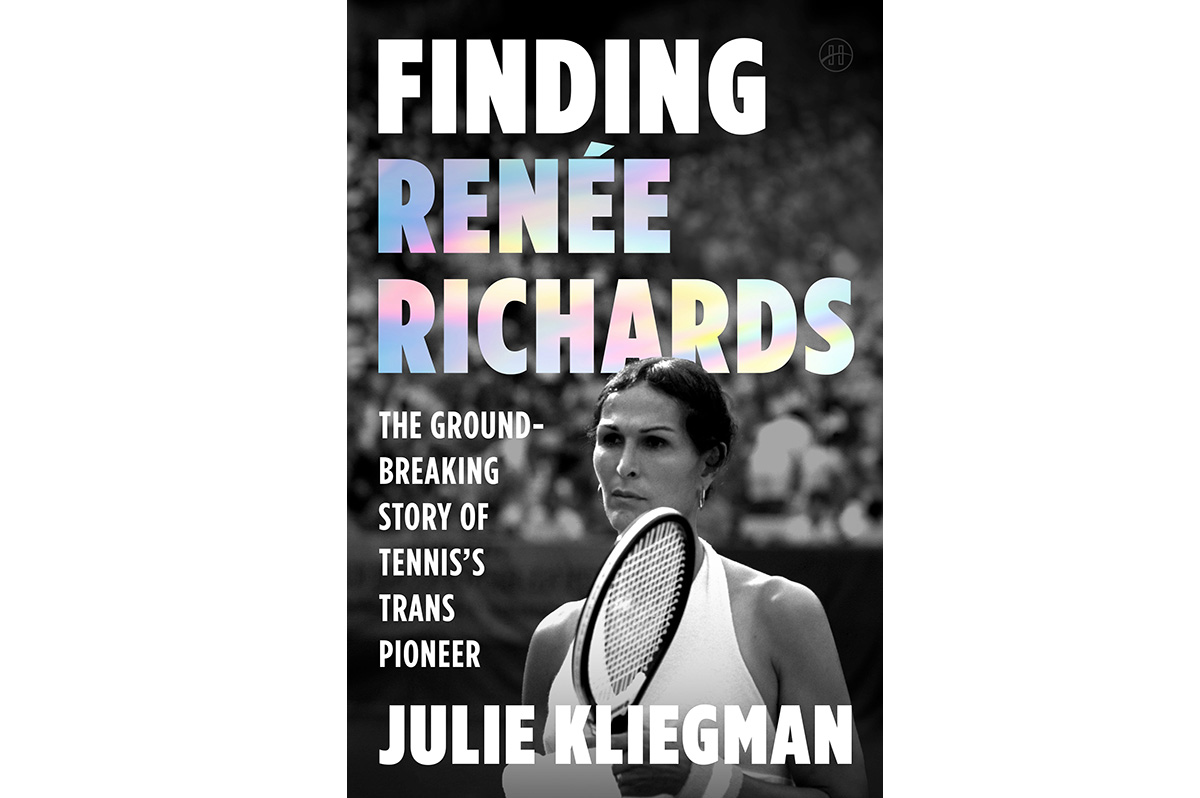
‘Finding Renée Richards’
By Julie Kliegman
c.2026, HarperOne
$28.99/272 pages
Come on in, the water’s fine.
Wade into it up to your ankles, your calves, your waist, you’ll be OK. You’ll adjust to the waves that swirl around you so come on, dive in, it’s all good. As in the new book “Finding Renée Richards” by Julie Kliegman, that goes for swimming, and for controversy.
Assigned to do a story on books written by trans tennis great Renée Richards, Julie Kleigman read the books and became “transfixed by a woman who had fought so hard to simply live as who she had long known she was….”. Their editor had figured that, as a nonbinary and trans individual, Kleigman would have “something incisive to say…” in an article. Instead, once they met and began interviewing Richards, Kliegman was left frustrated.
Born in the late summer of 1934, Richard Henry Raskind seemed to have arrived with a tennis racket in his hand. His mother was a psychiatrist; his father was an orthopedic surgeon who hoped “Dick” would follow his footsteps but Raskind was drawn instead to ophthalmology and tennis. He was also irresistibly drawn to wearing women’s clothing.
His sister knew of this pull and Raskind eventually came out to both parents, but few others on the tennis circuit were aware. When Raskind visited his hometown of New York City, however, he enjoyed furtively going out in women’s clothing but he also tried to squash the desire; in the meantime, he fell in love, married, fathered a son, and eventually learned that it was possible to become the woman he knew he really was.
To continue playing tennis professionally was a bonus.
And right there were the disagreements Kleigman had with Richards.
Richards, “To this day… [makes] a point of describing herself as a woman, period,” says Kleigman, but she firmly acknowledged Richard, almost as a separate individual, insisting that Kleigman use “him/his” pronouns when describing her earlier life.
And as for tennis and trans women’s participation in the sport, Richards had something even more frustrating to say.
Take that as a fair warning: you might be equally surprised at what author Julie Kliegman uncovered in “Finding Renée Richards,” and you may be truly gobsmacked by reading opinions from other women about the topic of trans women in sports.
That’s the main, huge point of interest in this fascinating book; the other is Richards’s life as seen through the lens of a trans individual. Kleigman’s wrestling with the 90-year-old Richards’ firmly dug-in heels is, in itself, worth your time as a study of highly varying viewpoints. That Kleigman and Richards have both lived at least a part of trans history is somewhat of a key to understanding how this book unfolds, as Kleigman offers up Richards’s tale. Readers who are able to read between the lines will be riveted.
If you’re a sports fan and you have opinions, you must read this book – and that goes double if it’s tennis you love. Also check out “Finding Renée Richards” if you just want a raucously good and very fine read.
The Blade may receive commissions from qualifying purchases made via this post.
Books
Bros + romance + fantasy = ‘Bromantasy.’
New book a romp full of humor, dragons, kings, and adventure
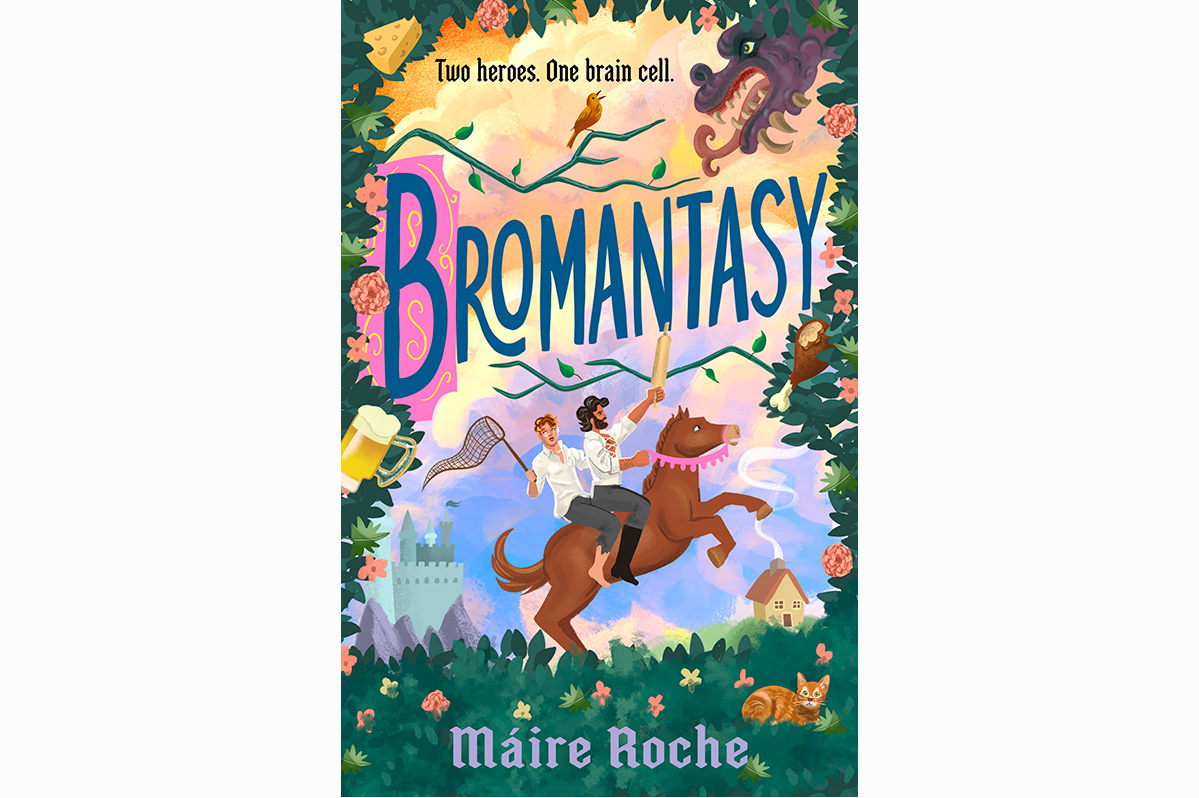
‘Bromantasy’
By Maire Roche
c.2026, G.P. Putnam’s Sons
$20/339 pages
“Danger” just happens to be your middle name.
Any fray, any tussle, anytime anybody needs help, they count on you to step in and save the day. You’re brave, smart and strategic, kind to old people, children, and small animals and, as in the new book “Bromantasy” by Maire Roche, dragons.
Of all the things there were to do – preserving food, keeping house for himself and his best friend Morningthall “Mo” Elmthorn, advanced skincare, and drinking at the local tavern down the road – the one thing Juniper O’Reilly couldn’t resist was a good brawl. It happened so often that Juniper honestly looked forward to it, though Mo wasn’t a fan.
Mo was more grown-up, calm, thoughtful, able, and Juniper loved him for it. He loved Mo, in fact, since they were little boys. He loved Mo in ways that they didn’t talk about, so they kept a wall between their bedrooms in their cottage.
Except for that one time.
They didn’t talk about that, either.
Instead, as they did often, on a warm fall night, Juniper and Mo went to the tavern, where mead was served and they could learn about the king’s weekly quests. There, Juniper could also find a good brawl, which is how he and Mo accidentally got into trouble: Juniper trounced one of the king’s men and was forced into a quest.
He didn’t want to fight dragons and he felt bad that Mo had been dragged along. He felt even worse leaving their farm, sleeping on the ground, wearing the same clothes every day, and not having enough skincare product along. A campfire added to the problem. A roving, lying prince, also in search of dragons, didn’t help. And though a quest was no place for a child, Juniper and Mo found a frightened little girl they had no choice but to protect.
A child with strange eyes, sharp teeth, and fire on her breath.
“And just like that, Juniper and Mo had a dragon.”
Bros + romance + fantasy = “Bromantasy.” It also could equal one of two other things: a romp full of humor, dragons, kings, princes, and adventure.
Or it could equal a whole lot of eye-rolling.
It’s a fact that this book is funny, in the way that a 1980s high school comedy movie is funny – meaning that it’s dippy, giddy, and very caricaturish but you’ll laugh quite often. The story contains everything you want in a fantasy romance (a “romantasy”), including human-like alternate species, a life-changing journey, and plenty of nudge-nudge-wink skirting around the attraction the two main characters have for one another. It’s a decent story, convoluted in just the right way. Purely, it’s an escape.
So why wouldn’t you want to read it? See above, and depending on your favorite reading genre. High-brow literature, this ain’t.
For the right reader, “Bromantasy” is a decent-enough vacation read, something not too taxing or hard on the brain. It’s for novel lovers, dragon hunters, king’s questers, princes, and romantics. For everyone else, this tale is just middling.
The Blade may receive commissions from qualifying purchases made via this post.

Pentagon expands testosterone screening as trans troops face hormone therapy restrictions

Calendar: September 4-10

Swiss government backs nationwide conversion therapy ban

Gloria Steinem dies at 92

The mastery of love

Poland begins to legally recognize same-sex marriages from other countries

HRC president campaigns for Chris Pappas in NH

We’re getting married but our parents object

Prominent French activist attacked outside Paris bar