Delaware
Delaware school district remains supportive after Trump attacks on trans students
Cape Henlopen has gender identity nondiscrimination policy

The Cape Henlopen School District in Delaware, one of five school districts in several states where the U.S. Department of Education earlier this month rescinded agreements protecting the rights of transgender students, says it will continue to provide a “safe and supportive learning environment” for all students.
In response to a request for comment, a spokesperson for the Cape Henlopen district sent the Washington Blade a short statement on its response to the federal Education Department’s action under orders from the Trump administration that ended what were called school district “resolution agreements” put in place under the administration of President Joe Biden.
Among other things, the federally initiated agreements required schools to train faculty on responding to a student’s preferred name and pronouns and to implement policies that allow transgender students to use bathrooms and locker rooms that align with their gender identity.
“The Cape Henlopen School District has received correspondence from the U.S. Department of Education’s Office of Civil Rights regarding the resolution agreement entered in March 2024,” the Cape Henlopen School District’s statement says. “As always, we are committed to providing a safe and supportive learning environment where all students can succeed,” it says.
“We will continue to work collaboratively to ensure our practices and programs support the well-being, growth, and achievement of every student in our District,” the statement concludes.
Although it did not respond specifically to the Trump-initiated action ending federal protections for trans students, a statement on the Cape Henlopen School District’s website says the district has a policy of non-discrimination based on a wide range of categories, including race, religion, creed, gender, and “sexual orientation or gender identity.”
The Trump administration’s latest action does not take away nondiscrimination policies put in place by school districts on their own.
The Cape Henlopen district is in Sussex County, a short distance from Rehoboth Beach, a Delaware resort town with many LGBTQ residents and summer visitors.
The other school districts for which the U.S. education department ended the trans nondiscrimination agreements include the Delaware Valley School District in Pennsylvania, Sacramento City Unified School District in California, Fife School District in Washington State, and La Mesa Spring Valley School District also in California.
Kimberly Richey, the Department of Education’s Assistant Secretary for Civil Rights, said in a statement that the decision to terminate the school agreements highlighted the Trump administration’s efforts to prevent trans students from participating in girls’ and women’s sports teams and accessing shared locker rooms.
“Today, the Trump administration is removing the unnecessary and unlawful burdens that prior administrations imposed on schools in its relentless pursuit of a radical transgender agenda,” she said in her statement.
Shiwali Patel, an official with the National Women’s Law Center, said in a statement that the action removing protections for trans students would negatively impact all students.
“There is absolutely no basis for what the Department of Education is doing, and it is unimaginably cruel,” she said. “Parents, teachers, and students need the Department to focus on addressing real harms on campuses instead of rolling back policies that keep all students safe.”





Delaware
Democrat Maureen ‘Mo’ Madden takes on longtime GOP stronghold in Delaware’s 38th
Out lesbian candidate for state House focused on infrastructure needs, voting rights
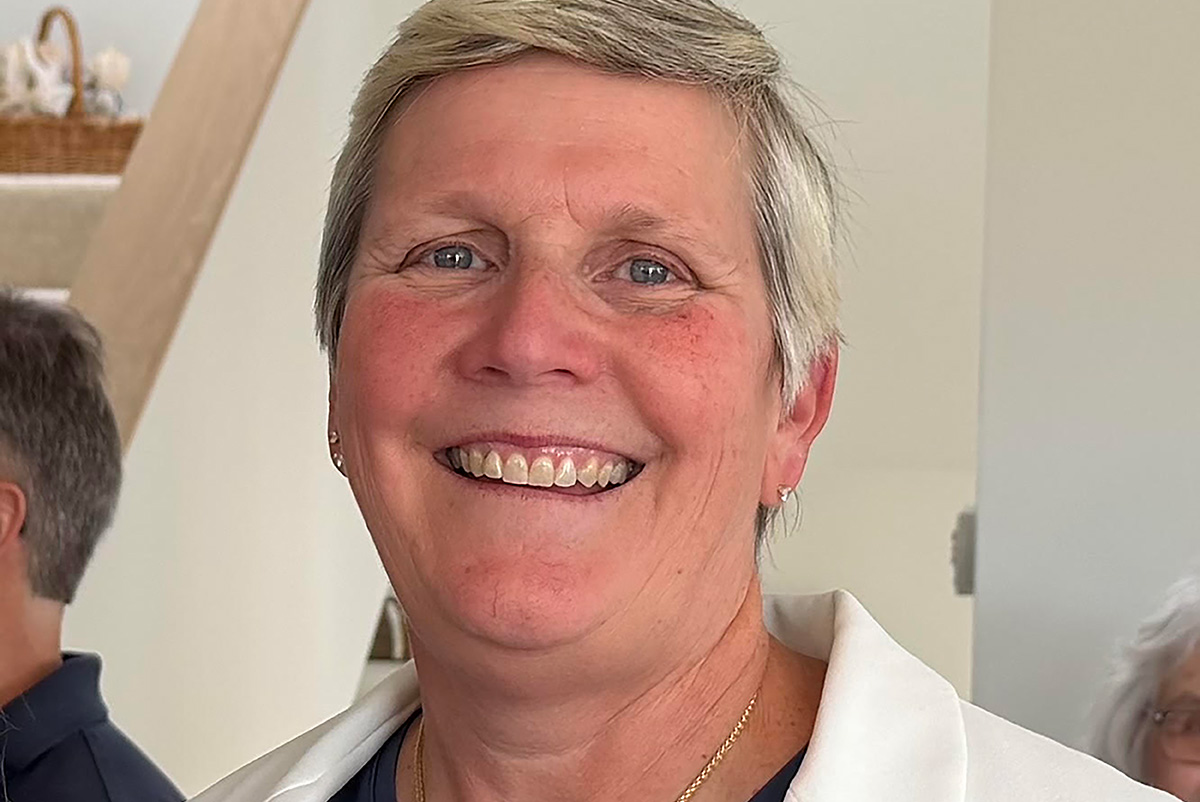
Democrat Maureen “Mo” Madden is running for the Delaware House of Representatives in the 38th District, seeking to win a seat that has been held by Republicans for more than two decades.
The race opened up after Republican state Rep. Ron Gray announced in April that he would not seek reelection after seven terms in the General Assembly.
Gray was first elected in 2012 and represents communities including Bethany Beach, Fenwick Island, Selbyville and Ocean View. Madden, a Dagsboro resident, filed to run for the seat in 2025.
Madden is a retired federal civil servant who spent nearly 23 years at NASA and more than seven years at the National Oceanic and Atmospheric Administration. She holds a master’s degree in physics and previously worked in leadership at NOAA.
She said her professional experience taught her the importance of working collaboratively, something she believes would translate to the legislature.
“Advocating, negotiating, and collaborating are all skills that a legislator needs,” she said. “You learn to collaborate. You learn to negotiate. You learn to advocate for your budget, for your team, and for your projects.”
Madden said her decision to run began after she and her wife moved to the area and she noticed the lack of Democratic candidates on the ballot in her district.
“Somebody’s got to do it, and I’ve got time. I’m retired,” said Madden.
She acknowledged the difficulty of running as a Democrat in the district, which has been represented by Republicans since 2002.
Madden said one of the biggest concerns she hears from residents is the rapid growth of Sussex County.
“We have a massive amount of growth and a massive amount of development,” said Madden.
Madden said the growth has placed additional pressure on roads, schools, emergency services, as well as water and sewer infrastructure.
“We need to find a way to bring more money down here for the school system and for the infrastructure that we need,” she said.
She also raised concerns about the impact of new developments on existing neighborhoods, particularly in regard to flooding and drainage.
“Something needs to be done,” said Madden.
Madden also pointed to climate change as a factor affecting the region.She said the state will need to work on both addressing development and preparing communities for increasingly severe weather.
“We have to work both sides of it,” Madden said.
Madden said improving infrastructure would be a priority if she is elected, particularly roads and other infrastructure that affect residents’ daily lives.
“I want to increase the safety of my neighbors,” she said.
Madden also said she wants to address infrastructure needs related to water and sewer service, as well as the availability of health care in the rapidly growing coastal region.
Madden said protecting voting rights would be another priority in the legislature.
“The right to vote is one of the biggest things that we have here in a democracy,” she said.
She said that she supports early voting, mail-in voting, and same-day registration, as well as restoring voting rights to people who have completed felony sentences.
“You should not lose a constitutional right because you’ve been in jail,” said Madden.
“Protecting the right to vote is how I will defend democracy when I get to the state House,” she said.
Madden said she would also support efforts to enshrine certain rights in the Delaware Constitution, including reproductive rights, voting rights, and the right to marriage.
“Those three protections of our freedoms that are right now under attack need to be more secure in the Delaware State Constitution,” she said.
As an openly lesbian candidate, Madden said LGBTQ+ rights are important to her, particularly the treatment of young transgender people.
She said she is concerned about efforts to restrict transgender students’ participation in sports and other policies affecting transgender people.
“They are picking on the most vulnerable of the most vulnerable,” said Madden.
She said she hopes voters will view LGBTQ+ people as part of their communities rather than as fundamentally different from their neighbors.
“We’re your neighbors. We’re your friends. We’re your family,” she said.
Madden will face Republican Carlie Carey in the general election on Nov. 3.
Delaware
New LGBTQ visitor center slated for Wilmington, Del.
The Collective to feature gift shop, queer museum, more

During Pride month this year, the Delaware Sexuality and Gender Collective (DSGC) announced plans for The Collective, which will become Delaware’s first LGBTQIA+ visitor center and Wilmington’s first dedicated LGBTQIA+ space in nearly 40 years.
“We’ve been talking about the concept of a brick-and-mortar space for a long time,” said Noah Duckett, co-founder of DSGC.
A licensed clinical social worker, Duckett co-founded DSGC with his mother, Julissa Coriano, in 2018. DSGC is an independent nonprofit organization that provides vital clinical and educational support, social programming and direct-need support to the LGBTQIA+ community.
Some of the programs DSGC offers include a free clothing closet for the trans community, meal support for people recovering from gender-affirming surgery, connections to pro bono legal services, a biannual Pride Market featuring over 100 LGBTQIA+-owned small businesses, and more.
“Our vision for The Collective is a place where our community can come to learn, create, work and be inspired,” said Coriano.
The Collective will feature a visitor center and gift shop highlighting LGBTQIA+-owned businesses in Delaware.
“I think that this is something that’s going to benefit our community so much,” said Duckett.
Some of the LGBTQIA+-owned businesses that DSGC has already partnered with include Stress Induced Art Attack, Moonbeam Art Collaborative, Voce Coffee, Groovy Gemini Co., Scout Cafe, Macaron Social and Huxley and Hiro.
“Specifically in Wilmington, we haven’t had an LGBTQIA+-dedicated space in almost 40 years,” said Duckett.
The Griffin Community Center, which operated from 1986 to 1990, was Delaware’s first LGBTQ+ community center. The Griffin was founded by Ivo Dominguez Jr. and James C. Welch and provided a range of community services during the height of the HIV/AIDS crisis, including AIDS hotlines, organizational offices and meeting space. The center ultimately closed because of a lack of financial support.
Duckett said DSGC hopes The Collective will carry on The Griffin’s legacy while building a sustainable space for the LGBTQIA+ community.
“I think now more than ever, there’s more and more spaces closing their doors. More and more spaces are losing funding, seeing reduced funding and reduced access, especially LGBTQ+ organizations and communities,” said Duckett.
The Collective will also feature Delaware’s first LGBTQ+ history museum, curated by LGBTQ+ historian Carolanne Deal.
“We don’t have any permanent displays in the state about Delaware’s queer history, and we want people to be able to access that history any day of the year, not just during Pride Month,” said Deal.
With a master’s degree in art history for museum professionals, Deal has more than seven years of experience in curatorial work and hands-on collections care.
“It’s mainly going to be a graphic display with photographs, articles and accessible text that draws people in and creates a story for the community,” said Deal.
Although the museum will not initially have an object collection, Deal said she hopes to add physical archival pieces in the future.
“Delaware has been at the forefront of a lot of queer civil rights, and it’ll be really amazing to have that enshrined in a permanent display that’s not only up for Pride Month,” said Deal.
Duckett said DSGC is currently raising funds with the goal of beginning construction this summer and opening by the end of the year.
Duckett told the Blade that fundraising efforts have reached just under $29,000 and that the organization is awaiting several major donations from community partner organizations.
However, he said DSGC continues to be denied many grants tied to federal or state funding because of restrictions on those funds being used for LGBTQ+-serving organizations.
“Private and corporate donations are absolutely vital,” said Duckett.
Anyone interested in supporting the construction and renovation of The Collective can donate online or contact [email protected] for more information.ose funds being used for LGBTQ-serving organizations.
“Private and corporate donations are absolutely vital,” said Duckett.
Anyone interested in supporting the construction of The Collective can donate online or contact [email protected] for more information.
Delaware
Delaware approves amendment protecting same-sex marriage
Measure must pass second vote in next year’s session

The Delaware General Assembly passed Senate Substitute 2 for Senate Bill 100 on the last day of the legislative session on Tuesday after being rescinded last week.
Senate Substitute 2 for Senate Bill 100 (SB-100) passed with 28 ‘yes’ votes, meeting the two-thirds threshold required for the bill to pass. Tuesday was the last day of the 153rd General Assembly.
The amendment would enshrine the right to same-sex and interracial marriage in the Delaware Constitution.
SB-100 was rescinded last week after it did not receive enough votes to pass. Democrats were short by three votes, with two Democratic members missing from the vote.
Rep. Josue Ortega (D-03) voted ‘no’ on SB-100 and Rep. Medinah Anton-Wilson (D-27) did not vote. However, both members voted ‘yes’ for Senate Substitute 2 for SB-100 on Tuesday.
Prime sponsor of SB 100, Rep. Claire Snyder-Hall (D-14), made the technical decision to change her vote last week from a ‘yes’ to a ‘no’ at the last minute to keep the bill alive.
Additionally, Republican Assemblyman Michael Smith (R-22) joined the Democrats with a ‘yes’ vote after voting ‘no’ on SB-100 last week.
In order for SB 100 to be enshrined into the state Constitution, it must be passed by two consecutive General Assemblies. Thus, the amendment will not be officially added to the Constitution unless it passes in the 154th General Assembly next year.
Rep. Snyder-Hall introduced the measure earlier this week.
“Just one week ago, we failed to pass this legislation. We failed the people of Delaware. But today, on the final day of the legislative session, the 153rd General Assembly affirmed that every Delawarean has the fundamental right to marry the person they love, regardless of race or gender,” said Snyder-Hall.
“Thank you to my colleagues for recognizing that the right to marry is a right worthy of protection and for voting yes on this important constitutional amendment.”

Democrat Maureen ‘Mo’ Madden takes on longtime GOP stronghold in Delaware’s 38th

Comings & Goings

Impulse to host ‘PrEP Pool Party’ at Vida: Navy Yard

Calendar: August 21-27

Trump-Vance administration’s LGBTQ brain drain: what you need to know

‘Maddie’s Secret’ defies campy expectations

PHOTOS: Nellie’s Drag Brunch

Remembering Barbara ‘Boo’ Price, a pioneering force in women’s music

White House targets gender-affirming care funding, states fight back