Local
Md. House committee votes to advance marriage bill
Full House vote final step; governor has pledged support
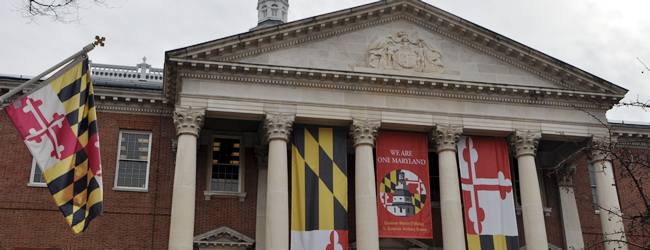
In a dramatic turn of events, the chair of a committee in the Maryland House of Delegates cast the deciding committee vote on Friday for a same-sex marriage bill, keeping the bill alive and allowing it to go the floor of the House for a final vote next week.
Del. Joseph Vallario (D-Prince George’s County), chair of the House Judiciary Committee, indicated earlier that he would likely not vote for the bill. But he cast a “yes” vote on Friday when it became known that another committee member and co-sponsor of the bill, whose support faltered earlier in the week, would vote against it.
The committee voted 12 to 10 to approve the bill and send it to the floor of the House of Delegates.
The vote to approve the bill came after the committee defeated several proposed amendments introduced by opponents aimed at weakening or gutting the bill, including a proposal for civil unions.
“Securing a favorable committee vote was an enormous obstacle – one that we were able to overcome together as thousands of marriage supporters called, emailed, and met with their delegates,” said Morgan Meneses-Sheets, executive director of the statewide LGBT group Equality Maryland.
“But I’m hearing from our elected officials that out-of-state opposition is flooding their offices with slanderous lies about gay and lesbian couples and their families like never before,” Meneses-Sheets said.
She called on LGBT Marylanders and their friends and supporters to redouble their efforts to contact their delegates to ask for their support in the final vote expected next week on the floor of the full House of Delegates.
Vallario’s vote in favor of the Civil Marriage Protection Act in committee on Friday became the deciding vote allowing the measure to pass after Del. Tiffany Alston (D-Prince George’s County), a co-sponsor of the bill, voted against it.
Alston was one of three Democratic co-sponsors of the bill whose support wavered earlier this week.
Alston and Del. Jill Carter (D-Baltimore City) forced Vallario to cancel a scheduled vote on the bill on Tuesday when they failed to show up for the voting session. Both said their initial intent was to pressure the committee and Democratic leaders in the House of Delegates to devote more attention to other bills they believe were equally as important as same-sex marriage.
Following meetings and phone calls with colleagues and constituents, the two agreed to show up for a committee voting session on Friday. Carter said she expected to vote for the bill. Alston, however, told the Baltimore Sun she was praying over how to vote, saying her religious beliefs made her uncomfortable despite her decision earlier in the year to become a co-sponsor of the bill.
Meanwhile, Del. Sam Arora (D-Montgomery County), another co-sponsor of the bill who pledged support for same-sex marriage in his election campaign last fall, stunned LGBT activists earlier in the week when he said he, too, was having strong reservations over the bill based on personal religious beliefs.
Political observers say support for same-sex marriage is strong in his solidly Democratic and liberal-leaning district in Montgomery County.
Arora released a statement Friday morning, shortly before the committee session, saying he had decided to vote for the bill in committee and on the House floor, with the expectation that voters would ultimately decide the issue in an expected referendum next year.
“I have heard from constituents, friends, and advocates from across the spectrum of views and have thought about the issue of same-sex marriage extensively,” he said in his statement.
“While I personally believe that Maryland should extend civil rights to same-sex couples through civil unions, I have come to the conclusion that this issue has such impact on the people of Maryland that they should have a direct say.”
Carter voted for the bill in committee. She has not said how she will vote when the measure reaches the full House next week.
Sources familiar with the committee said one of the proposed amendments called for dropping the same-sex marriage language and converting the legislation into a civil unions bill.
The marriage bill won approval last week in the Maryland Senate.
Supporters were cautiously optimistic that the razor-thin majority of delegates in the House of Delegates who committed to back the bill just a few weeks ago would hold firm and not buckle under a furious campaign to kill the bill by a coalition of conservative religious groups, including the Catholic Archdiocese of Maryland.
Arora’s initial statements that he might not vote for the bill drew a firestorm of protest from LGBT activists and others in Montgomery County, who noted that his pledge of support for the marriage bill played a role in their decision to support him and contribute money to his campaign for his House seat in last November’s election.
“We applaud the Maryland House of Delegates Judiciary Committee for ending attempts to hold our families hostage to political maneuvering,” said Joe Solmonese, president of the Human Rights Campaign, an LGBT advocacy group that’s lobbying for the Maryland marriage bill.
“Maryland is at the forefront in the fight for equality and will go down on the right side of history,” he said. “We ask the full House to swiftly move forward to bring full equality to Maryland families.”
Marc Solomon, national campaign director for the LGBT advocacy group Freedom to Marry, also praised the action of the committee but cautioned supporters to continue to push hard with lawmakers in the days before the final vote.
The National Organization for Marriage, which is leading efforts to defeat the bill, has said it would take immediate steps to place the same-sex marriage law before the voters in a referendum if it passes in the legislature and Gov. Martin O’Malley signs it, as he has said he would.
If opponents succeed in obtaining the required number of petition signatures, such a referendum would appear on the ballot in November 2012 in the midst of the U.S. presidential election campaign.






Rehoboth Beach
Officials raise troubling concerns about Rehoboth mayoral candidate Suzanne Goode
Homophobic emails, ‘aggressive’ behavior cited: ‘It just seems to be getting worse’

As Rehoboth Beach voters prepare to elect a new mayor on Aug. 8, some city officials and local residents are raising new concerns about the behavior of City Commissioner and mayoral candidate Suzanne Goode.
In addition to a history of troubling emails in which she has used homophobic language and criticized the city’s rainbow crosswalks, Goode is being accused of inappropriate behavior by a neighbor and a fellow Commissioner related to a dispute on the Nextdoor online platform.
The Blade spoke to City Manager Taylour Tedder, Commissioner Chris Galanty, and others about Goode’s behavior during her time as commissioner.
Goode was elected commissioner in August 2024. Fellow commissioner Susan Stewart, who is also running for mayor, criticized Goode’s behavior in a March 9, 2026 meeting, bringing up emails outlining Goode’s offensive conduct toward city staff.
In one email, Goode wrote to Rehoboth Beach City Solicitor Lisa Borin Ogden: “I am sorry that I learned from Google when you were first interviewed [in the] spring [of] 2025 that you are Jewish. My opinion of my fellow Jews declined significantly thanks to you since last summer. Actually would have thought you would have more compassion than the average person, based on your late brother. Except you don’t. I am sick of your haughty attitude toward me.”
In other emails, Goode questions why city officials encouraged CAMP Rehoboth and Clear Space Theatre to apply for grant funds. She has denigrated both institutions, referring to CAMP as a “questionable non-profit” and Clear Space as “second rate” with a “woke, drag queen bent” at times. She accuses Rehoboth’s LGBTQ community of displaying “their sex lives in public view” and fears physical violence from LGBTQ activists.
Goode disputed the claims and called for the city to remove Stewart’s remarks from the website.
The following statements were included in the emails sent by Goode:
• “Gays and theatre aficionados can donate as much as they like to these pet causes. Some taxpayers think the theatre is second-rate as community theatres go, and many dislike the RB emphasis on LGBTQ when heterosexuals don’t demand equivalent display of their sex lives in public view.”
• “Just because the LGBTQ community feels oppressed and discriminated against, that doesn’t mean that those who identify as LGBTQ are better able to recognize racial discrimination than someone like myself. It might surprise some of you to learn that I briefly dated an African American fellow college student.”
• “A performing arts and LGBTQ agenda isn’t appropriate for BOC spending when the city faces over $60M in debt.”
• “But there are some folks in town, who ironically have to remain in the closet (conservatives now have to do what gays had to do in the 20th century — ah, the irony) who object to the woke, drag queen bent of Clear Space at times. They have confided this in me, and thanked me for fighting for their tax dollars. Maybe I will regret speaking up, as some LGBTQ activist will attack me physically, even though I am a complete supporter of gay rights, and have as many gay male friends as female friends now that I live in RB with a large gay population.”
In the emails, Goode also referred to City Manager Tedder as “the mayor’s whore.”
Stewart told the Blade that the troubling behavior has since escalated.
Commissioner Chris Galanty spoke to the Blade about Goode’s behavior as commissioner and her issues with the rainbow crosswalks in town.
“Suzanne told me on two separate occasions that she didn’t like the rainbow crosswalks, and she said that she didn’t understand why they had to exist, and she didn’t understand why gay people had to advertise their sexuality, and she said straight people don’t have to do that.”
Galanty said that when he challenged her on this, she “moved very quickly to another topic.” He said that she has now shifted her perspective and is more concerned that the rainbow crosswalks are an issue of labor costs.
Goode told the Blade that, “Unfortunately, the rainbow crosswalks have potentially reduced the upkeep of the conventional crosswalks. But the rainbow crosswalks are attractive in and of themselves, and they do add to our recognition of Rehoboth’s longstanding status as a gay-friendly town.”
Accusations of “aggressive” behavior by Goode aren’t limited to emails. Last summer, Goode came to the home of Diana Jones, a property owner in Rehoboth Beach who is a neighbor of Galanty’s. Jones spoke to the Blade to share her experience with Goode.
Jones is active on Nextdoor, an online social network for neighborhoods. She said that she got involved on the platform during the time of the commissioners election last summer, in which her neighbor, Chris Galanty, was elected as commissioner.
Jones said that she made posts supporting Galanty. She said that someone posted a link of a lawsuit that involved Goode’s husband, Jeffrey Goode, who lost his race for commissioner last summer. Jones said that she reposted the link after it was taken down.
Jones said that the lawsuit was “very relevant to somebody who is running for city commissioner.”
Jones said that Suzanne Goode showed up at her house as a result of the post. Jones was out walking her dog nearby so Goode briefly spoke with Jones’s husband who was home.
“She came over to my house because she was saying I was doxing him,” said Jones. Jones said that Goode then found her as she was walking her dog and tried to talk to her about her Nextdoor posts, saying that she “brought up a very painful time in her life.”
Jones said that she has not had any communication with Goode since.
When asked for comment on the situation with Jones, Goode responded by saying “Diana Jones’s behavior toward me was despicable, and the way she has chosen to give her side of the story to news media says more about her than it will ever say about me.”
Galanty told the Blade that Goode came to his house in late June of this year when he was not home. She then called him about Jones.
“She relayed to me that she was having a disagreement with my neighbor on the Nextdoor platform, and she asked me to intercede with the neighbor,” said Galanty. “She said, ‘Please speak to her because I am frustrated with what she is saying. She needs to stop, and you need to say something to her.'”
Galanty said that Goode called him four times and texted him 32 times in the span of three and a half hours the next day.
Galanty said that he responded the next day, telling her that her behavior was inappropriate.
“Eventually it took a couple of weeks, but she apologized in her own way. She just said we just need to let it go.”
From his perspective as commissioner, Galanty said, “She likes to re-litigate things that have happened, six months ago, nine months ago. She likes to rehash issues that are in the past.”
“She can be really aggressive, and people are just really turned off by her,” said Galanty.
Tedder, who has accused Goode of creating a “hostile work environment,” told the Blade about his experiences working with Goode.
“She does not support the staff, and constantly tells us to resign,” said Tedder.
Tedder said that Goode texted City Solicitor Ogden at 7:45 a.m. on a Saturday, telling her to resign.
“Sometimes she does have good ideas. It’s just it gets so lost in these pages and pages of emails and thousands of emails that she sends,” said Tedder.
In regards to Goode’s behavior, Tedder said it has been going on since the beginning. “It just seems to be getting worse.”
Maryland
Advocates for trans students urge Md. to fight White House threats
Four school districts under federal investigation

By JESSICA CALEFATI | Allies of transgender children are urging state education officials to fight back against the Trump-Vance administration, which has threatened to punish a growing number of Maryland school districts over local policies that affirm students’ gender identities.
The advocates testified Tuesday morning before the Maryland State Board of Education — one day after the U.S. Education and Justice departments alleged that Anne Arundel County’s school system violated federal student privacy law by withholding a student’s gender identity from their parents. A spokesperson for the district said Monday legal counsel had not yet reviewed the claims and that the district had no further comment.
School districts in Prince George’s, Montgomery, and Frederick Counties were already under investigation for allegedly violating Title IX, the civil rights law that prohibits sex-based discrimination. The federal government last month threatened to revoke funding from the districts because they allow trans students to use restrooms and locker rooms that align with their identities.
The rest of this article can be read on the Baltimore Banner’s website.
Maryland
White House threatens Anne Arundel schools over gender identity policy
District faces possible legal action or loss of federal funding

By JESSICA CALEFATI | The Trump-Vance administration on Monday threatened to punish Anne Arundel County’s school system with legal action or the loss of federal funding for allegedly withholding information about a student’s gender identity and transition from the child’s parents.
The U.S. Education and Justice Departments together determined that the suburban Maryland district treats students’ gender identities as confidential medical information that cannot be shared with parents, in violation of federal student privacy law, according to a news release. A federal lawsuit filed against the district earlier this month made similar claims.
“As a mother and a grandmother, it is unconscionable that any school district would hide the most sensitive information about children in their care from their own parents,” U.S. Secretary of Education Linda McMahon said in a statement. “This is not only an affront to basic moral principles, but also to parents’ rights under federal law.”
The rest of this article can be read on the Baltimore Banner’s website.

Buttigieg indicates he may run for president in 2028

Remembering Elliot Leonard, generous visionary who helped LGBTQ communities thrive

My evening with Madonna

PHOTOS: Petal Release Party

Madonna headlines World Pride Music Festival in Amsterdam

PHOTOS: Lambda Legal in the Pines

Calendar: July 31-August 6

Taiwan’s government has failed to update process to change gender markers on ID documents

Come showcase your singing, poetry talent