
Movies
Reflections in a queer eye
Taylor’s filmography dotted with surprising number of gay-themed storylines

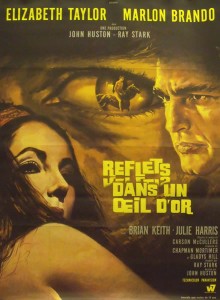
A French poster for John Huston's 1967 film 'Reflections in a Golden Eye.' In a career whose films are liberally peppered with gay themes, this is perhaps Elizabeth Taylor's gayest movie. (Image courtesy of filmposter.net)
Elizabeth Taylor was, of course, a gay icon. And for many reasons.
The legendary actress, who died of congestive heart failure last week at 79, was one of our few remaining ties to old Hollywood, the contract system era that has captured gay imaginations for decades with larger-than-life stars like Bette Davis, Katharine Hepburn, Judy Garland and Joan Crawford. Taylor, a generation behind that top tier, is part of that pantheon because she started so young. She was only 10 when she made her first movie in 1942.
Her close friendships with her gay and bi costars have been well documented — Montgomery Clift, Rock Hudson and James Dean. And whatever Michael Jackson’s true sexual orientation was, he and Taylor clearly had some kind of “Will & Grace” thing happening.
Her AIDS activism, too, has also been widely covered.
But one of the curious Taylor gay recurring themes, especially considering the era in which she made most of her films, was how many of their storylines are gay. In two of the best — 1958’s “Cat on a Hot Tin Roof” and 1959’s “Suddenly Last Summer,” that’s largely because gay playwright Tennessee Williams penned the source material.
In “Cat,” Taylor plays Maggie to Paul Newman’s depressed, alcoholic Brick, who’s uninterested in his gorgeous wife sexually. His relationship with pal Skipper, who committed suicide, is left somewhat vague in the film adaptation but only the most naive movie fans wouldn’t have been perplexed — and thus cued — that any man not interested in the ’50s-era Taylor, a strikingly beautiful woman widely considered among the most lustrous ever to grace the screen, had to have some homo issues lurking.
A lot of it is coded of course, as was common for the time. Homosexuality on the screen could only be alluded too but considering how many of filmdom’s participants were gay — both men and women, in front of and behind the camera — it’s not surprising queer sensibilities are lurking widely in the Tinseltown product of the day. For more on this topic, check out gay author William J. Mann’s brilliant 2001 book “Behind the Screen: How Gays and Lesbians Shaped Hollywood.”
Much gayer — and campier — is Taylor’s next film, “Summer,” a sordid-but-fascinating Joe Mankiewicz (“All About Eve”)-directed Williams adaptation that tells, in a roundabout way, of Catherine’s (Taylor) close friendship with her gay cousin Sebastian (whom we only see in flashback). While on holiday, he uses her, in a scandalous white bathing suit, to lure young local men for sex. They turn on him and kill him in a gruesome attack. Taylor spends much of the film trying to avoid a lobotomy. Sebastian’s mother, a domineering and possessive woman played masterfully by Katharine Hepburn (she and Taylor were both nominated for the film), refuses to address her son’s homosexuality. Hepburn’s long opening scene, in which she shows Clift her Venus Fly Traps and rambles on about her closeness with Sebastian and his supposed encounters with the divine, is a delight. She plays the Oedipal grace notes of the text perfectly, never hitting you over the head with its seamier components.
Taylor would do Williams again — 1968’s “Boom!” is an adaptation of his play “The Milk Train Doesn’t Stop Here Anymore.” It’s worth seeing as a curiosity piece, but Taylor and then-husband Richard Burton are both wildly miscast. The film mostly just made me yearn some record existed of what Tallulah Bankhead and gay actor Tab Hunter did with the material during a very short Broadway run.
Gayer still — but sadly, not nearly as good a film — is 1967’s “Reflections in a Golden Eye,” a tawdry and sensational John Huston-directed piece that finds Marlon Brando, in a wildly over-the-top performance, as a closeted, sadistic Army Major married to Taylor and, like Newman in “Cat,” not the least bit interested in her sexually.
I have the film on VHS but only watched it once, years ago. It wasn’t particularly memorable but researching this piece, I came upon the trailer on the film’s IMDB page. For the curious, that’s probably all you need. It’s a nice, compact two-minute, unintentional laugh-a-thon as Taylor purrs in a southern accent that her horse, “Firebird is a stallion” and Brando threatens to kill her during a scenery-chewing stairway confrontation.
Brian Hutton’s “X, Y and Zee” has a passing lesbian angle — bickering couple Taylor and Michael Cain, in a pale echo of “Virginia Woolf,” play a bickering married couple. He has an affair with a quiet, bisexual boutique shop owner.
As the ostensible gay characters and themes in Taylor’s work dried up, some of her later work still exhibited gay sensibilities. Definitely worth seeing is a hilarious bitchfest Taylor made in 1980 with Kim Novak and, again, old pal Hudson. The Agatha Christie adaption finds Novak in deliciously rare form as a conniving actress co-starring with rival Taylor in a costume epic.
And then there’s Taylor’s swan song, the 2001 TV movie “These Old Broads,” in which she co-starred with Joan Collins, Shirley MacLaine and old rival-turned-pal Debbie Reynolds. It’s another Hollywood-set backstory that, sadly, is not nearly as much fun as it sounds.




Movies
20 years later, we still can’t quit ‘Brokeback Mountain’
Iconic love story returns to theaters and it’s better than you remember
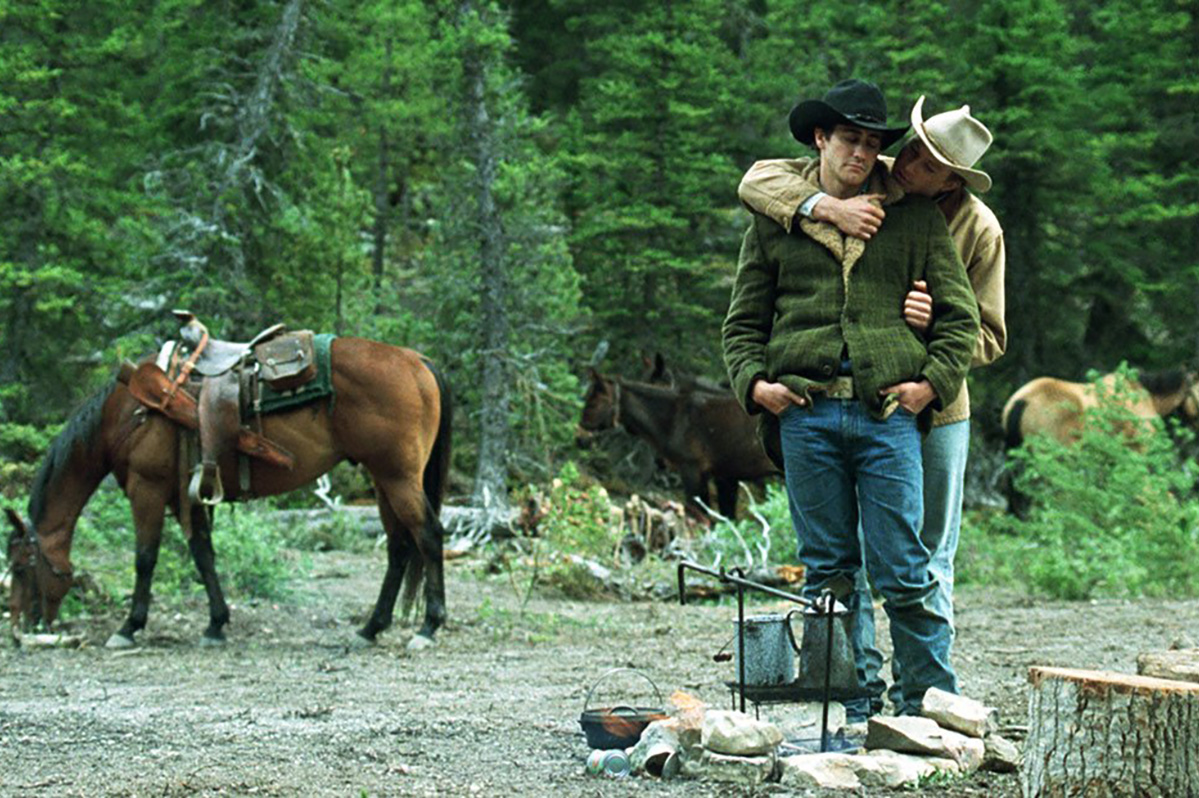
When “Brokeback Mountain” was released in 2005, the world was a very different place.
Now, as it returns to the big screen (beginning June 20) in celebration of its 20th anniversary, it’s impossible not to look at it with a different pair of eyes. Since its release, marriage equality has become the law of the land; queer visibility has gained enough ground in our popular culture to allow for diverse queer stories to be told; openly queer actors are cast in blockbuster movies and ‘must-see’ TV, sometimes even playing queer characters. Yet, at the same time, the world in which the movie’s two “star-crossed” lovers live – a rural, unflinchingly conservative America that has neither place nor tolerance for any kind of love outside the conventional norm – once felt like a place that most of us wanted to believe was long gone; now, in a cultural atmosphere of resurgent, Trump-amplified stigma around all things diverse, it feels uncomfortably like a vision of things to come.
For those who have not yet seen it (and yes, there are many, but we’re not judging), it’s the epic-but-intimate tale of two down-on-their-luck cowboys – Ennis Del Mar (Heath Ledger) and Jack Twist (Jake Gyllenhall) – who, in 1963 Wyoming, take a job herding sheep on the titular mountain. There’s an unmistakable spark between them, and during their months-long shared isolation in the beautiful-but-harsh wilderness, they become lovers. They part ways when the job ends and go on about their lives; Ennis resolutely settles into a hardscrabble life with a wife (Michelle Williams) and kids, while Jack struggles to make ends meet as a rodeo rider until eventually marrying the daughter (Anne Hathaway) of a wealthy Texas businessman. Yet even as they struggle to maintain their separate lives, they reconnect, escaping together for “fishing trips” to continue their forbidden affair across two decades, even as the inevitable pressures and consequences of living a double life begin to take their toll.
Adapted from a novella by Annie Proulx, (in an Oscar-winning screenplay by co-producer Diana Ossana and acclaimed novelist Larry McMurtry), and helmed by gifted Taiwanese filmmaker Ang Lee (also an Oscar winner), the acclaim it earned two decades ago seems as well-deserved as ever, if not more so. With Lee bringing an “outsider’s eye” to both its neo-western setting and its distinctly American story of stolen romance and cultural repression, “Brokeback” maintains an observational distance, uninfluenced by cultural assumptions, political narratives, or traditional biases. We experience Ennis and Jack’s relationship on their terms, with the purely visceral urgency of instinct; there are no labels, neither of them identifies as “queer” – in fact, they both deny it, though we know it’s likely a feint – nor do they ever mention words like “acceptance, “equality,” or “pride.” Indeed, they have no real vocabulary to describe what they are to each other, only a feeling they dare not name but cannot deny.
In the sweeping, pastoral, elegiac lens of Lee’s perceptive vision, that feeling becomes palpable. It informs everything that happens between them, and extends beyond them to impact the lives they are forced to maintain apart from each other. It’s a feeling that’s frequently tormented, sometimes violent, and always passionate; and while they never speak the word to each other, the movie’s famous advertising tagline defines it well enough: “Love is a force of nature.”
Yet to call “Brokeback” a love story is to ignore its shadow side, which is essential to its lasting power. Just as we see love flowing through the events and relationships we observe, we also witness the resistant force that opposes it, working in the shadows and twisting it against itself, compelling these men to hide themselves in fear and shame behind the presumed safety of heterosexual marriage, wreaking emotional devastation on their wives, and eventually driving a wedge between them that will bring their story to (spoiler alert, if one is required for a 20-year-old film) a heartbreaking conclusion.
That opposing force, of course, is homophobia, and it’s the hidden – though far from invisible – villain of the story. Just as with Romeo and Juliet, it’s not love that creates the problem; it’s hate.
As for that ending, it’s undeniably a downer, and there are many gay men who have resisted watching the movie for all these years precisely because they fear its famously tragic outcome will hit a little too close to home. We can’t say we blame them.
For those who can take it, however, it’s a film of incandescent beauty, rendered not just through the breathtaking visual splendor of Rodrigo Prieto’s cinematography, but through the synthesis of all its elements – especially the deceptively terse screenplay, which reveals vast chasms of feeling in the gaps between its homespun words, and the effectiveness of its cast in delivering it to performance. Doubtless the closeness between most of its principal players was a factor in their chemistry – Ledger and Gyllenhall were already friends, and Ledger and Williams began a romantic relationship during filming which would lead to the birth of their daughter, just before the movie’s premiere. Both Williams and Hathaway remain grounded in the truth of their characters, each of them earning our empathy and driving home the point that they are victims of homophobia, too.
As for the two stars, their chemistry is deservedly legendary. Ledger’s tightly strung, barely-articulate Ennis is a masterclass in “method” acting for the screen, with Gyllenhall’s brighter, more open-hearted Jack serving in perfectly balanced contrast. They are yin and yang to each other, and when they finally consummate their desires in that infamous and visceral tent scene, what we remember is the intensity of their passion, not the prurient details of their coupling – which are, in truth, more suggested than shown. Later, when growing comfort allows them to be tender with each other, it feels just as authentic. Both actors were outspoken allies, and though neither identified as gay or bisexual, their comfort and openness to the emotional (as well as physical) authenticity of the love story they were cast to play is evident in every moment they spend on the screen. It’s impossible to think of the movie being more perfect with anyone else but them.
As iconic as its starring pair have become, however, what made “Brokeback” a milestone was the challenge it threw in the face of accepted Hollywood norms, simply by telling a sympathetic story about same-sex love without judgment, stereotype, identity politics, or any agenda beyond simple humanistic compassion. It was the most critically acclaimed film of the year, and one of the most financially successful; though it lost the Oscar for Best Picture (to “Crash,” widely regarded as one of the Academy’s most egregious errors), it hardly mattered. The precedent had been set, the gates had been opened, and the history of queer cinema in mainstream Hollywood was forevermore divided into two eras – before and after “Brokeback Mountain.”
Still, its “importance” is not really the reason to revisit it all these years later. The reason is that, two decades later, it’s still a beautiful, deeply felt and emotionally resonant piece of cinema, and no matter how good you thought it was the first time, it’s even better than you remember it.
It’s just that kind of movie.
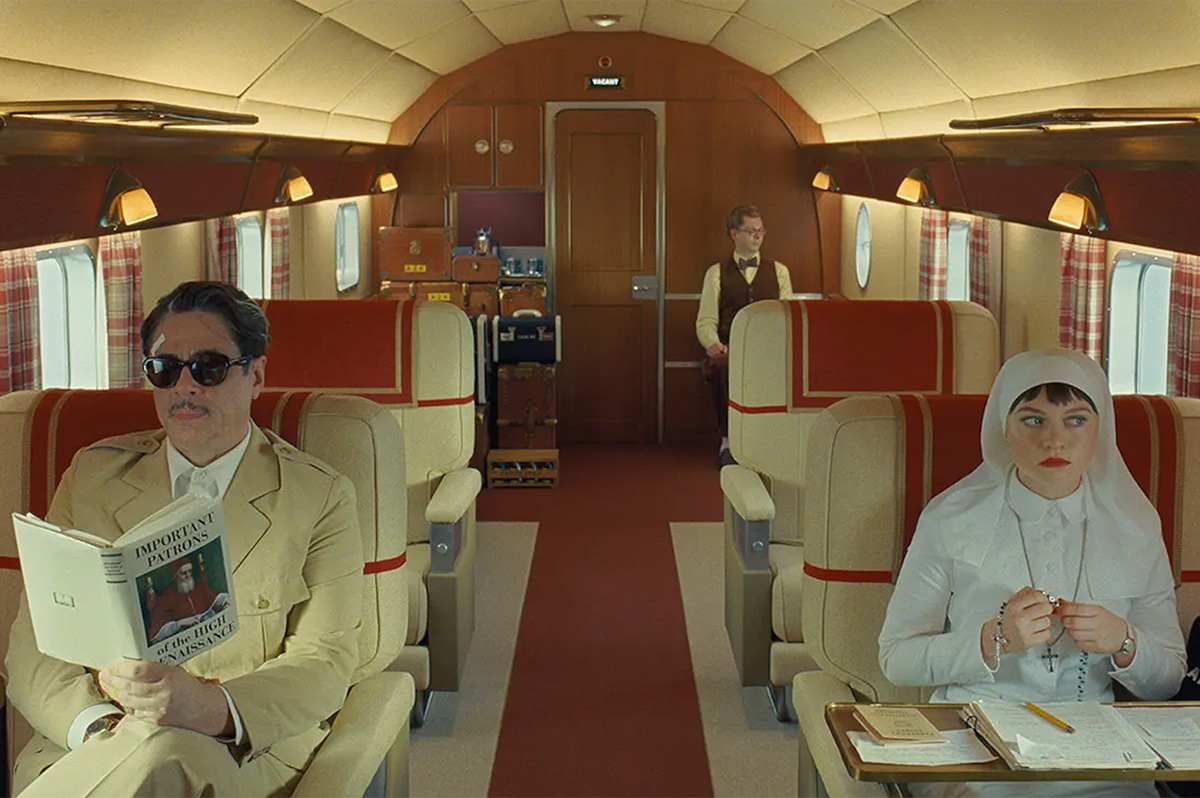
There was a time, early in his career, that young filmmaker Wes Anderson’s work was labeled “quirky.”
To describe his blend of dry humor, deadpan whimsy, and unresolved yearning, along with his flights of theatrical fancy and obsessive attention to detail, it seemed apt at the time. His first films were part of a wave when “quirky” was almost a genre unto itself, constituting a handy-but-undefinable marketing label that inevitably became a dismissive synonym for “played out.”
That, of course, is why every new Wes Anderson film can be expected to elicit criticism simply for being a Wes Anderson film, and the latest entry to his cinematic canon is, predictably, no exception.
“The Phoenician Scheme” – released nationwide on June 6 – is perhaps Anderson’s most “Anderson-y” movie yet. Set in the exact middle of the 20th Century, it’s the tall-tale-ish saga of Anatole “Zsa-Zsa” Korda (Benicio del Toro), a casually amoral arms dealer and business tycoon with a history of surviving assassination attempts. The latest – a bomb-facilitated plane crash – has forced him to recognize that his luck will eventually run out, and he decides to protect his financial empire by turning it over (on a trial basis, at least) to his estranged daughter Liesl (Mia Threapleton), currently a novice nun on the verge of taking her vows. She conditionally agrees, despite the rumors that he murdered her mother, and is drawn into an elaborate geopolitical con game in which he tries to manipulate a loose cadre of “world-building” financiers (Tom Hanks, Bryan Cranston, Riz Ahmed, Mathieu Amalric, and Jeffrey Wright) into funding a massive infrastructure project – already under construction – across the former Phoenician empire.
Joined by his new administrative assistant and tutor, Bjorn (Michael Cera), Korda and Liesl travel the world to meet with his would-be investors, dodging assassination attempts along the way. His plot is disrupted, however, by the clandestine interference of a secret coalition of nations led by an American agent code-named “Excalibur” (Rupert Friend), who seeks to prevent the shift of geopolitical power his project would create. Eventually, he’s forced to target a final “mark” – his ruthless half-brother Nubar (Benedict Cumberbatch), with whom he has played a lifelong game of “who can lick who” – for the money he needs to pull it off, or he’ll lose his fortune, his oligarchic empire, and his slowly improving relationship with his daughter, all at once.
It’s clear from that synopsis that Anderson’s scope has widened far beyond the intimate stories of his earliest works – “Bottle Rocket,” “Rushmore,” “The Royal Tenenbaums,” and others, which mostly dealt with relationships and dynamics among family (or chosen family) – to encompass significantly larger themes. So, too, has his own singular flavor of filmmaking become more fully realized; his exploration of theatrical techniques within a cinematic setting has grown from the inclusion of a few comical set-pieces to a full-blown translation of the real world into a kind of living, efficiently-modular Bauhaus diorama, where the artifice is emphasized rather than suggested, and realism can only be found through the director’s unconventionally-adjusted focus.
His work is no longer “quirky” – instead, it has grown with him to become something more pithy, an extension of the surreal and absurdist art movements that exploded in the tense days before World War II (an era which bears a far-too-uncomfortable resemblance to our own) and expresses the kind of politically-aware philosophical ideas that helped to build the world which has come since. It is no longer possible to enjoy a Wes Anderson movie on the basis of its surface value alone; it is necessary to read deeper into his now-well-honed cinematic language, which is informed not just by his signature aesthetic but by intellectual curiosity, and by the art, history, and cultural knowledge with which he saturates his work – like pieces of a scattered puzzle, waiting to be picked up and assembled along the way. Like all auteurs, he makes films that are shaped by a personal vision and follow a personal logic; and while he may strive to make them entertaining, he is perhaps more interested in providing insight into the wildly contradictory, often nonsensical, frequently horrifying, and almost always deplorable behavior of human beings. Indeed, the prologue scene in his latest endeavor illustrates each of those things, shockingly and definitively, before the opening credits even begin.
By typical standards, the performances in “Phoenician Scheme” – like those in most of Anderson’s films – feel stylized, distant, even emotionally cold. But within his meticulously stoic milieu, they are infused with a subtle depth that comes as much from the carefully maintained blankness of their delivery as it does from the lines themselves. Both del Toro and Threapleton manage to forge a deeply affecting bond while maintaining the detachment that is part of the director’s established style, and Cera – whose character reveals himself to be more than he appears as part of the story’s progression – begs the question of why he hasn’t become a “Wes Anderson regular” long before this. As always, part of the fun comes from the appearances of so many familiar faces, actors who have become part of an ever-expanding collection of regular players – including most-frequent collaborator Bill Murray, who joins fellow Anderson troupers Willem Dafoe and F. Murray Abraham as part of the “Biblical Troupe” that enact the frequent “near-death” episodes experienced by del Toro’s Korda throughout, and Scarlett Johansson, who shows up as a second cousin that Korda courts for a marriage of financial convenience – and the obvious commitment they bring to the project beside the rest of the cast.
But no Anderson film is really about the acting, though it’s an integral part of what makes them work – as this one does, magnificently, from the intricately choreographed opening credit sequence to the explosive climax atop an elaborate mechanical model of Korda’s dream project. In the end, it’s Anderson himself who is the star, orchestrating his thoroughly-catalogued vision like a clockwork puzzle until it pays off on a note of surprisingly un-bittersweet hope which reminds us that the importance of family and personal bonds is, in fact, still at the core of his ethos.
That said, and a mostly favorable critical response aside, there are numerous critics and self-identified fans who have been less than charmed by Anderson’s latest opus, finding it a redundant exercise in a style that has grown stale and offers little substance in exchange. Frankly, it’s impossible not to wonder if they have seen the same movie we have.
“The Phoenician Scheme,” like all of its creator’s work, is ultimately an esoteric experience, a film steeped in language and concepts that may only be accessible to those familiar with them – which, far from being a means of shutting out the “unenlightened,” aims instead to entice and encourage them to think, to explore, and, perhaps, to expand their perspective. It might be frustrating, but the payoff is worth it.
In this case, the shrewd political and economical realities he illuminates behind the romanticized “Hollywood” intrigue and his deceptively eccentric presentation speak so profoundly to the current state of world we live in that, despite its lack of directly queer subject matter, we’re giving it our deepest recommendation.
Movies
Queer movies and shows to watch this summer
‘Brokeback’ returns, a Sally Ride doc, and much more
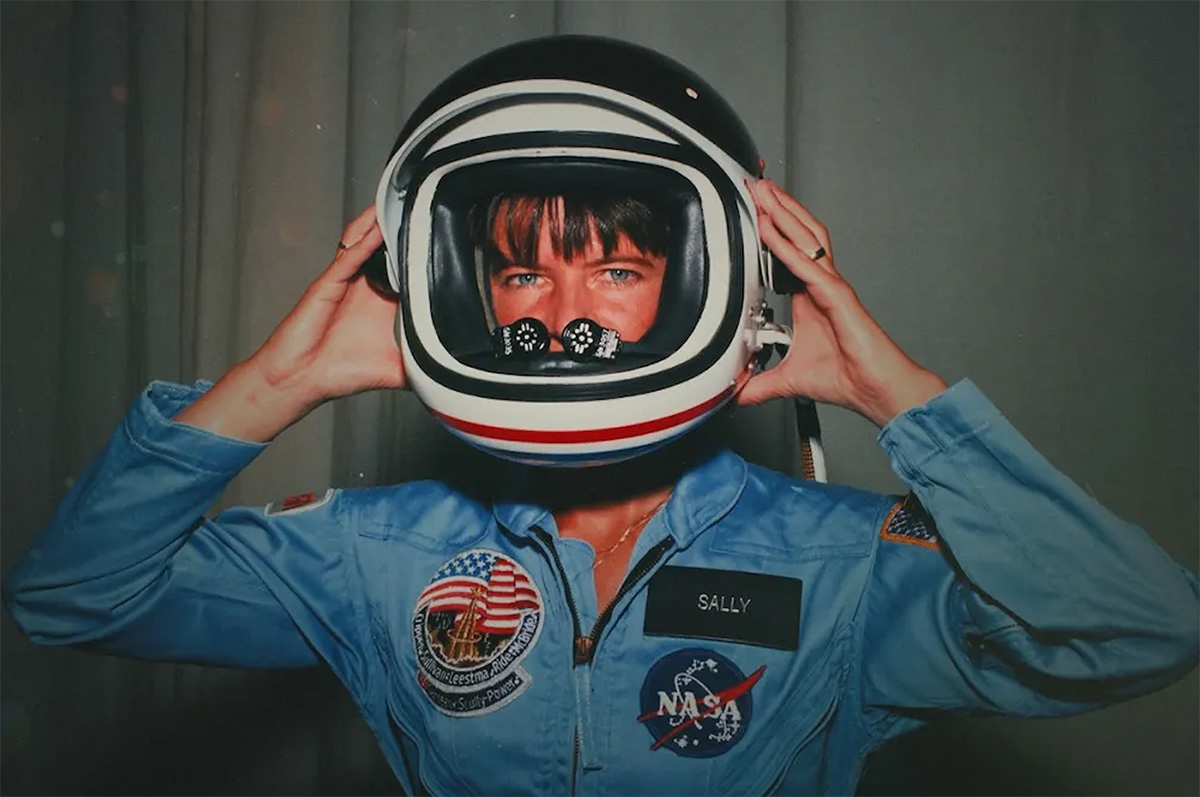
Summer is upon us, and so is Pride month, which means a whole crop of queer-flavored movies and shows are ready to blossom onto our nearest screen over the next few weeks; and as always, the Blade is here with a handy guide to help you fill out your watchlist.
I Don’t Understand You
First up is this pitch-black horror comedy starring Nick Kroll and Andrew Rannells as a gay American couple (and soon-to-be-adoptive-daddies) celebrating their 10th anniversary with a trip to Italy. Unfortunately, neither of them speaks Italian, and the resulting language barrier creates a series of mishaps and misunderstandings that turns their dream vacation into a farcical traveler’s nightmare. Co-created by real-life gay couple Brian Crano and David Joseph Craig (who also directed), it’s got an authentic queer voice behind it, and a pair of talented and funny lead actors to make it work; it’s also got a nice collection of good reviews behind it from its debut at 2024’s SXSW and other festivals, which makes it a strong opener for your summertime slate. 6/6, in theaters
Loulou
Directed by Noëlle P. Soulier, this thoughtful trans coming-of-age/coming-out story centers on a closeted 17-year-old teen (Kevin Curtis) struggling with her identity while trying to cope with harassment at school and the pressure of living with her strict Catholic parents (Desean Terry and Reiko Aylesworth). Pushed to the church, she finds unexpected solace, encouraging her to start a journey toward self-acceptance – something that includes a new relationship with her own ex-bully (Spencer Belko), who has been struggling with some identity issues of his own. Also starring Patrika Darbo as a sympathetic nun, this gentle story about trans experience seems like a welcome beacon of support at a time when we really need one. 6/6, VOD
Sally
Directed and produced by Cristina Costantini, this documentary from National Geographic explores the life and career of Sally Ride, who became the first American woman to blast off into space. It’s not just the story of her historic achievement, however, but the story of her 27-year romance and relationship with life partner, Tam O’Shaughnessy, who reveals the full personal journey of America’s LGBTQ astronaut for the very first time. 6/16, NatGeo; 6/17, Hulu, Disney+
Brokeback Mountain
No, that’s not a misprint and you’re not having a flashback to 2005, because the game-changing Ang Lee-directed drama about two cowboys in love is returning to theaters for a series of special screenings to celebrate its 20th anniversary. If you’re anything like us, you probably “wish you could quit” this powerful, heartbreaking, and tragically beautiful masterpiece – but we all know we never will. Why not celebrate that special bond by seeing it again on the big screen? Beginning 6/20, in theaters
The Gilded Age (Season 3)
Back for another round of sumptuously costumed, lavishly decorated intrigue among the ostentatiously wealthy high society class of late 19th-century New York (and those entangled in their world), the newest installment of this intrinsically queer period soap opera finds a definite shift in dynamics taking place after last season left the major players of the “old guard” weakened and the social-climbing “new money” crowd poised to take their place at the top of the pecking order. Promising the return of its sprawling cast – which includes queer fan favorites like Christine Baranski, Cynthia Nixon, Carrie Coon, Nathan Lane, and more, not to mention an ever-expanding host of Broadway greats to fill out the supporting cast and guest star roster – as well as the savvy perspective of show creator Julian Fellowes (“Downton Abbey,” which also returns later this year for a swan song on the big screen) to ensure its status as both artful social observation and “guilty pleasure” escapism, it’s probably already on your list if you’re a fan. If you’re not, there’s still time to catch up with the first two seasons before this one drops. 6/22, HBO Max
King of Drag
Move over, RuPaul, because the first major Drag King competition series is making its debut on queer streaming service Revry, where it plans on “serving you bold, brilliant, and unapologetic talent like never before” and celebrating “masculinity in all its forms.” Hosted by legendary trans New York drag king Murray Hill, it will feature regular judges Gottmik, Sasha Velour, Tenderoni, Wang Newton, and Revry co-founder Damian Pelliccione, as well as a list of guest judges that includes Jackie Beat, Cole Escola, Landon Cider, Lisa Rinna, and more. 6/22, Revry
Ironheart
Queer Marvel fans will certainly be on board for this new miniseries from the MCU, which is set after the events of the film “Black Panther: Wakanda Forever” and follows young genius inventor Riri Williams (Dominique Thorne) as she embraces her evolution into the titular superhero in her hometown of Chicago. Reportedly establishing the lead character as bisexual, the series (created by Chinaka Hodge) also continues the Marvel franchise’s efforts toward diversity and inclusion with the introduction of a transgender character and the casting of transmasculine actor Zoe Terakes and “Drag Race” star Shea Couleé in supporting roles. “Hamilton” and “In the Heights” star Anthony Ramos co-stars as Parker Robbins (aka “The Hood”). 6/24, Disney+
The Ultimatum: Queer Love (Season 2)
For fans of reality TV competition, this popular show – a spin-off from “The Ultimatum: Marry or Move On” – returns with a set of six new couples (made up of women and non-binary people), who must put their love to the test by moving in with other partners to determine if they’re ready for marriage — or simply ready for someone else. 6/25, Netflix
Hot Milk
Adapted from the 2016 novel by Deborah Levy, this coming-of-age drama from filmmaker Rebecca Lenkiewicz follows Sofia (Emma Mackey) as she accompanies her domineering, wheelchair-bound mother (Fiona Shaw) to a questionable clinic in Spain in search of treatment, and is tempted by a tantalizing new life in the form of a local seamstress (Vicky Krieps). With a literary pedigree to balance its air of soft-core steaminess, this one appeals to us on the basis of its captivating cast alone. 6/27, limited theaters
M3GAN 2.0
The hot movie ticket this summer is likely to be for this sequel to 2022’s campy comedic cult horror hit, in which a murderous rogue AI-powered doll goes on a rampage after becoming self-aware before being destroyed – or at least, apparently. Three years later, M3GAN’s creator (Allison Williams) is now an advocate for oversight on Artificial Intelligence, but when a new and deadly android (Ivanna Sakhno) is created as a military weapon from her stolen plans, she must risk resurrecting her original invention in order to stop an even greater threat to humanity. Violet McGraw returns as Williams’ now-teenaged niece, as do Amie Donald and Jenna Davis as the title character’s body and voice, respectively. 6/27, in theaters
Ponyboi
Highly anticipated is this neo-noir thriller from director Esteban Arango, written by and starring intersex actor, filmmaker, and activist River Gallo, which is finally getting a theatrical release nearly a year and a half after its acclaimed debut at the 2024 Sundance Festival. Adapted and expanded from a 2019 short film by Gallo, it follows a young intersex sex worker (Gallo), whose messy personal life – his best friend (Victoria Pedretti) is pregnant, and the father is his own pimp/boyfriend (Dylan O’Brien) – gets even messier when a drug deal gone bad puts him on the run from the mob. Gallo’s performance has earned copious praise, and the fact that it’s a whole movie centered on an intersex person – surely a rarity, if not a first, in commercial American filmmaking – makes it even more of a must-see. 6/27, in theaters
Sorry, Baby
Another Sundance favorite makes its way to theaters in the form of this dark comedy-drama from first-time writer/director/star Eva Victor, who plays Agnes, a woman still recovering from a sexual assault by a trusted figure in her past, who has tried to move on but realizes how “stuck” she still is after a close friend makes a milestone announcement. Despite the heavy subject matter, it’s earned its acclaim – and the resultant buzz that enticed top flight distributor A24 to snap up the rights – by approaching it with a hefty dose of absurdist humor, as it peels back the onion of the “bad thing” that happened to finally set Agnes on a course toward healing through a series of five “chapters” in her life. It’s been described as a “trauma-dy” – and frankly, we think that’s enough to make it irresistible. 6/27, in theaters
Freakier Friday
You might be tempted to say this is the sequel that nobody asked for – but you know you’re going to be there for it. The perennial parent/child identity swap franchise (spawned by a sharp-witted novel from Broadway royalty Mary Rodgers) reinvents itself yet again with the return of Jamie Lee Curtis and Lindsay Lohan as a mother and daughter who, decades after having swapped bodies due to a mystical incident involving a fortune cookie, find themselves once again switching places on the eve of a milestone wedding. We have no idea if there’s any queer-relevant story elements here; we just know most of us will be fully on board, if only for the nostalgia and the undying appeal of its queer-fan favorite stars. 8/8, in theaters
Lurker
Touted as “a screw-turning psychological thriller made for the moment” and directed by Alex Russell (writer/producer of the acclaimed shows “The Bear” and “Beef”), this dark pop cultural commentary focuses on a young LA loner (Théodore Pellerin) who has a chance encounter with a rising pop star (Archie Madekwe) and uses it to infiltrate his “entourage” – only to find himself caught up in an ever-escalating competition for attention, access, and proximity to “fame” that soon becomes “a matter of life and death.” A buzzy, paranoid, and grimly exhilarating exploration of the music industry, fandom, and “our universal search for validation,” this creepy but enticing suspenser scores extra points from us for leaning into a homoerotic subtext and serving up the sweaty wrestling scenes to prove it. 8/22, in theaters
Honey Don’t!
The second of a planned “Lesbian B-Movie Trilogy” from filmmaker Ethan Coen and his wife Tricia Cooke (which began with last year’s “Drive Away Dolls”), this neo-noir-ish dark comedy stars Margaret Qualley (“The Substance”) as a lesbian private eye who is led by a case into a series of strange deaths centered around a mysterious church. It’s the kind of movie for which the less you know about it, the better it probably plays, so we won’t say much more – except that its cast includes heavyweights Aubrey Plaza, Billy Eichner, and Chris Evans. We say, “honey, DO.” 8/22, in theaters
Twinless
Coming on the cusp of fall, filmmaker James Sweeney’s eagerly awaited black comedy (do we detect a common thread in this summer’s selection, or is it just us?) is yet another Sundance darling, bolstered even further by the controversial gay sex scenes that were leaked online by fans of teen-heartthrob-turned-A-lister Dylan O’Brien (playing gay again for his second appearance on our list), who co-stars with Sweeney himself in this oddball story about two young queer men who meet in a support group for bereaved twins and form a sexually intense friendship with each other. Praised by critics for its “seamless” integration of queer themes into a compelling (if unusual) narrative, there’s been a lot of delay and reshuffled plans around its official release date – but now it’s officially set to be our final treat for a summer full of queer entertainment. 9/5, in theaters

PHOTOS: Fredericksburg Pride

Two teens shot steps from Stonewall Inn after NYC Pride parade

Anaya Bangar challenges ban on trans women in female cricket teams

Zohran Mamdani participates in NYC Pride parade

La marcha LGBTQ desafía el silencio en El Salvador

Supreme Court upholds ACA rule that makes PrEP, other preventative care free

Supreme Court rules parents must have option to opt children out of LGBTQ-specific lessons

Evan Wolfson on the 10-year legacy of marriage equality

Senate parliamentarian orders removal of gender-affirming care ban from GOP reconciliation bill

Wilmington, Del. leaders paint city’s first rainbow crosswalk
-
 U.S. Supreme Court4 days ago
Supreme Court upholds ACA rule that makes PrEP, other preventative care free
-
 U.S. Supreme Court4 days ago
Supreme Court rules parents must have option to opt children out of LGBTQ-specific lessons
-
 National5 days ago
Evan Wolfson on the 10-year legacy of marriage equality
-
 Congress5 days ago
Senate parliamentarian orders removal of gender-affirming care ban from GOP reconciliation bill