National
BREAKING: White House names interim LGBT liaison
Alvillar, from Biden’s office, to replace Bond
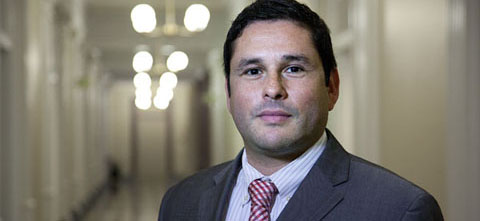
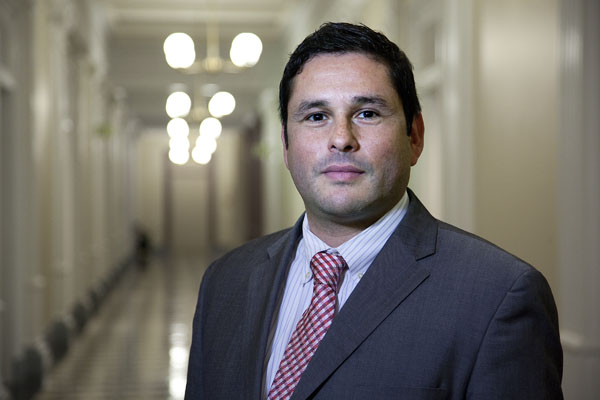
Raul Alvillar (photo courtesy of the White House)
The White House has designated a gay administration official as the interim point of contact for the LGBT community until a permanent liaison is named, the Washington Blade has learned exclusively.
Shin Inouye, a White House spokesperson, said Raul Alvillar, who currently serves as associate director for public engagement at the Office of the Vice President, will serve as a temporary replacement for Brian Bond, the current LGBT liaison. Bond, who’s leaving later this month for a position at the Democratic National Committee, is deputy director of the White House Office of Public Engagement and handled LGBT outreach as part of his portfolio.
“Following Brian’s departure from the White House to his new position at the DNC, we will have a full-time liaison to the LGBT community in the Office of Public Engagement in October,” Inouye said. “In the interim, Raul Alvillar from the Office of the Vice President will serve as the point of contact for the LGBT community for OPE.”
Alvillar, 33, served for two-and-a-half years as the congressional relations officer for the Department of Housing & Urban Development. During the 2008 presidential campaign, Alvillar was western political director for Obama and assisted with LGBT outreach and LGBT super delegates at the 2008 Democratic National Convention.
David Smith, the Human Rights Campaign’s vice president of programs, said in a statement HRC has heard “good things” about Alvillar.
“He has been with President Obama since the earliest days of the campaign,” Smith said. “Senior Adviser Valerie Jarrett, Melody Barnes, director of the Domestic Policy Council, and Jon Carson, director of the Office of Public Engagement continue to shepherd our issues in the White House so we don’t anticipate these changes to cause any problems.”
Winnie Stachelberg, senior vice president for external affairs at the Center for American Progress, said she’s “thrilled” the White House has selected Alvillar as the interim LGBT liaison because of his work on LGBT politics and issues.
“He’s certainly got the ear of senior leadership in the White House, and it’s a good step,” Stachelberg said. “He’s got a sense of the policy from having worked in the legislative office. He’s worked in state politics, which I think is terribly important. He’s worked on the campaign. So, he’s someone who’s absolutely worked in a range of different positions, which I think will help him, and, ultimately, help the community to navigate these times and continue the progress that we’ve made on LGBT issues in the past two-and-a-half years.”
It’s unclear from the statement given by the White House whether Alvillar, or his permanent successor, will have the same role as Bond or if the position will be modified. Some LGBT advocates have been calling for the appointment of a more senior LGBT adviser who could more directly and consistently counsel Obama on LGBT issues.
Richard Socarides, president of Equality Matters, said the opportunity for the White House to create a more senior LGBT adviser still exists in the time period before a permanent replacement for Bond is named.
“What I think the community wants and deserves is a senior, full-time White House official at the special assistant or higher level whose sole responsibility is to represent the interests of the LGBT community at the White House and in the federal government,” Socarides said. “We deserve no less — and the time, the political moment calls for it. It should be clear to everyone.”
But Stachelberg maintained Obama already has a circle of senior advisers who counsel him on LGBT issues — including Valerie Jarrett, senior adviser to the president; Melody Barnes, director of the Domestic Policy Council, and John Berry, who’s gay and director of the U.S. Office of Personnel Management — and said the appointment of a senior LGBT adviser would be redundant.
“What the White House has with respect to LGBT issues is a senior leadership team to work on these issues,” Stachelberg said. “It’s important that it’s not just about a person, but that it’s about the senior leadership team that the president has around him that really deals with these issues all the time.”



The Comings & Goings column is about sharing the professional successes of our community. We want to recognize those landing new jobs, new clients for their business, joining boards of organizations and other achievements. Please share your successes with us at [email protected].
Congratulations to Gil Pontes III on his recent appointment to the Financial Advisory Board for the City of Wilton Manors, Fla. Upon being appointed he said, “I’m honored to join the Financial Advisory Board for the City of Wilton Manors at such an important moment for our community. In my role as Executive Director of the NextGen Chamber of Commerce, I spend much of my time focused on economic growth, fiscal sustainability, and the long-term competitiveness of emerging business leaders. I look forward to bringing that perspective to Wilton Manors — helping ensure responsible stewardship of public resources while supporting a vibrant, inclusive local economy.”
Pontes is a nonprofit executive with years of development, operations, budget, management, and strategic planning experience in 501(c)(3), 501(c)(4), and political organizations. Pontes is currently executive director of NextGen, Chamber of Commerce. NextGen Chamber’s mission is to “empower emerging business leaders by generating insights, encouraging engagement, and nurturing leadership development to shape the future economy.” Prior to that he served as managing director of The Nora Project, and director of development also at The Nora Project. He has held a number of other positions including Major Gifts Officer, Thundermist Health Center, and has worked in both real estate and banking including as Business Solutions Adviser, Ironwood Financial. For three years he was a Selectman, Town of Berkley, Mass. In that role, he managed HR and general governance for town government. There were 200+ staff and 6,500 constituents. He balanced a $20,000,000 budget annually, established an Economic Development Committee, and hired the first town administrator.
Pontes earned his bachelor’s degree in political science from the University of Massachusetts, Dartmouth.
Kansas
ACLU sues Kansas over law invalidating trans residents’ IDs
A new Kansas bill requires transgender residents to have their driver’s licenses reflect their sex assigned at birth, invalidating current licenses.

Transgender people across Kansas received letters in the mail on Wednesday demanding the immediate surrender of their driver’s licenses following passage of one of the harshest transgender bathroom bans in the nation. Now the American Civil Liberties Union is filing a lawsuit to block the ban and protect transgender residents from what advocates describe as “sweeping” and “punitive” consequences.
Independent journalist Erin Reed broke the story Wednesday after lawmakers approved House Substitute for Senate Bill 244. In her reporting, Reed included a photo of the letter sent to transgender Kansans, requiring them to obtain a driver’s license that reflects their sex assigned at birth rather than the gender with which they identify.
According to the reporting, transgender Kansans must surrender their driver’s licenses and that their current credentials — regardless of expiration date — will be considered invalid upon the law’s publication. The move effectively nullifies previously issued identification documents, creating immediate uncertainty for those impacted.
House Substitute for Senate Bill 244 also stipulates that any transgender person caught driving without a valid license could face a class B misdemeanor, punishable by up to six months in jail and a $1,000 fine. That potential penalty adds a criminal dimension to what began as an administrative action. It also compounds the legal risks for transgender Kansans, as the state already requires county jails to house inmates according to sex assigned at birth — a policy that advocates say can place transgender detainees at heightened risk.
Beyond identification issues, SB 244 not only bans transgender people from using restrooms that match their gender identity in government buildings — including libraries, courthouses, state parks, hospitals, and interstate rest stops — with the possibility for criminal penalties, but also allows for what critics have described as a “bathroom bounty hunter” provision. The measure permits anyone who encounters a transgender person in a restroom — including potentially in private businesses — to sue them for large sums of money, dramatically expanding the scope of enforcement beyond government authorities.
The lawsuit challenging SB 244 was filed today in the District Court of Douglas County on behalf of anonymous plaintiffs Daniel Doe and Matthew Moe by the American Civil Liberties Union, the ACLU of Kansas, and Ballard Spahr LLP. The complaint argues that SB 244 violates the Kansas Constitution’s protections for personal autonomy, privacy, equality under the law, due process, and freedom of speech.
Additionally, the American Civil Liberties Union filed a temporary restraining order on behalf of the anonymous plaintiffs, arguing that the order — followed by a temporary injunction — is necessary to prevent the “irreparable harm” that would result from SB 244.
State Rep. Abi Boatman, a Wichita Democrat and the only transgender member of the Kansas Legislature, told the Kansas City Star on Wednesday that “persecution is the point.”
“This legislation is a direct attack on the dignity and humanity of transgender Kansans,” said Monica Bennett, legal director of the ACLU of Kansas. “It undermines our state’s strong constitutional protections against government overreach and persecution.”
“SB 244 is a cruel and craven threat to public safety all in the name of fostering fear, division, and paranoia,” said Harper Seldin, senior staff attorney for the ACLU’s LGBTQ & HIV Rights Project. “The invalidation of state-issued IDs threatens to out transgender people against their will every time they apply for a job, rent an apartment, or interact with police. Taken as a whole, SB 244 is a transparent attempt to deny transgender people autonomy over their own identities and push them out of public life altogether.”
“SB 244 presents a state-sanctioned attack on transgender people aimed at silencing, dehumanizing, and alienating Kansans whose gender identity does not conform to the state legislature’s preferences,” said Heather St. Clair, a Ballard Spahr litigator working on the case. “Ballard Spahr is committed to standing with the ACLU and the plaintiffs in fighting on behalf of transgender Kansans for a remedy against the injustices presented by SB 244, and is dedicated to protecting the constitutional rights jeopardized by this new law.”
National
After layoffs at Advocate, parent company acquires ‘Them’ from Conde Nast
Top editorial staff let go last week
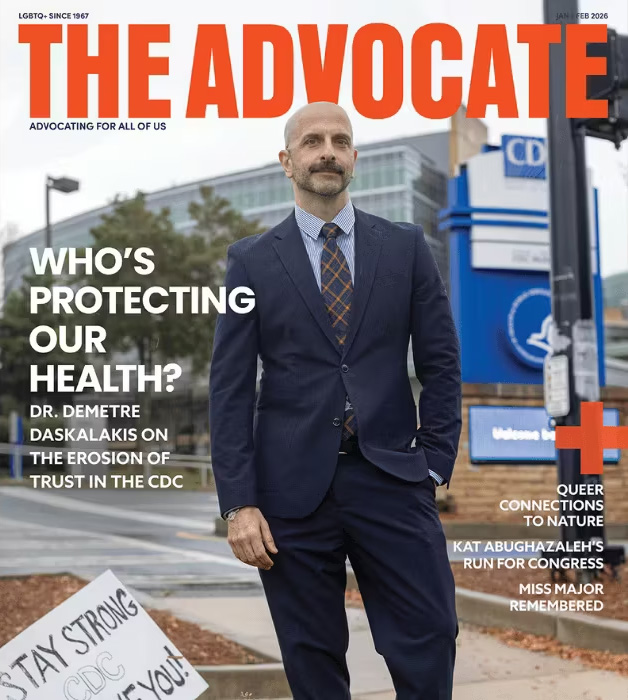
Former staff members at the Advocate and Out magazines revealed that parent company Equalpride laid off a number of employees late last week.
Those let go included Advocate editor-in-chief Alex Cooper, Pride.com editor-in-chief Rachel Shatto, brand partnerships manager Erin Manley, community editor Marie-Adélina de la Ferriére, and Out magazine staff writers Moises Mendez and Bernardo Sim, according to a report in Hollywood Reporter.
Cooper, who joined the company in 2021, posted to social media that, “Few people have had the privilege of leading this legendary LGBTQ+ news outlet, and I’m deeply honored to have been one of them. To my team: thank you for the last four years. You’ve been the best. For those also affected today, please let me know how I can support you.”
The Advocate’s PR firm when reached by the Blade said it no longer represents the company. Emails to the Advocate went unanswered.
Equalpride on Friday announced it acquired “Them,” a digital LGBTQ outlet founded in 2017 by Conde Nast.
“Equalpride exists to elevate, celebrate and protect LGBTQ+ storytelling at scale,” Equalpride CEO Mark Berryhill said according to Hollywood Reporter. “By combining the strengths of our brands with this respected digital platform, we’re creating a unified ecosystem that delivers even more impact for our audiences, advertisers, and community partners.”
It’s not clear if “Them” staff would take over editorial responsibilities for the Advocate and Out.

Arlington LGBTQ bar Freddie’s celebrates 25th anniversary

Love or fear flying you’ll devour ‘Why Fly’

Out actor Kevin Cahoon on starring role in ‘Chez Joey’

PHOTOS: Pride Reveal

Comings & Goings

Criteria for supporting a candidate in D.C.

Moving doc ‘Come See Me’ is more than Oscar worthy

Transmission DC breathes new life into a storied sound space

Capital Stonewall Democrats elect new leaders