
Financial
FHA loan limit increase benefits sellers and buyers
Hopeful purchasers now have more options; more players in the game will ensure good sale prices

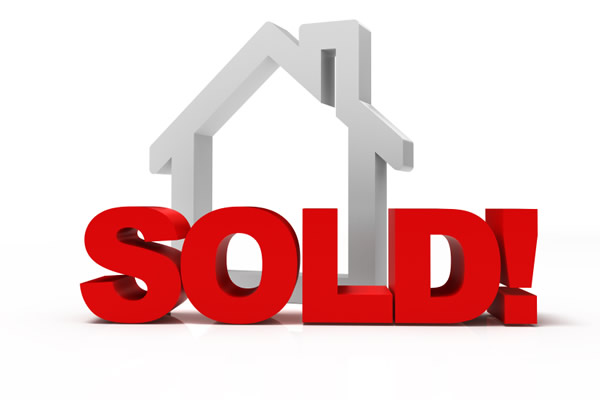
A new loan limit increase from the FHA will help sellers and make more properties attainable for borrowers.
Just in time for the holidays, the FHA (Federal Housing Administration) loan limit increase back to $729,750 from the $625,500 limit that existed prior to the mortgage crisis and for about half of 2011.
The limit means a lot in our area, where the median housing price is near the top in the nation. Since a greater percentage of our homes are sold in the $500,000-700,000 price range than in most of the rest of the country, the limits will be of particular benefit to our region. Sellers will have a greater support to maintain their home’s value since more buyers will be qualified to buy their home and therefore demand will be greater. And buyers will be able to qualify for more properties since the limit will increase.
Since FHA only requires a down payment of 3.5 percent and has rates that are often better than those of conventional loans, it has become an increasingly important part of the home buying and selling process. While there is a 1 percent funding fee and mandatory PMI requirements for five years for buyers who take advantage of the program, it has become a way for homebuyers to enter the market with less capital than is required by conventional programs.
Purchasing a home with less personal investment was a key factor in the mortgage and housing crisis that FHA loans are meant to help combat, but lending requirements and oversight have increased dramatically since the days preceding the 2008 meltdown. Gone are the so-called “no-doc”or “stated income” loan programs that simply relied on a credit score (and often a poor one) and while the minimal down payment requirements of FHA loans do not ensure buyers have much of their own skin in the game, buyers may only hold one FHA loan at a time, which helps prevent the extreme overleveraging of amateur investors that contributed to the nation’s foreclosure rolls.
The practical impact of an FHA loan limit increase is easily felt by today’s buyers and sellers. A listing of our own at $799,900 got limited interest while the loan program was reset to its pre-2009 levels, since it effectively ruled out FHA as an option (a buyer would need, $174,400 or 21.8 percent on top of the $625,500 loan to purchase the home at full price; this would make a conventional loan more attractive since it would not come with the 1 percent funding fee nor the more restrictive PMI — private mortgage insurance — requirement). When the limit was increased again, we instantly got two offers; one due specifically to that increase because the purchase could be made with $70,150, or 8.8 percent down at full price. Simple supply and demand dictates that with more buyers (who are not just willing, but also able), prices will stay steady or increase.
Our market continues to be strong and reliable, and investing in real estate in our area has become a favored way to build long-term financial security. The reversion to our recently high limits will only continue to benefit our local economy — specifically home buyers and sellers — as long as it is in place.
David Bediz is a Realtor at Coldwell Banker Residential Brokerage and part of the Dwight and David Real Estate Group. He can be reached at 202-352-8456 or through DwightandDavid.com.
Real Estate
Celebrate the power of homeownership this Fourth of July
Owning a home is powerful act of self-determination

This Fourth of July, celebrate more than independence: celebrate the power of LGBTQ+ homeownership. Explore resources, rights, and representation with GayRealEstate.com, the trusted leader in LGBTQ+ real estate for over 30 years.
Home is more than a house: it’s a symbol of freedom
As the fireworks light up the sky this Fourth of July, LGBTQ+ individuals and families across the country are not just celebrating the nation’s independence — they’re celebrating personal milestones of freedom, visibility, and the right to call a place their own.
For many in the LGBTQ+ community, owning a home represents more than stability — it’s a powerful act of self-determination. After generations of discrimination and exclusion from housing opportunities, more LGBTQ+ people are stepping into homeownership with pride and purpose.
Why homeownership matters to the LGBTQ+ community
While progress has been made, LGBTQ+ homebuyers still face unique challenges, including:
- Housing discrimination, even in states with legal protections
- Limited access to LGBTQ+ friendly realtors and resources
- Concerns about safety and acceptance in new neighborhoods
- Lack of representation in the real estate industry
That’s why the Fourth of July is a perfect time to reflect not just on freedom as a concept, but on how that freedom is expressed in the real world — through ownership, safety, and pride in where and how we live.
Finding LGBTQ+ Friendly Neighborhoods
One of the top concerns for LGBTQ+ buyers is whether they’ll feel safe, accepted, and welcome in their new neighborhood. Thanks to evolving attitudes and stronger community support, many cities across the U.S. now offer inclusive, affirming environments.
Some of the best cities for LGBTQ+ home buyers include:
- Wilton Manors, Fla. – A vibrant LGBTQ+ hub with strong community ties
- Palm Springs, Calif. – A longtime favorite for LGBTQ+ homeowners
- Asheville, N.C. – Progressive and artsy, with growing LGBTQ+ visibility
- Portland, Ore. – Inclusive, eco-conscious, and diverse
- Philadelphia, PA – Rich in history and LGBTQ+ community leadership
When you work with an LGBTQ+ friendly realtor, you get insight into more than property values — you get a real perspective on where you’ll feel most at home.
Navigating the real estate process with confidence
Whether you’re a first-time gay homebuyer or preparing to sell your home as an LGBTQ+ couple, it’s essential to understand your rights and options. Here are a few key tips:
1. Work with a trusted LGBTQ+ real estate agent
Representation matters. A gay realtor, lesbian real estate agent, or LGBTQ+ friendly agent understands the unique concerns you may face and advocates for you every step of the way.
Use GayRealEstate.com to connect with LGBTQ+ real estate agents near you. For over 30 years, we’ve helped LGBTQ+ buyers and sellers find their ideal home and a professional who respects their identity.
2. Know your legal protections
While federal law (via the Fair Housing Act and Supreme Court rulings) prohibits housing discrimination based on sexual orientation or gender identity, enforcement can vary by state. Make sure to research:
- State-level housing discrimination laws
- Local LGBTQ+ protections and resources
- What to do if you experience discrimination during a transaction
3. Secure inclusive financing
While most lenders follow fair lending rules, it’s smart to seek out banks or credit unions with LGBTQ+ inclusive policies and a history of non-discriminatory lending practices.
4. Plan for the future as a family
For same-sex couples, especially unmarried partners, it’s vital to review how you’ll hold the title, designate beneficiaries, and plan your estate.
Ask your agent or attorney about:
- Joint tenancy with right of survivorship
- Living trusts
- Powers of attorney and healthcare proxies
Selling a home as an LGBTQ+ homeowner
If you’re listing your home, working with a gay-friendly real estate agent ensures your identity and story are honored — not hidden — in the process.
Highlight:
- Your community connections
- Your home’s role in creating a safe space
- Local LGBTQ+ resources to attract like-minded buyers
Showcasing the full value of your home includes sharing what it meant to live there authentically and safely.
Your home, your freedom
The Fourth of July reminds us that freedom isn’t just an abstract idea — it’s lived every day in the spaces where we find comfort, love, and belonging. For the LGBTQ+ community, the right to own and thrive in a home is part of the larger journey toward full equality.
At GayRealEstate.com, we believe every LGBTQ+ person deserves:
- A safe place to live
- A community that welcomes them
- An advocate in the home buying or selling process
Ready to make a move?
Whether you’re dreaming of your first home, upgrading with your partner, or selling a space that helped shape your identity, GayRealEstate.com is your trusted partner. With our nationwide network of gay realtors, lesbian real estate agents, and LGBTQ+ friendly professionals, we make your journey smooth, respectful, and informed.
Visit GayRealEstate.com to:
- Search LGBTQ+ friendly homes
- Connect with inclusive real estate agents
- Access free guides for buyers and sellers
- Protect your rights and get expert advice
This Fourth of July, celebrate more than independence — celebrate your freedom to live, love, and own with pride.

Did you melt like the Wicked Witch of the West this week?
As summer temperatures rise, keeping your home or apartment cool during a heat wave can become both a comfort issue and a financial challenge. One of the most effective ways to keep a home cool is to prevent heat from entering in the first place. Sunlight streaming through windows can significantly raise indoor temperatures. Consider the following solutions:
• Close blinds or curtains during the hottest parts of the day. Blackout curtains or thermal drapes can reduce heat gain by up to 30%.
• Install reflective window films to block UV rays and reduce solar heat without sacrificing natural light.
• Use outdoor shading solutions such as awnings (yes, the ones you removed because they were “dated”) and shutters to limit direct sunlight.
Fans are a cost-effective way to circulate air and create a wind-chill effect that makes rooms feel cooler.
• Ceiling fans should rotate counterclockwise in the summer to push cool air down.
• Box fans or oscillating fans can be placed near windows to pull in cooler evening air or push hot air out.
• Create a cross-breeze by opening windows on opposite sides of your home and positioning fans to direct airflow through the space.
• For an extra cooling effect, place a bowl of ice or a frozen water bottle in front of a fan to circulate chilled air.
To optimize natural ventilation, open windows early in the morning or late in the evening when outdoor temperatures drop. This allows cooler air to flow in and helps ventilate heat that built up during the day.
Appliances and electronics generate a surprising amount of heat. To reduce indoor temperatures:
• Avoid using the oven or stove during the day; opt for no-cook meals, microwave cooking, or grilling outside.
• Run heat-producing appliances like dishwashers and clothes dryers in the early morning or late evening.
• Unplug electronics when not in use, as even standby power can add heat to your space.
• Switching to energy-efficient LED lightbulbs can also reduce ambient heat compared to incandescent lighting.
If you do use an air conditioner, maximize its effectiveness by:
• Setting it to a reasonable temperature—around 76–78°F when you’re home and higher when you’re away.
• Cleaning or replacing filters regularly to maintain airflow and efficiency.
• Sealing gaps around doors and windows to prevent cool air from escaping. (Didn’t we all have a parent who said, “Close the door. You’re letting all the cool out?”)
• Using a programmable thermostat to optimize cooling schedules and reduce energy use.
If it is not cost-prohibitive, adding insulation in attics and walls can greatly reduce heat transfer. Solar panels that reflect heat can also help, as well as offset the cost of their installation. Adding weatherstripping around doors and windows, sealing cracks, and using door sweeps can make a significant difference in keeping heat out and cool air in.
Natural and eco-conscious methods can also help cool your home.
• Snake plants, ferns, or rubber trees can improve air quality and slightly cool the air through transpiration.
• White or reflective roof paint can reduce roof temperatures significantly.
• Cooling mats or bedding can make sleeping more comfortable without cranking up the A/C.
For renters or those who can’t make permanent modifications, there are still plenty of ways to keep cool.
• Use portable fans and A/C units instead of built-in systems, making sure they are the correct size for your space.
• Removable window film or static cling tinting can reflect heat without violating your lease.
• Install tension rod curtains or temporary blackout panels instead of hardware-mounted window coverings.
• Add draft blockers and weatherstripping tape that can be applied and removed without damage.
• Cover floors with light-colored rugs to reflect heat rather than absorb it.
• If allowed, use temporary adhesive hooks to hang reflective materials or light-filtering fabrics over windows.
Even if your space is warm, you can still take steps to help your body stay cool.
• Wear light, breathable fabrics like cotton or linen.
• Stay hydrated and avoid caffeine or alcohol during peak heat hours.
• Take cool showers or use damp cloths on your neck and wrists to bring your body temperature down.
Keeping your home or apartment cool in the summer doesn’t have to be expensive or energy-intensive. With a few adjustments such as blocking sunlight, optimizing airflow, using fans effectively, and making renter-friendly upgrades, you can create a more comfortable indoor environment while keeping energy bills in check.
Valerie M. Blake is a licensed Associate Broker in D.C., Maryland, and Virginia with RLAH @properties. Call or text her at 202-246-8602, email her at DCHomeQuest.com, or follow her on Facebook at TheRealst8ofAffairs.
Real Estate
The world’s on fire and D.C. is on sale (sort of)
Prices are up, but then again, nothing makes sense anymore
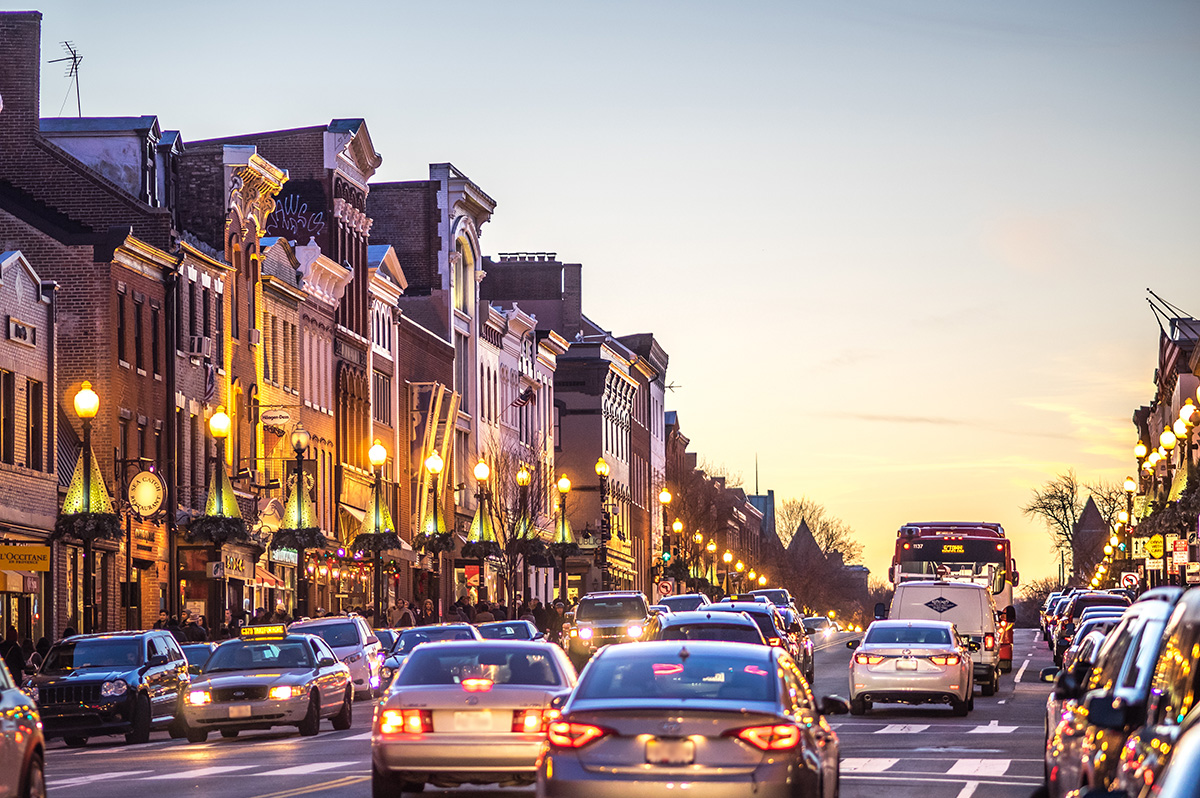
ICE is disappearing people, revered government agencies are shuttering, and who knows if we’ll be in World War III next week? But can you believe prices in D.C. are actually still up 6.3% since last year? It doesn’t make sense, and perhaps that does make sense, because nothing seems to make any sense any more.
That said, there are some parts of our market that are truly suffering. The interest rates, which have been up, up, up for about four years now, are the ongoing rain on our market’s military parade. Combine that with 75,000 federal employees taking a buyout nationwide, and DOGE cuts eliminating around 40,000 federal jobs in the District (per estimates by the D.C. CFO), not to mention thousands of other job losses in non-governmental organizations due to funding and program cuts, and you’ve got a case of uncertainty, and downright unaffordability in the pool of otherwise would-be buyers.
This has had a marked impact on properties that starter-home buyers and low- to mid-level employees would otherwise buy, most notably condominium and cooperative apartment units. These properties have already slowed in our market thanks to the profound impact that higher interest rates have had on their monthly carrying costs—pair that with job insecurity, and a lot of condos are proving to be very difficult to sell indeed.
So how is the average sale price up in our market?
The increase is almost entirely due to the resounding strength of the single-family home market, especially in upper Northwest D.C., where it is still quite common to see bidding wars, even on properties pushing past the $3M mark. It seems that buyers in that echelon are less impacted by a few percentage points in the interest rate, and less concerned about their job security. Notably, those buyers are often married with children and have an absolute need for more space, must stay in the area due to one spouse’s job, or the kid’s friend group, regardless of whether the cost of owning is thousands of dollars more per month than it would have been in 2020 or 2021. The continued appreciation in these neighborhoods defies imagination.
So, what to do if you are not one of those lucky enough to be shopping for a $3M home? The short answer: wait. If you want more space, rent your current place out and learn the joys of being a landlord while someone else pays your mortgage. Need the equity from your current home to buy your next place? Get a home equity line of credit, or loan, and pull the equity out of your current place to buy the next one. Or—and I have never recommended this before in 21 years of being a Realtor—rent for a few years. Sure, I’d love to list and sell your condo so you can climb the real estate ladder, but it might just be a waste of time, money or both if you could just ride out this storm and sell in a DOGE-less future.
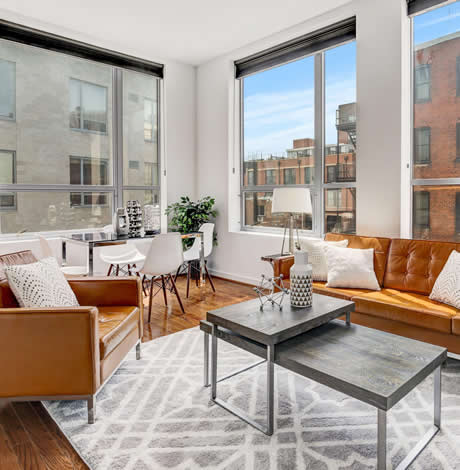
All this said, there are some condos that seem to be immune from this recent negative news. Anecdotally, it feels like it’s the truly special ones that do just fine no matter the market. Our recent listing in Capitol Hill had a view from every one of its 15 windows of the Supreme Court. Sold in five days with six offers. Another condo was on the top two floors of a townhouse and had the coolest black wood floors that gleamed like a grand piano. Sold in four days at full price.
So, all is not for naught if you have a condo or home in an area that people want to be in, with nice space, light, amenities and a certain je ne sais quois. And, as long as we have a democracy in a few years, my experience says our market will be back, stronger than ever, really soon.
David Bediz is a Realtor and mortgage loan broker for the Bediz Group LLC and Home Starts Here, LLC. Reach him at [email protected].

‘A Wrinkle in Time’ comes to Arena Stage

Celebrate the power of homeownership this Fourth of July

Two new documentaries highlight trans history

Trans cyclist’s victory sparks outrage in conservative media

Activist recalls experience in Tel Aviv after Israel-Iran war began

Supreme Court to consider bans on trans athletes in school sports

Celebrate the Fourth of July the gay way!

Va. court allows conversion therapy despite law banning it

LGBTQ suicide prevention hotline option is going away. Here’s where else to go in Md.

UPenn erases Lia Thomas’s records as part of settlement with White House
-
 U.S. Supreme Court2 days ago
Supreme Court to consider bans on trans athletes in school sports
-
 Out & About2 days ago
Celebrate the Fourth of July the gay way!
-
 Virginia2 days ago
Va. court allows conversion therapy despite law banning it
-
 Maryland5 days ago
LGBTQ suicide prevention hotline option is going away. Here’s where else to go in Md.