National
House votes to ban same-sex weddings on military bases
GOP-controlled chamber approves King amendment by 247-166 vote
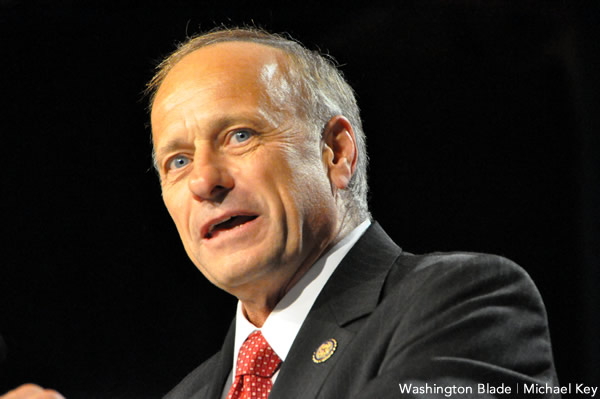
Rep. Steve King (Blade photo by Michael Key)
The U.S. House approved on Thursday an amendment that aims to bar same-sex wedding ceremonies from taking place on military bases — although LGBT groups are denying the measure will have any legal impact.
The amendment, introduced by Rep. Steve King (R-Iowa,) was approved 247-166 as part of major $608 billion Pentagon budget legislation known as the fiscal year 2013 defense appropriations bill. The House on the same day approved the legislation as a whole by 247-167.
In a floor speech offering the amendment, King, who has reputation for being anti-gay, said the amendment was necessary because the Pentagon is allowing same-sex weddings to take place on military bases and chaplains to officiate over these ceremonies despite the Defense of Marriage Act, which prohibits federal recognition of same-sex marriage.
“This same-sex marriage that has been taking place on our military bases, where otherwise legal around the world, contravenes the Defense of Marriage Act,” King said. “The Defense of Marriage Act means this, actually says specifically this: marriage means only a legal union between one man and one woman, as husband and wife, and the word spouse refers only to a person of the opposite sex who is a husband or a wife. Pretty simple statute being contravened by the directives of the President of the United States as exercised through the secretary of defense.”
The Pentagon issued guidance shortly after “Don’t Ask, Don’t Tell” repeal went into effect giving the OK to same-sex wedding ceremonies on military bases and allowing chaplains to participate in them if they so choose. The guidance states the military facilities should be used on a “sexual-orientation basis” and military chaplains may officiate over same-sex weddings, but aren’t required to do so if that’s contrary to their religious briefs.
Also on the House floor, King knocked Obama for coming out in favor of same-sex marriage, suggesting Obama’s new position is what makes him believe the administration can circumvent DOMA to allow same-sex weddings on military bases — even though Obama announced support for same-sex marriage more than a year after the Pentagon issued its guidance.
“The President has now stepped out and said that he supports same-sex marriage in the United States,” King said. “That is, apparently, the most recent evolution of his position. But an evolving position of the President of the United States cannot be allowed to contravene the will of the people of the United States, as expressed through the statutes of the United States and as signed by previous President Bill Clinton in September of 1996.”
Five Republicans voted against the amendment: Reps. Ileana Ros-Lehtinen (R-Fla.), Judy Biggert (R-Ill.), Rep. Mario Diaz-Balart (R-Fla.), Richard Hanna (R-N.Y.) and Nan Hayworth (R-N.Y.). But 17 Democrats voted in favor of the measure: Reps. John Barrow (D-Ga.), Sanford Bishop (D-Ga.), Ben Chandler (D-Ky.), Jerry Costello (D-Ill.), Mark Critz (D-Pa.), Joe Donnelly (D-Ind.), Gene Green (D-Texas), Tim Holden (D-Pa.), Larry Kissell (D-N.C.), Dan Lipinski (D-Ill.), Jim Matheson (D-Utah), MIke McIntyre (D-N.C.), Collin Peterson (D-Minn.), Nick Rahall (D-W.V.), Miss Ross (D-Ark.) and Health Shuler (D-N.C.).
Rep. Norman Dicks (D-Wash.), ranking Democrat on the House appropriations committee and House defense subcommittee, spoke out against the King amendment on the floor, saying he believes lawmakers should discuss DOMA, but in terms of the negative impact it has on gay service members.
“As the gentleman knows, the Defense of Marriage Act is already current law,” Dicks said. “Despite the successful repeal of ‘Don’t Ask, Don’t Tell’ last year under DOMA, same-sex military spouses are not entitled to the same benefits as other married couples. This amendment only seeks to divide this House. He knows that current law already prohibits same-sex spouses from independently shopping at military commissaries, using base gyms, or benefiting from subsidized dental and health care.”
LGBT advocacy expressed indignation over the passage of the amendment, but said the measure would have no impact because federal funds are already not used in violation of DOMA.
Aubrey Sarvis, executive director of the Servicemembers Legal Defense Network, said King’s amendment would do “nothing new.”
“No funds can ever be spent in contravention of federal law,” Sarvis said. “With this amendment, the Congressman is wasting Congress’ time and energy by restating current law in an attempt to infringe upon the rights of chaplains to practice their own faith and relegate gay and lesbian service members to second-class status by restricting their use of military facilities.”
Sarvis added DOMA has no impact on whether same-sex weddings can take place on military bases or whether chaplains can officiate over them.
“If the congressman wants a debate about the inequalities thrust upon America’s gay and lesbian service members by DOMA, let’s have that debate,” Sarvis said. “But perhaps, he should first undertake a review of the law and come to the debate prepared.”
Prior to passage of the amendment, the American Civil Liberties Union wrote a letter dated July 19 to House members urging them to vote “no” on the measure, saying it’s “both unnecessary and redundant.” The letter is signed by Ian Thompson, the ACLU’s legislative representative, and Laura Murphy, director of the Washington legislative office.
“While there are multiple legal challenges to DOMA working their way through the federal courts, it is still the law of the land,” Thompson and Murphy write. “The Department of Defense, like all federal agencies, is bound to uphold the law. The King Amendment serves absolutely no purpose other than to score election year political points at the expense of gay and lesbian couples and their families.”
It’s the not the first time the House has reaffirmed DOMA since Republicans have taken control of the chamber. On the same day that Obama announced his support for same-sex marriage, the House approved a measure by freshman Rep. Tim Huelskamp (R-Kansas) stating no U.S. government funds should be used in violation of DOMA. Last year, the House approved another amendment from Rep. Virginia Foxx (R-N.C.) reaffirming DOMA as part of defense appropriations legislation.

Federal Government
Trump budget targets ‘gender extremism’
Proposed spending package would target ‘leftist’ political ideologies
The White House submitted its 2027 budget request to Congress last month, outlining a push for the Federal Bureau of Investigation to “proactively” target what it describes as “extremism” related to gender — raising concerns about the potential for law enforcement to target LGBTQ people.
The Trump-Vance administration’s 2027 budget request, submitted to Congress on April 4, proposes a dramatic increase in national security and law enforcement spending, while reducing foreign aid and restructuring multiple domestic security programs. In total, the administration is requesting $2.16 trillion in discretionary budget authority (including mandatory resources), a 15.3 percent increase over the 2026 proposal.
Central to the proposal is the creation of a new “NSPM-7 Joint Mission Center,” a direct follow-up to the September 2025 National Security Presidential Memorandum 7 (NSPM-7). The directive instructs the Justice Department, the FBI, and other national security agencies to combat what the administration defines as “political violence in America,” effectively reshaping the Joint Terrorism Task Force network to focus on “leftist” political ideologies, according to reporting by independent journalist Ken Klippenstein.
The American Civil Liberties Union has characterized NSPM-7 as a way for President Donald Trump to intimidate his political enemies.
In a press release following the memorandum, Hina Shamsi, director of the ACLU’s National Security Project, said, “President Trump has launched yet another effort to investigate and intimidate his critics,” and had described the move as an “intimidation tactic against those standing up for human rights and civil liberties.”
The proposed mission center would include personnel from 10 federal agencies tasked with targeting “domestic terrorists” associated with a wide range of ideologies. Among them is what the administration labels “extremism” related to gender, alongside categories such as “anti-Americanism,” “anti-capitalism,” “anti-Christianity,” and “support for the overthrow of the U.S. government.” The document also cites “hostility toward those who hold traditional American views” on family, religion, and morality — language LGBTQ advocates have increasingly warned could be used to frame queer and transgender rights movements as ideological threats.
The mission center is one component of a proposed $166 million increase in the FBI’s counterterrorism budget.
In total, the FBI would receive $12.5 billion for salaries and expenses under the proposal, a $1.9 billion increase. Planned investments include unmanned aerial systems operations and counter-drone capabilities, counterterrorism efforts, and security preparations for the 2028 Summer Olympics in Los Angeles. The budget also cites 67,000 FBI arrests since Jan. 20, 2026, which it describes as a 197 percent increase from the prior year.
When Congress passed the USA PATRIOT Act in 2001, it also enacted 18 U.S.C. § 2331(5), which defines domestic terrorism as activities involving acts dangerous to human life that violate criminal laws and are intended to intimidate or coerce civilians or influence government policy through violence. That statutory definition has not changed.
However, federal agencies have historically categorized domestic terrorism threats into groups such as racially or ethnically motivated violent extremism, anti-government or anti-authority violent extremism, and other threats, including those tied to bias based on religion, gender, or sexual orientation.
The language in the budget suggests a shift in how those categories are interpreted and applied — particularly by explicitly linking “extremism” to gender and to perceived opposition to “traditional” views — without any corresponding change to federal law. Only Congress has the power to change the definition of domestic terrorism by passing legislation.
The budget document states:
“DT lone offenders will continue to pose significant detection and disruption challenges because of their capacity for independent radicalization to violence, ability to mobilize discretely, and access to firearms. Additionally, in recent years, heinous assassinations and other acts of political violence in the United States have dramatically increased. Commonly, this violent conduct relates to views associated with anti-Americanism, anti-capitalism, and anti-Christianity; support for the overthrow of the U.S. government; extremism on migration, race, and gender; and hostility toward those who hold traditional American views on family, religion, and morality.”
This language echoes earlier actions by the Trump-Vance administration targeting trans people.
On the first day of his second term, President Trump signed Executive Order 14168, titled “Defending Women from Gender Ideology Extremism and Restoring Biological Truth to the Federal Government.”
The order establishes a strict binary definition of sex and withdraws federal recognition of trans people.
“It is the policy of the United States to recognize two sexes, male and female,” the order states. “‘Sex’ shall refer to an individual’s immutable biological classification as either male or female. ‘Sex’ is not a synonym for and does not include the concept of ‘gender identity.’”
Appropriations committees in both chambers are expected to begin hearings in the coming weeks.
Puerto Rico
The ‘X’ returns to court
1st Circuit hears case over legal recognition of nonbinary Puerto Ricans

Eight months ago, I wrote about this issue at a time when it had not yet reached the judicial level it faces today. Back then, the conversation moved through administrative decisions, public debate, and political resistance. It was unresolved, but it had not yet reached this point.
That has now changed.
Lambda Legal appeared before the 1st U.S. Court of Appeals in Boston, urging the court to uphold a lower court ruling that requires the government of Puerto Rico to issue birth certificates that accurately reflect the identities of nonbinary individuals. The appeal follows a district court decision that found the denial of such recognition to be a violation of the U.S. Constitution.
This marks a turning point. The issue is no longer theoretical. A court has already determined that unequal treatment exists.
The argument presented by the plaintiffs is grounded in Puerto Rico’s own legal framework. Identity birth certificates are not static historical records. They are functional documents used in everyday life. They are required to access employment, education, and essential services. Their purpose is practical, not symbolic.
Within that framework, the exclusion of nonbinary individuals does not stem from a legal limitation. Puerto Rico already allows gender marker corrections on birth certificates for transgender individuals under the precedent established in Arroyo Gonzalez v. Rosselló Nevares. In addition, the current Civil Code recognizes the existence of identity documents that reflect a person’s lived identity beyond the original birth record.
The issue lies in how the law is applied.
Recognition is granted within specific categories, while those who do not identify within that binary structure remain excluded. That exclusion is now at the center of this case.
Lambda Legal’s position is straightforward. Requiring individuals to carry documents that do not reflect who they are forces them into misrepresentation in essential aspects of daily life. This creates practical barriers, exposes them to scrutiny, and places them in a constant state of vulnerability.
The plaintiffs, who were born in Puerto Rico, have made clear that access to accurate identification is not symbolic. It is a basic condition for moving through the world without contradiction imposed by the state.
The fact that this case is now being addressed in the federal court system adds another layer of significance. This is not a pending policy discussion or a legislative proposal. It is a constitutional question. The analysis is not about political preference, but about rights and equal protection under the law.
This case does not exist in isolation.
It unfolds within a broader context in which debates over identity and rights have increasingly been shaped by the growing influence of conservative perspectives in public policy, both in the United States and in Puerto Rico. At the local level, this influence has been reflected in legislative discussions where religious arguments have begun to intersect with decisions that should be grounded in constitutional principles. That intersection creates tension around the separation of church and state and has direct consequences for access to rights.
Recognizing this context is not an attack on faith or religious practice. It is an acknowledgment that when certain perspectives move into the realm of public authority, they can shape outcomes that affect specific communities.
From within Puerto Rico, this is not a distant debate. It is a lived reality. It is present in the difficulty of presenting identification that does not match one’s identity, and in the consequences that follow in workplaces, schools, and government spaces.
The progression of this case introduces the possibility of change within the applicable legal framework. Not because it resolves every tension surrounding the issue, but because it establishes a legal examination of a practice that has long operated under exclusion.
Eight months ago, the conversation centered on ongoing developments. Today, there is already a judicial finding that identifies a violation of rights. What remains is whether that finding will be upheld on appeal.
That process does not guarantee an immediate outcome, but it shifts the ground.
The debate is no longer theoretical.
It is now before the courts.
National
LGBTQ community explores arming up during heated political times
Interest in gun ownership has increased since Donald Trump returned to office
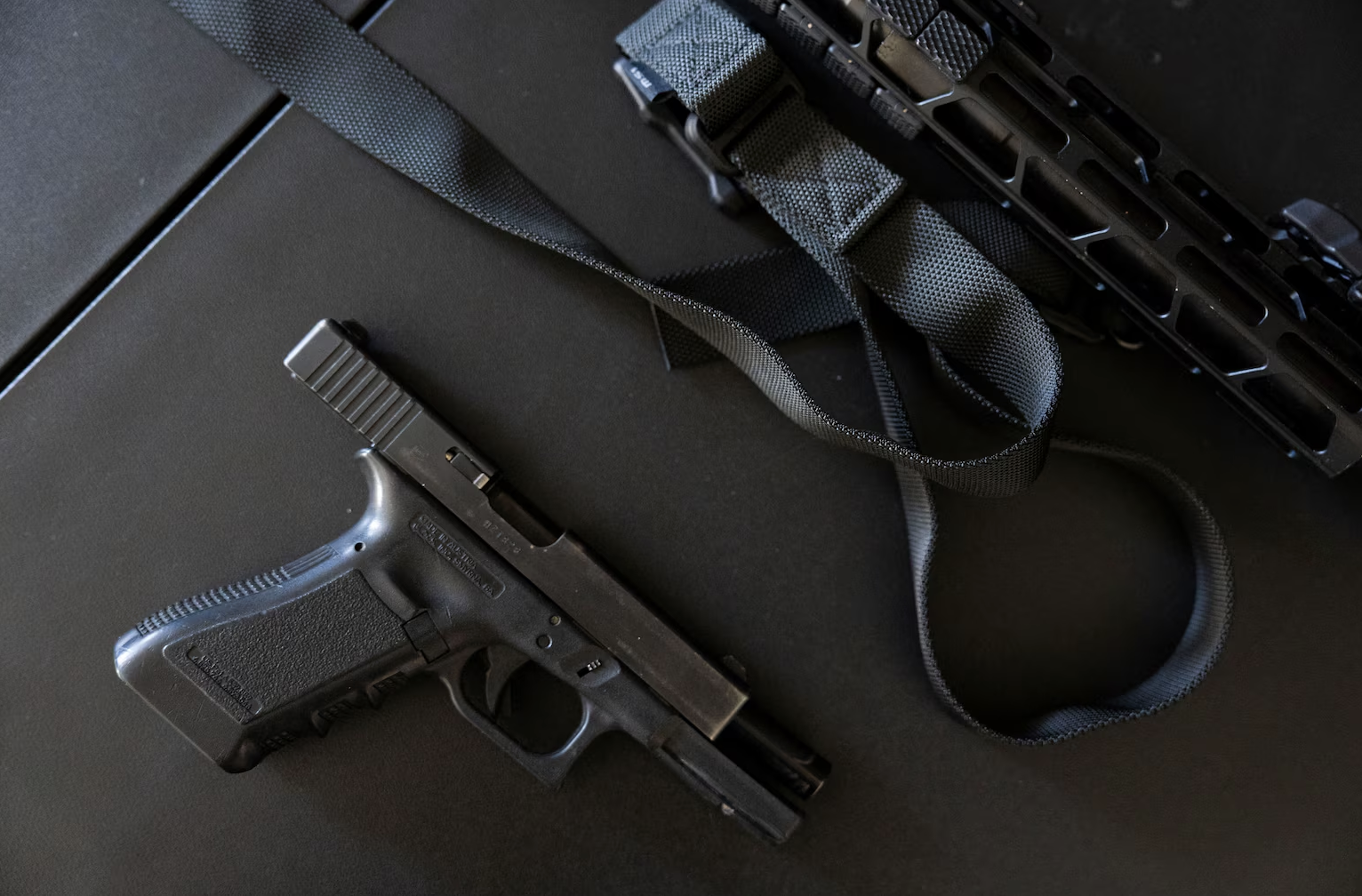
By JOHN-JOHN WILLIAMS IV | As the child of a father who hunted, Vera Snively shied away from firearms, influenced by her mother’s aversion to guns.
Now, the 18-year-old Westminster electrician goes to the shooting range at least once a month. She owns a rifle and a shotgun, and plans to get a handgun when she turns 21.
“I want to be able to defend my community, especially being in political spaces and queer spaces,” said Snively, a trans woman. “It’s just having that extra line of safety, having that extra peace of mind would be important to me.”
Snively is among what some say is a growing number of LGBTQ gun owners across the United States. Gun rights organizations and advocates say interest in gun ownership appears to have increased in that community since President Donald Trump returned to the White House last year.
The rest of this article can be read on the Baltimore Banner’s website.

Sri Lankan government withdraws support for LGBTQ tourism initiative

In an act of artistic defiance, Baltimore Center Stage stays focused on DEI

Trump budget targets ‘gender extremism’

Susan Lucci on love, loss, and ‘All My Children’

How to navigate shifting tenant expectations

Trump’s war threats trigger rare 25th Amendment discussion

New book celebrates 1970s dance music icons

ROSENSTEIN: Vote McDuffie for mayor of D.C.

A Sondheim masterpiece ‘Merrily’ rolls onto Netflix