Local
Gallaudet president reinstates chief diversity officer
University, McCaskill mum on possible terms of reinstatement
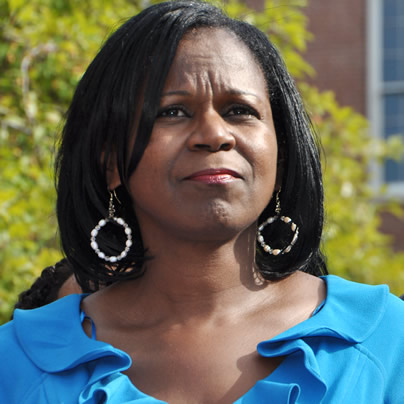
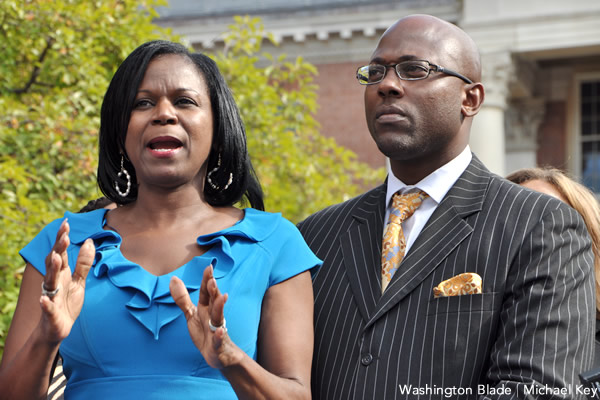
Angela McCaskill was placed on leave by Gallaudet University from her job as a diversity officer after it was revealed she signed an anti-gay marriage petition. (Washington Blade file photo by Michael Key)
Gallaudet University announced late Monday that it has reinstated its chief diversity officer, who was placed on paid administrative leave in October for signing a petition to place Maryland’s same-sex marriage law on the ballot in a voter referendum.
“With this communication I am announcing that Dr. Angela McCaskill has returned to campus to resume her full-time duties and responsibilities as Chief Diversity Officer,” Gallaudet President T. Alan Hurwitz said in an email sent to students, faculty, and staff members.
Hurwitz made the decision to place McCaskill on leave after news surfaced on campus in early October that she signed the petition circulated by same-sex marriage opponents seeking to overturn the marriage equality law passed earlier in the year by the Maryland General Assembly.
Anti-gay groups opposing the marriage law immediately denounced Hurwitz’s action, saying it confirmed their predictions that the law would lead to intolerance toward people of faith who oppose gay marriage. The opponents noted that McCaskill, a Maryland resident, signed the petition at her church.
In a news conference in Annapolis one week after what supporters called the suspension from her job, McCaskill said the action violated her right as a citizen to petition the government to give voters the opportunity to decide on a controversial issue. She declined to say whether she would vote for or against the marriage equality law in the November election.
Marriage equality supporters, including Maryland Governor Martin O’Malley, joined opponents in calling on Gallaudet to reinstate McCaskill, saying they, too, believe she shouldn’t be penalized for expressing her personal views on the matter.
Voters upheld the law in a close vote, making Maryland along with two other states – Maine and Washington – the first states to approve same-sex marriage by popular vote. Same-sex marriages began in Maryland shortly after midnight on New Years Day.
In his email message on Monday, Hurwitz didn’t say whether the reinstatement was based on any conditions. At the time he placed McCaskill on leave, Hurwitz hinted that he was sympathetic to concerns raised by gay and lesbian students on campus that it was inappropriate for the campus diversity officer to push for a ballot measure seeking to deny gays and lesbians the right to marry.
At her news conference in Annapolis, McCaskill startled some gay activists when she identified two out lesbian faculty members at Gallaudet whom she said persuaded Hurwitz take action against her for signing the ballot petition.
When reached by the Blade, faculty members Martina “MJ” Bienvenu and Kendra Smith declined to comment, saying they preferred that the matter be a “discussion” between the university and McCaskill.
“During the past three months a large number of you have taken the initiative to communicate with me,” Hurwitz said in his email. “This has been a period of reflection for all of us. I am deeply appreciative of the time you have taken to communicate your views, of the clearly heartfelt manner in which you have expressed those thoughts, and of the overall maturity you have shown in your willingness to consider the differing views others may hold.”
He added, “The work of the University’s Office of diversity and Inclusion is vital and must continue in an active and vibrant way. I personally look forward to working with Dr. McCaskill on the work of that office.”
McCaskill’s attorney, J. Wyndal Gordon, didn’t immediately respond to a request for comment. At the Annapolis news conference, Gordon said the university’s action “tarnished” McCaskill’s reputation. He said that on her behalf, he had asked the university to compensate McCaskill for damages, in addition to reinstating her, and hinted that she would consider filing a lawsuit over the matter.
University spokesperson Kaitlin Luna, who provided the Blade with a copy of Hurwitz’s email statement, said the university would have no further comment.
“As for the other questions, they are legal matters, which the university cannot speak to,” she said.

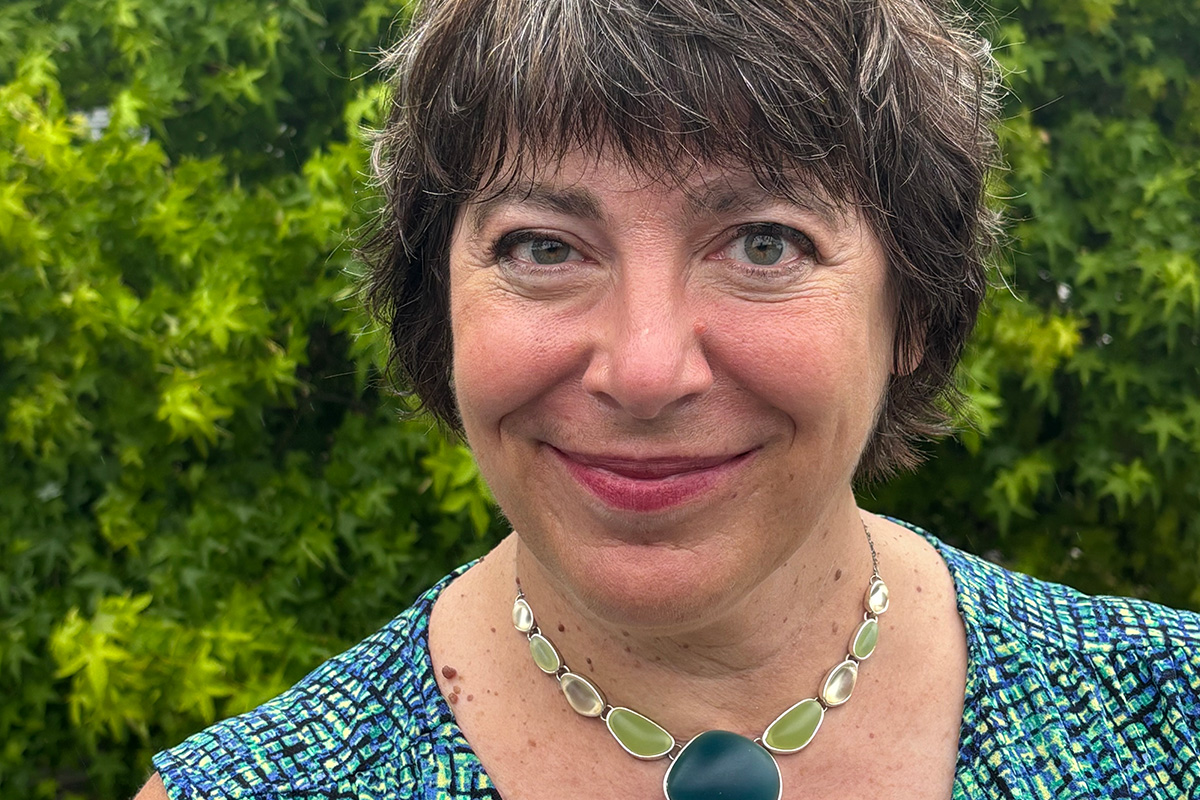
The Comings & Goings column is about sharing the professional successes of our community. We want to recognize those landing new jobs, new clients for their business, joining boards of organizations and other achievements. Please share your successes with us at [email protected].
The Comings & Goings column also invites LGBTQ+ college students to share their successes with us. If you have been elected to a student government position, gotten an exciting internship, or are graduating and beginning your career with a great job, let us know so we can share your success.
Congratulations to Susan Ferentinos, Ph.D., on her appointment to the Advisory Board of the Smithsonian’s National Museum of American History. On her appointment she said, “This is a moment when historians must stand up for accuracy, complexity, and the full breadth of the American story. I look forward to working with my fellow board members to ensure the National Museum of American History continues to fulfill its mission of serving all Americans with the highest standards of scholarship and integrity.”
Ferentinos operates her own national consulting business based in Port Townsend, Wash., with satellite operations based in Delaware County, Pa. Her business helps museums, historic sites, and government agencies expand and diversify the stories they tell about the American past. Her work focuses on interpreting LGBTQ history and women’s history, bringing overlooked narratives into mainstream historical interpretation. Her clients have included the National Park Service, the American Association for State and Local History, Baltimore Heritage, and numerous museums and historic sites across the country. Among her many accomplishments, Susan was part of the teams responsible for getting three LGBTQ sites designated as National Historic Landmarks. Two of those landmarks are in Washington, D.C. She authored the NHL nominations for the Furies Collective, in Capitol Hill, building on research performed by local historian Mark Meinke, and she authored the NHL nomination for the home of African-American educators Lucy Diggs Slowe and Mary Burrill, in Brookland, building on research by Eric Griffitts and Katherine Wallace, of EHT Traceries.
Ferentinos earned her bachelor’s degree from College of William and Mary in International Development and Philosophy; a master’s from Indiana University in United States History; and a Ph.D. from Indiana University in United States History.
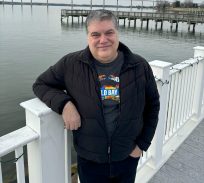
Congratulations also to Shawn Gaylord on joining a team at Berkshire Hathaway PenFed Reality in Solomons, Md. His focus will be Southern Maryland – Calvert, St. Mary’s, Charles, and Anne Arundel. Gaylord still leads the LGBTQ+ Strategies Team at The Raben Group and works part-time on federal policy for GLSEN.
Maryland
Md. Commission on LGBTQIA+ Affairs released updated student recommendations
LGBTQ students report higher rates of bullying, suicide
The Maryland Commission on LGBTQIA+ Affairs has released updated recommendations on how the state’s schools can support LGBTQ students.
The updated 16-page document outlines eight “actionable recommendations” for Maryland schools, supplemented with data and links to additional resources. The recommendations are:
- Developing and passing a uniform statewide and comprehensive policy aimed at protecting “transgender, nonbinary, and gender expansive students” against discrimination. The recommendation lists minimum requirements for the policy to address: name, pronoun usage, and restroom access.
- Requiring all educators to receive training about the specific needs of LGBTQ students, by trained facilitators. The training’s “core competencies” include instruction on terminology, data, and support for students.
- Implementing LGBTQ-inclusive curricula and preventing book bans. The report highlights a “comprehensive sexual education curriculum” as specifically important in the overall education curriculum. It also states the curriculum will “provide all students with life-saving information about how to protect themselves and others in sexual and romantic situations.”
- Establishing Gender Sexuality Alliances “at all schools and in all grade levels.” This recommendation includes measures on how to adequately establish effective GSAs, such as campaign advertising, and official state resources that outline how to establish and maintain a GSA.
- Providing resources to students’ family members and supporters. This recommendation proposes partnering with local education agencies to provide “culturally responsive, LGBTQIA+ affirming family engagement initiatives.”
- Collecting statewide data on LGBTQ youth. The data on Maryland’s LGBTQ youth population is sparse and non-exhaustive, and this recommendation seeks to collect information to inform policy and programming across the state for LGBTQ youth.
- Hiring a full-time team at the Maryland Department of Education that focuses on LGBTQ student achievement. These employees would have specific duties that include “advising on local and state, and federal policy” as well as developing the LGBTQ curriculum, and organizing the data and family resources.
- Promoting and ensuring awareness of the 2024 guidelines to support LGBTQ students.
The commission has 21 members, with elections every year, and open volunteer positions. It was created in 2021 and amended in 2023 to add more members.
The Governor’s Office of Communication says the commission’s goal is “to serve LGBTQIA+ Marylanders by galvanizing community voices, researching and addressing challenges, and advocating for policies to advance equity and inclusion.”
The commission is tasked with coming up with yearly recommendations. This year’s aim “to ensure that every child can learn in a safe, inclusive, and supportive environment.”
The Human Rights Campaign’s most recent report on LGBTQ youth revealed that 46.1 percent of LGBTQ youth felt unsafe in some school settings. Those numbers are higher for transgender students, with 54.9 percent of them saying they feel unsafe in school.
Maryland’s High School Youth Risk Behavior Survey reveals a disparity in mental health issues and concerns among students who identify as LGBTQ, compared to those who are heterosexual. LGBTQ students report higher rates of bullying, feelings of hopelessness, and suicidal thoughts. Nearly 36 percent of LGBTQ students report they have a suicide plan, and 26.7 percent of respondents say they have attempted to die by suicide.
The commission’s recommendations seek to combat the mental health crisis among the state’s LGBTQ students. They are also a call for local and state governments to work towards implementing them.
Virginia
Va. lawmakers consider partial restoration of Ryan White funds
State Department of Health in 2025 cut $20 million from Part B program
The Virginia General Assembly is considering the partial restoration of HIV funding that the state’s Department of Health cut last year.
The Department of Health in 2025 cut $20 million — or 67 percent of total funding — from the Ryan White Part B program.
The funding cuts started with the Trump-Vance administration passing budget cuts to federal HIV screening and protection programs. Rebate issues between the Virginia Department of Health and the company that provides HIV medications began.
Advocates say the funding cuts have disproportionately impacted lower-income people.
The Ryan White HIV/AIDS Program, a federal program started in 1990, provides medical services, public education, and essential services. Part B offers 21 services, seven of which remained funded after the budget cuts.
Equality Virginia notes “in 2025, a 67 percent reduction severely destabilized HIV services across the commonwealth.”
Virginia lawmakers have approved two bills — House Bill 30 and Senate Bill 30 — that would partially restore the funding. The Ryan White cuts remain a concern among community members.
Both chambers of the General Assembly must review their proposed changes before lawmakers can adopt the bills.
“While these amendments aren’t a full restoration of what community-based organizations lost, this marks a critical step toward stabilizing care for thousands of Virginians living with HIV,” said Equality Virginia Executive Director Narissa Rahaman. “Equality Virginia plans to continue their contact with lawmakers and delegates through the conference and up until the passing of the budget.”
“We appreciate lawmakers from both sides of the aisle who recognized the urgency of this moment and will work to ensure funding remains in the final version signed by the governor,” added Rahaman.

Intense doc offers transcendent treatment of queer fetish pioneer

In D.C. comedy, be sure to shop local

Comings & Goings

Liza Minnelli makes surprise appearance at GLAAD Media Awards

Fla. Senate passes ‘Anti-Diversity’ bill that could repeal local LGBTQ protections

Peter Thiel’s expanding power — and his overlap with Jeffrey Epstein

13 HIV/AIDS activists arrested on Capitol Hill

Va. lawmakers consider partial restoration of Ryan White funds

Md. Commission on LGBTQIA+ Affairs released updated student recommendations

35 years after ‘Truth or Dare,’ Slam is still dancing
-

 National5 days ago
Peter Thiel’s expanding power — and his overlap with Jeffrey Epstein
-
National4 days ago
13 HIV/AIDS activists arrested on Capitol Hill
-
Virginia5 days ago
Va. lawmakers consider partial restoration of Ryan White funds
-
Maryland5 days ago
Md. Commission on LGBTQIA+ Affairs released updated student recommendations