a&e features
Chef Patrick O’Connell offers lavish wedding prize
HRC to auction dream ceremony at Inn at Little Washington
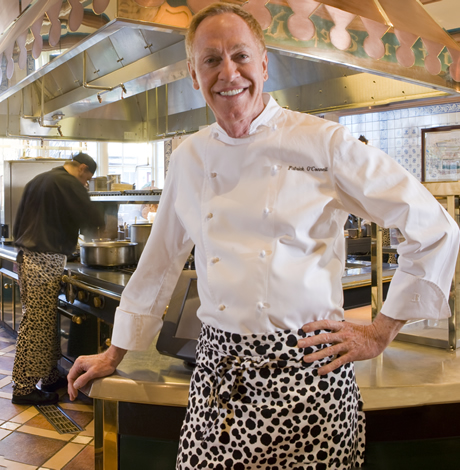
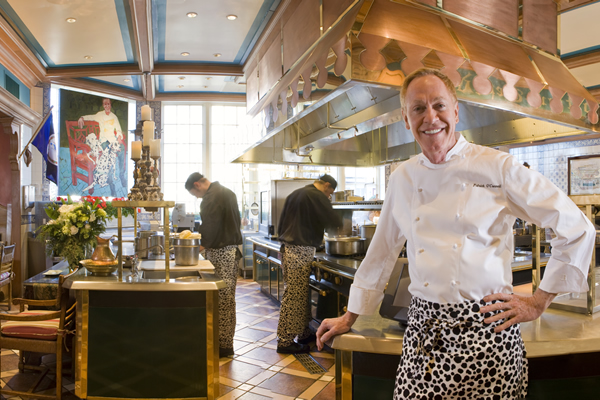
Patrick O’Connell in the kitchen at the Inn at Little Washington. (Photo by Gordon Beall)
Fourth annual Chefs for Equality
Human Rights Campaign
Tuesday, Oct. 20
6-9:30 p.m.
Ritz-Carlton
‘ReFRAin from Discrimination’
Tickets: $200
The Inn at Little Washington
309 Middle St.
Washington, VA
The Inn at Little Washington is a bit like the Meryl Streep of its domain: not wholly impervious to the occasional ranking slippage or so-so review, yet possessing so many across-the-board top awards and five-star raves, its reputation is beyond impeccable.
Top rankings from the 2015 Forbes Travel Guide, the American Automobile Association, Travel+Leisure and Le Chef Magazine, rave reviews from the Washington Post and D.C. Modern Luxury and a grand award from Wine Spectator (for the 21st consecutive year) are just the recent accolades. The coffee table book “The Inn at Little Washington: a Magnificent Obsession” made the New York Times bestseller list for “fashion, manners and customs” in May and offers sumptuous photos of the Inn’s lavish and gilded interiors.
Owned by chef/proprietor Patrick O’Connell, unofficially dubbed the “pope of American cuisine,” the Inn is in Washington, Va., located 67 miles southwest of Washington, D.C., in the foothills of the Blue Ridge Mountains. It has 24 guest rooms, an 80-seat restaurant that has earned many top reviews from the most prestigious publications and a 13,000-bottle wine cellar. The Inn is open year round every night except Tuesday.
This year O’Connell is again participating in the Human Rights Campaign’s annual Chefs for Equality event on Tuesday, Oct. 20. But this year, for the first time, he’s offering an auction item in which attendees can win an all-inclusive wedding package including dinner for 14 at the Inn with O’Connell himself officiating.
Over tea one sunny and quite warm afternoon in early September, O’Connell spent an hour reflecting on his career, the price of being out and how he has maintained the Inn’s reputation over the decades. His comments have been slightly edited for length.
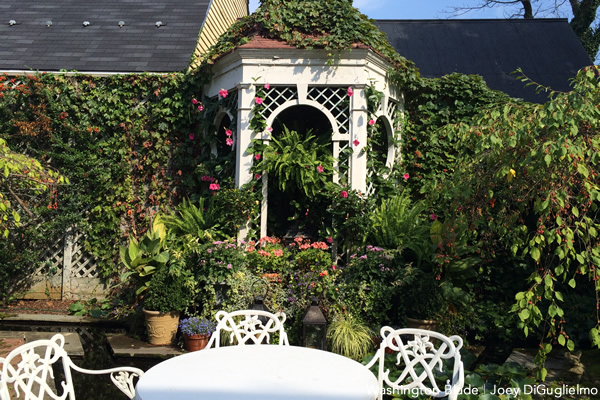
A gazebo and outdoor dining just off the main dining room at the Inn at Little Washington. (Washington Blade photo by Joey DiGuglielmo)
WASHINGTON BLADE: You became ordained just to offer this wedding package?
PATRICK O’CONNELL: I am not officially ordained at this time but my idea was that we could create a singular one-of-a-kind opportunity and offer it for the benefit of HRC that would be very hard to put a dollar value on. We thought it would be kind of fun and novel at the same time. We had begun to do some same-gender weddings — I always say same-gender rather than same-s-e-x weddings because I think for the public at large, that’s a far more appropriate term. I think if we had used that language rather than using s-e-x, we would have come along much further, much faster.
BLADE: Why?
O’CONNELL: It’s a loaded word. What’s the first thing you think of when you think of sex? The act, right? I think it was referred to as such by our detractors knowing that it would have charged, negative significance. But gender is gender. It’s uncharged. So I guess we had the first same-gender wedding in Rappahannock County at the Inn and we managed to discover that there was a judge who was not only open to do it, but was also a tribal member and it was delightful in every way. That was about two years ago. Then we had a few others. … I realized it was not a complex matter to be an officiant — I never intended to enter the ministry, although I do a lot of ministering just in my role as an employer. But in general I shy away from labels because I think they are limiting and work against people and can be very damaging. They always reduce an idea or a concept into one word and that’s kind of silly.
BLADE: But don’t we need them on some practical level?
O’CONNELL: Well, no question. It helps. But I think we’re all more than one word and capable of being many things. … I rather like the term healer, which encompasses nourishing and nurturing people. Looking after their well being. Ministering to them, et cetera.
BLADE: Did being out (O’Connell founded the Inn with his former partner whom he eventually bought out) ever hurt you?
O’CONNELL: Oh, it almost had me murdered on numerous occasions. Yes, the hostility was venomous. There was a small contingent of locals who were feeling very much that something extremely foreign was happening in their midst when we started. They were unable to understand what we were about and then the fact that the business took off immediately and became successful started bringing in what were to them outsiders. There are people who felt they belonged here because they were born here and then there are outsiders who are an unproven entity. And of course you have to think the worst because they’re untested. When you have a track record, when you’ve been some place for three generations, then you’re predictable.
BLADE: Isn’t it funny, though, when one of their own comes out?
O’CONNELL: Isn’t that the truth? Or you see how they try to integrate it or reconcile it. Or overlook it.
BLADE: How did the Chefs for Equality package come about?
O’CONNELL: We’ve always tried to be supportive (of HRC) and we wanted people of all genders to know that it was possible to have a marriage celebration here and that it is possible to be married here so we thought it would be wonderful to create a fantasy wedding and take care of all the details leaving the couple no worries of a financial sort or whether it would come off. A lot of the stress of a wedding is budget. How much up front? How much will this or that cost? … This takes all that away so all you have to do is come here and get married.
BLADE: How many gay weddings have you had here?
O’CONNELL: I think probably four or five. Some quite small. The biggest was probably 50 seated guests. Here it usually involves dinner and this one will as well. Although this is not limited by gender. Opposite-gender couples can bid on this item as well. We’re wide open.
BLADE: Will you continue to officiate at weddings here or is this a one-off?
O’CONNELL: Initially the idea was that I would make it available only once. We have a minister on staff who has done about 170 weddings here over 15 years. … He hasn’t performed same-gender yet but he’s open to that. … I’ve witnessed many of his ceremonies and it’s always charming when you have someone who’s rooted in the place where you are married and is comfortable there, not just somebody who walks in and has never been here before. I think it’s a nice touch to have the chef and owner of the property offer to do this and it would be a once-in-a-lifetime kind of situation. So therefore it certainly potentially adds value to the auction item.
BLADE: Has the Inn always had an LGBT clientele?
O’CONNELL: Always, yes yes yes. And probably more and more each year.
BLADE: Are gays harder to please?
O’CONNELL: Certainly not with weddings. Overall I think they’re among our most appreciative audience because they’re knowledgeable and focused on details and very responsive to the ambience. What’s a little strange for them sometimes is to be outside an urban environment altogether and so we take care to be sure that they’re completely comfortable here. We’re part of a European-based association called Relais & Chateaux and we have member properties in 52 nations so through that we see a lot of European guests. It’s a very nice thing to hear different languages being spoken in the dining room on a given night and to have this sense that you’ve escaped Washington (D.C.) in a way. We like to think of ourselves as a little foreign embassy out here. It’s out in nowhere land and sometimes you can lose a little of your baggage out here. … You feel much further from Washington than you actually are. … It has a good healing energy and I think people feel restored when they come here.
BLADE: Nobody can go 100 miles per hour all the time. How do you maintain such a high level over many years and not get burned out?
O’CONNELL: It’s complicated but also in a way very simple. Each day you have to find something that you can do better than you did the day before so you have some tangible sense of improvement and evolution and it becomes ingrained in your culture. The Inn has never stopped. It has continued to evolve since it was a garage. Almost every day we’ve succeeded in making some improvement. If we were to look back at a film of what we were like 10, 15, 20,25, 30 years ago, it would laughable for most people compared to where we are today… It’s performance art and you have to fine-tune it all the time and you have to be incredibly self critical. That’s what’s hard for people. No one likes to be brutally self critical, so we joke about it. We say things like, “We look like we almost know what we’re doing. One day we’ll have this down.” Basically we’re just real people but ordinary people trying collectively to do something extraordinary. As long as everyone subscribes to that theory, then that’s what’s called for and the only thing that’s going to work.
BLADE: How do you convey your vision to the staff?
O’CONNELL: You have to find ways to continue to energize your team, to continue to challenge them and give them something to dream about so you’re inspiring them all the time to not only do their best but, like a trainer might in a gym, if he can succeed in getting his client more than they can do on their own, then he’s providing value. It’s just like with any sport — swimming for instance, you want to shorten your time on a sprint or something like that. … I love hearing them when they come back and they’ve had these breakthroughs. Some of them are quite young but they realize that the progress they’re making here translates into anything else they do in life. I love it when a former staff person will come back and maybe they’re a successful lawyer in Washington or New York and they come back and say the reason my career took off the way it did its what I learned here, how I learned to read people, to intuit people, to think on my feet and be able to do five things at one time. My feeling is there should be a point in every young person’s life when they benefit from working in a restaurant. Not only do you get an appreciation for how hard it is — it is not easy work, it’s extremely taxing mentally and physically — but to be able to subtly control an audience while creating the illusion that the audience is controlling you, is fascinating.
BLADE: How many are on staff?
O’CONNELL: 140
BLADE: How much of the cooking do you actually do?
O’CONNELL: I’m in the kitchen every night and generally I’m in a position where I can watch from one vantage point what everyone is doing, like an orchestra conductor. They’re facing me and I’m facing them and there are no hiding places. You develop a sixth sense and you can feel when everything is on and when it’s going to be a good night.
BLADE: And when things go wrong?
O’CONNELL: With 140 people, there’s some sort of a personal crisis every day so you have to be sure they’re OK and see how it’s affecting the entire team. … You have to get all that out of the way or it’s going to have a negative impact. … Humor is my greatest tool and weapon. In the kitchen we can be as naughty and outrageous as we want to be. … It’s about not taking ourselves overly seriously. We can have a little fun but not lose focus.
BLADE: If you’re Robert De Niro, you can go back and watch “Raging Bull” if you want, or whatever. Food, though, is ephemeral. What kind of legacy can you build in an ephemeral medium?
O’CONNELL: I think sometimes the most beautiful things are the ephemeral ones. Those that can’t really be put into words or saved with a snapshot. I stopped taking pictures ages ago simply because they were never as good as reality. And there was never time to look at them. Rarely did I find one that did justice to the moment. Very often you’ll be reminded of an important occasion. You’ll hear that an experience was very important to a guest and maybe they’ll be on their deathbed reminiscing and they’ll have had an occasion here that was unforgettable. That’s very sweet, really, really nice. What more do you need? It’s why live theater has greater value than film. You can watch a concert on television but why is it that people when they sit there in an auditorium and listen to an entertainer sing, they feel ripped off when they’re lip syncing? Because it’s just not the same, it’s not in the moment. That’s what we offer and I really do believe that you reach people either consciously or unconsciously. Even if they don’t get all the details, they can feel them.
BLADE: Do the accolades bring with them a burden as well? The public comes with much higher expectations when they hear of all the accolades and ratings.
O’CONNELL: The staff always joked that I made the lies true. Early on I got a call from Craig Claiborne, he was the New York Times food writer, and he said, “Did you hear the news, the Zagat survey came out and you’re number one in America.” I said, “Yeah.” He said, “the number one resort.” This was shortly after we converted the garage. We never thought of ourselves as a resort. We had no amenities whatsoever. My first thought was that it must have been an error. Then I thought, “God, what am I gonna do?” So the next day I went out and bought two bicycles and that’s where that little slogan came from. You make the lies true. The next year they changed the category for inns and we were number one for inns so it was a little more appropriate. But yes, each of them heightens expectations and it’s hard to get that across to the staff. One food writer once said she would hate it if she were running a place and it was called the best in the world because then the simplest flaw that would not even be noticed or observed in a lesser restaurant would stand out in neon and that’s all anybody would remember. So in that regard, the clientele is less forgiving than they would be almost anywhere else and the expectations are greater, but in the end it’s always about how we make them feel. If we focus on that, on knowing each person is different and has to be reached, then it’s not overwhelming.
BLADE: Has it benefitted you in the long run being rather isolated out here?
O’CONNELL: I think you see from studying other restaurants you do see chefs and proprietors buckle under the pressure of being held up on this incredible pedestal. Because of course the media typically plays the game of putting them up there and then shooting them off. So we’ve been fortunate in that we’re like an old tree that grew year by year by year. We didn’t just open the doors and skyrocket because what happens very often in those situations is they get locked in and they’re so busy that all they can do is maintain. Being here in the country, we usually have a quiet few weeks in the winter, weekends are the same, but we have some very quiet weeknights that can be these wonderful opportunities to regroup and plan and strategize and reinvent ourselves. Also living out here has created a balance. We don’t go discoing after work like we might if we were in the city. You take a walk, you walk the dog if you have one, you look at the moon. You take a few deep breaths. You might read a little. You learn to hate television. Then you have a pretty good night’s sleep listening to the crickets. I think it helps create longevity and it’s a fabulous antidote to the incredible intensity that goes on here. On a Saturday night when you might have two critics and a head of state and the pressure is just sort of throbbing, you can step out and it feels like it was just an illusion. I used to step out sometimes, my head would be spinning, and I’d look across at the neighbors and they’re porch sitting and you think, “Who has the better life?” But then you remind yourself not to get unbalanced by the intensity. It comes in a wave, then it dissipates.
BLADE: Do you get millennials here?
O’CONNELL: Yes. They come in the kitchen and say hi. And I say, “First time?” They say, “Yes, how’d you know?” “Because you’re so young!” They say their parents have been coming for a long time and that’s very sweet to hear. Not long ago a man came to propose and said he’d been coming here since he was 5. That was really sweet.
BLADE: Society overall has gotten so informal. People go everywhere looking like slobs. Do you see it here?
O’CONNELL: It is changing very perceptively. We used to have a sort of image of our client in our minds because that was the majority. A very well-coiffed woman in a Chanel suit who was extremely well traveled and mentored and schooled in social etiquette by somebody and it’s very different now. Then we had the computer generation and we had people showing up wearing tennis shoes without laces and you thought, “Well maybe they’ve had a foot operation,” but no. It was the idea of, “I’m a success in the computer world, in the IT world, why would I make any effort.” So that was all fine. We’ve always joked when asked if we had a dress code, we say, “Yes — no wet bikinis.” Sometimes you see Armani out in the finest restaurants in Europe and he wears just a black T-shirt. And he’s probably the richest man ever to walk in the place. The Italian and French idea is that you shouldn’t have anything imposed on you. It’s your personality and who you are and that’s acceptable. If you’re here, then you’re supposed to be here. You might be eccentric, you might be odd as hell, you might look like a banshee, but if you’re here then you’re somebody. … But it is a shame that so much of the culture is being lost as it’s being relaxed and supplanted by something else.
BLADE: What’s the last great meal you had in D.C.?
O’CONNELL: It isn’t quite that simple. It’s about what fit my mood perfectly at that moment and who I might have been with. It’s hard when you’re in the biz to turn off your critical faculty. It’s nice to take a poor friend or a 9-year-old child or someone for whom anything is going to be, “Wow, this is really fun,” because then you see it through their eyes. I dine out alone a lot and am quite comfortable doing that.
BLADE: Are you often recognized?
O’CONNELL: Often and that can be delightful except that you often end up eating more than you wanted to eat because you’re sent a little taste of this and that as a courtesy so it becomes a diplomatic occasion and something that has another element to it. It’s fine if you’re in the mood for it like if it’s your birthday or something it’s OK, but if you just stopped in because you had low blood sugar and you couldn’t make it any further, then you have to be on and it’s your night off, so it can be tricky. But I’m very appreciative of the effort anyone makes who’s in this business because I know how hard it is.
BLADE: There’s a lot of back and forth about following one’s passions versus pursuing more practical career paths. As someone who’s done the former, what are your thoughts?
O’CONNELL: Culturally we have a very simple problem. America has led the way in attempting to convince people that there is only one goal and only one game and that is money. The minute you can free yourself of that and realize that that can greatly limit you and that there are many other sources of measuring achievement and success, then you’re open to pursue more of something from within and a direction that’s more true to yourself. My feeling has always been if you do what you love and find out what you love and work toward mastery, everything else will fall into place. You’re not going to have to worry about money, but mastery is something that requires a great deal of sacrifice and commitment and most people simply aren’t willing to make the sacrifice and the degree of commitment required. … There are ways to turn your liabilities into assets.
BLADE: Such as?
O’CONNELL: You look at a gay person who grows up and the first thing they have to do in my generation is disguise so they don’t get beaten or killed. Or at least hated and scorned and whatever. It was automatic. So that terrible adaptation is also a tremendous strength. You want me to play this? OK, I can play this. You master acting right off the bat. You had lemons and you made lemonade and you did what you could but you ultimately benefitted from it.
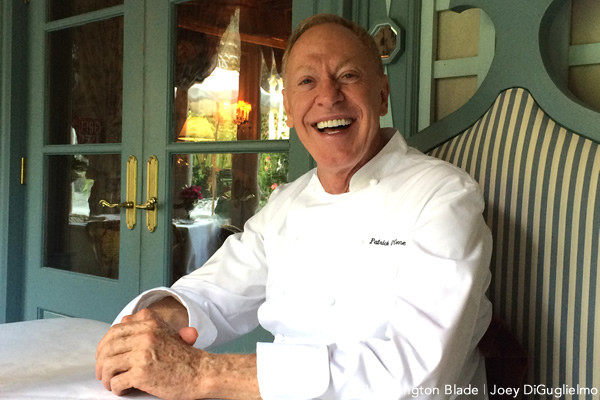
Patrick O’Connell says slow growth over many years helped the Inn cement its stellar reputation. (Washington Blade photo by Joey DiGuglielmo)




a&e features
35 years after ‘Truth or Dare,’ Slam is still dancing
Salim Gauwloos on Madonna, HIV, and why he almost didn’t audition for Blond Ambition Tour
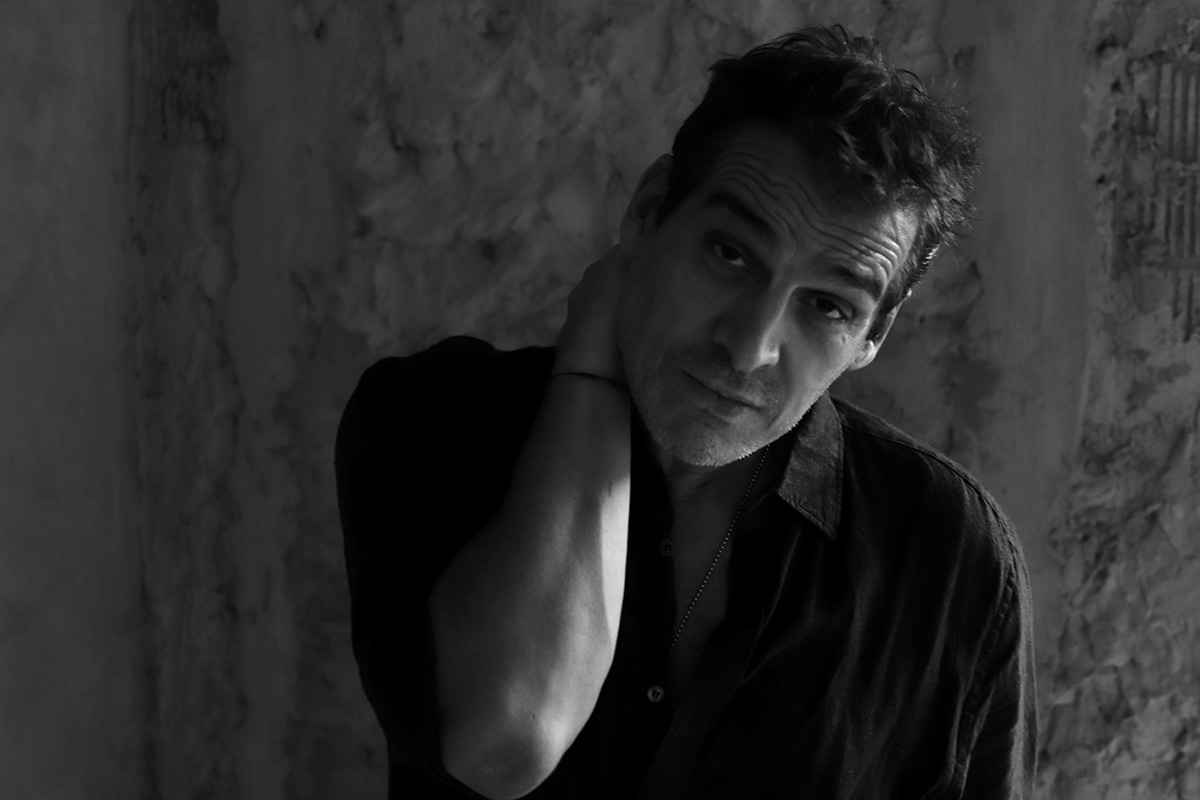
Most gay men of a certain age remember “the kiss.”
It was the moment Madonna’s dancers Salim Gauwloos and Gabriel Trupin locked lips in the hit 1991 documentary film “Truth or Dare,” which is celebrating its 35th anniversary this spring.
The kiss was hot, but what made it groundbreaking is that it appeared in a mainstream Hollywood movie that screened in suburban multiplexes across the country. This wasn’t an obscure art house film. The movie, and tour on which it was based, received months of breathless media attention all over the world for bold expressions of female empowerment and queer visibility. Madonna was threatened with arrest in Toronto for simulating masturbation on stage and Pope John Paul II urged Catholics to boycott the show, triggering a media firestorm.
“Truth or Dare” was billed as a behind-the-scenes documentary of the tour, but it quickly became clear that the real star of the show wasn’t Madonna, but rather her colorful troupe of seven backup dancers, six of whom identified as gay: Kevin Stea, Carlton Wilborn, Luis Xtravaganza Camacho, Jose Gutierez Xtravaganza, Gauwloos, and Trupin; Oliver Crumes III identifies as straight.
We saw them party and march in the New York City Pride parade. They were unabashedly queer at a dangerous time — before protease inhibitors began to stem the AIDS plague and before most celebrities and politicians embraced the gay community in any real way. Being out in 1991 carried major risks to career and reputation.
Enter Gauwloos, one of those brave dancers who vogued his way into the hearts of countless gay men entranced by his handsome looks, his stage presence, and dance skills.
Gauwloos — known then and now as “Slam”— sat down with the Blade to talk Madonna, the lasting impact of “Truth or Dare,” the public disclosure of his HIV status, and plans for a new book on his life.
His story is fascinating — from growing up in Europe to dancing in New York to landing the gig of a lifetime with Madonna. He performed on that tour while secretly HIV positive and went without medical treatment for 10 years because he was living in the United States as an undocumented immigrant. Not even Madonna knew of his HIV status. Two other dancers on the tour were also HIV positive but no one talked about it. Ironically, Madonna was singing “Express Yourself” and advocating for condom use during her concerts yet backstage three of her dancers were secretly positive.
“A lot of people were dying so I wasn’t going to tell Madonna I had HIV,” said Slam, now 57. “And the others didn’t either. It wasn’t the moment to do it. She used to make speeches about Keith Haring and AIDS and I thought it’s going to be me next.”
Gabriel Trupin died of AIDS in 1995. Slam was diagnosed at age 18 in 1987, a frightening time when a positive test result often meant a death sentence. He booked the “Blond Ambition Tour” at age 21 after moving to New York. His friends encouraged him to audition but Slam resisted because he wasn’t a big Madonna fan.
“It was crazy, everyone wanted that job,” he said, “but I wanted to dance with Janet Jackson and Paula Abdul.” He listened to his friends and shortly after the audition, Slam received a call from Madonna herself inviting him to join the tour.
“We all wanted to be stars but not even Madonna knew how big that tour would become. The way it was choreographed and directed, the stars aligned. … It never looks dated even today.”
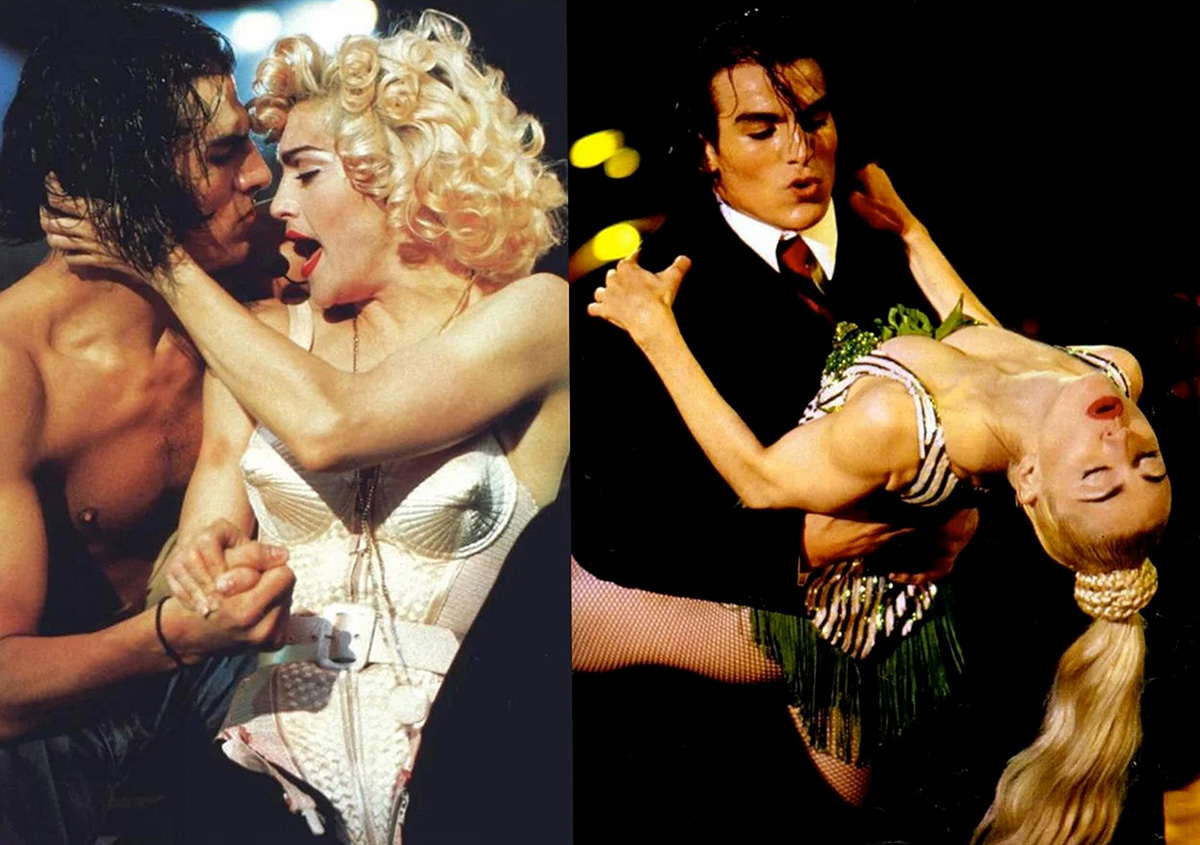
The world tour kicked off in Japan in April 1990 then moved to the United States and Europe, stirring controversy wherever it went. There was the iconic cone bra; the aforementioned simulated masturbation during “Like a Virgin”; and religious imagery that offended many Catholic groups and the Vatican.
And the controversy didn’t end with the tour. Cameras were rolling throughout the tour for what Slam thought would be a “video memory” for Madonna. But as the tour unfolded, director Alek Keshishian reportedly became more interested in what was happening behind the scenes so plans for mere tour footage were expanded into a full documentary.
“We were young and partying and didn’t really know what was going on,” Slam said. “You live in this celebrity bubble and you sign a paper – I don’t even know what I signed.”
In 1992, Kevin, Oliver, and Gabriel sued Madonna for invasion of privacy and fraud claiming she used some footage without their consent. They claim they were told nothing would be included in the film that they didn’t want to be seen. In one specific incident, Gabriel alleged that he told producers he didn’t want the scene of him kissing Slam to be in the film as he wasn’t fully out.
“Gabriel was forcibly outed,” in the movie, Kevin said in a 2016 interview.
Slam did not join his colleagues in the lawsuit.
“I couldn’t sue because I was illegal but I wasn’t ever going to sue,” Slam said. “I’m not a suing kind of person. But good for them, they fought for it and won. A lot of people don’t have the balls to sue Madonna.” The suit was settled two years later for an undisclosed sum.
“We were all conflicted about the kiss,” he said with a laugh. “The kiss, oh my God, my boyfriend is going to kill me! Belgian stress!”
Beyond worrying about his boyfriend’s reaction, Slam had concerns about the impact of being openly gay on his modeling career.
“In 1990, you couldn’t get high fashion campaigns as an openly gay model,” he said. “I was worried about that. I couldn’t get a campaign because I was gay. My agency told me to say I was straight and it was just a game.”
In 2016, pegged to the 25th anniversary of “Truth or Dare,” the surviving six dancers filmed a documentary about their lives post-Madonna titled “Strike A Pose.” In it, Slam publicly revealed his HIV status for the first time in an emotional scene with his former colleagues.
“I found the strength to tell the world I have HIV,” he recalls. “I was scared but I felt brave. The outcome and messages were beautiful. After I saw ‘Strike A Pose,’ I knew we gave people hope. And not just for gay people.”
He was infected in 1987 but didn’t get treated until 1997. After the tour ended, he said he went into a depression and his agency dropped him.
“I was partying too much after the tour,” he recalls. “I made a decision to live as an illegal alien.” In 1997, Slam collapsed and was rushed to the hospital with pneumonia.
“They started treating me and thank God the new HIV drugs were out, the cocktails, it took me a couple months to get better.”
Madonna didn’t participate in “Strike A Pose” and Slam said he hasn’t seen or spoken to her since the end of the tour. He said he had no idea of the impact “Truth or Dare” would have.
“You look at this movie in 1991 and you don’t think it’s going to be such a big thing and 35 years later it’s still helping people,” he said. “It was helpful for people who felt alone at that time. It was such an important documentary.
“I don’t think younger gay people realize how important Madonna was to gay and queer visibility — she was a big part of it. We showed the world it’s OK to be gay and that was the great message of this movie.”
He noted that, decades later, many of his friends have transgender kids and that queer culture is represented in much of mainstream pop culture.
“It’s amazing how far we’ve come,” he said. “I know we’ll always be marginalized but we have come so far. I’m really proud of our community. The current nightmare will be over and I do believe that things will get better.”
Referencing President Trump’s attacks on the LGBTQ community and crackdown on immigration, Slam described the situation in the U.S. today as “sad.”
“Everything is such a mess,” he said. “Some of these people have lived here 30-40 years and they take you out of your home. I can’t even imagine. It breaks my heart. When I was illegal it was a different story.”
Slam met his husband, Facundo Gabba, who’s from Argentina, in 2000, and he helped him get a legal case together to win citizenship. He filed a case in 2001 and was told there was a 99 percent chance he wouldn’t be permitted to stay in the United States because they weren’t allowing HIV-positive immigrants to remain in the country. But he got his green card anyway in 2005 and became a U.S. citizen in 2012.
Today, Slam and Gabba live in Brooklyn, though they travel a lot because “I can’t take the cold.” The couple married in Argentina in 2010 and in the U.S. in 2016.
Slam is still dancing and working as a choreographer. He’s teaching at a contemporary dance festival in Vienna in July and even offers online lessons via Salimdans.com.
As a longtime HIV survivor, Slam is dedicated to a healthful lifestyle.
“You have to keep moving; when you move you stay healthy,” he says. “Dance heals everything. I do yoga, I eat healthy and clean as possible. I don’t watch much TV … I try to stay healthy and positive. If I absorb all of the negativity I would be sick.”
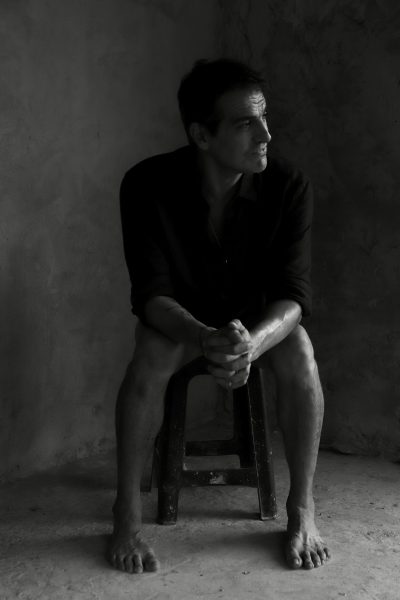
In addition to his ongoing work in dance and choreography, Slam is in the early stages of writing a book about his extraordinary life and pioneering career.
“I always knew I had a book inside of me. I want to talk about my HIV status. I know I can inspire more people. I want to tell even more secrets in the book; secrets are a poison so I want to tell everything.”
Among those secrets, he notes, is a desire to write about his strict Muslim father and the years he spent as an undocumented immigrant in America.
“Those are the things I want to talk about, the struggles. It’s a love story, hope and resilience. I know it will help people.”
As for his friends from the tour, Slam says he remains in contact with Gabriel’s mother and José Xtravaganza is his best friend. Baltimore’s Center Stage theater is currently developing a new musical about Xtravaganza’s life. And Slam said he occasionally talks to Oliver, though “he still can’t pronounce Sandra Bernhard’s name.”
At the end of our interview, Slam indulged a round a rapid fire questions:
• Favorite song to perform in the “Blond Ambition” tour? “Express Yourself.”
• Aside from Madonna, who was your favorite artist you worked with? Toni Braxton in “Aida” on Broadway.
• Favorite Madonna song? “Live to Tell”
• Favorite Madonna video? “Bedtime Stories”
• What’s more stressful: performing in a concert or performing on the VMAs? “Both, because we always had to be perfect.”
• Did you go to Madonna’s recent “Celebration” tour? “I didn’t see the show but I saw clips online.”
• What do you remember most about performing “Vogue” at the VMAs? “It was nerve-racking for them to flip those fans.”
• When was the last time you vogued? “I teach classes so a couple weeks ago.”
a&e features
Transmission DC breathes new life into a storied sound space
A fresh home for boundary-pushing culture on H Street
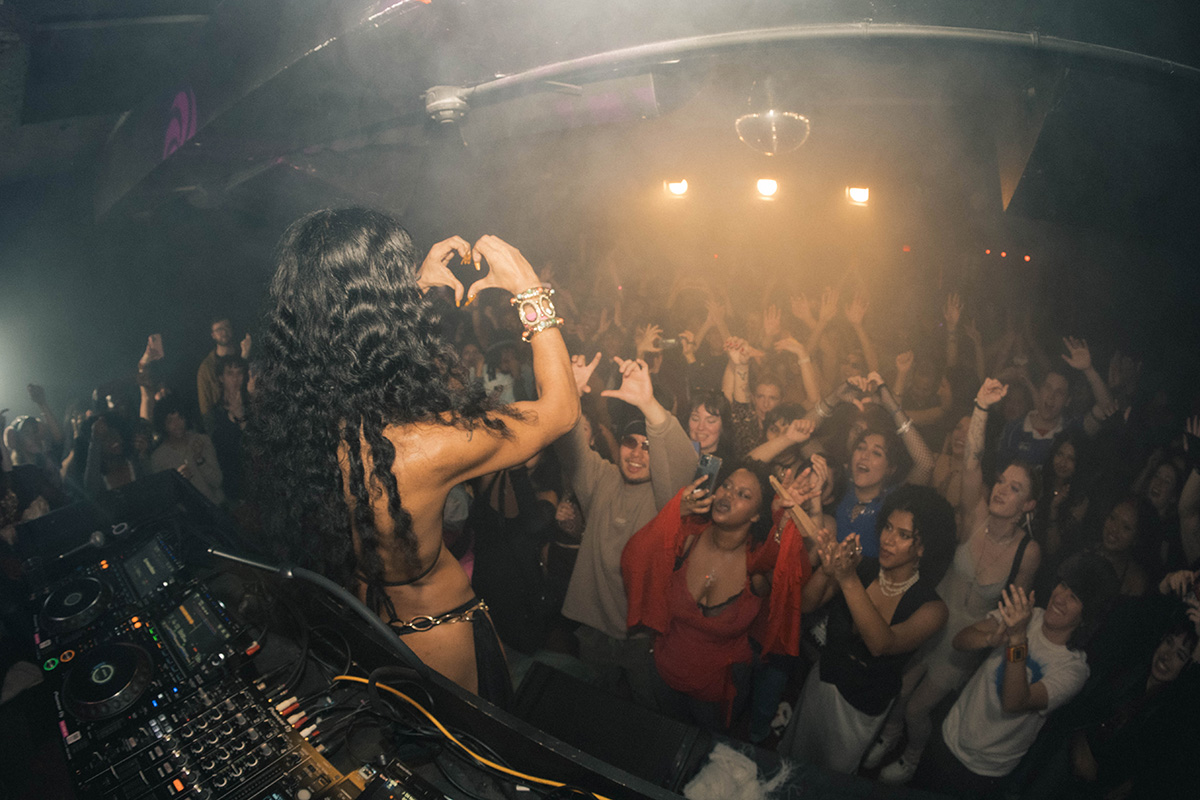
Late last year, phoenix-style, a fresh home for boundary-pushing culture arose on the H Street corridor. Transmission DC – a queer, trans, and POC-owned, operated, and centered community-focused venue – powered on in the former home to the Rock & Roll Hotel (famously, not a hotel, but very much rock & roll). Transmission (1353 H St., N.E.) arrives secure in its mandate – or even birthright – to provide a place to celebrate creativity and music through a lens of inclusivity and respect.
Transmission’s team brings experience, but also representation. Owners/partners Kabir Khanna (who is also programming director), Ellie McDyre, and Kelli Kerrigan together previously managed 618, a venue in Chinatown, crafting “some of D.C.’s freakiest parties, raves, and mosh pits” they note.
They packed up operations last fall to a space curated specifically for D.C.’s underground music and culture scene, building their efforts in Chinatown to bring in more fans in queer and POC circles.
Transmission, Khanna points out, is built on DIY values. In the music scene, DIY means that promoters and organizers – often disconnected from the mainstream and part of marginalized communities – build shows and programs collaboratively, but independently from institutions, supporting each other as smaller, independent venues close. Here, Transmission aims to ensure that those putting together these underground inclusive shows have a more permanent and stable home, can have access to resources, and can provide more sustainable income to artists. “We’re trying to get more people to support and enjoy the music, and also give artists and organizers within the DIY community more structure and a larger cut,” says Khanna.
Khanna also notes that Transmission operates “under the principles of safety, inclusivity, and respect.” McDyre added that even at venues that claim inclusivity, that statement might not take place in practice. We’re “not just putting up a rainbow flag,” says McDyre, but as some of the owners are trans and POC, audiences can see themselves reflected at the top.
Much like the DIY nature of the music community, the Transmission owners brought a DIY ethos to turning around their space.
In March 2020 – the height of COVID lockdowns – Rock & Roll Hotel suddenly shuttered, though not due to the pandemic; instead, the venue claimed that decreasing sales and increasing competition led to the closure. For 14 years, it was the central spot for cheap beer and lesser-known and celebrated acts. The space stood vacant for more than five years, until Transmission turned the power back on.
“When we got into the space, it was effectively abandoned for years,” says Khanna. “There was a ton of mold, and paint primer covering all surfaces. It was nearly falling apart.” Khanna noted that many music venues like this one, regardless of how well it was maintained, “get the shit kicked out of it,” given the nature of shows. The team called in mold removal contractors, ripped up most of the floorboards, and started fresh.
Transmission’s first floor is styled as a stripped-down black box: the better to take in the music. “It’s minimal on purpose to act as a canvas for set design and music,” without a specific aesthetic, says Khanna. Moving upstairs, the second floor has been opened up, removing some walls, and now has a larger dance area than the first floor. Beyond the first two performance levels, and a holdover from Rock & Roll Hotel, is the rooftop. Though without a stage, the rooftop space is filled with murals splashed across the walls, with a full bar. Transmission’s current capacity is 496, but the team is looking to grow that number. Transmission will also leverage the full kitchen that Rock & Roll Hotel operated, bringing in Third Hand Kitchen to offer a variety of food, including vegan and vegetarian options.
Khanna pointed out an upcoming show reflective of Transmission’s inclusive ethos: Black Techo Matters on Feb. 27. The event is set to be “a dynamic, collaborative night of underground electronic music celebrating Black History Month.” Khanna says that techno came from Black music origins, and this event will celebrate this genesis with a host of artists, including DJ Stingray 313, Carlos Souffront, and Femanyst.
a&e features
Meet D.C.’s Most Eligible Queer Singles
Our annual report, just in time for Valentine’s Day

Just in time for Valentine’s Day, the Blade is happy to present our annual Most Eligible Singles issue. The Singles were chosen by you, our readers, in an online nominations process.
John Marsh
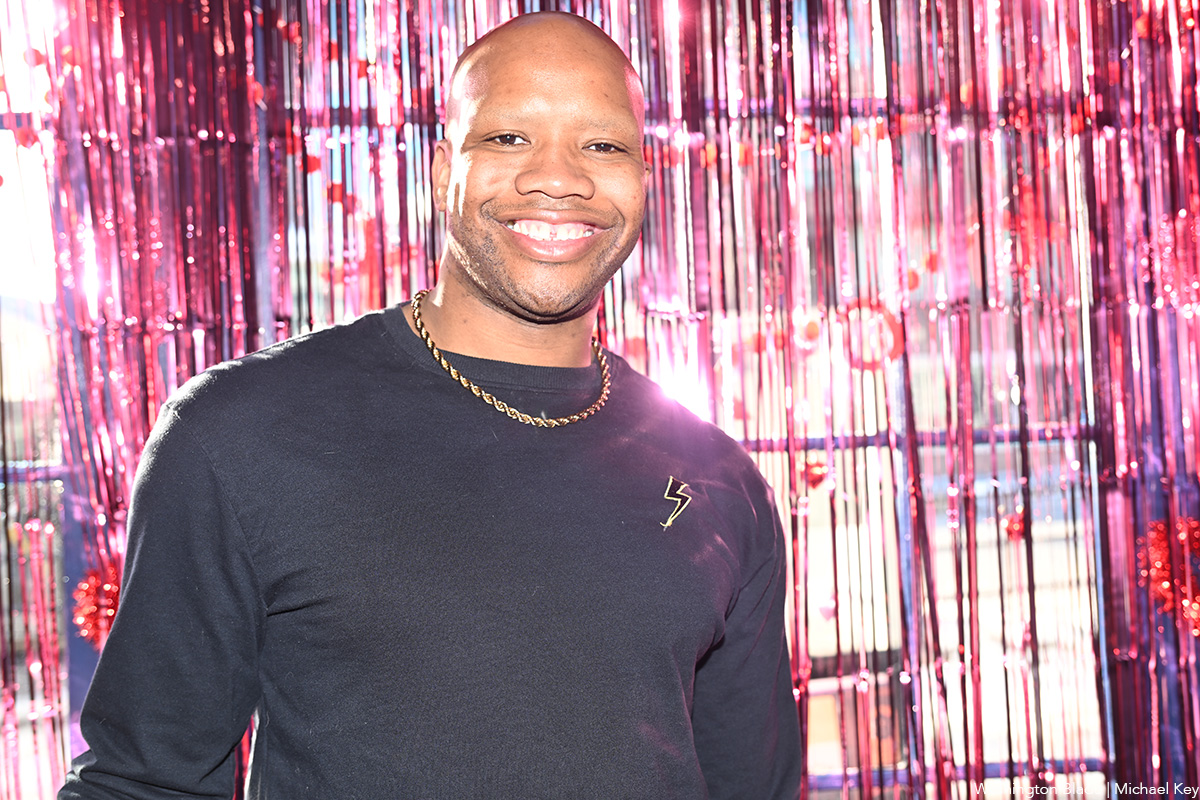
Age: 35
Occupation: DJ and Drag Entertainer
How do you identify? Male
What are you looking for in a mate? I’m looking for someone who’s ready to dive into life’s adventures with me. someone independent and building their own successes, but equally open to supporting each other’s dreams along the way. I know that probably sounds simple because, honestly, who isn’t looking for that? But my life and career keep me very social and busy, so it’s important to me to build trust with someone who understands that. I want a partner who knows that even when life gets hectic or I’m getting a lot of attention through my work in the community, it doesn’t take away from my desire to build something real, intentional, and meaningful with the right person.
Biggest turn off: My biggest turnoff is arrogance or judgment toward others. I’m most drawn to people who are comfortable being themselves and who treat everyone with the same level of respect and care. I’ve worked hard for the success I’ve found, but I believe in staying humble and leading with kindness, and I’m attracted to people who live the same way. I’m also turned off by exclusionary mindsets, especially the idea that sapphic folks don’t belong in gay spaces. Our community is vibrant, diverse, and strongest when it’s shared with everyone who shows up with respect and love
Biggest turn on: I’m drawn to people who can confidently walk into new spaces and create connection. Being able to read a room and make others feel comfortable shows emotional intelligence and empathy, which I find incredibly attractive. I also come from a very social, open, and welcoming family environment, so being with someone who embraces community and enjoys bringing people together is really important to me.
Hobbies: I have a lot of hobbies and love staying creative and curious. I’m a great cook, so you’ll never have to worry about going hungry around me. In my downtime, I watch a lot of anime and I will absolutely talk your ear off about my favorites if you let me. I’m also a huge music fan and K-pop lover (listen to XG!), and I’m a musician who plays the cello. I spend a lot of time sewing as well, which is a big part of my creative expression. My hobbies can be a little all over the place, but I just genuinely love learning new skills and trying new things whenever I can.
What is your biggest goal for 2026? This year feels like a huge milestone for me. I’m getting ready to join a tour this summer and want to represent myself well while building meaningful connections in every city I perform in. I’m also focused on growing as a DJ, sharing more mixes and content online, and reaching a big creative goal of releasing original music that I’m producing.
Pets, Kids or Neither? I have a lovely Akita named Grady that I’ve had for 10 years and always want pets in my life. I’m open to kids when/if the time is right with the right person.
Would you date someone whose political views differ from yours? Hell no. I don’t see political differences as just policy disagreements anymore – they often reflect deeper values about how we treat people and support our communities. I’m very progressive in my beliefs, and I’m looking for a partner who shares that mindset. For me, alignment in values like equity, compassion, and social responsibility is non-negotiable in a relationship. To be very clear about my beliefs, I’m outspoken about my opposition to immigration enforcement systems like ICE and believe both political parties have contributed to policies that have caused real harm to vulnerable communities. I’m also deeply disturbed by the ongoing violence in Palestine and believe we need to seriously examine our support of military actions that have resulted in the loss of countless innocent lives. These aren’t abstract political opinions for me, they are moral issues that directly inform who I am and what I stand for.
Celebrity crush: Cocona
Name one obscure fact about yourself: I used to own a catering business in college that paid for my school — I also went to a Christian college, lol.
Jackie Zais
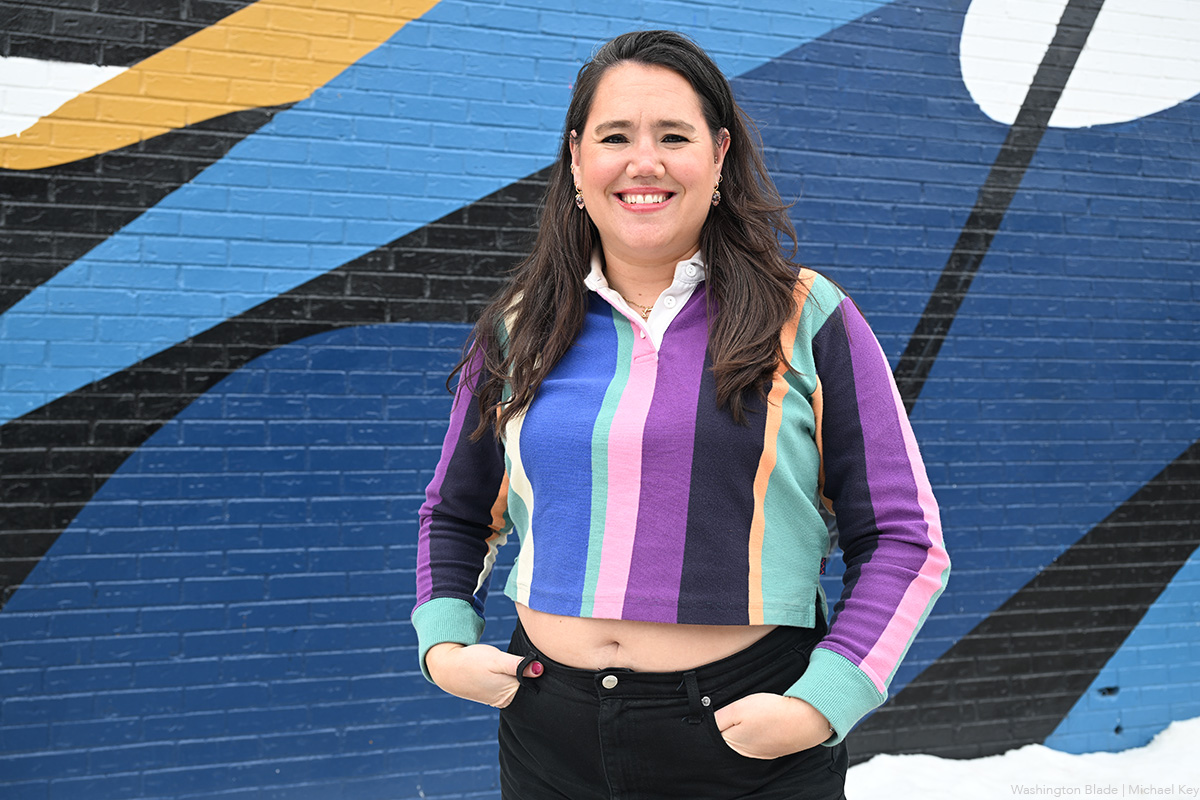
Age: 35
Occupation: Senior director at nonprofit
How do you identify? Lesbian woman
What are you looking for in a mate? Looking for someone who’s curious about the world and the people in it — the kind of person who’s down to explore a new spot one night and stay in with takeout the next. Confident in who they are, social without being exhausting, adventurous but grounded, thoughtful but not pretentious. Someone who can be funny while still taking life (and relationships) seriously.
Biggest turn off: Doesn’t have strong opinions. I love hearing a wild hot take.
Biggest turn on: When someone can make me belly laugh.
Hobbies: Number one will always be yapping with friends over food, but I also love collecting new hobbies. Currently, I crochet (and have some dapper sweater vests as a result), listen to audiobooks on what I personally think is a normal speed (2x) and play soccer and pickleball. But I’ve tried embroidery, papier-mâché, collaging, collecting plants, scrap booking, and mosaic.
What is your biggest goal for 2026? I’ve recently started swimming and I want to look less like a flailing fish and more like someone who knows what they’re doing.
Pets, Kids or Neither? I have neither but open to kids
Would you date someone whose political views differ from yours? My best friend is a moderate Democrat and that’s as far right as I’m willing to go.
Celebrity crush: Tobin Heath
Name one obscure fact about yourself: I’m the daughter of Little Miss North Quincy 1967.
Kevin Schultz
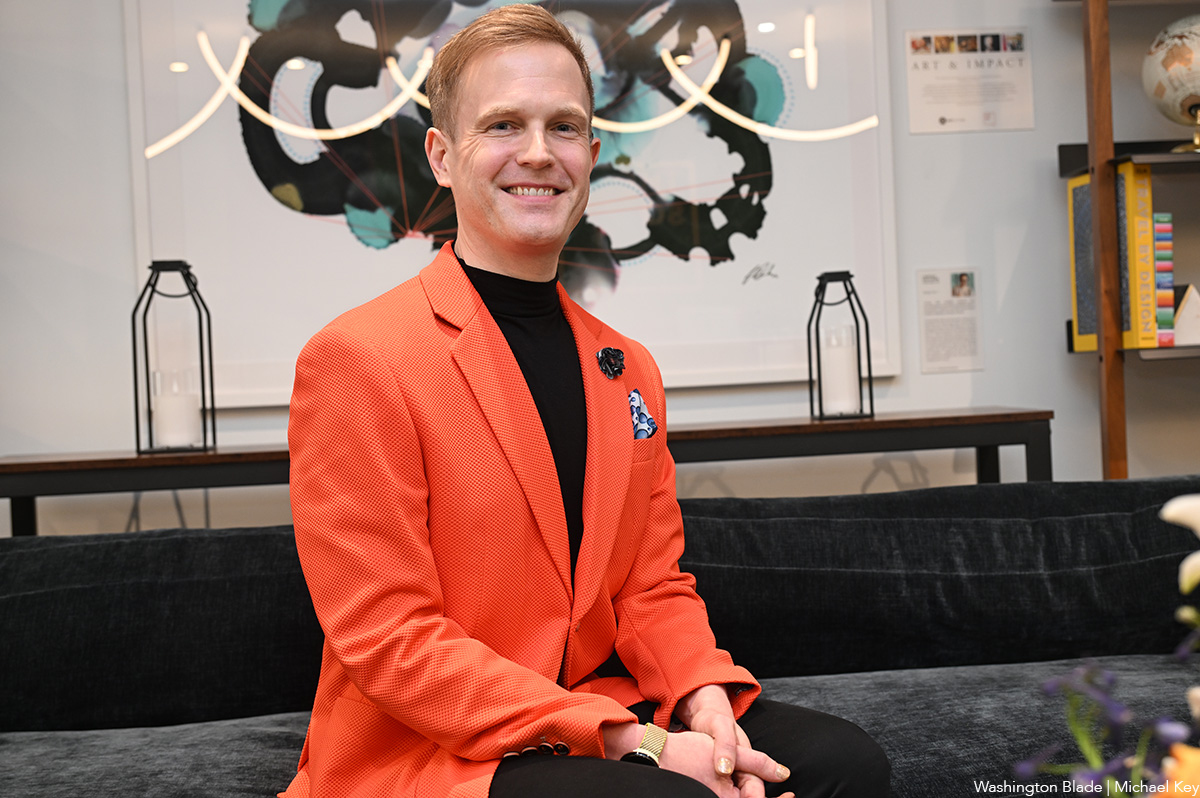
Age: 39
Occupation: Product manager
How do you identify? Gay
What are you looking for in a mate? You know 2001’s hottest Janet Jackson single, “Someone to Call My Lover?” To quote Janet, “Maybe, we’ll meet at a bar, He’ll drive a funky car; Maybe, we’ll meet at a club, And fall so deeply in love.”
Realistically though, I’d love to find someone who loves to walk everywhere and who avoids the club because it’s too loud and crowded. Later in the song, our songstress opines “My, my, looking for a guy, guy, I don’t want him too shy; But he’s gotta have the qualities, That I like in a man: Strong, smart, affectionate” and I’m quite aligned there – I’m an introvert looking for someone more extroverted.
I’m looking for someone who is different from me. When the math works, one plus one should equal two. Two becoming one is more art, and my relational approach is more science, or, I guess, math.
Biggest turn off: I’m turned off by a lot of superficially small things — chewing with one’s mouth open, dirty or untrimmed fingernails, oh, and also, lack of self awareness. My personal brand of anxiety is hyper self-aware, so I’m very turned off by someone who doesn’t realize that they exist in the world with others.
Biggest turn on: Competency. Or maybe…eyes? So perhaps, you see my conundrum — I’m very engaged by people who are deeply engaged by something, but I’d be lying if I said a sharp gaze and a wink didn’t get me. And, you know, some stamina in all avenues, mental and physical doesn’t hurt either.
Hobbies: Fixing everyone’s WiFi (this did actually get me a date once), and just generally fixing everyone’s everything. If it’s got a plug, screen, or buttons I can probably help you with it. On my own, I’m really into smart home devices and automation, and just to be timely, my latest thing is setting up and tuning my own instance of OpenClaw. (No one should actually do this, which is why I’m trying.) Together, we could also explore such hobbies as visiting every Metro station, visiting and exploring a new airport, and exploring why there are so many gay transit nerds. There’s no non-fake sounding way to say this but I also just love knowledge seeking, so I’d also love to go on an adventure with you where we learn something brand new.
What is your biggest goal for 2026? My biggest goal is to arrive to 2027 just a little better than I arrived to 2026. A few gym goals, a few personal goals, a few work goals; I hope to get a few of them across the finish line. At the risk of holding myself accountable, one of those goals is to be able to flawlessly side plank for over a minute. Please don’t mistake me for a huge gym rat; I just have a questionable relationship with balance and I’m really working on it.
Pets, Kids or Neither? I’ll just be blunt: no pets. Stating this on my Hinge profile resulted in an exponential loss of matches, so it’s very fun to trot out the idea. Primarily, I’m allergic to cats and dogs so my aversion is mostly biological. I’m not, however, allergic to kids — big fan of my various nieces and nephews — but I’d really only consider kids of my own if my chosen companion and I could financially afford them without compromise, and at this age I’ve become opinionated about the life I want to live.
Would you date someone whose political views differ from yours? No. This becomes a simpler answer with each passing day, unfortunately.
Celebrity crush: If I’m being of the moment, of course, it’s going to be one of the gentlemen on “Heated Rivalry,” but if I were to really dig into the archives it would be pre-Star Trek Chris Pine. I first saw him in an absolute train wreck of a movie called “Blind Dating” where he plays a blind guy who tries to pretend to be sighted in order to date. The movie was terrible, but I found him irresistible.
Name one obscure fact about yourself: I went suddenly deaf on one side only (my left) just before my 33rd birthday. After a bit of time in the wilderness (metaphorically) I got a cochlear implant a few years later, and it really changed my life. I will talk until someone stops me about hearing, sound, and the amazing arena of hearing loss technology. A lot of people, when they see my implant, assume I was born with hearing loss, so it’s always a bit odd (obscure even!) when I tell people I lost it as an adult. But, I also got my hearing back as an adult and am an eager advocate for assistive technology and visibility for people with disabilities that are not always immediately visible. I also work with prospective adult implant candidates to determine if an implant is right for them, because losing hearing suddenly as an adult is isolating and it’s helpful to talk to someone who’s been there.
Gabriel Acevero
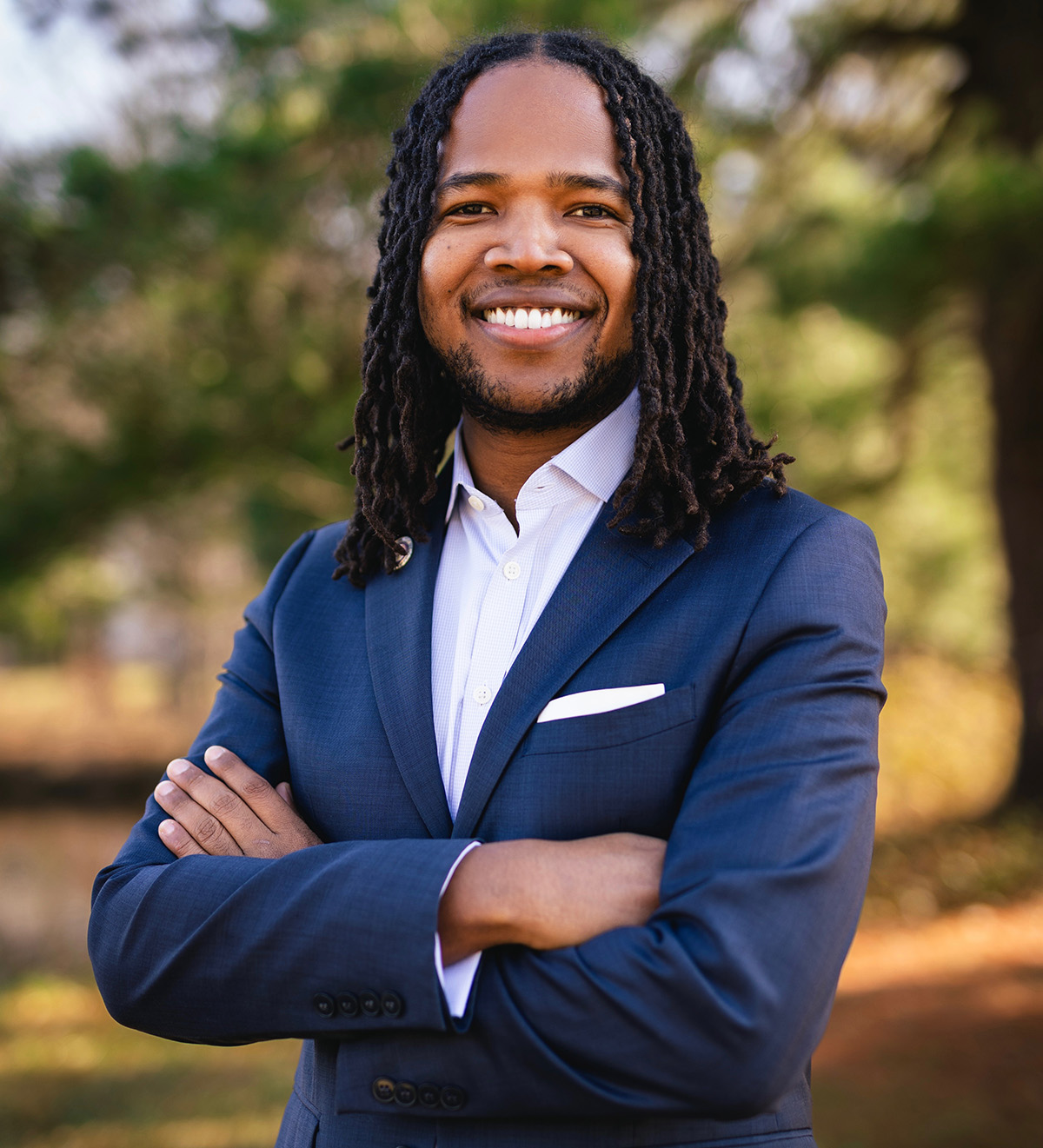
Age: 35
Occupation: Maryland State Delegate
How do you identify? Gay
What are you looking for in a mate? Emotional intelligence and a sense of humor.
Biggest turn off: Fetishization.
Biggest turn on: Kindness and emotional intelligence.
Hobbies: Traveling and reading (I love books).
What is your biggest goal for 2026? More self care. I love what I do but it can also be physically taxing. In 2026, I’m prioritizing more self care.
Pets, Kids or Neither? I have neither but I’m open to both.
Would you date someone whose political views differ from yours? No.
Celebrity crush: Kofi Siriboe
Name one obscure fact about yourself: I’m a Scorpio who was raised by a Scorpio and I have many Scorpios in my life.
Vida Rangel
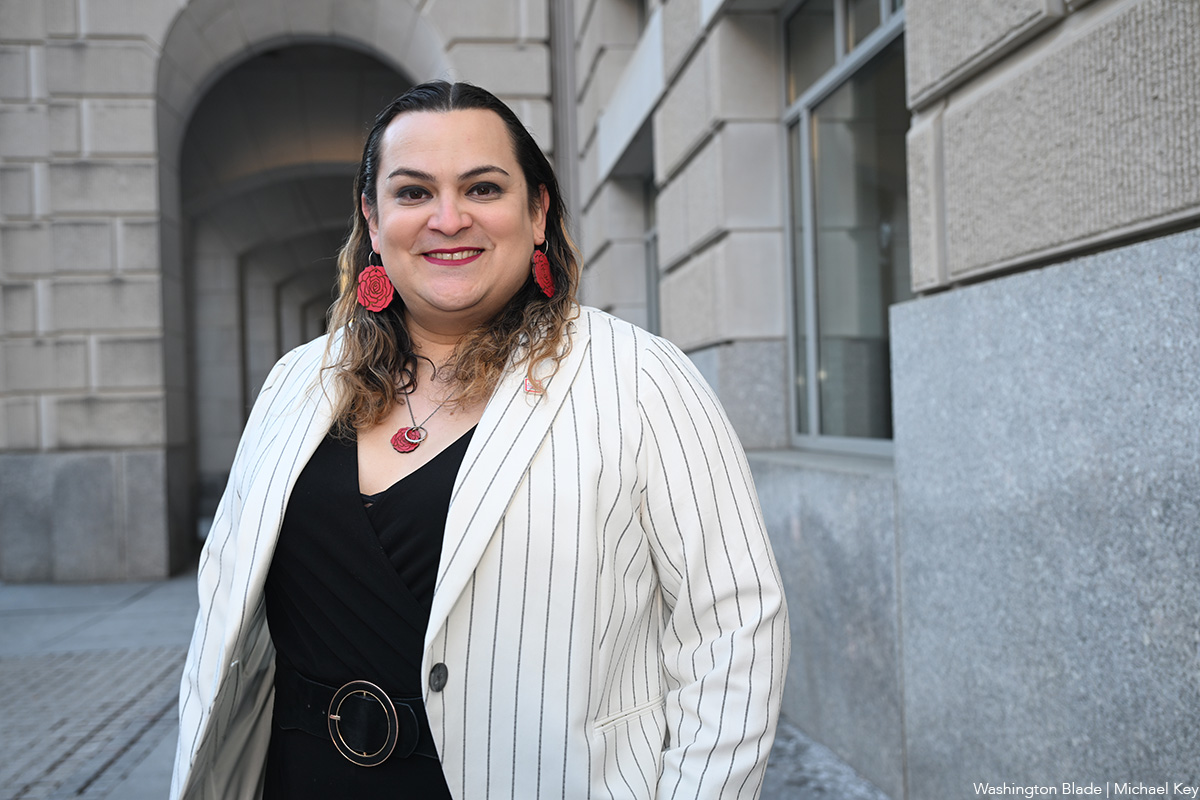
Age: 36
Occupation: Public Servant, Community Organizer
How do you identify? I am a queer transLatina
What are you looking for in a mate? I’m looking for a partner who is caring, socially aware, and passionate about meaningfully improving some part of this world we all live in. Ideally someone playful who can match my mischievous energy, will sing and dance with me whenever joy finds us, and will meet me at protests and community meetings when the moment calls for bold collective action.
Biggest turn off: Ego. Confidence can be cute, but humility is sexy.
Biggest turn on: Drive. Seeing someone put their heart into pursuing their goals is captivating. Let’s chase our dreams together!
Hobbies: Music in all its forms (karaoke, playing guitar, concerts, musicals…), finding reasons to travel to new places, and making (Mexican) tamales for friends and coworkers.
What is your biggest goal for 2026? My biggest goal for 2026 is to organize and a celebratory kiss on election night wouldn’t hurt.
Pets, Kids or Neither? An adorable black cat named Rio (short for Misterio)
Would you date someone whose political views differ from yours? Ma’am? If you feel the need to ask…
Celebrity crush: Mi amor, Benito Bad Bunny. Zohran Mamdani, too. I have lots of love to give.
Name one obscure fact about yourself: I worked at Chick-fil-A when I was in high school and was fired after just three months. At the time it was still legal to fire someone for being trans, but I’m pretty sure it was because I called out to go to a Halloween party.
Em Moses
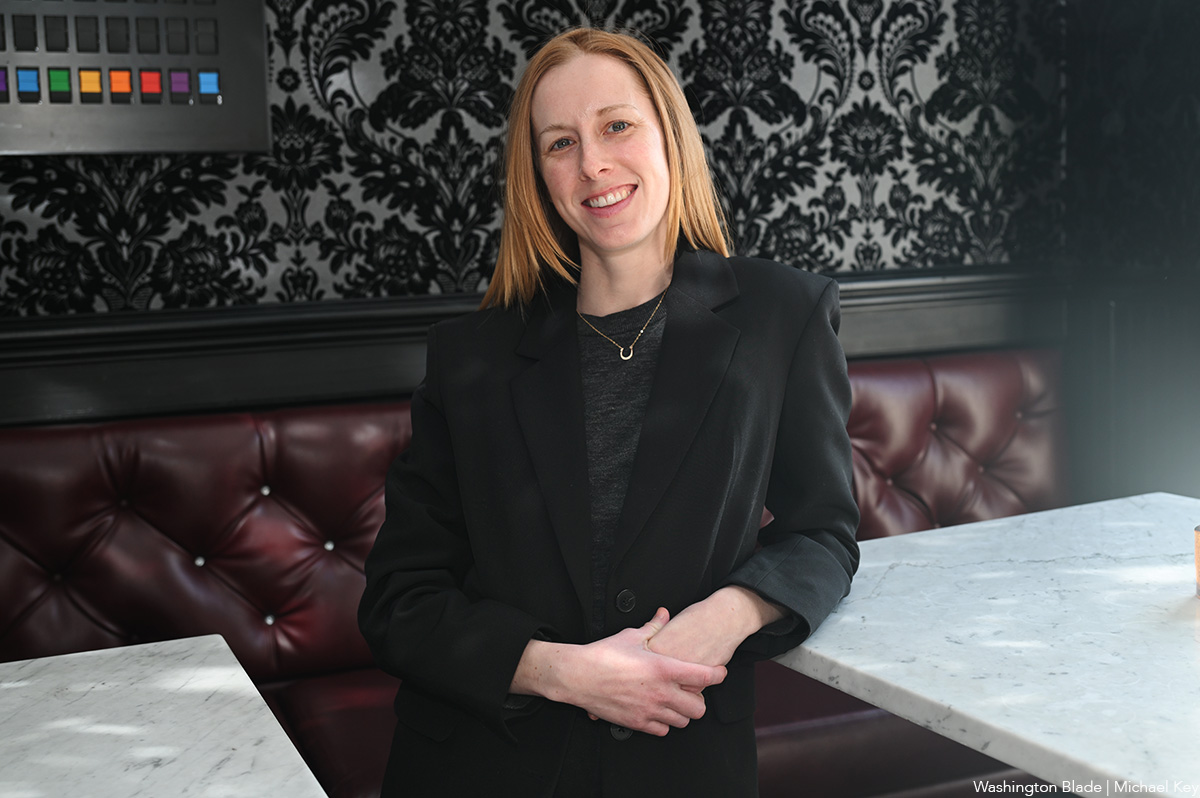
Age: 34
Occupation: Publishing
How do you identify? Queer
What are you looking for in a mate? Companionship, passion, fun. I seek a confident partner who inspires me, someone to laugh and dance with, someone with a rich internal universe of interests and experiences to build upon. A lifelong friend.
Biggest turn off: Dishonesty.
Biggest turn on: I love when someone is exactly themselves, nurturing their passions and skills and showing up uniquely in this world as only they can.
Hobbies: I love to read. I create art with my hands. When the weather is nice I’m outside, walking around the District looking at flowers and trees.
What is your biggest goal for 2026? My main goal this year is to spend more time with my nieces and nephews.
Pets, Kids or Neither? No pets or children in my life currently.
Would you date someone whose political views differ from yours? While I consider myself quite openminded and genuinely enjoy learning from perspectives different from my own, I have clear boundaries around my morals and those pillars do not fall.
Celebrity crush: Luigi Mangione
Name one obscure fact about yourself: My first job was at a donut shop.
Nate Wong
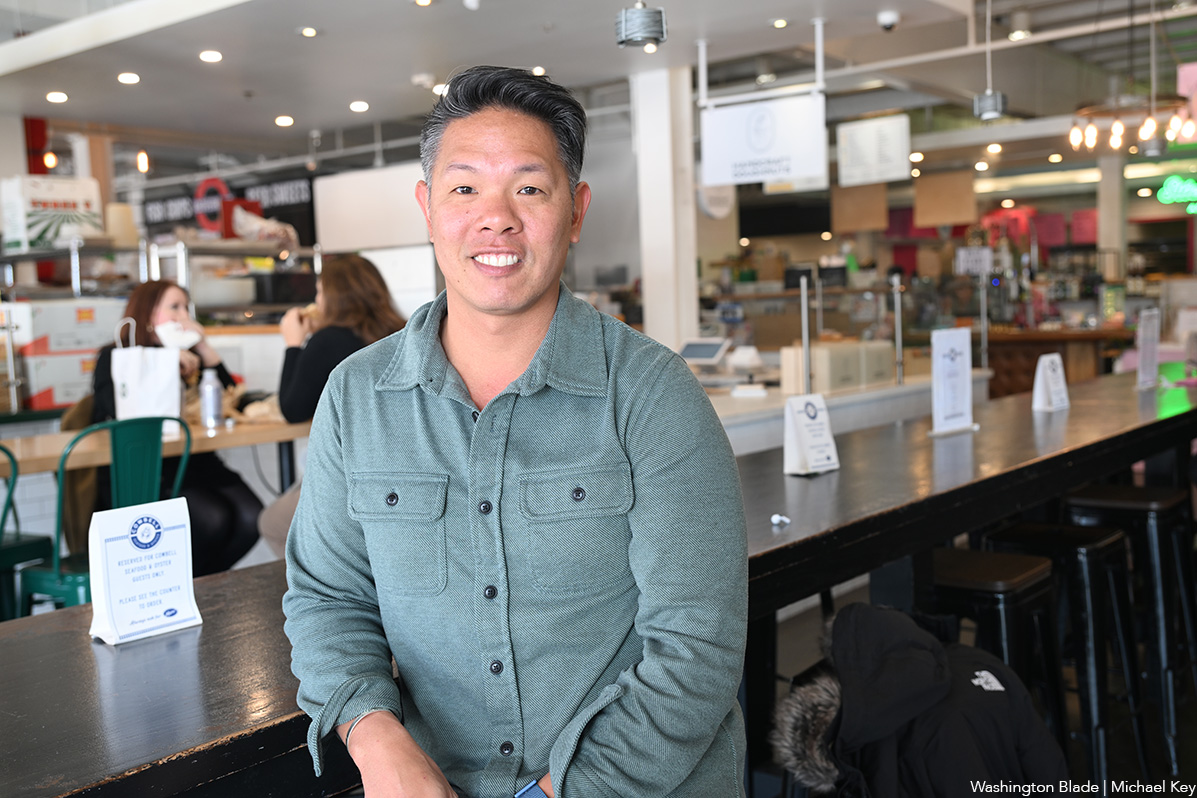
Age: 41
Occupation: Strategy adviser to nonprofits and philanthropists to help ambitious ideas turn into meaningful, positive societal impact.
How do you identify? Gay (he/him)
What are you looking for in a mate? An additive partner: sociable, adventurous, and curious about the world. I’m drawn to warmth, openness, and people who show up fully — one-on-one and in community. If you enjoy a good dinner party, make eye contact, and actually talk to strangers (I know a D.C. no-no), we’ll get along just fine.
Biggest turn off: Not being present. Active listening matters to me; attention is a form of respect (and honestly, very attractive). And a picky food eater (how will we some day be joint food-critics?).
Biggest turn on: Curiosity, adventuresome spirit, and someone who can hold their own in a room — and still make others feel at ease. Confidence is best when it’s generous.
Hobbies: Splitting my time between the ceramics studio (District Clay), planning the next trip, and finding great food spots. I box to balance it all out, and I love curating small, adventurous gatherings that bring interesting people together — the kind where you stay later than planned.
What is your biggest goal for 2026? The last few years threw some curve balls. So 2026 is all about moving forward more freely and passionately, trusting what feels right and following it with intention (and joy).
Pets, Kids or Neither? Open to kids (in a variety of forms — already have some adorable god kids). A hypoallergenic dog would absolutely raise the cuddle quotient; cats are best admired from a respectful, allergy-safe distance.
Would you date someone whose political views differ from yours? I value thoughtful listening and sincere debate; shared values around the honoring of everyone’s humanity, equity, and justice matter to me and aren’t up for debate.
Celebrity crush: Bad Bunny style with Jason Momoa humble confidence (harking to my Hawaiian roots) and Idris Elba charm — range matters.
Name one obscure fact about yourself: I celebrated medical clearance by going surfing in El Salvador. I’ve also nearly been arrested in Mozambique and somehow walked away unscathed (and without complying with a bribe) — happy to explain over an excursion.
Diane D’Costa
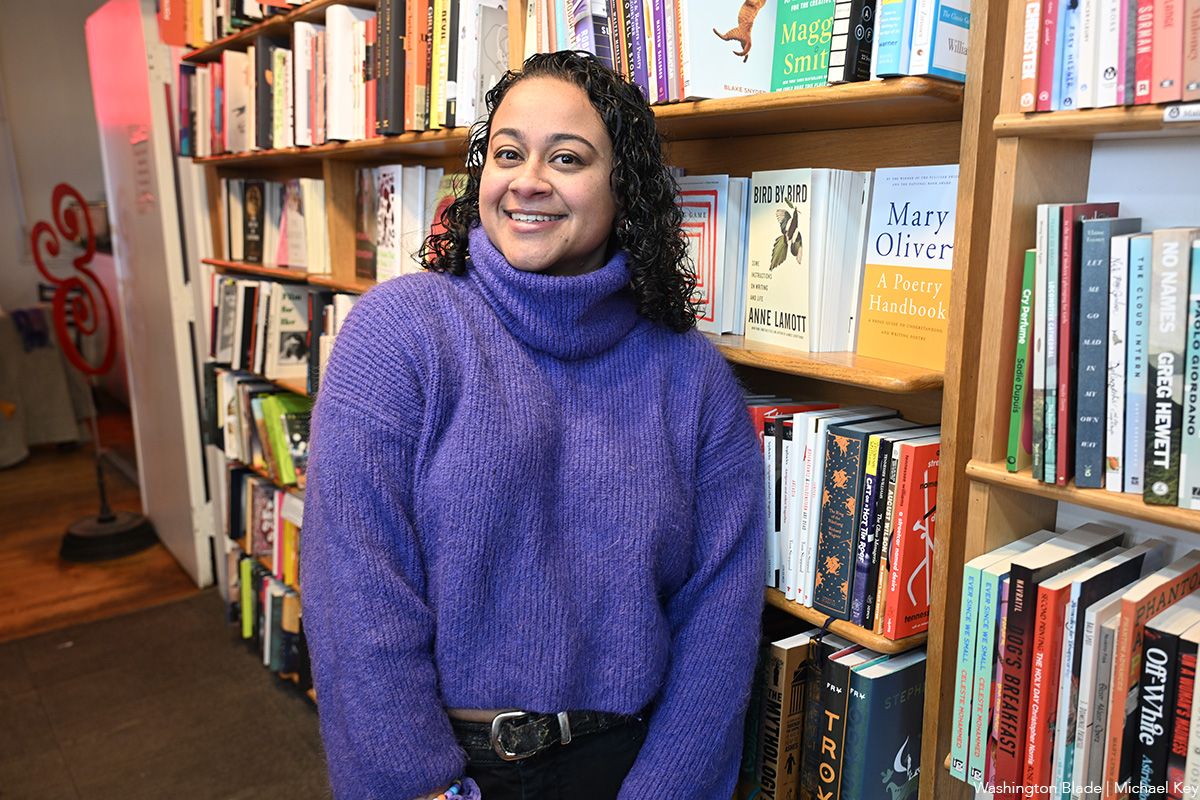
Age: 29
Occupation: Artist + Designer
How do you identify? Queer/lesbian
What are you looking for in a mate? A cuddle buddy, a fellow jet setter, a muse! Someone to light my soul on fire (in a good way).
Biggest turn off: Apathy. I care deeply about a lot of things and need someone with a similar curiosity and zest for life.
Biggest turn on: Mutuality really does it for me — a push and pull, someone who will throw it back and also catch it. I love someone who takes initiative, shows care and compassion, and expresses fluidity and confidence.
Hobbies: You can find me throwing pottery, painting, sipping natural wine, supporting local coffee shops, and most definitely tearing up a QTBIPOC dance floor.
What is your biggest goal for 2026? Producing my first solo art show. This year I’m really leaning into actualizing all my visions and dreams and putting them out into the world.
Pets, Kids or Neither? I’ve got a Black Lab named Lennox after the one and only D.C. icon, Ari Lennox. I love supporting the youth and (made a career out of it), but don’t necessarily need to have little ones of my own.
Would you date someone whose political views differ from yours? No. Values alignment is key, but if you wanna get into the nuances of how we actualize collective liberation let’s get into it.
Celebrity crush: Queen Latifah
Name one obscure fact about yourself: I’m in the “Renaissance” movie. I know, I know slight flex… but “Crazy In Love” bottom left corner for a split second and a harsh crop, but I’m in there. “You are the visuals, baby” really hit home for me.
Donna Marie Alexander
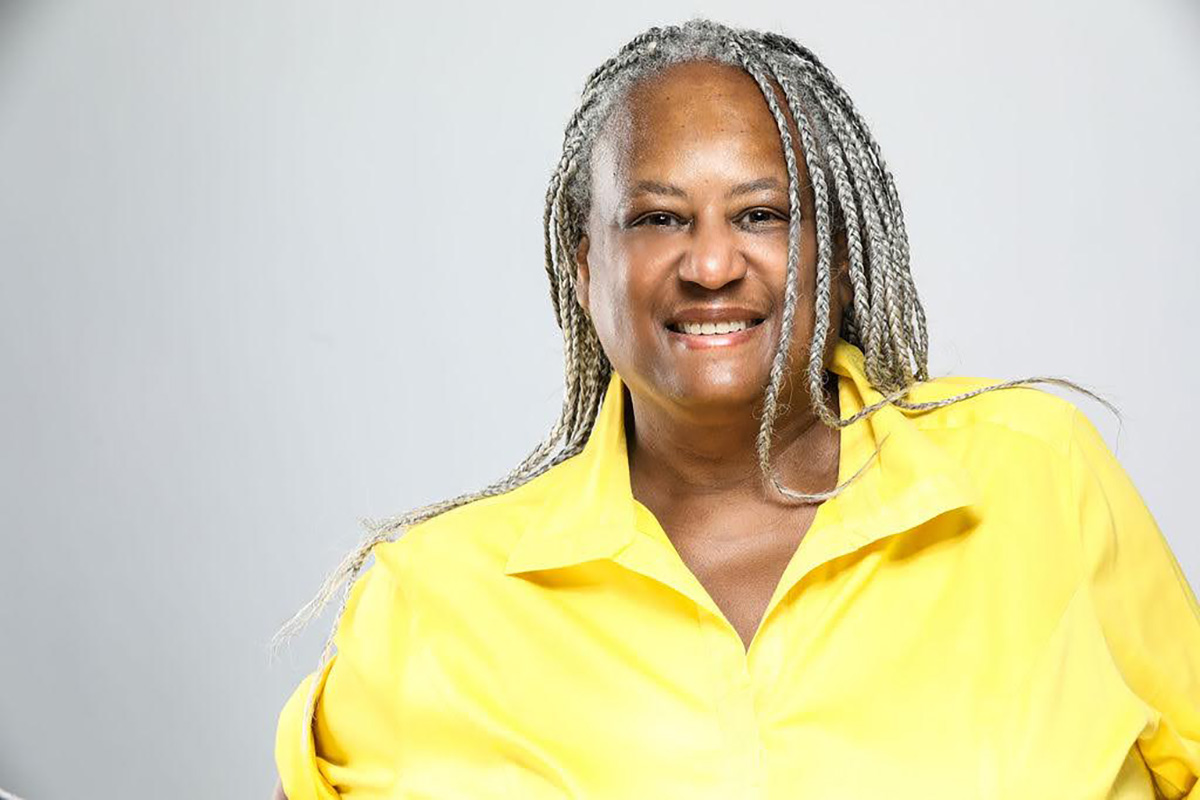
Age: 67
Occupation: Social Worker
How do you identify? Lesbian
What are you looking for in a mate? Looking for a smart, kind, emotionally grown woman who knows who she is and is ready for real companionship. Also, great discernment and a good lesbian processor. Bonus points if you’ll watch a game with me— or at least cheer when I do. Extra bonus if you already know that women’s sports matter.
Ideal first date: Out for tea or a Lemon Drop that turns into dinner, great conversation, and a few laughs. Low drama, high warmth.
Must haves: A sense of humor, curiosity about the self, curiosity about me, and curiosity about the world. An independence, and an appreciation for loyalty—on and off the field. Dealbreaker: Anyone who thinks “it’s just a game.”
Biggest turn off: Self-centered and a lack of discernment.
Biggest turn on: Great conversation and a sense of humor.
Hobbies: Watching the Commanders game
What is your biggest goal for 2026? Self-growth and meeting an amazing friend.
Pets, Kids or Neither? I have two kids and grandkids.
Would you date someone whose political views differ from yours? No
Celebrity crush: Pam Grier
Name one obscure fact about yourself: She’s way more superstitious about game-day routines than she lets on
Joe Reberkenny
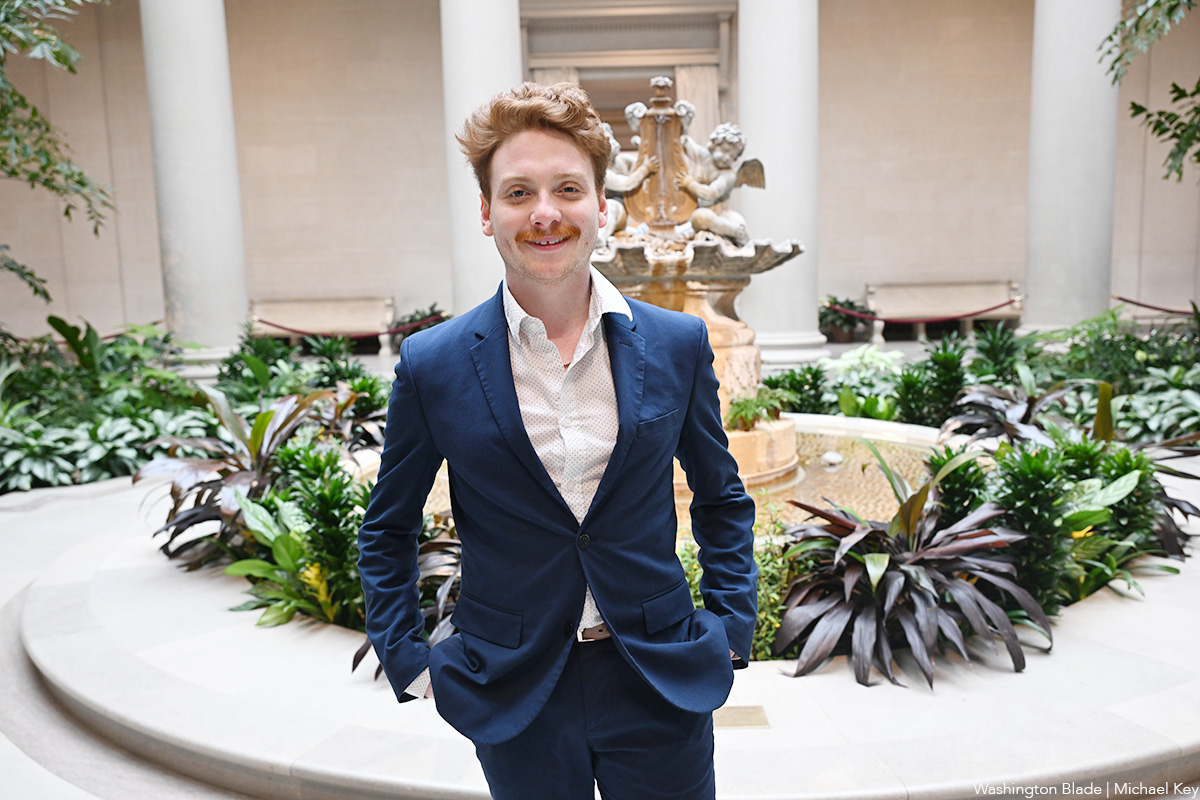
Age: 24
Occupation: Journalist
How do you identify? Gay
What are you looking for in a mate? Someone who’s driven, flexible, and independent. I’m a full-time journalist so if there’s news happening, I’ve gotta be ready to cover breaking stories. I’m looking for someone who also has drive in their respective career and is always looking to the future. I need someone who gets along with my friends. My friends and community here are so important to me and I’m looking for someone who can join me in my adventures and enjoys social situations.
Biggest turn off: Insecurity and cocky men. Guys who can’t kiki with the girls. Early bedtimes.
Biggest turn on: Traits: Emotional stability and reliability. A certain sense of safety and trust. Someone organized and open to trying new things. Physical: Taller than I am (not hard to do at 5’7″) but also a preference for hairy men (lol). Someone who can cook (I am a vegetarian/occasional pescatarian and while it’s not a requirement for me in a partner it would need to be something they can accommodate).
Hobbies: Exploring D.C. — from museums to nightlife, reading (particularly interested in queer history), dancing, frolicking, playing bartender, listening to music (preferably pop), classic movie connoisseur (TCM all the way).
What is your biggest goal for 2026? Continue my work covering LGBTQ issues related to the federal government, uplift queer voices, see mother monster (Lady Gaga) in concert.
Pets, Kids or Neither? I’ve got neither but I love a pet.
Would you date someone whose political views differ from yours? No
Celebrity crush: Pedro Pascal
Name one obscure fact about yourself: I’ve been hit by multiple cars and I have a twin sister.

Claudia López wins primary in Colombian presidential race

Too afraid to leave home: ICE’s toll on Latino HIV care

Intense doc offers transcendent treatment of queer fetish pioneer

In D.C. comedy, be sure to shop local

Comings & Goings

13 HIV/AIDS activists arrested on Capitol Hill

An undeclared war of distraction by the felon

PHOTOS: Sydney Gay and Lesbian Mardi Gras Parade

Ugandan activist named Charles F. Kettering Foundation fellow