News
Ros-Lehtinen becomes latest GOP co-sponsor of Equality Act
Republican supports LGBT measures after last year expressing ‘concerns’
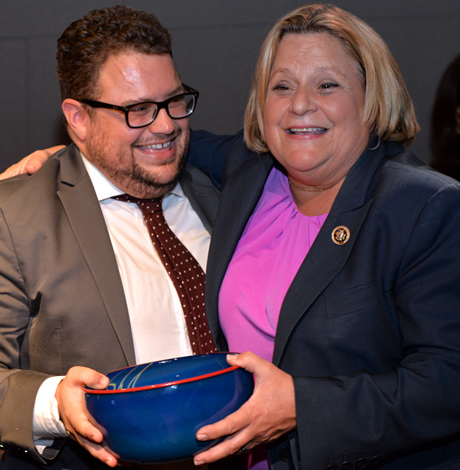
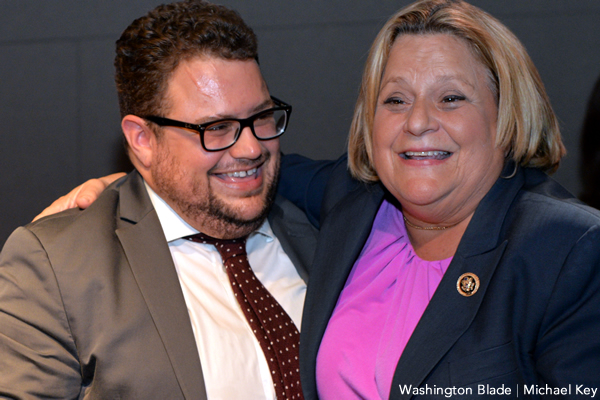
Rodrigo Heng-Lehtinen and his mother, Rep. Ileana Ros-Lehtinen (R-Fla.) attend the National Center for Transgender Equality’s 13th anniversary at Hamilton Live on May 18, 2016. (Washington Blade file photo by Michael Key)
A Republican member of the U.S. House who supports LGBT rights — but had concerns about the Equality Act — has now become a co-sponsor of the legislation.
Rep. Ileana Ros-Lehtinen (R-Fla.) — who has a transgender son, Rodrigo — quietly became on Friday the second House Republican and third Republican in Congress to co-sponsor the comprehensive LGBT rights legislation.
The legislation, introduced by Rep. David Cicilline (D-R.I.) in the House and Sen. Jeff Merkley (D-Ore.) in the Senate, would add sexual orientation and gender identity to the Civil Rights Act of 1964 to prohibit discrimination against LGBT people in employment, housing, jury service, federal programs, credit, education and public accommodations. The legislation now has 177 co-sponsors in the House and 41 co-sponsors in the Senate.
Jay Brown, a spokesperson for the Human Rights Campaign, said in a statement Ros-Lehtinen’s co-sponsorship of the Equality Act demonstrates the bipartisan appeal of the legislation.
“Equality isn’t a partisan value,” Brown said. “It’s an American value. Rep. Ros-Lehtinen is once again stepping up to ensure LGBTQ people have the same access and opportunities as our neighbors.”
Still, Republican support for the legislation is very limited. The only other Republican co-sponsor of the Equality Act in the House is Rep. Robert Dold (R-Ill.). In the Senate, Mark Kirk (R-Ill.) remains the only Republican co-sponsor of the legislation.
Ros-Lehtinen’s co-sponsorship of the Equality Act marks a departure from the “concerns” she expressed about the legislation even she’s considered the most pro-LGBT Republican in Congress. At the time of the bill’s introduction, Ros-Lehtinen cited “concerns about the current proposal’s broadness and how it will impact religious organizations.”
The Washington Blade has placed a request in with Ros-Lehtinen’s office seeking comment on why she would co-sponsor the Equality Act now after expressing concerns about the legislation last year.





Rehoboth Beach
CAMP Rehoboth hires new executive director
Dr. Robin Brennan’s background includes healthcare, fundraising roles
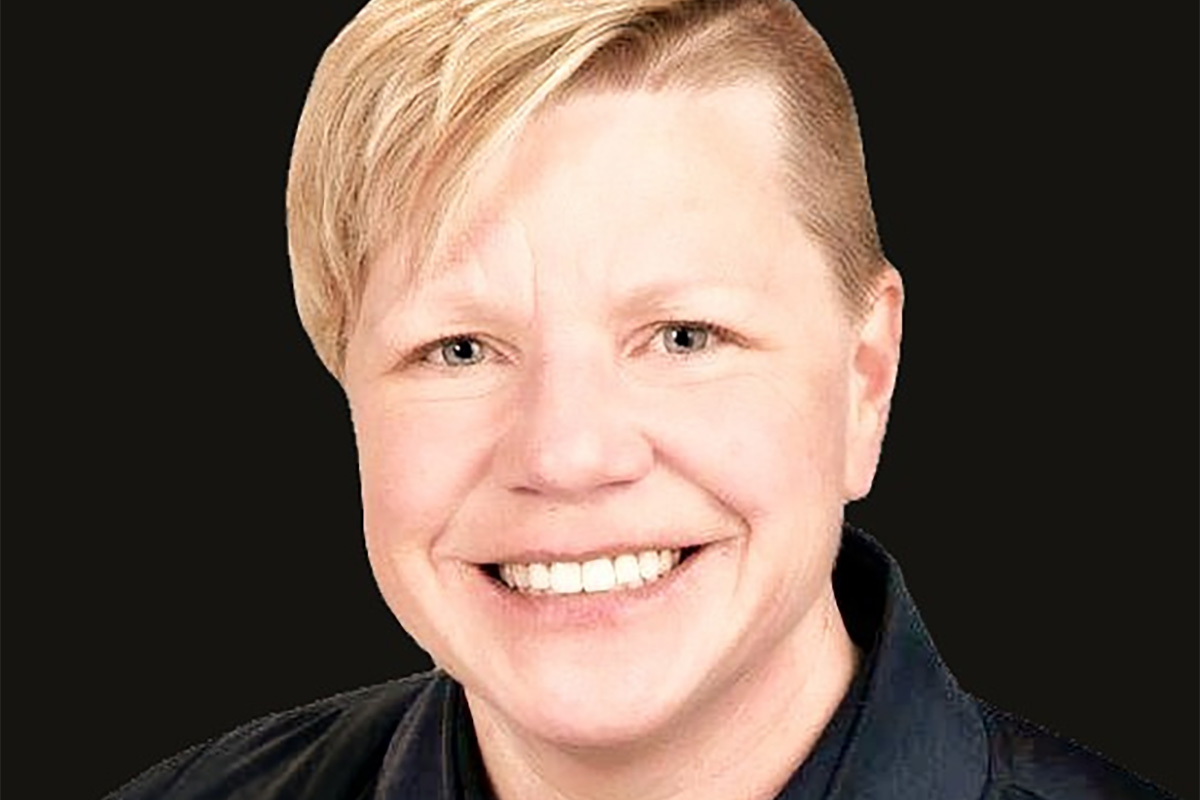
CAMP Rehoboth, the Delaware LGBTQ community center, on Monday announced Dr. Robin Brennan as the organization’s new executive director.
Brennan, who is relocating full time to Rehoboth Beach with her wife and daughter, will start on March 23. The position opened up following the retirement of Kim Leisey after more than two years in the role.
Brennan’s background is in health systems. At Nemours Children’s Health in Wilmington, Del., she held senior roles in evaluation, population health, and DEI education, according to a CAMP Rehoboth statement. Most recently, she served as vice president and Chief Diversity and Inclusion Officer at Redeemer Health. Brennan is an experienced fundraiser, according to the statement.
“After conducting a comprehensive national search, the Board of Directors selected Robin because of her depth of leadership experience, her fundraising acumen and her overall joyful, focused approach,” said Leslie Ledogar, president of the CAMP Rehoboth board of directors and chair of the Executive Director Search Committee. “The fact that core to her leadership is her belief that community well-being is inseparable from access to health, culture, education and the arts – an approach that mirrors CAMP Rehoboth’s holistic mission – makes Robin the exact next person to lead CAMP Rehoboth today and into the future.”
“I am deeply honored to serve as CAMP Rehoboth’s executive director as we enter an exciting new chapter,” said Brennan. “I was drawn to CAMP Rehoboth because of its unwavering mission, deep roots in the community, and the meaningful role it plays in bringing people together. I look forward to meeting members of the community, listening to their stories, and building meaningful relationships with the many people who make CAMP Rehoboth such a vital community anchor.”
Colombia
Claudia López wins primary in Colombian presidential race
Former Bogotá mayor’s wife lost reelection bid on Sunday
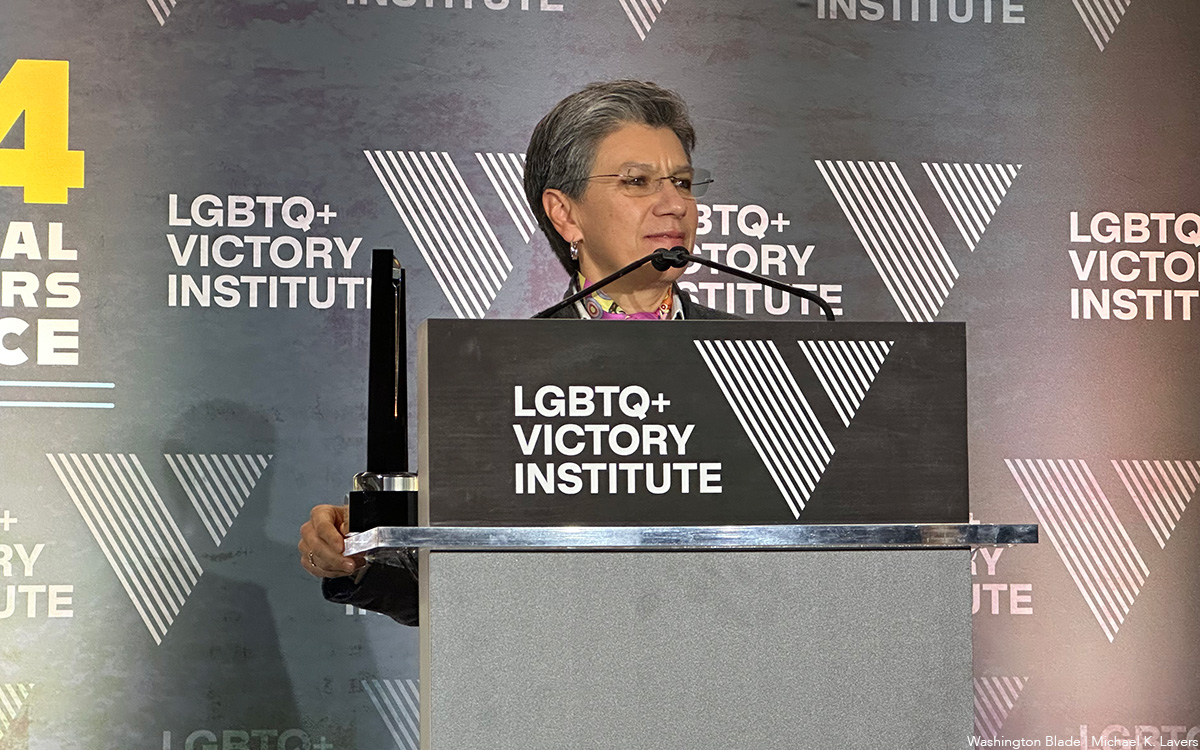
Former Bogotá Mayor Claudia López on Sunday won her primary in the race to succeed Colombian President Gustavo Petro.
López, a centrist who is running as an independent, defeated Leonardo Huerta in the “Consulta de las Soluciones” primary.
López was the Colombian capital’s mayor from 2020-2023. She was a member of the Colombian Senate from 2014-2018.
López is running to succeed Petro, the country’s first leftist president who cannot seek a second consecutive term under Colombia’s constitution. Other presidential candidates who won their respective parties’ primaries on Sunday include Sen. Iván Cepeda, a member of Petro’s Historic Pact party, and Sen. Paloma Valencia of the conservative Democratic Center, the country’s main opposition party that former President Álvaro Uribe leads.
Juan Daniel Oviedo, who finished second in the Democratic Center’s primary, is openly gay.
The first-round of Colombia’s presidential election will take place on May 31.
Polls indicate López is trailing Cepeda and Valencia, who are considered the two frontrunners.
A second round will take place is no candidate receives at least 50 percent of the vote on May 31. López would become Colombia’s first female and first lesbian president if she wins the election.
López’s wife loses Senate seat
Colombia’s congressional elections also took place on Sunday.
Former Congressman Mauricio Toro, a member of the center-left Green Alliance party, in 2018 became the first openly gay man elected to Colombian Congress when he won a seat in the House of Representatives.
He lost his reelection bid in 2022. Voters on Sunday elected Toro for a second term.
Congresswoman María del Mar Pizarro, a bisexual Historic Pact member, won re-election.
Caribe Afirmativo, a Colombian LGBTQ and intersex rights group, notes only two of the 33 openly LGBTQ congressional candidates won their respective races. Among those who lost is Sen. Angélica Lozano, a bisexual woman who in 2018 became the first openly LGBTQ person elected to the Colombian Senate.
Lozano is married to López.
Lozano in a message posted to her Instagram page expressed “heartfelt gratitude to everyone for their support and love.”
“I will end my work in Congress on a high note by ensuring (the) child support and service contractor protection bills will become a reality in June,” she said.
Health
Too afraid to leave home: ICE’s toll on Latino HIV care
Heightened immigration enforcement in Minneapolis is disrupting treatment
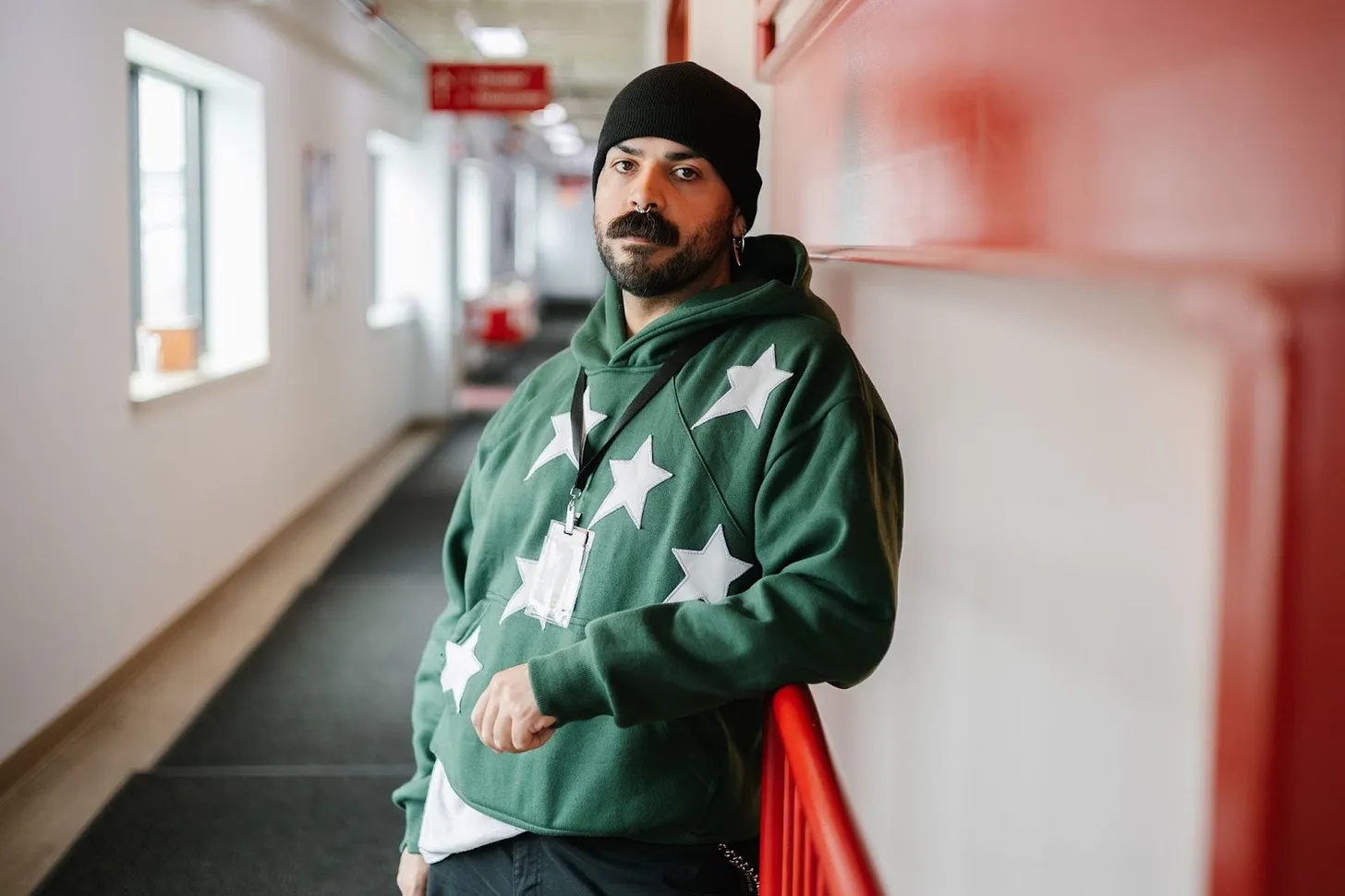
Uncloseted Media published this article on March 3.
This story was produced in collaboration with Rewire News Group, a nonprofit publication reporting on reproductive and sexual health, rights and justice.
This story was produced with the support of MISTR, a telehealth platform offering free online access to PrEP, DoxyPEP, STI testing, Hepatitis C testing and treatment and long-term HIV care across the U.S. MISTR did not have any editorial input into the content of this story.
By SAM DONNDELINGER and CAMERON OAKES | For two weeks, Albé Sanchez didn’t leave their house in South Minneapolis.
“[I was] forced into survival mode,” Sanchez told Uncloseted Media and Rewire News Group (RNG). “I felt like there was an invisible wall [to the outside world] that I couldn’t cross unless I really wanted to put myself in a place where there was a chance that I might not be able to come back.”
Queer and Mexican American, Sanchez was afraid of being targeted by the Immigration and Customs Enforcement presence in their neighborhood, even though they are a U.S. citizen.
“Every day is a risk,” they say, adding that even if they have paperwork, if they fit the profile, they are a target, making it scary to go even to work or the grocery store.
Sanchez, a 30-year-old sexual health care educator, has been taking oral PrEP, the daily preventive medication for HIV, for over a decade. But the mounting stress of ICE raids has made it harder to keep up with dosing.
“A missed dose here and there pushed me to make the appointment [for something more sustainable],” they say.
Sanchez says they felt like somebody would have their back at their local clinic. It was only a 10-minute drive from where they worked, they knew its staff from previous visits and community outreach, and they could count on finding Spanish-speaking staff and providers of Latino heritage. But not everybody has had that same experience accessing care.
Since ICE’s Operation Metro Surge began in early December, an increasing number of Latino patients in Minnesota are delaying or canceling what can be lifesaving care for the prevention and treatment of HIV.
These findings are particularly alarming for Latino communities, who, as of 2023, are 72 percent more likely than the general U.S. population to be diagnosed with HIV. And while overall infections have decreased, cases among Latinos increased by 24 percent between 2010 and 2022.
“I’m very concerned that there is going to be a sharp uptick in transmission,” says Alex Palacios, a community health specialist in the Minneapolis area.
In a January 2026 declaration as part of a lawsuit seeking to end Operation Metro Surge in the days following Renee Nicole Good’s killing, the commissioner of the Minnesota Department of Health said HIV testing among Latino populations has “dropped dramatically” and that “although grantee staff continue to go into the community to promote and provide testing, people are not showing up.”
Local clinics are reporting the same thing. The Aliveness Project, a community wellness center in Minneapolis specializing in HIV care, told Uncloseted Media and RNG they have seen more than a 50 percent decrease in new clients. The clinic serves a large number of Latino and undocumented clients, and while it usually sees 750 people walk through their door each week, according to providers, it reported seeing 100 fewer people each week since December.
Red Door, Minnesota’s largest STI and HIV clinic, has had a “modest uptick” in no-shows and missed appointments since December.
What happens when treatment stops
Today, there are multiple medications available that work to prevent HIV and dozens that treat it once a person tests positive. Many people who consistently take their medication have such low levels of the virus that they can’t transmit it through sex. But becoming undetectable requires patients to stay on their medication; otherwise, the virus replicates and mutates, weakening the immune system and increasing the risk of life-threatening infections.
“If patients aren’t on their medicines consistently, HIV can learn about the medication and become resistant to them. When this happens, the medicine will not work for the patient, and the new resistant virus could potentially be passed on to others,” says George Froehle, a physician assistant and provider at Aliveness Project. “Medication adherence is one of the most important aspects of HIV care.”
To maintain care and prevent dangerous, untreatable strains from spreading in Minnesota, providers at Aliveness Project have begun delivering medication to patients when possible, offering telehealth when they can, and pausing routine lab work to limit in-person appointments.
“The most important thing we can do from a public health perspective is to keep people undetectable so they don’t transmit HIV,” Froehle says, adding that providers in other cities targeted by ICE will need to make plans for missed injection visits, pivot to telehealth and prepare their teams for the “trauma that can occur.”
Sanchez understands the risks of inconsistent treatment, which is why they opted for the injectable preventative medication.
“I have a lot of risk [to HIV in my community],” Sanchez says. “With so much uncertainty about the future and whether HIV care will remain stable, I realized I couldn’t let this opportunity pass.”
But injectable HIV treatments are commonly dosed at two weeks to six months apart, and the medication must be administered in a clinic — a setting many patients are avoiding, according to providers.
“They have a two-week window” to get their shots, according to Froehle, who added that because patients are afraid to come in person, they have had to transition people off of their injectable HIV treatments. This has caused patients to return to oral HIV treatments without the testing they would normally receive had ICE not been in Minneapolis. “[Oral treatments] weren’t super successful [for these patients] to begin with and that’s why they were on injectables.”
Oral HIV medications, too, must be taken consistently to work. In response, providers have urged patients to have their pills with them at all times in case they get deported or detained.
The caution is not unfounded. Federal immigration facilities have a history of denying adequate medical care to people living with HIV, despite internal standards that require them to comply. Since 2025, at least two men living with HIV have been denied access to their medication in a Brooklyn jail, according to lawsuits obtained by THE CITY. One man said he was only given his medication after his lips broke open and he developed an open pustule on his leg. And in January 2025, another man died of HIV complications while in ICE custody in Arizona.
Beyond being detained without proper medication, patients are at risk of being deported to countries with limited access to HIV care, like Honduras and Venezuela, experts say.
“A lot of men [from Venezuela] told me they left because it wasn’t safe to be gay there and because they struggled to access HIV care,” says Froehle. “It’s a little heartbreaking to see new folks not only face the threat of deportation, but to places where they didn’t feel safe medically or identity-wise.”
“Some of these patients will die in their home country,” says Anna Person, the chair of the HIV Medicine Association. “It’s a death sentence.”
A ‘cascading disaster’
While ICE’s presence is threatening the infrastructure of HIV care that Minneapolis has built over decades, experts say there has always been a blind spot in HIV care for the city’s Latino community.
Vincent Guilamo-Ramos, executive director of the Institute for Policy Solutions at the Johns Hopkins University of Nursing, describes HIV in Latino communities as a “cascading disaster,” the result of years of compounding inequities.
“There’s been an invisible crisis among Latinos that hasn’t gotten traction,” he says. “The numbers have consistently gone up in terms of new infections, while nationally they’ve gone down. … That should be a big alarm.”
Numbers are rising because structural barriers and stigma are preventing Latinos from receiving care. A 2022 report from the Centers for Disease Control and Prevention found that between 2018 and 2020, nearly 1 in 4 Hispanic people living with HIV reported experiencing discrimination in health care settings. Lack of representation among providers, language barriers and deep-rooted medical mistrust further complicate access to care, according to Guilamo-Ramos.
Beyond the medical system, stigma within Latino communities can be equally damaging. According to Human Rights Campaign data, more than 78 percent of Latino LGBTQ youth reported experiencing homophobia or transphobia within the Latino community in 2024.
Sanchez agrees that stigma and bias are already massive barriers to care, citing the strict gender norms and Catholic beliefs many Latino communities hold. They say ICE’s presence is threatening already delicate access to HIV care.
“This has caused so much damage to people,” Sanchez says. “Not being able to access your health care appointments is such a stab in the side. … Being able to navigate any of these things in normal circumstances already has so much difficulty to it.”
Palacios, who is Afro-Latine and living with HIV, says the heightened ICE presence is worsening barriers that have long undermined the Latino community’s access to HIV care.
“The horizon has always been stark and dim,” they say. “And this just feels like one more thing to address and to fight back against.”
Sliding backwards
Navigating HIV care is becoming more difficult across the board, as the federal government has decimated HIV funding, compromising decades of progress made in the fight against the virus since Donald Trump retook office just over a year ago.
In February 2026, three months into Operation Metro Surge, the Trump-Vance administration proposed slashing $600 million in HIV-related grants, targeting four blue states, including $42 million for Minnesota programs. A federal judge has temporarily blocked the cuts.
“This would completely decimate and gut all of our HIV prevention,” says Dylan Boyer, director of development at Aliveness Project. “That’s the reality that we live in.”
“We have all the tools, and yet we are staring down this rollback of infrastructure and research dollars, prevention efforts, treatment efforts, that are going to put us squarely back in the 1980s,” says Person, a national HIV expert who grew up in Minnesota. “[There] seems to be no other rationale for that besides cruelty, to be quite frank, since there’s no scientific reason for it.”
Repair and representation
Jenny Harding, director of advancement at a Minneapolis-area supportive housing program for people living with HIV, says that while ICE’s presence is lessening in the Twin Cities, the “damage is done.”
Person says that this mending will take time, especially between the medical community and patients, since HIV providers can have a “very fragile” relationship with their clients.
“It takes, sometimes, years to build that level of trust. And I do worry that folks are just going to say, ‘I don’t feel safe here anymore. The system does not have my best interest at heart, and I’m not coming back,’” she says. “This is not something that you can flip a switch and everything will go back to normal.”
“We need to hold our federal government accountable, particularly HHS, [and] we need to ensure that HIV funding remains intact,” Guilamo-Ramos says, adding that in order to lower rates of HIV in the Latino community, there should be more specialized efforts: such as bilingual and culturally aligned health care providers, community-based outreach programs co-located where risk is highest, trust-building initiatives to address medical mistrust, mobile clinics, and targeted programs to re-engage patients who have fallen out of care.
Aliveness Project’s patient numbers have increased in the last few weeks as the ICE operation has waned, but the clinic staff is keeping “a watchful eye” and is having “difficulty reaching folks who are understandably scared.”
“Our biggest focus right now is reconnecting with people through our outreach so no one has a lapse in their HIV medications or prevention care,” Boyer, of Aliveness Project, says.
For Sanchez, seeing providers who speak Spanish and are of Latin heritage at Aliveness Project built enough trust for them to reach out and make an appointment despite the risks. Sanchez feels optimistic about their new injectable prevention strategy with the support of their clinic.
“There’s many places where you can receive care here in the Twin Cities where you might not see your skin tone. … There’s still a lot of health care professionals that unfortunately carry bias. … Aliveness is the opposite of that,” they say. “Seeing that representation and knowing someone has that cultural context of how to meet you in moments of sensitivity, it’s crucial.”

CAMP Rehoboth hires new executive director

Claudia López wins primary in Colombian presidential race

Too afraid to leave home: ICE’s toll on Latino HIV care

Intense doc offers transcendent treatment of queer fetish pioneer

In D.C. comedy, be sure to shop local

13 HIV/AIDS activists arrested on Capitol Hill

An undeclared war of distraction by the felon

PHOTOS: Sydney Gay and Lesbian Mardi Gras Parade

Ugandan activist named Charles F. Kettering Foundation fellow