Local
Obstacles in the aisle
Local couple overcomes adversity, enters Crate & Barrel wedding contest

Washington residents Jonathan Howard (left) and Gregory Jones are hoping to strike it big in a Crate & Barrel-sponsored wedding contest. (Photos by Heather Lyons; courtesy of Howard and Jones)
It began as little more than a lark, but a Washington gay couple entered a Crate & Barrel wedding contest and have been shocked to find friends and allies have catapulted them to the top of a huge list of nearly 200 couples hoping to nab the top prize of a $100,000 company-sponsored wedding.
Jonathan Howard, who’s 29 and just 11 days younger than his partner, Gregory Jones, discovered the contest in a Crate & Barrel e-mail. They moved to D.C. together in 2008 and got engaged in October when Howard popped the question. They’re planning to take advantage of the District’s new same-sex marriage law, which went into effect this week, but having an extra $100,000 would obviously sweeten the deal.
Howard and Jones were in second place as of press time with 5,906 votes. They’d previously been in the lead. A Chicago police officer who was paralyzed in the line of duty, Densey Cole, is in first place with Mary Cole with 10,677 votes, but they may be disqualified — they’re already married, having wed in the hospital when he awoke from a coma following the May 2009 accident. They’re hoping for an ocean-side ceremony to renew their vows. The rules state couples entering the contest must be engaged.
Howard says it would be amazing if they win.
“It would be great for us but more than that for the community to really say, ‘Hey, we’re a normal couple and we’re getting married and it doesn’t matter if it’s two men,'” Howard says. “This company is supporting us and it’s a great story, it’s a great step for marriage equality but in a completely different venue, not political at all. I would be shocked and amazed and overwhelmed and overjoyed and it would be just great for everybody involved.”
So how did these two average Joes convince nearly 6,000 people to vote for them? A lot of it stems from a tragedy they only hinted at in their 100-word online bio. Howard made a lot of friends and contacts in the gay community following an August 2008 hate crime attack. He and three friends were in Boston, where he went to college and lived at the time, when it happened.
“We were walking home and a group of four guys pulled up to us in a car,” Howard says. “I turned around to see what the commotion was and the last thing I remember is hearing, ‘Die, faggot, die,’ as they stomped my head into the pavement.”
Howard says he’s lucky he wasn’t seriously hurt in the attack. His attacker, Fabio Brandao, eventually pleaded guilty but received a two-year suspended sentence that let him get by without any jail time, an outrage, Howard says.
He met hundreds of gay activists and friends after the attack and was friends with many of them on Facebook. When they heard he and Jones were soliciting votes, they rallied in support. The Gay & Lesbian Alliance Against Defamation wrote about the couple spurring more votes and Jones’ brother’s fiance in Chicago, Katie Lindner, went on a mini-crusade of sorts helping them get the word out. She’s working on a graduate degree in Chicago on new media and says the Facebook phenomenon is fascinating to observe.
“People kind of think of [Facebook] as this thing that doesn’t seem important, that wastes your time and fills your day, but it gives me chills to see how much support there’s been for them,” Lindner says. “It’s bigger than any one individual could achieve.”
“I think people see our story as a nightmare with a fairy tale ending,” Jones says. “We went through this horrible thing together and it made us better, stronger people and brought us closer to each other.”
Though the votes are important, it will ultimately be up to a panel of judges to decide who wins. Several prizewinners will be selected from among the top 50 vote getters by Crate & Barrel employees.
Is it realistic to hope the company might select a gay couple for one of the top prizes, even the $100,000 grand prize? Vickie Lang, manager of public relations and community affairs for Crate & Barrel, says it’s certainly possible and that the gay-friendly company is open to it.
“Ultimately our role is to be a resource to any couple celebrating a wedding, a commitment ceremony or any of that,” Lang says. “As part of that, we’re celebrating inclusiveness and we’re excited about that. … We’re looking for couples who really reflect the Crate & Barrel lifestyle, whether they’re same-sex couples or heterosexual couples.”
And just what is the “lifestyle”? Lang mentions “Timeless, classic, high quality, clean, vibrant and comfortable — things for a warm, approachable lifestyle.”
There’s been an ugly side to the contest, though. Anonymous Chicago blogger Detective Shaved Longcock, who knows and supports the Coles, wrote in comments that have since been removed from his blog: “A gay couple is giving Densey and Mary Cole a run for their money? Let’s really get the vote out for one of our own. … I am not politically correct and never will be. Period! I am not going to let this fruit loop couple beat one of our own!”
That posting inspired a litany of anti-gay anonymous posts against Howard and Jones including, “these are all guys who can’t please a woman,” “faggots deserve to die,” “Homos are as sick as child molesters and rapists,” “I hope they all catch HIV,” and more.
But there’s also been an upside. Jones says he’s heard from people who harassed him with anti-gay slurs in school who’ve now voted for he and Howard to win. One even apologized.
“I can’t even put it into words,” Jones says. “It’s a warm and amazing feeling.”
A handful of other same-sex couples are also in the contest. One couple, Ed and Erwin, who have two adopted sons, are facing Erwin’s terminal lung cancer and hope to wed before he dies. They have more than 1,000 votes.
If they win, Howard and Jones would like to wed on their anniversary — Oct. 10 (10/10/10). If not, they’ll likely bump to April 2011.
Regardless of how it turns out, they’re happy to have found each other and thrilled that they can marry in Washington.
“It is so affirming that this is our nation’s capital and this happening right here around people making our rights, laws and liberties,” Jones says. “It also makes a huge statement that Congress had the ability to veto this and they did not. It sends a really positive message that this needs to be accepted and that we are equal and deserve every right that every other couple in this country deserves.”
To vote, go to www.ultimateweddingcontest.com and register an e-mail address. Howard and Jones are couple number 22682.





District of Columbia
Bowser, Office of LGBTQ Affairs announce LGBTQ+ History Month events
High Heel Race to take place Oct. 27
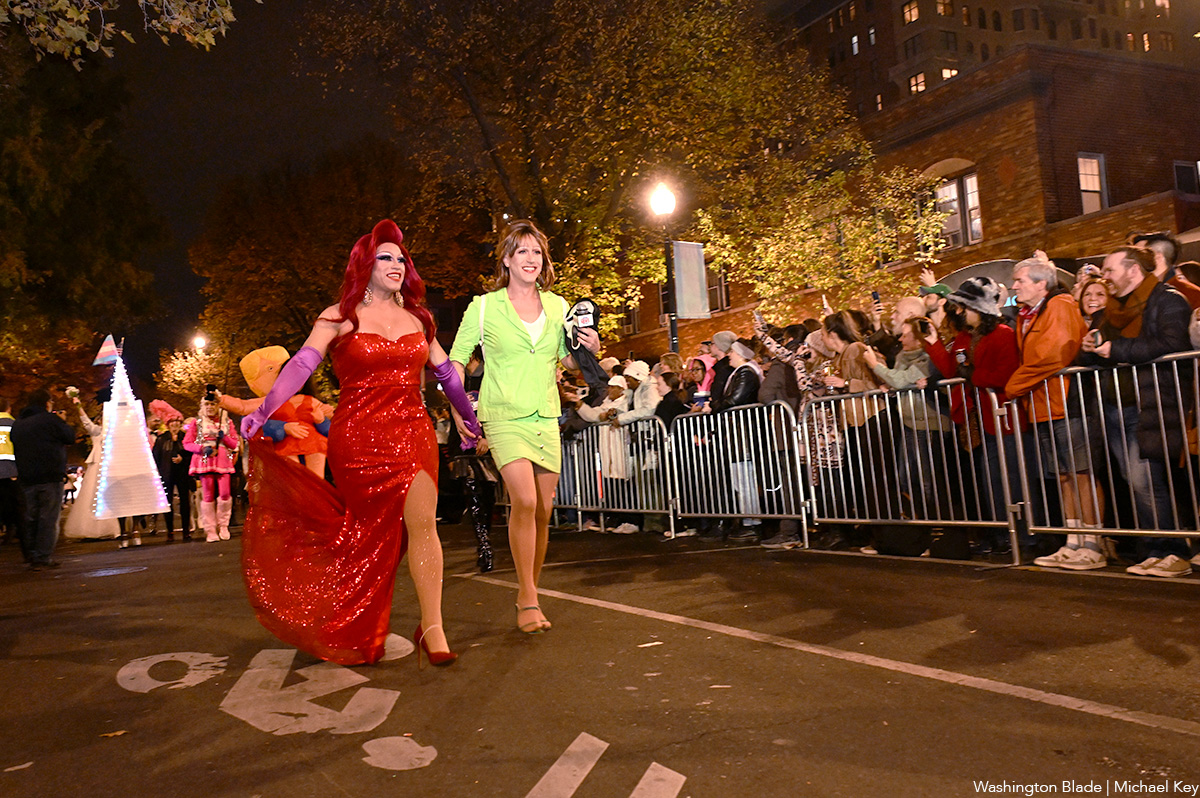
D.C. Mayor Muriel Bowser and the D.C. Mayor’s Office of LGBTQ Affairs have announced they will join the local LGBTQ community in celebrating LGBTQ+ History Month throughout October.
An Oct. 2 joint statement from Bowser and the Office of LGBTQ Affairs says the celebration will include several events in partnership with D.C. LGBTQ organizations and LGBTQ businesses. It says among the events will be a “Birthday Bash” celebrating the 20th anniversary of the Office of LGBTQ Affairs.
“Throughout October, Washingtonians are invited to honor the people, places, movements, and milestones that have shaped the District’s LGBTQIA+ community and the community’s ongoing contributions to Washington, D.C.,” the statement says.
“LGBTQIA+ History Month is a reminder that our history is not simply something we look back on — it is something we continue to make,” Japer Bowles, director of the Office of LGBTQ Affairs said in the statement.
Bowles added that in celebrating the 20th anniversary of the Office of LGBTQ Affairs “we honor the generations of advocates, artists, organizers, businesses, and residents who built our community and continue to shape its future. This milestone is an opportunity to celebrate how far we have come while continuing to build a more welcoming, inclusive and connected Washington, D.C.”
Equality Forum, the Philadelphia-based group that initiated the nationwide annual LGBTQ+ History Month in October, has said it recognizes the history, achievements, and contributions of LGBTQ people and the organizations they have led to advance the rights of LGBTQ people.
The statement released by Bowser and the D.C. Mayor’s Office of LGBTQ Affairs says these are among the upcoming events planned for October:
The Relationship Lab: A Healthy Relationships Series
Join us for an engaging series exploring what makes relationships healthy and how to recognize the signs when they’re not. Facilitated by DC SAFE in partnership with MOLGBTQA (The Mayor’s Office of LGBTQ Affairs.)
- When: Tuesday, Oct. 6, 13, and 20, 6-7:30 p.m.
- Where: 899 North Capitol St. N.E.
- RSVP: The Relationship Lab
MOLGBTQA Birthday Bash
Join us for the 20th Anniversary Celebration! We will be hosting an upbeat gathering, highlighting community leaders, advocates, artists, and institutions who have advanced LGBTQIA+ progress in Washington, D.C. over the last two decades. This event will highlight key milestones and the contributions of LGBTQIA local community partners with live entertainment and free refreshments.
- When: Thursday, Oct. 15, 6-9 p.m.
- Where: Penn Social (801 E St. N.W.)
- RSVP: s.dc.gov/MOLGBTQABday
Mayor’s LGBTQ+ Advisory Committee
Come get to know the newest members of the Mayor’s LGBTQ+ Advisory Committee. This diverse group of leaders, business owners, and advocates advise the mayor and Director Bowles on issues relating to DC’s LGBTQIA+ community and the Office of LGBTQ Affairs.
- When: Monday, Oct. 19, 6-7 p.m.
- Where: DC LGBTQ+ Community Center (1827 Wiltberger St., N.W.)
- RSVP: s.dc.gov/LGBTQMACoct
39th Annual 17th Street High Heel Race
Join us for the High Heel Race, cheering the queens, kings, and our community members as they sprint down 17th Street in heels, creativity, and pure D.C. spirit. From lively drag performances to thousands of neighbors filling the street, don’t miss this D.C. night!
- When: Tuesday, Oct. 27, 6-10 p.m.
- Where: 17th Street between R and P Streets, N.W.
- RSVP: s.dc.gov/2026HHR
What appeared to be the first LGBTQ+ History Month-related event to take place in D.C., called PRIDEtoberfest, was held Saturday, Oct. 3 from noon to 11:30 p.m. at the city’s Wunder Garten outdoor beer garden and event facility at 1101 First St., N.E. A flyer announcing the event says the Capital Pride Alliance and the Mayor’s Office of LGBTQ Affairs were among the event’s participants.
“We proudly attended, tabled, and I gave remarks at the Pridetoberfest this weekend,” Japer Bowles, director of the LGBTQ Affairs Office told the Blade.”
District of Columbia
To school to homeschool to school again
‘Pandemic took more than 2 years of school. It took 2 years of my childhood’
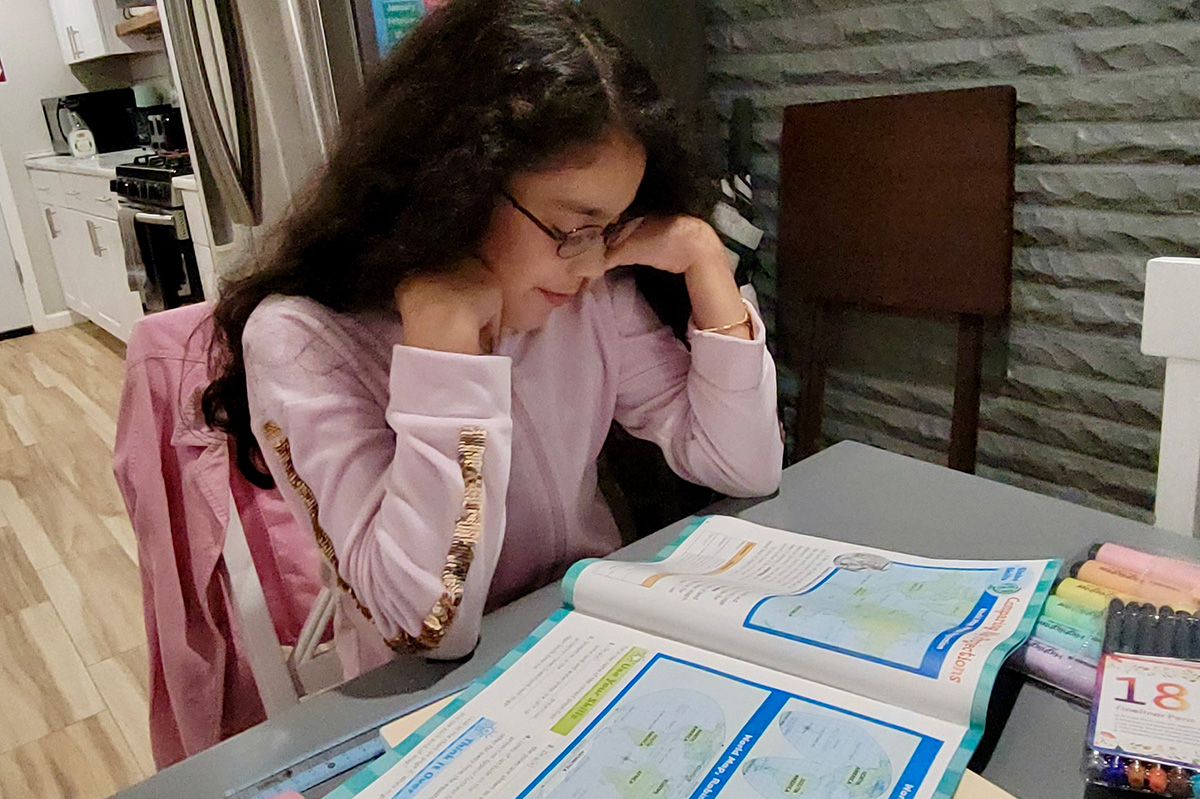
It wasn’t until I no longer had those 30 minutes of lunch and recess, when all the boys and girls would come together to trade bracelets, make up games, gossip about who we liked, play tag and sports, that I realized how much of my childhood happened during the parts of school that had nothing to do with schoolwork.
I was in the third grade when the COVID-19 pandemic began. I remember my parents explaining that I couldn’t go back to school and wondering when I would see my friends again — or whether I wanted to go back at all. But after spending two years learning from home, cut off from the friends, teachers and routines I had known, I began to understand what I had lost.
For many of my friends and classmates, going to school changed from a bus ride every morning to clicking a link and seeing their teachers and classmates through a screen. My experience was a little different. Instead of going to virtual school, I was homeschooled. My new routine was sitting at my kitchen table, with my mom teaching me how to write a paragraph or solve a math problem, surrounded by the same walls I saw every day.
My family was not alone. Many families across the country turned to homeschooling after schools shut down. Homeschooling increased sharply during the pandemic, especially among Black families, rising from 3.3 percent in the spring of 2020 to 16.1 percent that fall, according to the U.S. Census Bureau’s Household Pulse Survey.
It would be two years before I entered a classroom again.
At first, I loved homeschooling.
I didn’t have to wake up early or put on a uniform. I liked the comfort of my own room, surrounded by my stuffed animals and toys. I didn’t have to push my way through that horrible lunch line because my food was now waiting for me at the kitchen table.
It felt like a fever dream where school was canceled and all day was fun. That was my view as a 9-year-old.
But as days turned into weeks and weeks into months, that initial excitement wore off.
Every day became the same routine. There was no recess when I could play princess with all the other girls. There were no conversations in the lunch line and none of the small things that had broken up the school day before. I didn’t realize how much those moments mattered until I could no longer experience them.
With less to look forward to, I started spending more time on the internet.
I turned to platforms such as YouTube and TikTok to distract myself. Instead of seeing what the kids around me were doing every day, I could watch people online show off their clothes, makeup, dances, art and lives.
Over time, I started comparing myself with what I saw. I thought the way I dressed was childish and wanted to be like the superstars I saw online. I followed what was trendy and admired the girls and boys who looked so confident on screen.
Before the pandemic, my friends and I didn’t need the internet to tell us what was popular. But during those years at home, I became much more aware of what other people thought was cool and what someone my age was supposedly supposed to like. I felt as though I was growing up without getting to experience all the steps in between.
When I finally returned to school, I thought my classmates would be excited to see each other again after spending so much time apart.
Instead, I realized how much we all changed.
When I walked through those doors, I remembered vague memories of running down those halls and always seeing my peers with smiles on their faces. Now those same faces were tired, with eye bags. The lunchroom, which used to be full of life with happy kids eating to their hearts’ content, turned into a lunch where all the girls controlled what they ate and talked about the latest trend on TikTok.
Maybe some of that change would have happened anyway. Kids grow up. Interests change. Middle school has always been awkward.
But I didn’t get to watch my classmates gradually change or change alongside them. I left one social world and came back to another.
When I returned, I was expected to understand a social world that had changed while I was gone. I felt I missed so much that I would never get back, and without that day-to-day learning to help me adapt to these new norms, I struggled.
Those everyday interactions are an important part of how children learn to get along with others: A 2026 meta-analysis of 157 studies from 33 countries published in the academic journal Child Development found that children’s social and emotional skills declined during the pandemic, along with their overall well-being. The researchers noted that schools are not just places where children learn math and reading. They are also places where children learn how to make friends, work through disagreements, understand other people’s feelings and manage their own emotions.
Years later, many parents say some of those effects are still being felt. In a 2025 Gallup survey, 45 percent of parents with school-age children said the pandemic hurt their child’s social skills, and 22 percent said those problems were still ongoing. Forty-two percent said the pandemic negatively affected their child’s mental health. Parents were more likely to report problems with their children’s social skills and mental health than with their academics or physical health.
I saw some of those changes around me, too. Classmates who once seemed outgoing became quieter or more withdrawn. Starting conversations felt harder. Making new friends felt harder. Sometimes retreating into myself felt easier than trying to figure out where I belonged.
Now, the kids who were in elementary school when the pandemic began are moving through high school. We are older, but some of us are still figuring out what those missing years meant.
Before the pandemic, I thought lunch and recess were simply breaks from learning. Now I understand that we were learning during those 30 minutes, too. We were learning how to make friends, how to disagree and make up, how to be embarrassed and recover from it, what we liked and what we didn’t, and slowly who we wanted to become.
I can’t know exactly who I would be if I had spent those years inside a classroom instead of at home. Maybe middle school still would have been awkward. Maybe I still would have worried about fitting in.
But I know I missed something I didn’t understand was important until it was gone: the ordinary, sometimes boring, sometimes ridiculous parts of growing up alongside other kids.
You can make up schoolwork. You can return to the classroom. But there are some parts of childhood you don’t get to repeat.
Gloria Collazo Huamani is a sophomore at Benjamin Banneker Academic High School in D.C., one of Youthcast Media Group’s journalism class partners. Gloria worked with James Jarvis, a YMG mentor-editor and reporter for Inside Health Policy, on this story.
Virginia
Gay Va. couple hopeful voters will enshrine marriage equality in state constitution
Early voting has already begun in the state
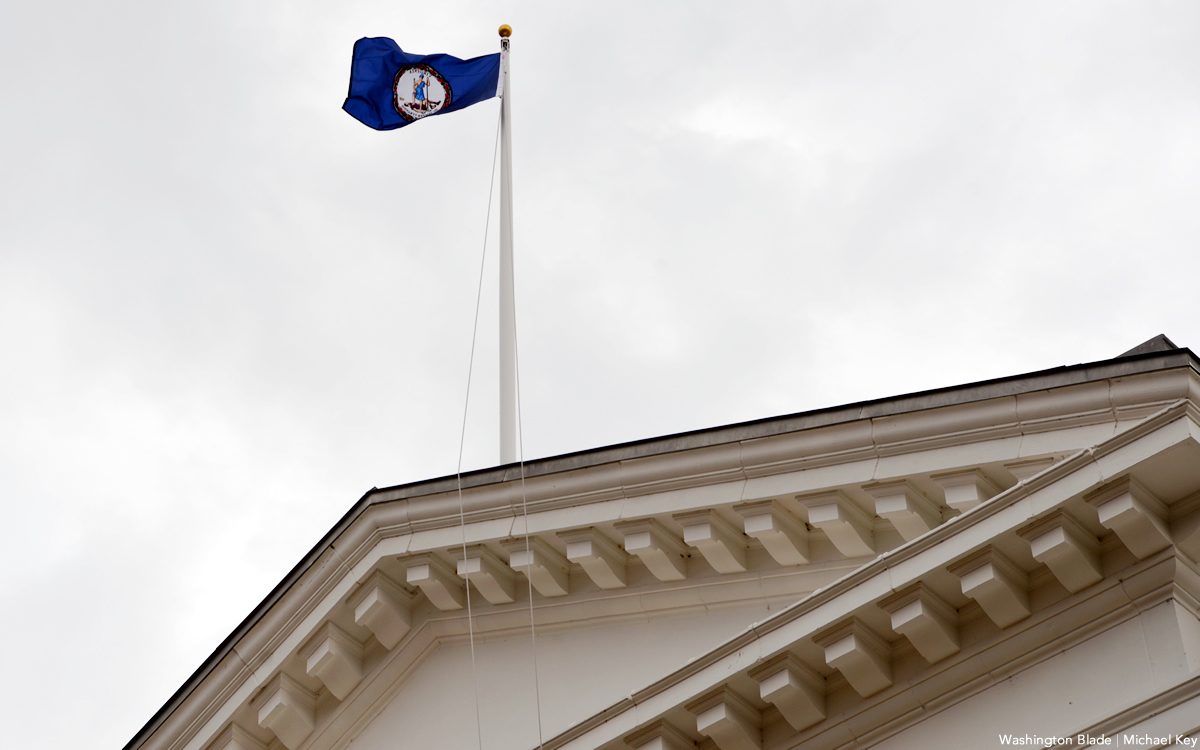
A referendum on whether to enshrine marriage equality in Virginia’s constitutional amendment is on the ballot this year.
If voters approve Question 2, it will codify the U.S. Supreme Court’s Obergefell ruling in 2015 that extended marriage rights to same-sex couples across the country — gays and lesbians have been able to legally marry in Virginia since Oct. 6, 2014.
Ron Bookbinder and James Fisher are a married couple who live in Arlington.
They have been together for 38 years — Bookbinder and Fisher married in 2014.
“We think this is a critical vote to remove this discriminatory language from the constitution and to ensure that going forward, no matter what happens, the state of Virginia will ensure marriage equality,” Fisher told the Washington Blade. “It is it is really difficult and upsetting to think that our current state constitution would prohibit same-sex marriage, even though the federal government overrides that now. There’s no saying what may happen in the future.”
Bookbinder said it was important for him and Fisher to get married “to gain social equality.”
“I was surprised how good it felt, how important it was to begin to say, ‘my husband rather than my partner,'” Bookbinder said.
Bookbinder then explained why it feels good to be married.
“Is it a legal partner, a business partner, a tennis partner, you know, or a romantic partner? But when you say my husband James, everyone knows exactly what you mean and confers an equal status with everyone else who’s married, and we were both surprised at how good it felt and how equal it felt to suddenly be married and be able to state that you were married and discuss your husband rather than your partner, and I would hate to lose that,” he said.
Bookbinder and Fisher said they are hopeful that voters will approve the amendment, noting Virginia has become more progressive over the years.
“I think people have, with the Supreme Court decision, people have seen that a same-sex marriage is just a marriage,” stated Fisher. “It’s just two people who love each other, and I think more and more people have attended a same-sex marriage, someone in their family or a friend, and the experience of what this is, firsthand experience, is so important in shaping people’s opinions, and I think the period of time that we’ve had since the Obergefell decision has given a lot of voters that experience, which I think is really important and powerful.”
The couple also said the push to enshrine marriage equality in Virginia’s constitution is in response to the Trump-Vance administration.
“And I think due to President Trump doing all the horrible things he’s done to so many groups, including LGBTQ, especially trans people, that Virginians are kind of pushed to be even more progressive to protect those who need protection, which would include the LGBTQ community in terms of marriage equality, so I’m confident it will pass,” said Bookbinder.
Narissa Rahaman, executive director of Equality Virginia, sent the Blade a statement about early voting on Question 2 that has already begun.
“With early voting now underway, our focus is making sure every Virginian knows Question 2 is on their ballot,” said Rahaman. “The outdated ban on same-sex marriage still in Virginia’s state constitution leaves a gap in protections for the thousands of same-sex couples that call this state home, but after 20 years we have the chance to fix it.”
Log onto www.mobilize.us/vaformarriage to find out more about the campaign in support of Question 2.

Bowser, Office of LGBTQ Affairs announce LGBTQ+ History Month events

PHOTOS: Winchester Pride

Evan Low is not the leader the Victory Fund needs at this moment

Transgender woman elected to Brazilian Chamber of Deputies

Lula, Flávio Bolsonaro to face off in second round of Brazilian presidential election

Gay Va. couple hopeful voters will enshrine marriage equality in state constitution

Victory Fund board investigates former staffers’ allegations against CEO Evan Low

LGBTQ community must vote in big numbers

The right to be an ordinary transgender man

Calif. governor signs 6 pro-LGBTQ bills, vetoes 1
-

 Virginia4 days ago
Gay Va. couple hopeful voters will enshrine marriage equality in state constitution
-
LGBTQ Non-Profit Organizations4 days ago
Victory Fund board investigates former staffers’ allegations against CEO Evan Low
-
Opinions4 days ago
LGBTQ community must vote in big numbers
-
Opinions4 days ago
The right to be an ordinary transgender man