Local
Casualties of war
Gay Iraqi, shot helping U.S., seeks fresh start in D.C. area
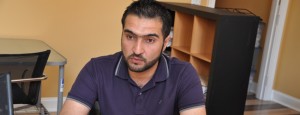
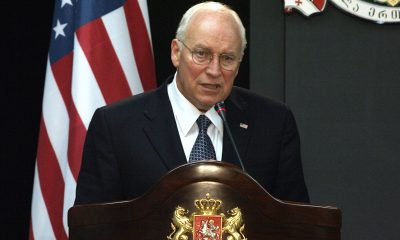
Firas Abdulmajeed, 33, a gay Iraqi refugee, has been in the U.S. for a month. A computer science expert, Abdulmajeed lost a leg to the Shiites while working as a translator for the U.S. Army in Baghdad. He’s now trying to find work in the Washington area. (Washington Blade photo by Michael Key)
Firas Abdulmajeed wants to make one thing clear up front: He’s not looking for a handout, just a job.
The 33-year-old gay Iraqi refugee, who fled to Alexandria, Va. a month ago with his 68-year-old mother after living six years in the United Arab Emirates, has faced an uphill battle most of his life. His home country was ravaged by war for most of his formative years; he lived under the violent regime of Saddam Hussein; and he suffered within a virulently anti-gay society that told him his same-sex desires were demonic.
Things have calmed for Abdulmajeed since he arrived in the U.S., but huge obstacles remain. While fluent in English and possessing the proper papers to work here, he suffered a life-changing gunshot wound in his native Iraq on July 21, 2003, that eventually required a below-the-knee amputation of his left leg.
The loss had an incalculably negative effect on Abdulmajeed’s life. He sometimes wishes the wound had been fatal.
He has a bachelor’s degree in computer science that he earned from Al Mansour University in his hometown of Baghdad, but Abdulmajeed says he’d be happy taking any job that doesn’t require him to stand and walk for any length of time. Infection and shoddy medical care after the injury — he’s certain his leg could have been saved had he received proper care — resulted in 17 operations, years of excruciating pain and a series of ill-fitting prosthetics that offer little help.
He met James Jorkasky, a gay Arlington resident, at a grocery store in Northern Virginia two weeks ago. Jorkasky, a lobbyist for medical research funding, could see Abdulmajeed was struggling to walk and started their conversation. He’s been using his contacts to help Abdulmajeed find a job, see an orthopedic surgeon and get a proper-fitting prosthetic leg.
“I’m really pushy and nosy, so I asked a lot of questions and found out a lot,” Jorkasky says. “I just thought maybe I could help.”
Abdulmajeed says knew he was gay around age 13. He was athletic and enjoyed swimming. He soon realized he was attracted to men he saw at the pool — and thought he was the only person in the world who felt this way. Confiding to the head of his mosque about his desires proved disastrous.
“He started shouting, ‘You are the devil,’ and kicked me out. I felt awful and embarrassed. So it was a hard time.”
The development came during Hussein-era Iraq, which natives regard as something of a mixed bag. Abdulmajeed says many Iraqis prefer it to the violence and chaos that has engulfed the country since the U.S. invasion. Even gay life was better then, he says.
“There was a gay community and a gay cruising area. In the Saddam time it was better. If you were gay and don’t talk about the government or Saddam, you were safe. Now both the Sunnis and Shiites are against that and want to show the Islamic world they are brave so they kill gay people.”
Abdulmajeed moved to Dubai after college, working various administrative jobs, but came back to Iraq just before the U.S. invasion in 2002. By March 2003, communication was down and Abdulmajeed, who lived with his parents again in Baghdad, visited a hotel to try to learn the whereabouts of relatives. Though Muslim, Abdulmajeed had attended a Catholic school and studied English. He also studied in Dubai and honed his speaking skills watching U.S. movies.
Abdulmajeed approached a U.S. Army officer and asked him in English if it was possible to make an international call at the hotel. In turn, the officer gave him an offer to work for the U.S. as a translator. Abdulmajeed became one of a team of Iraqi translators working in an Army contracting office in the Green Zone, Iraq’s international 3.8 square-mile zone in Baghdad.
While the work went well, it quickly became obvious to Abdulmajeed, a Sunni Muslim, that the Shiites did not approve of his work for the U.S. His new car was stolen, which he says may have had nothing to do with his work, but about three weeks later, a small bomb was thrown into his family’s house. Intimidating notes were sent to him. Still, he didn’t consider quitting.
“I think I was doing a good job and the officers in the contracting office, they were really nice people,” he says. “I wanted to help the Iraqis, and they always try to support Iraqi vendors, so I think it was [a] really good job, ethically, as I am Iraqi and also the payment was good.
“I didn’t understand the message — or maybe I was ignoring the message — as I [had] a chance to have [a] promotion to work with the USA embassy in Baghdad, as I was a hard worker.”
‘I’ll never forget his face’
The attack that claimed part of Abdulmajeed’s left leg happened quickly.
It was a Saturday in July 2003 and extremely hot. Abdulmajeed was waiting for a taxi to take him to his office in the Green Zone. He remembers thinking it would be a busy day, more like a Monday because the office was closed on Sunday, so there’d be extra work. On this day, he was to accompany a U.S. officer to a construction site.
He remembers thinking how hot it would likely be in the Humvee without air conditioning.
Without warning, a Shiite he’d never seen before came face to face with him carrying a gun. After reciting a Muslim creed (“I believe in one god, one prophet Mohammad…”), he pointed at Abdulmajeed’s left leg and shot him.
“I’ll never forget his face,” Abdulmajeed says. “He didn’t cover his face or try to hide. By the chance that a police [officer] was there it didn’t matter, because there was no government at that time. I didn’t feel it, actually. I just fell and my feet were moving kind of automatically. I was confused, then I start seeing blood over my jeans and I knew something was wrong. He was so close to me he could have easily shot me in the head and nobody would have stopped him.”
A neighbor helped Abdulmajeed get to a hospital by taxi, but staff there had few supplies and said they could do nothing for him. He was taken to another hospital where he stayed for six months. It was the beginning of a grueling ordeal that continues today.
Painkillers were in short supply. He was given one pill a day. He cut it in half and took half in the morning and half in the evening. Some of the 17 surgeries were performed without any anesthetic. His mother stayed with him around-the-clock at the hospital — a blessing and curse as he felt he had to mask his true emotions so she wouldn’t see him in agony.
“You act as if you don’t care because your parents are watching,” he says. “They want to know how you feel and you feel down but you cannot show it, the things in my heart, so I just smile and [was] joking.”
Aside from the physical pain, there were other scars. Just 26 years old at the time, Abdulmajeed realized he’d never again enjoy his hobbies of swimming and tennis. He also thought it would affect his desirability in the gay world.
“Maybe if I were straight it would be easier, but as a gay, it’s worse because it’s hard to be gay and beauty is so hard, and at that time I was thinking about my future, which I lost it already. I lost my job and every dream I had in my life.”
By July 2003, many doctors had fled Iraq or had been killed. A steel rod was inserted into Abdulmajeed’s leg, but he says that turned out to be a mistake as the wound should have been kept open. A gangrene-like infection set in and the muscle started dying. The infection caused a foul smell that scared away visitors. And though he’d had a boyfriend for about 18 months prior to the shooting, Abdulmajeed was dumped while he was in the hospital.
“He sent a message through a friend and said, ‘I can’t be with an amputee guy,’“ Abdulmajeed recalls.
Within a few weeks, he also lost his Army job, since being in the hospital prevented him from performing his duties.
Upon his release from the hospital, Abdulmajeed found a cheap prosthetic in Iraq, but it required a size 10 shoe and Abdulmajeed’s shoes were one size too small. He was able to walk with the aid of a stick and also used a wheelchair.
A relative arranged for him to come to the UAE in July 2004, but he faced an anti-handicap prejudice.
“It’s the Mediterranean mentality,” he says. “They don’t even call you by name. They just say, ‘Amputee.’ That really affected me a lot but I don’t have another choice. I couldn’t go back to Iraq and I was only allowed to stay in the UAE as long as I had a job.”
Abdulmajeed’s father, a retired civil engineer, was kidnapped in November 2006 after Abdulmajeed left for the UAE. The circumstances surrounding his disappearance remain unclear, but his mother was ordered to pay $30,000 to get him back. She followed the instructions to drive to a spot two hours from her house with the money. They were supposed to send her husband an hour after getting the money. She never saw him again.
Abdulmajeed says the tragedies were nearly too much to bear.
“We never even saw his body or know whatever happened to him. Surely he’s not still alive after all these years. So this old lady, she loses her husband and her son lost his leg for no reason. I didn’t do any mistake. If I was fighting or a soldier, that would be one thing, but I was a civilian. And my father, a Shiite kidnapped him because he was Sunni.
“It really affects your way of thinking, your dreams that you will get freedom. We don’t even need the freedom, just safety. And you can’t imagine the temperature. It’s 110 and there’s no electricity.”
Abdulmajeed eventually was able to have his mother join him in UAE in January 2007, but she was never the same.
“She lost it sometimes,” he says. “If I come in from work, I go inside the home and heard her speaking with my father. She imagines him there. So this is a problem.”
‘I don’t want charity’
Life stabilized for the two in UAE, but uncertainty loomed as their ability to remain there depended on Abdulmajeed staying employed, which he was able to do.
In 2007, he applied to a refugee program with the United Nations to come to the U.S. It was three years before his application was approved, but he and his mother, who has diabetes, high blood pressure and a heart condition, were able to come to the U.S. last month.
The two have little between them. He has a permanent Visa for refugees and a work permit, a few pieces of furniture, eight months of health insurance and food stamps.
“I don’t want charity or a handout,” Abdulmajeed says emphatically. “I just want a desk job, even data entry. Nothing fancy, just [enough] to cover expenses and to live here.
“About this point: I’m not looking for charity or donation. If someone wants to help, I need the jobs. Not because they’re sorry I lost my leg or am an amputee, but because he feels I desire a chance to prove myself. Only that. The day that I feel I can’t offer the life here, that’s the day I should go back to Iraq or wherever, but I don’t want charity.”
Jorkasky says he’s been amazed at his friend’s drive.
“I’ve never seen such a quick study on anything,” he says. “He soaks up everything I give him. I think somebody would get themselves and excellent, smart, dedicated worker.”
Jorkasky hopes the local LGBT community will help Abdulmajeed get the aid he needs.
Abdulmajeed’s new life is modest by American standards. He and his mother love the country and have been amazed by what they say are friendly, smiling people. He enjoys simple freedoms like visiting a garden near the apartment building where he lives. He’s been to no gay clubs since arriving. Jorkasky is his only gay friend. He knows one other Iraqi here.
“Sometimes I just sit there in the garden and I have this feeling how great it is do to anything or talking about anything gay or whatever in public,” he says. “I don’t have this feeling before, so this kind of freedom, it’s a great feeling everybody wants since childhood.
“I think there are a lot of Americans who may not agree with the war or the invasion of Iraq, but whatever your politics are, what gets lost in the equation a lot of times are the real casualties,” Jorkasky says. “I think everybody in the D.C. gay community should just take a step back and look at their lives and realize what they have compared to the incredible struggle that Firas has had. One of our brothers is suffering right now and needs our help.”
Job leads can be sent to Abdulmajaeed at [email protected] or Jorkasky at [email protected].



District of Columbia
Center for Black Equity’s annual gala to take place Oct. 3
Advocacy group to honor Black LGBTQ community champions
The Center for Black Equity, the D.C.-based international network of LGBTQ activists and organizations that advocate for Black LGBTQ communities and organize Black Pride events worldwide, will hold its annual 2026 Be Gala in D.C. on Oct. 3.
The event, to be held at the Conrad Washington Hotel at 950 New York Ave., N.W., among other things, will honor at least a dozen “distinguished Black individuals” and organizations that champion Black LGBTQ communities, according to a statement released by the Center for Black Equity.
“The honorees will receive awards recognizing extraordinary leadership, advocacy, and service across civil rights, public health, the arts, media, entrepreneurship, and community life,” the statement says.
“With an elegant atmosphere and a bold mission, this unforgettable evening brings together advocates, allies, and change makers committed to equity and joy,” the statement says in referring to the Oct. 3 BE Gala.
The statement notes that tickets for the event, which serves as a fundraiser for the Center of Black Equity, begin at $250 for individuals and include dinner and two drinks. It says reserved tables for eight were being offered for $2,000, and “Premier” tables for eight were selling for $2,500 and include seating near the stage.
“The BE Gala is more than an evening of celebration,” according to the statement. “It is an opportunity to honor Black LGBTQ+ leadership while investing in the work of the Center for Black Equity.”
Kenya Hutton, the Center for Black Equity’s CEO, told the Washington Blade the name “BE” for the gala is not an acronym. “The name is rooted in the idea of being: being seen, being celebrated and being fully and authentically yourself,” he said.
“BE Gala creates a space to celebrate Black LGGTQ+ people for who they are, the lives they lead and the impact they make,” he added.
The Center for Black Equity until 2012 was called the International Federation of Black Prides and was founded by organizers of D.C.’s Black Pride celebration.
Its current website includes a statement saying it’s mission is to “promote a multinational LGBTQ+ network dedicated to improving health and wellness opportunities, economic empowerment, and equal rights while promoting individua and collective work, responsibilities, and self-empowerment.”
The 2026 Center for Black Equity award honorees as announced in its statement released this week are:
Courtney Snowden: Welmore Cook Advocacy & Service Award
Clover Barnes: Ernest Hopkins Public Health Leadership Award
Nikki Alexander: Unsung Hero Award
Darryl G. Moore: Center for Black Equity Leadership Award
The Freelux Project: Center for Black Equity Small Business Award
Tori Cooper: Earline Budd Transgender Leadership Award
Bishop Steven R. Sawyer: Bishop Kwabena Rainey Cheeks Spiritual & Community Leadership Award
Rev. Carmarion D. Anderson-Harvey: Bishop Kwabena Rainey Cheeks Spiritual & Community Leadership Award
Monroe Alise: Trans Power in Media Award
Justin N. Stewart: National Black Pride Image Award
Marlene McNeese: Curtis L. Etherly Jr. Ally Award
Venton Jones: Eleanor Holmes Norton Civil Rights & Justice Award
In Our Own Voices, Inc.: Ruth Ellis Community Impact Award
Baltimore
Charles Bowers, former owner of Baltimore gay bar the Hippo, dies
Prominent activist died at his Mount Vernon home
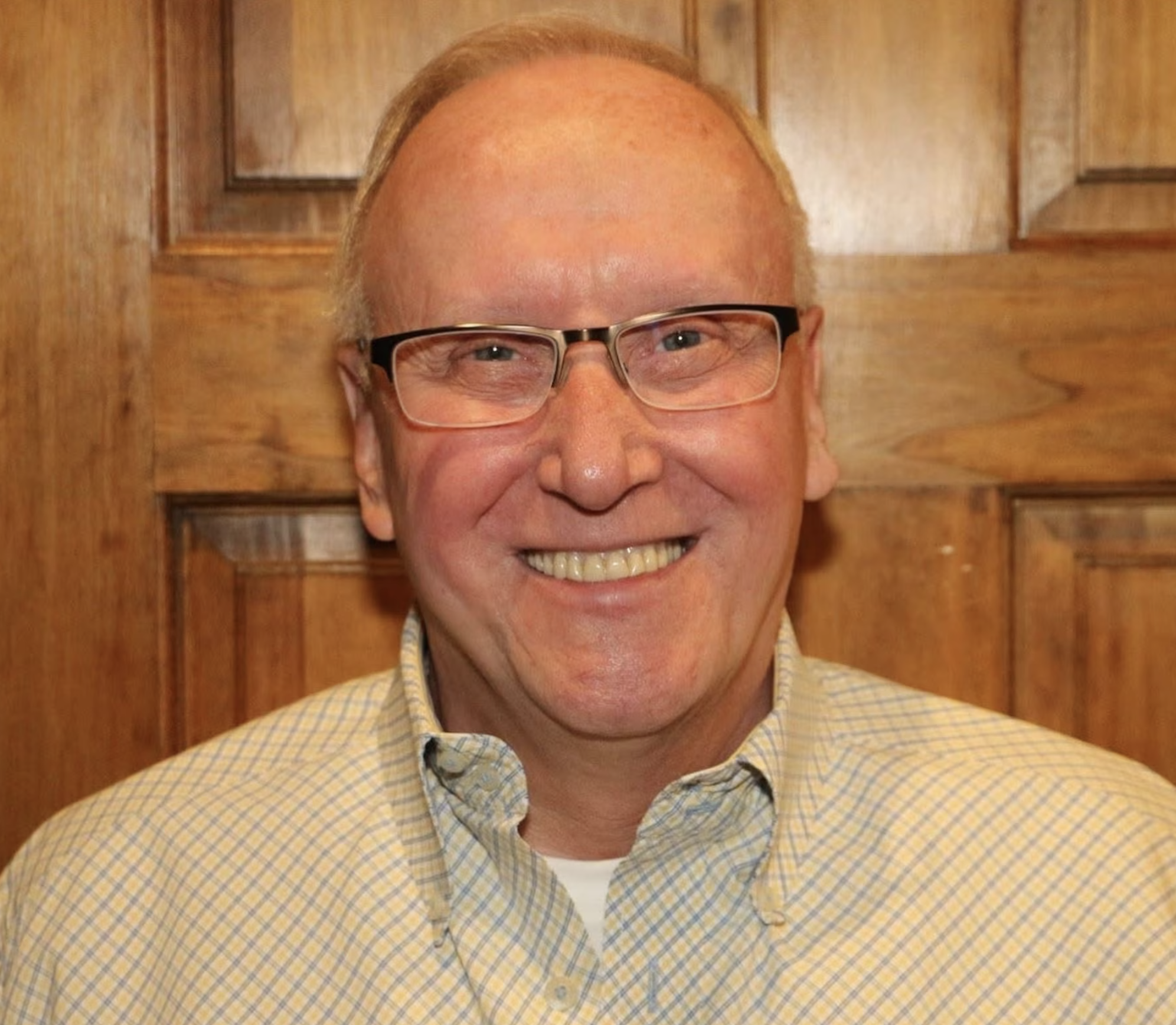
By WESLEY CASE | Charles “Chuck” Bowers, former owner of the storied Baltimore gay club the Hippo and a prominent advocate for Maryland’s LGBTQ community, died Tuesday. He was 81.
Bowers turned the Mount Vernon club — located at the corner of North Charles and West Eager streets — into a judgment-free refuge for queer and straight locals looking to find and express their authentic selves on a packed dance floor.
“He truly tried to make the Hippo a place for everybody — a safe space,” said an emotional Rik Newton-Treadway, who befriended his “mentor” Bowers at the club in 1979.
Bowers, of Mount Vernon, died Tuesday evening in Baltimore of natural causes, said his niece, Cathy Bowers.
The rest of this article can be read on the Baltimore Banner’s website.
District of Columbia
Being a female firefighter comes with unique risks, and rewards
Well-fitting gear can be a safety issue
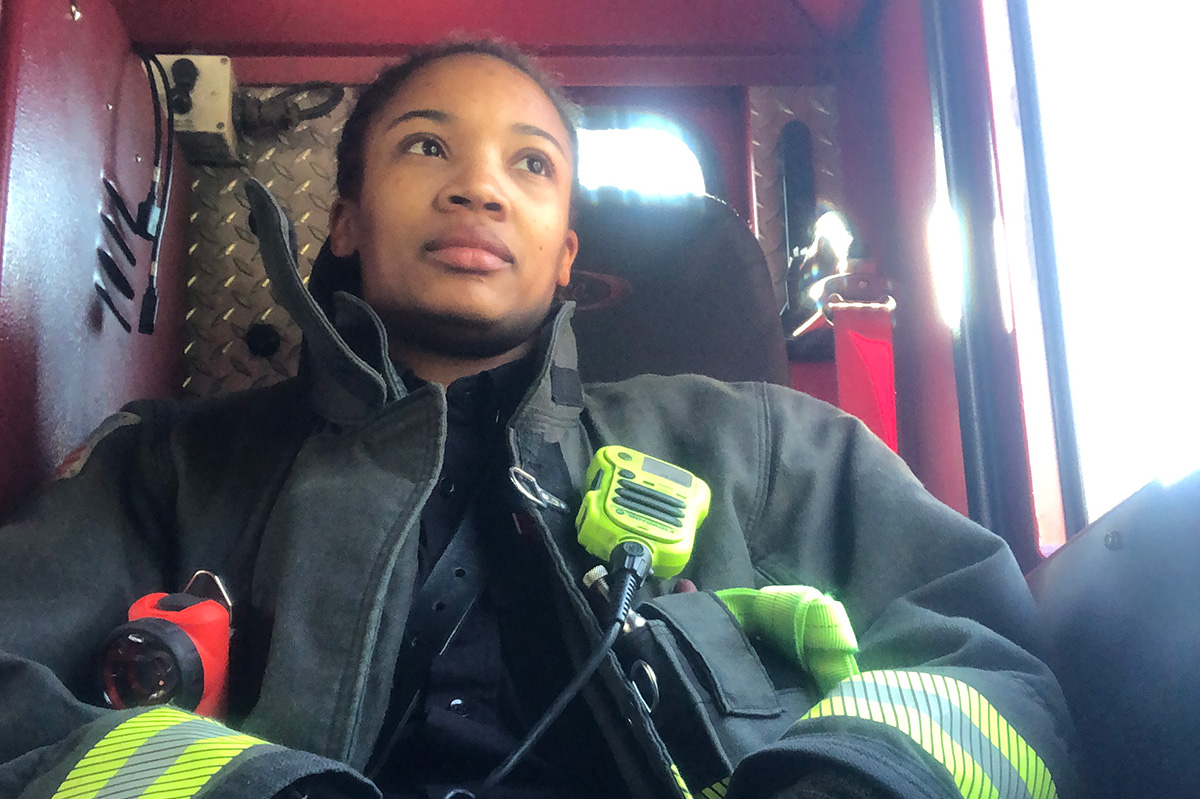
Firefighters are known for running into danger to save lives, but they may face another danger after the fire is out. Studies on firefighter health point to rising concerns about cancer risk, mental health struggles, and exposure to toxic “forever chemicals” found in firefighting foam and protective gear.
Nearly 40 percent of firefighters report “clinically significant levels” of anxiety or depression and 10 percent report this level of posttraumatic stress disorder, according to a national survey of public safety workers published last year in the journal Psychological Services. Lawmakers from several states are also pushing for stronger federal protections and compensation for firefighters exposed to hazardous chemicals on the job.
Female firefighters can also face a higher risk of injury, heat-related illness, and even greater carcinogen exposure due to ill-fitting equipment that wasn’t designed for their bodies. Their risk of psychological and workplace stress is higher, as well, due in part to the isolation of being in a slim minority in fire departments across the country. Only 5 to 9 percent of firefighters are women.
To understand the risks and rewards of being a female firefighter, Youthcast Media Group interviewed Connie Reid, a firefighter with the DC Fire and EMS Department. Meredith McQuerry, an associate professor of textile science at Florida State University who studies how to improve firefighting gear and other personal protective equipment to better protect women in the fire service, also responded to student questions via email. Reid’s and McQuerry’s responses have been edited for clarity and length.
HOW LONG HAVE YOU BEEN IN YOUR CAREER, AND WHAT DREW YOU TO IT?
REID: I’ve been a firefighter for seven years. I wasn’t sure if I wanted to be a firefighter or police officer, but I do have uncles that were firefighters, so I leaned towards the firefighter side. So I’m happy I made that decision.
McQUEERY: During my PhD, a colleague and I realized we never saw any female firefighters come through our research center. We began looking in the literature and found very few studies focused on PPE for women in the fire service.
DOES FIREFIGHTING GEAR ACTUALLY FIT WOMEN, AND DOES IT MATTER?
REID: In D.C., if you have an issue, you just send an email, and we have people who will properly size us. I don’t think any female that I know has complained about gear not fitting.
McQUERRY: Wearing protective clothing designed for the opposite sex can lead to restricted mobility, greater opportunity for thermal and particulate exposure, and a lack of functionality that can mean life or death, such as accessing a tool in a pocket that is completely closed off due to anthropometric differences.
There is a culture in the fire service, and especially for women in a male-dominated field, that suppresses the likelihood of advocating for better-fitting gear. While not within our area of expertise, we have done our best to raise awareness for the need for properly fitting gear for women in the fire service and to champion their self-advocacy.
Female firefighters report the inability to throw a ladder, step onto the truck, or cinch their pants down adequately due to ill-fitting protective clothing and equipment. One example is the interference between the helmet and the self-contained breathing apparatus which prevents many female firefighters from looking upward to throw a ladder without first twisting their neck sideways to avoid the lid of the helmet knocking into the respirator bottle. This type of modification can lead to acute and long term injury.
ARE THESE PROBLEMS MOSTLY ABOUT COMFORT? WHAT ARE SOME EXAMPLES OF SAFETY RISKS OR DANGERS THAT CAN HAPPEN WHEN GEAR DOES NOT FIT PROPERLY?
McQUERRY: All firefighters need properly fitting PPE as the primary threats center around carcinogen exposure, musculoskeletal injuries, and heat-related illnesses. For example, you have to work harder to do the same task in ill-fitting, mobility restrictive gear, which leads to faster metabolic heat production and build-up in the suit, quickening the onset of fatigue and other HRI.
Our previous work led us to hypothesize that oversized gear for women allowed for more particulate ingress in the interface areas including the collar/hood, sleeve/glove, boot/pant, and coat/pant areas. A recently funded study is allowing us to quantify this by correlating the gear fit of women’s structural turnout gear with their cancer biomarkers collected via urinalysis pre- and post-live fire burns.
HOW DO FIREFIGHTERS TRAIN TO STAY SAFE DURING DANGEROUS SITUATIONS?
REID: So we have trainings all the time. Safety is the number one priority of the job. They make sure they let us know all the time. We have annual trainings. We have quarterly trainings. We have online training if you need refreshers.
We are both on a medical side and a fire side so as a D.C. firefighter, you come in, and they teach you. You bring a positive attitude and just determination, because some people really don’t understand it’s not just physical, it’s mental. You have to be mentally prepared.
WERE THERE ANY FINDINGS IN YOUR RESEARCH THAT SURPRISED YOU?
McQUEERY: Yes, we were surprised to find in our nationwide survey [of 2,000 people] a few years ago that 15 percent of U.S. structural and 21 percent of wildland female firefighters sometimes or always leave off an essential item of their PPE due to limited mobility. Specifically, the turnout coat and pants or wildland shirt and pants were the most noted for being intentionally not worn, which is very surprising and concerning.
HAVE FIRE DEPARTMENTS OR EQUIPMENT COMPANIES STARTED MAKING IMPROVEMENTS SINCE YOUR STUDY, AND IF SO, WHY DO YOU THINK FIREFIGHTING EQUIPMENT HAS TAKEN SO LONG TO ADAPT TO WOMEN FIREFIGHTERS?
McQUEERY: It wasn’t until the post-Me Too movement that our research in this area was able to gain traction and support. It is a decades (or centuries) old problem of there not being enough “market share” for the 5-11 percent of the fire service. However, we have seen tremendous growth and innovation in this area since we began our funded research in 2019. Now, nearly every single structural firefighting manufacturer offers women’s protective clothing.
When we began this research, only two manufacturers offered women’s turnout gear. Now, to our knowledge, all but one [seven out of eight] does, which is a significant advancement across the industry. There is still much work to do in fine tuning these designs to fit the specific anthropometrics of female firefighters.
DO YOU WORRY ABOUT THE LONG TERM EFFECTS OF BEING A FIREFIGHTER?
REID: Do I worry? I wouldn’t say worry. I’m more mindful of it, because the material of today is different from years ago. It burns faster, and then there’s more chemically made things than like natural resources. So I’m aware of that. They also have training teaching us about things like that. And there’s smoke exposures, there’s a health risk like sleep deprivation or sleep disruption.
WHAT KIND OF EDUCATION OR TRAINING DO YOU NEED TO BECOME A FIREFIGHTER?
REID: So there’s a few routes to get onto the job. The cadet route would be … you have to be 18 to 21 years old, you have to be a D.C. resident, have a high school diploma from a D.C. school (public or private), or have a GED, and you have to have at least a learner’s permit at the time that you are applying for the job. To be a recruit, you have to be at least 18 years old, have a full driver’s license, (not just a permit), and you also have to have a high school diploma or GED. The third way [is as] a paramedic, and you have to come on the job with your paramedic license.
WHAT’S YOUR ADVICE FOR YOUNG WOMEN CONSIDERING THIS PATH?
REID: I would say, welcome. Come on the job. We need females. I always think it’s awesome when we get young ladies that are interested in the fire side. A lot of females just only want to do EMS. There’s nothing against EMS, but the fire side is pretty cool, too. Don’t sell yourself short, just try to do both of them. It’s a very rewarding job. You have to also mentally prepare yourself and physically prepare yourself. But I think the job is a great experience. I wish I would have started younger myself.
Mariyah Matthews is in the class of 2027 at Bard High School Early College DC, one of Youthcast Media Group’s journalism class partners. Sarah Gandluri is a YMG intern who is studying political science and global studies at the University of North Carolina at Chapel Hill.

‘Star Trek: Strange New Worlds’ star Celia Rose Gooding breaks down that finale time travel twist

Center for Black Equity’s annual gala to take place Oct. 3

Charles Bowers, former owner of Baltimore gay bar the Hippo, dies

Being a female firefighter comes with unique risks, and rewards