Commentary
LGBTQ communities around the world embrace antisemitism
Political opposition towards Israeli government has turned into Middle Ages-style bigotry
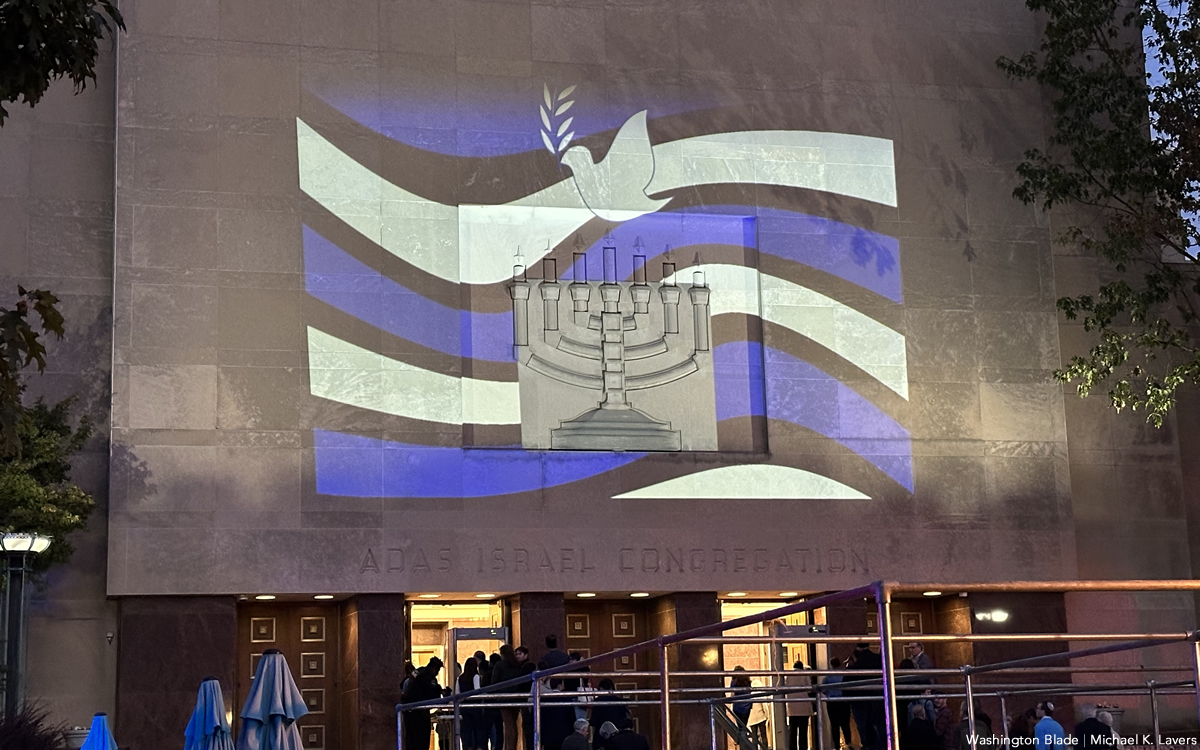
“I stopped reading Facebook feeds,” one of my queer Jewish American friends told me. I won’t say their name, but they are one of the many who showed similar sentiments.
We were speaking about increasing antisemitism among the LGBTQ community, and they were devastated.
Unfortunately, recent events in the Gaza Strip caused a peculiar situation when all Jewish people are blamed for the brutal response of Israeli Prime Minister Benjamin Netanyahu’s government; and LGBTQ Jews faced microaggression and direct violence, get insulted and attacked, even at Prides.
First and foremost, I want to say that indiscriminate slaughtering of Gazan civilians is definitely a war crime that should be condemned and avoided in the future, but there are a lot of articles written on this topic by others who are more competent on this topic. This time I deliberately wouldn’t discuss Hamas and Israeli politicians here, because this story is not about them — this story is about the way the LGBTQ community is treating their Jewish siblings right now.
There are not so many visible queer politicians among Netanyahu supporters, and they are not spending time in social media queer groups.
Moreover, right-wing LGBTQ people with connections to the Israeli government don’t care much about LGBTQ communities in the US, the UK, or Russia.
LGBTQ people who suffer from everyday antisemitism are the ones who need community the most. Unfortunately, we live in a world where many families don’t accept their LGBTQ children, and for many queer people, the LGBTQ community became the only family support they had.
And now antisemitism is taking this support away.
Why political opposition toward the Israeli government turned into Middle Ages-style bigotry is a very good question that doesn’t have a simple answer.
Double standards
For a person who is not deeply into political and social issues, this situation may seem quite typical. After all, people are often used to judging the whole nation based on what their government did, right? Actually, wrong.
As a person from Ukraine, I may say that I spoke a lot about the Russian-Ukrainian war with LGBTQ and progressive activists in the West, and most of them showed enormous levels of compassion to “ordinary Russians,” despite the fact that the vast majority of the Russian population supports the Russian-Ukrainian war. Moreover, even after Russia in 2022 deliberately bombed the Mariupol Theater with Ukrainian children inside, Russians en masse weren’t called “child killers” by the American and European LGBTQ communities, and Russian activists still welcomed at Prides.
So it is definitely not about bombing children.
Also, all LGBTQ organizations in the US, UK, and European Union known to me that now openly support Palestine and call themselves anti-Zionists have never openly spoken up against concentration camps, ethnic cleansing, and the genocide of Muslim Uyghur populations in East Turkestan, which is under Chinese occupation right now.
But LGBTQ groups and activists have never called themselves anti-Chinese, didn’t create a “queer for Eastern Turkistan” movement, and didn’t push Chinese LGBTQ people on campus to condemn the actions of the Chinese government.
So, it is also not about fighting Islamophobia.
What is it about? I have been a refugee in three different countries, and I have been involved in LGBTQ activism in some way in Russia, Ukraine, the UK, and the US, and I may say that antisemitism in LGBTQ communities exists in all those countries in some way.
And in different cultural contexts, antisemitism represents itself differently among LGBTQ people.
Eastern European antisemitism
Me and three other LGBTQ activists in 2018 held a small demonstration in the middle of St. Petersburg on Victory Day, a big state-promoted holiday when Russians celebrate the Soviet victory over Nazism. We were holding posters about the common threats between Nazi Germany and the modern Russian Federation, including the persecution of LGBTQ people.
Suddenly, a very respected-looking man came to us, blaming us for an anti-Russian Western conspiracy just because we criticized the Russian government, and then started to say that the Holocaust never happened. When I yelled back at this man, telling him that I’m partly Jewish and daring him to repeat his antisemitic accusation, the man announced that Jews “paid to live in Auschwitz, so later they would create their own state.”

No one said anything against this man, but Russians were angry with me for “spoiling a holiday.”
Holocaust denial and everyday antisemitism are extremely prominent in Eastern Europe, from Poland to Russia. It is especially strong in Russia.
Russian pride about “victory over Nazis” is not about fighting Nazi ideology, but rather about being proud of a Soviet legacy. Simplifying Nazis is bad only because they killed Russian Soviets.
Even in state Russian Orthodox Churches, you could buy the “Protocol of the Elders of Zion” Nazi propaganda book.
LGBTQ activists in Russia are generally less antisemitic than the majority of the population, but all the same, they were raised in this culture, so they allow themselves antisemitic jokes and sometimes share Russian supremacy ideas.
So, for them, anti-Zionism is just another, new, and more appropriate way to hate Jews, and they didn’t even try to hide antisemitic rhetoric, especially because many prominent Jewish LGBTQ people moved to Israel or to the US, so the community is mostly non-Jewish.
Western European and American antisemitism
The situation is quite different in America and Western Europe.
“Why are you supporting Palestine in a way you have never supported people from other war zones, including any other Muslim lands?” I asked my friend and activist from Sheffield in the UK.
“Because there is a first time in modern history when a country committed such an attack against civilians!” They answered me. “Especially with our government’s support.”
I closed my eyes, suddenly remembering the Iraqi city of Mosul that was wiped out to the ground by US-led allies, killing not just ISIS fighters, but also peaceful townsfolk stuck under the occupation of the self-proclaimed “caliphate,” or the Syrian town of Baqhuz Fawqani, where families of ISIS fighters, including babies and pregnant women, were bombed together with Syrian civilians.
And to mention, once again, Russian “clearing” operations and bombings in Chechnya and Ukraine, Syrian President Bashar al-Assad’s crimes against his own people in Syria, crimes committed by ISIS, or the ongoing war in Mali.
My friend has no idea how wrong they were.
Modern wars are extremely brutal, and there is an ongoing problem of dehumanizing enemies and war crimes that need to be solved. It’s a much broader problem than just Israeli‘s actions, but like one of my Jewish nonbinary friends is saying, “no Jews, no news.”
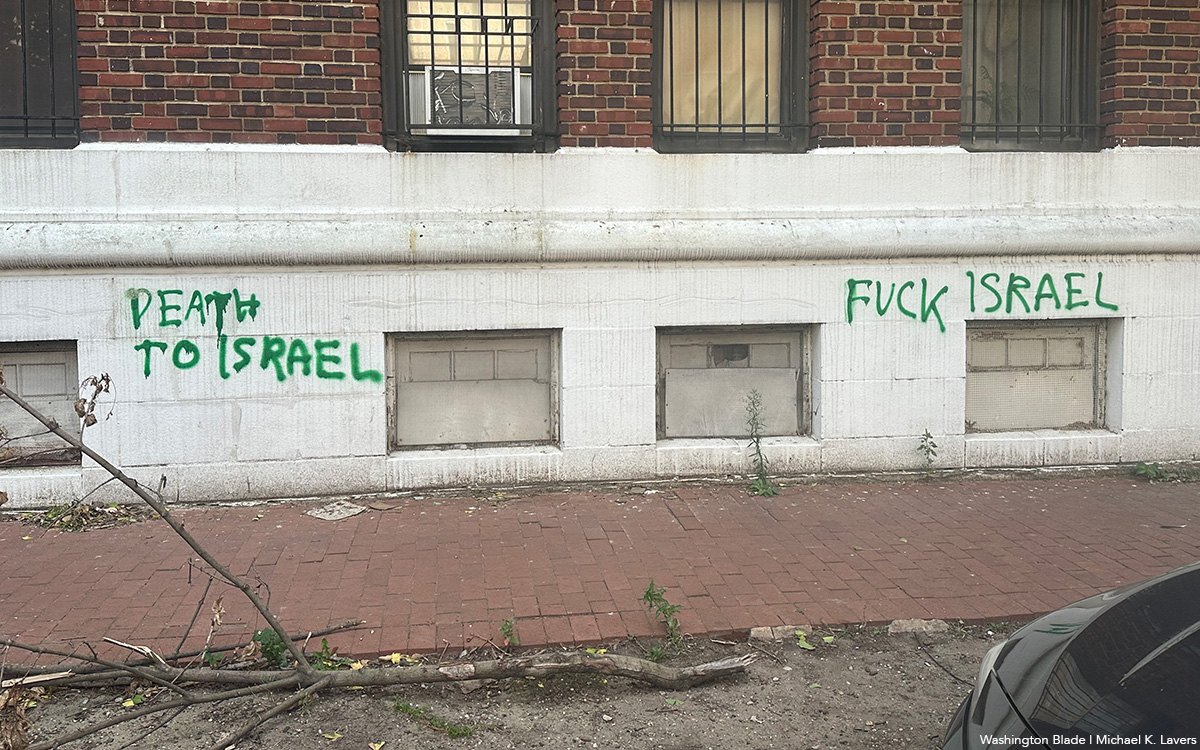
Western antisemitism in the LGBTQ community, including the idea that all Jewish people are extremely privileged white oppressors, is based on a simple ignorance, no less than on prejudice. If in Russia I saw more activists who hate Jews and just want to be anti-Jewish in a modern way, in the UK and US LGBTQ community I saw more people who are generally caring about war crimes. But they refused to make their own analysis and refused to use the same standards for Jews that they use for other minorities — for example, not pushing them to condemn crimes they never committed.
The Palestinian rights movement has one of the biggest and more successful PR campaigns in modern history, while Jewish organizations failed to promote their agenda among non-Jewish populations.
“Most of them [LGBTQ activists and friends] don’t even know what Zionism is, to be really anti-Zionist,” my queer American friend noticed.
But, just like in Russia, some queer people are just bigots who now could show their hate publicly in a way that wouldn’t be condemned by their community.
Ayman Eckford is a freelance journalist, and an autistic ADHDer transgender person who understands that they are trans* since they were 3-years-old.




Commentary
Anti-science, anti-LGBTQ movements go hand in hand
HHS under RFK Jr. has blocked gender-affirming care for youth

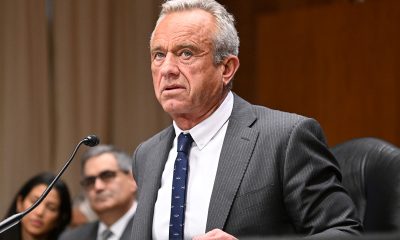
A newborn baby died after contracting measles in Pennsylvania last month, and, as if it wasn’t enough grief for his parents, anti-vax activists are trying to track down and harass his family. Apparently, Gov. Josh Shapiro tangled with Robert F. Kennedy Jr. over his “inaccurate and misleading claims.”
On Aug. 26, RFK Jr., the secretary of the U.S. Department of Health and Human Services, declared that the deaths could be fabricated. We live in peculiar times, when it is government officials, not freaks on the internet, who are spreading conspiracy theories. The new spread of measles in the United States since Donald Trump came to power is one of the most shameful parts of the story of modern American politics, and the tragedy of parents who lost their baby because more and more people refused to vaccinate may seem absolutely unrelated to LGBTQ rights, but actually, there is a pretty solid connection.
Because RFK Jr., the same man who was fighting vaccination, promoted the false idea that vaccines caused autism, and even curated the anti-vaccine organization Children’s Health Defense before going into politics, is also a known opponent of transgender rights. Under his “leadership,” gender-affirming care for trans minors was banned, and there were also created new healthcare guidelines recognizing only two genders.
All around the globe, there is a weird correlation between anti-LGBTQ — particularly anti-trans — ideas and anti-science movements. And it should be clearer to the general public. People who are speaking against LGBTQ rights are not just threatening minorities. They are a danger to everyone.
The Trump-Vance administration is an iconic example of such tendencies.
Trump himself is a known critic of modern scientific studies — for example, believing in the same anti-vax conspiracies that Kennedy promoted, and showing obvious skepticism that global warming exists, despite all the evidence that has been shown by climatologists. And he is also a man who used trans people as boogeymen. Under his command, trans people were kicked out of the military. And even worse, recently he made an extremely chilling statement about the 2026 midterm elections, urging voters to “pretend I’m on the ballot” and vote for Republicans, and while discussing what he says is at stake, he said that if Republicans win, “transgenderism” will “end.” This is an offensive statement at best and genocidal at worst.
And, of course, I think everyone remembers the Department of Government Efficiency (DOGE), which was led by infamous billionaire Elon Musk, who announced to the world that he would destroy the “woke mind virus” that killed his child just because his trans daughter, Vivian Wilson, well, is happy to be a trans person.
DOGE is known not just for cancelling academic research around LGBTQ studies and gender studies. No, this agency abruptly canceled and froze thousands of federal science, research, and health grants, attacking such vital health programs as cancer research, vaccination research, and diabetes research, among others. As you can see, they are not just attacking people who are “affected” by the “mind” virus — they are dangerous to everyone, even if most of the public standing of Musk was around his anti-trans politics and he tried to present himself as a pro-science, pro-progress man by supporting the space industry.
An even more vivid example is the so-called Dark Enlightenment movement.
This extremely reactionary political movement was born in the late 2000s, and originally grew from very democratical classical liberal ideas. Until it became anti-democratic itself. And also often It was created by American software engineer Curtis Yarvin (writing under the pseudonym Mencius Moldbug) and expanded by British philosopher Nick Land. The movement is popular among some Silicon Valley businessmen, and got support from PayPal founder Peter Thiel, and one of their main ideas is that modernity is bad. They are basically obscurantists, who see modern universities as part of “the Cathedral” — a system that, in their opinion, promotes equality and modern science that society doesn’t need. Of course, the movement’s followers are mostly anti-LGBTQ rights, and, as you can see, anti-queerness once again go hand in hand with obscurantism. Unfortunately, the movement got the support of extremely prominent politicians, including U.S. Vice President JD Vance.
In his speech from 2021, Vance proved to be an obscurantist when he claimed that universities are the enemy. He is also a known homophobe and transphobe.
So, why are anti-vaxxers, people who oppose modern scientific studies, and people who hate universities more likely to be queerphobic? Why do the same people who are defending their transphobia by showing that they support common sense actually often show zero such sense when it comes to protecting themselves and their children from measles or decreasing the chances of getting cancer?
We don’t have any statistics or studies that show that all obscurantists are queerphobic, but around the globe, the same dynamic is visible.
In Russian anti-LGBTQ censorship, books about animal biology and zoology have been censored because the censors saw “LGBT propaganda” in them. The famous pro-Putin philosopher Alexander Dugin, who is extremely anti-queer, also speaks up against modernity itself.
In Taliban’s Afghanistan, modern science and LGBTQ rights are attacked at the same time.
Even in the UK, Reform UK is known as the most anti-trans and anti-queer party, and they are facing widespread criticism from scientists and medical experts for promoting climate change denial and anti-vaccine ideas. It doesn’t mean that LGBTQ supporters never believe in conspiracy theories or that progressive politicians always support science.
No, it just means that explicit anti-science and anti-LGBTQ statements often go hand in hand.
I think there are two reasons for this correlation.
First, LGBTQ people are real. You cannot deny that sex is not binary, gender and sex are different, and transition improves the quality of life of actual trans people. Or that same-sex relationships are natural, because even animals have same-sex sexual contacts. To deny it, you need an ideology or a conspiracy theory.
The second reason is that anti-scientific populism and anti-LGBTQ conspiracy theories are popular among the same category of people. It’s a “bundle” of ideas — a trend that conservative voters often adopt together. Studies also show that people who are likely to believe in one conspiracy theory are more likely to believe in another.
But the question is more broad. We don’t speak enough about the harm anti-scientific conspiracy theories and obscurantist politicians around the globe create for mankind in general. Not all people would suffer from a prohibition of hormone therapy, or attacks on same-sex marriage. But anti-global warming ideas, anti-vax advocates, and restrictions on modern research, especially medical research, are potentially dangerous to any human being.
And one of the best things LGBTQ activists could do is just show society that they are being used — that the same people who are stealing LGBTQ rights are also destroying medicine and the environment, and it’s a threat to their own traditional families and future of all kids no less than to queer people.
Commentary
Please join me in supporting the Washington Blade Foundation
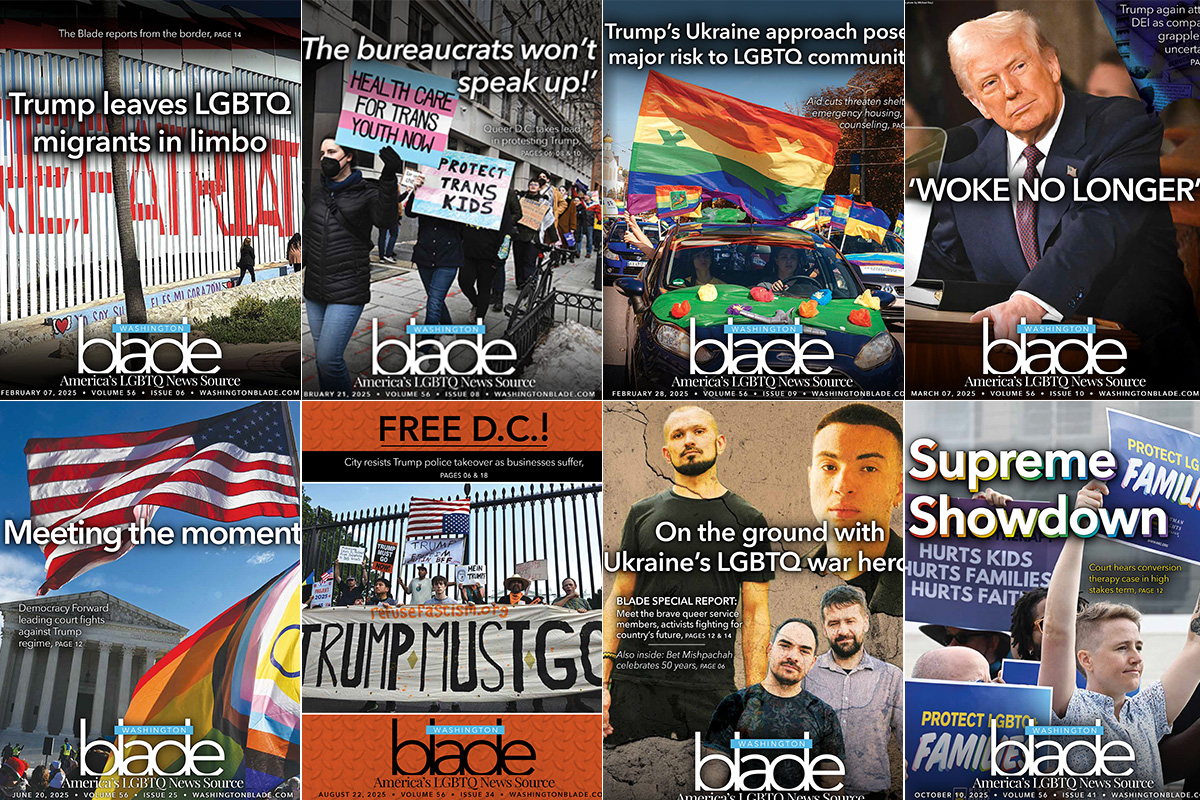
An important event impacting the LGBTQ community will be held on Sept. 12 in Rehoboth Beach, Del.
The event is a fundraiser for the Washington Blade Foundation. Whether you can join us in person, or just be with us from a distance, I ask you to seriously consider becoming a sponsor of this event. You may ask why should you care, why is this important, and how the Blade Foundation supports the LGBTQ community.
The event will feature an open bar, food catered by the Blue Moon, entertainment, and speeches from Blade staff along with remarks from Rehoboth’s Mayor-elect Susan Stewart and another surprise guest or two. You can buy tickets on Eventbrite; if you’re interested in sponsoring the event, contact Publisher Brian Pitts at [email protected].
The Blade Foundation was begun to ensure the history of our community, written in the pages of the Washington Blade, was archived, and never lost. That effort was a success thanks to the support of the DC Public Library. Now the Blade Foundation works to help ensure there will be future LGBTQ journalists working throughout the media, not just for the Blade. By funding interns and fellowships for LGBTQ journalism students, we help make that possible. By helping to fund the international news section of the Blade, the Foundation helps to keep the LGBTQ community around the world connected. In many countries where our community is either still not accepted, or worse, tortured, members of our community living in those places may only get news of their communities by reading the Blade online.
I know many of you reading this already know, the Washington Blade newspaper has been in existence, and reporting on the LGBTQ community, for more than 56 years. The paper’s reporting is done by those who are part of the community, and that makes a real difference. The paper is proud of its journalists, and the numerous awards they have won. One is Lou Chibbaro Jr., who recently was the subject of a documentary aired on PBS. He, and others like him, report the news honestly, without bias, but with fervor, because they actually live the stories.
In those 50-plus years since Stonewall, the Blade has been reporting on the progress our community has made. The steps forward, the stumbles, those allies who have worked with us, and those people who have tried to stop us from living our lives as who we were born to be. Again, the news is being reported by members of our own community. It is not others writing about us, but us, writing about ourselves. The Blade is followed by many mainstream media outlets, and stories that first only the Blade covered, ignored by mainstream media, were then picked up and reported garnering the widespread coverage they deserve. The Blade is the best place to find out about what the members of our own community are doing, and what others are doing to, and for, us.
It is sad that today the Blade has to report we are at a place in history where we are fighting just to keep the strides for equality we have made over the past 50 years. Because of that, it is even more important than ever, that the Washington Blade keeps publishing. Today, the Blade is the only LGBTQ news outlet with a dedicated seat in the White House briefing room. That is important for the Blade, and for all the members of our own community. It is important the Blade be where the action is.
The Blade’s international coverage helps us in the United States to understand where we can help those in our community who may be suffering and less fortunate, but also to celebrate with those who are even more free in many ways. The recent stories about World Pride in Amsterdam inspire us to fight even harder for our rights here, so we never again have a president who will work to keep our community from being all it can be. That we will never again have a President who threatens the lives of our trans sisters and brothers, threatens their healthcare, and throws our community’s heroes out of our military. Those news stories are important to write, and they often only get written about fully, in the Blade.
So again, I ask you to consider being a sponsor, and joining us in Rehoboth on Sept. 12. Or if you can’t be in Rehoboth, that you support our work from a distance, and support this important event. The Washington Blade Foundation is a 501c(3) non-profit. So, whether you are a business supporting the community, an individual ally, or a member of the community, please dig deep, and help to support the future of LGBTQ journalism, and future LGBTQ journalists. By doing so, you are supporting the future of the LGBTQ community. You can donate online at bladefoundation.org/donate.
Peter Rosenstein is a longtime LGBTQ rights and Democratic Party activist.
Africa
When home becomes a journey: migration, memory, and the African diaspora
People carry pieces of previous lives wherever they go
Sometimes I wonder whether home is a place or a feeling.
I have lived in places where I never imagined I would stay. I have crossed borders I never expected to cross and spent years in refugee communities where people wake up each morning wondering what the future will bring. I have known Kakuma Refugee Camp in Kenya, spent time in Zambia and South Africa, and now live in Gorom Refugee Settlement in South Sudan.
So, when I think about migration, I don’t think first about passports, borders, statistics, or immigration offices.
I think about people.
I think about the mother who leaves everything behind because she wants her children to survive. I think about the young person crossing a border with little more than a phone, a few clothes, and memories of a life that may no longer exist. I think about the refugee who has spent years waiting for a durable solution and still doesn’t know where they will eventually call home.
Migration is often described simply as movement from one place to another. But sometimes it is much more than that.
It can mean leaving behind a version of yourself.
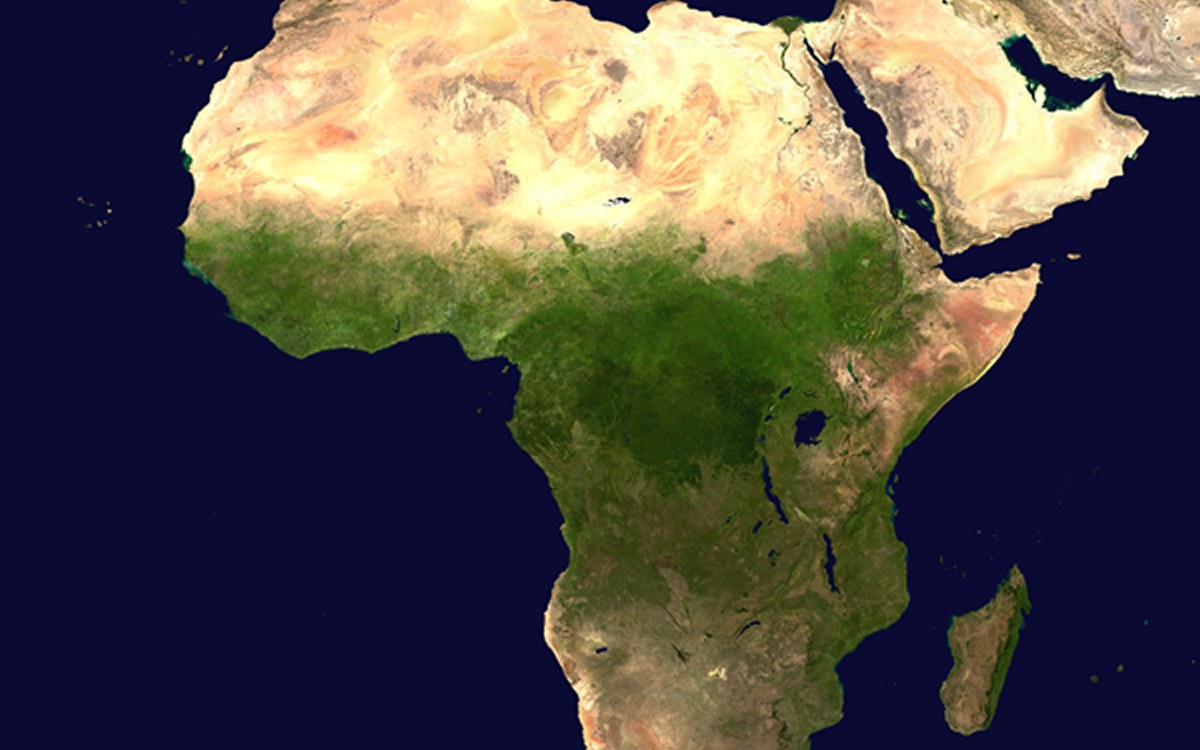
Africa has always been moving
Africa’s migration story did not begin with modern refugee camps or today’s international borders.
People have moved across this continent for generations. They have followed trade routes, searched for pasture and water, moved for marriage, education and employment, escaped conflict, and built new communities elsewhere.
Migration has always been part of African life.
Today, people move for many different reasons. Some flee war and political instability. Others escape persecution or discrimination. Some leave because they cannot find work or see a future for themselves. Others migrate to study, find employment, start businesses, join family members or simply seek new opportunities. There is an important distinction here.
Not every African migrant is a refugee.
A refugee is someone forced to leave because returning home is unsafe. An asylum seeker is someone seeking protection and waiting for a decision on their claim. Exile can mean living away from one’s homeland, sometimes unwillingly. The diaspora is broader still: it includes people of African origin living outside their country or continent, whether they left by choice or were forced to leave.
These words matter because behind each one is a human story.
When leaving is not a choice
I know what it means when leaving is no longer a choice.
Forced displacement takes something from you that is difficult to explain. You may still have your memories, your language and perhaps a few possessions, but the ordinary things that once made life predictable can disappear.
You begin again.
Sometimes you begin again in another country. Sometimes you begin again in a refugee camp.
My experiences in Kakuma taught me that displacement does not necessarily end when you cross a border and reach somewhere safer. The uncertainty can continue for years.
Now, in Gorom Refugee Settlement, I see that uncertainty in the lives of people around me. Mothers worry about food and the health of their children. Young people wonder whether they will return to education. Others wait for resettlement or another safe pathway while trying to build a life with very limited resources. There is a strange feeling in waiting.
You are physically present somewhere, but mentally you may still be traveling towards a future you cannot see.

What happens to identity?
One of the hardest questions migration raises is: Who am I when I am no longer where I came from?
A person can cross a border in a few hours. Identity doesn’t move that quickly.
You carry your accent.
You carry your food.
You carry your mother’s stories.
You carry songs you heard as a child.
You carry the names of people who may never know where you ended up.
You carry memories.
And sometimes you carry pain.
I have met people who have lived in several countries and can no longer give a simple answer when asked where they are from. They may have been born in one country, grown up in another, lived in a refugee settlement somewhere else and now dream of resettling in a fourth.
Does that make them less African?
I don’t think so.
Perhaps it makes their identity larger.
Carrying Africa across borders
The African diaspora is sometimes discussed as though it were simply a population scattered around the world. I see it differently.
People carry pieces of home wherever they go.
An African family living in Australia, Canada, Britain, the United States, or elsewhere may still cook the food they grew up eating. They may speak their mother tongue at home, send money to relatives, listen to African music, support community projects and remain closely connected to events thousands of miles away. Migration doesn’t necessarily erase belonging.
Sometimes it creates several belongings at once.
The diaspora also contributes enormously to communities back home. Remittances help families pay school fees, buy food, build houses, access healthcare and start businesses. Migrants also carry knowledge, professional experience, ideas and connections that can benefit communities across borders.
A person may leave Africa physically and still spend much of their life contributing to Africa.
That matters.
The price of being a migrant
But migration has another side.
Not every new country means a new beginning.
For some migrants, the journey leads to racism, xenophobia, exploitation, or discrimination. People can be judged because of their nationality, accent, skin color, immigration status or refugee identity.
Others discover that qualifications earned at home are not recognized. A professional becomes a cleaner. A teacher struggles to find work. A skilled worker is told to start again.
There is nothing wrong with honest work. The problem begins when someone’s dignity is reduced because they are a migrant.
For refugees, bureaucracy can become another form of suffering. A person can become a case number, waiting months or years for interviews, decisions, relocation opportunities, or family reunification.
But life doesn’t stop while the paperwork continues.
Children grow older, parents become sick, people lose loved ones, birthdays come and go and still the waiting continues.
I sometimes wonder whether the people making decisions about migration fully understand how heavy that waiting can become for someone sitting on the other side of the process.
Women, children, and LGBTQ refugees
Migration does not affect everyone in the same way.
Women often carry enormous responsibilities after displacement. They may become the main providers for their children while dealing with their own trauma and uncertainty.
Children experience displacement differently. They may not fully understand why they had to leave home, but they understand the absence of familiar faces, schools and routines.
Young people face another difficult question: how do you plan a future when you don’t know which country you will be living in?
For LGBTQ refugees, the journey can be even more complicated. Some leave because the place where they were born no longer feels safe for them. They may have experienced rejection, threats, violence or discrimination before they ever reached a refugee settlement.
And yet, even in such circumstances, people create community.
In Gorom, LGBTQ refugees and asylum seekers come from different African countries and backgrounds. We don’t always agree on everything. But we understand something important: when the world has already made you feel unwanted, having people around you who understand your experience can mean everything.
Community can become another form of home.
Should borders decide our worth?
I understand why countries have borders. Countries have laws and responsibilities.
But I sometimes ask myself a simpler question: Should crossing a border change the value of a human life?
A child doesn’t become less deserving of food because they were born on the other side of a political boundary.
A mother doesn’t become less worthy of safety because she crossed without the right document.
A refugee doesn’t stop being a human being while waiting for an immigration decision.
From a Humanist perspective, this seems straightforward to me. Human dignity should not depend on nationality.
We can have immigration systems and still treat migrants with compassion.
We can protect borders without forgetting that the people standing behind those borders are human beings.
We can disagree about migration policy without dehumanizing migrants.
That balance isn’t easy. But perhaps that is exactly why we need more humanity in conversations about migration.
What does home mean now?
I have asked myself this question many times: Where is home?
Is it where I was born?
Where I first felt safe?
Where my memories live?
Or perhaps home isn’t always a geographical location.
Maybe home can be the people who stand beside you.
Maybe it is the language you speak when you are emotional.
Maybe it is the smell of food that takes you back to childhood.
Maybe, after so much has been taken away, home becomes something you slowly rebuild.
My birthday falls on Sept. 12. Birthdays usually invite us to think about another year of life. But for someone who has experienced displacement, another birthday can mean something deeper.
It means I made it through another year.
I am still here.
And I think about the many refugees who don’t know whether they will be safe long enough to celebrate their next birthday. I think about children growing up in camps who deserve to celebrate their birthdays in a home they can call their own.
That thought stays with me.
We are more than where we come from
Migration has taught me that people cannot be reduced to the countries printed on their passports.
We are our memories, our relationships, our struggles, our dreams, and our choices.
Africa’s diaspora is not simply a story of people leaving Africa. It is also a story of people carrying Africa with them.
And the refugee experience is not simply a story of loss. It is also a story of survival.
I don’t know where my own journey will eventually take me. Perhaps that is one of the things migration teaches us: we can make plans, but life sometimes writes a different story.
What I do know is that every person deserves the chance to live without fear, to love without persecution, to work with dignity, to raise children safely and to imagine a future.
Borders may separate countries.
They should never separate us from our humanity.
If migration has taught me anything, it is that home is not always the place we left behind. Sometimes home is the safe place we are still searching for.
And sometimes, while searching, we become one another’s home.

Advocate, Out parent company adds Trump supporter to board, prompting outrage

78th annual Emmy Awards recapped

Indonesia’s top Muslim clerical body proposes criminalizing LGBTQ people, advocacy

Hands Off the Arts to form ‘human chain’ around Kennedy Center

LGBTQ issues, attacks on Democrats dominate unusual RNC midterm convention

Multi-billion-dollar 9/11 Victim Compensation Fund to continue until 2090

LGBTQ Military Happy Hour set for Sept. 15

Calendar: September 11-17

Comings & Goings