National
Key Senate races a focus for LGBT community
Pro-gay Dems face tough fights in Nevada, Wisc., Pa., Colo.
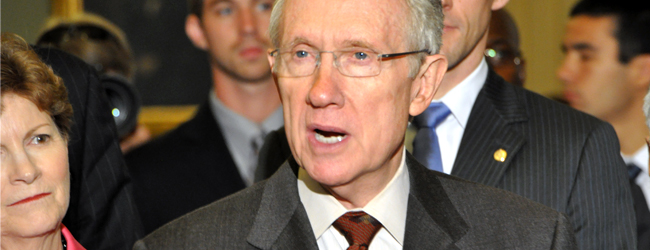
On Election Day, many eyes will be focused on several key Senate races where lawmakers with a history of support for the LGBT community are facing tough challenges on the road to re-election.
By far the most high profile race in this group is taking place in Nevada, where Senate Majority Leader Harry Reid (D-Nev.) is fighting for his political life against Republican Sharron Angle, a Tea Party candidate and former Nevada State Assembly member.
Several polls have Angle ahead of Reid by a few points. On Tuesday, Rasmussen Reports made public a poll that found Angle leading Reid by four percentage points among likely voters.
As majority leader, Reid is responsible for moving forward with pro-LGBT legislation in the Senate and would continue to decide the agenda if he wins on Election Day.
Reid has expressed support for the Employment Non-Discrimination Act and repeal of “Don’t Ask, Don’t Tell.” A Mormon, Reid has also been critical of the Church of Jesus Christ of Latter-day Saints’ lead role in backing Proposition 8 in California, which ended same-sex marriage in the state in 2008.
Michael Mitchell, executive director of the National Stonewall Democrats, said a win for Reid is important to the LGBT community because some would likely blame his loss on his leadership on LGBT issues.
“I have a feeling that’s where the Republicans will go with this, and it will be over ‘Don’t Ask, Don’t Tell,’ or it will be that he was too liberal,” Mitchell said. “And, of course, our issues in that moniker of ‘too liberal.'”
In contrast to Reid, Angle has said “Don’t Ask, Don’t Tell” shouldn’t be repealed until the Pentagon has a chance to finish its review of the policy.
Angle has also said in a questionnaire that she’d refuse campaign contributions from businesses that have pro-gay policies in place. She has, however, reportedly taken contributions from political action committees to which such businesses have donated.
The Republican candidate is also known for having ties to an anti-gay party in Nevada in which she once held membership, the American Independent Party.
In 1994, when Angle was involved in the group, the American Independent Party published a 16-page newspaper ad insert calling for a state constitutional amendment permitting discrimination against LGBT people. The insert refers to LGBT people as “sodomites” and portrays them as “child-molesting, HIV-carrying, Hell-bound freaks.”
Despite Angle’s positions, one Republican LGBT group is looking forward to seeing Reid go because of the economic conditions facing Nevada.
Christian Berle, deputy executive director of the Log Cabin Republicans, said the race in Nevada is “as much about voter distaste with Reid’s record as it is about the positions presented by Angle and her campaign.”
“Nevadans want a senator who will stand for their values and deliver for a state that has a 15 percent unemployment rate, not a legislator who is jockeying for legislation to favor the White House agenda first and foremost,” Berle said.
While enjoying general support among LGBT people, Reid has been criticized for not moving fast enough on pro-LGBT legislation.
Some supporters of “Don’t Ask, Don’t Tell” repeal said he politicized a repeal measure in September by limiting the number of amendments that could have been offered on the bill once it reached the floor.
The Senate was unable to move forward with the legislation, and many senators said the amendment issue prevented them from voting in the affirmative.
But Mitchell said he’s “tired of hearing Republicans and other folks” blame Reid for the failure of “Don’t Ask, Don’t Tell” repeal in the Senate because he said the majority leader was doing his job by limiting the number of amendments on the bill.
“With the incredible obstructionism from the Republicans that were blocking every single bill almost,” Mitchell said. “There are like 420 bills that the Senate needed to pick up that the House passed. As majority leader, he needs to start to pull things together to try and get things through.”
Mitchell said faulting Reid for the failure of “Don’t Ask, Don’t Tell” in the Senate is “placing the blame in wrong place” and said “the blame is solely on the Republicans there.”
Another race of interest is taking place in Wisconsin, where U.S. Sen. Russ Feingold (D-Wis.) is running against Republican Ron Johnson, a wealthy plastics manufacturer.
Many polls have Feingold trailing Johnson. On Tuesday, Rasmussen published a poll that found Feingold behind Johnson by seven percentage points among Wisconsin likely voters. Cook Political Report identifies the race as “leans Republican.”
Feingold is known for having long been a friend to the LGBT community. In 1996, he was among 14 senators to vote against passage of the Defense of Marriage Act.
In the current Congress, Feingold has co-sponsored ENDA and legislation that would end “Don’t Ask, Don’t Tell.” The Wisconsin senator also was responsible for an amendment to State Department budget legislation that would require the U.S. government to take more active role in LGBT issues overseas.
Michael Cole, a Human Rights Campaign spokesperson, said Feingold deserves support from the LGBT community because he has long been a “progressive champion, broadly, and particularly for the LGBT community for years.
“I think that are so many issues in play out in the field that it is hard, I think, for LGBT people to see such a champion in a tough race,” Cole said. “It speaks to the difficult political environment that’s out there right now.”
Mitchell praised Feingold for sometimes being a maverick and said his loss would be “heartbreaking” because his voice is distinct among the Senate Democratic caucus. Earlier this year, the senator joined with most Republicans to vote against financial reform legislation.
“He doesn’t always vote lock step,” Mitchell said. “He’s very much a freethinker, and I think we’re seeing less and less of that in both houses actually.”
Still, an anti-gay label doesn’t fit Johnson. The Republican candidate said he would support repeal of “Don’t Ask, Don’t Tell” on the condition that the Pentagon backs an end to the law.
Last month, Johnson told reporters that he favors nondiscrimination, but wants to see the Pentagon’s report on how “Don’t Ask, Don’t Tell” repeal would affect operations. He said if the report were convincing, he would vote to remove the statute from the books.
Berle said the Wisconsin race represents “a remarkable contrast” between a long-serving politician and “a businessman who knows what it takes to sign the front of a paycheck. Berle also commended Johnson for being willing to vote for repeal of the military’s gay ban.
“Johnson’s support for ending the failed ‘Don’t Ask, Don’t Tell’ policy is representative of a broad swath of Republicans throughout the country who favor open service,” Berle said.
In the center of the country, another race is playing out where the candidates have divergent views on gay issues.
Sen. Michael Bennet (D-Colo.) is vying to retain his seat against Republican Ken Buck, a Tea Party candidate and district attorney in the state.
The race between Buck and Bennet is seen as among the closest in the country. On Monday, Public Policy Polling published numbers finding that, among likely Colorado voters, 47 percent support Buck and while another 47 percent support Bennet.
Buck has made several anti-gay comments throughout the course of his campaign. In a September debate, Buck said he opposes “Don’t Ask, Don’t Tell” repeal because he said the U.S. military should be as “homogeneous as possible.”
In another recent debate on NBC’s “Meet the Press,” Buck said being gay is a choice and compared it to alcoholism.
“I think that birth has an influence over it, like alcoholism and some other things, but I think that, basically, you have a choice,” he said.
By contrast, Bennet has taken pro-LGBT positions since his appointment to his seat in the current Congress, such as signing on as a co-sponsor of ENDA and legislation to repeal “Don’t Ask, Don’t Tell.”
Cole said the choice for LGBT people in the Colorado race is distinct based on the positions of the candidates.
“You have Michael Bennet, who has been a strong voice for the community running against Buck, who just on ‘Meet the Press’ last weekend made his dangerous comments about LGBT people,” Cole said.
Mitchell also said a win for Bennet is important in Colorado because of statements Buck has made against gays as well as recent remarks against the separation of church and state.
“Ken Buck is little crazy, right?” Mitchell said. “His statement of separation of church and state … I think when you start to peel the layers down from that, I think that’s a pretty extreme view.”
But Berle characterized the Colorado race as “a referendum on the failed Democratic leadership” in the Senate.
“Coloradans are looking for a leader who will oppose out of control government spending and support economic policies designed to get the economy back on track,” Berle said.
Berle said Log Cabin “strongly disagrees with Buck’s belief that sexual orientation is a choice,” but recalled the candidate’s previous work as a prosecutor.
“We remember that this is the same man who as district attorney zealously prosecuted the murderers of a young transgender woman in 2008,” Berle said. “Despite our disagreements, this is evidence that Buck is willing to listen on issues important to gay and lesbian Americans.”
Another tight race is unfolding in Pennsylvania, where Rep. Joe Sestak (D-Pa.), a two-term House lawmaker and former Navy admiral, is vying for an open seat against Pat Toomey, a former U.S. House member and former president of the Club for Growth.
A poll published Tuesday by Reuters/Ipsos found that race between Sestak and Toomey is a dead heat. Among the Pennsylvania adults who were polled, 46 percent favored Sestak in the election and another 46 percent supported Toomey.
During his time in the U.S. House, Sestak has been vocal in his support for the LGBT community and repeal of “Don’t Ask, Don’t Tell.” He’s voted for hate crimes protection legislation as well as a version of ENDA.
In contrast, during his earlier tenure in the U.S. House, Toomey voted for a constitutional ban on same-sex marriage in 2004 and a measure in 1999 that would have banned adoption by gays in D.C.
Still, Toomey said earlier this month during a debate he would back repeal of “Don’t Ask, Don’t Tell” if military leaders can ensure an end to the law will improve and not undermine its capabilities.
Berle emphasized support for Toomey based on the former U.S. House member’s “consistent voice for fiscal conservatism.”
“His message resonates with Pennsylvanians who are particularly annoyed with being represented by Sen. Arlen Specter who put his own career ahead of his constituents’ interests when he switched parties,” Berle said.
But Cole also emphasized the distinction between Sestak and Toomey in the Senate race based on the Democratic candidate’s support for the LGBT community.
“You have Joe Sestak, the highest-ranking military officer serving in Congress, who is a staunch supporter of ‘Don’t Ask, Don’t Tell’ repeal, running against the guy whom Rick Santorum called ‘too conservative,” Cole said.
Similarly, Mitchell said a win for Sestak in Pennsylvania is important because the Keystone State is considered a “bellwether” for the rest of the country.
“It’s very middle of the road,” Mitchell said. “I think for there to be a win by Sestak in Pennsylvania softens the blow for some of the other races that we may lose.”





National
Man charged in Mall of America shooting plot inspired by Pulse massacre: report
Suspect exchanged hundreds of messages, pledged loyalty to ISIS
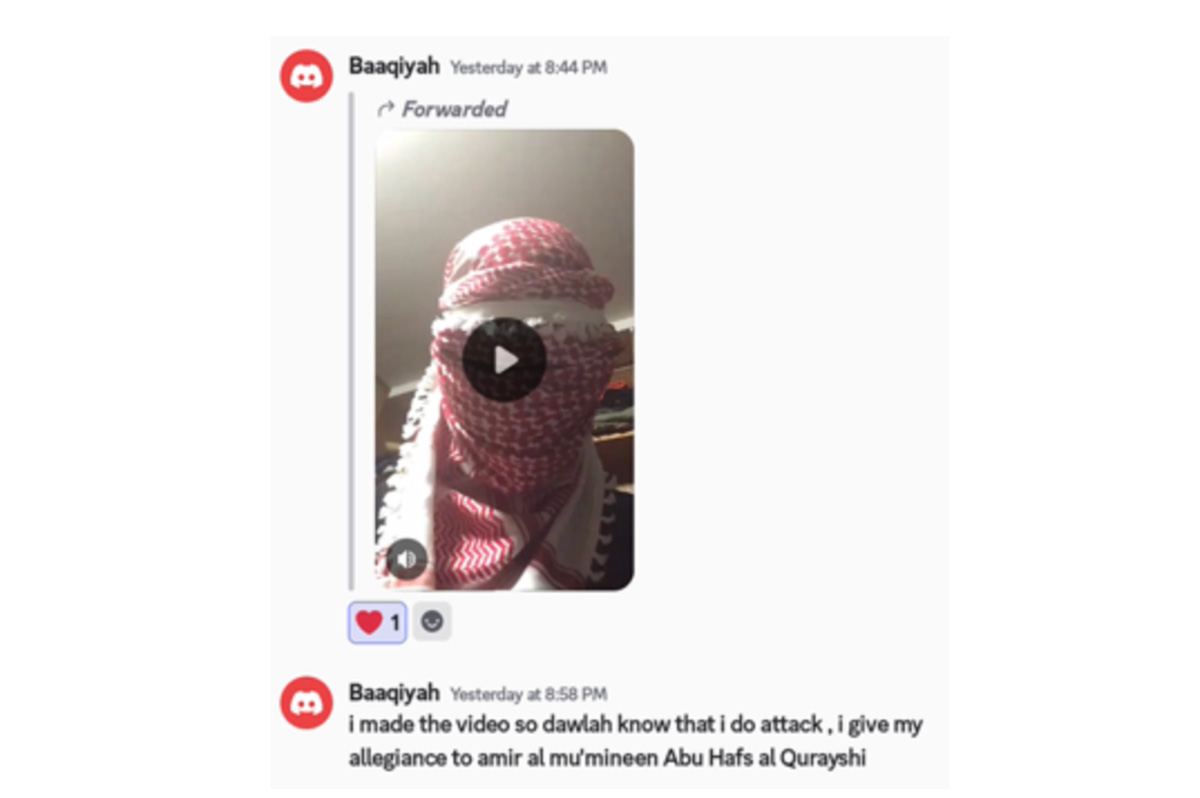
The U.S. Department of Justice charged Sheikhdoon Abdullahi Mohamud, 18, of Richfield, Minn., on Oct. 7 with one count of knowingly receiving a firearm and ammunition in order to commit a federal crime of terrorism. Mohamud allegedly planned to carry out a mass-casualty attack in support of ISIS, inspired in part by the Pulse nightclub massacre that took place on June 12, 2016 when then-29-year-old Omar Mateen murdered 49 people and wounded 58 – one of the deadliest mass shootings in U.S. history, and the deadliest targeting the LGBTQ+ community.
According to a DOJ statement release, Mohamud was arrested on Oct. 6 by the FBI, which had arranged to sell him an AK-47 assault rifle, magazines, and ammunition through an undercover FBI employee. Mohamud was arrested shortly after paying $600 in cash and taking possession of those items; he reaffirmed his intention to shoot people at the Mall of America during the transaction.
“Mohamud allegedly sought to carry out a mass-casualty shooting at the Mall of America, expressing a desire to emulate some of the most horrific ISIS-inspired attacks in the United States, including the atrocities at Pulse Nightclub and 2025 New Year’s Day attack in New Orleans,” said Assistant Attorney General for National Security John A. Eisenberg in the statement by the DOJ. “The National Security Division will continue to work closely with the FBI and Joint Terrorism Task Force to track down and prosecute ISIS-inspired terrorists in the United States.”
According to the complaint, beginning on or about December 2024, Mohamud had exchanged hundreds of messages through multiple social media and messaging apps with a confidential source, and expressed a desire to travel to Somalia to join a designated foreign terrorist organization to fight on their behalf.
The defendant stated many times that if he was unable to travel overseas because of a lack of funds, he planned to carry out a mass-casualty event in Minnesota in support of ISIS.
According to the DOJ, “In July 2026, Mohamud sent messages discussing his intent to carry out a mass-casualty shooting attack at the Mall of America because he claimed it was owned by Jews. He wrote that [he] wanted to kill 30 to 60 people so no one would go there.”
“During the course of his communications, Mohamud stated that he wanted to commit an attack similar to those of the Pulse Nightclub mass-shooting in Orlando, the Bondi Beach mass-shooting in Australia, and the New Year’s Day vehicle-ramming attack in New Orleans.”
This case is being prosecuted by Trial Attorney Ryan White of the National Security Division’s Counterterrorism Section and Assistant U.S. Attorney Benjamin Bejar for the District of Minnesota.
California
Calif. GOP gubernatorial candidate ad ‘disgusting attempt to exploit lesbian intimacy’
Activists, anti-LGBTQ religious leaders criticized Steve Hilton spot

Two women sit on a bed, a Pride flag hanging behind them. One is nervous; the other tells her to be calm and that she’ll do “all the work.” The music swells. The two hold hands and — fill out a ballot voting for Steve Hilton?
This is the new advertisement from the Hilton gubernatorial campaign that is drawing rebuke from both sides of the aisle, but for very different reasons.
Jorge Reyes Salinas, the communications director at Equality California, said the ad was an insult to the queer community.
“This ad is a disgusting attempt to exploit lesbian intimacy for political attention,” he said. The advertisement plays on media tropes that Salinas says “reduce lesbian and bisexual women … to sexual entertainment,” rather than showing them as well-rounded characters. “Any group of the LGBTQ+ community deserves the same dignity and respect as everyone else,” he said.
The ad is truly hyper-sexualized. It ends with one woman telling the other, “Now lick it.” The two pause and stare before she reveals an envelope to send the ballot, and large text pops up saying, “Just try it!”
Salinas characterized the ad as a desperate attempt to get attention from a candidate who is trailing far behind in the polls in heavily Democratic California. The Democratic candidate Xavier Becerra, who is endorsed by Equality California, holds a 25-point lead over Hilton according to recent polling by the UC Berkeley Institute of Governmental Studies.
Conservatives have also criticized the ad.
Influential evangelical Pastor Jack Hibbs thought the ad was distasteful and said, “lesbianism among college girls and some high school girls that right now is an actual pandemic of social ill.” Republican attorney general candidate Michael Gates said it undermines “the sanctity of the relationship between parents and their children.” This criticism is rather confusing because although the ad features two relatively young women, they both appear to be adults, not minors.
“The comments from Pastor Jack Hibbs should be criticized because there is nothing wrong with two women being attracted to each other,” Salinas said. “We’re calling out the ad’s stereotypes, while also rejecting the homophobia in the response to it … by other Republicans.”
The backlash from Hilton’s own party and supporters shows that an advertisement full of queer innuendo was ill-considered, considering the national GOP’s attacks on LGBTQ people in recent years. Hilton himself has been campaigning against transgender girls and women competing in school sports and using locker rooms that correspond with their gender identity. This context might be why Hilton’s political base responded to the ad just as poorly as the liberal voters he was attempting to court.
Hilton says the ad is part of a new series rolling out before Election Day, showing stereotypical California liberal archetypes voting for Hilton. He claims these ads are authentically filmed with real actors, as opposed to being A.I. generated, like many of his previous ads. One other advertisement has been released so far by the campaign showing a man at a spiritual retreat also being swayed to vote for Hilton, although it is notably absent of sexual innuendo.
Caleb Kaufman is a California Local News Fellow placed with the Los Angeles Blade. The California Local News Fellowship is a state-funded initiative to support and strengthen local news reporting. Learn more about it at fellowships.journalism.berkeley.edu/cafellows.
2026 Midterm Elections
Trump uses anti-trans slur against Democratic Senate candidate
President mocked Annie Andrews

President Donald Trump used an anti-trans slur against Democratic South Carolina Senate candidate Annie Andrews on Monday as he sought to rally support for Republicans in the state’s Senate race.
In a post on Truth Social, Trump attacked Andrews three times, referring to her as “trannie” while promoting U.S. Sen. Darline Graham (R-S.C.)’s campaign.
Andrews is running against Graham for a Senate seat in the solidly Republican state.
Earlier this year, Graham was specially appointed to the seat following the death of her brother, Lindsey Graham, who represented South Carolina in the Senate from 2003 to 2026.
Andrews, the Democratic nominee from the state, is a pediatrician that lives in Charleston with her three children. She told NBC News that she will “work with anyone to put South Carolina first.”
“As a mom and a pediatrician, I’m in this race to fight for my patients, my three kids, and South Carolina,” Andrews said, adding that “lowering costs and making life better for families across our state is going to take all of us working together.”
Andrews used the attention from the president’s attack to emphasize what she described as a focus on policy issues rather than the culture wars that have dominated much of the political debate.
“If you care more about your bills than the politics in Washington, this campaign is for you,” she added.
Trump’s remarks have drawn criticism from leaders on both sides of the aisle.
Senate Minority Leader Chuck Schumer (D-N.Y.) condemned Trump’s words Monday night on social media, calling his attacks on Andrews “despicable.”
“Annie Andrews is a mom and pediatrician who’s always put her community first — and she’s exactly who South Carolina needs representing them in the Senate,” Schumer said on X.
Former South Carolina Gov. David Beasley, a Republican, also criticized the president’s attack on Andrews, urging voters to “reject politics based on division and hate.”
“This is abhorrent. Elections don’t have to be about cruelty and lies. South Carolina deserves better,” Beasley wrote Monday night on X.
South Carolina has not elected a Democratic senator in nearly three decades.
Andrews’s campaign website does not mention her positions on LGBTQ issues.
The Washington Blade reached out to Andrews’s campaign for comment on Trump’s attack and her positions on transgender rights but did not hear back by time of publication.

Essential queer horror classics for Halloween

Solidarity beyond the parade: the actual cost of Pride

Physician: addiction doesn’t always look the way you think it does

Calendar: October 9-15

ICC unseals arrest warrants for Taliban officials accused of persecuting LGBTQ people, women

Alianza para la Inclusión fortalece la defensa de derechos LGBTQ en Centroamérica

The facts about Victory Fund’s investigation and the path forward

In Ga., 2 trans candidates believe voters are ready for them

Bessent says Trump chose him for his qualifications, not his sexuality

‘Some Like It Hot’ a wild ride at renovated Bernard Family Theatre
-

 Central America5 days ago
Alianza para la Inclusión fortalece la defensa de derechos LGBTQ en Centroamérica
-
Opinions5 days ago
The facts about Victory Fund’s investigation and the path forward
-
Georgia5 days ago
In Ga., 2 trans candidates believe voters are ready for them
-
Federal Government4 days ago
Bessent says Trump chose him for his qualifications, not his sexuality