National
Frank: ‘Zero chance’ for LGBT bills next year
Gay congressman hopeful on ‘Don’t Ask’ repeal in lame duck
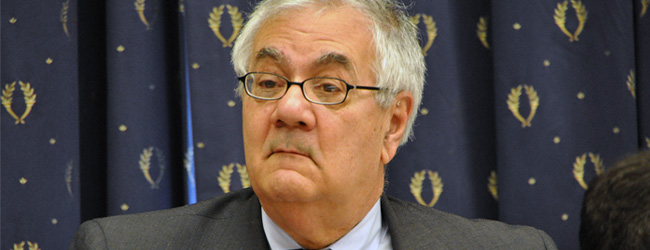
Gay U.S. Rep. Barney Frank (D-Mass.), who won re-election last week in one of his toughest challenges, said LGBT legislation would have no chance of passing in Congress under the Republican-controlled House next year.
In an interview Tuesday with the Washington Blade, Frank also said he was confident that the Senate, of which Democrats retained control, would join President Obama in blocking any anti-gay bills that conservative Republicans might introduce over the next two years.
“Next year there’s no chance of anything happening,” he said of pro-LGBT legislation. “There’s zero chance.”
He added, “It will be a status quo. They don’t have the votes to hurt us but we don’t have the votes to advance anything in the cause.”
Frank also said he was certain that Republicans would fail in an attempt to overturn D.C.’s same-sex marriage law.
“Do you think Barack Obama is going to sign a bill to repeal the D.C. marriage law,” he asked. “It won’t go through the Senate. There is no chance that could happen. None—zero.”
Frank noted that only five out of 179 House Republicans voted earlier this year to repeal “Don’t Ask, Don’t Tell.”
“The Republicans have become much more anti-gay in their voting patterns,” he said. “There is zero chance of anything good happening with Republicans in control of the House.”
Frank said he was hopeful that the Senate would vote to repeal “Don’t Ask, Don’t Tell” in the congressional lame duck session over the next two weeks. The House passed a “Don’t Ask, Don’t Tell” repeal measure earlier this year as part of a defense authorization bill.
The Senate killed a similar defense authorization bill containing “Don’t Ask, Don’t Tell” repeal language in a filibuster organized by Sen. John McCain (R-Ariz.). Every Senate Republican voted against a cloture motion to break the filibuster.
Frank noted that a number of GOP senators cited the Senate bill’s inclusion of a controversial immigration provision known as the DREAM Act as their reason for voting against the bill, saying they otherwise would have supported repeal of “Don’t Ask, Don’t Tell.”
He said Senate Majority Leader Harry Reid (D-Nev.) told him he won’t insert the DREAM Act immigration language in the defense authorization bill when he brings it to the Senate floor in the lame duck session.
With the immigration language removed as an “excuse,” Frank said he’s hopeful that Republican senators who support repeal of “Don’t Ask, Don’t Tell” will now join Democrats in supporting the overall defense bill to which repeal language will be attached. Among the GOP senators that repeal advocates hope will back the bill this time are Sens. Susan Collins and Olympia Snow, both from Maine.
In one of his first comments on a campaign ad by the conservative gay Republican group GOProud opposing him in his re-election race, Frank said the ad had little or no impact on the election.
He noted that his GOP opponent, Sean Bielat, opposes repealing “Don’t Ask, Don’t Tell” and is against “every other gay issue.”
“So I have no idea who these people are,” he said of the GOProud group. “And they have no influence whatsoever. The LGBT community in my district continues to be virtually unanimously supportive.”
The following is a transcript of the Blade’s interview with Rep. Frank, conducted on Nov. 8.
Rep. Barney Frank: I’ve been working today on “Don’t Ask, Don’t Tell.” In fact, I think it’s time for people to hold the Republicans’ feet to the fire because we didn’t get any votes from them. Last time around, they had the excuse – some of them – that they didn’t want to vote because [Senate Majority Leader] Harry [Reid] was going to put the DREAM Act in there on immigration. He now says he’s not going to put the DREAM Act in there. He’s going to put that in some other place. So now the question is why do Republicans — Sen. Snow, Sen. Collins and Sen. Brown — what reason would they have for voting against the whole bill?
And I spoke today to Pete Rouse [the acting White House Chief of Staff] and to Sen. Reid and Sen. [Richard] Durbin [D-Ill.] and Sen. [Carl] Levin [D-Mich.], and they all agree. They want to pass the defense bill with ‘Don’t Ask, Don’t Tell’ in it. They have two weeks. The question is whether Republicans filibuster it to death. But the Democrats are going to try very hard to do it. I think by the way, that’s why [Secretary of Defense Robert] Gates spoke out. I am sure, nobody’s told me this, but I’m sure the president said to Harry Reid, look, we’ve got to get this done. And Reid said fine, would it be helpful if I got some military support? And eventually Gates spoke out as he did.
Washington Blade: Your press person sent us a copy of your statement on that today.
Frank: I’ve spent — I made a lot of phone calls today. Plus, one fear was I saw, oh well, they’ll take ‘Don’t Ask, Don’t Tell’ back out of the defense bill. It won’t pass in the House if they do that. I believe the speaker wouldn’t allow it to come up.
Blade: Do you mean next year?
Frank: No, [Rep. John] Boehner [R-Ohio, who will become Speaker of the House in January] is not who I was talking about. The thought was that the Republicans would say if they took ‘Don’t Ask, Don’t Tell’ out of the [defense] bill this year in the lame duck session they would get it passed. And my answer is that’s not going to get them anywhere because we wouldn’t pass it in the House. We will not accept — there’s been some speculation about that — and the answer is no, the House—we’re going to tell the Senate that’s not going to work. And I don’t think the Senate is planning to do that. Harry is not planning to do that.
… ‘Don’t Ask, Don’t Tell’ repeal is in the defense authorization bill. What I just said was there was some suggestion that [Sen. John] McCain [R-Ariz.] would say strip that out and I’ll let you pass the defense bill. And the answer is that won’t work because the House won’t pass it. In other words, the Democratic leadership is thoroughly committed to getting ‘Don’t Ask, Don’t Tell’ repealed. The only question is — you know, Log Cabin says, oh, the Democrats couldn’t do it. Well they got us five Republican votes in the House … And no Republican votes in the Senate. The Democrats can’t do that all by ourselves without a single Republican supporter.
Blade: Did Harry Reid give an indication of when he might bring it up?
Frank: Right away — they only have two weeks. He’s committed to getting it done. He and I talked to the three — the Democratic leader, the Democratic whip, the Democratic committee chairman … They all agree they want to get it done. Unfortunately, if we have no Republican votes it can’t be done. So the question is will any Republicans and their supporters get us anything?
Blade: What’s the prospect of advancing LGBT-related bills next year, when the Republicans take charge of the House?
Frank: Next year there’s no chance of anything happening. There’s zero chance. We got five Republican votes out of 179 to repeal ‘Don’t Ask, Don’t Tell.’ The Republicans have become much more anti-gay in their voting patterns. There is zero chance of anything good happening with Republicans in control of the House.
Blade: Have you heard of anything about a Log Cabin supported gay-related tax reform bill? They won’t give us any details but the head of Log Cabin says that’s the first thing they’re going to work on next year and he thinks they might get Republican support.
Frank: If they’re suggesting that there will be Republican support for recognition of same-sex marriage that’s a lie and they know it. There’s no chance of that.
Blade: I asked them about that and he wouldn’t give me details but —
Frank: Yes, the Log Cabin club would like to make it easier for taxing – they would like to reduce taxes for rich people. I understand that. But there will be no help for gay people. Now for some of them, I think their income is skewed pretty high anyway. So they’ll feel good about it. But, no, there is zero chance that the Republicans will do anything that would recognize same-sex couples.
Blade: What about ENDA? He did say they would try to move ENDA.
Frank: There is zero chance of them doing anything on ENDA — zero.
Blade: Then the next step is whether the Republican majority or some Republicans will try to harm gay people such as attempting to repeal D.C.’s same-sex marriage law.
Frank: They can’t. That would take the president and the Senate … Do you think Barack Obama is going to sign a bill to repeal the D.C. marriage law? It won’t go through the Senate. There is no chance that could happen. None, zero.
Blade: So essentially it’s going to be a standstill?
Frank: It will be a status quo. The one thing we have a chance for is ‘Don’t Ask, Don’t Tell’ repeal in this lame duck session. And we can get that if we get any Republican cooperation. … On the other hand, they don’t have the votes to hurt us but we don’t have the votes to advance anything in the cause.
Blade: What’s your prediction on Nancy Pelosi’s decision to run for the Democratic leadership post as House Minority Leader?
Frank: Oh, she’ll win.
Blade: Your press spokesperson said you are supporting her.
Frank: I’m supporting her. I think she’ll win. … And from the LGBT standpoint, nobody’s going to get elected to any Democratic [leadership] office who isn’t 100 percent supportive.
Blade: In terms of your re-election campaign, did the ad attacking you from the conservative gay Republican group GOProud have any impact?
Frank: I don’t think anybody knew about it. Can you answer a question?
Blade: Yes.
Frank: What is it they are proud of? Does anybody know?
Blade: I guess they say they’re proud of being Republicans.
Frank: You guess? My [opponent, Republican Sean Bielat] was against repeal of ‘Don’t Ask, Don’t Tell.’ He did not take a single pro-gay position.
Blade: Their ad said they supported him because you were ‘catty.’
Frank: It means that these are people who have no interest in advancing gay causes, and I have no idea what it means. He’s a guy who’s against ‘Don’t Ask, Don’t Tell’ repeal, against every other gay issue and ran an ad in the YouTube, which I never saw, which two newspaper editorials condemned as anti-gay — two separate newspapers have condemned it as anti-gay. So I have no idea who these people are. And they have no influence whatsoever. The LGBT community in my district continues to be virtually unanimously supportive.
Blade: How do you feel about your role on the House Financial Services Committee under Republican leadership? [Frank will lose his position as chair of the highly influential committee in the GOP-controlled House in January.]
Frank: I believe we will be able to defend the financial regulation reform. Of all the issues, that was the one where we are on the most popular side. If they try to undo the consumer protection or other stuff, we’ll be able to block them.
Blade: And are you going to serve as the ranking minority member on the committee?
Frank: Yes.
Blade: Will the Democrats be reshuffling committee chairs in the new Congress?
Frank: Well everybody that’s returning will stay. Obviously there are some vacancies.
Blade: Concerning the health care reform law, do you think that will stay intact?
Frank: They can’t change it legislatively. They may try to un-fund it. That will be what they will try to do. Thank you.





National
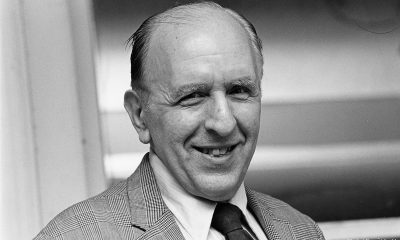
Lou Chibbaro Jr. documentary wins award from NLGJA
‘Lou’s Legacy’ produced by D.C.’s Mattachine Society

“Lou’s Legacy: a Reporter’s Life at the Washington Blade,” a documentary produced by The Mattachine Society of Washington, D.C., will receive an Excellence in Journalism Award from NLGJA, the Association of LGBTQ+ Journalists.
The film premiered on WETA PBS in D.C. and Maryland Public Television (MPT) in June of 2025. The documentary’s Emmy-nominated director and producer Patrick Sammon will accept the award for Excellence in Local Television on Sept. 11 at NLGJA’s National Convention in San Francisco.
“Lou’s Legacy” was produced in association with the Mattachine Society of Washington, D.C., a non-profit LGBTQ history society dedicated to conducting original archival research. Aside from Sammon, the NLGJA is recognizing other members of the film’s production team including Producer Julianne Donofrio, Editor Amir Jaffer, Executive Producer Charles Francis, and Executive Producer Pate Felts.
“Lou’s Legacy” tells the story of two D.C. icons — legendary Washington Blade reporter Lou Chibbaro Jr. and beloved drag performer Donnell Robinson, known to generations of Washington audiences as “Ella Fitzgerald.” Through Lou’s nearly five-decade career at the Blade and Ella’s return to the stage after a three-year hiatus following COVID, the 29-minute documentary explores the history of Washington’s LGBTQ community and today’s rising backlash against LGBTQ rights, including laws targeting drag performers.
“All students of journalism can learn a lot from the story of Lou Chibbaro, Jr. Lou has chronicled nearly five decades of LGBTQ+ life and the community’s struggle for equality in Washington, D.C. Lou’s work and the role of the queer press has been essential in covering stories the mainstream media would often ignore or erase,” said Ryan Levi, president of the D.C. chapter of the NLGJA.
“We are thrilled to receive this award from the NLGJA,” said the film’s director Patrick Sammon. “Lou Chibbaro’s nearly five decade career at the Washington Blade demonstrates the essential role LGBTQ journalism plays in telling our community’s stories and documenting its history. This recognition from journalists who follow in Lou’s footsteps is particularly meaningful to me and the rest of our production team.”
Arizona
Shooting outside gay bar in Ariz. leaves three dead
Tucson police investigating double murder-suicide as a hate crime
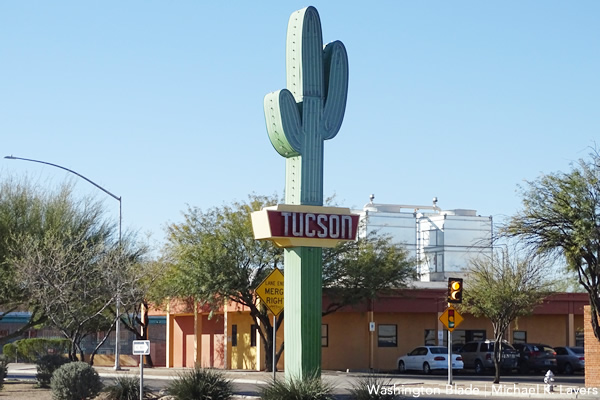
Three people were fatally shot outside a gay bar in Tucson, Ariz., early Monday morning, about a mile from the city’s nightlife district.
Police have said the shooting, which took place in the parking lot of Venture-N bar at 1239 N. 6th Ave., was likely a hate crime and a double murder-suicide following a verbal altercation.
The suspect, Ousman Ceesay, allegedly shot Vincent Anthony Siqueiros and Cameron Davis Capara while they were outside the club around 12:30 a.m. Monday.
Reports show Capara and Siqueiros were pronounced dead at the scene. Ceesay died after being taken to a local hospital with gunshot wounds.
Police have also said that Ceesay was carrying a list of LGBTQ businesses at the time of the shooting.
Arizona Public Media has said police are investigating the case as a hate crime because the suspect was carrying a note containing the names of multiple LGBTQ-associated businesses.
“I am deeply saddened that another senseless loss of life has happened in our community,” Tucson Police Chief Monica Prieto said in a statement. “Bias-based crimes are especially heinous and have no place in our community.”
According to Prieto, there is no imminent threat to the community, and the Tucson Police Department is working to provide extra protection to various LGBTQ businesses across town.
Congresswoman Adelita Grijalva, who represents the area, issued a statement condemning the act of violence, which appears to have been at least in part motivated by homophobia.
“I am disgusted and deeply saddened to learn of a targeted act of hate and the cold-blooded murder of two members of our LGBTQIA+ community, Vincent Siqueiros and Cameron Capara, at the Venture-N bar in Tucson last night. This horrific attack is a painful reminder that even in welcoming communities like Tucson, hate and violence against the LGBTQIA+ community still exist.”
“When that hate is combined with easy access to firearms, the consequences can be deadly. I am sick and tired of Congress refusing to lift a finger to protect our communities while, every day, dozens of people are shot and killed across the country. It does not have to be this way. The House of Representatives is returning to session this week, and our first action should be passing common-sense gun safety reforms that we know can save lives.”
Other federal lawmakers also condemned the shooting.
The Congressional Equality Caucus, which is made up of federal legislators advancing LGBTQ interests, issued a statement after news broke.
“Our hearts are with the friends and loved ones of the victims of this devastating attack outside a Tucson gay bar and with the Tucson LGBTQI+ community,” it said on X. “No one should fear violence because of who they are — and we’re going to continue fighting to build a world where no one does.”
The Human Rights Campaign, the largest LGBTQ organization in the country, released a statement following the shooting.
“We are heartbroken by the loss of Vincent Anthony Siqueiros and Cameron Davis Capara and our hearts are with their families, loved ones, and the entire Tucson LGBTQ+ community. Once again, we are reminded that gun violence robs people of their lives, destroys families, and devastates communities.”
A candlelight vigil honoring the victims is planned for Sept. 2 at 6:30 p.m. at Catalina Park in North Tucson.
Congress
HRC president campaigns for Chris Pappas in NH
Gay congressman running to succeed retiring U.S. Sen. Jeanne Shaheen

Human Rights Campaign President Kelley Robinson on Sunday campaigned for U.S. Rep. Chris Pappas (D-N.H.) in New Hampshire.
Robinson traveled to Manchester, the state’s largest city, nine days before the Sept. 8 primary that will determine who will vie for retiring U.S. Sen. Jeanne Shaheen (D-N.H.)’s seat.
We’re hitting the pavement across New Hampshire to fight for a freer, fairer future for everyone.
Glad to have Human Rights Campaign President @KelleyJRobinson join us for a canvass launch in Manchester today. pic.twitter.com/XWCEaQxy4o
— Chris Pappas (@ChrisPappasNH) August 30, 2026
Former U.S. Sen. John E. Sununu, who represented New Hampshire in the U.S. Senate from 2003-2009, will face off against former U.S. Sen. Scott Brown, who represented Massachusetts in the U.S. Senate from 2010-2013, in the Republican primary.
Karishma Manzur is among the Democrats challenging Pappas.
A poll the University of New Hampshire Survey Center released on Aug. 26 shows Sununu is ahead of Brown. The same survey shows Pappas ahead of Manzur and his other Democratic challengers.
The UNH Survey Center poll shows Sununu ahead of Pappas by a 45-43 percent margin if they were to face off in the general election. The margin of error is +/-2.1 percent.
Pappas would become the first openly gay man elected to the U.S. Senate if he were to win in November.

Gloria Steinem dies at 92

The mastery of love

Trans people need a politics of ordinary life

Enlarging the Supreme Court keeps making more sense

Markey’s primary win deemed success for LGBTQ activists

Immersive ‘Nation-State’ imagines a society free of authoritarianism

Poland begins to legally recognize same-sex marriages from other countries

HRC president campaigns for Chris Pappas in NH

We’re getting married but our parents object

Michael Smith could make history as Delaware’s first LGBTQ treasurer
-

 Theater4 days ago
Immersive ‘Nation-State’ imagines a society free of authoritarianism
-
Poland4 days ago
Poland begins to legally recognize same-sex marriages from other countries
-
Congress3 days ago
HRC president campaigns for Chris Pappas in NH
-
Advice4 days ago
We’re getting married but our parents object