Health
National news in brief
Illinois House passes civil unions, anti-gay app yanked, Skype marriage invalid and more
Illinois House passes civil unions bill
WASHINGTON — The Illinois House of Representatives on Tuesday passed a civil unions bill by a 61-52 vote. The bill will now move to the state Senate. Gay state Rep. Greg Harris sponsored the bill.
The bill passed by the House would permit both same-sex and opposite-sex couples to enter into civil unions and receive the same benefits, protections, and responsibilities under Illinois law that are granted to spouses. If the legislation passes the Senate and is enacted into law, couples that enter into a civil union will not receive any rights or benefits under federal law. Illinois does not permit same-sex couples to marry.
The state Senate is expected to also approve the measure and Illinois Gov. Pat Quinn has already pledged to sign the bill. If the senate passes the bill, Illinois would join New Jersey as being the only states with a civil-union statute. Iowa, New Hampshire, Connecticut and Vermont allow same-sex marriage.
“I think that this is a step down a slippery slope that leads me to someday have to explain to my children and grandchildren that no longer in America are we going to give the honor to a man and a woman in marriage,” state Rep. Ron Stephens told an Illinois Fox affiliate.
New York City slashes services to homeless youth
NEW YORK — The New York City Department of Youth and Community Development sent e-mails last week announcing that state and city budget cuts are forcing it to reduce its Runaway and Homeless Youth Services expenditures by nearly a million dollars next year and a further $700,000 in 2012, according to media reports. Some gay activists say LGBT youth will be disproportionately impacted by the cuts.
The Department said it will significantly reduce street outreach services by 50 percent next year, then eliminate them in 2012; drop-in services in Manhattan, Bronx, Brooklyn and Queens will be reduced by one-third in 2011 and by another 23 percent in 2012. Another in Staten Island will be reduced by 10 percent in 2012. A 2008 report found that the city averages 3,800 homeless youth on an average night.
Since homeless LGBT youth make up 40 percent of the city’s homeless youth population, gay teens will likely be hit hardest. The Ali Forney Center and the Bronx Pride Center are both losing 50 percent of city funds that support their drop-in programs, which amounts to $185,000 of the $969,000 2011 cut announced Nov. 26.
“These cuts will devastate kids who are hanging on by a thread, struggling to survive alone on the streets,” Carl Siciliano, director of the Forney Center, said. “More youths will turn to drugs and prostitution and more will become HIV-infected and more will attempt suicide. I cannot believe hat the city of New York would be so neglectful of the most basic welfare of hurt and vulnerable children.”
Some city Council members said they recognized that budget cuts need to be made but objected to this decision.
D.C. officials declare Skype marriage invalid
DALLAS — D.C. officials have declared the online marriage of a Dallas gay couple invalid, according to Dallas Voice, a gay newspaper. Mark Reed and Dante Walkup said their vows over Skype last month while D.C. lesbian Sheila Alexander-Reid officiated from Washington.
The two have been together 10 years and traveled to the District to register their marriage but actually exchanged their vows with Alexander-Reid over Skype in a Dallas hotel conference room, the paper reported. The couple received notice by mail from D.C. Superior Court that the vows are void. The letter says the marriage couldn’t be certified or registered because all parties weren’t physically present for the ceremony. The letter, from D.C. Marriage Bureau Deputy Clerk Denise Johnson, says the ceremony must be performed in the District with all parties present.
“It was extremely disappointing,” Reed told the Voice. “We felt like we had covered our bases and all of the media out there was agreeing. No one was saying what we did wasn’t legal, so we felt very confident that we had succeeded and so it really was a kick in the stomach and it hurt.”
The two men said they are exploring their legal options. They filed a discrimination complaint against the Dallas Morning News for refusing to publish their wedding announcement but withdrew it upon realizing their marriage wasn’t valid.
iCondom launches in time for World AIDS Day
PARIS — A new iPhone application called iCondom launched this week in the U.S. and was available for a 48-hour free download on the Apple Store to commemorate the importance of prevention measures against STDs on World AIDS Day, which was Wednesday.
iCondom shows users where the nearest condom dispensers are to their location using a geolocation platform and Google Maps. It was launched in France in October in Paris and Marseilles. An updated version was launched in the U.S. this week in New York and Washington. Apple plans to expand it.
Washington has the highest U.S. HIV infection rates with 3 percent infected. The program geolocates about 140 addresses in the District in which condom dispensers can be found.
Apple yanks anti-gay application
LONDON — Apple has removed an anti-gay app from its App Store according to a report from Pink News, a British gay news outlet. Media attention reportedly prompted Apple to quietly take down the app, which was created by a Christian group.
The app was based on the “Manhattan Declaration,” an anti-gay manifesto signed last year by Protestant and Catholic Church leaders that condemns same-sex unions as the “erosion of marriage.” Apple had originally given the app a 4+ rating, which indicates it has “no objectionable content.”
About 7,700 people signed a petition urging Apple to pull the app, which calls gay relationships “sexually immoral” and features a four-step survey that asks users if they agree with questions on same-sex marriage and abortion. Those who answer with pro-gay and pro-choice opinions get a failing score at the end of the test.
The petition said it wanted to “send a strong message to Apple that supporting homophobia and efforts to restrict choices is bad business.” Apple said it removed the app “because it violates our developer guidelines by being offensive to large groups of people.” The app’s creators e-mailed Apple CEO Steve Jobs to learn more about why their app was pulled but did not respond to a request for comment.
Judge rejects Family Council bid in Minn. lawsuit
MINNEAPOLIS — A judge has rejected an attempt by the Minnesota Family Council to intervene in a lawsuit challenging state law that bans same-sex marriage, the Minnesota Independent, a Center for Independent Media online newsmagazine, reported.
Three same-sex couples filed a lawsuit against the state of Minnesota earlier this year arguing that the Defense of Marriage Act signed into law in 1997 violates the state Constitution. The Family Council argued that it should be part of the lawsuit, in part, because if DOMA is ruled unconstitutional, it will cost them millions to fight same-sex marriage. The court said the group has no standing to defend DOMA, the newsmagazine reported.
“The Council’s alleged injuries would occur solely due to its sincerely held belief that principles rooted in its interpretations of religious texts are best for the well-being of children and families, and that marriage only between one man and one woman accords with these principles,” wrote Minnesota Fourth District Court Judge Mary DuFrense. “The Court certainly understands that the Council feels strongly about the social issue of same-sex marriage. Strong feelings, however, do not establish a legal interest in a lawsuit.”
The Minnesota Family Council attempted to enter the lawsuit with the help of James Dobson’s Alliance Defense Fund, an evangelical Christian legal group.
‘Hate’ designation irks gay rights opponents
WASHINGTON — The Southern Poverty Law Center last week labeled as “hate groups” several political and religious organizations that campaign against same-sex marriage and, the center says, engage in “repeated, groundless name-calling” against gays and lesbians, Washington Post reported last week.
The law center has spent four decades tracking extremist groups and hate speech. One of the groups named, Family Research Council, is accused of putting out “demonizing propaganda aimed at homosexuals and other sexual minorities.”
Peter Sprigg, a senior fellow for policy studies at the Council, had several of his comments highlighted in the report. He told MSNBC host Chris Matthews he thinks homosexual behavior should be outlawed.
Council President Tony Perkins told the Post the designation is a political attack by a liberal organization.
“The left’s smear campaign of conservatives is . . . being driven by the clear evidence that the American public is losing patience with their radical policy agenda as seen in the recent election and in the fact that every state . . . that has had the opportunity to defend the natural definition of marriage has done so,” Perkins said in a statement.
“Earlier this month, voters in Iowa sent a powerful message when they removed three Supreme Court justices who imposed same-sex marriage on the state. Would the SPLC also smear the good people of Iowa?”
Brian Brown, president of the National Organization for Marriage, objected to his organization’s inclusion in the center’s report, the Post reported.
“This is about protecting marriage. This isn’t about being anti-anyone,” Brown told the Post.






Health
AIDS Healthcare Foundation announces 3 million people globally in its care
Los Angeles-based group lauded ‘historic milestone’

The AIDS Healthcare Foundation, a Los Angeles-based nonprofit group founded in 1987 that has become the world’s largest HIV/AIDS organization, has announced it has three million people in care around the world.
In a statement released on May 26, the organization, known worldwide as AHF, said the latest accomplishment reflects its global commitment to HIV prevention, care, and treatment. It says the accomplishment comes at a time when AHF marks the 25th anniversary of its first global programs launched in South Africa and Uganda in early 2001.
The statement says the three million people in care milestone also comes while the group approaches the 40th anniversary of its founding in 1987.
“Today, AHF provides lifesaving services in 50 countries across Africa, the Americas, Asia, and Europe, supporting millions of people living with HIV through a network of 1,056 global clinics, 79 healthcare centers in the U.S., 67 pharmacies, 96 wellness centers, 26 Out of the Closet thrift stores, outreach programs, and community partnerships,” the statement says.
“This accomplishment is far more than a number — it represents 3 million individuals whose lives have been touched by compassion, commitment, and the belief that healthcare is a human right,” Condessa M. Curley, the AHF board chair, said in a statement. “We extend our deepest gratitude to every member of the AHF team whose dedication made this milestone possible,” Curley said.
The AHF website notes the organization was founded in 1987 in Los Angeles as a network of hospices committed to “fighting for the living and caring for the dying” at a time when there was no effective treatment for HIV/AIDS. A statement on the website says since that time AHF has greatly expanded, converting its hospices into healthcare centers “and building a new paradigm for HIV care both in the United States and around the world.”
The statement adds, “Under the leadership of president and co-founder Michael Weinstein, AHF has grown from a group of friends dedicated to creating dignified hospice care to the largest AIDS organization in the world.” It says Weinstein “has been at the forefront of creating cutting-edge healthcare and advocacy programs and continues to drive the organization forward with the aim of saving more lives around the world.”
The statement announcing the milestone has also come at a time when more than 40 million people worldwide are living with HIV, “while hundreds of thousands continue to die annually from AIDS-related illnesses despite the availability of effective treatment.”
It says AHF’s response has included an expansion of its prevention and public health programs worldwide. In 2025 alone, according to the statement, AHF and its affiliated programs provided nearly five million free HIV tests globally and distributed more than 54 million free condoms, “underscoring the organization’s continued emphasis on both prevention and treatment.”
In D.C. AHF operates health care centers at 1701 K St., N.W., Ste. 400 [202-293-8680], 650 Pennsylvania Ave., S.E., Ste. 310 [202-350-5000], and 1647 Benning Road, N.E., Ste. 300 [202-350-5000].
Cannabis Culture
LGBTQ people, weed, and mental health: what you need to know
Community uses marijuana at much higher rates than general population

Uncloseted Media published this story on May 7.
By SPENCER MACNAUGHTON | In 2025, the global cannabis market size was valued at nearly $103 billion. By 2034, that number is expected to explode by roughly 1,400 percent to more than $1.43 trillion.
In short, as an increasing number of countries legalize marijuana use, everyone is starting to consume a lot more weed. And LGBTQ people tend to use cannabis at much higher rates than the general population. One study found that 55 percent of lesbian and 45 percent of gay young adults use marijuana, compared to about 33 percent and 37 percent, respectively, of their straight counterparts.
As LGBTQ people face a mental health crisis, the mainstream stereotypes that depict weed as an antidote for anxiety, panic and depression aren’t painting the full picture. And that could be exacerbating the mental health struggles so many queer people, and especially youth, face.
Here’s what the research demonstrates about marijuana and its effects on mental health:
- Multiple studies suggest a link between marijuana use and an increased risk of mental health disorders, including schizophrenia, depression and anxiety in individuals who are genetically predisposed.
- One study found that daily marijuana use, especially among younger people, makes some individuals seven times more likely to develop psychosis.
The increase in higher-potency strains of marijuana could pose unknown risks. In 1995, the average content of Tetrahydrocannabinol (THC) in confiscated marijuana was less than 4 percent. In 2022, it was more than 16 percent. Researchers don’t know the full extent of the impact that these higher concentrations can have on mental health and especially on younger people whose brains are still developing.
- A systematic review of studies published between 2013 and 2025 found damning results for the mental health of young cannabis users:
They were 51 percent more likely to experience depression, 58 percent more likely to experience anxiety, between 50 and 65 percent more likely to experience suicidal ideation and 80 to 87 percent more likely to have attempted suicide.
- While the above stats paint a grim picture, there is also some research that suggests benefits of cannabis use:
- A 2025 systematic review found that “medicinal” weed showed some efficacy in relieving withdrawal symptoms of opioid use disorder. THC use has been associated with improvement of post-traumatic stress disorder symptoms, bipolar symptoms and sleep quality.
- Other studies found that THC administered in a controlled setting was associated with a decrease of symptoms and adverse effects for a range of mental health disorders, including schizophrenia, psychotic symptoms, and anorexia nervosa.
Beyond what we pulled from academia, there is an astounding lack of information about the interplay between weed and mental health. As we dive deeper into Mental Health Awareness Month, I hope advocacy organizations, influencers and news outlets ramp up their coverage of this important topic that affects the countless LGBTQ weed smokers, many of whom are already struggling.
Health
UPDATED: Trans-led HIV clinic in Portsmouth struggles amid funding cuts
As states across the U.S. cut funding for HIV care this small clinic in Va, is still fighting
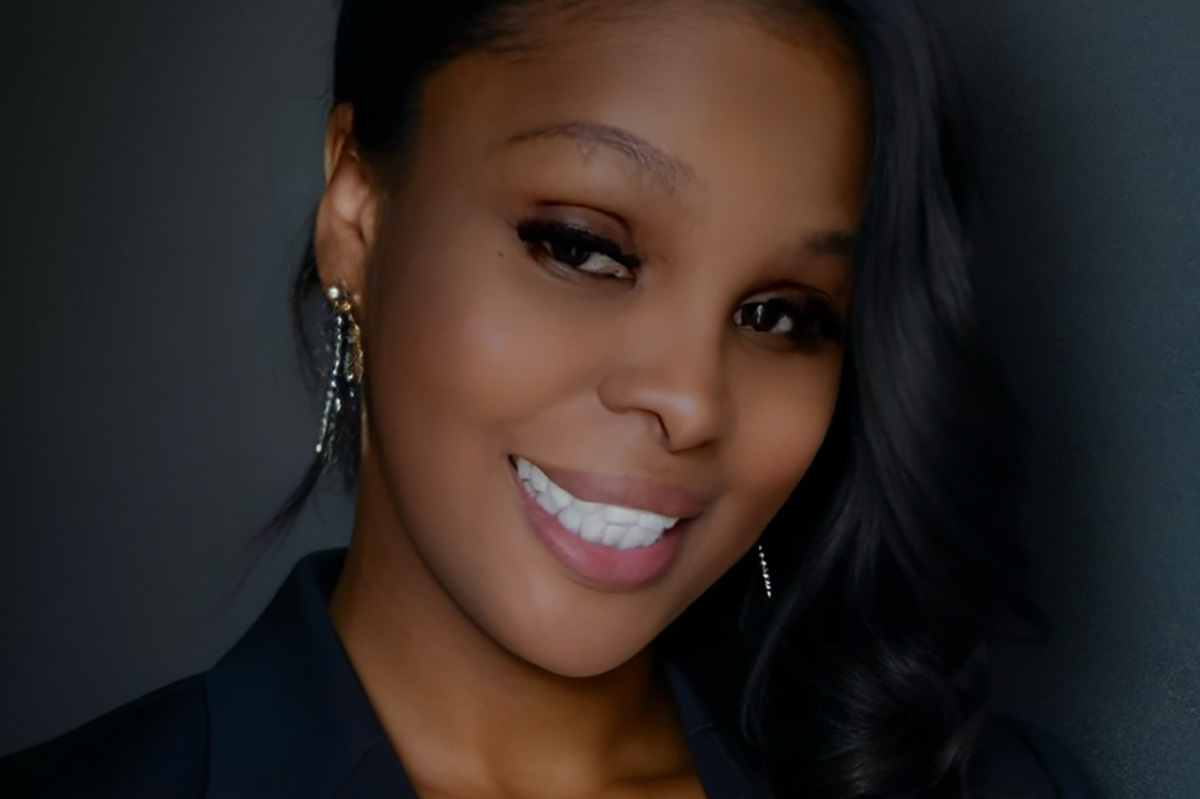
Two years ago, Nyonna Byers, a transgender woman from Portsmouth, Va., founded Ending Transmission of Sexual Infections (ETSI) Health Clinic to support a community she saw struggling with rising HIV rates. Now, as costs continue to climb and funding for HIV healthcare initiatives is being cut across the United States, Byers says her transgender identity has made it harder to secure the financial support her clinic needs to survive.
Portsmouth, with just under 100,000 people, is right across the Elizabeth River from Norfolk.
“We’re an HIV-led organization here in Portsmouth, providing services throughout the Hampton Roads area,” Byers told the Blade. “As a trans-led organization—with me as the founder and executive director—I’ve received a lot of rejection when it comes to funding. That’s one of the main reasons why we’re struggling to keep the clinic open. Without funding, we can’t provide HIV treatment or care, and then we’re just a theoretical organization—we can’t be impactful in the community we serve.”
She said the data clearly shows a need for increased investment in HIV care in Portsmouth, but the response from leadership has not matched the urgency of the crisis.
“Portsmouth is one of the smallest cities with one of the highest HIV rates, and there are very few HIV-led organizations or clinics here. The need is urgent, but the response doesn’t match it. We’re doing the work on the ground, but we’re not getting the support to sustain it. That disconnect is what’s hurting people the most.”
That need, Byers explained, continues to grow as ETSI struggles to meet the financial demands of the life-saving work it provides.
Portsmouth has one of the highest HIV prevalence rates in Virginia, with roughly 736.9 cases per 100,000 people—a rate that exceeds both state and national averages.
“Leaders like the mayor and city council don’t focus on public health or social health. They focus more on development—building the city up physically—rather than investing in the health of the people. I’ve applied for funding multiple times and been denied. Every time I’ve asked for resources, I’ve been turned away.”
When asked why, Byers said the answer felt clear to her.
“I honestly believe I was denied funding because I’m trans. I told the mayor I was going to go public with it, because it’s not fair. We’re on the ground doing the work to end HIV, and we’re still not getting the support we need. That’s not just frustrating—it’s harmful.”
While she said local support has been lacking, Byers noted that the state has stepped in—though the funding still falls short of what is needed to sustain the clinic long term.
ETSI Health Clinic was included as a recipient of funding in the Virginia 2027–2028 Senate budget, receiving $50,000 per year from the Virginia General Fund. Byers specifically credited State Sen. Lillie Louise Lucas with helping secure that funding, which she said did not come from city leadership.
Byers shared that she has given up a lot to keep ETSI afloat, but the costs just keep coming.
“I’ve worked a lot of contracts—jobs paying $30 to $40 an hour—and poured that money into my clinic. But the downside is that I’m struggling personally. I’ve lost cars, I’ve lost a house—I’ve lost a lot to keep this clinic going. This work has cost me almost everything.”
She added that the impact of federal policy shifts is also being felt locally. As the Trump-Vance administration continues to roll back what it has described as unnecessary “DEI” spending, Byers said those decisions are affecting clinics like hers.
There was a time when the clinic was able to receive funding from Sentara Cares, the philanthropic program of Sentara Health, a not-for-profit healthcare system based in Virginia and North Carolina, but now they can’t.
“We had funding from Sentara Cares for three years, and it helped keep us going. Then when DEI initiatives started getting rolled back, that funding stopped. I was told directly that because of federal policy changes, they couldn’t fund the clinic. I broke down during that meeting, because it felt like they were really saying they couldn’t support us because of who we are.”
That lack of funding is compounded by broader gaps in healthcare access in the region. Portsmouth—the ninth most populous city in Virginia—does not have a hospital.
“There’s very limited access to care in Portsmouth. We don’t even have a hospital—people have to be transported to Norfolk. We’ve had high rates of syphilis, and the health department is only open a few days a week. A lot of people don’t trust it, and that leaves entire communities without care.”
Byers made it clear that this is more than a passion project for her—it is her life’s calling, and she would do nearly anything to keep it going.
“To be honest, I would go back to sex work before I let my clinic close. This is something I built from the ground up. I built this clinic with money I earned myself. I’m not going to let it disappear without a fight.”
She also pointed to gaps in education and outreach, which she says exacerbate HIV rates despite the availability of preventive measures.
“There’s almost no marketing or education about PrEP in the Hampton Roads area. If you go to places like D.C. or Atlanta, you see billboards and campaigns—but here, you don’t see anything. If people don’t see it, they don’t know about it. That lack of awareness is putting people at risk.”
It is also a deeply personal fight, she explained.
“I’ve lost friends to HIV. People say you can’t die from HIV anymore, but you can if you’re not in care. I’ve seen it firsthand, and that’s what motivates me to keep going. HIV doesn’t have to be a death sentence—but without support, it can become one.”
The Blade reached out to Portsmouth Mayor Shannon E. Glover for comment.
Glover disputed Byers’ claims that her clinic was treated unfairly, including her allegation that her transgender identity played a role in funding decisions.
“There’s no issue with Miss—with her and her organization. We have been in discussion, and quite frankly, the claims that she made as it relates to ‘we’re not treating her equitably and fairly because of her [being] transgender’ that is totally untrue,” Glover told the Blade via phone call. “I’ve talked to Miss Nyonna on a number of occasions, and that is categorically not true.”
Glover added that the city provides funding to various organizations and said he had directed Byers to seek support elsewhere.
“So I’m not understanding what her issues are,” he said. “But in any event, you know, we have funding that we provide to organizations. I’ve recommended other organizations to her. I’ve recommended that she go to the state where they have more flexibility with their budget and they could help her. So that’s what I’m prepared to tell you today. I’m not going to answer any questions. I just wanted to respond that her claim that we are mistreating her, not treating her fair, is totally untrue.”
To donate to ETSI, visit their donation page at ESTIhcvas.org/donate

PHOTOS: Walk and 5K to End HIV

PHOTOS: Wanda Alston Foundation Fall Reception

Moving presents a chance to ‘clean house’

EV ecstacy: BMW iX3, Rivian R2

Curl up with a good book this fall

Trump’s Cabinet: Dumb, dumber, dumbest, and evil

More than 150 people detained outside Istanbul courthouse

Virginia Anti-Violence Project struggles to fill federal funding gaps

Gay man sues Delaware AG for not prosecuting partner in domestic violence case

D.C.’s fall theater season is already well underway
-

 Opinions4 days ago
Trump’s Cabinet: Dumb, dumber, dumbest, and evil
-
Turkey5 days ago
More than 150 people detained outside Istanbul courthouse
-
Virginia5 days ago
Virginia Anti-Violence Project struggles to fill federal funding gaps
-
Delaware5 days ago
Gay man sues Delaware AG for not prosecuting partner in domestic violence case