Opinions
O’Malley, Mehlman for Md. marriage fight
Guv, former RNC chair would make unlikely, yet welcome, bedfellows
The successful campaign to win marriage equality in New York stands in stark contrast to the disappointing effort earlier this year in Maryland to do the same.
Although there are many important differences between the two states — most notably the threat of a referendum in Maryland and the influence of conservative black churches there — the most glaring contrast was the role of each state’s governor in the fight. In New York, Gov. Andrew Cuomo embraced the cause of marriage equality as a civil rights issue. He made it clear even before he was elected that he supported full marriage rights and then backed up those words with public and private efforts to make it happen. He personally lobbied for the needed votes behind the scenes, but more significantly, took a visible and public stand.
In contrast, Maryland Gov. Martin O’Malley is the reluctant advocate, offering meek, private assurances of support but refusing to publicly embrace the cause, even after winning a second term in a landslide. O’Malley recently told the Baltimore Sun that a more public push for marriage on his part, “would have kicked it into the gutter of partisan division.”
Huh? Sen. Allan Kittleman — the former GOP Senate leader — bravely killed the false notion that this is a partisan issue by publicly and forcefully embracing full marriage rights. O’Malley’s own attorney general — and the likely next Maryland governor — Doug Gansler has already cleared the way for O’Malley thanks to his own visibility and advocacy on marriage equality.
O’Malley fails to understand his role and his own power. He’s a popular two-term governor in a decidedly “blue” state with a formidable campaign war chest. His full, fierce advocacy would reassure the fence sitters in the legislature and send a message that Maryland will lead on matters of civil rights and stand on the right side of history.
Instead, O’Malley ceded that leadership role to Cuomo, who, along with fellow marriage rights advocate New York Mayor Michael Bloomberg, is consistently mentioned in the top tier of 2016 presidential contenders. And let’s face it, by 2016, it will be untenable for the Democratic nominee to oppose marriage equality. President Obama will endorse it next year (if not sooner) and that position will become the Democratic standard.
Maryland’s 2012 legislative session is just six months away and there is much work to do. Sure, O’Malley says he supports marriage equality, but he could give a much-needed boost to the fight by taking a page from Cuomo’s playbook and finally engaging in a meaningful way.
And he’s not the only voice we need in this debate. As a recent Sun editorial pointed out, former Republican National Committee Chair Ken Mehlman, who came out as gay, is a native Marylander. He joined the fight for marriage equality in New York, but his penance for his myriad past sins is not yet complete. Mehlman should come home to Maryland and lobby Republican state lawmakers whose votes we will need next year.
Lobbying in Annapolis will be an easier chore next year, as advocates now know where the votes are and who needs a push. With O’Malley leading the charge on the Democratic side and Mehlman organizing Republican efforts for passage, Maryland’s same-sex couples will be in a strong position to finally win marriage rights in the Free State.
Kevin Naff is editor of the Washington Blade. Reach him at [email protected].



Opinions
Tennessee’s trans data bill a frightening omen
Information collected for ‘research’ can be repurposed for enforcement
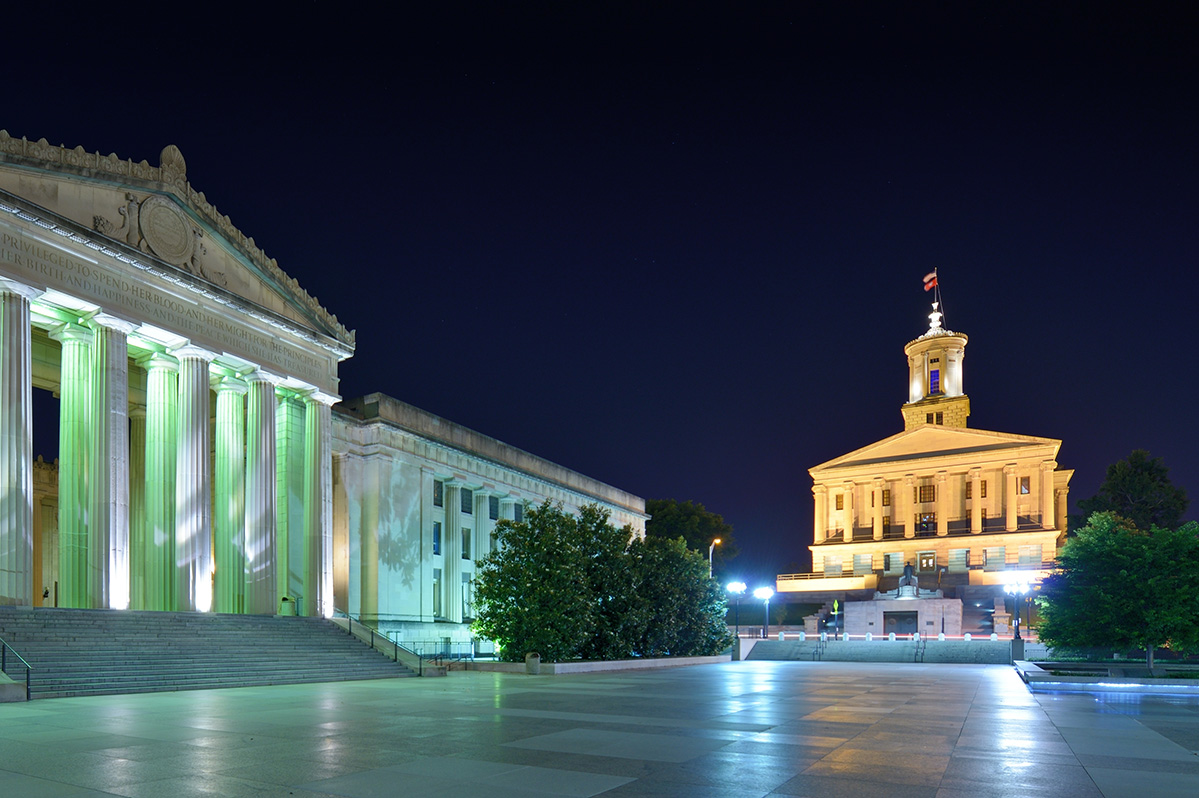
Something important recently happened in Tennessee — and it demands far more scrutiny than it’s getting.
The Tennessee state House passed a bill — HB 754 — that requires clinics and insurers to report data on patients receiving gender-affirming care to the state. On paper, it is framed as a neutral effort: a way to “study trends,” “understand outcomes,” and bring clarity to a politically charged area of medicine. That is how its supporters describe it.
But laws are not judged solely by their stated intent. They are judged by their structure, their context, and the foreseeable ways they can be used.
And in structure and context alike, this bill edges dangerously close to something far more unsettling: a system of tracking a politically targeted minority.
The mechanics matter. Under the legislation, providers must submit detailed information about transgender patients — data that will ultimately be compiled into state reports and made public in aggregated form.
Supporters emphasize a key safeguard: the data is supposed to be “de-identified.” No names, no Social Security numbers. In theory, no direct link to any one individual.
But that reassurance collapses under even minimal scrutiny.
Because data does not need to contain a name to identify a person. In smaller communities—rural counties, tight-knit towns—granular data points like age, treatment type, and geography can easily narrow a dataset down to a handful of individuals. In some cases, to one.
Privacy experts have been warning about this problem for years. Re-identification is not a hypothetical risk — it is a well-documented reality. And when the dataset concerns a stigmatized population, the stakes are not abstract. They are personal, immediate, and potentially dangerous.
That is why critics of the bill are not calling it “data collection.” They are calling it what it resembles: a registry in all but name.
And history gives that word weight.
Governments have always justified registries as tools of order and knowledge. Lists of dissidents. Lists of immigrants. Lists of the sick, the criminal, the different. They begin as bureaucratic exercises — tidy, rational, even boring. Only later do we confront what those lists enable.
To be clear, HB 754 is not a list of names published online. It is not, at least yet, a direct catalogue of individuals. But the architecture it builds—centralized data collection on a specific, politically contested group—is the same architecture that makes such lists possible.
And that is where context becomes unavoidable.
This bill does not exist in isolation. It comes after years of escalating legislation targeting transgender people in Tennessee—from restrictions on healthcare to limits on public expression. The trajectory is not ambiguous. It is cumulative.
When a government repeatedly singles out a group for legal scrutiny, and then begins building systems to track that group—even indirectly—it crosses a conceptual line. It moves from regulating behavior to mapping people.
Supporters argue that none of this is the point. That the bill is about medical evidence, not identity. That policymakers need data to evaluate treatments.
But this argument collapses under its own selectivity.
If the true goal were neutral scientific inquiry, we would expect similarly aggressive data collection across other areas of medicine—cosmetic surgery, psychiatric medication, fertility treatments. We do not see that. The focus here is narrow, targeted, and politically charged.
That selectivity reveals something important: this is not just about healthcare. It is about governance—about which populations the state chooses to monitor, and why.
And once that monitoring infrastructure exists, its use is not fixed.
Data collected today for “research” can be repurposed tomorrow for enforcement, litigation, or exposure. Laws change. Administrations change. What remains is the dataset—and the precedent that it is acceptable to build it.
That is the real risk embedded in HB 754. Not necessarily what it does on day one, but what it normalizes over time.
It normalizes the idea that transgender people are a category to be tracked. It normalizes the idea that their private medical decisions are of special interest to the state. And perhaps most dangerously, it normalizes the idea that the boundary between public policy and personal identity can be quietly, bureaucratically eroded.
There is a tendency, especially among lawmakers, to view policy as modular—each bill evaluated in isolation, each provision defended on its own terms. But for the people living under those laws, the experience is cumulative. It is the pattern that matters.
And the pattern here is becoming harder to ignore.
A state that restricts your care, debates your existence, and then begins compiling data about you is not neutral. It is not merely studying you. It is defining you as a subject of governance.
That distinction—between citizen and subject—is subtle. But it is where the stakes of this bill ultimately lie.
Because once a government begins building lists—even partial, anonymized, “harmless” ones—it is no longer just making policy.
It is deciding who counts.
Isaac Amend is a writer based in the D.C. area. He is a transgender man and was featured in National Geographic’s ‘Gender Revolution’ documentary. He serves on the board of the LGBT Democrats of Virginia. Contact him on Instagram at @isaacamend.
Opinions
The felon’s gang can’t get their story straight
Silver lining could be a blue wave in November
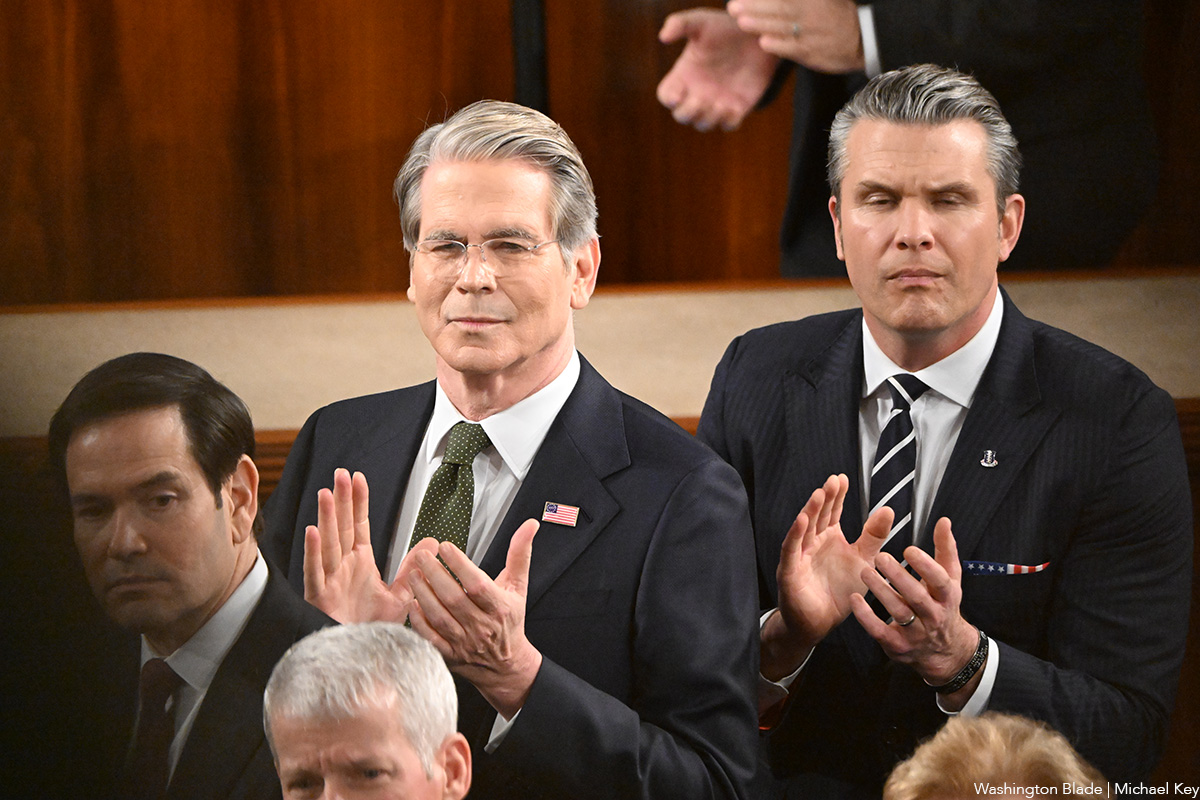
The felon and his administration all come up with different stories about a losing war. It’s bizarre to listen to the felon in the White House, and the different members of his administration, talk about the war in Iran. They can’t get their stories straight. Between gay Secretary of the Treasury Scott Bessent; the signal twins, Sec’y of Defense Hegseth and Michael Waltz, now the U.S. ambassador to the UN; little Marco, our Secretary of State; and the vice president who once called the felon our own Hitler. None of them seem to know what is going on in the world either with Iran, or anywhere else. They do interviews and come up with different stories, and then when asked to be specific they say, “well it’s up to the president.” Clearly, they don’t know, because the felon changes his mind every five minutes. Bessent changes his story on sanctions against Russia, and Waltz tries to justify the felon’s threats against infrastructure and private citizens in Iran, as not war crimes.
As I write this the president again sidelines his vice president, and wants to send the two grifters, Witkoff and Kushner, to Pakistan to try to negotiate with the Iranians who haven’t even said they will be there. These two, who seem to negotiate everything for the felon, while enriching themselves, fail to get any longstanding agreements. Last time they and Vance were in Pakistan, Rubio was attending a wrestling match with the felon in Florida, apparently left out of any negotiations concerning the illegal war the felon began. Some suggest he is looking at how to become the King/Queen of Cuba. Is it any wonder no country in the world trusts us?
As former senator and Secretary of State Hillary Rodham Clinton commented, it was close to criminal the felon claimed he wasn’t made aware Iran had the ability to close the Strait of Hormuz. She described that as “a long known fundamental pillar of geopolitical strategy in the Middle East.” She noted in her national security experience, “closing the Strait was always assumed to be the first thing Iran would do as its primary tool of global leverage.” She is much too polite to call the president a moron, or demented, when he clearly is both, and the moron appellation can easily be applied to people like Pete Hegseth, who surround him. It was reported those with any smarts, like the Chairman of the Joint Chiefs of Staff Dan Caine, told the felon not to start this war.
It looks like the best we can hope for after this illegal and unwise war the LOSER in the White House began, is we get back to about the same place we were before he began it. We were in negotiations, and the Strait of Hormuz was open. That is close to where we were years ago during Trump’s first term, when he pulled out of the agreement with Iran Obama had negotiated.
Now the unintended consequences of this war, and I have to assume they are unintended as why would the felon want to destroy his own credibility and Republican chances of keeping the Congress, which is what is happening. He is disrupting, and destroying, the lives of Americans with his actions and policies. This war has cost the American taxpayer nearly $60 billion so far. We have lost at least 13 of our service members and nearly 500 have been injured. We have bombed schools and hospitals in Iran. Gas prices are through the roof at home, and around the world, and inflation is climbing. Prices for everything are going up. Polling indicates Americans are rightly blaming the felon and Republicans for this. The felon’s approval ratings have hit a new low of about 34%. Even his MAGA cult opposes this war.
We know the felon will try to find some way to end this and claim he is winning. He did that with his tariffs. Anyone with a brain knows after he screwed with them, and then backed off, he claimed getting back to where he was before he levied them was a win. Now that the Supreme Court ruled, he had no authority to levy them, he is figuring out how the government will return the $166 billion that was collected illegally. The average American got screwed as in most cases they won’t get a refund on the cost that was passed on to them.
So, we move from one crisis to the next, all caused by the felon and his administration. The only positive I see in the future is all these disasters the felon is responsible for, might just lead to a blue wave allowing Democrats to take back Congress and some statehouses.
Peter Rosenstein is a longtime LGBTQ rights and Democratic Party activist.
Opinions
Why we need to recognize and celebrate Lesbian Day of Visibility
Fighting erasure inside and outside of the LGBTQ community
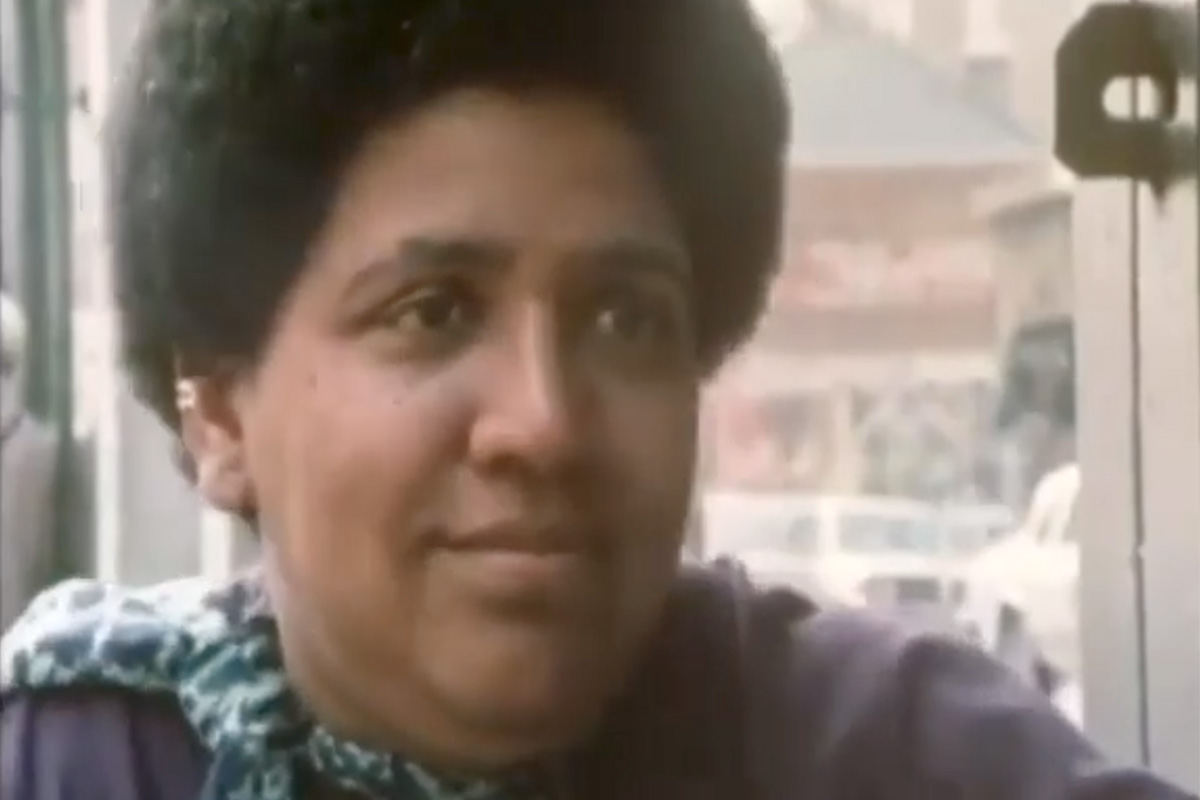
Sunday, April 26 is Lesbian Visibility Day. It concludes Lesbian Visibility Week that started this past Monday. Originally founded back in 2008 by the National Coalition for LGBT Health — and separately by a group of American lesbian activists who ran a social media campaign called “I am a Lesbian” that same year — Lesbian Visibility Day fights lesbophobia, or hatred, discrimination, and violence toward lesbians, and the erasure of lesbians inside and outside of the LGBTQ community.
Amid the rise of anti-LGBTQ and reproductive healthcare legislation and court decisions, there has never been a better time to reflect on the intersectionality of fighting for queer people’s and women’s rights and recognizing the queer women who were integral in the feminist movement that made America what it is today.
From the very beginning, lesbians have been critical to American liberation movements. Lesbian and queer women were key leaders and organizers of the women’s suffrage movement, including Dr. Anna Howard Shaw, Jane Addams, Annie Tinker, Alice Dunbar-Nelson, Molly Dewson, and Sophonisba Breckinridge. Some of these women even lived in same-sex partnerships, known as “Boston marriages,” during a time when homosexuality was illegal.
Similarly, during the Second Wave Feminist movement, lesbians were key activists that fought to integrate issues of LGBTQ equality into the women’s movement.
Lesbian and queer organizers like Audre Lorde, Adrienne Rich, Barbara Smith, and Rita Mae Brown fought for intersectional activism, noting how sexism, racism, homophobia, and ableism intersect to keep women and other marginalized individuals down. But many of these lesbian activists faced backlash from the mainstream women’s movement, called a “lavender menace” that threatened the women’s movement’s progress.
Betty Friedan, then president of The National Organization for Women (NOW), first used this term in 1969 — ironically the same year as the Stonewall Riots — to refer to the danger that integrating lesbian issues into the mainstream women’s movement might pose to the success and timeliness of women’s rights. Friedan and other NOW members worried that intentionally including lesbians in NOW and its objectives would create the impression that the movement was full of misandrists and “a bunch of dykes.”
That same year, NOW removed the Daughters of Bilitis, the first American lesbian organization, from their list of sponsors for the First Congress to Unite Women in November 1969.
In response, a group of lesbian radical feminists reclaimed the term during their protest at the Second Congress to Unite Women in 1970. The group, called Radicalesbians, along with people from the Gay Liberation Front and other allied groups, burst into the Second Congress and demanded that NOW accept and intentionally include lesbians and queer women in the feminist movement. Lesbians, queer women, and allies lined the aisles of the auditorium holding signs and shouting “We are all lesbians” and “Lesbianism is a women’s liberation plot.”
As Karla Jay, another member of the Lavender Menace who stood up in the audience, said, “Yes, yes, sisters! I’m tired of being in the closet because of the women’s movement.”
Not only was this moment a critical challenge of the movement’s tendency to foreground white, straight women’s experiences and rights, and was applauded by feminists of color who routinely felt their voices remained unheard and experience unrepresented in the movement, but it also invited members of the feminist movement to confront their own lesbophobia. The rest of the Second Congress to Unite Women was replaced by workshops on issues lesbian women are facing and a dance hosted by the Gay Liberation Front at the Church of the Holy Apostles.
At the end of the conference, members of the Lavender Menaces shared the resolutions that they and NOW members developed in those two days of workshops to the leaders of NOW, and by 1971, NOW passed a resolution to support lesbians. However, Friedan did not acknowledge the critical contributions of lesbian women in the feminist movement until six years later at the 1977 National Women’s Conference.
Many have pointed out how Friedan and other feminists’ fear about and exclusion of lesbian and queer women in their movement is deeply connected to present opposition against including trans women in modern feminist circles. Often called TERFS or Trans-Exclusionary Radical Feminists, feminists prioritizing womanhood based solely on sex assigned at birth perpetuate the same gender policing of women’s spaces that Friedan and others did over 50 years earlier — this time, excluding not just trans women but also intersex women and denying how transphobia is a critical feminist issue. Black cis women are especially vulnerable to transphobic violence.
Never has it been clearer that women’s liberation is lesbians’ liberation is BIPOC women’s liberation is trans women’s liberation. In fact, the fourth and fifth wave feminist movements that first emerged in the early 2000s strive to re-center the movement on collective, intersectional action rather than individual empowerment. Some feminists have even joined the trans-led Gender Liberation Movement, founded by Raquel Willis and Eliel Cruz in 2024, that fights for bodily autonomy and pushes for organizing and policy that frees all people from gendered expectations.
Lesbophobia remains alive and well
Protecting lesbian, bisexual, and queer women’s rights has never been more timely because lesbophobia is not a thing of the past. Recent backlash to Netflix announcing that the next season of Bridgerton will feature a sapphic storyline makes it clear that lesbophobia is alive and well, even as stories featuring bisexual and gay men are receiving critical and fan praise. In fact, television shows featuring lesbian and queer women were significantly cut. In 2022, more than two-thirds of all cancelled LGBTQ shows featured queer women. Lesbophobia is alive and well sadly, along with the fetishization of lesbian and queer women online.
And just how Friedan and other NOW leaders’ fears around lesbians resonate with current TERF action against trans women, the “Lavender Scare” or systematic firing of LGBTQ employees during the McCarthy Era is making a comeback. Many of the people who were fired by the federal government during this time are still alive and have never been given an apology for how they were treated and discarded by the federal government.
The current administration’s attempts to terminate anyone working in Diversity, Equity, and Inclusion initiatives, disband LGBTQ employee resource groups, and earlier this month, requesting access to the medical records of millions of federal workers, retirees, and their family members, recall another history of excluding LGBTQ people.
As CNN reported earlier this month, a notice that was sent to insurers that offer Federal Employees Health Benefits of Postal Service Health Benefits plans this past December asks them to provide “service and cost data,” which the Office of Personnel Management (OPM) argues will be used to ensure “competitive, quality, and affordable plans.”
Michael Martinez, senior counsel at Democracy Forward, told CNN earlier this month that OPM has given no insight into how they would use and protect this information, and warns that it could be used to target people who have sought or had abortions or those who have had or are inquiring about gender affirming care, again tying together trans liberation with women’s liberation and the protection of bodily autonomy.
So as we celebrate Lesbian Visibility Week, it is critical to acknowledge how lesbian women calling for intersectionality (along with Black, Indigenous, and Latina women who have done this work for centuries), fundamentally changed the trajectory of the feminist movement —and how their call for intersectionality is still timely and important.
Emma Cieslik is a museum worker and public historian.

Diverse cast tackles ‘Aguardiente’ at GALA Hispanic Theatre

New books reveal style trends for a more enlightened century

Tennessee’s trans data bill a frightening omen

The queer appeal of ‘The Devil Wears Prada’

Lesbifriends Travel to host queer night out

European Parliament backs EU-wide conversion therapy ban

Rep. Sarah McBride reflects on first year in Congress amid political backlash

Baltimore Heritage wants Md. LGBTQ historical sites added to National Registry

Republicans attach five anti-LGBTQ riders to State Department funding bill

Rehoboth’s Blue Moon sold; new owners to preserve LGBTQ legacy
-

 European Union4 days ago
European Parliament backs EU-wide conversion therapy ban
-
Delaware5 days ago
Rep. Sarah McBride reflects on first year in Congress amid political backlash
-
Maryland5 days ago
Baltimore Heritage wants Md. LGBTQ historical sites added to National Registry
-
Federal Government2 days ago
Republicans attach five anti-LGBTQ riders to State Department funding bill