Philippines
Filipino HIV/AIDS group questions US, Philippines health agreement
Country’s epidemic disproportionately impacts MSM, trans people
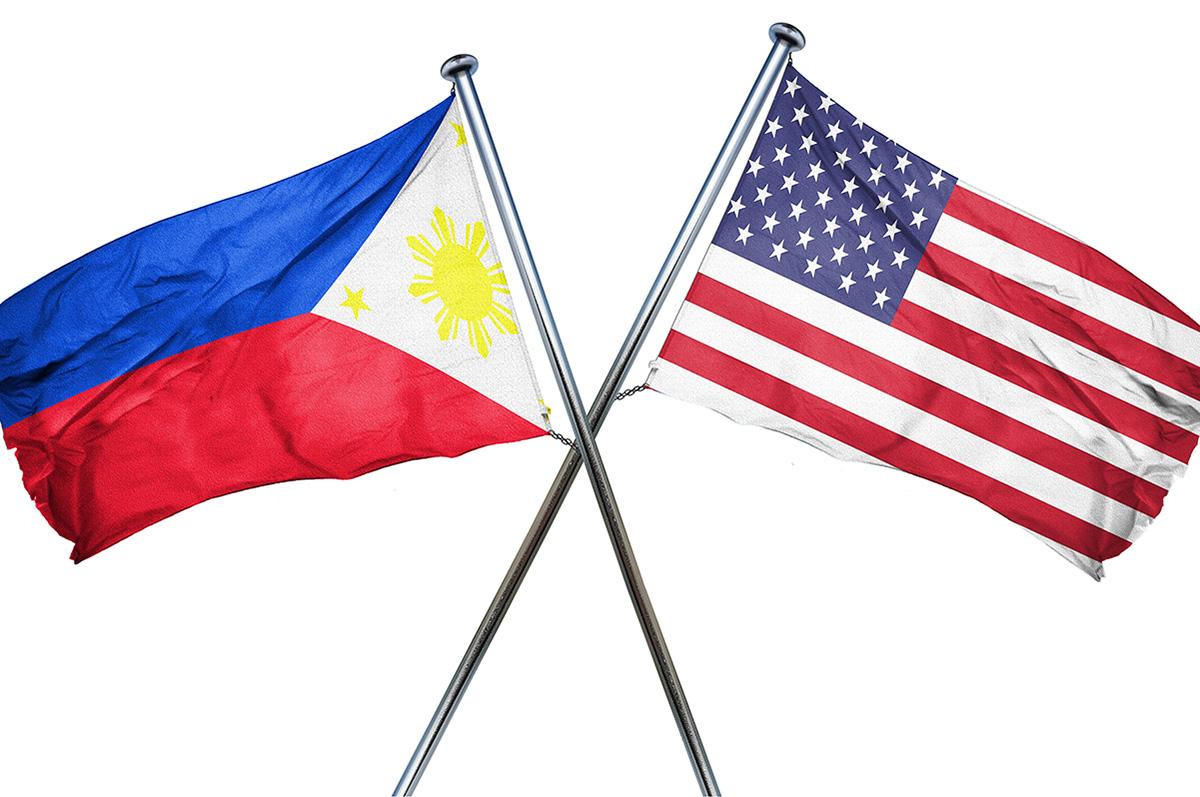
A new health agreement between the U.S. and the Philippines has raised questions among HIV/AIDS service providers.
A joint declaration signed by the U.S. and the Philippines on April 7 sets out a plan for closer health cooperation, aimed at transitioning the Philippines toward greater autonomy and “self-reliance” in its health systems, according to a State Department statement released.
In practice, “self-reliance” in health systems refers to a country’s ability to fund, manage, and deliver care without heavy dependence on external donors. In the Philippines, programs serving LGBTQ people — particularly those focused on HIV prevention, testing and treatment — have relied in part on international funding and technical support, including from the U.S., according to UNAIDS.
The Philippine Department of Health has led the national response to the pandemic.
The joint declaration of intent was signed under the Trump-Vance administration’s “America First Global Health Strategy.” The State Department said the agreement would involve co-funding of mutually agreed global health objectives under bilateral health cooperation between the U.S. and the Philippines in the near future.
The declaration also outlines areas of cooperation beyond financing: workforce development, health information systems, and emergency preparedness. The State Department said the framework is intended to strengthen coordination between U.S. and Philippine institutions while supporting the Philippines’ capacity to manage public health challenges independently over time. The statement does not specifically address LGBTQ health.
Similar agreements in other regions have drawn scrutiny from LGBTQ advocacy groups.
In Africa, community organizations have warned that a shift from donor-funded, community-led health programs to government-to-government frameworks could affect access for marginalized populations, including LGBTQ people. The Washington Blade found that such changes may reduce reliance on specialized clinics that have historically provided stigma-free care, raising concerns about discrimination, privacy, and continuity of services.
Desi Andrew Ching, president of HIV & AIDS Support House in the Philippines, said the partnership presents a significant opportunity, but added that, like any large-scale international agreement, its success for the LGBTQ community will depend on how it is implemented on the ground.
“On one hand, it’s a positive move. Increased cooperation on health systems can lead to better technical support and potentially more resources for HIV/AIDS prevention and mental health — areas that deeply impact our community,” Ching told the Blade. “If the government and civil society work closely together, we could see some real progress.”
Ching said community concerns often center on where those resources ultimately go. Ching added there is a risk funds could remain within “usual” government-aligned channels or traditional implementers that may not have the trust or reach of grassroots LGBTQ organizations.
The Philippines is facing one of the fastest-growing HIV epidemics in the Asia-Pacific region, with UNAIDS statistics indicating new infections increased by about 543 percent between 2010 and 2023.
The epidemic is concentrated among key populations, particularly men who have sex with men and transgender women who account for a vast majority of new infections. A 2023 analysis found that key populations represented about 92 percent of new HIV cases in the country, underscoring the disproportionate impact on LGBTQ communities. At the same time, stigma, limited access to testing and gaps in healthcare delivery continue to shape outcomes for these groups.
Ching said that for the partnership to be effective, support would need to be closely targeted to reach those most at risk, including individuals who often avoid government facilities because of stigma and fear of judgment.
“If the partnership prioritizes ‘community-led’ monitoring and direct support to local organizations, it will be a game-changer. If it stays at the top tier of administration, we might just see the same results as before,” Ching said.
Community-led organizations have been central to the Philippines’ HIV response, particularly in reaching LGBTQ populations often underserved by formal healthcare systems. UNAIDS notes groups such as LoveYourself have expanded testing and treatment access through community-based clinics and online outreach, including during the COVID-19 pandemic, when movement restrictions limited access to government facilities.
“To be honest, in these high-level agreements, ‘guarantees’ are hard to come by on paper. The real safeguards lie in the mechanics of implementation,” said Ching. “From the community’s perspective, we believe the best way to prevent services from being diluted is through direct involvement in the planning phase. We would like to see the funding groups and government stakeholders sitting at the same table as the community to game out the specific work plans. It should not be a top-down approach; it needs to be co-designed.”
Ching said oversight would be a critical layer of protection, adding that a dedicated point of contact, such as a U.S Agency for International Development technical lead or a similar monitor, would be needed to track how funds are used.
USAID officially shut down on July 1, 2025, after the Trump-Vance administration dismantled it.
Ching added community-led monitoring would also be necessary in addition to government oversight. He said safety and trust cannot be guaranteed by policy alone but must be built through experience, noting that community-led organizations have consistently reached the most marginalized populations.
“Safety and trust aren’t things you can just write into a policy; they have to be built through experience,” Ching said, adding that community-based sites are often seen as more accessible and safer because they are “for us, by us.”
He said the partnership should direct substantial support to grassroots organizations that have demonstrated an ability to overcome stigma, while strengthening coordination with government clinics. The most effective approach, he added, would combine government infrastructure with community-led delivery, allowing trusted local groups to serve as the primary point of access.
’We want a seat at the table’
According to a report by the World Health Organization on the Philippines, prevention efforts account for only about 6 percent of total HIV spending, despite a sharp rise in cases. The report said the gap has been compounded by a recent pause in U.S. funding, which has delayed the development and implementation of prevention programs and community-led responses.
Asked whether community-led LGBTQ organizations would be funded and included in implementation or sidelined under a government-led approach, Ching said that remained the central question for the community, adding that no detailed plan has yet been made public.
“But we have to be realistic about the politics — both within the government and even within civil society — that can sometimes slow things down,” said Ching. “A good baseline to look at is the UNAIDS 30-80-60 targets. These milestones are specifically designed to put community-led responses at the center of the HIV fight. If we’re being honest, as a country, we are still finding our footing in meeting those specific targets. There is a very real risk of being sidelined if the execution defaults to a standard ‘government-only’ approach.”
The UNAIDS set global targets to guide the HIV response, most notably the “95-95-95” goals for 2025.
The framework calls for 95 percent of people living with HIV to know their status, 95 percent of those diagnosed to receive sustained treatment and 95 percent of those on treatment to achieve viral suppression. The targets were designed to reduce transmission and improve health outcomes, while also highlighting gaps in access to testing, treatment, and prevention services.
“We view this new partnership with the U.S. as a chance to course-correct. If the intention is to end AIDS as a public health threat, the data shows it simply cannot be done without the community in the driver’s seat for service delivery,” said Ching. “Our hope is that the implementation isn’t just government-led, but government-enabled. We want a seat at the table not just for the sake of being there, but to ensure the resources are actually hitting the ground where they matter most. We’re looking for a partnership that honors those 2025 milestones by making community-led organizations formal, funded partners in this roadmap.”



Philippines
Philippines Supreme Court rules same-sex couples can co-own property
Advocacy group celebrated landmark decision
The Philippines Supreme Court in a landmark ruling said same-sex couples can co-own property under the country’s Family Code.
The Philippine News Agency on Tuesday notes the court issued its ruling in the case of two women who bought a house in Quezon City, a suburb of Manila, the Filipino capital, before they broke up.
The two women, according to the Philippine News Agency, “agreed to sell the property” after they ended their relationship, “and the registered owner — the respondent — signed a document acknowledging that the other partner paid for half of the purchase and renovations.” The Philippine News Agency notes “the registered owner” later “refused to sell the property and withdrew her earlier acknowledgment of co-ownership, prompting the other partner to file a complaint.”
A Regional Trial Court and the Philippines Court of Appeals ruled against the plaintiff.
The Supreme Court in a 14-page ruling it issued on Feb. 5 overturned the decisions. The Supreme Court published its decision on Tuesday.
“Considering that there is co-ownership between petitioner and respondent, then each co-owner may demand at any time the partition of the thing owned in common, insofar as her share is concerned,” said the Supreme Court in its ruling, according to the Philippine News Agency. “Having rightful interest over the subject property, petitioner has the right to demand the division of the subject property.”
The predominantly Catholic country’s Family Code defines marriage as “a special contract of permanent union between a man and a woman entered into in accordance with law for the establishment of conjugal and family life.” It also states in Article 148 that “in cases of cohabitation” outside of marriage, “only the properties acquired by both of the parties through their actual joint contribution of money, property, or industry shall be owned by them in common in proportion to their respective contributions.”
“In the absence of proof to the contrary, their contributions and corresponding shares are presumed to be equal,” it reads.
The BBC reported the Supreme Court ruling states this provision “applies to all forms of co-habitation,” regardless of the couple’s gender. A Supreme Court press release indicates the decision notes lawmakers and the Filipino government “must address same-sex couples’ rights, as courts alone cannot resolve all related policy concerns.”
“This court does not have the monopoly to assure the freedom and rights of homosexual couples,” it reads. “With the political, moral, and cultural questions that surround the issue concerning the rights of same-sex couples, political departments, especially the Congress must be involved to quest for solutions, which balance interests while maintaining fealty to fundamental freedoms.”
LGBT Pilipinas, a Filipino advocacy group, welcomed the ruling.
“This ruling marks a monumental step forward in the legal recognition of LGBTQ+ families and relationships in the country,” it said in a statement.
LGBT Pilipinas added the ruling “lays a crucial legal foundation for broader recognition of same-sex relationships and strengthens the push for comprehensive anti-discrimination protections.”
“This is a win not only for the LGBTQ+ community, but for fairness and justice in Philippine society as a whole,” said the group.
Asia
Asian Development Bank urged to uphold LGBTQ, intersex rights commitments
Activists met in the Philippine capital of Manila earlier this month
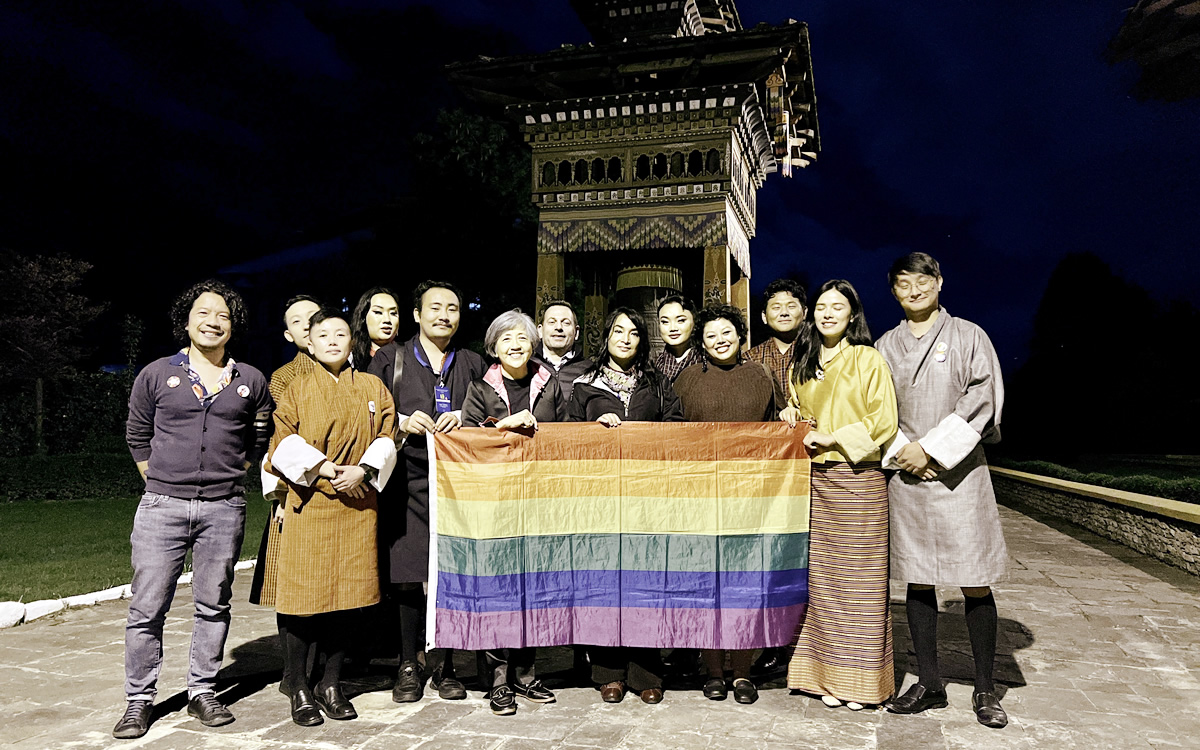
APCOM and the Asian Development Bank hosted the 3rd Asian Development Bank Learning Week in the Philippine capital of Manila from Sept. 8-9.
The meeting brought together LGBTQ and intersex activists, civil society organizations, and human rights defenders from Asia and the Pacific to engage with bank management on development that is LGBTQ and intersex-inclusive. The ASEAN SOGIE Caucus, ILGA Asia, Intersex Asia, and the Pacific Sexual and Gender Diversity Network co-organized the event.
The bank’s presence and collaboration, however, was noticeably absent.
Although invitations had been extended and initially accepted, all bank staff who were scheduled to speak at the sessions — including representatives from the ADB NGO and Civil Society Center — withdrew at the last minute.
“It’s really unfortunate that we have this situation, but we understand if there is some trepidation to engage with the LGBTQI community given the changing geopolitical context and a dismaying pushback on rights across the spectrum. The LGBTQI community will continue its advocacy to demand accountability from the ADB to include us in its quest for a prosperous, inclusive, resilient, and sustainable Asia and the Pacific. That promise should include the LGBTQI community,” said Bambang Prayudi, executive director of Perkumpulan Suara Kita, an LGBTQ rights organization based in Indonesia. “The lessons of the past have clearly demonstrated that exclusion ultimately undermines and harms individuals, communities, and entire nations both socially and economically.”
The activists shifted from the originally planned sessions with ADB staff to engaging directly with bank board members, voicing concerns the withdrawal reflected a backtracking by an institution that had increasingly been progressive on LGBTQ and intersex-inclusion and engagement with LGBTQ and intersex communities. The move also raised questions about the bank’s commitment to its Strategy 2030, which aims to sustain efforts to eradicate extreme poverty and promote an inclusive Asia and Pacific.
APCOM, however, highlighted the bank last year approved a new Environmental and Social Framework that, for the first time, explicitly includes sexual orientation and gender identity in its definition of disadvantaged and vulnerable groups. The policy is scheduled to take effect on Jan. 1, with rollout efforts underway, including capacity-building for bank management and staff.
APCOM noted that while the move represents a significant step forward for the bank, its true impact will depend on consistent implementation and sustained, genuine engagement with the LGBTQ and intersex community.
Activists said bank management in December 2024 approved the Operational Approach to Sexual and Gender Minorities Inclusion: A Roadmap for 2025–2030, aimed at creating an environment in which people of diverse sexual orientation, gender identity, gender expression and sex characteristics are not only accepted but fully empowered. APCOM noted in a press release the bank has since removed the document from its website without explanation.
The press release said the sudden removal has left many LGBTQ and intersex activists uncertain about next steps because they were not consulted. The website removal raises questions about how firmly the bank will carry its commitment forward.
APCOM said activists met with several bank board members and requested the ADB return the document to its website. The press release also highlighted disappointment the bank this year did not commemorate the International Day Against Homophobia, Biphobia and Transphobia — the ADB has marked IDAHOBiT since 2019.
“ADB needs to have continued dialogue with the LGBTQI community and hold regular meetings with us if it seeks to implement policies that claim to benefit us,” said APCOM Executive Director Midnight Poonkasetwattana. “They have to remember: Nothing about us, without us. They cannot enact SOGIESC-inclusive policies without involving the LGBTQI community.”
LGBTQ and intersex activists who traveled to Manila, meanwhile, are urging the bank to uphold accountability in its stated commitments.
“More than policies on paper, our constituencies seek meaningful inclusion — to be consulted, engaged, and heard in the design, implementation, and monitoring of initiatives that affect their lives,” said Poonkasetwattana. “We sincerely hope ADB, whose policies are so crucial in setting an example for its member states and other stakeholders to follow, will stand strong in these challenging times and uphold principles of equality and social justice for all.”
The Washington Blade in 2022 reported then-Ambassador Chantale Wong, who was the ADB’s U.S. director during the Biden-Harris administration, pushed for sexual orientation and gender identity to be included in the bank’s safeguards.
The bank, which is based in the Philippines, seeks to promote economic and social development across Asia and the Pacific. Wong was the first openly lesbian U.S. ambassador in the U.S.
Arts & Entertainment
Get swept away by ‘Sparks Camp,’ the Philippines’ first gay dating show
Landmark series creators discuss impact on LGBTQ representation in country
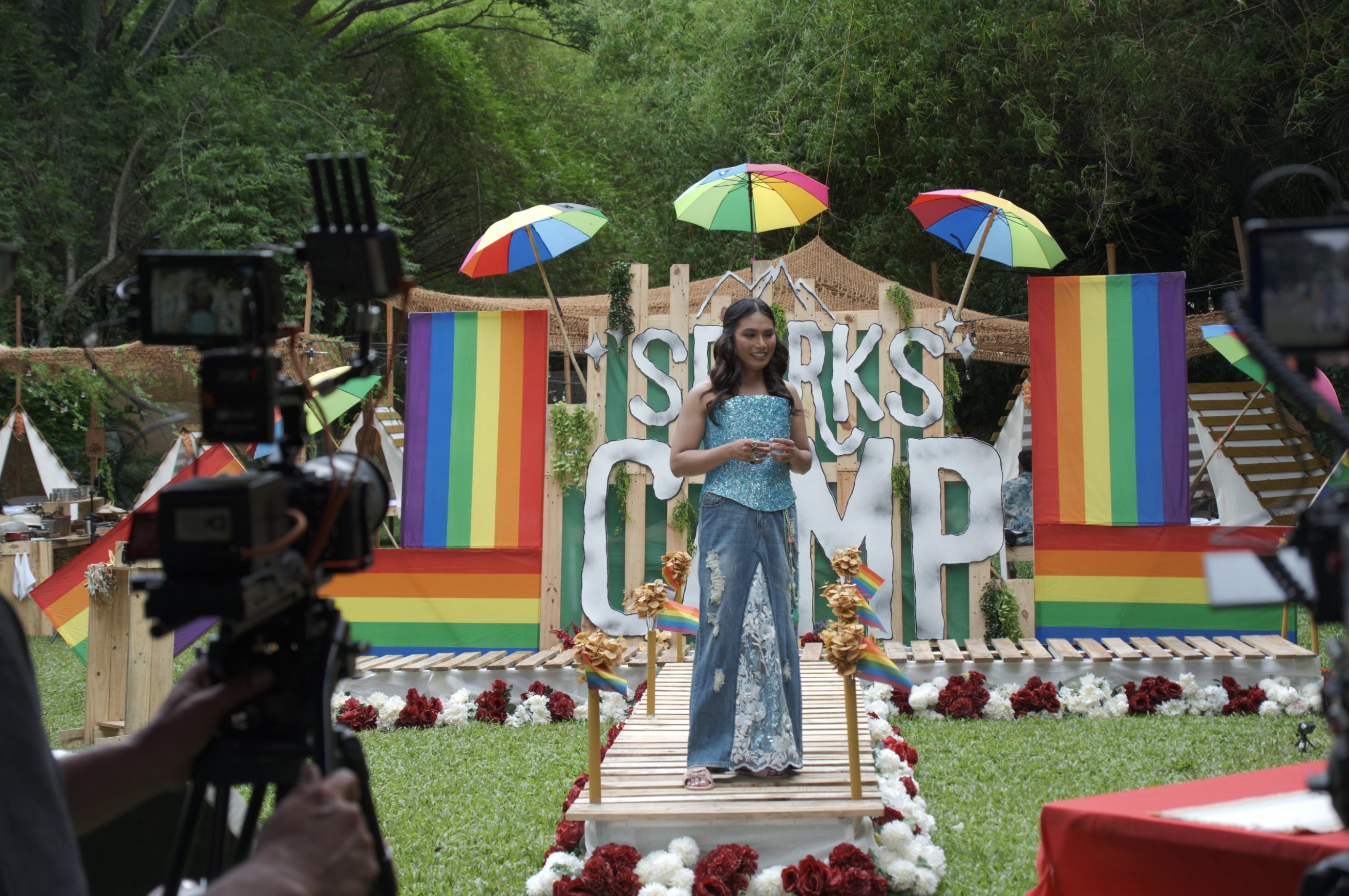
Whether it be iconic crashouts or jaw-dropping moments of drama, reality television has always had a tremendous impact on queer culture — but few shows have done as much in the fight for global liberation as “Sparks Camp.”
This series has awed since its premiere, with U.S. audiences discovering “Sparks Camp” when the first episode dropped for free on YouTube back in 2023. Focusing on a group of “Campers” who participate in romance-themed challenges while exchanging the titular “sparks of love,” the program made history as the Philippines’ first ever gay dating show. It was a landmark production for a country that still struggles with widespread prejudice against the LGBTQ community. Yet with each season comes increasing viewership and more people (both within the country and across the world) learning from the love on display and the many messages of queer self-acceptance featured in each episode. The Los Angeles Blade sat down with the cast and creatives behind this series as they wrap up their third season, with the “Sparks Camp” team breaking down what this groundbreaking show has done for LGBTQ representation in the Philippines — and how they plan to do even more going forward.
“The journey [to] “Sparks Camp” hasn’t been easy,” said Creative Head Hyro Aguinaldo, as he spoke to the Los Angeles Blade alongside Director Theodore Boborol. The pair detailed the many difficulties they faced in getting greenlit by ABS-CBN — one of the Phillipines’ biggest TV networks — and their fight against an entertainment industry that had never given LGBTQ stories the platform they deserve.
“Most queer individuals here in the Philippines are tolerated, but not accepted,” explained Boborol. “Queer people are usually only relegated to [comic relief], never [portrayed] in any serious way … and that includes, of course, reality shows.”
He describes how impossible it once seemed that they’d actually get to create the program and, now that they’re wrapping up its third season, how heartwarming it’s been to see LGBTQ audiences fall in love with the project. It’s not always a great experience, as the series has been the victim of countless discriminatory attacks online. But it’s undeniable that “Sparks Camp” has become one of the most educational, authentic portrayals of what it truly means to be LGBTQ in the Philippines today … but what is it like to actually be on the show?
While reality series can skyrocket contestants to internet fame, none elevate their cast to international icon status like “Sparks Camp” does for its ensemble. Season 3 stars Andrew, Kim, and Edward spoke about how thrilling it felt to have their attempts at romance get filmed on camera, with Kim saying, “Being there in the camp with nine other strangers, where I have to be as vulnerable as I can!? It was very challenging!” From half-naked mud wrestling tournaments to discussions about healing from trauma, the experience is intense enough on its own, yet it wasn’t until their installment began airing that the men realized just how influential these moments would be in the Philippines’ ongoing fight for queer rights. These were narratives that the heterosexual members of their audience (a demographic that has steadily increased since season one) weren’t used to, with Andrew detailing, “One of the reasons why a lot of people are unaware [about LGBTQ issues] is because we’ve been restricted from talking about these very normal topics.” They all explained how mainstream Filipino culture often discourages discussions about sexual safety and LGBTQ romance, meaning not only are people disallowed from learning about these identities, but young queer folk aren’t able to see themselves represented onscreen.
“Moving forward,” said Edward. “I want queer boys and girls to see their stories reflected in ours.”
Representing your community on such a large scale can be daunting, but these campers take pride in using every scene to show their audience what it means to be gay in the Philippines today. It’s a heavy responsibility for many, but luckily, this show is hosted by someone who truly knows what it means to fight for your found family: “Mother Sparker” herself, Mela Habijan.
When she isn’t advocating for transgender rights or winning international pageants, Habijan acts as the host of “Sparks Camp,” moderating the series and imbuing each episode with her unique brand of self-love. It’s a role she does not take lightly, emphasizing, “Whenever I spend time with [the campers], there’s an assurance that their stories are safe, that this isn’t just a mere reality show about finding love — it’s [a space] for them to find value in themselves.”
It’s an assurance that shows through the screen; whether it’s witty banter at challenges or reminding Campers to love themselves above all else, she brings a level of care to her role unusual for your typical reality host. She describes how this kind of openness is sadly missing in the Philippines, with the country’s deep roots in Catholicism meaning anti-LGBTQ discrimination is the norm in many areas and that there are few laws safeguarding queer rights. It’s because of this that she recognizes just what a huge impact “Sparks Camp” has on their local communities, saying, “I take pride in being ‘Mother Sparker’ because once a young trans person [watches the show], they can say: my future can be in front of the camera.” Habijan, who’d spent her entire career fighting to make easier pathways for other trans artists, emphasized how essential it is for people to see her and her campers being their truest selves onscreen. “The future is bright for [young people], because if they see more and more people who reflect [their] same experiences, then they’ll gain the courage [they need].”
“Sparks Camp” stands out not only for its historical impact, but because it does something that few reality shows are able to: it offers an amazing show, with an even better message. As each of the team expressed in their interviews with the Blade, this program and the few others like it are bringing LGBTQ stories to the Philippines like the country has never seen before. It’s helping to not only start vital conversations surrounding the respect and rights of queer communities, but fosters a kind of inclusive, love-filled influence that any viewer, no matter what country they’re watching from, can benefit from. In the last few moments of her interview, Mela Habijan perfectly encapsulated the core of what “Sparks Camp” is truly about.
“The value of their being queer … that’s what matters most. When you create and enrich the love that [the Campers] have within [them] — even if they don’t find the spark at the end of the series — they will end their journey at ‘Sparks Camp’ with so much pride in themself.”
It’s a pride that LGBTQ people worldwide can use now more than ever, and luckily for all, it’s a pride that anyone can watch three seasons of for free online right now.

Bet Mishpachah participates in D.C. Oct. 7 commemoration ceremony

Man charged in Mall of America shooting plot inspired by Pulse massacre: report

Bar Betsie, inviting and intimate, marks one-year anniversary

Trump, Netanyahu, and Putin are all war criminals

Center Arts Gallery celebrates 10 years with reception, auction

Eliot Glazer’s new book an engaging collection of essays

Equality Chamber hosts Pride in Business Expo and Profits & Pours

Learn more about Virginia’s queer history

The financial realities facing LGBTQ+ first-time buyers

PHOTOS: Winchester Pride
-

 Books4 days ago
Eliot Glazer’s new book an engaging collection of essays
-
Out & About5 days ago
Equality Chamber hosts Pride in Business Expo and Profits & Pours
-
Out & About5 days ago
Learn more about Virginia’s queer history
-
Real Estate4 days ago
The financial realities facing LGBTQ+ first-time buyers