Asia
Asian Development Bank urged to uphold LGBTQ, intersex rights commitments
Activists met in the Philippine capital of Manila earlier this month
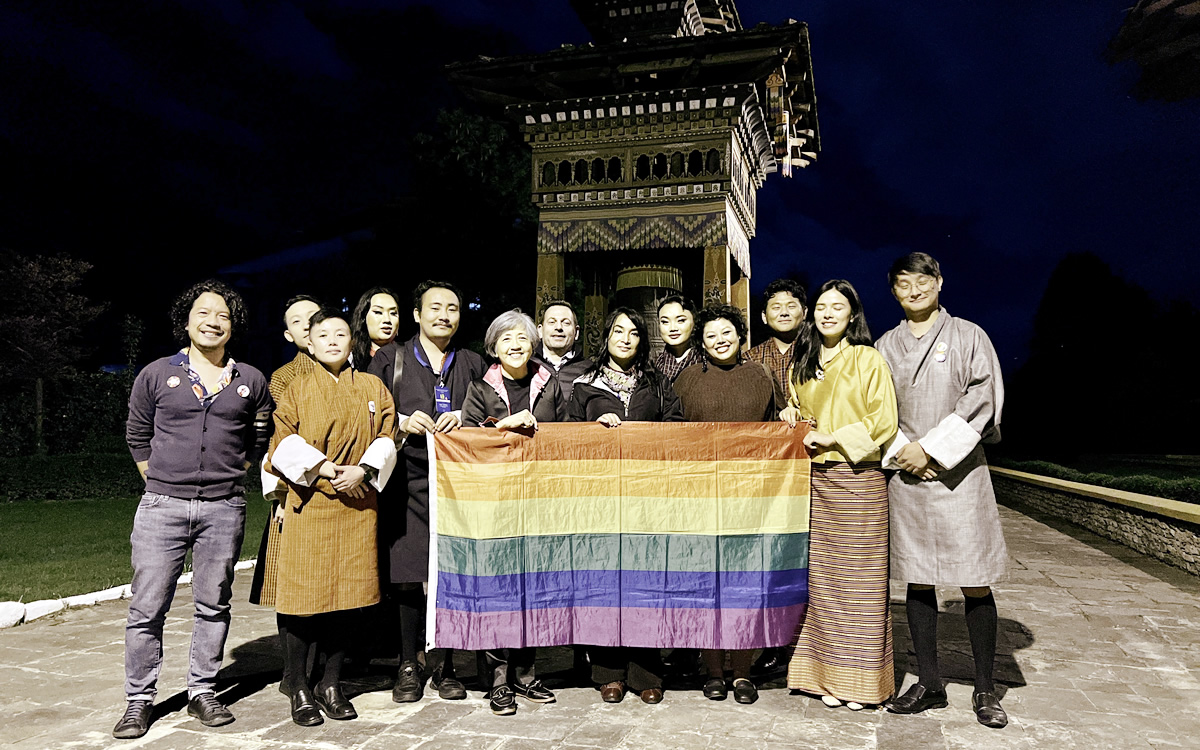
APCOM and the Asian Development Bank hosted the 3rd Asian Development Bank Learning Week in the Philippine capital of Manila from Sept. 8-9.
The meeting brought together LGBTQ and intersex activists, civil society organizations, and human rights defenders from Asia and the Pacific to engage with bank management on development that is LGBTQ and intersex-inclusive. The ASEAN SOGIE Caucus, ILGA Asia, Intersex Asia, and the Pacific Sexual and Gender Diversity Network co-organized the event.
The bank’s presence and collaboration, however, was noticeably absent.
Although invitations had been extended and initially accepted, all bank staff who were scheduled to speak at the sessions — including representatives from the ADB NGO and Civil Society Center — withdrew at the last minute.
“It’s really unfortunate that we have this situation, but we understand if there is some trepidation to engage with the LGBTQI community given the changing geopolitical context and a dismaying pushback on rights across the spectrum. The LGBTQI community will continue its advocacy to demand accountability from the ADB to include us in its quest for a prosperous, inclusive, resilient, and sustainable Asia and the Pacific. That promise should include the LGBTQI community,” said Bambang Prayudi, executive director of Perkumpulan Suara Kita, an LGBTQ rights organization based in Indonesia. “The lessons of the past have clearly demonstrated that exclusion ultimately undermines and harms individuals, communities, and entire nations both socially and economically.”
The activists shifted from the originally planned sessions with ADB staff to engaging directly with bank board members, voicing concerns the withdrawal reflected a backtracking by an institution that had increasingly been progressive on LGBTQ and intersex-inclusion and engagement with LGBTQ and intersex communities. The move also raised questions about the bank’s commitment to its Strategy 2030, which aims to sustain efforts to eradicate extreme poverty and promote an inclusive Asia and Pacific.
APCOM, however, highlighted the bank last year approved a new Environmental and Social Framework that, for the first time, explicitly includes sexual orientation and gender identity in its definition of disadvantaged and vulnerable groups. The policy is scheduled to take effect on Jan. 1, with rollout efforts underway, including capacity-building for bank management and staff.
APCOM noted that while the move represents a significant step forward for the bank, its true impact will depend on consistent implementation and sustained, genuine engagement with the LGBTQ and intersex community.
Activists said bank management in December 2024 approved the Operational Approach to Sexual and Gender Minorities Inclusion: A Roadmap for 2025–2030, aimed at creating an environment in which people of diverse sexual orientation, gender identity, gender expression and sex characteristics are not only accepted but fully empowered. APCOM noted in a press release the bank has since removed the document from its website without explanation.
The press release said the sudden removal has left many LGBTQ and intersex activists uncertain about next steps because they were not consulted. The website removal raises questions about how firmly the bank will carry its commitment forward.
APCOM said activists met with several bank board members and requested the ADB return the document to its website. The press release also highlighted disappointment the bank this year did not commemorate the International Day Against Homophobia, Biphobia and Transphobia — the ADB has marked IDAHOBiT since 2019.
“ADB needs to have continued dialogue with the LGBTQI community and hold regular meetings with us if it seeks to implement policies that claim to benefit us,” said APCOM Executive Director Midnight Poonkasetwattana. “They have to remember: Nothing about us, without us. They cannot enact SOGIESC-inclusive policies without involving the LGBTQI community.”
LGBTQ and intersex activists who traveled to Manila, meanwhile, are urging the bank to uphold accountability in its stated commitments.
“More than policies on paper, our constituencies seek meaningful inclusion — to be consulted, engaged, and heard in the design, implementation, and monitoring of initiatives that affect their lives,” said Poonkasetwattana. “We sincerely hope ADB, whose policies are so crucial in setting an example for its member states and other stakeholders to follow, will stand strong in these challenging times and uphold principles of equality and social justice for all.”
The Washington Blade in 2022 reported then-Ambassador Chantale Wong, who was the ADB’s U.S. director during the Biden-Harris administration, pushed for sexual orientation and gender identity to be included in the bank’s safeguards.
The bank, which is based in the Philippines, seeks to promote economic and social development across Asia and the Pacific. Wong was the first openly lesbian U.S. ambassador in the U.S.
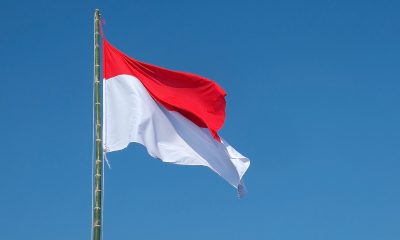




Indonesia
Indonesia’s top Muslim clerical body proposes criminalizing LGBTQ people, advocacy
Proposal underscores increased pressure against community
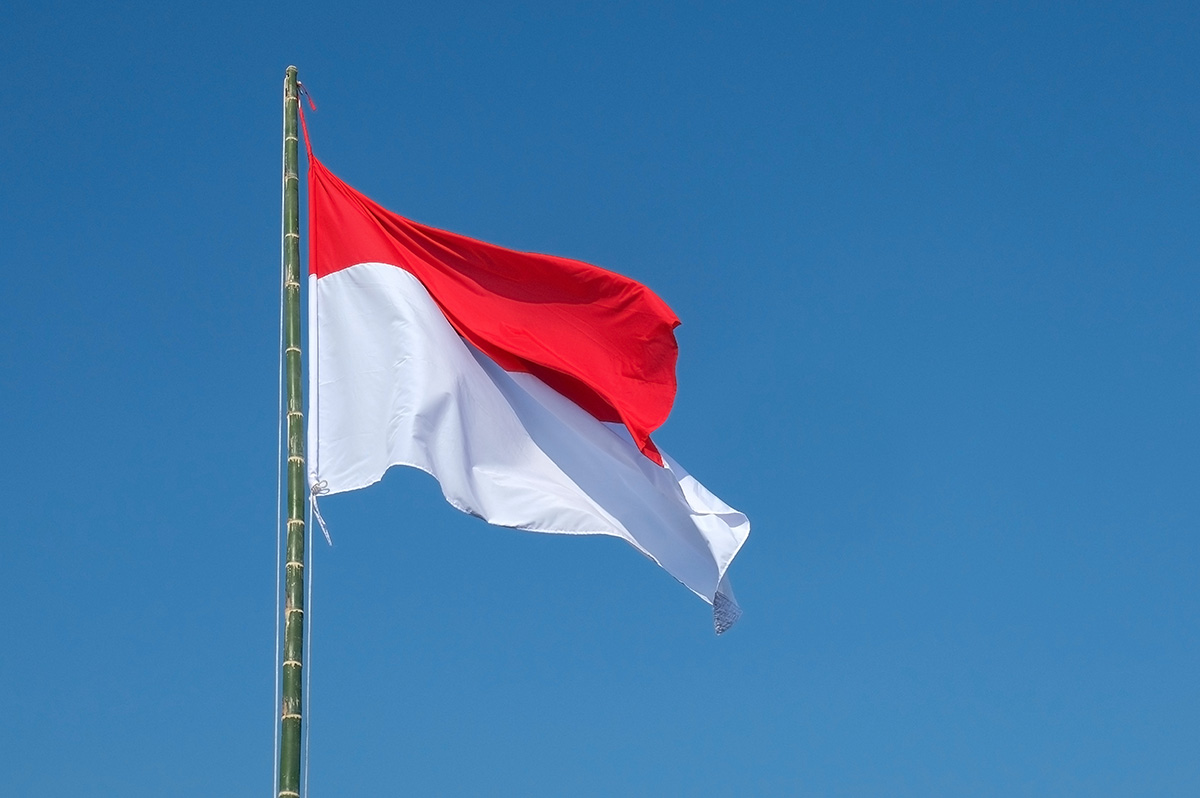
Indonesia’s top Muslim clerical body has proposed replacing the term “LGBT” with “LGSP,” grouping lesbian and gay people with sodomy and sexual abuse, as it prepares a proposed law that would criminalize conduct and advocacy it consideres prohibited.
Asrorun Niam Sholeh, head of the Indonesian Ulema Council’s Fatwa Commission, announced the proposal in Jakarta in late July, saying the council was preparing an academic paper and draft bill to submit to the government and MPs
The council in August also warned men against wearing women’s clothing during Independence Day festivities, despite a long-standing tradition in some Indonesian communities of men dressing in dresses and hijabs to play football as part of the annual celebrations. In a statement issued Aug. 7, the Fatwa Commission said such cross-dressing was “haram,” or forbidden under Islamic law, and linked the practice to what it described as a covert campaign by the “Lesbian, Gay, Sodomy and Obscenity (or LGSP) movement.
Indonesia on Aug. 17 marks its 1945 declaration of independence from the Netherlands with flag ceremonies, neighborhood gatherings, and a lively tradition of community competitions known as “lomba tujuhbelasan.” Children and adults take part in games ranging from sack races and cracker-eating contests to tug-of-war and “panjat pinang” — teams climb a greased pole to reach prizes at the top. Some communities also hold football matches in sarongs or “daster,” a loose-fitting house dress traditionally associated with women, turning the celebrations into an occasion for communal play and laughter.
The pressure extends beyond religious authorities.
In a report published in July, Human Rights Watch said attacks against LGBTQ university students had escalated during June’s Pride Month, while at least 10 public universities had recently adopted discriminatory regulations and curbed student media coverage and social media discussions about gender and sexual diversity. The rights group said the measures undermine freedom of expression and academic freedom.
Reacting to Pride Month celebrations, the Ulema Council called for “sexual deviation” to carry criminal penalties heavier than those for adultery and said it was preparing a draft law to criminalize LGBTQ conduct and campaigning.
President Prabowo Subianto in October 2025 signed Presidential Regulation No. 111 of 2025, which sets Indonesia’s General National Defense Policy for 2025–2029 and classifies the spread of LGBTQ culture as a non-military threat to the state. The provision places it among other perceived threats that include terrorism, radicalism, separatism, and the spread of prohibited ideologies.
The regulation drew public attention in July after Indonesian media reported on the provision, prompting Amnesty International Indonesia Executive Director Usman Hamid to warn that it could institutionalize discrimination against LGBTQ people.
“Amnesty International Indonesia unequivocally condemns these attacks and intimidation by both state and non-state actors based on perceived sexual orientation or gender identity,” said Amnesty International Indonesia. “We urgently call upon the Indonesian government to repeal this regulation and uphold its constitutional mandates and the international human rights treaties it has ratified.”
Indonesia on Jan. 2 began enforcing a new national criminal code, replacing the Dutch-era penal code that had governed the country for more than eight decades.
MPs had approved the 345-page code in December 2022 after years of debate and public protests over provisions concerning morality, religion, and individual rights. Among its new provisions is Article 411, which makes sexual intercourse outside marriage a criminal offense punishable by up to one year in prison.
Article 412 makes living together as husband and wife outside a legally recognized marriage punishable by up to six months in prison. The offenses can be prosecuted only after a complaint by a spouse, parent or child, but rights groups have warned that the provisions can disproportionately affect same-sex couples, whose relationships are not legally recognized in Indonesia.
Purba Widnyana, chairman of GAYa Nusantara, an Indonesian LGBTQ rights organization, told the Washington Blade that the situation for LGBTQ people in Indonesia has become increasingly worrying.
Widnyana told the Blade that the concern extends beyond increasing violence, pointing to stronger anti-LGBTQ sentiment in public spaces, on social media and within educational institutions, as well as in politics, including Presidential Regulation No. 111 of 2025.
“The impact is not always in the form of physical violence. Many LGBT+ people, especially trans women, that mostly work in entertainment or other informal jobs, beginning to lose job opportunities because they are considered to pose a ‘risk’ to the event organizers,” Widnyana said. “There are also concerns that the rising stigma and fear could deter people from accessing health services, including HIV test and STI, due to the fear that their identity or sexual orientation might be revealed.”
Widnyana said the changing environment has placed an additional burden on LGBTQ organizations; making spaces for gatherings, educational activities, and public information campaigns increasingly sensitive.
“We are constantly in alert mode,” he said, adding that since the previous wave of anti-LGBTQ sentiment in 2016, organizations have developed security and risk-mitigation plans before holding events. Previously, he said, the primary concerns were physical attacks, raids and threats that could force venues to cancel events. Now, organizations also have to account for online attacks, including WhatsApp hijacking and social media account hacking, as well as the possibility of an event or organization being targeted after going viral.
“It’s been limiting our movements,” he said.
Asked about the proposed LGSP framework and its decision to replace the term LGBTQ with a classification combining sexual orientation with sexual conduct, Widnyana said the council was conflating fundamentally different concepts.
“I really don’t know where to begin. They are definitely confused by mixing identities, in this case sexual orientation, with sexual behavior and actions that are understood as violations or offenses, that are sodomy and sexual indecencies,” he said.
Widnyana said the change should not be viewed as merely a change in terminology.
“The change shifts how Indonesians understand or perceive LGBT+ issues, moving from identities, rights and existence to behavior, morality, and criminality,” he told the Blade. “We also see it in the context of narrative that has been for so long evolving that frames LGBT+ as the ‘product of the West’ or ‘Western propaganda’,” he said. “In this framework, LGSP can be interpreted as their effort in rejecting how LGBT+ people define themselves and changing it with a category that is defined by those who oppose the existence of LGBT+ people.”
Widnyana also pointed to Indonesia’s long history of diverse gender identities and expressions, citing traditions such as the “bissu,” “calalai,” “calabai,” and “waria,” as well as artistic traditions in which men perform female characters. He cautioned against imposing modern LGBTQ categories on those traditions, but said gender and sexual diversity are not foreign to Indonesian history.
Widnyana said his main concern was the lack of clarity around terms such as “campaigning,” “promoting,” and “spreading LGBT+ culture,” which he said could be interpreted broadly enough to affect legitimate work in education, health care, human rights, and community services. He cited HIV and sexual health information, legal assistance for victims of violence, discrimination research, training on sexual orientation, gender identity and expression, and sex characteristics, and academic discussion as examples. Widnyana also questioned whether a gay man publicly saying he is gay and demanding to live safely, or a transgender woman speaking about discrimination she has experienced, could be deemed “campaigning” or “spreading LGBT+ culture.” Such legislation, he warned, could turn existing social stigma into a tool for systematically limiting the lives, expression, services and LGBTQ organizations.
“For me, the situation is becoming more difficult. And I think we need to look beyond just what the law says. Because sometimes, when we talk about Indonesia, people say, ‘Well, being LGBTQ+ is not generally criminalized under the national criminal law,’” said Arisdo, outreach representative of Pelangi Nusantara, an LGBTQ community group in Indonesia advocating for love, equality, and the right to live with dignity. “technically, that’s an important distinction. But that’s not really what people on the ground are experiencing. What we’re seeing is more pressure. More harassment. More public shaming. More people being targeted simply because they are perceived to be LGBTQ+.”
Arisdo told the Blade that transgender women are facing escalating violence, citing Pelangi Nusantara’s documentation of 10 attacks in Bogor between March and July 2026 involving 45 victim-survivors. He said the emergence of “Boti Hunter” groups was particularly alarming, reflecting a shift from anti-LGBTQ rhetoric toward actively targeting people. He added that fear of being outed or attacked prevents many victims from reporting violence, while doxxing and online harassment are increasingly forcing LGBTQ organizations to limit their visibility.
India
Proposed Indian foreign funding law overhaul could further pressure LGBTQ groups
Measure introduced in Parliament earlier this year
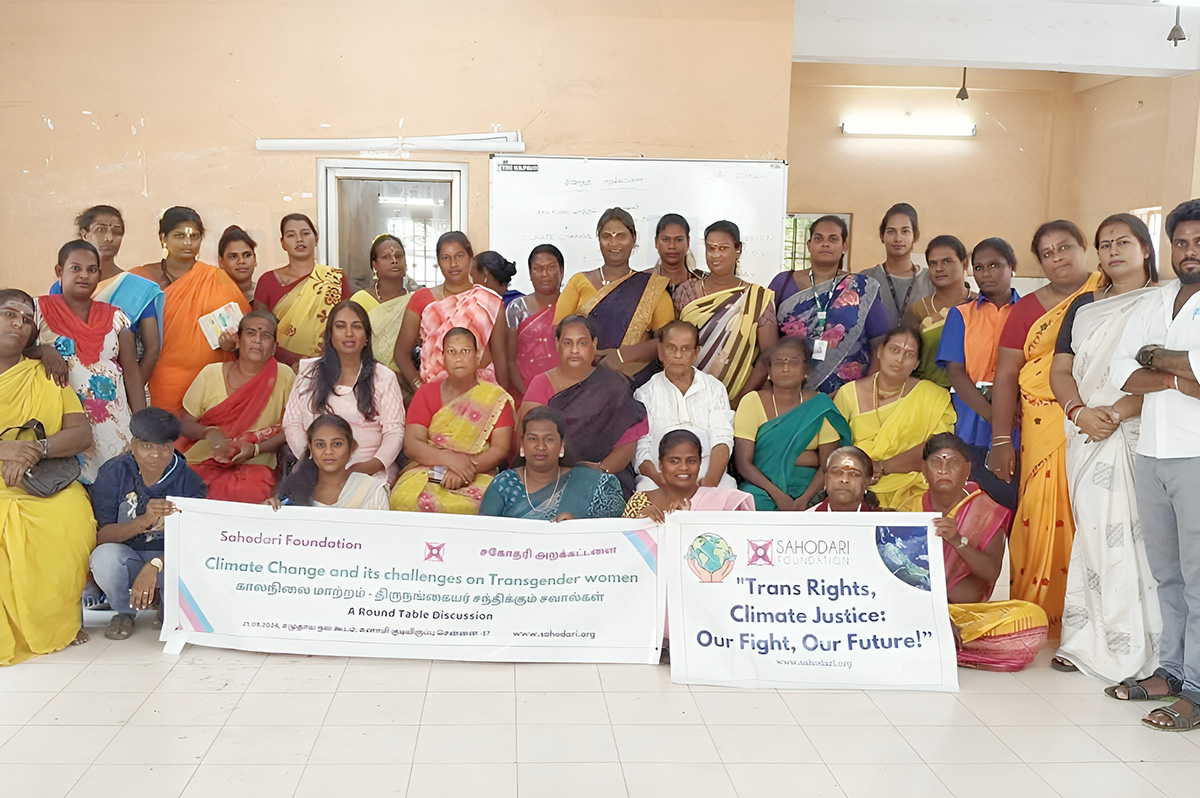
India’s proposed overhaul of its foreign funding law could put LGBTQ organizations that depend on overseas donations under new pressure.
Introduced in the Lok Sabha, the lower house of Parliament, on March 25, the Foreign Contribution (Regulation) Amendment Bill, 2026, or FCRA, would give a government-designated authority control over foreign funds, and assets when an organization loses or surrenders its registration.
The Foreign Contribution (Regulation) Amendment Bill returned to the spotlight this month as the Indian government prepared to seek its passage during Parliament’s Monsoon Session; drawing fierce opposition from political parties, civil society groups and religious organizations.
The government says the bill is intended to address gaps in the management of foreign funds and assets when an organization’s FCRA registration is cancelled, surrendered, or expires. The Foreign Contribution (Regulation) Amendment Bill, 2026, would create a Designated Authority to oversee the vesting, supervision, management, and disposal of foreign contributions and assets when an organization’s FCRA registration is cancelled, surrendered , or ceases. If a vested asset is a place of worship, the authority would be required to preserve its religious character. The FCRA would also reduce the maximum prison term for violating the law from five years to one year.
The changes could also make it difficult for organizations to leave the FCRA regime without surrendering assets created with foreign funds. Under the bill, an organization would have to keep renewing its FCRA certificate to retain those assets. FCRA rules also impose spending requirements on organizations seeking to maintain their certificates.
The bill may also create a distinction between assets created by organizations with FCRA registration and those created through the separate prior-permission route.
More significantly, neither the existing law nor the bill provides an appeal mechanism when the central government refuses to renew an FCRA certificate. They also do not expressly require the organization to be given an opportunity to be heard before renewal is denied. Under the proposed framework, such a denial could trigger the vesting of the organization’s foreign-funded assets in the Designated Authority.
The bill would also widen the circle of people who could face consequences for an organization’s FCRA violations.
Its definition of “key functionary” extends beyond directors and office bearers to trustees, governing-body members, managing-committee members and others responsible for an organization’s affairs. Those functionaries could be held liable for offenses committed by the organization, unless they can show that they were unaware of the violation or had exercised due diligence to prevent it. The FCRA bill would also impose restrictions on dealing with foreign-funded assets during a suspension and leave several important operational details — including timelines and procedures for managing and returning assets — to rules that have yet to be prescribed.
Parliament on Aug 12 moved to refer the FCRA bill to a parliamentary committee for further scrutiny and wider consultations.
Minister of State for Home Nityanand Rai moved the motion in the Lok Sabha, to refer the bill to a committee comprising 21 members of the lower house and 10 members of the Rajya Sabha, Parliament’s upper house.
The Rajya Sabha subsequently approved the nomination of its 10 members to the committee. The panel is expected to submit its report by the last day of the first week of Parliament’s Winter Session.
The proposed changes could have significant implications for LGBTQ organizations that rely on the FCRA framework to receive foreign contributions. (The global LGBTQ and intersex rights movement since the Trump-Vance administration took office in 2025 has lost nearly $50 million in U.S. funding because of foreign aid cuts. One source with whom the Washington Blade spoke described the funding loss as a “catastrophe” for the global movement.)
While the government does not appear to have published an easily accessible, consolidated list of LGBTQ organizations receiving such funding, FCRA registration records and organizations’ financial disclosures indicate that foreign contributions have supported LGBTQ rights, healthcare, and community services in India.
K.C. Venugopal, general secretary of the opposition Indian National Congress, told reporters his party and other opposition parties would strongly protest the legislation if it were introduced in Parliament. He said the bill was aimed at targeting minorities and NGOs and vowed that the opposition would oppose its passage.
Venugopal called the proposed legislation “unconstitutional and anti-people.”
“If the Central Government thinks they can cook up and introduce the Foreign Contribution (Regulation) Amendment Bill within these two or three days, they should keep that wish to themselves,” he told reporters in Alappuzha, Kerala, on Aug. 9.
“Three provisions worry LGBTQ+ organizations like ours most directly,” said Souvik Saha, founder of People for Change and Jamshedpur Queer Circle. “First, the 2026 bill would let a government-appointed ‘Designated Authority’ take control of an organization’s foreign-funded assets— bank balances, equipments, sometimes even property— the moment its FCRA registration is cancelled, surrendered, or simply not renewed, and this happens through an administrative process, without prior judicial adjudication. For a small community organization, that means losing everything we have built — case files, shelter infrastructure, helpline equipment — almost overnight, with no court hearing first.”
Saha told the Blade the revised FCRA Rules announced in June introduced a minimum spending threshold: organizations must spend at least $10,449 in foreign contributions over two financial years or risk cancellation and non-renewal of their registration.
“This specifically penalizes small and grassroots groups that deliberately keep their foreign funding modest — which describes most LGBTQ organizations in India, including ours,” said Saha. “We are not running core-scale budgets; we are running helplines, safe spaces, and district-level outreach on modest grants.”
Saha told the Blade that the ban on sub-granting, carried over from the 2020 amendment, means larger, well-established rights organizations cannot pass foreign funds to smaller, unregistered LGBTQ collectives that could not obtain FCRA registration themselves. He said rights groups have long described the restriction as a near “death knell” for hundreds of small nongovernmental organizations that work collaboratively with larger organizations, adding that LGBTQ groups outside major metropolitan areas depend heavily on such funding arrangements.
“Domestic funding for LGBTQ work in India is still thin, CSR (Corporate Social Responsibility) money avoids us because we are seen as ‘controversial,’ and most Indian foundations would not touch gender-identity programming,” Saha said. “So foreign funding is not a convenience for organizations working with the transgender and LGBTQ community, it is often always funding.”
Netherlands
Thailand’s first openly gay senator attends World Pride in Amsterdam
Blade sat down with Pornchai Witayalerdpan on Aug. 7
Editor’s note: International News Editor Michael K. Lavers and Photo Editor Michael Key were on assignment in the Netherlands from July 28-Aug. 10.
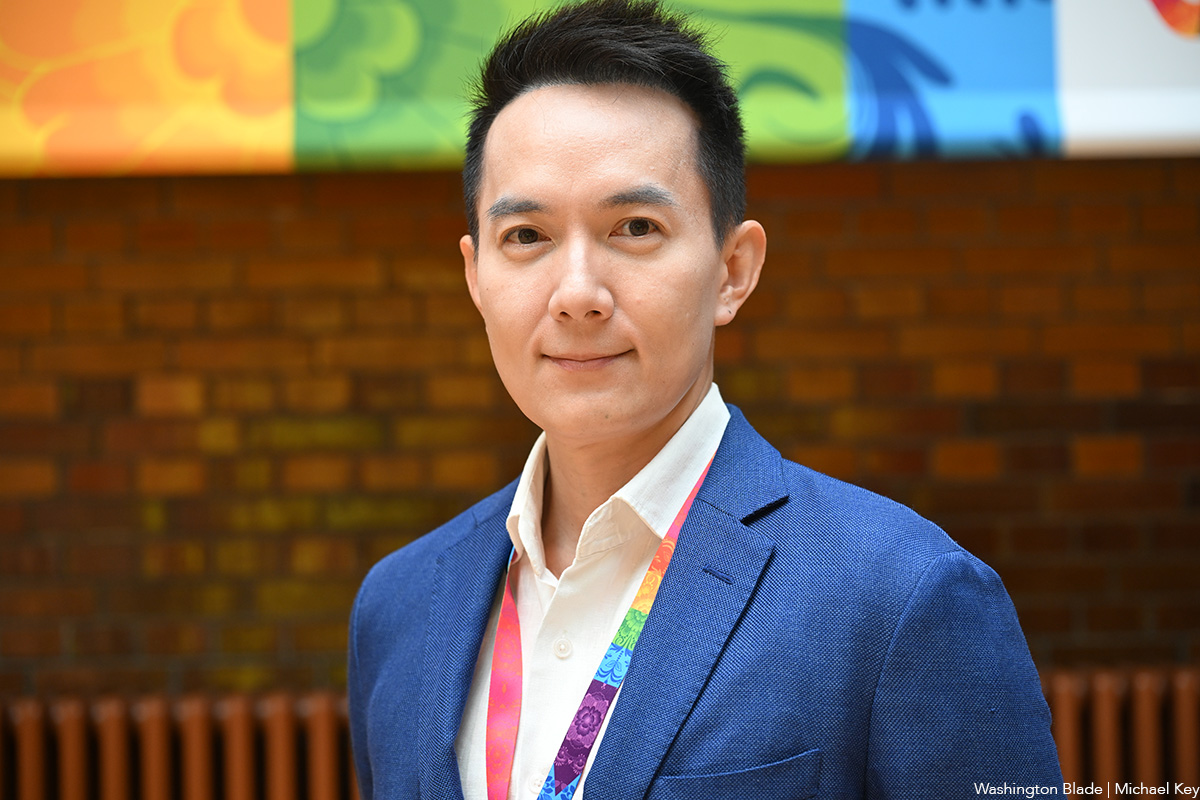
AMSTERDAM — The first openly gay man elected to the Thai Senate says the law that extended marriage rights to same-sex couples in Thailand has positively impacted his country’s global image.
“It totally changed how the world perceived Thailand,” Sen. Pornchai Witayalerdpan told the Washington Blade on Aug. 7 during an interview at the World Pride Human Rights Conference in Amsterdam.
Thailand on Jan. 23, 2025, became the first country in Southeast Asia to allow same-sex couples to legally marry.
The marriage equality bill received final legislative approval in June 2024 when the Senate approved it by a 152-130 vote margin. King Maha Vajiralongkorn signed it a few months later. Then-Prime Minister Prime Minister Paetongtarn Shinawatra is among those who supported the law.
Witayalerdpan was a freelance interpreter before he took office in July 2024.
The independent senator noted Thailand’s marriage equality movement began to gain traction with a lawsuit that the Foundation for Sexual Orientation and Gender Identity Rights and Justice, a Thai advocacy group, filed.
The Constitutional Court in 2021 upheld a law that defined marriage as between a man and a woman. MP Tunyawaj Kamolwongwat of the Move Forward Party later introduced the marriage equality bill that became law.
“It was a coalition of efforts between the civil society organizations, the LGBTQ organizations, and also the Pride movement in Thailand,” Witayalerdpan told the Blade.
Taiwan in 2019 became the first country in Asia to extend marriage rights to same-sex couples.
The Nepalese Supreme Court in June issued a landmark ruling that ordered the country’s government to guarantee full marriage rights to same-sex couples.
The Japanese Supreme Court in March said it will consider six marriage equality lawsuits that have been filed in the country. The Indian Supreme Court in 2023 ruled against marriage rights for same-sex couples. South Korea is among the other Asian countries in which marriage equality efforts are gaining momentum.
Witayalerdpan said Thailand’s marriage equality law could have a direct impact in Japan, which is the only G7 country that does not legally recognize same-sex couples.
“It’s been nothing but a positive effect (in Thailand) after the same-sex marriage law (took effect),” he said.
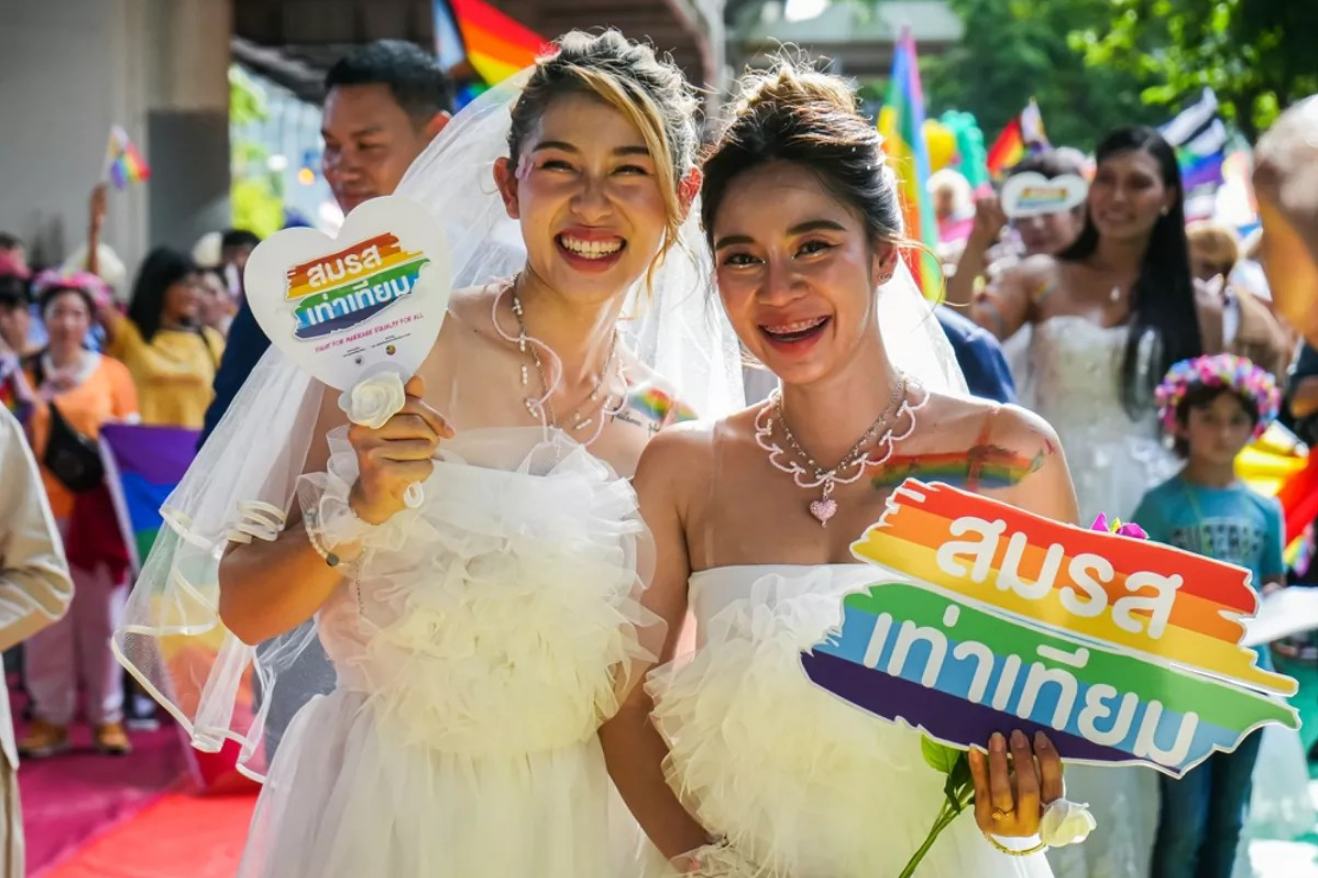
InterPride, the organization that coordinates World Pride events, has announced Bangkok and Barcelona, Spain, are the two finalists to host the biennial event in 2030. (World Pride took place in D.C. in 2025.)
Witayalerdpan told the Blade that World Pride in Bangkok would further improve Thailand’s global image. He also said his fellow lawmakers, in turn, should pass LGBTQ rights bills — including proposals that would allow transgender people to legally change their name and gender and enable same-sex couples to have children via surrogates from in vitro fertilization. Witayalerdpan noted the most important bill to him is one that would strengthen Thailand’s LGBTQ-inclusive nondiscrimination law that took effect in 2015.
Impact of US funding cuts has ‘been very hard’
Witayalerdpan also offered advice to activists in the U.S. and elsewhere around the world.
“Keep on pushing forward,” he told the Blade. “I know that it’s hard for activists in Thailand as well.”
Witayalerdpan acknowledged the loss of U.S. government funding since the Trump-Vance administration took office — which has forced advocacy groups in Asia and elsewhere around the world to close — has “been very hard.” Witayalerdpan noted the global LGBTQ and intersex rights movement in response to these cuts has turned to the European Union, the U.K., Canada, and the Netherlands to help fill the gap.
“It’s very good that these countries are providing more funds to the activists in Asia than before because of the Trump situation,” he told the Blade. “It can increase their soft power as well.”
Witayalerdpan said American activists should “wish for a positive result in the mid-term elections.”
“Then there is some resistance,” he added.
Witayalerdpan specifically highlighted efforts to fight against the Trump-Vance administration’s efforts to restrict gender-affirming healthcare.
A federal court in Massachusetts on Aug. 15 struck down a key provision of a U.S. Department of Health and Human Service rule that would have limited access to gender-affirming care under the Affordable Care Act. Maryland and California are two of the 21 states that sued the Trump-Vance administration over the issue.
“You have to show more resistance … to show that we are still here and we will push back when we can,” said Witayalerdpan.

Lula, Flávio Bolsonaro to face off in second round of Brazilian presidential election

The financial realities facing LGBTQ+ first-time buyers

‘Merrily’ is for Sondheim super fans, the uninitiated, and anyone in between

Engrossing ‘Tip Toe’ delivers tension and an ominous warning

Eliot Glazer’s new book an engaging collection of essays

Meet the LGBTQ candidates running for U.S. House, Senate

Ana Brnabić becomes world’s first openly lesbian head of state

Vote now! Best Of LGBTQ DC readers’ choice awards

Gay Va. couple hopeful voters will enshrine marriage equality in state constitution

Victory Fund board investigates former staffers’ allegations against CEO Evan Low
-

 2026 Midterm Elections5 days ago
Meet the LGBTQ candidates running for U.S. House, Senate
-
Serbia5 days ago
Ana Brnabić becomes world’s first openly lesbian head of state
-
Arts & Entertainment4 days ago
Vote now! Best Of LGBTQ DC readers’ choice awards
-
Virginia4 days ago
Gay Va. couple hopeful voters will enshrine marriage equality in state constitution