Indonesia
Indonesia’s top Muslim clerical body proposes criminalizing LGBTQ people, advocacy
Proposal underscores increased pressure against community
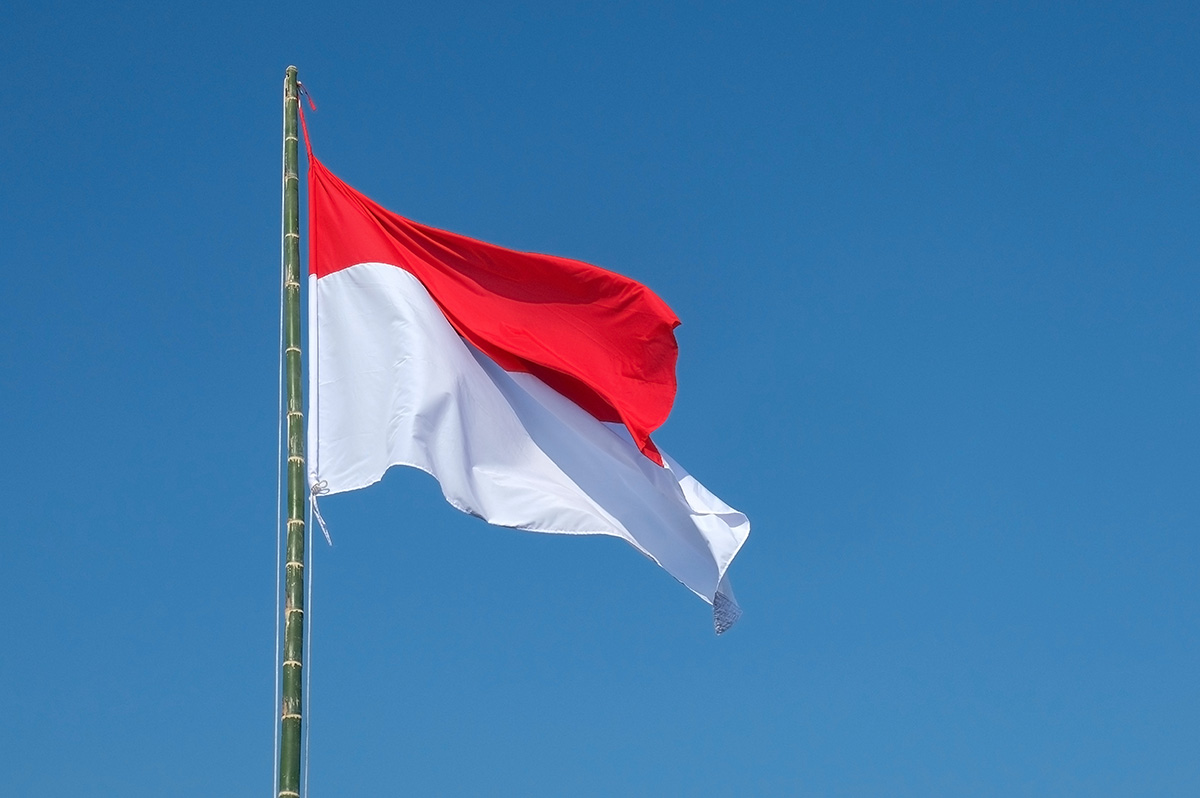
Indonesia’s top Muslim clerical body has proposed replacing the term “LGBT” with “LGSP,” grouping lesbian and gay people with sodomy and sexual abuse, as it prepares a proposed law that would criminalize conduct and advocacy it consideres prohibited.
Asrorun Niam Sholeh, head of the Indonesian Ulema Council’s Fatwa Commission, announced the proposal in Jakarta in late July, saying the council was preparing an academic paper and draft bill to submit to the government and MPs
The council in August also warned men against wearing women’s clothing during Independence Day festivities, despite a long-standing tradition in some Indonesian communities of men dressing in dresses and hijabs to play football as part of the annual celebrations. In a statement issued Aug. 7, the Fatwa Commission said such cross-dressing was “haram,” or forbidden under Islamic law, and linked the practice to what it described as a covert campaign by the “Lesbian, Gay, Sodomy and Obscenity (or LGSP) movement.
Indonesia on Aug. 17 marks its 1945 declaration of independence from the Netherlands with flag ceremonies, neighborhood gatherings, and a lively tradition of community competitions known as “lomba tujuhbelasan.” Children and adults take part in games ranging from sack races and cracker-eating contests to tug-of-war and “panjat pinang” — teams climb a greased pole to reach prizes at the top. Some communities also hold football matches in sarongs or “daster,” a loose-fitting house dress traditionally associated with women, turning the celebrations into an occasion for communal play and laughter.
The pressure extends beyond religious authorities.
In a report published in July, Human Rights Watch said attacks against LGBTQ university students had escalated during June’s Pride Month, while at least 10 public universities had recently adopted discriminatory regulations and curbed student media coverage and social media discussions about gender and sexual diversity. The rights group said the measures undermine freedom of expression and academic freedom.
Reacting to Pride Month celebrations, the Ulema Council called for “sexual deviation” to carry criminal penalties heavier than those for adultery and said it was preparing a draft law to criminalize LGBTQ conduct and campaigning.
President Prabowo Subianto in October 2025 signed Presidential Regulation No. 111 of 2025, which sets Indonesia’s General National Defense Policy for 2025–2029 and classifies the spread of LGBTQ culture as a non-military threat to the state. The provision places it among other perceived threats that include terrorism, radicalism, separatism, and the spread of prohibited ideologies.
The regulation drew public attention in July after Indonesian media reported on the provision, prompting Amnesty International Indonesia Executive Director Usman Hamid to warn that it could institutionalize discrimination against LGBTQ people.
“Amnesty International Indonesia unequivocally condemns these attacks and intimidation by both state and non-state actors based on perceived sexual orientation or gender identity,” said Amnesty International Indonesia. “We urgently call upon the Indonesian government to repeal this regulation and uphold its constitutional mandates and the international human rights treaties it has ratified.”
Indonesia on Jan. 2 began enforcing a new national criminal code, replacing the Dutch-era penal code that had governed the country for more than eight decades.
MPs had approved the 345-page code in December 2022 after years of debate and public protests over provisions concerning morality, religion, and individual rights. Among its new provisions is Article 411, which makes sexual intercourse outside marriage a criminal offense punishable by up to one year in prison.
Article 412 makes living together as husband and wife outside a legally recognized marriage punishable by up to six months in prison. The offenses can be prosecuted only after a complaint by a spouse, parent or child, but rights groups have warned that the provisions can disproportionately affect same-sex couples, whose relationships are not legally recognized in Indonesia.
Purba Widnyana, chairman of GAYa Nusantara, an Indonesian LGBTQ rights organization, told the Washington Blade that the situation for LGBTQ people in Indonesia has become increasingly worrying.
Widnyana told the Blade that the concern extends beyond increasing violence, pointing to stronger anti-LGBTQ sentiment in public spaces, on social media and within educational institutions, as well as in politics, including Presidential Regulation No. 111 of 2025.
“The impact is not always in the form of physical violence. Many LGBT+ people, especially trans women, that mostly work in entertainment or other informal jobs, beginning to lose job opportunities because they are considered to pose a ‘risk’ to the event organizers,” Widnyana said. “There are also concerns that the rising stigma and fear could deter people from accessing health services, including HIV test and STI, due to the fear that their identity or sexual orientation might be revealed.”
Widnyana said the changing environment has placed an additional burden on LGBTQ organizations; making spaces for gatherings, educational activities, and public information campaigns increasingly sensitive.
“We are constantly in alert mode,” he said, adding that since the previous wave of anti-LGBTQ sentiment in 2016, organizations have developed security and risk-mitigation plans before holding events. Previously, he said, the primary concerns were physical attacks, raids and threats that could force venues to cancel events. Now, organizations also have to account for online attacks, including WhatsApp hijacking and social media account hacking, as well as the possibility of an event or organization being targeted after going viral.
“It’s been limiting our movements,” he said.
Asked about the proposed LGSP framework and its decision to replace the term LGBTQ with a classification combining sexual orientation with sexual conduct, Widnyana said the council was conflating fundamentally different concepts.
“I really don’t know where to begin. They are definitely confused by mixing identities, in this case sexual orientation, with sexual behavior and actions that are understood as violations or offenses, that are sodomy and sexual indecencies,” he said.
Widnyana said the change should not be viewed as merely a change in terminology.
“The change shifts how Indonesians understand or perceive LGBT+ issues, moving from identities, rights and existence to behavior, morality, and criminality,” he told the Blade. “We also see it in the context of narrative that has been for so long evolving that frames LGBT+ as the ‘product of the West’ or ‘Western propaganda’,” he said. “In this framework, LGSP can be interpreted as their effort in rejecting how LGBT+ people define themselves and changing it with a category that is defined by those who oppose the existence of LGBT+ people.”
Widnyana also pointed to Indonesia’s long history of diverse gender identities and expressions, citing traditions such as the “bissu,” “calalai,” “calabai,” and “waria,” as well as artistic traditions in which men perform female characters. He cautioned against imposing modern LGBTQ categories on those traditions, but said gender and sexual diversity are not foreign to Indonesian history.
Widnyana said his main concern was the lack of clarity around terms such as “campaigning,” “promoting,” and “spreading LGBT+ culture,” which he said could be interpreted broadly enough to affect legitimate work in education, health care, human rights, and community services. He cited HIV and sexual health information, legal assistance for victims of violence, discrimination research, training on sexual orientation, gender identity and expression, and sex characteristics, and academic discussion as examples. Widnyana also questioned whether a gay man publicly saying he is gay and demanding to live safely, or a transgender woman speaking about discrimination she has experienced, could be deemed “campaigning” or “spreading LGBT+ culture.” Such legislation, he warned, could turn existing social stigma into a tool for systematically limiting the lives, expression, services and LGBTQ organizations.
“For me, the situation is becoming more difficult. And I think we need to look beyond just what the law says. Because sometimes, when we talk about Indonesia, people say, ‘Well, being LGBTQ+ is not generally criminalized under the national criminal law,’” said Arisdo, outreach representative of Pelangi Nusantara, an LGBTQ community group in Indonesia advocating for love, equality, and the right to live with dignity. “technically, that’s an important distinction. But that’s not really what people on the ground are experiencing. What we’re seeing is more pressure. More harassment. More public shaming. More people being targeted simply because they are perceived to be LGBTQ+.”
Arisdo told the Blade that transgender women are facing escalating violence, citing Pelangi Nusantara’s documentation of 10 attacks in Bogor between March and July 2026 involving 45 victim-survivors. He said the emergence of “Boti Hunter” groups was particularly alarming, reflecting a shift from anti-LGBTQ rhetoric toward actively targeting people. He added that fear of being outed or attacked prevents many victims from reporting violence, while doxxing and online harassment are increasingly forcing LGBTQ organizations to limit their visibility.





Authorities in the Indonesian city of Bogor on June 22 arrested 75 people after they raided a “gay party.”
Amnesty International in a press release notes the party was taking place at a villa in the city’s Puncak neighborhood. A local police chief reportedly said officers raided the gathering “following reports from the public regarding ‘gay activities.'”
“The police claimed to have secured a number of pieces of evidence, among them sex toys, four condoms, and a sword used for a dance performance,” said Amnesty International.
Bogor is roughly 40 miles south of Jakarta, the Indonesian capital, on the country’s Java island.
Officers took the 74 men and one woman they arrested to police headquarters. Amnesty International says they “were subjected to further examination, including health checks, and HIV tests.”
“The Indonesian authorities must end these hate-based and humiliating raids,” said Amnesty International. “No one should be subjected to arrest, intimidation, or public shaming because of their actual or perceived sexual orientation or gender identity.”
“The police must immediately release all those arrested,” it added. “Indonesia’s government must also take urgent steps to ensure accountability for human rights violations committed by the police, and work toward creating an environment where LGBTI individuals and their allies can live free from fear and harassment.”
Amnesty International notes authorities in Jakarta on May 24 raided a “gay sex party” at a hotel and arrested nine people. Indonesian police on Feb. 1 detained 56 people in a different Jakarta hotel after they raided “a gay party.”
Jakarta authorities in 2017 arrested 51 people who were attending a “gay party” at a sauna.
“These raids have increased in frequency in the first half of the year,” an Indonesian LGBTQ activist told the Washington Blade on Wednesday.
Amnesty International in its press release notes those arrested in the raids could face up to 15 years in prison for violating Indonesia’s Pornography Law.
“The Pornography Law defines pornography broadly, encompassing material that contravenes norms of community morality,” says Amnesty International. “Ambiguously worded laws on pornography are often exploited to deliberately target LGBTI people, denying them the basic right to privacy and the right to enter into consensual relationships.”

Bowser, Office of LGBTQ Affairs announce LGBTQ+ History Month events

PHOTOS: Winchester Pride

Evan Low is not the leader the Victory Fund needs at this moment

Transgender woman elected to Brazilian Chamber of Deputies

Lula, Flávio Bolsonaro to face off in second round of Brazilian presidential election

Gay Va. couple hopeful voters will enshrine marriage equality in state constitution

Victory Fund board investigates former staffers’ allegations against CEO Evan Low

LGBTQ community must vote in big numbers

The right to be an ordinary transgender man

Calif. governor signs 6 pro-LGBTQ bills, vetoes 1
-

 Virginia4 days ago
Gay Va. couple hopeful voters will enshrine marriage equality in state constitution
-
LGBTQ Non-Profit Organizations4 days ago
Victory Fund board investigates former staffers’ allegations against CEO Evan Low
-
Opinions4 days ago
LGBTQ community must vote in big numbers
-
Opinions4 days ago
The right to be an ordinary transgender man