Maryland
Va., Md., advocates brace for next fight after Supreme Court sports ruling
Neither state has statewide ban on trans student athletes
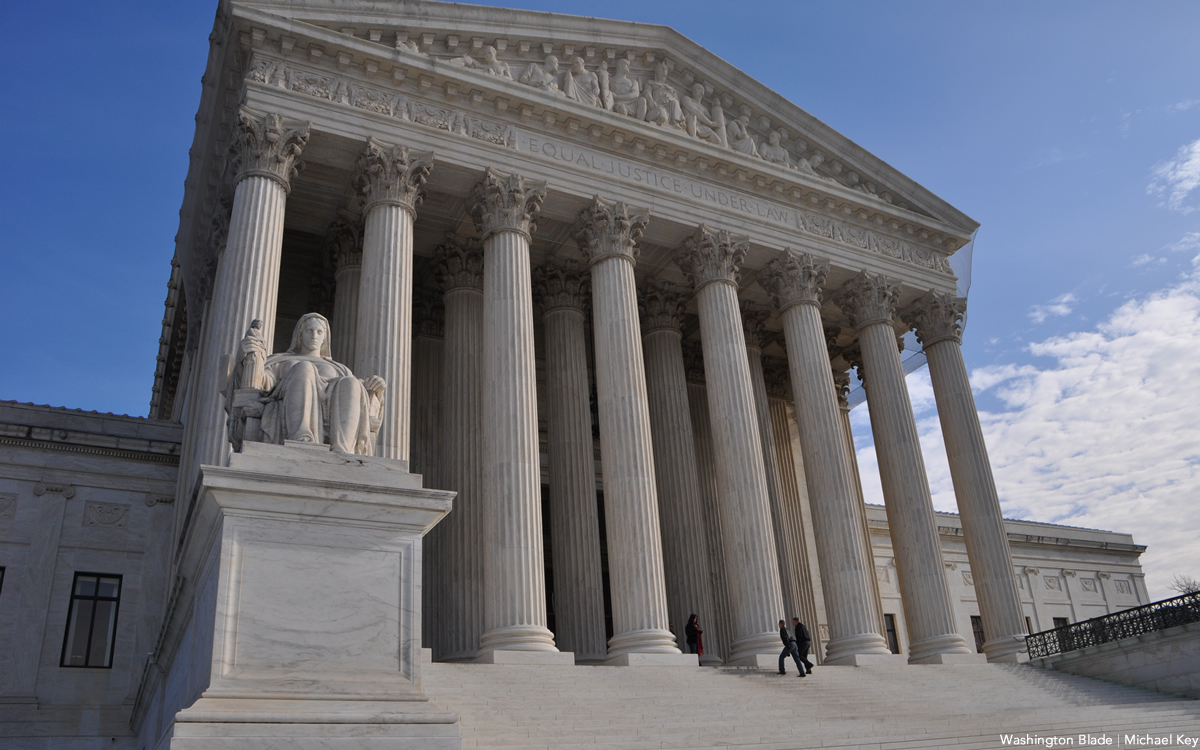
On June 30, the U.S. Supreme Court cleared the way for states to enforce laws barring transgender students from participating on school sports teams consistent with their gender identity, a decision LGBTQ advocates say could encourage additional restrictions across the country.
While neither Maryland nor Virginia currently has a statewide ban on trans student athletes, advocates say the decision could reshape future legislative battles and school policies throughout the region.
Directly following the case, attorneys for trans student athletes spoke out about the case and how detrimental it could be to students.
“This ruling is deeply harmful for transgender women and girls who only asked for the ability to participate in sports with their peers,” said Sasha Buchert, senior attorney and director of the Nonbinary and Transgender Rights Project for Lambda Legal, in a press release from the American Civil Liberties Union.
The next step is figuring out how states will move forward, specifically in Maryland and Virginia.
As of right now, neither state has bans on trans athletes in schools. The new Supreme Court decision also does not require states to enact bans, only that bans are allowed if states or school districts choose to enforce them.
According to the ACLU, 27 states have banned trans youth from participating in school sports since 2020. Most of these states also require sex testing, which the organization says is invasive for all female athletes.
Equality Virginia Executive Director Narissa Rahaman said that while she has heard a lot of frustration following the decision, people are ready to take action.
“Families, parents and youth have lived through disappointing changes to the Virginia Department of Education’s model policies for the treatment of transgender students, and the Virginia High School League’s decades-old policy that allowed transgender students an opportunity to play sports with their friends,” Rahaman said in a statement to the Washington Blade.
She believes they are not ready to give up this fight quite yet.
As of now, trans and nonbinary students are protected under Virginia law, and Rahaman wants that to continue.
“This ruling will likely embolden right-wing members of the General Assembly to pursue trans athlete bans, and we will continue to defeat every bill like we have the past five legislative sessions. Now is our time to be proactive,” Rahaman said.
She also calls upon Democratic Gov. Abigail Spanberger to defend trans youth in Virginia from what she describes as bullies and to continue to stand up to federal attacks on the trans community in general.
For trans students, Rahaman wants to ensure that they continue to know that they belong and have a place in school sports.
“To the transgender young people watching this decision unfold: you belong on your team, in your school, in your community, and here in Virginia. This ruling does not change that. A single Supreme Court decision cannot define your worth or your future,” Rahaman said.
For people who may be outside the community but want to help, she encourages them to speak with trans and nonbinary people in their community, befriend the families of youth to show their support, and continue to speak up on these issues when needed.
According to ACLU of Virginia, high schooler Eliza Munshi was told she could not compete on the girls’ track team because she was trans. To prove a point, she decided to compete with the boys.
She had previously competed on the girls’s track team before her Virginia school decided to enforce the ban demanded by President Donald Trump. With pink hair and pink makeup, she decided to continue her love for the sport alongside boys. According to Munshi, her entire community rallied for her.
“I did it to prove a point. I knew I could do it. I knew it wouldn’t phase me. My gender itself and that label has been the least important part of my transition: I want to look how I want to look. I want to dress how I want to dress. If you don’t like that, then that’s not my business,” Munshi said.
DOE has launched Title IX probe against Md. school districts
In the weeks leading up to the ruling, multiple Maryland school districts were included in a Title IX probe stating that not enforcing sex-based protections guaranteed by federal law. Currently, there have been no updates on the lawsuit or the district’s decisions.
According to the U.S. Department of Education, the federal probe is based on parent complaints that the school districts were violating a specific Trump-Vance administration addition to Title IX, stating it aligned the sex-based protections “with biological reality, not ideological fantasy.”
According to FreeState Justice, an LGBTQ advocacy group in Maryland, while this is a disappointing ruling to see, they will continue to fight for trans student-athletes in Maryland and want trans youth to know that they belong.
“Every young person deserves the opportunity to participate in school and community life without being singled out because of who they are. These decisions send a harmful message to transgender youth that they are somehow less deserving of that opportunity,” said Phillip Westry, the group’s executive director.
Westry wants to make sure the community knows that their commitment to the organization has not changed and will continue to provide the same legal services they have prior and to advance policy solutions, to ensure “every LGBTQ+ Marylander can live with dignity, safety, and equal opportunity.”
Another issue brought up by trans advocates is the issue of testing women to determine whether they are biologically female or not.
According to Human Rights Watch, as of 2023, World Athletics required cis women with increased testosterone levels to undergo medical procedures to have it reduced to avoid advantages. Other forms of “sex verification” may include genetic testing, screenings of an athlete’s anatomy or chromosomes.
However, this can become detrimental because not all women have ovaries, a uterus, or XX chromosomes, meaning cisgender women could potentially be included in these bans, depending on how the specific state plans to enforce them.






Maryland
Md. groups receive state grants to fight hate crimes
Pride Center of Maryland among recipients
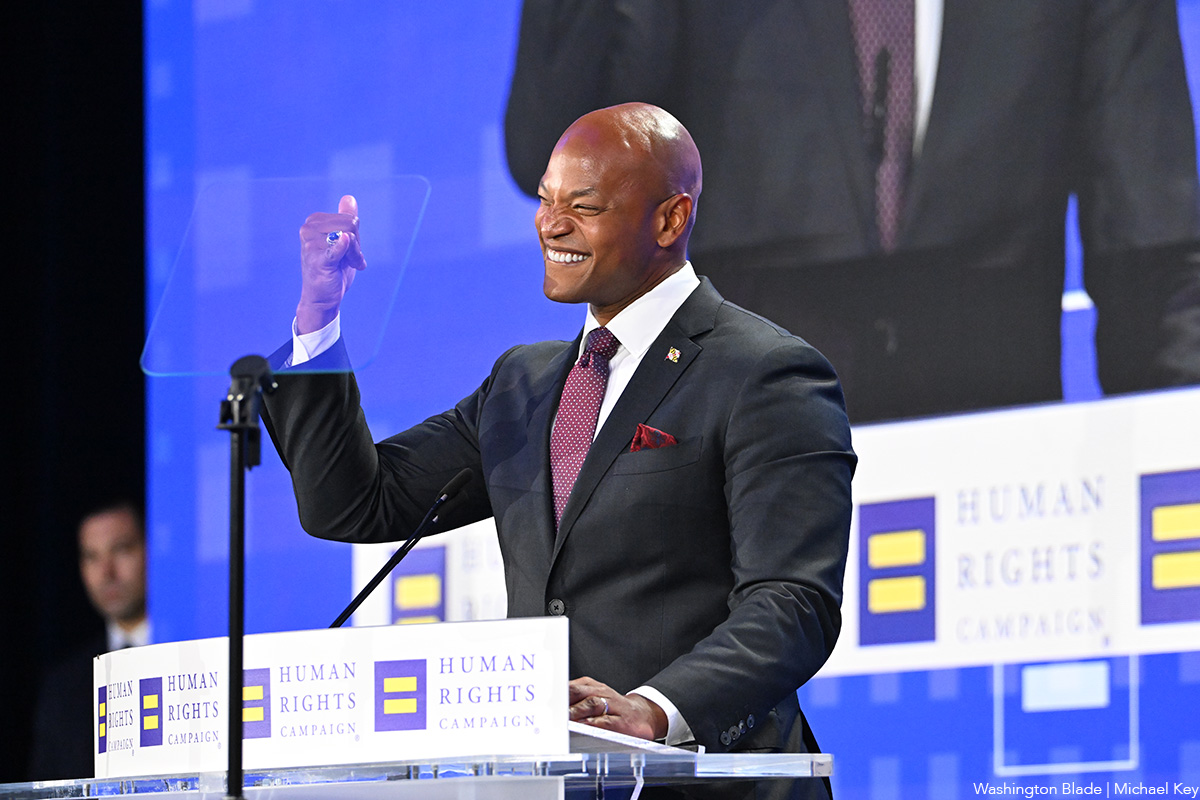
Maryland Gov. Wes Moore and the Governor’s Office of Crime Prevention and Policy are awarding a total of $10 million in grants in the 2027 fiscal year to nonprofit organizations that work to prevent hate crimes in the state.
The funds will be used to support those who feel targeted or discriminated against because of their race, religion, sexual orientation, gender identity, or disability status.
The Pride Center of Maryland is among the recipients. Churches, synagogues, mosques, and LGBTQ organizations are all eligible to receive grants
“The safety and security of all Marylanders is my top priority, so we are drawing a hard line because we have no tolerance for hate,” said Moore, according to media reports. “We are committed to protecting and ensuring safe and sacred spaces stay that way by investing in non-profit organizations, houses of worship, and community centers to protect and honor every community that makes our state so diverse and special.”
“Protection Against Hate Crime funding has strengthened the Pride Center of Maryland’s ability to protect, educate, and support the communities we serve … at a time of heightened concern associated with the Trump administration’s anti-LGBTQ/SGL (same-gender-loving) policies and pressures,” Pride Center of Maryland CEO Cleo Manago said. “PAHC funding helps us do more than improve physical security — it strengthens our community’s knowledge, preparedness, connection to resources, and ability to respond to hate with greater awareness and support.”
Maryland’s hate crimes law includes both sexual orientation and gender identity. The state’s nondiscrimination statute is also LGBTQ-inclusive.
Maryland
Anne Arundel schools now need parent permission to call trans students by preferred names
Conservative groups challenged system’s policy
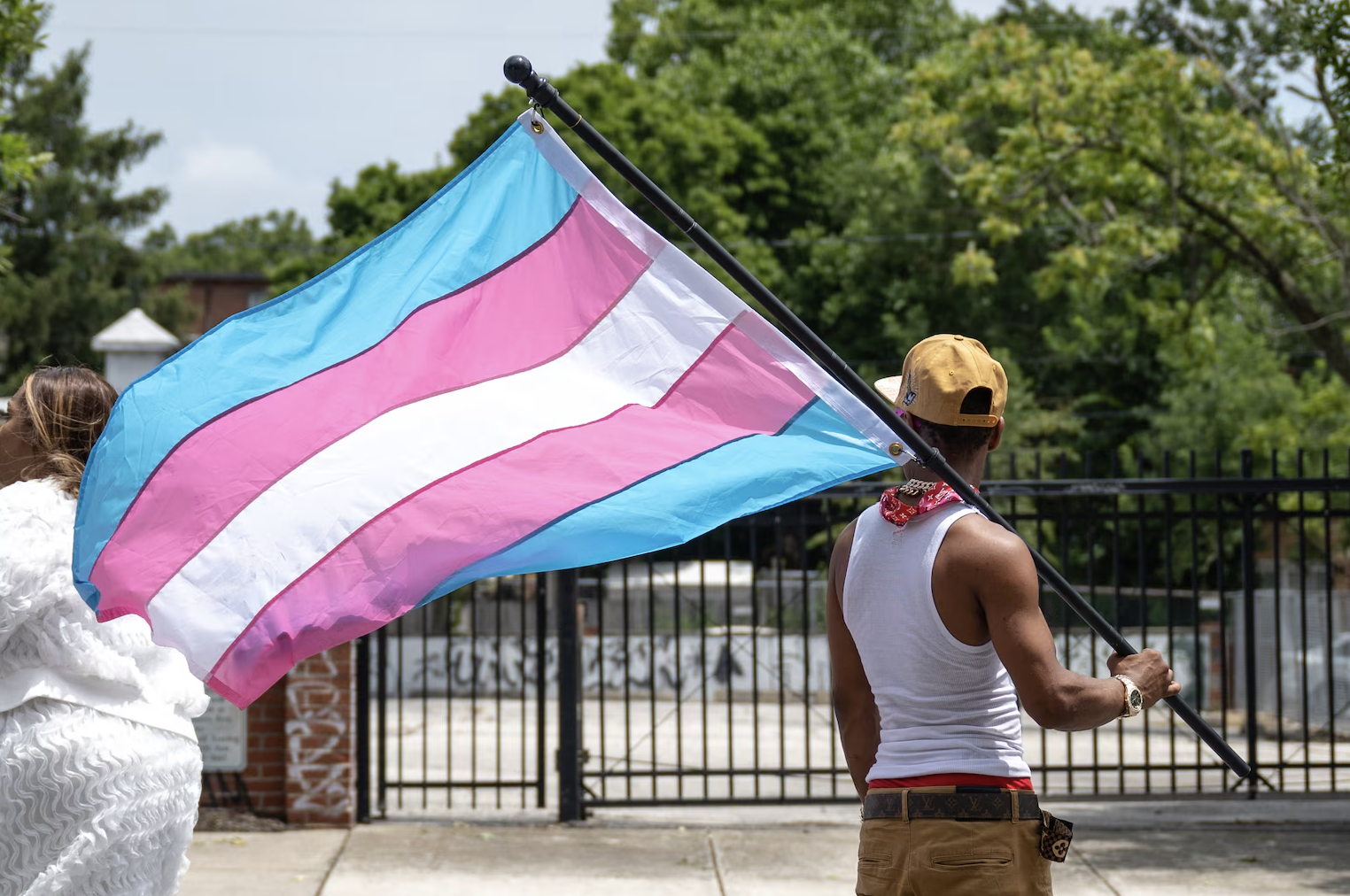
By JESSICA CALEFATI | Anne Arundel County Public Schools staff cannot use transgender students’ preferred names if their parents oppose it, according to an internal document reviewed by the Banner, a change that comes after conservative groups challenged the school system’s approach to gender identity.
Teachers union president Kristina Korona told members in an Aug. 20 email that the new guidance undermines district policy on acceptance and inclusivity and “will begin harming affected students immediately.”
Previously, the district didn’t require parental permission to use a high school student’s chosen name and pronouns corresponding to their gender identity, the internal document says. Now it does. The change comes as parents challenge the suburban school system’s gender identity policy and regulation in court and the Trump-Vance administration threatens the district’s funding.
The rest of this article can be found on the Baltimore Banner’s website.
Maryland
Girlfriends charged with Silver Spring murder to go on trial in 2027
Prosecutors charged both women with killing mother of one of them

Two women identified as a couple who are charged with the May 22, 2026, murder of the mother one of them in her Silver Spring home and who were arrested three weeks later in Ohio are scheduled to go on trial for murder April 19, 2027.
According to online records filed with Montgomery County Circuit Court in Rockville, Vanessa Tjongarero-Henderson, 29, of Clarksburg, Md., and Samantha Raebel, 36, of Phoenix are being held without bond in the Montgomery County Correctional Facility until the time of their trial.
Statements from Montgomery County police show the two women were arrested June 10 in Genoa, Ohio, after fleeing from the scene of the murder in Silver Spring. Police statements and court records show they were extradited back to Maryland in July, where prosecutors with the Montgomery County State’s Attorney’s Office obtained indictments against them for murder.
Earlier statements from Montgomery County police say their investigation into the murder led to their decision to initially charge the two women with first-degree murder for the death of Hilde Henderson, 67, who was Tjongarero-Henderson’s mother.
“Through the course of the investigation, detectives identified Henderson’s daughter, Vanessa Tjongarero-Henderson, and Vanessa’s girlfriend, Raebel, as the suspects,” one of the police statements says. It says police obtained arrest warrants for both women and launched a nationwide search seeking help from the public in in locating them.
One of the police statements says an autopsy determined the cause of Hilde Henderson’s death was blunt-force trauma injuries brought about by a murder. Police and the State’s Attorney’s Office, which is prosecuting the case, have yet to disclose whether they have determined a motive for the murder.
Court records show that prior to the start of the April 19, 2027, trial a “motion” hearing was scheduled for Oct. 30, 2026, a pre-trail conference was scheduled for Feb. 12, 2027, and another motion hearing and a status hearing were scheduled for March 12, 2027.
Court records also show that Tjongarero-Henderson is being represented by attorneys with the Montgomery County court system’s public defender service. The records show that Raebel initially had been represented by a public defender service attorney, but updated records show Aug. 14 is listed as the “removal date” for that attorney.
The docket shows that on Aug. 20, two new attorneys with the prominent D.C. law firm of Covington & Burling made their official appearance as her attorneys in the murder case. One of them, Daniel Solomon, told the Washington Blade in response to an inquiry that the defense has no comment at this time on the case.
He confirmed that Covington & Burling is representing Raebel on a no-cost, pro bono bass.
The office of the Montgomery County public defender service didn’t immediately respond to a phone message from the Blade asking for a comment on the Tjongarero-Henderson case.

Center for Black Equity honors leaders, activists at BE. Gala

In ‘The Lost Brontë,’ a complicated lie can lead to danger

CAMP Rehoboth Block Party returns Oct. 18

Essential queer horror classics for Halloween

Solidarity beyond the parade: the actual cost of Pride

10 years later, we still can’t shake Barry Jenkins’s ‘Moonlight’

‘Some Like It Hot’ a wild ride at renovated Bernard Family Theatre

D.C.’s LGBTQ homeless facilities face possible hit from Trump funding cuts

Trump uses anti-trans slur against Democratic Senate candidate

U.S. int’l trade negotiator, consultant James Bedore dies at 82
-

 Movies5 days ago
10 years later, we still can’t shake Barry Jenkins’s ‘Moonlight’
-
Theater5 days ago
‘Some Like It Hot’ a wild ride at renovated Bernard Family Theatre
-
District of Columbia5 days ago
D.C.’s LGBTQ homeless facilities face possible hit from Trump funding cuts
-
2026 Midterm Elections4 days ago
Trump uses anti-trans slur against Democratic Senate candidate