Cuba
Trans parent charged with kidnapping, allegedly fled to Cuba with child
Cuban authorities helped locate Rose Inessa-Ethington
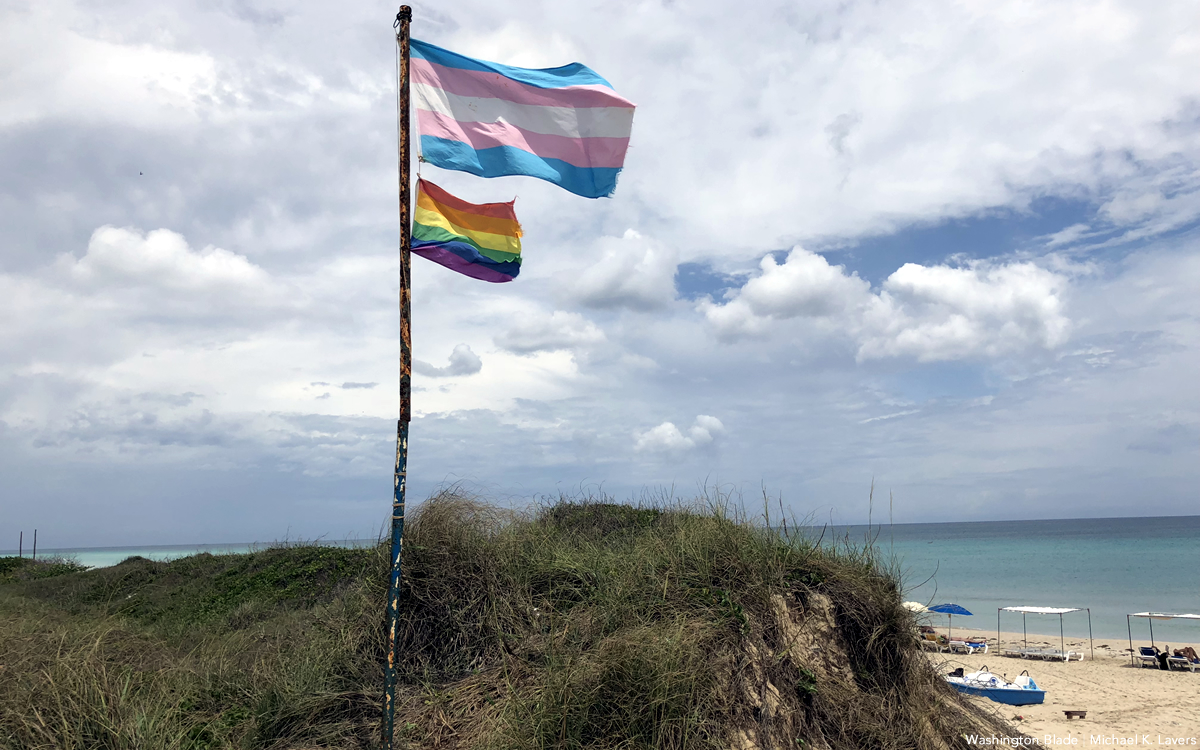
Federal authorities have charged a transgender woman with kidnapping after she allegedly fled to Cuba with her 10-year-old child.
An affidavit that Federal Bureau of Investigation Special Agent Jennifer Waterfield filed in U.S. District Court for the District of Utah on April 16 notes the child is a “biological male who identifies as a female” and “splits time living with divorced parents who share custody” in Cache County, Utah.
Waterfield notes the child on March 28 “was supposed to be traveling by car to” Calgary, Alberta, “for a planned camping trip with his transgender mother, Rose Inessa-Ethington, Rose’s partner, Blue Inessa-Ethington, and Blue’s 3-year-old child.”
The affidavit notes the group instead flew from Vancouver, British Columbia, to Mexico City on March 29. Waterfield writes the Inessa-Ethingtons and the two children then flew from Mérida, Mexico, to Havana on April 1.
The 10-year-old child called her biological mother on March 28 after they arrived in Canada. The custody agreement, according to the affidavit, required Rose Inessa-Ethington to return the child to her former spouse on April 3.
“Interviews of MV [Minor Victim] 1’s family members provided significant concerns for MV 1’s well-being, as MV 1 was born a male, however, identifies as a female child, which is largely believed to be due to manipulation by Rose Inessa-Ethington,” reads the affidavit. “Concerns exist that MV 1 was transported to Cuba for gender reassignment surgery prior to puberty.”
The affidavit indicates authorities found a note in the Inessa-Ethingtons’ home with “instruction from a mental health therapist located in Washington, D.C., including instruction to send the therapist the $10,000.00 and instructions on gender-affirming medical care for children.”
The affidavit does not identify the specific “mental health therapist” in D.C.
A Utah judge on April 13 ordered Rose Inessa-Ethington to “immediately” return the child to her former spouse. The former spouse also received sole custody.
“Your affiant believes that due to the extensive planning and preparation exhibited by both Rose Inessa-Ethington and Blue Inessa-Ethington to isolate MV 1 and take MV 1 to Havana, Cuba, without notifying or requesting permission from MV 1’s mother indicates they are likely not planning to return to the United States,” wrote Waterfield.
The affidavit notes Cuban authorities found the Inessa-Ethingtons and the child.
A press release the U.S. Attorney’s Office for the District of Utah issued notes the Inessa-Ethingtons “were deported from Cuba” on Monday “with the assistance of the FBI.”
The couple has been charged with International Parental Kidnapping. The Inessa-Ethingtons were arraigned in Richmond, Va., on Monday. The press release notes a federal court in Salt Lake City will soon handle the case.
The New York Times reported the child is now back with their biological mother.
“We are grateful to law enforcement for working swiftly to return the child to the biological mother,” said First Assistant U.S. Attorney Melissa Holyoak of the District of Utah in the press release.
The case is unfolding against the backdrop of increased tensions between Washington and Havana after U.S. forces on Jan. 3 seized now former Venezuelan President Nicolás Maduro and his wife, Cilia Flores.
President Donald Trump shortly after he took office in January 2025 issued an executive order that directed the federal government to only recognize two genders: male and female. A second White House directive banned federally-funded gender-affirming care for anyone under 19.
The U.S. Supreme Court last year in the Skrmetti decision upheld a Tennessee law that bans gender-affirming care for minors.
Cuba’s national health care system has offered free sex-reassignment surgeries since 2008.
Activists who are critical of Mariela Castro, the daughter of former President Raúl Castro who spearheads LGBTQ issues as director of Cuba’s National Center for Sexual Education, have previously told the Washington Blade that access to these procedures is limited. The Blade on Wednesday asked a contact in Havana to clarify whether Cuban law currently allows minors to undergo sex-reassignment surgery.




Commentary
The boy they refused to forget
Jonathan David Muir Burgos released from Cuban prison after participating in protest
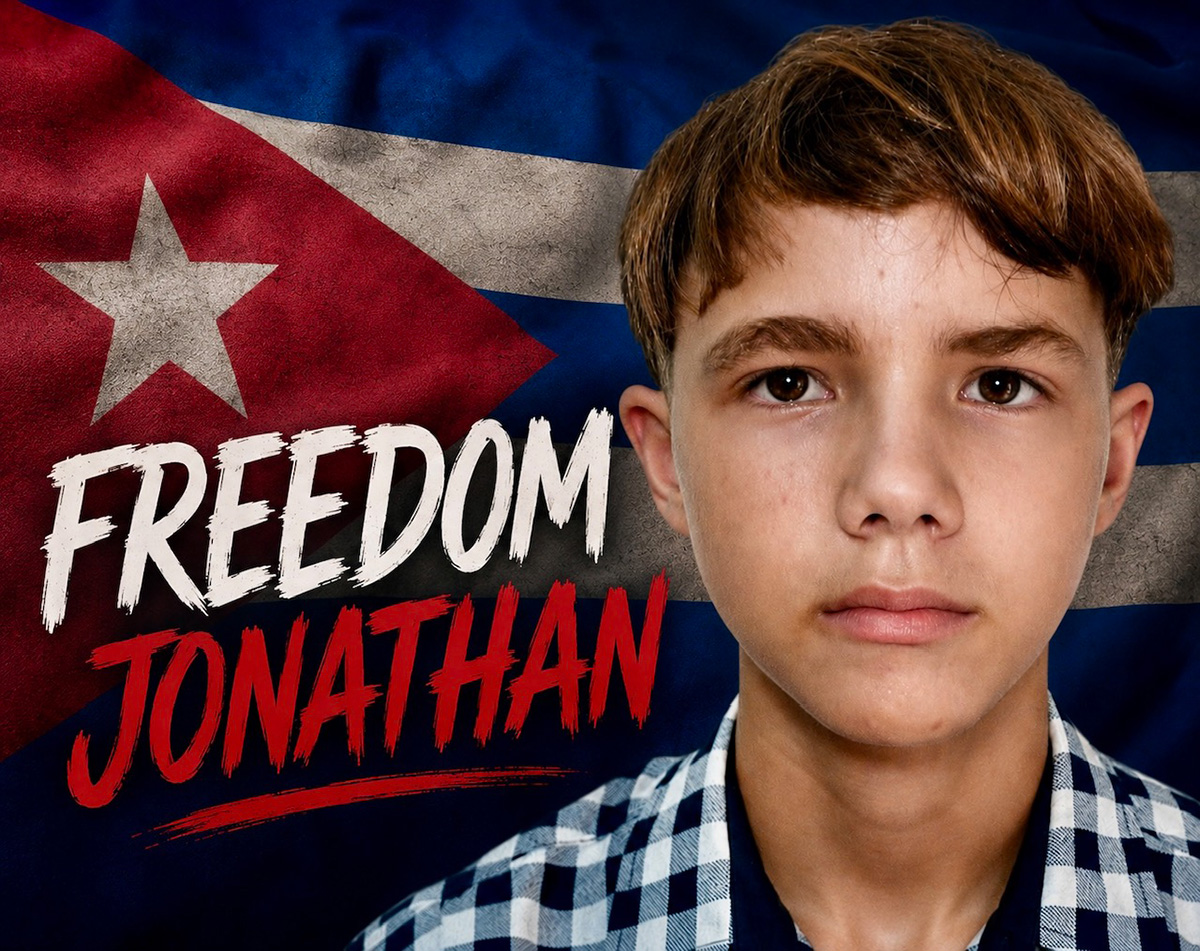
When the Washington Blade first reported the story of Jonathan David Muir Burgos, the news centered on a 16-year-old Cuban teenager who had been sent to prison after taking part in a public protest in Morón, Ciego de Ávila. At the time, the facts were straightforward. A minor had lost his freedom, and his case was beginning to attract attention beyond Cuba’s borders.
Today there is another fact that deserves to be recorded with the same rigor.
Jonathan is no longer in prison.
His release, confirmed by multiple news organizations, closes one chapter of a story that, for months, was followed by journalists, human rights organizations, religious communities, and countless individuals who refused to let his name disappear from public view. Each of them became part of a much larger effort to ensure that the imprisonment of a Cuban teenager would not fade into silence as the news cycle moved on.
That collective attention does not explain every decision that ultimately led to Jonathan’s release, and it would be irresponsible to suggest otherwise. Judicial processes are rarely shaped by a single factor. What can be said with certainty is that Jonathan’s story never disappeared. It continued to be documented, discussed and followed long after the initial headlines were published.
Behind every widely reported case there is a family living a reality that rarely appears in the news. In Jonathan’s case, there was a father who also serves as a Protestant pastor and who spent months speaking publicly about his son while asking others not to forget him. There was a mother enduring the uncertainty familiar to any parent separated from a child. There were classmates, friends, and neighbors waiting for the day when Jonathan would no longer be known as the teenager behind bars, but simply as the young man returning home.
The image of a prison gate opening often marks the end of a news story. In reality, it marks the beginning of something far more difficult. A teenager must resume an interrupted education, reconnect with friends, rebuild ordinary routines, and recover a sense of normalcy after months in confinement. Those experiences seldom become headlines, yet they are part of the true cost of imprisonment.
Jonathan’s release is therefore more than an update to a story previously reported. It is a reminder that public attention has value. Journalism matters because it documents. Human rights organizations matter because they investigate. Communities matter because they refuse indifference. Families matter because they continue to wait, even when the waiting becomes unbearable. None of these efforts should be viewed in isolation. Together they ensure that a person’s story does not disappear simply because time has passed.
Many people leave prison after being forgotten.
Jonathan David Muir Burgos walked out of prison knowing that, throughout those months, thousands of people had continued to speak his name, follow his case and hope for the day when this story could be told differently.
Today, that day has arrived.
Cuba
When impunity meets history
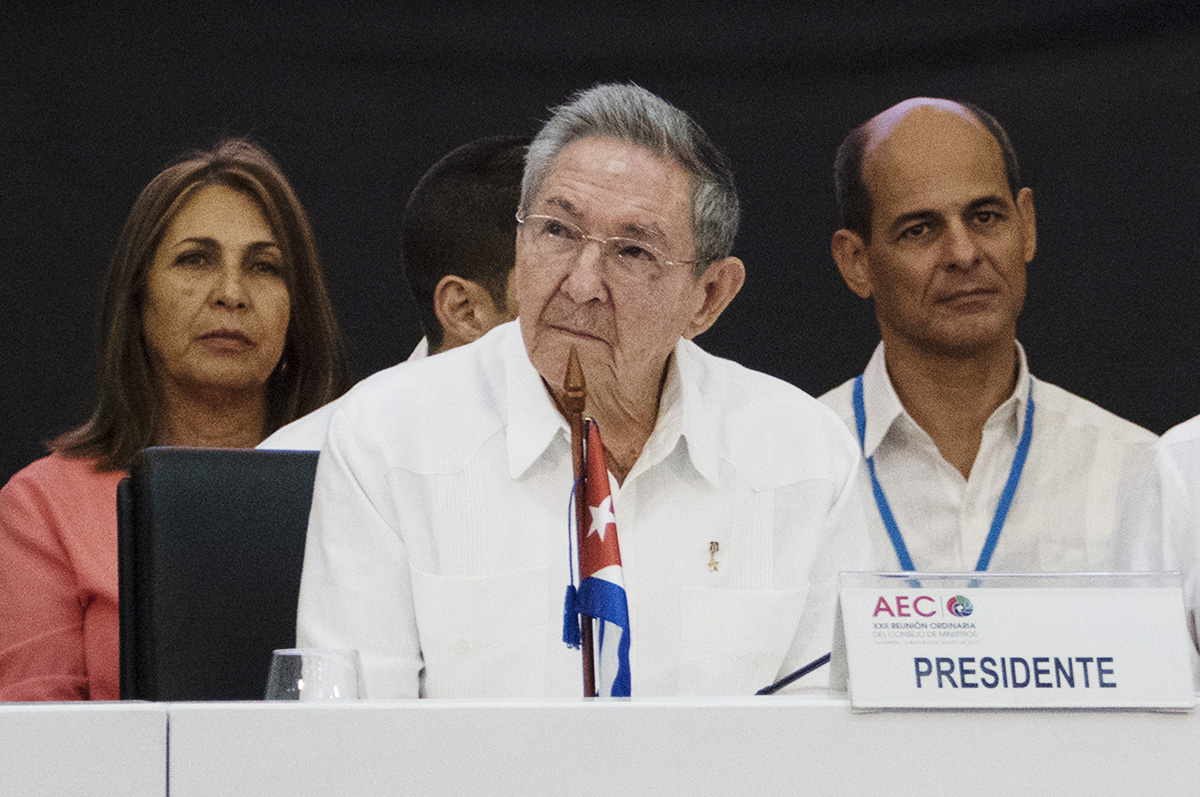
Raúl Castro indicted for alleged role in shooting down Brothers to the Rescue aircraft
The scene would have seemed impossible only a few years ago.
The name of Raúl Castro Ruz appearing formally inside a United States federal criminal indictment. Cuba’s former general of the Army, for decades one of the most powerful figures inside the Havana regime, accused in connection with the shootdown of the Brothers to the Rescue aircraft and the deaths of American citizens in 1996. And all of it unfolding in Miami, inside the Freedom Tower, on May 20.
That detail matters.
Because this indictment arrives at one of the most fragile and politically tense moments in recent relations between Washington and Havana. It comes as Cuba faces deep economic collapse, growing political exhaustion, mass migration, blackouts, and increasing public frustration both inside and outside the island. It also arrives on a date carrying enormous symbolic weight for Cuban exiles — the anniversary of the founding of the Cuban Republic in 1902.
But the true significance of this moment goes far beyond symbolism.
What happened in Miami represents something much larger: the collapse of the idea that certain men would never face accountability.
For decades, Raúl Castro embodied the permanence of revolutionary power in Cuba. Defense minister. Military strategist. The man who oversaw the armed forces for generations. One of the central architects of the Cuban political and security apparatus built alongside Fidel Castro. A figure many believed would leave this world untouched by any court, shielded forever by power, time, and history itself.
Today the image is very different.
Today his name appears inside the language of American criminal prosecution.
And that changes the historical dimension of this case completely.
Because this is no longer simply a political accusation voiced by the Cuban exile community. It is now a formal federal criminal indictment publicly announced by the United States government against one of the highest-ranking figures in the history of the Cuban regime.
The setting itself carried enormous meaning.
The Freedom Tower is not just another building in Miami. For generations of Cuban exiles it represents memory, displacement, survival, and the beginning of a new life after fleeing Cuba. Thousands of Cubans passed through those doors after escaping the revolution. Families arrived carrying fear, uncertainty, grief, and hope all at once. Announcing these charges from that location transformed the moment into something far deeper than a legal proceeding.
And the people witnessing it were not only members of the exile community.
Among those present were relatives of the young men killed nearly 30 years ago. Families who spent decades waiting to hear words they feared might never come. Families who carried the weight of loss while believing the men responsible would never be formally accused by any court.
That emotional weight still surrounds this case.
On Feb. 24, 1996, two civilian aircraft operated by Brothers to the Rescue were shot down over the Florida Straits by Cuban military jets. Armando Alejandre Jr., Carlos Costa, Mario de la Peña, and Pablo Morales were killed. The flights were connected to humanitarian rescue efforts searching for Cubans attempting to flee the island during the migration crisis of the 1990s.
Those aircraft were not military bombers.
They were not attacking Cuba.
They were civilian planes associated with rescue operations involving Cubans risking their lives at sea.
That reality has always shaped how this tragedy lives inside the memory of the Cuban exile community.
For many, this was never viewed simply as a geopolitical conflict between hostile governments. It was seen as the use of military force against civilians connected to humanitarian missions during one of the darkest chapters in modern Cuban migration history.
But for many Cubans, the indictment reaches far beyond the Brothers to the Rescue case itself.
It touches decades of unresolved pain tied to one of the central figures behind Cuba’s military and political system.
It reaches mothers who buried sons lost in compulsory military service or in distant wars they never chose to fight. Families who spent years believing promises that were never fulfilled. Political prisoners who disappeared into silence. Relatives who watched loved ones die trying to flee the island.
And for many LGBTQ Cubans, the moment carries another layer of historical weight.
Long before official campaigns promoting tolerance and inclusion emerged from within the Cuban government, there were years of persecution, fear, forced silence, and humiliation carried out under the revolutionary system itself.
The UMAP labor camps remain one of the deepest scars in modern Cuban history. Gay men, pastors, religious believers, artists, and others considered incompatible with the revolutionary ideal were sent away under the language of “re-education” and forced labor.
In recent decades, public gestures toward LGBTQ inclusion promoted by figures close to the Cuban leadership attempted to project an image of progress and openness to the international community. But for many survivors, and for many Cuban LGBTQ people, those gestures never erased the trauma or the historical responsibility tied to the same structures of power that once persecuted them.
For many, acknowledgment without accountability still feels painfully incomplete.
That is why this indictment resonates so deeply today.
Because it arrives while Cuba once again faces profound national crisis. The island is losing entire generations through migration. Public frustration continues to grow. Economic collapse shapes daily life. And the revolutionary narrative that once projected permanence and control appears increasingly eroded by reality itself.
Against that backdrop, the image emerging from Miami becomes even more striking.
A man once viewed as untouchable by history now formally accused by the United States government and legally transformed into a fugitive wanted by American justice.
History moves slowly until suddenly it does not.
And for many Cubans, both on the island and throughout the diaspora, what happened today inside the Freedom Tower felt like witnessing something they once believed they would never live long enough to see.
As a Cuban, as an immigrant, and as someone who has lived close to that pain, one thought keeps returning tonight:
Justice takes time.
But when it finally arrives, it arrives with history behind it.
Cuba
Cuba marks IDAHOBiT amid heightened tensions with U.S.
Energy crisis, fears of military intervention overshadow events

International Day Against Homophobia, Transphobia, and Biphobia commemorations took place in Cuba against the backdrop of increased tensions between the country and the U.S.
Mariela Castro, the daughter of former Cuban President Raúl Castro who is the director of the country’s National Center for Sexual Education, spoke at a Havana press conference on May 13. Mariela Castro, who is a member of Cuba’s National Assembly, also participated in an IDAHOBiT gala that took place in the Cuban capital on May 14.
CENESEX organized an IDAHOBiT event in Havana on Sunday. The group this month also put together panels and other gatherings.

‘Love is law’
IDAHOBiT commemorates the World Health Organization’s declassification of homosexuality as a mental disorder on May 17, 1990.
This year’s IDAHOBiT theme was “At the Heart of Democracy.” CENESEX-organized IDAHOBiT events took place under the “Love is Law” banner.
“On this day we remember diversity is wealth and equality is a right that does not allow exceptions,” said Cuba’s National Office of Statistics and Information on Sunday. “To say ‘no’ to homophobia, transphobia, and biphobia is to affirm Cuba is being built around the inclusion, the dignity, and the recognition of all people.”
Mariela Castro’s uncle, Fidel Castro, in the years after the 1959 Cuban revolution sent thousands of gay men and others deemed unfit for military service to labor camps known as Military Units to Aid Production.
His government forcibly quarantined people living with HIV/AIDS in state-run sanitaria until 1993. Fidel Castro in 2010 formally apologized for the labor camps, which are known by the Spanish acronym UMAP.
His brother, Raúl Castro, succeeded him as Cuba’s president in 2008. Fidel Castro died in 2016.
The Cuban constitution bans discrimination based on sexual orientation and gender identity, among other factors. Authorities, however, routinely harass and detain activists who publicly criticize the government. (The Cuban government in 2019 detained this reporter for several hours at Havana’s José Martí International Airport after he tried to enter the country to cover IDAHOBIT events. Officials then allowed him to board a flight back to the U.S.)
Same-sex couples have been able to marry on the island since 2022.
Cuba’s national health care system has offered free sex-reassignment surgeries since 2008. Activists who are critical of Mariela Castro and/or CENESEX have previously told the Washington Blade that access to these procedures is limited.
Lawmakers in 2025 amended Cuba’s Civil Registry Law to allow transgender people to legally change the gender marker on their ID documents without surgery.
Federal prosecutors to reportedly indict former Cuban president
American forces on Jan. 3 seized now former Venezuelan President Nicolás Maduro and his wife, Cilia Flores, at their home in Caracas, the Venezuelan capital, during an overnight operation.
Venezuela after Maduro’s ouster stopped oil shipments to Cuba. That, combined with a U.S. energy blockade, has caused widespread blackouts and a severe fuel shortage that has paralyzed the country.
Federal prosecutors are reportedly planning to indict Raúl Castro over his alleged role in the 1996 shooting down of four planes that Brothers to the Rescue, a Miami-based Cuban exile group, operated over the Florida Straits that separate Cuba and the Florida Keys. The Associated Press notes Raúl Castro, who is 94, was Cuba’s defense minister when the incident took place.
CIA Director John Ratcliffe on May 14 met with Raúl Castro’s grandson, Raúl Guillermo Rodríguez Castro, and other Cuban officials in Havana.
Axios on Sunday reported Cuba “has acquired” more than 300 drones and is preparing to use them to attack Guantánamo Bay, a U.S. naval base on the island’s southern coast, and other targets that include Key West, Fla., which is less than 100 miles north of the Communist country. Cuban President Miguel Díaz-Canel said Cuba is “not a threat, nor does it have aggressive plans or intentions against any country.”
“Cuba, which is already suffering from a multidimensional aggression by the U.S., does indeed have the absolute and legitimate right to defend itself against a military onslaught. This cannot, however, be logically or honestly be wielded as an excuse to wage war against the noble Cuban people.”
Las amenazas de agresión militar contra #Cuba de la mayor potencia del planeta son conocidas.
Ya la amenaza constituye un crimen internacional. De materializarse, provocará un baño de sangre de consecuencias incalculables, más el impacto destructivo para la paz y la estabilidad…
— Miguel Díaz-Canel Bermúdez (@DiazCanelB) May 18, 2026

Essential queer horror classics for Halloween

Solidarity beyond the parade: the actual cost of Pride

Physician: addiction doesn’t always look the way you think it does

Calendar: October 9-15

ICC unseals arrest warrants for Taliban officials accused of persecuting LGBTQ people, women

Alianza para la Inclusión fortalece la defensa de derechos LGBTQ en Centroamérica

The facts about Victory Fund’s investigation and the path forward

In Ga., 2 trans candidates believe voters are ready for them

Bessent says Trump chose him for his qualifications, not his sexuality

‘Some Like It Hot’ a wild ride at renovated Bernard Family Theatre
-

 Central America4 days ago
Alianza para la Inclusión fortalece la defensa de derechos LGBTQ en Centroamérica
-
Opinions4 days ago
The facts about Victory Fund’s investigation and the path forward
-
Georgia4 days ago
In Ga., 2 trans candidates believe voters are ready for them
-
Federal Government4 days ago
Bessent says Trump chose him for his qualifications, not his sexuality