National
National news in brief: August 5
AFTAH non-profit status yanked, anti-gay group voter fraud alleged in Wisconsin recall, three new reports charting LGBT progress and more

Anti-gay group’s tax-exempt status yanked
CHICAGO — Despite long being certified by the Southern Poverty Law Center as a “hate group,” Illinois-based Americans for the Truth About Homosexuality has maintained its tax-free non-profit status since 2006, and its president, Peter LaBarbera, has continued to bill himself as a credible source to media outlets on LGBT issues.
However, as of June 10 donations to the organization will not be considered tax-exempt after losing 501(c)3 status for “failure to file a Form 990, 990-EZ, 990-N, or 990-PF for 3 consecutive years,” according to LGBT blog and watchdog group, ExGayWatch.
Tea Party group accused of voter fraud in Wis.
MILWAUKEE — Tea Party activist group, Americans for Prosperity and anti-LGBT group Wisconsin Family Action are accused of voter fraud after allegedly mailing absentee ballots with inaccurate deadline dates and wrong return addresses to Democratic voters in districts where two Republican senators face recall.
Several voters reported receiving the ballots with instructions to return “by August 11,” two days after the actual Aug. 9 deadline, and asks for ballots to be mailed not to the County Clerk, but to “Application Processing Center,” at a mailing address belonging to the anti-gay WFA, all according to the Minnesota Independent online newspaper.
“I’m sure the liberals will try to make a mountain out of a molehill in an attempt to distract voters’ attention from the issues,” Wisconsin state director of Americans for Prosperity, Matt Seaholm told the Milwaukee Journal-Sentinel, calling the mistakes “typos.”
S.C. paper prints same-sex wedding announcement
COLUMBIA, S.C. — The State, a prominent South Carolina newspaper, this week published the New York wedding announcement of two men native to South Carolina who have been together since 1984. It was the first time the paper has published a same-sex wedding announcement.
Gregory Smith and William Hasty III, who were both commissioned officers in the Army, met in Columbia S.C., raised two sons, and were finally married in Mamaroneck, N.Y. on July 26, 2011, two days after same-sex marriages began to be recognized. The paper developed a policy of printing same-sex wedding announcements of local couples who marry in states where such marriages are legal.
3 reports show state of LGBT acceptance
WASHINGTON — Three separate reports released on Wednesday show significant gains and ongoing challenges for the LGBT community in terms of college campus inclusively, television responsibility and equal access under the law.
Campus Pride released its annual “LGBT-Friendly Campus Climate Index,” which seeks to help campuses assess their ongoing efforts to provide a more “inclusive, welcoming and respectful,” college experience. According to the report, campuses receiving a perfect 5-star rating rose from 19 in 2010 to 33. However, Campus Pride also found that only seven percent of American colleges have institutional support for LGBT students, only thirteen percent include sexual orientation in campus non-discrimination statements, and only six percent include gender identity in those same statements.
Also on Wednesday, the Gay and Lesbian Alliance Against Defamation released its annual Network Responsibility Index, grading television networks on positive LGBT portrayals. ABC Family is only the second network ever to receive an “excellent” rating in the report, with positive LGBT impressions included in more than 55 percent of all programming hours.
CW topped broadcast networks at 33 percent of programming hours and A&E, TBS received failing grades. CBS was named “least improved” broadcast network over the course of 5 years.
Finally, the Movement Advancement Project released its biennial Momentum report, highlighting “challenges among accelerating change.” The report cited public opinion supporting marriage equality, as well as significant gains in relationship recognition with marriage expanding from two to six states and civil recognition extended in six new states in two years. The report also celebrated a tremendous increase in LGBT-inclusive policy at the federal level, repeal of “Don’t Ask, Don’t Tell,” striking of adoption bans in Arkansas and Florida, strengthening of employment protections in four states, and anti-bullying laws in six states.






Federal Government
Inside the LGBTQ records of Todd Blanche and Markwayne Mullin
Two men are acting attorney general, DHS secretary
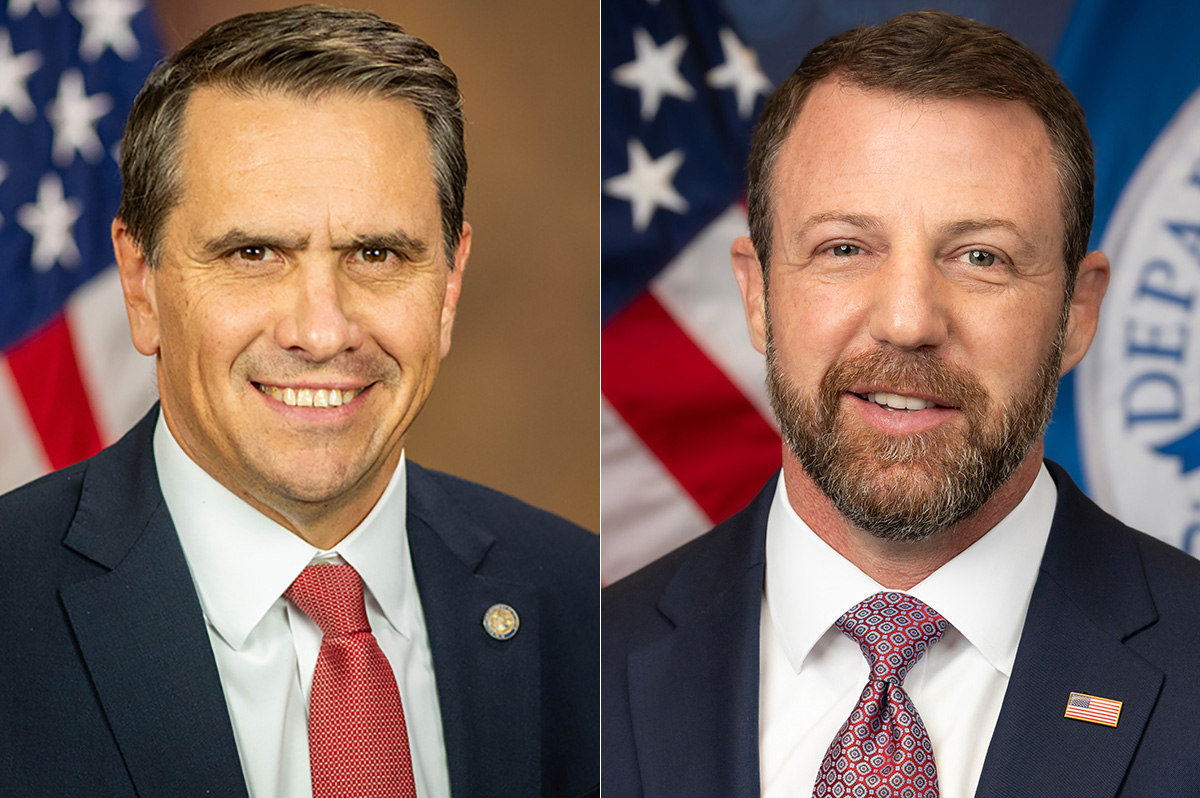
President Donald Trump became famous for his use of the phrase “You’re fired!” while hosting the reality TV show “The Apprentice” in the early 2000s. However, during his time in the Oval Office, he has attempted to distance himself from that image.
Despite those efforts, the phrase once again comes to mind as Trump has fired two high-level female Cabinet members within the past month: Pam Bondi and Kristi Noem.
Their replacements — Todd Blanche at the Justice Department and Markwayne Mullin at the Department of Homeland Security — bring records that, while different in depth, both reflect limited support for LGBTQ protections and, in some cases, direct opposition.
Todd Blanche
Acting attorney general
Little has been found regarding Todd Blanche’s LGBTQ history prior to his role as acting head of the Department of Justice. Unlike those who have worked within the Justice Department’s Civil Rights Division or served as state attorneys general, he has not developed a public-facing legal ideology on LGBTQ issues.
Blanche attended American University for his undergraduate studies — like fellow Trump attorney Michael Cohen — where he met his future wife, Kristin, who was studying at nearby Catholic University in D.C.
He began his legal career as an intern at the U.S. Attorney’s Office in Washington, which eventually became a full-time position. He later worked as a paralegal in the U.S. Attorney’s Office for the Southern District of New York while attending Brooklyn Law School at night. Blanche graduated cum laude in 2003. He and his wife later married and had two children.
Blanche left the U.S. attorney’s office in 2014, taking a job in the Manhattan office of the law firm WilmerHale. In September 2017, he moved to Cadwalader, Wickersham & Taft LLP, where he was a partner in the White Collar Defense and Investigations practice.
In his personal capacity, he represented several figures associated with Donald Trump and former New York City Mayor Rudy Giuliani, including Trump’s former campaign manager Paul Manafort, businessman Igor Fruman, and attorney Boris Epshteyn.
In 2024, Blanche switched from Democrat to Republican, aligning himself with Trump’s political orbit. He later served as Trump’s personal defense attorney in the New York State case that led to Trump’s 2024 conviction on 34 felony counts of falsifying business records to cover up hush-money payments to bisexual adult film star Stormy Daniels.
Now the highest-ranking official at the Justice Department, Blanche has played a central role in overseeing the department and has been involved in leadership decisions tied to several controversial actions affecting LGBTQ people.
In a letter to New York Attorney General Letitia James, Blanche declared that the Justice Department “will not sit idly by while you attempt to use your office to force harmful procedures on our most vulnerable population,” if legal action were taken against NYU Langone. The hospital had “permanently” ended a program earlier that month after the Trump-Vance administration threatened to pull all federal funding if it continued prescribing puberty blockers and hormones to minors.
Blanche wrote that “the Justice Department believes the law is clear, and anti-discrimination laws cannot be used to force NYU Langone to perform sex-rejecting procedures on children.”
“As just one example, your office’s position would require a hospital to prescribe certain medications for certain diagnoses, regardless of the hospital’s or its doctors’ independent medical determination about the propriety of such treatment,” he said.
Blanche also echoed his predecessor’s public stance on limiting LGBTQ-related protections at the federal level, aligning with Bondi’s sentiments in June 2025 regarding the U.S. Supreme Court’s 6–3 decision that restricted LGBTQ history lessions in schools and limits lower federal courts from issuing nationwide injunctions — rulings that have often blocked Trump administration policies.
Calling it “another great decision that came down today,” Blanche argued that the ruling “restores parents’ rights to decide their child’s education,” adding: “It seems like a basic idea, but it took the Supreme Court to set the record straight, and we thank them for that. And now that ruling allows parents to opt out of dangerous trans ideology and make the decisions for their children that they believe is correct.”
In December 2025, a Justice Department memo stated that, “effective immediately,” prisons and jails would no longer be held responsible for violations of standards meant to protect LGBTQ people from harassment, abuse, and rape under the Prison Rape Elimination Act. The law, passed unanimously by Congress in 2003, requires that incarcerated people be screened for their risk of sexual assault, including consideration of LGBTQ status, and applies to all correctional facilities.
Additionally, when the Justice Department, under Blanche’s deputy leadership and at Trump’s behest, attempted to force Children’s National Hospital in D.C. to turn over medical records related to gender-affirming care, U.S. District Judge Julie R. Rubin ruled that the effort “appears to have no purpose other than to intimidate and harass.”
Blanche is also described as having a “strong belief in executive authority.”
Markwayne Mullin
Secretary of Homeland Security
While Blanche’s record is defined more by recent actions than a long paper trail, Markwayne Mullin brings a more established history on LGBTQ issues from his time in Congress.
The head of the Department of Homeland Security has served in Congress since 2013, in both the U.S. House of Representatives and U.S. Senate. He has been actively engaged in shaping restrictions and aligns with broader cultural rhetoric that frames anti-LGBTQ speech as protected expression.
In May 2016, Mullin criticized the Department of Education and the Justice Department’s “Dear Colleague” letter on transgender students, arguing that trans girls should not use girls’ restrooms in public schools.
By January 2021, Mullin and then-Hawaii Congresswoman Tulsi Gabbard had introduced a bill to prevent trans women from participating in women’s sports.
Mullin was not recorded as voting on the final passage of the Respect for Marriage Act, which codified federal recognition of same-sex and interracial marriage.
In 2023, Mullin received a rating of just 6 percent from the Human Rights Campaign.
While serving in the Senate and as a member of the Health, Education, Labor, and Pensions (HELP) Committee, Mullin has been a vocal critic of policies aimed at expanding LGBTQ inclusion in federal programs. He has participated in broader Republican efforts questioning equity-based implementation of the Older Americans Act, including guidance related to sexual orientation and gender identity in aging services, arguing such policies could have unintended consequences.
Mullin also makes history as the first Native American — and a citizen of the Cherokee Nation — to lead the Department of Homeland Security.
He was among the 147 Republicans who voted to overturn the 2020 presidential election results despite no evidence of widespread fraud, and was present in the House on Jan. 6.
Noticias en Español
La X vuelve al tribunal
Primer Circuito examina caso del reconocimiento de personas no binarias en Puerto Rico

Hace ocho meses escribí sobre este tema cuando todavía no había llegado al nivel judicial en el que se encuentra hoy. En ese momento, la discusión se movía entre decisiones administrativas, debates públicos y resistencias políticas. No era un asunto cerrado, pero tampoco había alcanzado el punto actual.
Hoy el escenario es distinto.
La organización Lambda Legal compareció ante el Tribunal de Apelaciones del Primer Circuito en Boston para solicitar que se confirme una decisión que obliga al gobierno de Puerto Rico a emitir certificados de nacimiento que reflejen la identidad de las personas no binarias. La apelación se produce luego de que un tribunal de distrito concluyera que negar esa posibilidad constituye una violación a la Constitución de Estados Unidos.
Este elemento marca la diferencia. Ya no se trata de una discusión conceptual. Existe una determinación judicial que identificó un trato desigual.
El planteamiento de la parte demandante se sostiene en el propio marco legal vigente en Puerto Rico. Los certificados de nacimiento de identidad no son registros históricos inmutables. Son documentos utilizados para fines actuales y esenciales. Permiten acceder a empleo, educación y servicios, y son requeridos en múltiples gestiones ante el Estado. Su función es operativa.
En ese contexto, la exclusión de las personas no binarias no responde a una limitación jurídica. Puerto Rico permite la corrección de marcadores de género en certificados de nacimiento para personas trans binarias desde el caso Arroyo González v. Rosselló Nevares. Además, el Código Civil reconoce la existencia de certificados que reflejan la identidad de la persona más allá del registro original.
La diferencia radica en la aplicación.
El reconocimiento se concede dentro de categorías específicas, mientras que se excluye a quienes no se identifican dentro de ese esquema. Esa exclusión es el eje de la controversia actual.
El argumento presentado por Lambda Legal es preciso. Obligar a una persona a utilizar documentos que no reflejan su identidad implica someterla a una representación incorrecta en procesos fundamentales de la vida cotidiana. Esto puede generar dificultades prácticas, exposición innecesaria y situaciones de vulnerabilidad.
Las personas demandantes, nacidas en Puerto Rico, han planteado que el acceso a documentos precisos no es una cuestión simbólica, sino una necesidad básica para poder desenvolverse sin contradicciones impuestas por el propio Estado.
El hecho de que este caso se encuentre en el sistema federal introduce una dimensión adicional. No se trata de un proyecto legislativo ni de una política pública en discusión. Es una controversia constitucional. El análisis gira en torno a derechos y a la aplicación equitativa de las leyes.
Este proceso tampoco ocurre en aislamiento.
Se desarrolla en un contexto donde los debates sobre identidad y derechos han estado marcados por una mayor presencia de posturas conservadoras en la esfera pública, tanto en Estados Unidos como en Puerto Rico. En el ámbito local, esa influencia ha sido visible en discusiones legislativas recientes, donde argumentos de carácter religioso han comenzado a formar parte del debate sobre política pública. Esa intersección introduce tensiones en torno a la separación entre iglesia y Estado y tiene efectos concretos en el acceso a derechos.
Señalar este contexto no implica cuestionar la fe ni la práctica religiosa. Implica reconocer que, cuando determinados argumentos se trasladan al ejercicio del poder público, pueden incidir en decisiones que afectan a sectores específicos de la población.
Desde Puerto Rico, esta situación no se observa a distancia. Se experimenta en la práctica diaria. En la necesidad de presentar documentos que no corresponden con la identidad de quien los porta. En las implicaciones que esto tiene en espacios laborales, educativos y administrativos.
El avance de este caso abre una posibilidad de cambio en el marco legal aplicable. No porque resuelva de inmediato todas las tensiones en torno al tema, sino porque establece un punto de análisis jurídico sobre una práctica que hasta ahora ha operado bajo criterios restrictivos.
A diferencia de hace ocho meses, el escenario actual incluye una determinación judicial que ya identificó una violación de derechos. Lo que corresponde ahora es evaluar si esa determinación se sostiene en una instancia superior.
Ese proceso no define un resultado inmediato, pero sí establece un nuevo punto de referencia.
El debate ya no es teórico.
Ahora es judicial.
New York
Court orders Pride flag to return to Stonewall
Lambda Legal, Washington Litigation Group filed federal lawsuit
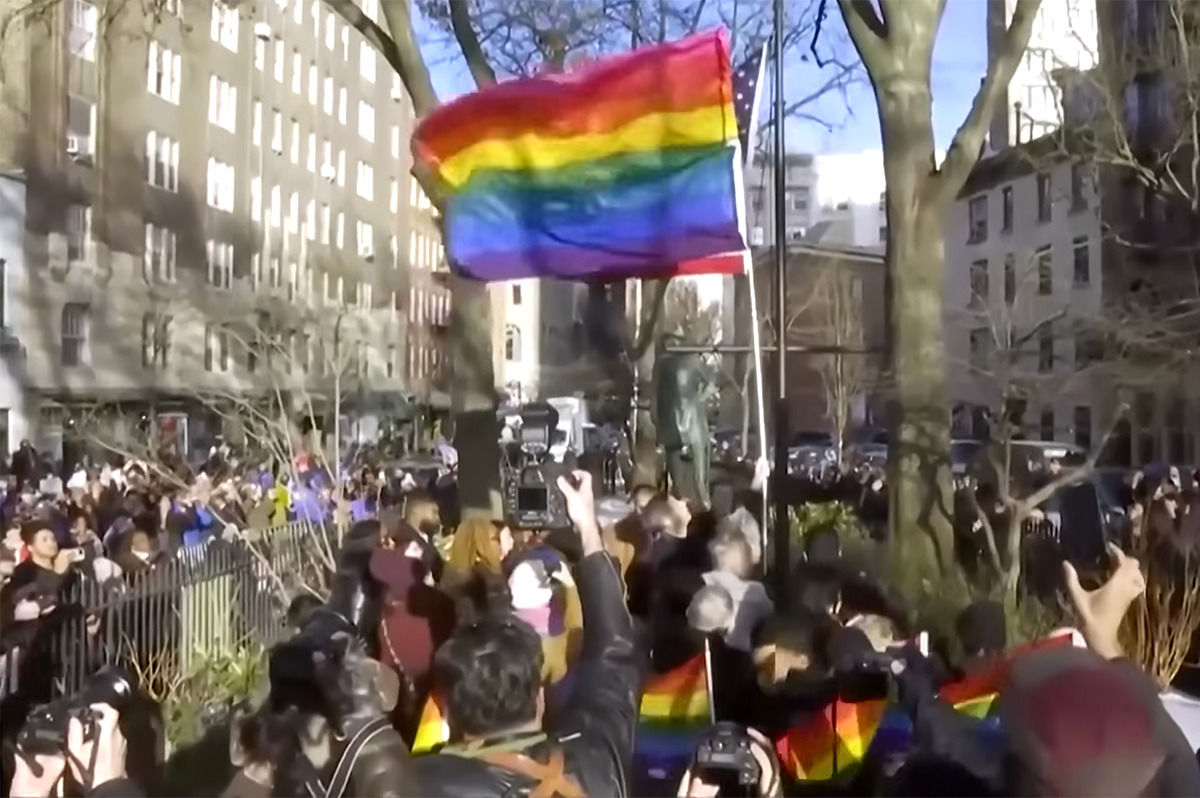
The Pride flag will once again fly over the Stonewall National Monument in New York following a court order requiring the National Park Service to raise it over the site.
The decision follows a lawsuit filed by Lambda Legal and the Washington Litigation Group in the U.S. District Court for the Southern District of New York, which challenged the removal as unconstitutional under the Administrative Procedure Act and argued that the government unlawfully targeted the LGBTQ community.
In February, the NPS removed the Pride flag from the Stonewall National Monument, the first national monument dedicated to LGBTQ rights and history in the U.S. The move followed a Jan. 21 memorandum issued by President Donald Trump-appointed NPS Director Jessica Bowron restricting which flags may be flown at national parks. The directive limited displays to official government flags, with narrow exceptions for those deemed to serve an “official purpose.”
Plaintiffs successfully argued that the Pride flag meets that standard, given Stonewall’s status as the birthplace of the modern LGBTQ rights movement. They also contended that the policy violated the APA by bypassing required public input and improperly applying agency rules.
The lawsuit named Interior Secretary Doug Burgum, Bowron, and Amy Sebring, superintendent of Manhattan sites for the NPS, as defendants. Plaintiffs included the Gilbert Baker Foundation, Village Preservation, Equality New York, and several individuals.
The court found that the memorandum — while allowing limited exceptions for historical context purposes — was applied unlawfully in this case. As part of the settlement, the NPS is required to rehang the Pride flag on the monument’s official flagpole within seven days, where it will remain permanently.
“The sudden, arbitrary, and capricious removal of the Pride flag from the Stonewall National Monument was yet another act by this administration to erase the LGBTQ+ community,” said Karen Loewy, co-counsel for plaintiffs and Lambda Legal’s Senior Counsel and Director of Constitutional Law Practice. “Today, the government has pledged to restore this important symbol back to where it belongs.”
“This is a complete victory for our clients and for the LGBTQ+ community,” said Alexander Kristofcak, lead counsel for plaintiffs and a lawyer with Washington Litigation Group. “The government has acknowledged what we argued from day one: the Pride flag belongs at Stonewall. The flag will be restored and it will fly officially and permanently. And we will remain vigilant to ensure that the government sticks to the deal.”
“Gilbert Baker created the Rainbow Pride flag as a symbol of hope and liberation,” said Charles Beal, president of the Gilbert Baker Foundation. “Today, that symbol is restored to the place where it belongs, standing watch over the birthplace of the modern LGBTQ+ rights movement.”
“The government tried to erase an important symbol of the LGBTQ+ community, and the community said no,” said Amanda Babine, executive director of Equality New York. “Today’s accomplishment proves that when we stand together and fight back, we win.”
“The removal of the Pride flag from Stonewall was an attempt to erase LGBTQ+ history and undermine the rule of law,” said Andrew Berman, executive director of Village Preservation. “This settlement restores both.”
With Loewy on the complaint are Douglas F. Curtis, Camilla B. Taylor, Omar Gonzalez-Pagan, Kenneth D. Upton Jr., Jennifer C. Pizer, and Nephetari Smith from Lambda Legal. With Kristofcak on the complaint are Mary L. Dohrmann, Sydney Foster, Kyle Freeny, James I. Pearce, and Nathaniel Zelinsky from Washington Litigation Group.

Trailblazing trans Brazilian lawmaker refuses to set foot in Trump’s America

Lebanese LGBTQ group responds to latest war

Inside the LGBTQ records of Todd Blanche and Markwayne Mullin

PHOTOS: Denali at Pitchers

Whitman-Walker Health to present ‘Pro Bono Excellence’ award to law firm

HRC endorses Va. ballot initiative to redraw congressional districts

BLUF leather social set for April 10 in Rehoboth

The emperor has no clothes: how rhetoric fuels repression in Eswatini

LGBTQ community explores arming up during heated political times

Celebrations of life planned for Sean Bartel
-

 2026 Midterm Elections5 days ago
HRC endorses Va. ballot initiative to redraw congressional districts
-
Rehoboth Beach5 days ago
BLUF leather social set for April 10 in Rehoboth
-
Eswatini5 days ago
The emperor has no clothes: how rhetoric fuels repression in Eswatini
-
National5 days ago
LGBTQ community explores arming up during heated political times