Local
Multi-million dollar Gay Games lawsuit settled
Cleveland foundation that bested DC for games settled with City of Cleveland, Federation of Gay Games after being ousted as organizers

A Cleveland-based foundation that beat LGBT sports groups in D.C. and Boston for the right to host the 2014 Gay Games agreed to an out-of-court settlement in July that ended its multi-million dollar lawsuit against the City of Cleveland, the Federation of Gay Games and other Cleveland-based sports groups.
The Cleveland Synergy Foundation filed the lawsuit in the fall of 2010 after the FGG revoked its contract to organize the Gay Games on grounds that it allegedly failed to meet the terms of the contract. The foundation denied it had breached its contract and accused the FGG and Cleveland city officials of conspiring to break a legal and binding contract calling for the Synergy Foundation to organize and operate the games in the Cleveland-Akron area.
The Gay Games is an international LGBT sports competition modeled after the Olympics and held every four years. It usually draws more than 10,000 athletes and spectators to the host city.
Due to public reporting requirements, Cleveland officials disclosed that the city paid $475,000 to Cleveland Synergy Foundation to settle the lawsuit. But the settlement terms with the other parties named in the suit, including the Federation of Gay Games, were sealed by the court at the request of the parties involved.
A spokesperson for the FGG declined to disclose what, if anything, the non-profit LGBT sports organization paid as part of the settlement.
“The Federation of Gay Games confirms all litigation involving the Gay Games has been terminated and the parties have resolved to ensure that the 2014 Gay Games in Cleveland-Akron are a success,” said FGG spokesperson Kelley Stevens in a statement to the Blade.
At the time it ousted Cleveland Synergy the FGG hired a new entity called the Cleveland Special Events Corporation to organize and operate the 2014 Gay Games.
In its 2010 finance report to the IRS, which is required for all non-profit, tax-exempt groups, the FGG reported that it incurred a deficit of $55,349, with $99,641 in revenue and $154,349 in expenses. FGG spokesperson Stevens did not respond to a question asking if expenses associated with the lawsuit were responsible for some or the entire 2010 deficit.






District of Columbia
Blade welcomes fall intern
Alexis McLean is student at University of North Florida
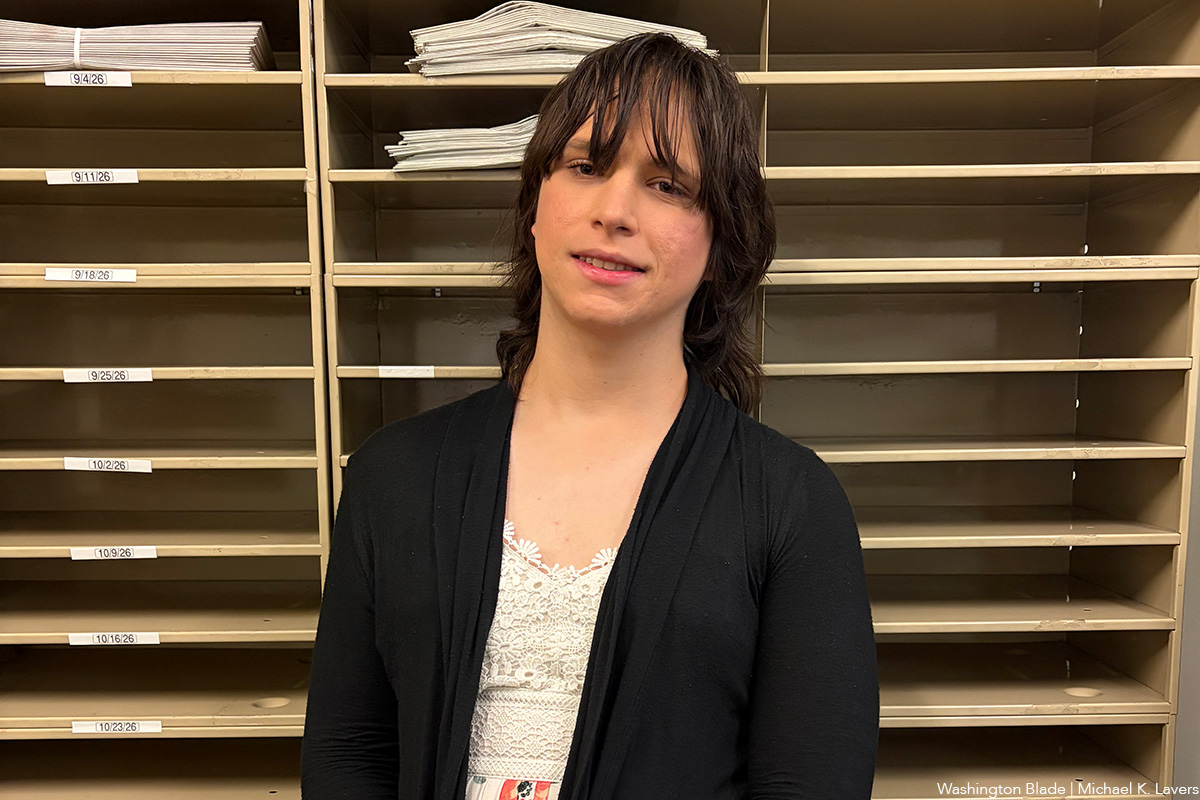
The Washington Blade this week welcomed Alexis McLean as its fall intern.
Alexis is studying political science at the University of North Florida in Jacksonville, Fla. She is interning with the Blade as part of a continued partnership with the Washington Center.
“I am looking forward to spending my time in the fall with the Washington Blade, as this is a new experience for me,” said Alexis. “I have not experienced any journalist jobs in the past so this would be my first time, and I am excited to better my writing and communications skills with this internship.”
Alexis’s internship with the Blade ends in early December.
Rehoboth Beach
SUNFESTIVAL takes center stage as Rehoboth Beach closes out summer
Labor Day Weekend bustling with events, including David Archuleta performance

Labor Day Weekend marks the unofficial end of summer in Rehoboth Beach, but there will be no shortage of LGBTQ events, with CAMP Rehoboth’s annual SUNFESTIVAL taking over town this weekend.
Thursday (9/3)
Get your Labor Day Weekend started early Thursday night with happy hour from 5-7 p.m. at Diego’s Bar & Nightclub, followed by Naughtee Bingo hosted by Magnolia Applebottom at 8:30 p.m.
After bingo, the party continues with Dancing at Diego’s from 9 p.m. to 1:30 a.m.
Aqua Bar & Grill will also kick off its Labor Day Weekend festivities Thursday with a DJ spinning from 9 p.m.-1 a.m.
Friday (9/4)
The weekend ramps up Friday night at Aqua, where DJ Matt Bailer will keep the dance floor moving from 9 p.m.-1 a.m.
Over at Diego’s, DJ Steve Sidewalk will then take over Diego’s for Freedom Friday from 9 p.m.-1:30 a.m.
Saturday (9/5)
The main event of the weekend arrives Saturday with the opening night of CAMP Rehoboth’s SUNFESTIVAL.
Billed as the ultimate party to close out the summer, SUNFESTIVAL has become one of Rehoboth’s signature Labor Day Weekend events. The annual celebration sells out each year, with proceeds benefiting CAMP Rehoboth.
Doors open at 6:30 p.m. with refreshments available at the cash bar while attendees are invited to socialize and find their seats.
Saturday night will feature local singer Ashley Williams as the opening performer, followed by headliner David Archuleta. The event will also feature a live auction.
Back across town Saturday, Aqua will continue its Labor Day Weekend DJ lineup from 9 p.m. to 1 a.m.
Diego’s will also have plenty happening, with ‘Splash Party’ hosted by Magnolia Applebottom at 5 p.m., followed by a Saturday Dance Party with Brett Oosterhaus from 9 p.m.- 1:30 a.m.
The Blue Moon hosts its popular Legends Show at 9 p.m. It’s an all-live singing show by the Blue Moon cast of celebrity impersonators.
Etienne Pilon has taken Rehoboth by storm this summer. Check out the talented singer/pianist at The Pines from 7-10 p.m.
Sunday (9/6)
Sunday’s SUNFESTIVAL event will shift the focus to the dance floor, with globally renowned DJs Robbie Leslie and James Anthony scheduled to perform. Doors open at 7 p.m., with dancing continuing until 1 a.m.
On Sunday, Aqua will throw its annual White Party, with DJs spinning from 9 p.m.-1 a.m. Guests are encouraged to dress in white for the holiday weekend celebration.
Diego’s will host its Sunday High T-Dance with Pamala Stanley at 5 p.m. Later that evening, DJ Tannr will be spinning at 9 p.m.
John Flynn is on the piano from 6-8 p.m. at the Blue Moon.
Monday (9/7)
The final day of Labor Day Weekend brings one last chance to hit the dance floor before summer officially winds down.
Aqua will close out its five-day Labor Day Weekend celebration with DJ Biff from 3-7 p.m.
Maryland
Anne Arundel schools now need parent permission to call trans students by preferred names
Conservative groups challenged system’s policy
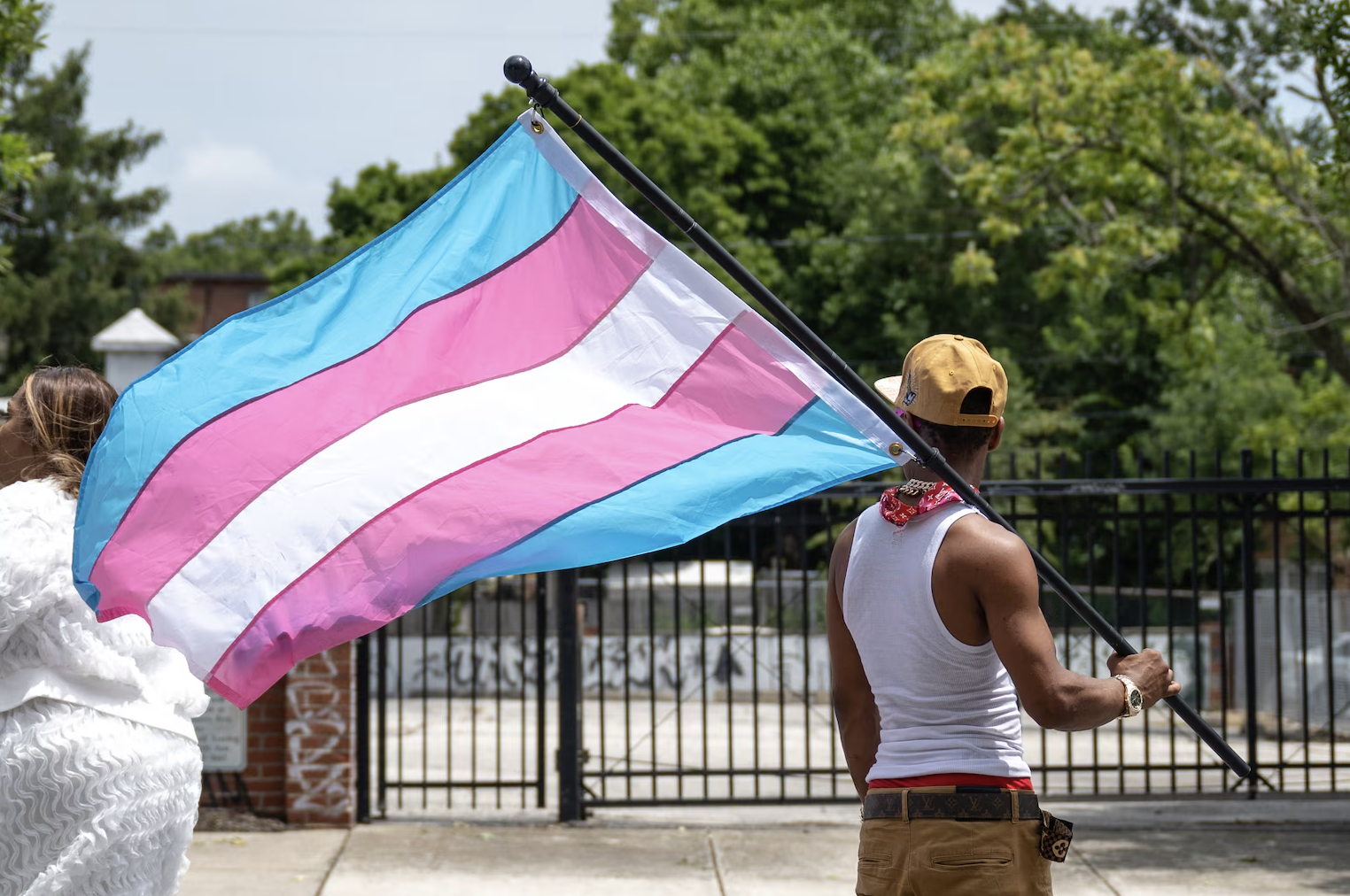
By JESSICA CALEFATI | Anne Arundel County Public Schools staff cannot use transgender students’ preferred names if their parents oppose it, according to an internal document reviewed by the Banner, a change that comes after conservative groups challenged the school system’s approach to gender identity.
Teachers union president Kristina Korona told members in an Aug. 20 email that the new guidance undermines district policy on acceptance and inclusivity and “will begin harming affected students immediately.”
Previously, the district didn’t require parental permission to use a high school student’s chosen name and pronouns corresponding to their gender identity, the internal document says. Now it does. The change comes as parents challenge the suburban school system’s gender identity policy and regulation in court and the Trump-Vance administration threatens the district’s funding.
The rest of this article can be found on the Baltimore Banner’s website.

Markey’s primary win deemed success for LGBTQ activists

Top Bulgarian court rules government must legally recognize trans people

Lou Chibbaro Jr. documentary wins award from NLGJA

Beloved D.C. ‘Old Catholic’ Bishop Charles Braun dies at 86

Blade welcomes fall intern

E-INFOSOL leaders encourage youth to pursue tech careers

New book examines Trump cuts to LGBTQ healthcare

Immersive ‘Nation-State’ imagines a society free of authoritarianism

Poland begins to legally recognize same-sex marriages from other countries

HRC president campaigns for Chris Pappas in NH
-

 Technology4 days ago
E-INFOSOL leaders encourage youth to pursue tech careers
-
Books4 days ago
New book examines Trump cuts to LGBTQ healthcare
-
Theater3 days ago
Immersive ‘Nation-State’ imagines a society free of authoritarianism
-
Poland2 days ago
Poland begins to legally recognize same-sex marriages from other countries