National
Tempers flare over negative messages in Va., S.F.
Victory Fund defends ‘attack’ mailings amid criticism from Cleve Jones, other Dems

Negative campaign messages were unleashed on behalf of openly gay candidates in Virginia and San Francisco during the past two weeks, raising the ire of LGBT activists and their straight allies.
In both cases, the messages were issued by the Gay and Lesbian Victory Fund, a non-partisan group that raises money and campaigns to help elect openly LGBT candidates across the country.
One of the group’s messages, issued in the form of an email sent to the Victory Fund’s members and donors, targeted Virginia State Sen. Janet Howell (D-Reston), who is being challenged by gay Republican Patrick Forrest, an attorney and former senior official with the U.S. Department of Homeland Security.
The other message came in the form of a mailing that targeted San Francisco City Attorney Dennis Herrera, who is being challenged in his race for San Francisco mayor by gay former San Francisco Supervisor Bevan Dufty. Both are Democrats and the two are among 16 candidates running in the hotly contested mayoral race.
Victory Fund spokesperson Denis Dison said the email in Virginia and the mailing in San Francisco were aimed at informing Victory Fund supporters in Virginia and mostly LGBT voters in San Francisco of the gay candidates’ qualifications and their opponents’ shortcomings as part of a widely used campaign practice in American politics.
But the messages angered some gay Democratic activists in Virginia as well as LGBT Democrats and independents in San Francisco who are backing Herrera. The messages were signed by Victory Fund president and CEO Chuck Wolfe.
In the Virginia email, Wolfe cited a Washington Blade story last month that reported Forrest and his supporters had accused the Howell campaign of using “gay baiting” tactics against Forrest. The Blade story reported that Forrest and his supporters learned that a Democratic Party volunteer approached voters and asked them if they knew that Forrest was gay and allegedly told them he would promote a “homosexual agenda” in the state’s public schools.
Without mentioning Howell by name, Wolfe stated in his email, “That kind of divisive campaigning has no place in politics, and it’s wrong no matter which party does it.
“We’re standing up for Patrick because openly gay voices in politics are far too rare in places like Virginia, and because he’ll be the only openly LGBT Republican state legislator in America if he wins his campaign,” Wolfe said in his email.
Howell told the Blade the Democratic campaign worker was not part of her campaign and acted without authorization and was quickly dismissed from any role in the party dealing with the Howell campaign.
Leaders of LGBT Democrats of Virginia, a statewide group, called Howell one of the LGBT community’s strongest straight allies in the Virginia Legislature. The group notes that Democrats are clinging to a razor-thin majority in the State Senate and a defeat for Howell and just one other Democrat would flip the Senate into the control of Republicans, opening the way for passage of anti-gay bills next year and the certain defeat of LGBT-supportive legislation.
“I get their interest in wanting to endorse a gay candidate,” said Terry Mansberger, chair of the Virginia Democratic Party’s LGBT Caucus. “But I don’t think it was necessary to attack Janet Howell, a very supportive LGBT ally.”
Mansberger said Forrest’s support for LGBT equality, including same-sex marriage, would make him a welcome addition to the State Senate. But he called Forrest’s candidacy ill timed and the Victory Fund’s support for him irresponsible, saying the ouster of Howell and a GOP takeover of the Senate would be devastating to LGBT equality in Virginia for at least the next two years.
David Lampo, president of Log Cabin Republicans of Virginia, a gay group that has endorsed Forrest, disputes that assessment, saying Democrats would likely retain control of the Senate through wins in other races. He said Forrest would be a strong advocate for LGBT rights in the Senate and within the Senate’s GOP caucus regardless of whether Republicans gain control of the body.
Dison of the Victory Fund disputed claims by Howell and her gay supporters that the Victory Fund had attacked Howell or issued an “attack” ad, as some Howell backers have described it.
“Based on information published by the Washington Blade, the Fund asked its own supporters via email to donate to Patrick’s campaign in the face of gay-baiting reportedly employed by Democratic Party operatives,” Dison said. ”That email never mentioned the name of Patrick’s opponent, so charges that we have somehow “targeted” or “attacked” her are baseless.”
In a separate race, Democrat Adam Ebbin, a gay member of the Virginia House of Delegates, is considered the strong favorite to win a seat in the State Senate representing parts of Alexandria, Arlington and Fairfax counties.
The Victory Fund has also endorsed Ebbin. Lampo said his group chose not to endorse Ebbin’s Republican opponent, political newcomer Tim McGhee. Lampo said McGhee declined to endorse proposed legislation to ban discrimination based on sexual orientation and gender identity for state employees.
McGhee created a stir last month when he appeared before an election forum sponsored by the Arlington Gay and Lesbian Alliance and recited biblical passages to stress his personal beliefs as a Christian and questioned whether most gays are comfortable reconciling their sexual orientation and religious upbringing.
Similar to Ebbin, Forrest has expressed strong support for legislation banning employment discrimination for Virginia state employees as well as other LGBT-supportive measures, including marriage equality for same-sex couples and the repeal of a state constitutional amendment approved by Virginia voters in 2006 that bans same-sex marriage in the state.
In a development that LGBT activists see as a positive sign, a third openly gay candidate in Virginia will be on the ballot in the Nov. 8 election. Michael Sutphin, 27, a public affairs coordinator at Virginia Tech University, is running for a seat on the Blacksburg, Va., Town Council.
Sutphin is a graduate of Virginia Tech University, which is located in Blacksburg, and served as president of the college’s LGBT Alliance. He currently serves on the board of Equality Virginia, a statewide LGBT group.
He’s among five candidates running for three seats up for election on the Blacksburg Council. Under the town’s election rules, the three candidates receiving the highest number of votes win election to the seats. Sutphin received the endorsement of the Roanoke Times, the region’s most prominent daily newspaper.
In San Francisco, the Victory Fund mailing outraged some LGBT activists who are supporting Herrera, a City Attorney who is considered one of the strongest LGBT-supportive politicians in California.
Both Herrera and Dufty, along with most of the other 14 candidates in the mayoral race, are Democrats.
Dufty is vying to become the first openly gay mayor in a city considered to be the nation’s epicenter of LGBT rights and equality. The Victory Fund, which endorsed him earlier this year, released its campaign mailing against Herrera last month at a time when Herrera was considered Dufty’s strongest competitor for LGBT votes.
The ad includes a brightly colored depiction of a fish impaled on a hook described as a fishing “lure,” which the ad says illustrates how powerful law firms in the city landed lucrative city contracts from the Office of the City Attorney, which Herrera headed. The ad, citing news media sources, says at least five law firms that donated to Herrera’s campaign for mayor have received a combined total of more than $1.2 million in city contracts.
“The donors are fishing and Dennis Herrera is taking the bait,” the ad says.
Victory Fund spokesperson Dison said his group produced the ad independently from the Dufty campaign without the approval of — or any interaction with — Dufty’s campaign. Dison noted that the practice is used widely by Democrats and Republicans in election campaigns as a means of informing voters of the shortcomings and potential problems of an opponent.
“There’s some criticism there, but it’s all coming from people who are involved in local politics and who have their own candidates and old rivalries,” Dison said. “It gets extremely complicated, but they’re essentially asking us to back off from our support for Bevan Dufty, and we’re not going to,” he said.
“He is an obviously viable and an experienced candidate,” Dison said of Dufty “He has been in government for more than 20 years. He has been elected twice to the Board of Supervisors. And the Bay Area Reporter, when they endorsed him, said he is as qualified as anybody in the field of candidates and it’s time we elected a gay person as mayor.”
The Bay Area Reporter is San Francisco’s LGBT community newspaper. The city’s two LGBT Democratic Clubs, the Harvey Milk and Alice P. Toklas clubs, endorsed Herrera over Dufty.
However, the Toklas Club endorsed Dufty for “second choice” in a first-of-its-kind mayoral voting system for San Francisco that allows every voter to select three candidates and designate them as their first, second and third choice for mayor.
San Francisco gay activist Cleve Jones, a collaborator with San Francisco’s famed gay leader Harvey Milk in the 1970s and the lead organizer of the 2009 LGBT Equality March on Washington, is supporting Herrera. He said he’s outraged over the Victory Fund’s attack ad targeting Herrera in an effort to boost Dufty’s candidacy.
Jones points to Dufty’s role as a lead supporter of the appointment of then San Francisco City Administrator Ed Lee as interim mayor in January of this year. At the time, Lee, who became the city’s first Asian-American mayor, promised he would not seek election for a full term. The Board of Supervisors appointed him mayor to fill the unexpired term of Mayor Gavin Newsom, who resigned after winning election as lieutenant governor.
Lee upset many of his fellow politicians and city officials when he announced he had changed his mind and would enter the mayoral race this year. Many in the Asian-American community along with other supporters urged him to run, saying, among other things, that his role as the city’s first Chinese mayor was historic and he should stay on as mayor beyond his interim appointment.
Jones told the Blade that he and other LGBT activists believe Dufty entered the race as Lee’s stalking horse, with the aim of taking gay votes away from Herrera, who has been viewed as a longstanding champion among gay voters.
“All of the polls show that Bevan is not placing at all,” Jones said.
Dufty, in a telephone interview with the Blade on Tuesday, called Jones’ claims “ridiculous.” He said that under the new voting system for mayor that gives voters three choices, he believes he has a strong chance of winning the race in the second round of “virtual” vote counting.
Under the new system, if no candidate receives at least 51 percent of the “first choice” vote, the candidate with the least number of votes is eliminated and the city counts the second choice votes of that candidate. The process is repeated until a candidate obtains a 51 percent majority.
Dufty, who said he’s convinced the vote count will go to at least one additional round, points out that he has raised $1.3 million for his campaign, the second highest amount raised after Lee, who raised just under $1.5 million. He said polls showing Lee far ahead of all the other candidates are wrong because the polls can’t accurately predict the outcome in the “ranked choice” voting system.






Pennsylvania
Pa. House passes bill to codify marriage equality in state law
Governor supports gay state Rep. Malcolm Kenyatta’s measure

The Pennsylvania House of Representatives on Wednesday passed a bill that would codify marriage equality in state law.
House Bill 1800 passed by a 127-72 vote margin. Twenty-six Republicans voted for the measure.
The Republican-controlled Pennsylvania Senate will now consider the bill that state Rep. Malcolm Kenyatta (D-Philadelphia), who is the first openly gay person of color elected to the state’s General Assembly, introduced. Democratic Gov. Josh Shapiro supports the measure.
“Here in Pennsylvania, we believe in your freedom to marry who you love,” said Shapiro on Wednesday. “Today, the House has stepped up to protect that right.”
BREAKING: The Pennsylvania House just passed @RepKenyatta's bill to codify marriage equality into law in PA — and they did it with broad bipartisan support.
— Governor Josh Shapiro (@GovernorShapiro) March 25, 2026
Here in Pennsylvania, we believe in your freedom to marry who you love. Today, the House has stepped up to protect that…
Florida
DeSantis signs emergency bill that restores Fla. ADAP funding
Temporary funds to last through June 30
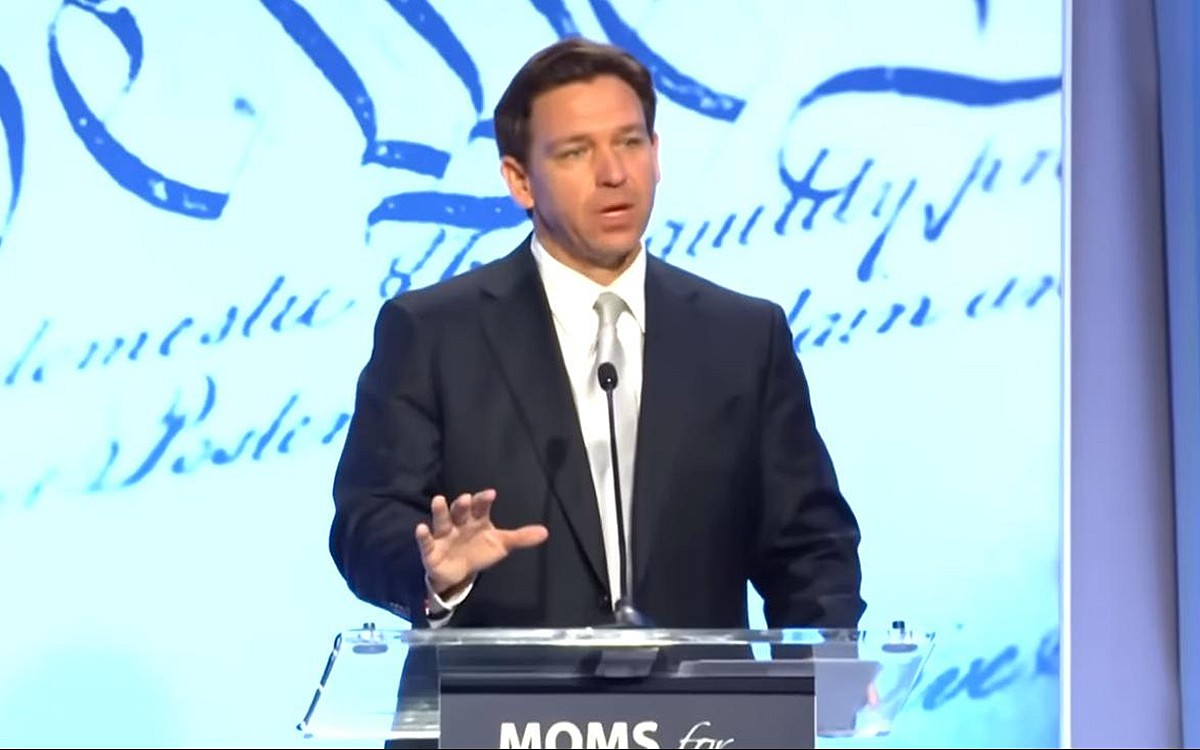
After the Florida Department of Health made huge cuts to the AIDS Drug Assistance Program in January, Republican Gov. Ron DeSantis has signed emergency legislation restoring HIV access to more than 12,000 Floridians.
Two months ago, as the Washington Blade reported, the Sunshine State cut the vast majority of those in ADAP by shifting the income levels required for eligibility — without following standard procedure when changing government policy outside of legislative or executive action.
The bill, signed by DeSantis on Tuesday, passed both chambers of the Florida Legislature unanimously and appropriates $30.9 million in emergency bridge funding through June 30, 2026. It restores Florida’s ADAP income eligibility to 400 percent of the Federal Poverty Level — the level it was prior to the January cuts. The legislation also requires the FDOH to submit detailed monthly financial reports to legislative leadership beginning April 1.
Under the old policy, eligibility would have been limited to those making no more than 130 percent of the federal poverty level, or $20,345 per year.
“For 10 weeks, 12,000 Floridians living with HIV did not know if they could fill their next prescription. Today, they can,” Esteban Wood, director of advocacy and legislative affairs at AIDS Healthcare Foundation, said in a statement.
The detailed reports now required to be sent to legislative leadership must include all federal revenues and expenditures, including manufacturer rebates; enrollment figures by county and insurance status; prescription utilization by drug class; and any projected funding shortfalls. This is the first time the Legislature has required this level of financial transparency from the program.
DeSantis signed the legislation one day after a Leon County Circuit Court judge denied AIDS Healthcare Foundation’s request for an injunction to block the significant changes the DeSantis administration is making to the program, which it claims faces a $120 million shortfall for calendar year 2026.
AIDS Healthcare Foundation, a national organization focused on protecting and expanding HIV healthcare access and prevention methods, filed a lawsuit over the change in eligibility, arguing the Florida Department of Health did not follow the laid out path for formally changing policy and was acting outside established procedures.
Typically, altering eligibility for a statewide program requires either legislative action or adherence to a multistep rule-making process, including: publishing a Notice of Proposed Rule; providing a statement of estimated regulatory costs; allowing public comment; holding hearings if requested; responding to challenges; and formally adopting the rule. According to AIDS Healthcare Foundation, none of these steps occurred.
The long-term structure of ADAP will be determined by the 2026–2027 fiscal year state budget, something that lawmakers have until June 30 to finish.
Federal Government
Markwayne Mullin confirmed as next DHS secretary
Okla. senator to succeed Kristi Noem
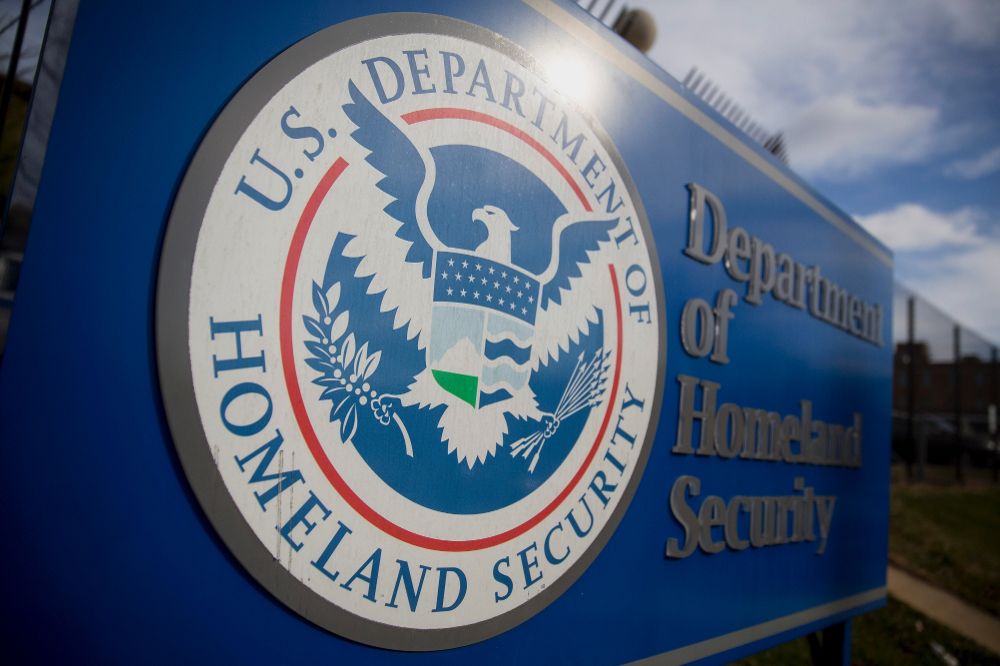
The U.S. Senate confirmed Markwayne Mullin as the next secretary of Homeland Security on Monday, as the agency continues to grapple with what lawmakers have described as a “never-ending” funding standoff, with Democrats attempting to withhold funding from one of the nation’s largest and most costly agencies.
Mullin — a Republican senator from Oklahoma, former mixed martial arts fighter, and plumbing business owner — was confirmed in a 54–45 vote. Two Democrats — U.S. Sens. John Fetterman (D-Pa.) and Martin Heinrich (D-N.M.) — sided with Republicans in supporting his confirmation.
The new agency head is expected to follow the policy direction set by President Donald Trump, emphasizing stricter immigration enforcement. This includes proposals to support immigration agents at polling sites and to cut funding to so-called “sanctuary cities.”
Mullin replaces Kristi Noem, who was fired earlier this month following a widely scrutinized 2-day congressional hearing on Capitol Hill.
During the hearing, Noem faced intense questioning over her response to several crises, including the fatal shooting of two American citizens in Minneapolis by U.S. Immigration and Customs Enforcement agents, a $220 million border security advertising campaign that featured her on horseback near Mount Rushmore amid one of the largest federal workforce reductions in U.S. history, and the federal response to major natural disasters such as the July 2025 Texas floods and Hurricane Helene in 2024.
Noem had previously drawn criticism for a series of policy decisions in South Dakota that broadly focused on restricting the rights of LGBTQ individuals. In 2023, she signed House Bill 1080, banning gender-affirming medical care for transgender minors. She also signed legislation and executive orders restricting trans athletes’ participation in women’s sports, as well as the state’s “Religious Freedom Restoration Act,” which critics argued enabled discrimination against LGBTQ individuals. Additionally, the state canceled contracts related to LGBTQ support services — including suicide prevention and health care navigation programs‚ and later agreed to a $300,000 settlement with trans advocacy group, The Transformation Project.
Despite her removal from DHS, Noem will remain in the Trump-Vance administration as a special envoy for the “Shield of the Americas,” an initiative aimed at promoting U.S. influence in the Western Hemisphere, including efforts to counter cartel networks, reduce Chinese influence, and manage migration.
The new head of DHS has served in Congress since 2013, in both houses of the federal legislature. While in the Senate and a member of the Health, Education, Labor, and Pensions (HELP) Committee, Mullin has been a vocal critic of policies aimed at expanding LGBTQ inclusion. He led a group of lawmakers in urging the Administration for Community Living to reverse a rule requiring states to prioritize Older Americans Act services based on sexual orientation and gender identity, arguing the policy could have unintended consequences.
Mullin also makes history as the first Native American — and a citizen of the Cherokee Nation — to lead the Department of Homeland Security. He was also among the 147 Republicans who voted to overturn the 2020 presidential election results despite no evidence of widespread fraud, and was present in the U.S. House of Representatives chamber on Jan. 6.

‘No Kings’ protests set for D.C.

Border to border: modern slavery and human trafficking in refugee movements across East Africa

New IOC policy bans trans women from Olympics

Introducing the Torchbearers Awards honoring queer, trans women and nonbinary people

Pa. House passes bill to codify marriage equality in state law

PHOTOS: Capital Stonewall Democrats 50th anniversary

‘Inherit the Wind’ isn’t about science vs. religion, but the right to think

Small is beautiful: subcompact SUVs

Polish court rules country must recognize same-sex marriages from EU states

Capital Stonewall Democrats 50th anniversary gala draws sold out crowd
-

 Photos4 days ago
PHOTOS: Capital Stonewall Democrats 50th anniversary
-
Theater5 days ago
‘Inherit the Wind’ isn’t about science vs. religion, but the right to think
-
Autos5 days ago
Small is beautiful: subcompact SUVs
-
Poland4 days ago
Polish court rules country must recognize same-sex marriages from EU states