Arts & Entertainment
‘Queer Eye’ on D.C.
Gay designer Thom Filicia in region with new line this weekend
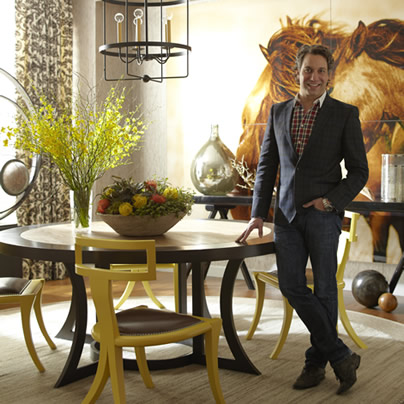
Thom Filicia
‘Conversation on Design’
Saturday
11:30 a.m.
Belfort Furniture
22267 Shaw Road
Dulles, VA 20166
703-406-7600
[email protected]
belfortfurniture.com
thomfilicia.com
Reservations recommended

(Photo courtesy Thom Filicia Design)
Thom Filicia says the work he does on TV and with his eponymous design firm is apples and oranges — most people may know him from the small screen but it’s his years of work on the latter that gives him the credibility to do the former.
He says his TV work is usually “fast and furious” and personality-driven incorporating product from retail shops like Crate & Barrel and Pottery Barn, while the work he does for his private design firm — recent clients are Tina Fey and Jennifer Lopez — is “kind of a different breed.”
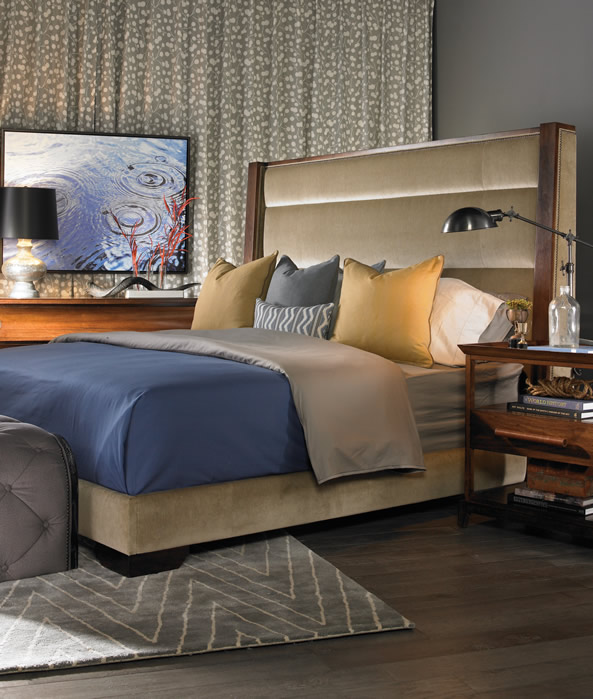
He rattles off a torrent of adjectives for his product line — authentic, real, substantive, smartly designed, “accessible, but not super accessible,” familiar, comfortable, approachable.
“It’s silhouettes and designs that are familiar … but also fresh and different and unique and authentic,” he says during a break at his Manhattan-based SoHo office where he and a 12-member staff work. “It’s for the way we live now as opposed to trying to reproduce a look and feel from decades prior or trying to make something that feels extremely sleek and modern.”
Filicia says his pieces can temper whatever spaces they’re in.
“The furniture I design can make a loft in the city feel warm and inviting or it can make the Georgetown colonial outside the city feel hip and cool. It’s a really nice bridge of modern and classic and I feel that we do it in a way that feels different.”
Washington-area residents will get to see Filicia’s work up close and personal at Belfort Furniture (three miles north of Dulles Airport in Virginia), which is unveiling his collection “Thom Filicia Home” Saturday at 11:30 a.m. Filicia will be on hand to answer questions and will mingle with guests during a wine reception immediately after. A book signing was planned but his latest tome, “Thom Filicia Style,” is sold out at the moment.
“It’s a good problem to have,” he says with a laugh. “We sold about 15,000 of the first run, so that’s both the good news and the bad news. But sure, if somebody wants me to sign a napkin or something, I’ll be happy to.”
Belfort management says it’s happy to have Filicia’s line in its store.
“We’re very excited to add this distinctive American-chic collection to our lineup,” says Michael Huber, Belfort Furniture CEO. “The Thom Filicia Home Collection offers unexpected design elements for every décor from classic to modern.”
Filicia, of course, is best known from “Queer Eye” (originally called “Queer Eye for the Straight Guy”), the groundbreaking 2003-’07 Bravo series on which he was one of the “Fab Five” along with Ted Allen, Kyan Douglas, Carson Kressley and Jai Rodriguez. He also hosted “Dress My Nest” for three years on the Style Network and has more TV and book projects in the works. A new book to be called “American Beauty” is slated for an October release, he did a holiday special for HGTV and has pitches for future shows in discussions with that channel.
“Once ‘Queer Eye’ was over, I knew I always wanted to keep TV as something near and dear and something I would participate in and evolve and grow with hopefully, but my focus has always been on my core business.”
With the new Belfort relationship, the Washington area will join retailers that carry his work in San Francisco, Los Angeles, New York, Dallas, Atlanta, Chicago, Toronto and more. Some of the line at Belfort will be pieces from the last few years that have been popular elsewhere. Others are new.
(Photo courtesy Thom Filicia Design)
“I’m really excited about this new relationship,” Filicia says. “They have really great sensibility and they’ve been really excited about our product so there’s some great synergy. I really love what they’re doing and it’s a great operation they have in Dulles. I’m really excited to have them on board.”
Filicia keeps up with his old “Queer Eye” pals. He’s seen Allen’s current Food Network competition show “Chopped” and says it’s “great.”
“It’s a great hook and it’s fun,” he says. “He’s done a great job with it.”
He sees his old pals “every couple of months. Though Rodriguez and Douglas are based in Los Angeles now (Kressley is in New York and Allen splits his time between New York and Chicago), they’re together enough to have maintained their friendships.
“It usually starts with one of us texting the others and we’ll start joking around and soon we’re all laughing and trying to figure out a time to meet up.”
Filicia and long-time partner Greg Calejo, who does strategic marketing for Kerzer International, are almost at the nine-year mark. He says marriage has been discussed but admits he has an offbeat take on it.
“I kind of feel you have to earn marriage,” he says. “I almost feel like it should be done backwards. Like you see if it works out, then it should be a reward for having made it 10 or 15 years. So we’ll see.”
And Filicia has gracious words for other famous gay designers, whether they’re out or not.
Of Nate Berkus, the Oprah designer who just wrapped his own talk show, Filicia says he possesses a “really interesting concept” and has a “sweet personality.”
“I’ve only seen his show once; I was sad to hear it’s been canceled, but he adds another layer to the world of designers. My style, of course, is different, both in design and in our personalities. I think I’m a little more quick witted. I like to have fun when I’m designing and I tend to be a bit more self deprecating. I think his work is perhaps a bit drier. I think mine is a little more intoxicated and his is more sober.”
Mitchell Gold (Mitchell Gold+Bob Williams)?
“I’ve known Mitchell a long time,” Filicia says. “They do really smart things with a basic furniture collection. I see them as kind of a Gap of the furniture world — doing something really great with really smart basics.”
Filicia chuckles when Christopher Lowell’s (“Interior Motives,” “It’s Christopher Lowell!”) name is mentioned.
“I hate to stereotype, but yeah, I think he’s gayer than a handbag,” Filicia says. “He’s kind of like the Corky St. Clair character in ‘Waiting for Guffman,’ always talking about his wife. I think Christopher Lowell is a really genius business man and a genius at marketing but what he does is so very different, it’s not something I’ve really connected with aesthetically, but I’m certainly a big fan of him as a businessman and designer. It’s the same reason there are millions of restaurants. Everybody wants something different so he fills a niche that’s greatly needed and it’s wonderful that he’s doing great things with the people who connect with what he does.”
And just for fun, what was it like being in the audience when Madonna kissed Britney and Christina at the 2003 MTV Video Music Awards? The Fab Five — white hot at the time — were in the audience and their riotous reaction shots are part of the legendary clip’s charm.
“It felt really staged. It probably looked a lot more organic on TV than it felt in person,” he says. “Being there seeing it live, it definitely felt like something that had been in the works for weeks and that there were layers and layers of planning to. … I enjoy Madonna’s music, but I’m not really a fan. I don’t feel she’s really done anything to give back the way Lady Gaga has. You look at all Lady Gaga has done for social awareness and I’ve always been a little disappointed that Madonna doesn’t seem to have that in her persona.”



Television
‘Lizzie Borden’ might be the best ‘Monster’ yet
Exquisitely realized, shrewdly written with outstanding performances
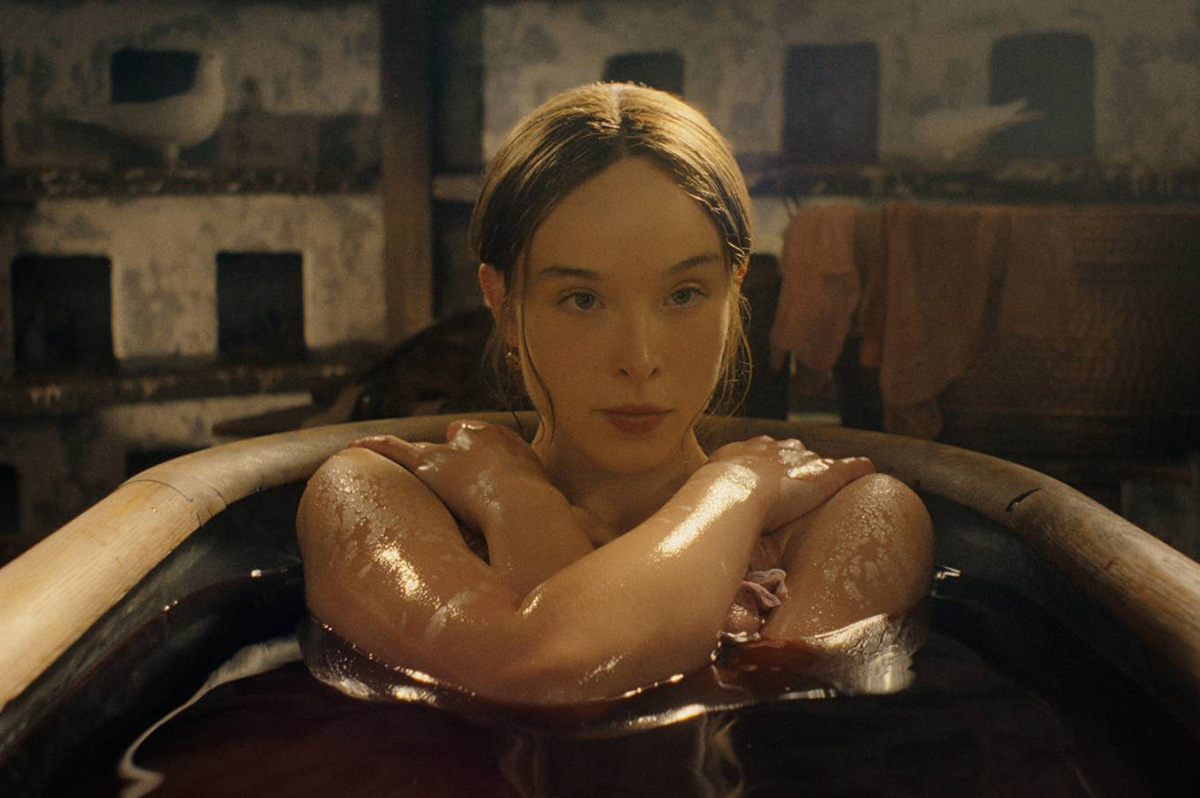
“When the legend becomes fact, print the legend.”
That famously cynical quote from the 1962 Western movie “The Man Who Shot Liberty Valance” could easily have been the mission statement behind the latest season of Ryan Murphy’s controversial anthology series, “Monster,” which retells the story of America’s most famous axe murderer – Lizzie Borden, who, in 1892, “took an axe” to her father and stepmother at their family home in Fall River, Mass.
Except, officially, she didn’t. Borden was acquitted of the killings in a trial that was a national sensation; the crime remained unsolved, and despite rumors and theories that have proliferated over the last century, nobody really knows what actually happened nor who was responsible for it.
Yet in the popular imagination, Lizzie is still remembered as a killer who got away with one of the most notorious murders in American history. Though she walked free and lived a life of wealth and high social position for another three decades after her trial, she never truly escaped the scandal; she would be forever branded as guilty, her alleged crime even immortalized in a children’s schoolyard rhyme, and all but a few die-hard theorists assume, unequivocally, that she was the killer. In other words, the legend of Lizzie Borden, axe-murderer, has “become fact.”
“Monster: The Lizzie Borden Story,” like most other retellings of this gruesome crime saga, “prints” the legend – and indeed, goes even further to canonize her into something like a radical feminist saint.
With Ella Beatty (daughter of Hollywood royalty Warren Beatty and Annette Bening) in the title role, the show frames Lizzie as the repressed and disregarded adult child of wealthy businessman Andrew Borden (Charlie Hunnam) and stepmother Abigail (Rebecca Hall), who married her father after her mother’s death; both of them treat her – and indeed, almost everyone around them – with dismissive cruelty. Andrew is an alcoholic who openly disdains both wife and daughter, while Abigail takes out her own frustration with the marriage on Lizzie, whom she has branded as a “simple” child that she never wanted to have – and a difficult one at that.
The arrival of a new household maid — Bridget Sullivan (Vicki Krieps), who goes by the name “Maggie” — changes Lizzie’s outlook and her destiny. Well-traveled, worldly, and deeply independent, Maggie befriends her and becomes both her companion and mentor, introducing her to new ideas and cultivating her sense of self-worth; they become lovers, their bond deepened by a dissatisfaction with the cultural limits imposed upon them by their status as women. As conditions within the household grow increasingly unbearable, they formulate a gruesome plan which, if they can succeed, will liberate them from the patriarchal subjugation that relegates them to the level of chattel while puffing a pipe full of expensive tobacco.
From there, writer/creator Ian Brennan takes us through an effectively grisly re-enactment of the famous murders and onward through the trial in which Lizzie, ironically benefitting from stereotyped male assumptions about what women are or are not capable of doing, is ultimately acquitted of the gruesome crime she absolutely DID commit. It then follows her – and Bridget – into the aftermath of the scandal, where a kind of imprisonment awaits them both, anyway.
Boldly crafted with cinematic flourish (six episodes were directed by Max Winkler, the two others by Sarah Adina Smith) and continuing the series’ tradition of lavishly depicted violence, one can’t deny that it’s a wild ride. It flaunts its contemporary attitude through fiercely eclectic musical choices in the soundtrack, from the lushly romantic classical tones of its late 19th-century period to ferociously feminist ‘90s punk; it includes graphic sex both tender and aggressive, juxtaposed with scenes of pastoral beauty and genteel refinement; and, as always in Ryan Murphy’s “true story” productions, it plays fast-and-loose with the facts, choosing instead to lean into artistic license in order to expand on the “hotbed” themes woven into the narrative.
In this case, Brennan’s version of Lizzie’s tale mines the historical record to incorporate lesser-known factual details while veering into speculation to fill the blanks elsewhere; it creates incidents that didn’t happen, alters incidents that did, and embellishes what’s known of its characters’ private lives with details that no one could know; and, like other seasons of “Monster” have done, it finds a way to introduce extra real-life killers into the mix – blood-bathing 16th-century Countess Elizabeth Báthory (also played by Krieps) and hitchhiking 20th-century serial murderer Aileen Wournos (Sarah Paulson) – for good measure. The result, of course, is a work of complete fiction.
These are the things that have consistently made “Monster” one of Murphy’s most controversial television franchises. The excesses of gore and brutality, though they might seem gratuitous to some and are certainly hard to watch for many, are arguably justified by the show’s branding as a “horror” series; less easy to write off, however, is the criticism of many detractors that the series spreads false information and perpetuates myths, whether to “push” an agenda or in the name of “artistic interpretation.”
“The Lizzie Borden Story,” consequently, has already been met with such objections – though in today’s political climate, it’s hard to know if they are really about the blending of fact and fiction or the feminist social commentary that runs through the show like a vein of molten lava. Brennan’s vision of Lizzie’s presumed crime casts her as woman suffering from a life of psychological torment by her parents, and Bridget – who has experienced more than her own fair share of mistreatment at the hands of aggressively toxic men – as her savior; the crime they concoct and execute together is a radical act of defiant rebellion against an ingrained system of patriarchal domination, and we are set up from the start to be completely on their side.
That radical feminist thread pops up everywhere: through Lizzie’s stepmother (despite her own monstrosity), who is granted a share of empathy for the sake of her own stifled existence; through famous actress Nance O’Neil (Jessica Barden), who steps in to become an ally at a crucial juncture of Lizzie’s trial; even through her estranged sister (Billie Lourd), who sets aside her own doubts to support Lizzie in sisterly solidarity. Brennan even imagines Lizzie as an activist in the fight for women’s suffrage.
Of course, if one is inclined to view “Monster” as a documentary crime series, occupied with discerning facts and providing an objective overview of the case, that’s a perfectly good reason not to watch its latest installment. For those who realize that it is instead a vehicle for artistic expression, a series devoted to finding the kind of truth that transcends facts and challenges viewers to examine the cultural conditions that create these “monsters” in the first place, this might be its best season yet.
Exquisitely realized, shrewdly written, and featuring outstanding performances across the board, it’s not really a crime story, nor really even horror: it’s an exhilarating, satisfying, and thoroughly transgressive fantasia on an American legend that puts the blame for the Borden family murder squarely where it belongs – on the oppressive cruelty that drives otherwise good-hearted women to commit unspeakable acts.
Out & About
Tyler Clementi Foundation to host fundraiser in Rehoboth
Special remarks to be given by Jane Clementi, Rep. McBride
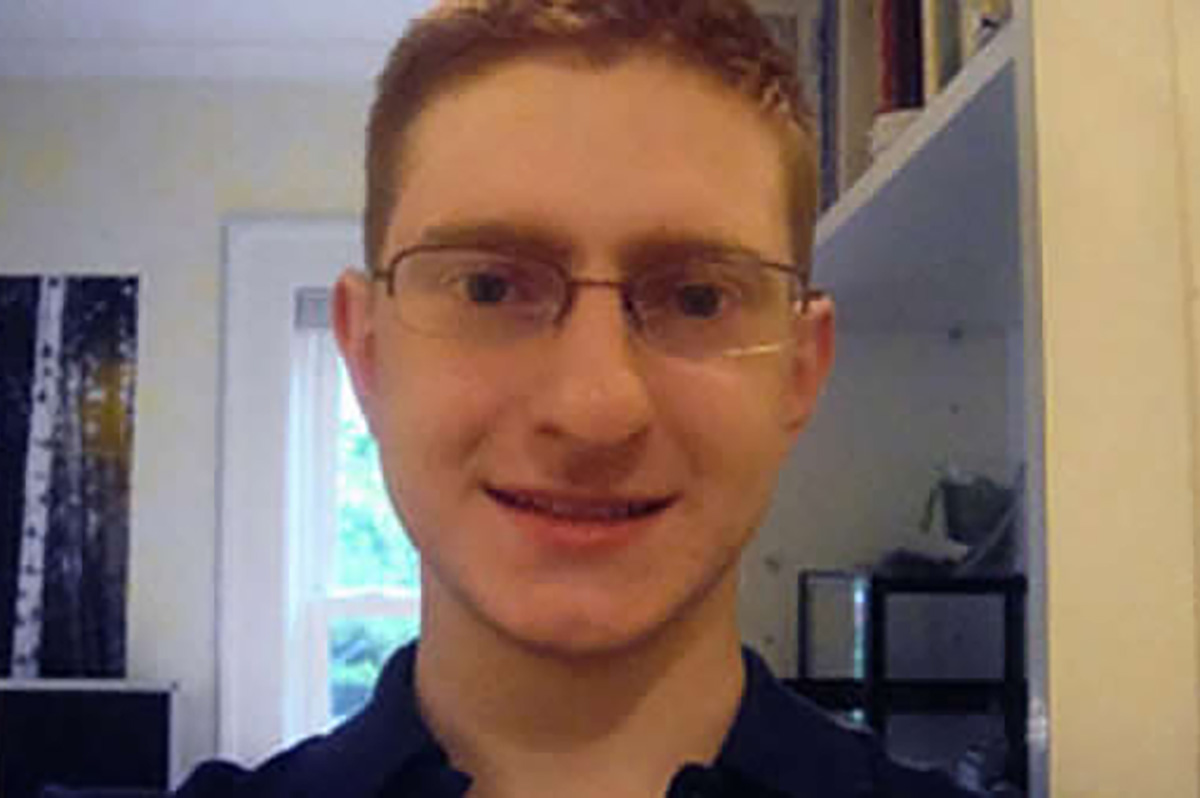
To kick off National Coming Out Month, the Tyler Clementi Foundation will host a fundraiser on Thursday, Oct. 1 at 6 p.m. at CAMP Rehoboth in Delaware.
The event will feature special remarks by Jane Clementi and Rep. Sarah McBride. If you are unable to attend, please consider making a donation to support the work of the Tyler Clementi Foundation to end online and offline bullying and harassment in schools, workplaces, and faith communities.
For more details, visit the Tyler Clementi Foundation’s Facebook page.

Friday, September 25
Go Gay DC will host “LGBTQ+ Community Happy Hour” at 7 p.m. at DIK Bar. This is a chance to relax, make new friends, and enjoy happy hour specials at this classic retro venue. Attendance is free and more details are available on Eventbrite.
Trans Discussion Group will be at 7 p.m. on Zoom. This event is intended to provide an emotionally and physically safe space for trans people and those who may be questioning their gender identity/expression to join together in community and learn from one another. For more details, email [email protected].
Saturday, September 26
Go Gay DC will host “LGBTQ+ Community Brunch” at 11 a.m. at Freddie’s Beach Bar & Restaurant. This fun weekly event brings the DMV area LGBTQ+ community, including allies, together for delicious food and conversation. Attendance is free and more details are available on Eventbrite.
Black Lesbian Support Group will be at 1 p.m. on Zoom. This is a peer-led support group devoted to the joys and challenges of being a Black Lesbian. For more details, email [email protected].
Sunday, September 27
“Nellie’s DC Drag Brunch” will be at 12 p.m. at Nellie’s Sports Bar. Come get served like a queen by a queen. Join Sapphire Blue, Deja Diamond and their team of amazing drag performers for the most fun you’ll have all weekend. Tickets cost $58.51 and are available on Eventbrite.
Monday, September 28
“Center Aging: Monday Coffee Klatch” will be at 10 a.m. on Zoom. This is a social hour for older LGBTQ+ adults. Guests are encouraged to bring a beverage of choice. For more information, contact Adam ([email protected]).
Queer Book Club will be at 7 p.m. on Zoom. The Queer Book Club meets on the fourth Monday of the month to discuss queer books by queer authors. This month’s reading is “Happy Iceland” by Anne Marie Wells. For more details, visit the DC Center for the LGBTQ+ Community’s website.
Tuesday, September 29
The DC Center for the LGBTQ+ Community will host “Center Aging: Painting Class” at 1 p.m. This is a free watercolor painting workshop that will be held in the community room and led by Laya Monarez. All supplies and light snacks will be provided. This workshop involves paint, so please dress accordingly. Email Mac at [email protected] for more details.
Wednesday, September 30
Job Club will be at 6 p.m. on Zoom upon request. This is a weekly job support program to help job entrants and seekers, including the long-term unemployed, improve self-confidence, motivation, resilience and productivity for effective job searches and networking — allowing participants to move away from being merely “applicants” toward being “candidates.” For more information, email [email protected] or visit www.thedccenter.org/careers.
Thursday, October 1
The DC Center for the LGBTQ+ Community’s Fresh Produce Program will be held all day at the Center. People will be informed on Wednesday at 5:00 pm if they are picked to receive a produce box. No proof of residency or income is required. For more information, email [email protected] or call 202-682-2245.
API Queer Support Group will be at 7 p.m. on Zoom. This is a support group for the Asian and Pacific Islander queer community. The support group is co-sponsored by APIQS (Asian Pacific Islander Queer Society DC) and AQUA (Asian Queers United for Action). For more details, email [email protected].

‘Lizzie Borden’ might be the best ‘Monster’ yet

Comings & Goings

Tyler Clementi Foundation to host fundraiser in Rehoboth

Calendar: September 25-October 1

Former Capital Pride board member reiterates sexual harassment allegation

For lesbian victims of domestic violence, competent care is scare

United States Conference on HIV/AIDS grapples with federal budget cuts

UN human rights chief sounds alarm over ‘comprehensive onslaught’ against LGBTQ rights

Gov. Whitmer to serve as keynote speaker for Saturday’s HRC National Dinner

Washington Blade responds to concerns over White House pool duties
-

 National4 days ago
For lesbian victims of domestic violence, competent care is scare
-
Health4 days ago
United States Conference on HIV/AIDS grapples with federal budget cuts
-
United Nations5 days ago
UN human rights chief sounds alarm over ‘comprehensive onslaught’ against LGBTQ rights
-
LGBTQ Non-Profit Organizations4 days ago
Gov. Whitmer to serve as keynote speaker for Saturday’s HRC National Dinner