Arts & Entertainment
Arts briefs: April 13
Events of note for the region — Washington and Baltimore

Victory Fund to host annual brunch
The Victory Fund is having its National Champagne Brunch on Sunday at the Washington Hilton (1919 Connecticut Ave., N.W.) at 11 a.m. featuring Tammy Baldwin.
This year’s theme is “Strength in Numbers” and Victory Fund will be honoring the eight openly gay and lesbian members of the Maryland legislature: Luke Clippinger, Bonnie Cullison, Anne Kaiser, Richard Madaleno, Maggie McIntosh, Heather Mizeur, Peter Murphy and Mary Washington.
Individual tickets are $150 and a table with ten seats is $1,500.
For more information and to purchase tickets, visit victoryfund.org.
Illumination time for Ward 8
Saturday marks the opening of a series of spaces opening in the commercial corridor of Historic Anacostia with Lumen8Anacostia, a 12-hour festival of light, art, music and more starting at noon.
Events begin at noon at Lightbox (2235 Shannon Place, S.E.) with opening remarks on the cargo bay stage and SHAM pop up shop and DJs on the main stage. Both stages will have various performers, the cargo bay stage closing at 6 p.m. and the main stage remaining busy until midnight.
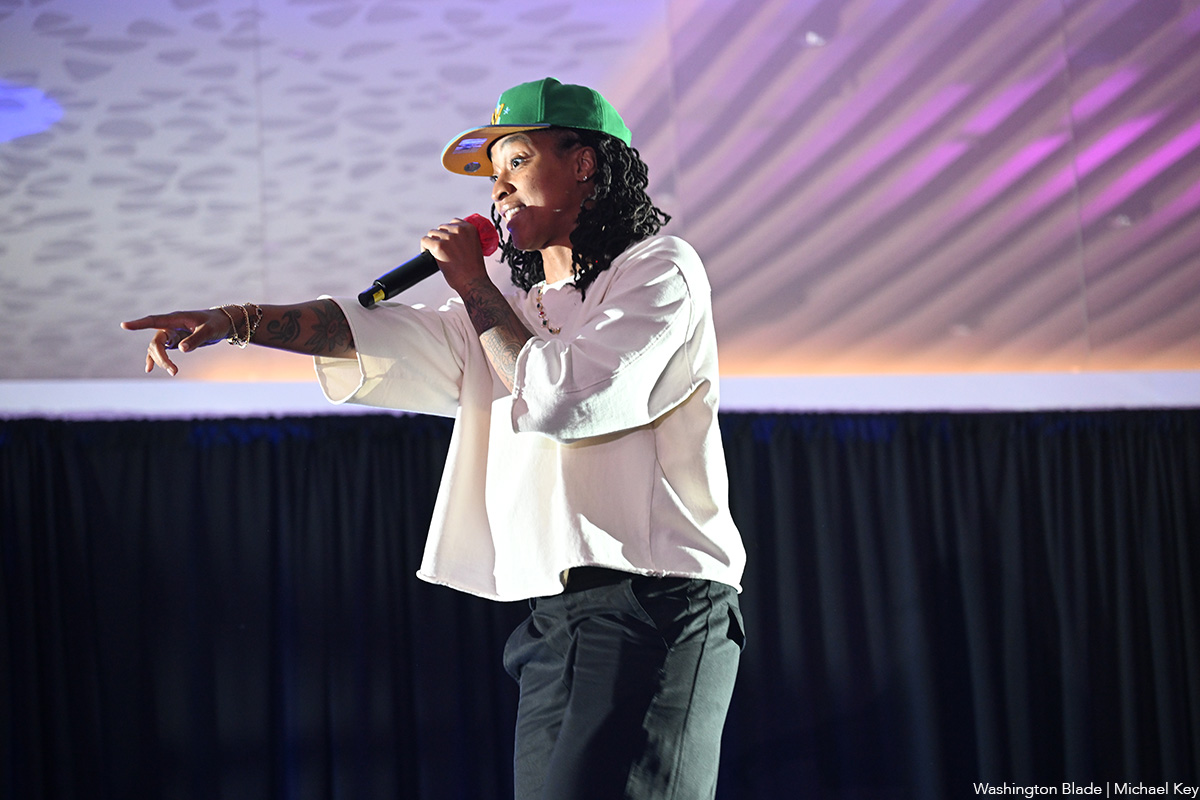
There’s also the “Party Behind the Big Chair” (2020 Shannon Place, S.E.) with performers such as Yung Yeaga and Cee Love, starting at 4:15 p.m.
Part of a project by D.C.’s Office of Planning, vacant and underutilized storefronts and empty lots have been transformed into an artist showcase/village for three to six months.
This event is free and open to the public. For more information, visit lumen8anacostia.com.
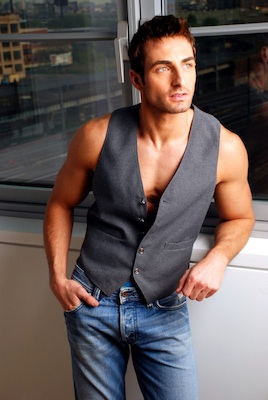
Scott Nevins plays two shows at MCC-DC
Openly gay comedian, celebrity and television personality Scott Nevins will be appearing at Metropolitan Community Church (474 Ridge St., N.W.) tonight and Saturday at 8 p.m.
Nevins, who appears on truTV’s show, “The Smoking Gun Presents,” has worked with some of Hollywood’s biggest starts including Barry Manilow, Susan Lucci, Idina Menzel, Hal Sparks and more.
Nevins has been awarded an Out There award, was nominated for a HX Award and Glammy Award in 2004 and a MAC Award in 2007 and was chosen by “New York Magazine” in their “Best of New York” issue.
Tickets are $25 and can be purchased online at mccdc.com. Proceeds will benefit the outreach and service programs at MCC.
Gay Broadway star at the Birchmere Sunday
Original Broadway cast members of “Rent” Adam Pascal and openly gay Anthony Rapp play the Birchmere Music Hall (3701 Mount Vernon Ave., Alexandria) Sunday at 7:30 p.m.
Rapp, who came out when he was 18, originated the role of Mark Cohen, best friend and roommate of Pascal’s Roger Davis. He has also released a solo album, “Look Around,” and appeared in many theatre productions, TV shows and films including the film version of “Rent.”
Rapp has also written a memoir “Without You: A Memoir of Love, Loss, and the Musical Rent,” which was released in 2006 and premiered as a show at the Pittsburgh City Theatre in 2008.
Tickets are $39.50 and available online at ticketmaster.com.
BALTIMORE BRIEFS:
Ball, screening among Alliance offerings
The Creative Alliance at the Patterson (3134 Eastern Ave.) has two events coming up this week.
On Saturday, the Patterson will be transformed into Wonderland for its “Alice in Wonderland”-themed 2012 Marquee Ball.
The ball begins with a preview dinner at 6 p.m. to honor arts lawyer, Scott Johnson with the Golden Formstone Award and Terry Rubenstein for her family’s lifetime achievements in the arts. The dance party begins at 9 p.m.
Tickets are $40 in advance for the party, $35 for CA members and $185 for the dinner.
On Thursday, the Alliance is screening the film “From the Back of the Room,” by D.C.-based director, Amy Oden, about women’s involvement in DIY punk featuring interviews by women like Kathleen Hanna of Bikini Kill and Le Tigre, Allison Wolfe of Bratmobile and many more.
Tickets for the screening are $10, $5 for Alliance members. Doors open at 6:30 p.m. For more information on either events and to purchase tickets, visit creativealliance.org.
Fashion show tries alternate approach
The Maryland Institute College of Arts presents the 19th annual benefit fashion show Transcend on Saturday in the Brown Center in Falvey Hall (1301 W. Mount Royal Ave.) at 8 p.m.
The designers featured in the show were asked to go beyond the expected and their norm and audience members will be able to see the workings of their brains and the manifestations of their inner thoughts and aspirations.
After the show, everyone is invited to mix and mingle with the designers and view an exhibition of fashion-inspired photography, illustration and fiber arts, including fashion pictorials of the students’ designs captured by celebrity photographer Derek Blanks.
Tickets are $20 for general admission and $15 for students.
For more information and to purchase tickets, visit mica.edu.
Gay group to hold tax program
The Maryland Corporate Council, a networking group for LGBT professionals, is hosting “Tax Wise,” an LGBT tax program for anyone who is or hopes to be partnered at the Inn at Henderson’s Wharf (1000 Fell St.) on Thursday from 6 to 8 p.m.
The program will feature a short presentation covering tax implications of LGBT relationships including joint property ownership and obtaining and protecting deductions, from Denise Dodson, the executive director at Ernst & Young Tax Practice.
Registration is free for members and $15 for guests.
For more information and to register, visit marylandcoporate.org.
Estate planning for LGBT residents planned
FreeState Legal Project is hosting “Will-Power Party: Estate Planning for the Rest of Us,” a workshop and pro bono assistance event at the Gay, Lesbian, Bisexual, Transgender Community Center of Baltimore (241 W. Chase St.) on Tuesday from 6 to 8 p.m.
During the event, people in need of simple wills, powers of attorney and advance directives will be matched with attorneys and receive assistance in drafting their estate documents.
FreeState Legal Project is a group that advocates for the rights of low income LGBT individuals through direct legal services, education and community outreach in the Greater Baltimore region.
For more information, visit freestatelegal.org.
A protest was held outside of the White House on Saturday following the killing of Renee Nicole Good by a U.S. Immigration and Customs Enforcement agent in Minneapolis. Across the Potomac, picketers held signs calling for “Justice for Renee” in Tysons, Va.
“ICE Out For Good” demonstrations were held in cities and towns across the country, according to multiple reports. A march was held yesterday in Washington, D.C., as the Blade reported. Further demonstrations are planned for tomorrow.
(Washington Blade photos by Michael Key)


Books
Feminist fiction fans will love ‘Bog Queen’
A wonderful tale of druids, warriors, scheming kings, and a scientist
‘Bog Queen’
By Anna North
c.2025, Bloomsbury
$28.99/288 pages
Consider: lost and found.
The first one is miserable – whatever you need or want is gone, maybe for good. The second one can be joyful, a celebration of great relief and a reminder to look in the same spot next time you need that which you first lost. Loss hurts. But as in the new novel, “Bog Queen” by Anna North, discovery isn’t always without pain.

He’d always stuck to the story.
In 1961, or so he claimed, Isabel Navarro argued with her husband, as they had many times. At one point, she stalked out. Done. Gone, but there was always doubt – and now it seemed he’d been lying for decades: when peat cutters discovered the body of a young woman near his home in northwest England, Navarro finally admitted that he’d killed Isabel and dumped her corpse into a bog.
Officials prepared to charge him.
But again, that doubt. The body, as forensic anthropologist Agnes Lundstrom discovered rather quickly, was not that of Isabel. This bog woman had nearly healed wounds and her head showed old skull fractures. Her skin glowed yellow from decaying moss that her body had steeped in. No, the corpse in the bog was not from a half-century ago.
She was roughly 2,000 years old.
But who was the woman from the bog? Knowing more about her would’ve been a nice distraction for Agnes; she’d left America to move to England, left her father and a man she might have loved once, with the hope that her life could be different. She disliked solitude but she felt awkward around people, including the environmental activists, politicians, and others surrounding the discovery of the Iron Age corpse.
Was the woman beloved? Agnes could tell that she’d obviously been well cared-for, and relatively healthy despite the injuries she’d sustained. If there were any artifacts left in the bog, Agnes would have the answers she wanted. If only Isabel’s family, the activists, and authorities could come together and grant her more time.
Fortunately, that’s what you get inside “Bog Queen”: time, spanning from the Iron Age and the story of a young, inexperienced druid who’s hoping to forge ties with a southern kingdom; to 2018, the year in which the modern portion of this book is set.
Yes, you get both.
Yes, you’ll devour them.
Taking parts of a true story, author Anna North spins a wonderful tale of druids, vengeful warriors, scheming kings, and a scientist who’s as much of a genius as she is a nerd. The tale of the two women swings back and forth between chapters and eras, mixed with female strength and twenty-first century concerns. Even better, these perfectly mixed parts are occasionally joined by a third entity that adds a delicious note of darkness, as if whatever happens can be erased in a moment.
Nah, don’t even think about resisting.
If you’re a fan of feminist fiction, science, or novels featuring kings, druids, and Celtic history, don’t wait. “Bog Queen” is your book. Look. You’ll be glad you found it.
Movies
A Shakespearean tragedy comes to life in exquisite ‘Hamnet’
Chloe Zhao’s devastating movie a touchstone for the ages
For every person who adores Shakespeare, there are probably a dozen more who wonder why.
We get it; his plays and poems, composed in a past when the predominant worldview was built around beliefs and ideologies that now feel as antiquated as the blend of poetry and prose in which he wrote them, can easily feel tied to social mores that are in direct opposition to our own, often reflecting the classist, sexist, and racist patriarchal dogma that continues to plague our world today. Why, then, should we still be so enthralled with him?
The answer to that question might be more eloquently expressed by Chloe Zhao’s “Hamnet” – now in wide release and already a winner in this year’s barely begun awards season – than through any explanation we could offer.
Adapted from the novel by Maggie O’Farrell (who co-wrote the screenplay with Zhao), it focuses its narrative on the relationship between Will Shakespeare (Paul Mescal) and his wife Agnes Hathaway (Jessie Buckley), who meet when the future playwright – working to pay off a debt for his abusive father – is still just a tutor helping the children of well-to-do families learn Latin. Enamored from afar at first sight, he woos his way into her life, and, convincing both of their families to approve the match (after she becomes pregnant with their first child), becomes her husband. More children follow – including Hamnet (Jacobi Jupe), a “surprise” twin boy to their second daughter – but, recognizing Will’s passion for writing and his frustration at being unable to follow it, Agnes encourages him to travel to London in order to immerse himself in his ambitions.
As the years go by, Agnes – aided by her mother-in-law (Emily Watson) and guided by the nature-centric pagan wisdom of her own deceased mother – raises the children while her husband, miles away, builds a successful career as the city’s most popular playwright. But when an outbreak of bubonic plague results in the death of 11-year-old Hamnet in Will’s absence, an emotional wedge is driven between them – especially when Agnes receives word that her husband’s latest play, titled “Hamlet,” an interchangeable equivalent to the name of their dead son, is about to debut on the London stage.
There is nothing, save the bare details of circumstance around the Shakespeare family, that can be called factual about the narrative told in “Hamnet.” Records of Shakespeare’s private life are sparse and short on context, largely limited to civic notations of fact – birth, marriage, and death announcements, legal documents, and other general records – that leave plenty of space in which to speculate about the personal nuance such mundane details might imply. What is known is that the Shakespeares lost their son, probably to plague, and that “Hamlet” – a play dominated by expressions of grief and existential musings about life and death – was written over the course of the next five years. Shakespearean scholars have filled in the blanks, and it’s hard to argue with their assumptions about the influence young Hamnet’s tragic death likely had over the creation of his father’s masterwork. What human being would not be haunted by such an event, and how could any artist could avoid channeling its impact into their work, not just for a time but for forever after?
In their screenplay, O’Farrell and Zhao imagine an Agnes Shakespeare (most records refer to her as “Anne” but her father’s will uses the name “Agnes”) who stands apart from the conventions of her town, born of a “wild woman” in the woods and raised in ancient traditions of mysticism and nature magic before being adopted into her well-off family, who presents a worthy match and an intellectual equal for the brilliantly passionate creator responsible for some of Western Civilization’s most enduring tales. They imagine a courtship that would have defied the customs of the time and a relationship that feels almost modern, grounded in a love and mutual respect that’s a far cry from most popular notions of what a 16th-century marriage might look like. More than that, they imagine that the devastating loss of a child – even in a time when the mortality rate for children was high – might create a rift between two parents who can only process their grief alone. And despite the fact that almost none of what O’Farrell and Zhao present to us can be seen, at best, as anything other than informed speculation, it all feels devastatingly true.
That’s the quality that “Hamnet” shares with the ever-popular Will Shakespeare; though it takes us into a past that feels as alien to us as if it took place upon a different planet, it evokes a connection to the simple experience of being human, which cuts through the differences in context. Just as the kings, heroes, and fools of Shakespeare’s plays express and embody the same emotional experiences that shape our own mundane modern lives, the film’s portrayal of these two real-life people torn apart by personal tragedy speaks directly to our own shared sense of loss – and it does so with an eloquence that, like Shakespeare’s, emerges from the story to make it feel as palpable as if their grief was our own.
Yes, the writing and direction – each bringing a powerfully feminine “voice” to the story – are key to the emotional impact of “Hamnet,” but it’s the performances of its stars that carry it to us. Mescal, once more proving himself a master at embodying the kind of vulnerable masculine tenderness that’s capable of melting our hearts, gives us an accessible Shakespeare, driven perhaps by a spark of genius yet deeply grounded in the tangible humanity that underscores the “everyman” sensibility that informs the man’s plays. But it’s Buckley’s movie, by a wide margin, and her bold, fierce, and deeply affecting performance gives voice to a powerful grief, a cry against the injustice and cruelty of what we fumblingly call “fate” that resonates deep within us and carries our own grief, over losses we’ve had and losses we know are yet to come, along with her on the journey to catharsis.
That’s the word – “catharsis” – that defines why Shakespeare (and by extension, “Hamnet”) still holds such power over the imagination of our human race all these centuries later. The circumstantial details of his stories, wrapped up in ancient ideologies that still haunt our cultural imagination, fall away in the face of the raw expression of humanity to which his characters give voice. When Hamlet asks “to be or not to be?,” he is not an old-world Danish Prince contemplating revenge against a traitor who murdered his father; he is Shakespeare himself, pondering the essential mystery of life and death, and he is us, too.
Likewise, the Agnes Shakespeare of “Hamnet” (masterfully enacted by Buckley) embodies all our own sorrows – past and future, real and imagined – and connects them to the well of human emotion from which we all must drink; it’s more powerful than we expect, and more cleansing than we imagine, and it makes Zhao’s exquisitely devastating movie into a touchstone for the ages.
We can’t presume to speak for Shakespeare, but we are pretty sure he would be pleased.
-
Colombia5 days agoGay Venezuelan man who fled to Colombia uncertain about homeland’s future
-
Arts & Entertainment4 days ago2026 Most Eligible LGBTQ Singles nominations
-
District of Columbia4 days agoKennedy Center renaming triggers backlash
-
District of Columbia4 days agoNew interim D.C. police chief played lead role in security for WorldPride