Arts & Entertainment
‘This is a very big deal’
Obama, NAACP announcements infuse Black Pride festivities with celebratory flair
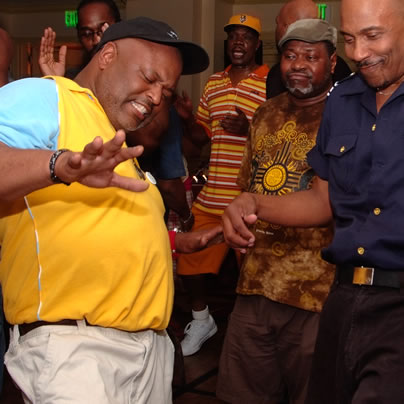
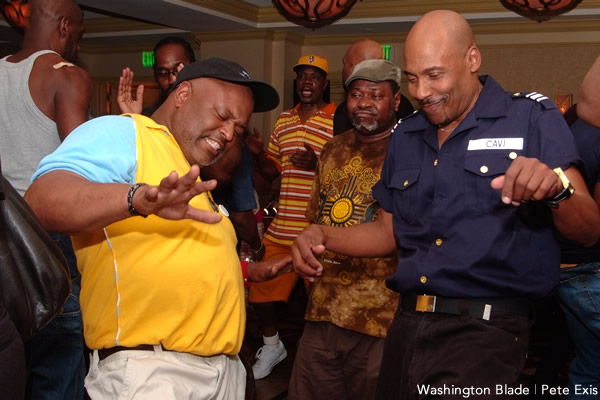
Revelers at last year's Black Pride. (Blade file photo by Pete Exis)
Change is in the air and prominent local black LGBT activists say its effects will be palpable at this weekend’s Black Pride festivities.
It’s debatable what led to the timing of President Obama’s announced change of heart on same-sex marriage — he told ABC’s Robin Roberts in a May 9 interview that he “think(s) same-sex couples should be able to get married,” an unprecedented statement for a sitting U.S. president — but whether it was the timing of the North Carolina amendment to ban same-sex marriage, Vice President Joe Biden’s shockingly unbridled comments the weekend before on “Meet the Press” or just the final stop on his self-proclaimed “evolution” on the issue, the announcement came as a shock to many, especially since it’s an election year. But the comments and the subsequent announcement by the NAACP of its endorsement of same-sex marriage make for a radically altered climate for D.C. Black Pride and several other piggy-backing black LGBT events happening this weekend.
Local black activists and promoters say almost universally it’s an exciting turn of events.
“It made me very happy,” says Kenya Hutton, a Black Pride board member. “Being the first American president to do so is very important.”
“I was absolutely elated,” says Linda McAllister, owner of D.C. lesbian bar Lace. “It’s a very historic moment … It’s unbelievable. I could not have been more pleased.”
“My first reaction was, ‘Yes, thank God he did it,’” says lesbian event promoter Ebone Bell. “It was like, ‘Thank you,’ for the first time in history we have a president who stood up for the right thing.”
Others say the announcement itself was not such a shock, so much as the timing of it.
“My initial thoughts were ones of astonishment that a sitting president up for reelection would come out so strongly in support, that’s the first thing,” says lesbian Khadijah Tribble. “Then I thought, yes, this is the man we all got behind as a staunch supporter of LGBT rights, so I was not surprised on one level but I just didn’t expect this timing at all.”
Sharon Lettman-Hicks, who prefers the term “sister of the movement” to straight ally (she’s married to a man but is also executive director of the LGBT rights group National Black Justice Coalition), agrees.
“I was extremely proud,” she says. “I was in shock and awe, but also just extremely proud that he would do this in such a polarizing political climate, but he was willing to step outside of the world of politics and really put human dignity first.”
And although the announcement has no legislative impact — marriage in the U.S. continues to be largely a state issue — many locals the Blade spoke to for this piece say it’s still a watershed moment because it’s giving straight black Americans a forum in which to discuss the LGBT people in the community.
The announcement has many angles — the fact that Obama, as the first U.S. president of color, is the first sitting president to make such an unequivocal statement is one thing. But it’s perhaps doubly significant that Obama is black since many African-American Baptist ministers preach anti-gay theology. White U.S. clergy do as well, of course. Just this week, the YouTube-posted video of North Carolina minister Charles Worley advocating putting gays and lesbians in an electrified pen like cattle until they starve to death went viral. But there’s perhaps a vociferousness to the rhetoric in black America that is often a bit different.
“It’s going to take a while to digest the issue but the big thing is that people are talking about it now,” says Earl Fowlkes, president of the Federation of Black Prides and also a long-time board member for D.C. Black Pride. “To have a black president talking about gay issues and same-sex marriage, these things are largely unspoken of in the black community, which is pretty much where the straight white community was 10 years ago. But when the president speaks and you have an organization as well respected as the NAACP, where half the chapter presidents are church people and they’re saying, ‘What’s the big deal?,’ it allows activists like myself to step forward and gives us ammunition.”
Several interesting points come up in these conversations — Tribble says that growing up in the South, black LGBT people were largely accepted as long as they abided by an unwritten “Don’t Ask, Don’t Tell”-type social policy.
“There were a lot of LGBT people growing up that although technically they were closeted, we all knew it,” she says. “They were still accepted within the church, they were still at the family cookouts, this is Aunt so-and-so and the aunt’s best friend who’s always with her. They came to everything and really weren’t treated any differently, but we just didn’t name it or talk about it even though they still had a place in the African-American community.”
Sheila Alexander-Reid says Obama’s announcement gives straight black Americans a catalyst to finally talk about LGBT issues.
“This way they can say, ‘What do you think about what Obama said,’ not, ‘What do you think about Johnny or Suzie?,” she says. “These are conversations that are long overdue. A lot of these people are very entrenched in their homophobia.”
Lettman-Hicks says black straight Americans aren’t so much squeamish about LGBT issues as they are uncomfortable with any talk of sexuality.
“It’s not an LGBT issue, it’s a sexuality issue in which LGBT issues fall under that,” she says. “If you want to have an intelligent debate about black people, you have to understand black people and black sexuality … so many discount the challenges that our community has faced. We were beaten, raped, brought here and sold as slaves, there’s a level of indignity that we faced as an oppressed people so in many ways we’re having the wrong conversation. Black America needs to have a robust conversation about human sexuality in general.”
She says, though, that Obama and the NAACP’s positions are excellent jumping-off points for those discussions.
But what about Obama’s reelection odds — will the LGBT support he picks up offset straight black Americans who may jump ship?
“I think it will help him overall,” says SaVanna Wanzer, a transgender activist and Whitman-Walker Health board member. “Number one, because it was the right thing to do. I think he will lose some support, yes, but the people who want human interests and civil rights first will still be on his side.”
“There will be some who back off, but no one in my family in Alabama is not going to vote for him because of this issue, I’m sure,” Tribble says. “Even the ones who tell me I’m going to hell, they still think I’m going to hell, but they won’t back away from Obama just because of this.”
Others say that while Obama’s statements are to be celebrated, the black LGBT community in D.C. spends too much time worrying about marriage rights when it has more pressing issues — transgender health, homelessness, HIV/AIDS, drug abuse and more — that should be on the front burner.
“I usually refrain from commenting,” says Earline Budd, a long-time advocate for disadvantaged transgender D.C. residents. “Day in and day out, like right here just now in my office, I have a 21-year-old HIV-positive person with a major infection. I just don’t have time to think about marriage. I do believe those who are out there on the front lines in the marriage battles, that we need that, but it’s just not on my agenda at this time … This whole thing with HIV, which is affecting more and more young people all the time, is much more pressing.”
Wanzer agrees.
“I’m thankful for his support, but there are much more pressing needs, especially with the transgender community,” she says.
Even so, many expect the Black Pride festivities to have an increased excitement and energy this year because of recent events.
“I know Eleanor [Holmes Norton] will be commenting on it, the mayor will be commenting on it, there’s definitely going to be a huge acknowledgement about this at Black Pride,” Fowlkes says. “Every time I’m at the mic, I’ll say something about it. What you’re really doing is giving people permission to celebrate it … we’re going to be making that acknowledgement at all our events so people can clap and feel happy because this is a very big deal.”
Black Pride, related events abound this weekend
Today (Friday)
An opening reception is held for Leandrea Gilliam this evening at 6:30 at the Hyatt Regency (400 New Jersey Ave., N.W.). Gilliam is the care advocacy program manager of the Sexual Minority Youth Assistance League and a Wellmore Cook Community Service Awardee. Admission to this event is free. For details, go to dcblackpride.org.
Author of “King Peggy,” Peggielene Bartels, signs copies of her book tonight at 7:30 at the Hyatt Regency (400 New Jersey Ave., N.W.). The book is about Bartels’ journey to becoming king of the African village Otuam in Ghana. The book costs $25. Proceeds will go to the nonprofit organization, Otuam Community Development Corp. Find more information at dcblackpride.org.
RainbowConnects is hosting speed dating in the Yellowstone/Everglades Room at the Hyatt Regency (400 New Jersey Ave., N.W.) tonight at 7. Admission is free. For details, visit dcblackpride.org.
“She’Baltimore,” a play written and directed by Ira Kip, opens at Warehouse Theater (1071 7th St., N.W.) tonight at 8. Admission is $25. For more information, email [email protected] or go to dcblackpride.org.
The 5000 Men Pride Mega Party featuring Ashanti is tonight at FUR Night Club (33 Patterson St., N.E.). Doors open at 10. Cover charge ranges $20-$50. For more information, visit omegapartydc.net.
Saturday, May 26
Representatives from Capital One Bank will be on-site at the Capital One Job Fair held from 11 a.m.-3 p.m. in the Olympic Room at the Hyatt Regency (400 New Jersey Ave., N.W.). The event is free. For details, visit dcblackpride.org.
Angela Harvey presents “The Key to the Perfect Orgasm” today at 12:30 at the Hyatt Regency (400 New Jersey Ave., N.W.) in Congressional Room A. Admission is free. For more information, visit dcblackpride.org.
New York Life Job Fair is held in the Sequoia Room at the Hyatt Regency (400 New Jersey Ave., N.W.) today from 12:30-3 p.m. The event is free. For details, visit dcblackpride.org.
A film festival is being held at the Hyatt Regency (400 New Jersey Ave., N.W.) from 2-5 p.m. The films that are playing include “Change,” “Finding Me: Truth” and “Taboo Yardies.” Admission is $15. For details, visit dcblackpride.org.
Terry W. Sidney is reading “The Four of Us” at the Mead Lab Theater (916 G St., N.W.) today at 2 p.m. Admission is $20. For more information visit beyonddarkcorners.com or dcblackpride.org.
Chocolate City Pride hosts the Tropical Heat Rooftop Party today from 3-8 p.m. on top of the Ibiza Roof (1222 1st St., N.E.). The event will include free food. Admission is $10. For more information, visit omegapartydc.net.
Buttafly Soul is hosting a Poetry Slam today from 5-8 p.m. at the Hyatt Regency (400 New Jersey Ave., N.W.). Admission is $15. For details, visit dcblackpride.org.
Black Men’s Xchange D.C. presents Revelation tonight at 7 at the Hyatt Regency (400 New Jersey Ave., N.W.). The panel discussion will be moderated by the reality T.V. star Karamo Brown. For details, visit dcblackpride.org.
Layla Lounge (501 Morse St., N.E.) hosts the annual Manhunt Party tonight from 9 p.m.-3 a.m. Passes are on sale at omegapartydc.net.
A soul train dance party is being held at the Hyatt Regency (400 New Jersey Ave., N.W.) tonight from 10 p.m.-1 a.m. The event features DJ Mandrill. Admission is $15. For details visit dcblackpride.org.
Lace Nightclub (2214 Rhode Island Ave., N.E.) hosts Insomniac, the after-party tonight from 3:30-8 a.m. Complimentary breakfast will be provided. For details, visit omegapartydc.net.
Sunday, May 27
A faith service is today from 9-11 a.m. at the Hyatt Regency (400 New Jersey Ave., N.W.). The event is free. For more information, visit dcblackpride.org.
“It’s a Family Affair” is held at Francis-Stevens Educational Campus (23 & O St., N.W.) today from noon-6. Admission is free. For details, visit dcblackpride.org.
Island Inferno annual pool party takes place at Great Waves Water Park (4001 Eisenhower Ave., Alexandria, Va.) today at 3. There will be free food, cash bar and a body contest. For more information visit omegapartydc.net.
Klimex Mega Party is tonight at the Love Nightclub (1350 Okie St., N.E.) from 9 p.m.-4 a.m. Table reservations begin at $500. For details, visit omegapartydc.net.
Monday, May 28
Chocolate City Pride hosts a cookout at Fort Dupont Park (3600 F St., S.E.) today from noon to 5 p.m. For more information, visit omegapartydc.net.
Layla Lounge (501 Morse St., N.E.) hosts the Apocalypse party tonight from 9 p.m.- 2 a.m. Admission is $10. For details, visit omegapartydc.net.
— ERIN DURKIN



Books
‘Mighty Real’ explores history of LGBTQ music
From Judas Priest to Whitney, something for every taste
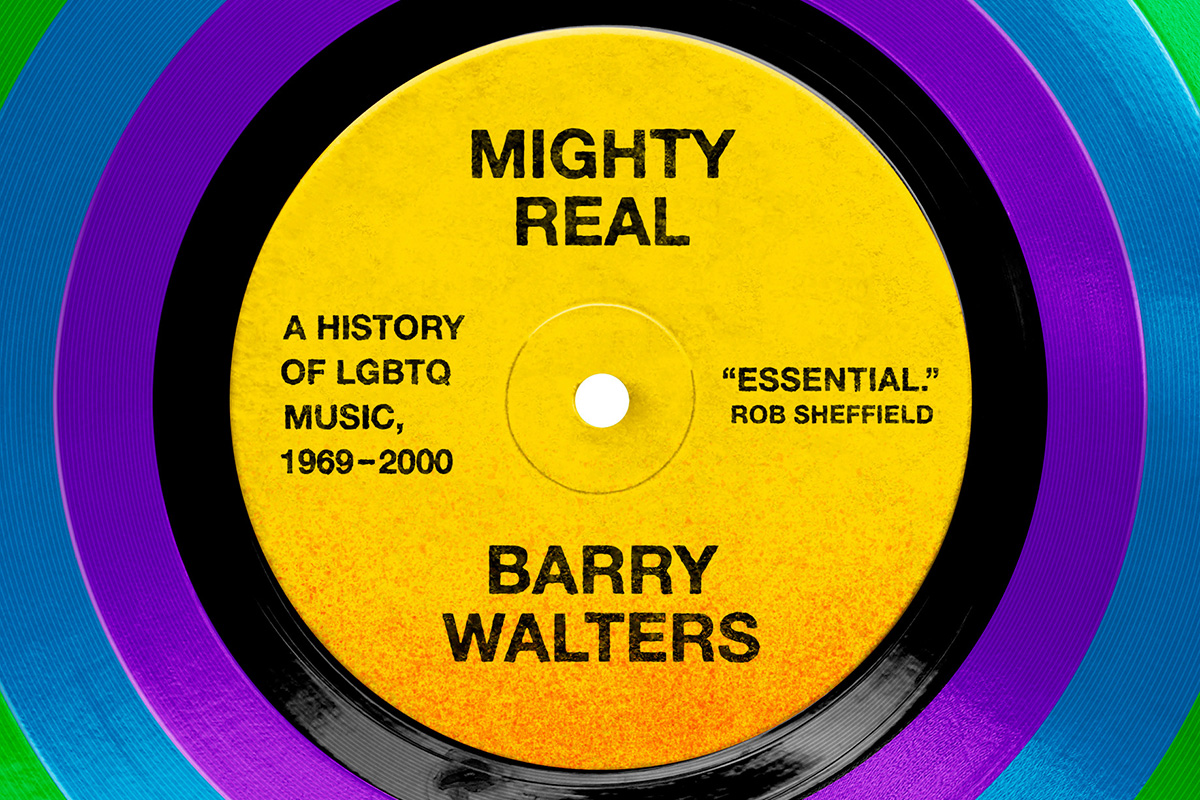
‘Mighty Real: A History of LGBTQ Music, 1969-2000’
By Barry Walters
c.2026, Viking
$35/496 pages
Step, step, tap, back step.
Shimmy in a circle, left hand waving over your head, shake your tail feathers, repeat to the beat. Once there was a time when you could do any dance in your sleep, but it’s been a while. So read “Mighty Real” by Barry Walters, and see if your toes don’t tap.

Fifty-seven years after Stonewall, and here we are: LGBTQ musicians still face scrutiny for their sexuality because, says Walters, music isn’t created for gay listeners. No problem: LGBTQ artists and writers have often penned lyrics carefully in order to say what can’t be said, “coding” songs for gay audiences that straight (and ignorant) listeners can dance to and enjoy with apparent obliviousness.
Walters offers “just a few” examples.
Lou Reed sang about trans people in the late ‘60s and offered a rallying song for the Gay Liberation Front in 1972, the latter of which felt like a message to a then-11-year-old Walters. Janis Joplin claimed she was straight, but she had several girlfriends. Motown singers often offered sometimes-ambiguous lyrics.
John Lennon’s hand placement on the back cover of Sgt. Pepper’s Lonely Hearts Club Band made Walters begin to understand that he was different from other boys.
David Bowie is on his list, of course, as is Bette Midler, Elton John, Donna Summer, and Queen. You’ll find Judas Priest here, Green Day, and punk music. The Village People are included in this book, also Grace Jones, Duran Duran, and Cher, Whitney, Melissa, Latifah, and the lyrics from several blockbuster movies.
Two of Prince’s band members were lesbians, and they heavily influenced his albums. Diana Ross’s “I’m Coming Out” cemented her position in LGBTQ culture, and Michael Jackson’s inclusion here takes much careful consideration.
Read about Olivia Newton-John and the B52s. And then there’s Sylvester, for whom Walters has a soft spot in his heart. Sylvester’s death still makes Walters cry.
In his preface, author and music writer Barry Walters points out that music is what you make it and that it’s interpreted differently by each individual. To that end, this book naturally consists of preferential history and personal opinions about singers, bands, albums, and songs.
Agree or disagree. That’s where much of the appeal lies in “Mighty Real.”
Here, Walters wraps his memories around his choices, giving readers room for their own views, memories, and list making. Music-loving readers might also be surprised to note who’s not on Walters’ list – there aren’t many country performers here, for example, and the overall list focuses entirely on music from roughly 1968 to the year 2000, mostly on the kinds of songs you’ll want at the club or party. Again, discuss, and curate your own playlist.
This is a hefty book, but the chapters are browse-able and generally short enough to read in under five minutes. It’s nostalgic, yet also serious in the history it presents. This is the kind of book you want to leave near your album collection, or wherever you get your tunes. But finding “Mighty Real” is your first step.
The Blade may receive commissions from qualifying purchases made via this post.

The Gay Men’s Chorus of Washington performed “Soul Divas” at the Lincoln Theatre over the weekend. The show featured songs popularized by Tina Turner, Aretha Franklin, Diana Ross, Gladys Knight, Whitney Houston and more.
(Washington Blade photos by Michael Key)


Theater
Timothy Nelson on the premiere of his opera ‘Song of Sakuntala’
Story of love, loss, redemption unfolds amid Indian classical music
‘The Song of Sakuntala’
IN Series
In Washington and Baltimore
Atlas Performing Arts Center, 1333 H St., N.E.
(Selected dates June 6-14)
Baltimore Theatre Project, 45 W. Preston St., Baltimore
(June 19-21)
$25-35
Inseries.org
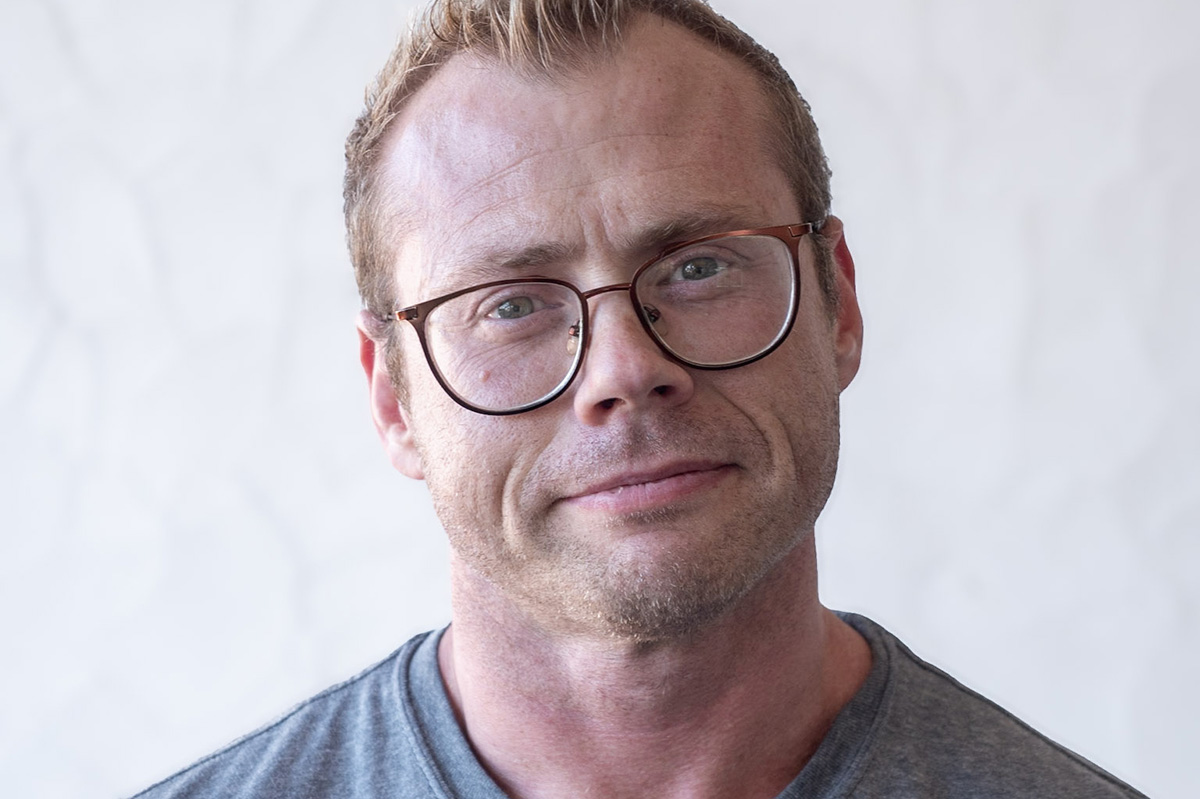
As the artistic director of IN Series, Timothy Nelson rarely blows his own horn, but for the world premiere of his own opera “The Song of Sakuntala,” he’ll make an exception.
During a recent interview squeezed in between afternoon and evenings rehearsals, Nelson took time to talk about his opera (while nearby his “blessing of a husband” prepared a giant dinner for the entire cast and crew).
As smart and gracious as ever, Nelson explains that he wrote the opera a decade ago at a low point in his life: He was divorcing and wanted to immerse himself into something musical, all-consuming, a project tantamount to writing a thick novel.
At the time, Nelson’s mentor, the influential American stage and opera director Peter Sellers, pushed him to write again. Nelson recalls, “I hadn’t composed for some time. I wanted to see if I could do it, and I wanted to revisit Indian classical music.”
He adds, “There was never any anticipation of it being produced. It was a way of processing and dealing with life in a healthy way.”
Adapted from Kālidāsa’s 5th-century dramatic masterpiece, “The Song of Sakuntala” brings together Western baroque and Indian classical musical traditions into a story of “love, loss, memory, and redemption.” His libretto, a reflection of South Asian storytelling, includes the words of the great Indian poets Tagore, Naidu, and Vidyapati.
The story follows “a prince and a woman of the forest who fall in love and wed in secret. He departs, and she later seeks him out, only to have him deny all recognition of her. She disappears in sorrow; he spends the rest of his life searching. At the end, in the same forest where they first met, they find each other again and are transfigured.”
At 90 minutes, the uninterrupted piece features three singers (Aryssa Leigh Burrs, Teresa Ferrara, Marvin Wayne Allen) accompanied by an instrumental ensemble led by acclaimed sitarist Rajib Karmakar, who specializes in bridging Indian and Western classical traditions, and conducted by Nelson who also joins the music making on drone and harmonium.
Burrs plays the prince. Originally written for a countertenor, Nelson imagined a man singing the role but ultimately cast a woman to play the part.
Because the piece is “fiendishly difficult in almost unnecessary ways,” Nelson explains with a wicked chuckle, he knew that Burrs had the talent and sharp brain required for the role.
The prince is cruel without explanation. Despite that, 40-something Nelson admits to relating to the opera’s prince: “In midlife, you reflect on your mistakes. At least for now that’s how I feel. I might have felt different earlier and it could change later on.”
Nelson lived in India for nine months, backpacking and studying in different places, absorbing different musical styles and playing pieces as varied and complex as any Western music.
And while based in D.C., IN Series performs in both Washington and Baltimore using various borrowed venues. “The Song of Sakuntala” is playing at both the Atlas Performing Center in D.C. (6/6-6/14) and Baltimore’s beloved Baltimore Theatre Project (6/19-6/21) with its terrific acoustics.
In a past conversation, Nelson who lives in Adams Morgan, shared that all audiences bring something specific to the table. Baltimore tends to attract more risk taking while D.C. audiences often lean into the intellectual side of what the company does.
At the helm of IN Series for eight years, Nelson has relished reimagining opera and musical theater, but only recently did he decide to program his latest work. The way in which “The Song of Sakuntala” blends Western and non-Western music is very much a part of the IN Series music brand, so it seemed the perfect selection to close the season.
“I do this humbly with great hesitancy. And I know it feels a little unseemly to cheer on your own work, but I will say, it’s a piece that is successful in sitting in both places (Western and South Asia) and the Indian musicians on board are responding to it.”

D.C.’s housing reality: Cautious optimism meets landlord strain

‘Mighty Real’ explores history of LGBTQ music

PHOTOS: ‘Soul Divas’

Timothy Nelson on the premiere of his opera ‘Song of Sakuntala’

Controversial ‘Blue Film’ pushes past taboos for gripping drama

Outright International honors Cyndi Lauper at annual NYC gala

AIDS Healthcare Foundation announces 3 million people globally in its care

Results from key Tuesday primary races

Federal appeals court rules White House illegally banned trans troops

Leaving for a barge trip through canals of Burgundy
-

 Celebrity News4 days ago
Outright International honors Cyndi Lauper at annual NYC gala
-
Health5 days ago
AIDS Healthcare Foundation announces 3 million people globally in its care
-
National5 days ago
Results from key Tuesday primary races
-
U.S. Military/Pentagon4 days ago
Federal appeals court rules White House illegally banned trans troops