Arts & Entertainment
Out & About: DC and Baltimore events
Swimsuit show and WTF at Town, several black LGBT theater events, a Whitney Houston tribute in Baltimore and more
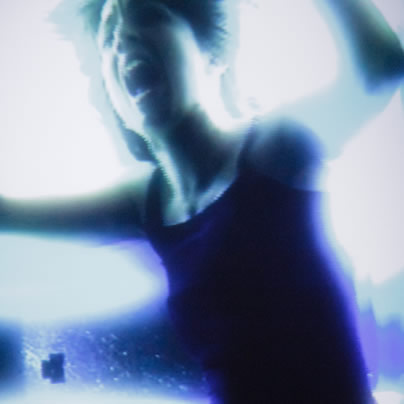
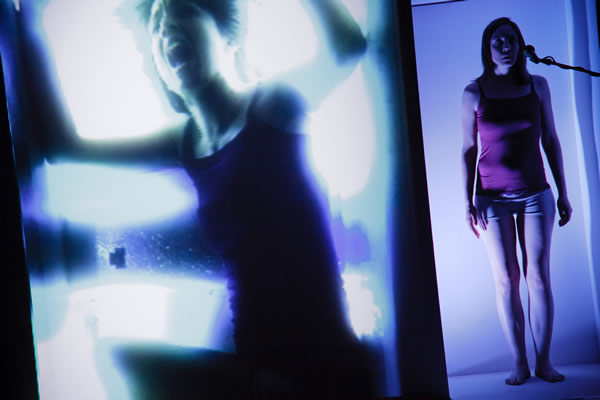
A production still from ‘The Ice Child,’ being staged now in Washington. (Photo courtesy Factory 449)
‘Ice Child’ play finds inspiration in creepy Poe tales
Inspired by the chilling tales of Edgar Allan Poe, Factory 449 company members Lisa Hodsoll, Hunter Styles and Rick Hammerly (who is gay) have co-written “The Ice Child,” a terrifying hour-long theater piece guaranteed to resonate with audiences.
Now in production at Mead Theatre Lab at Flashpoint, “The Ice Child” centers on Catherine (Sara Barker), a young woman who awakens to find herself imprisoned in a coffin-sized freezer. Held captive by former co-worker Kidd (Dexter Hamlett), Catherine soon learns her release is not imminent and escape from what could easily be a lethal situation depends on not angering her creepy captor. Meanwhile outside the freezer, Catherine’s treatment and fate is being considered as well.
Slickly produced, “The Ice Child” is compellingly told through a mash up of performance, film, and projected photos. It runs through June 3 at the Mead Theatre Lab at Flashpoint (916 G Street, NW). Tickets are $20. Visit factory449.com for details or call 866-811-4111.
Swimsuits and WTF at Town this weekend
Town (2009 8th St., N.W.) has a couple events happening this weekend.
On Saturday, the club is hosting a swimwear fashion show featuring models in “2xist” swimsuits courtesy of Universal Gear. DJ Chord spins. Doors open at 10 p.m. and cover is $7 until 11 p.m. and $12 afterward.
Sunday brings the return of “WTF” and this week’s theme is airlines. The night will feature several DJs including the Pocket Gays, Aaron Riggins and Ed Bailey. Doors open at 10 p.m. and cover is $5.
Attendees must be 21 or older for both events.
Several black LGBT theater events on weekend slate
Tonight and Saturday, “She’Baltimore” by Ira Kip is premiering in the D.C. area at Warehouse Theater (645 New York Ave.,) as an official part of Black Pride at 8 p.m.
The play, which takes place in Baltimore, deals with issues of battery and abuse in the LGBT community. Admission is $25.
Another official Black Pride theater event is a reading of “The Four of Us” at Mead Lab Theater (916 G St., N.W.) on Saturday at 2 p.m. Admission is $20 and includes a small reception.
Although not an official part of Pride, the African-American Collective Theater is observing the 20th anniversary of its first D.C. Black Pride theater showcase on Sunday with two stage readings of “Here. And Now.” by ACT founding directo Alan Sharpe at Warehouse Theater at 5 and 8 p.m. The play is a family drama in which the relationship of a middle-aged, male couple with two sons is tested. Tickets are $15. Contact [email protected] for more information and advance tickets.
Komen race to benefit Mautner Project
The 23rd annual Susan G. Komen Global Race for the Cure will happen June 2 on the National Mall in Washington. The annual breast cancer benefit awarded a $200,000 grant to lesbian health organization the Mautner Project, which expanded its breast cancer program. The grant was awarded in 2011 and runs for two years.
The event starts at 8 a.m. It’s still possible for those wishing to participate to register. Details are at globalraceforthecure.org. Or call 1-877-GOKOMEN.
Soulful Symphony to honor Houston
Hippodrome Theater at the France-Merrick Performing Arts Center (12 North Eutaw St.) hosts the Soulful Symphony on June 1 at 8 p.m. as it honors the late Whitney Houston.
The concert will feature Houston’s hits ranging from gospel to pop, R&B to film music and more.
This performance will also act as the groups season-ending gala event.
Tickets range from $30 to $250 and are available online at ticketmaster.com. Special gala tickets include dinner, concert and VIP after party.
For more information on Soulful Symphony, visit soulfulsymphony.org.
Grand Central has specials, theme nights and more
Grand Central (1001/1003 N. Charles St.) has several events this week.
Tonight is the club’s weekly dance party with $2.50 drinks until 11 p.m. Sappho’s is having its own happy hour from 8 to 10 p.m.
Saturday has two-for-one drinks until 8 p.m. and Glow with DJ Arturo. Admission to Glow is $5.
Sunday is the club’s kick off to summer beach party with DJ Arturo.
Monday and Tuesday, Grand Central has karaoke with host Nikki Cox from 10 p.m. to 1 a.m.
Wednesday is “Hump Wednesdays,” an electropop, alternative, indie dance night with DJ Arturo.
The week ends Thursday with ladies night featuring DJ Lems and $2.50 drinks until 11 p.m.
Sci-fi/fantasy convention in town this weekend
Balticon 46, the Maryland regional science fiction and fantasy convention, runs today through Monday at Marriott’s Hunt Valley Inn (245 Shawan Rd.) with special guests Jody Lynn Nye, Jim Odbert, Heather Dale, Ben Deschamps and William D. Phillips.
There will be a variety of panels and workshops covering topics such as anime, dance, gaming, music, video and more.
There will also be an art show, various dealers selling books, memorabilia and more.
Registration ranges from $17 for a single day to $62 for the whole weekend for adults and $9 to $31 for children ages 6 through 12.
For more information and to register online, visit balticon.org.
Trans, poz, coming-out groups to meet at Center
The GLBT Community Center of Baltimore and Central Maryland (241 West Chase St.) has several programs this week.
Three groups are slated to meet Saturday: Sufficient As I Am, a group for youth 24 and younger dealing with issues of sexuality, coming out, relationships, family and more, meets in room 201 at 12:30 p.m.; GIG: Baltimore Trans-Masculine Alliance, a FTM support group, meets at 6 p.m. in room 202; and GIG: Tran*quality, a MTF support group, meets at 8 p.m. in room 202.
On Monday, Men Like Me, a support group for adult men who love other men, is facilitated by licensed clinicians and meets 6 p.m. in room 202.
POZ Men, an LGBT-affirming peer support group for all HIV-positive men, meets Wednesday in room 202 at 6 p.m.
Women of Color, a social and discussion group, meets Thursday at 7:30 p.m. in room 202.
The center also has HIV and STD testing on Wednesdays from 5 to 8 p.m. provided through a collaboration between the GLCCB Health Committee and the Baltimore City Health Department.
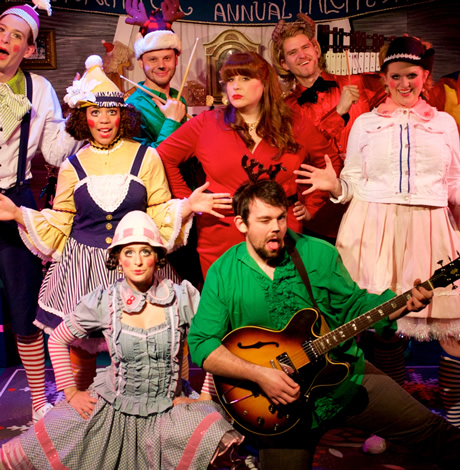
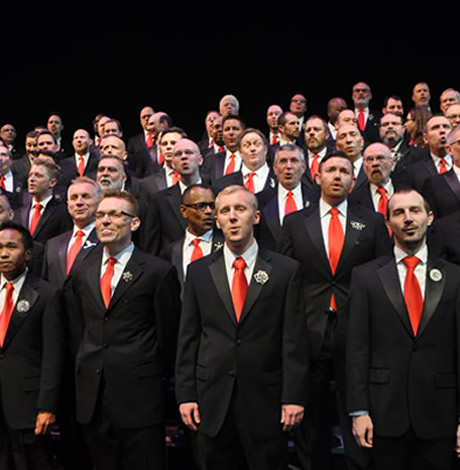
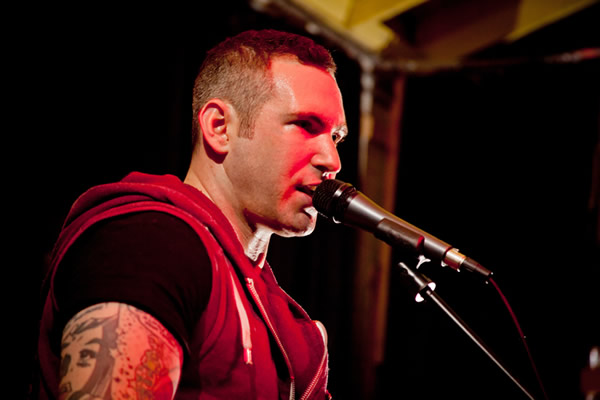

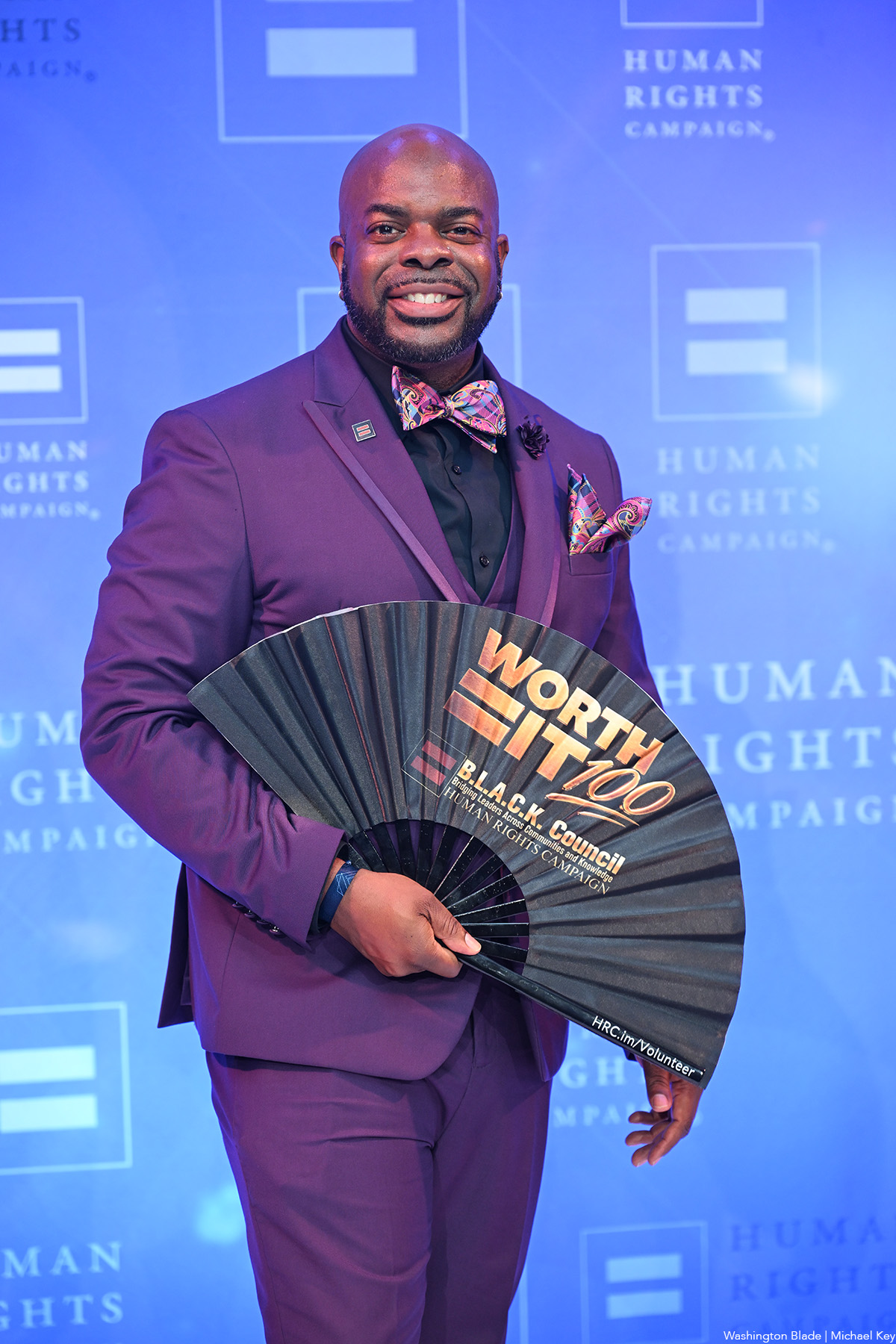
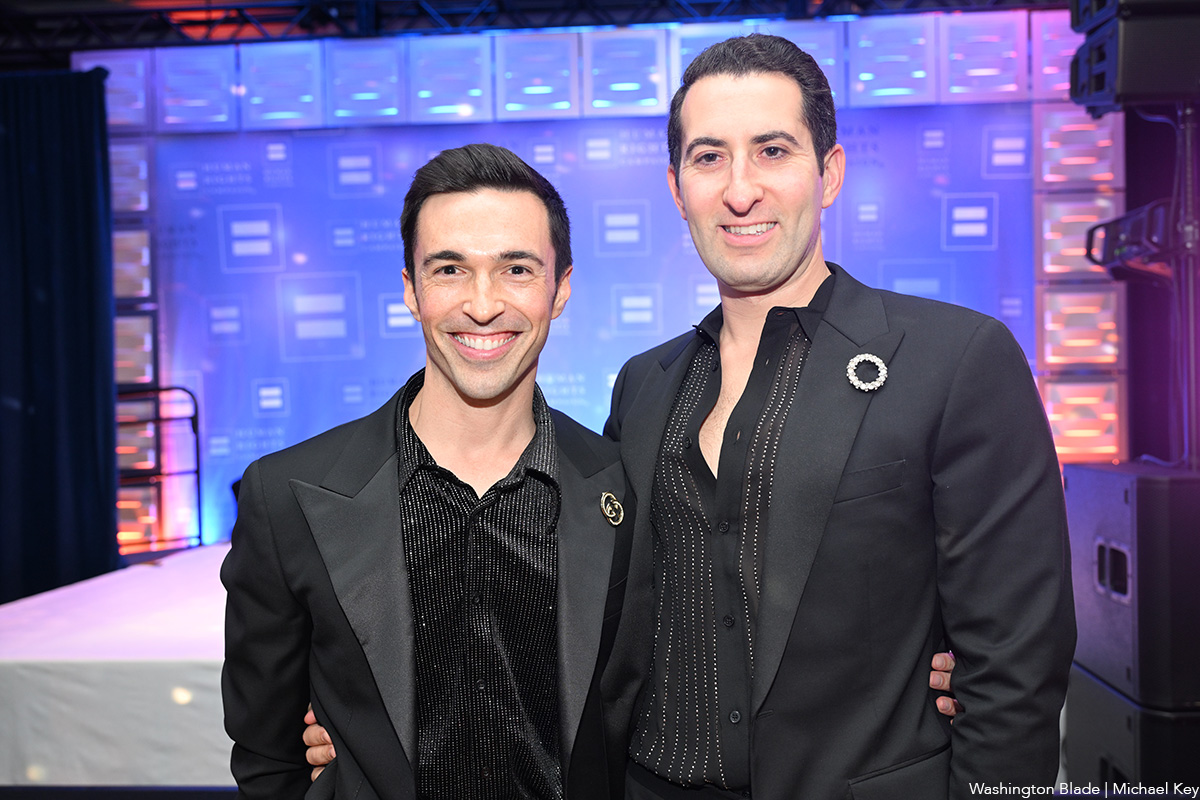
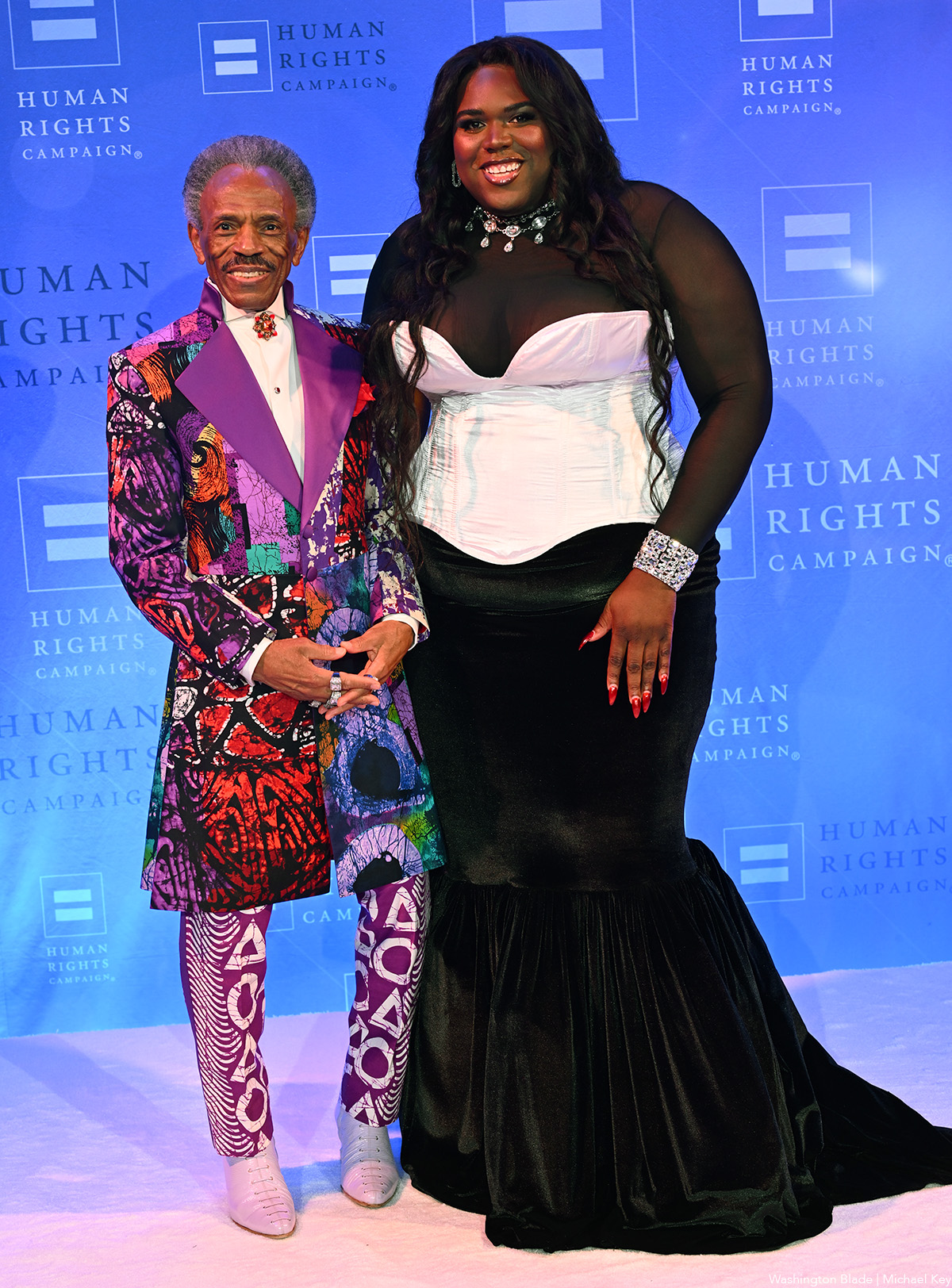
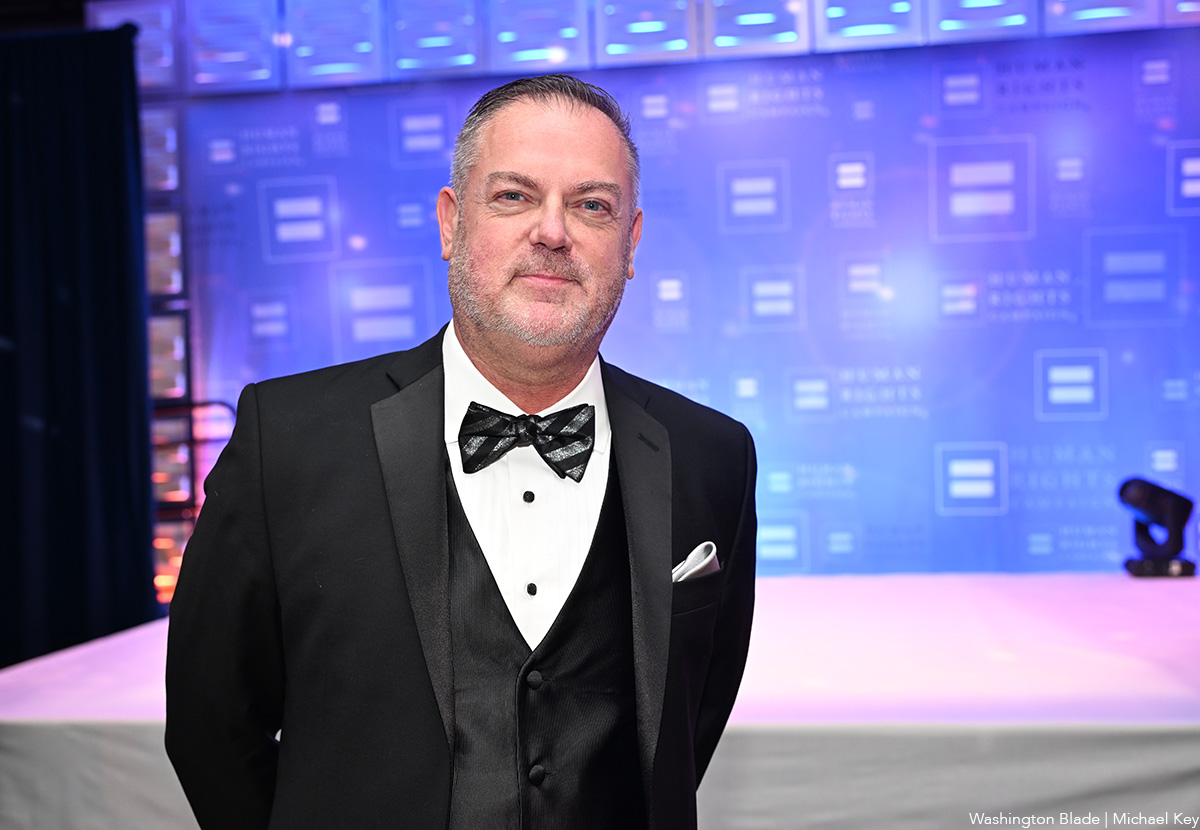
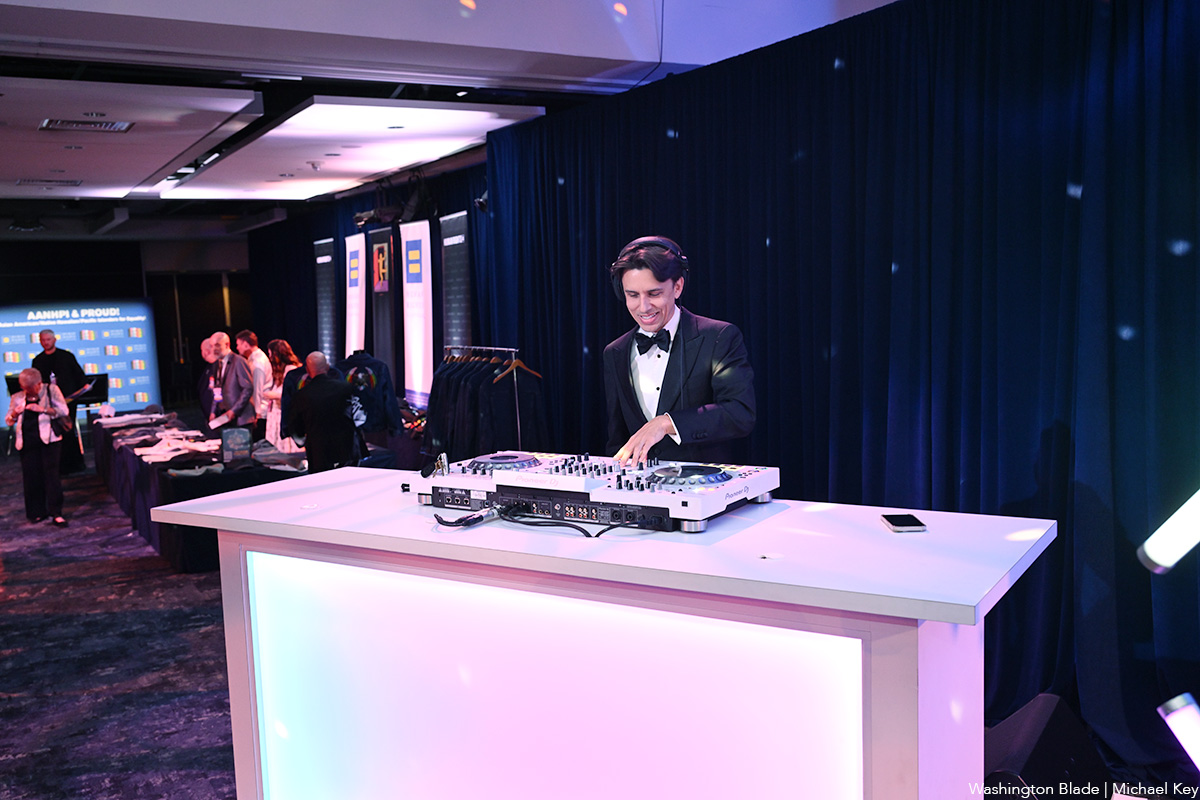
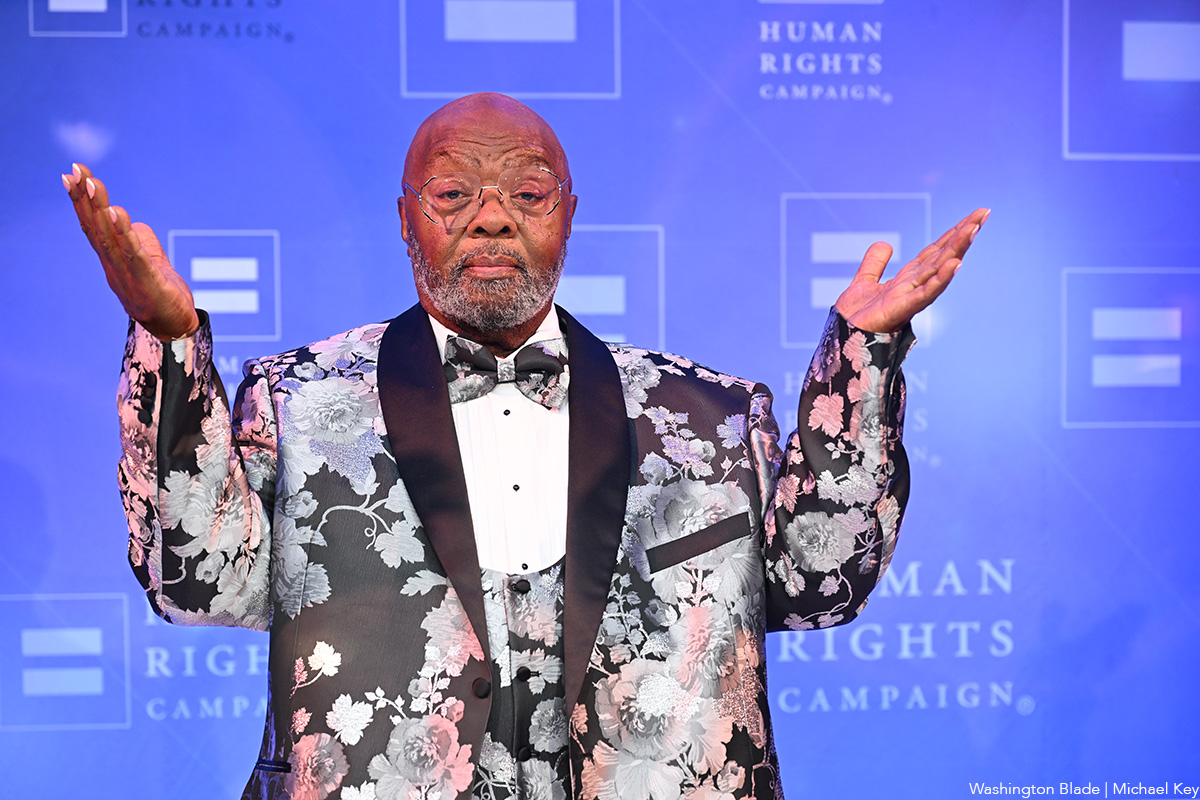
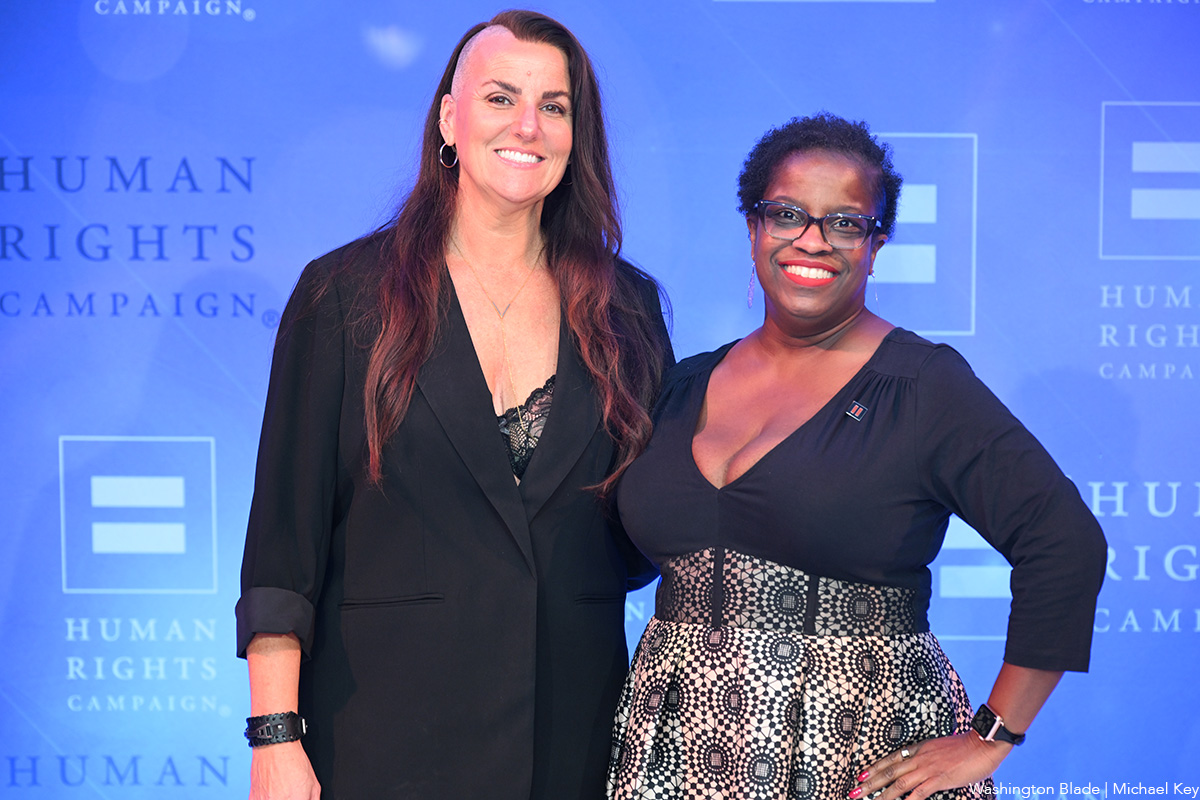
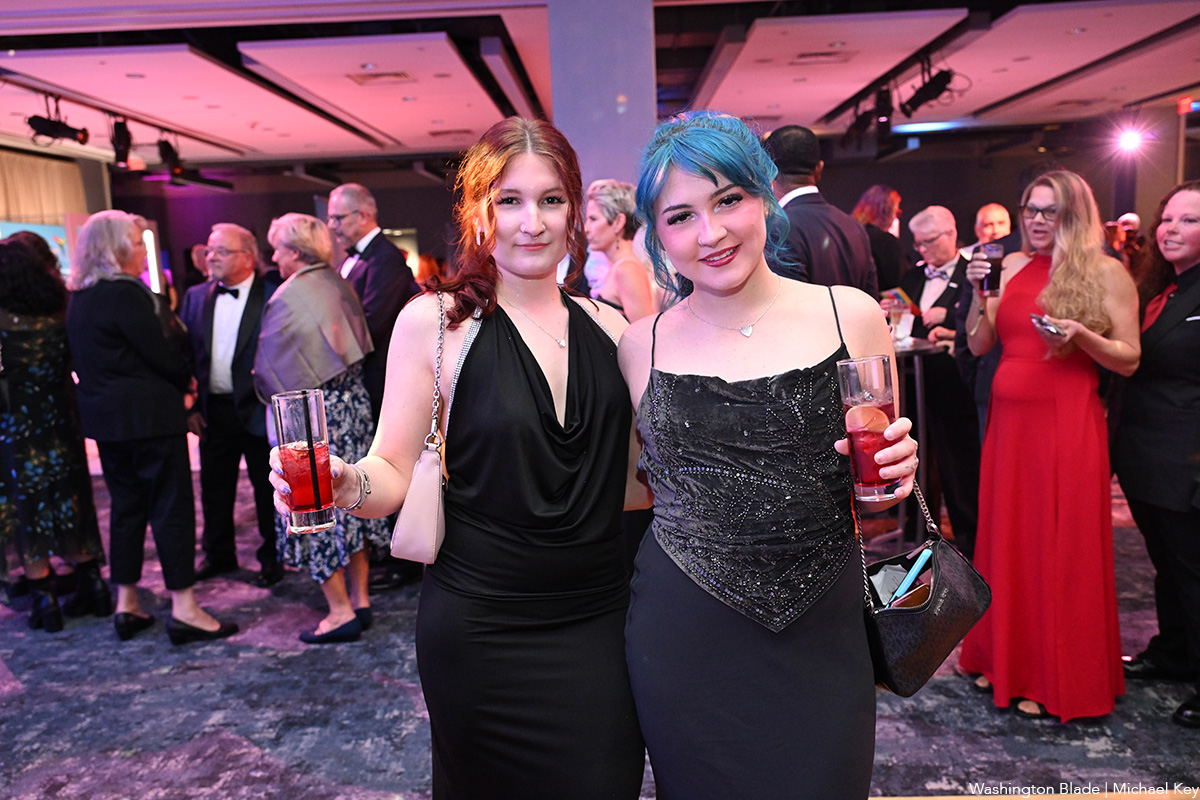
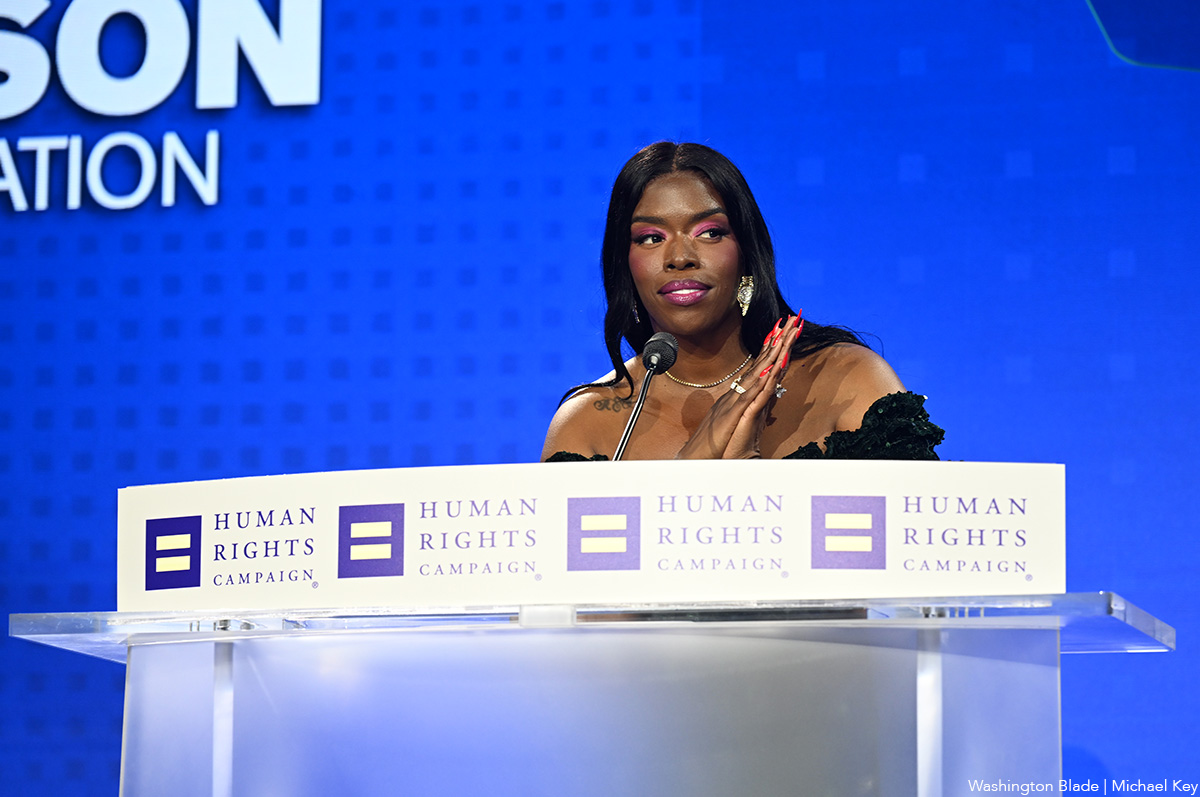
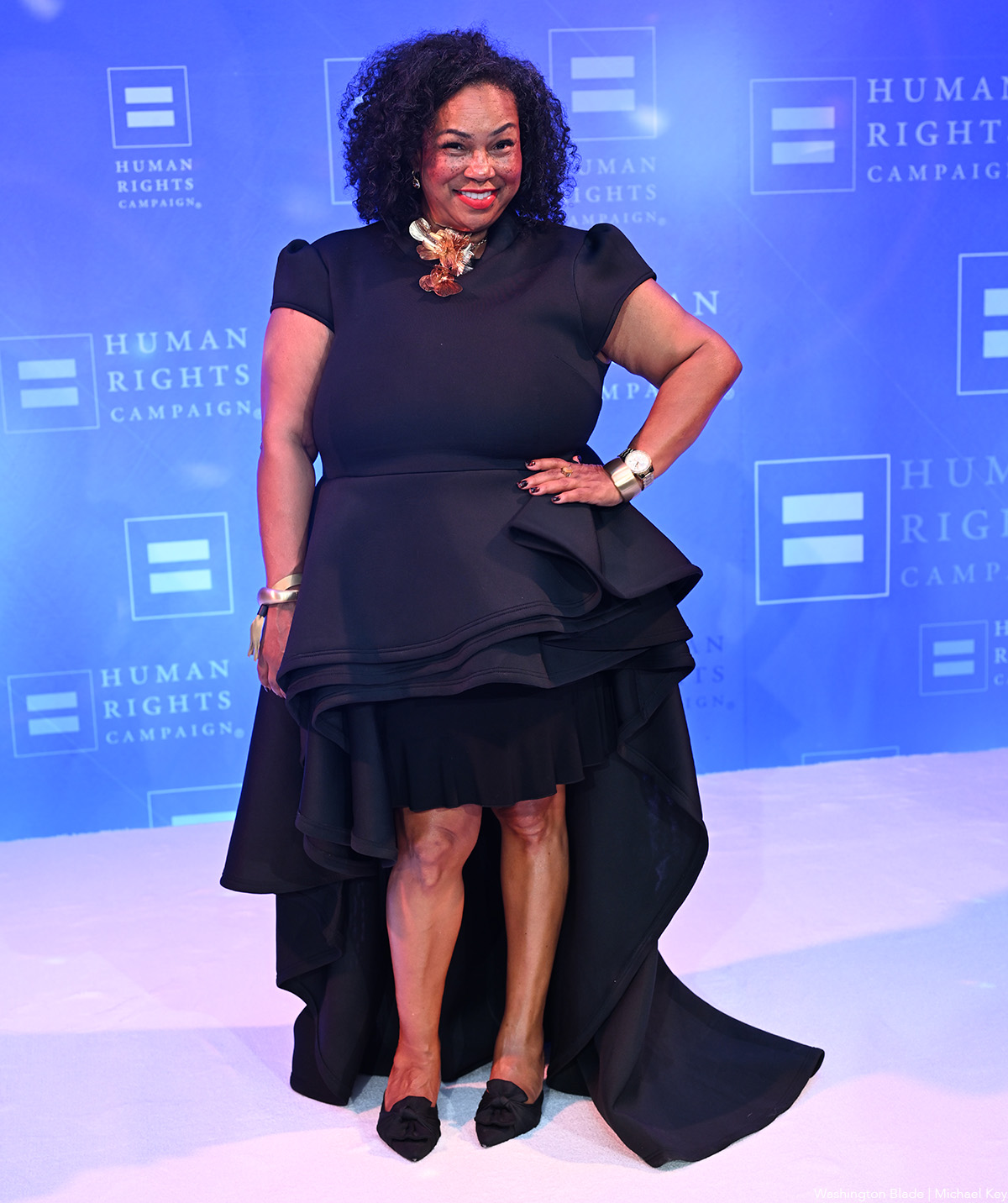
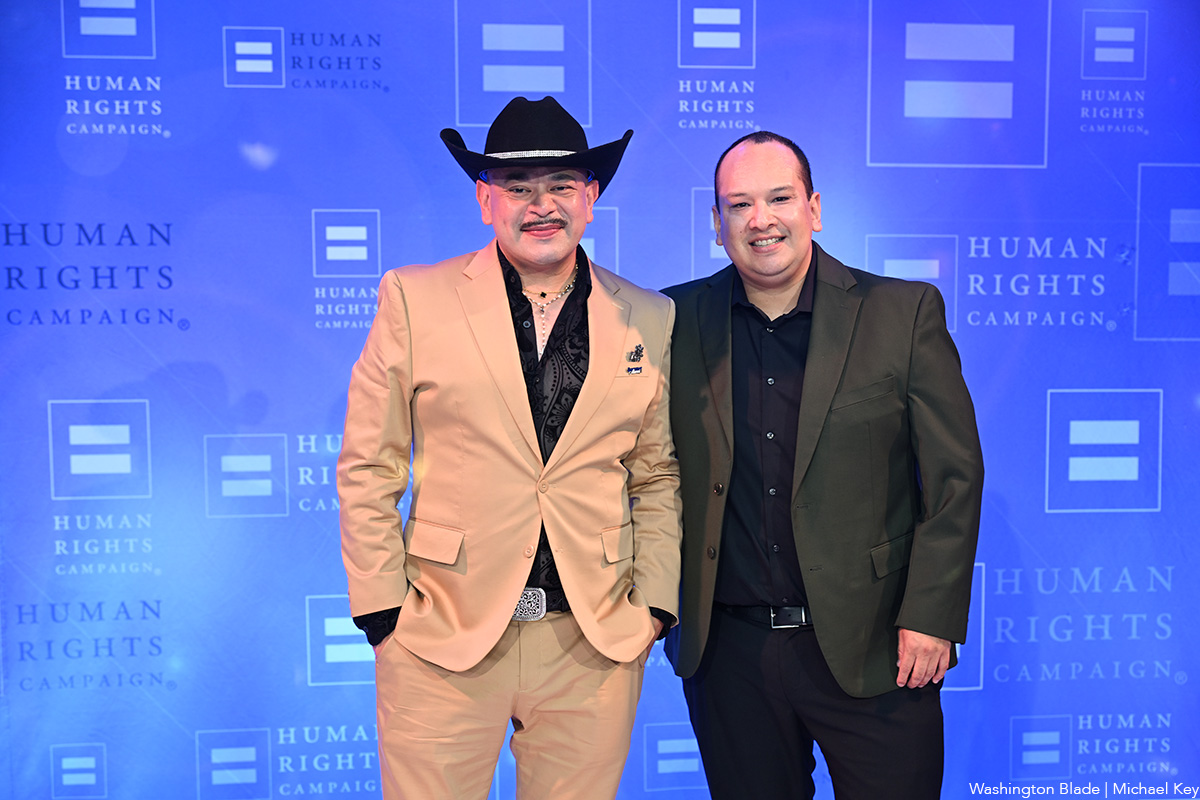
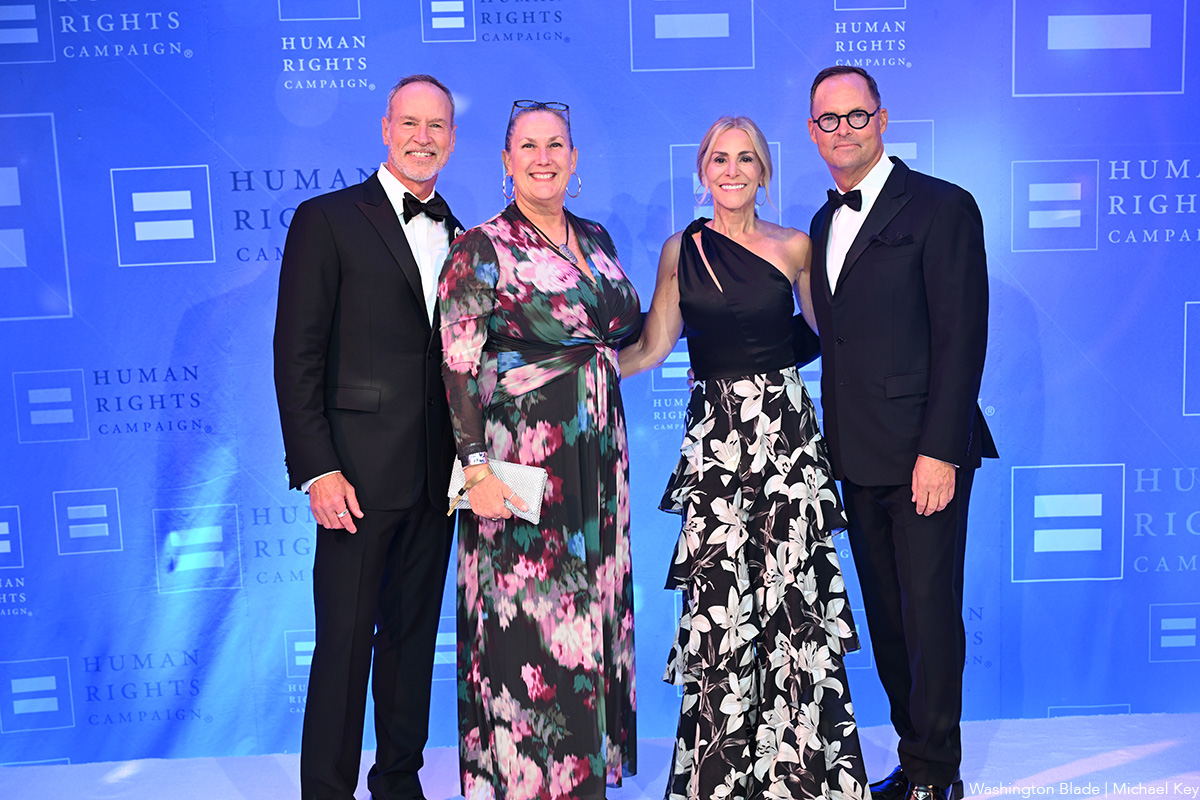
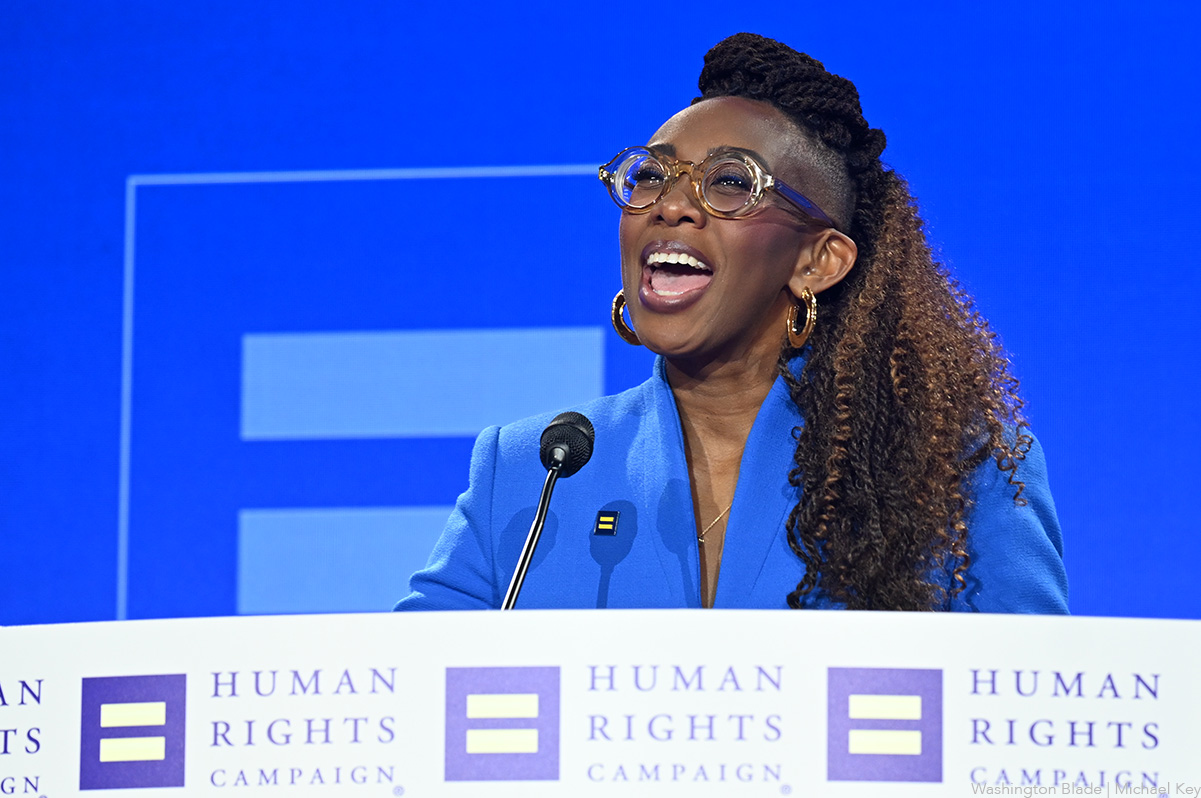
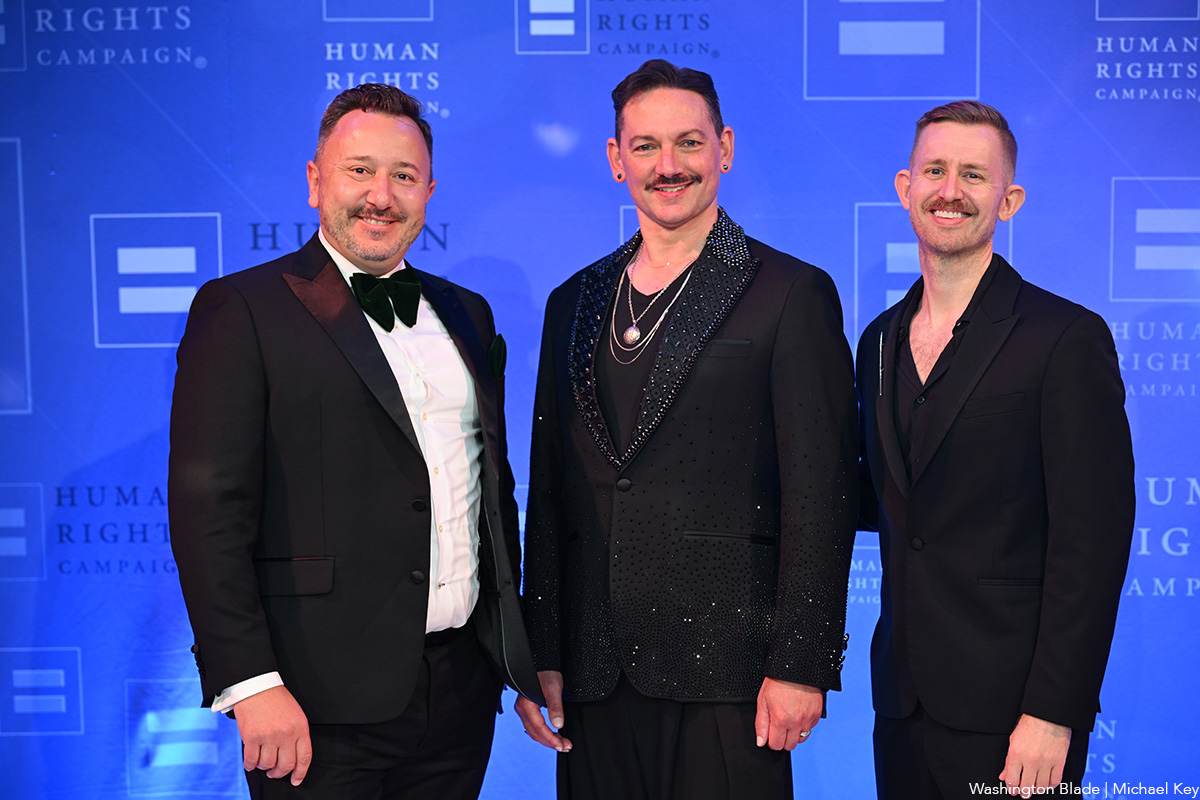
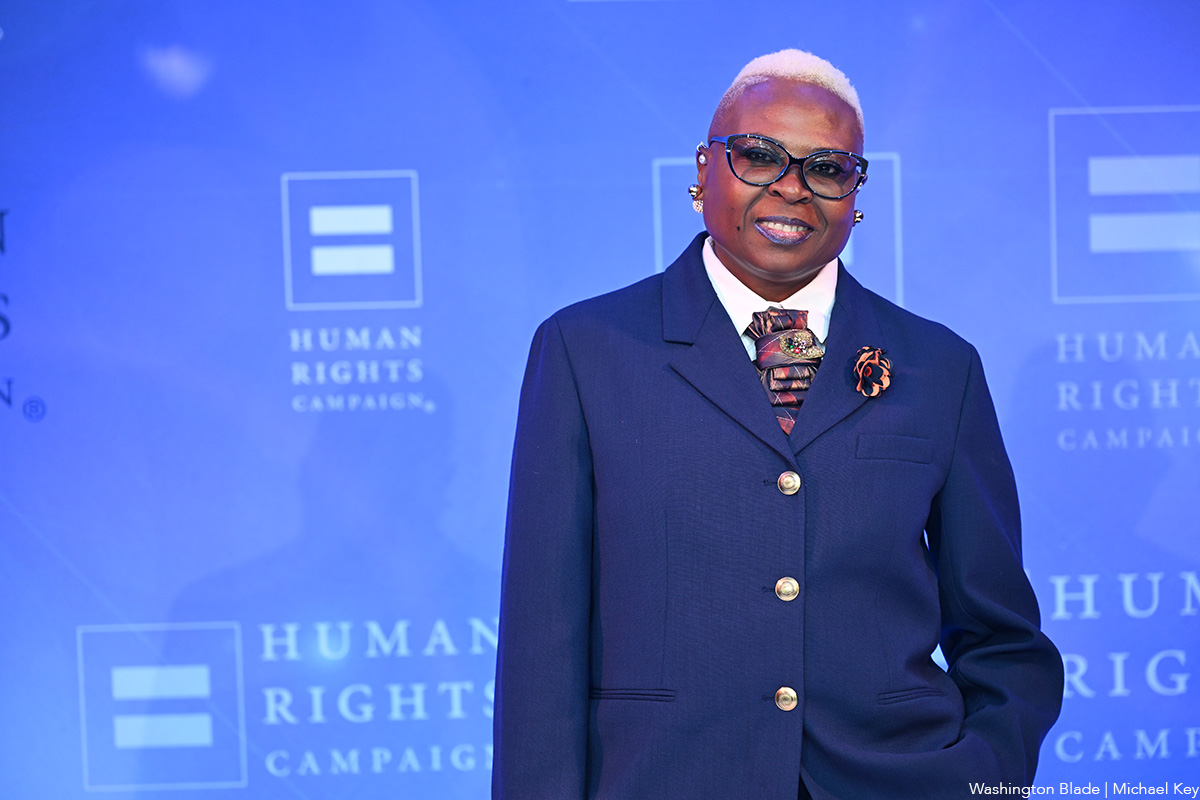
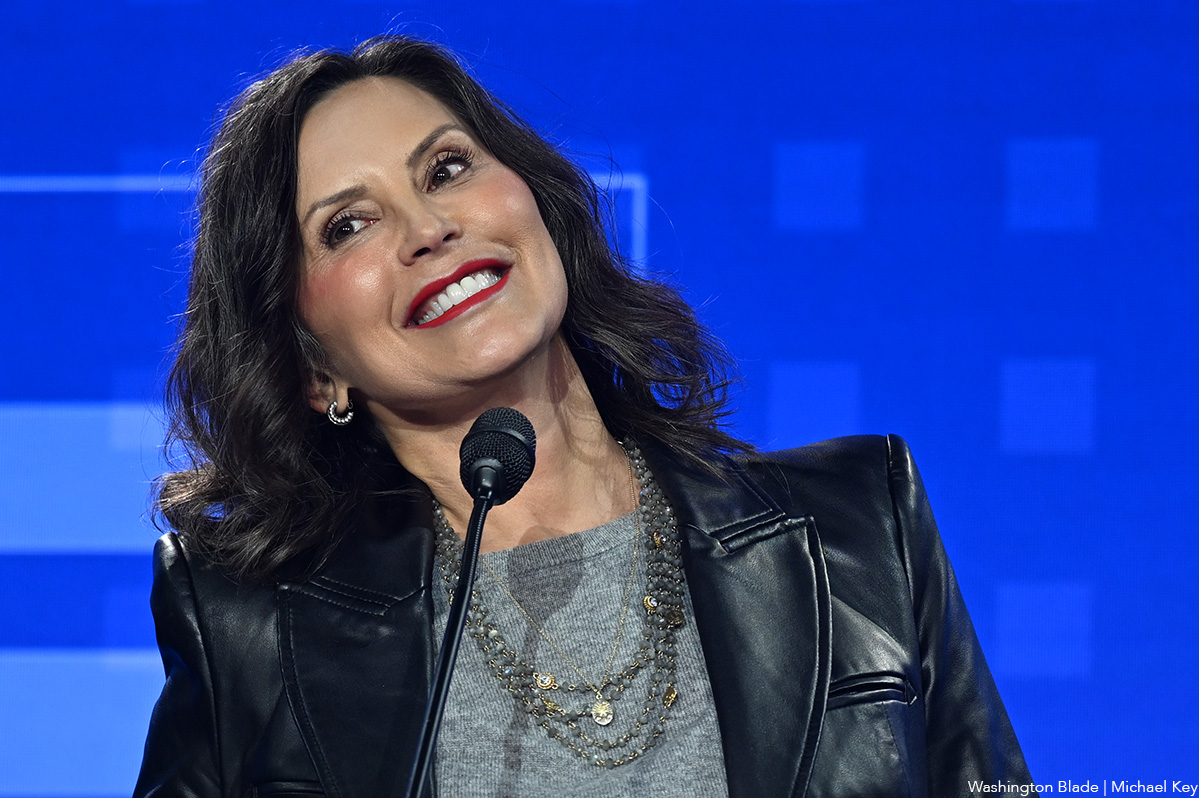
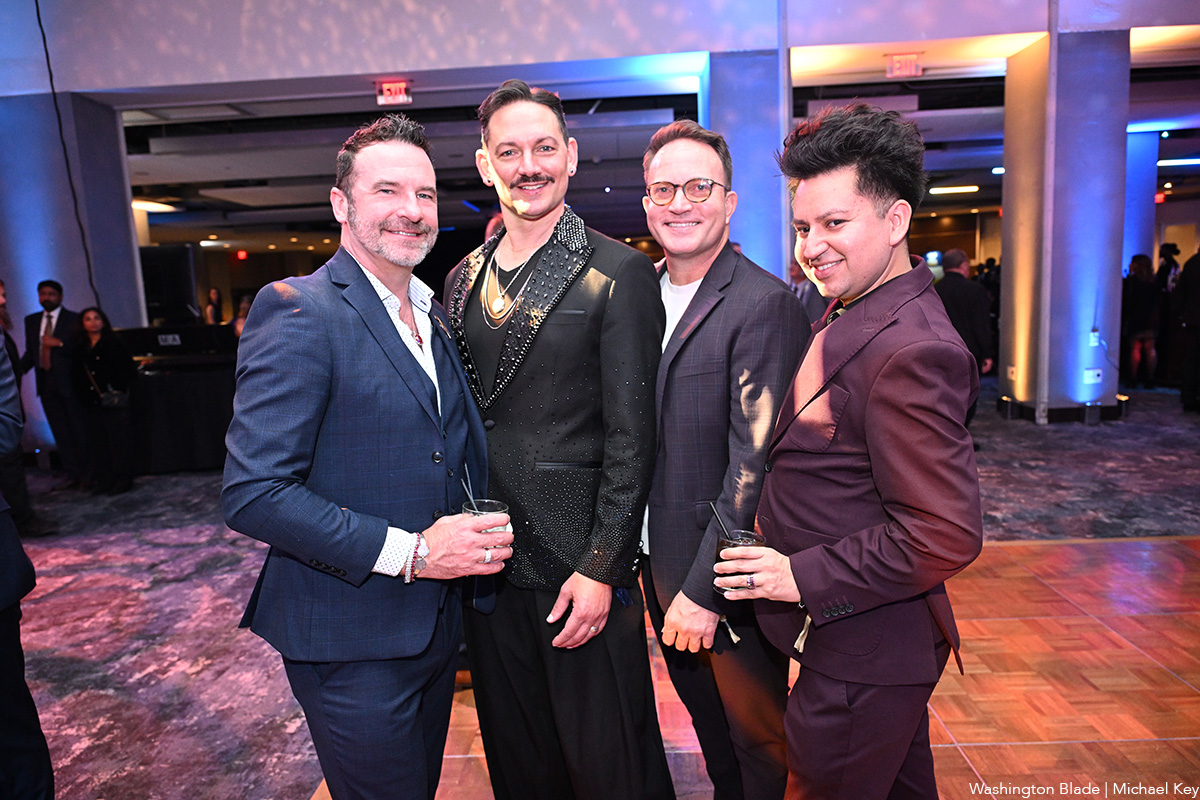
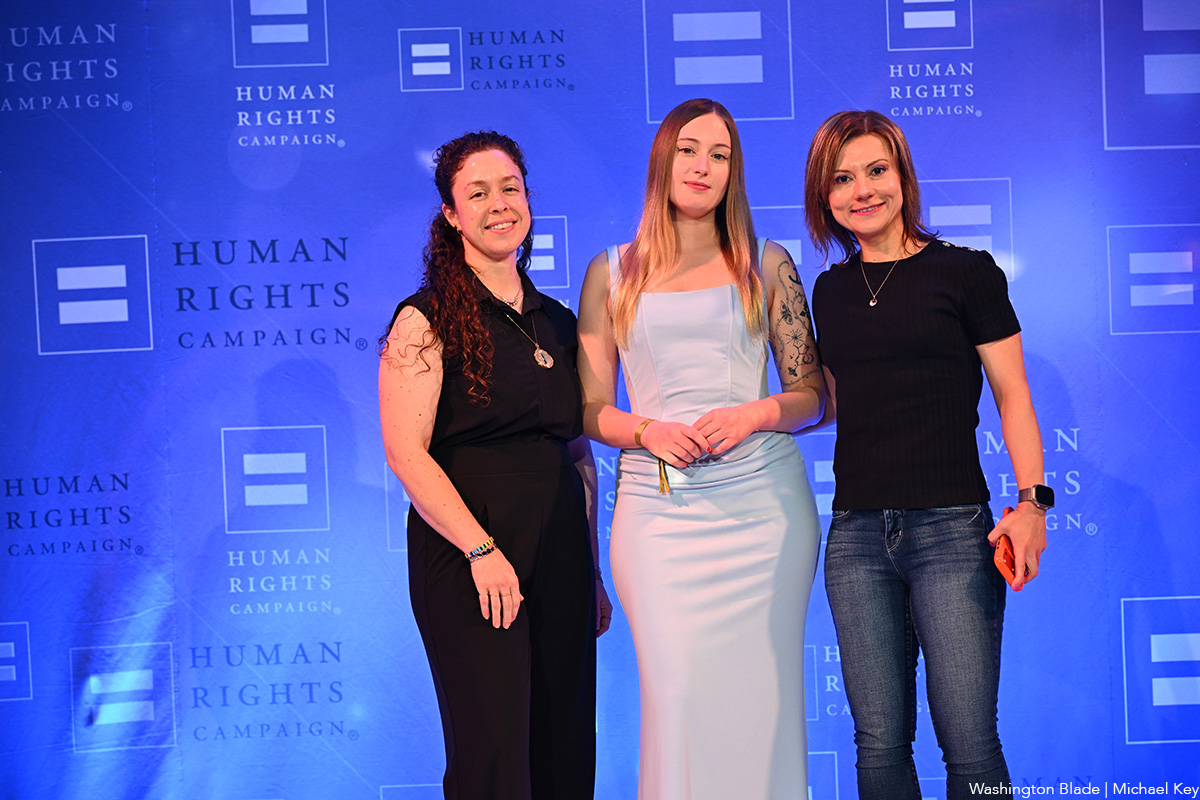
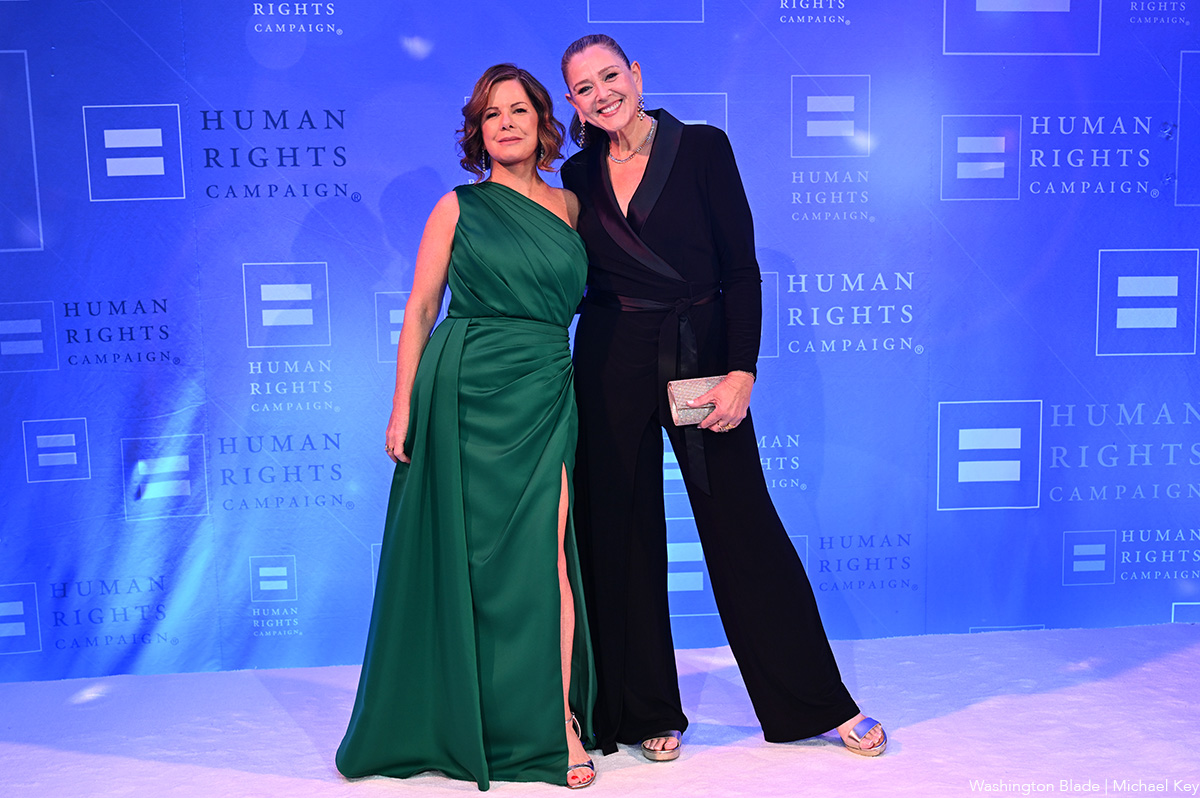
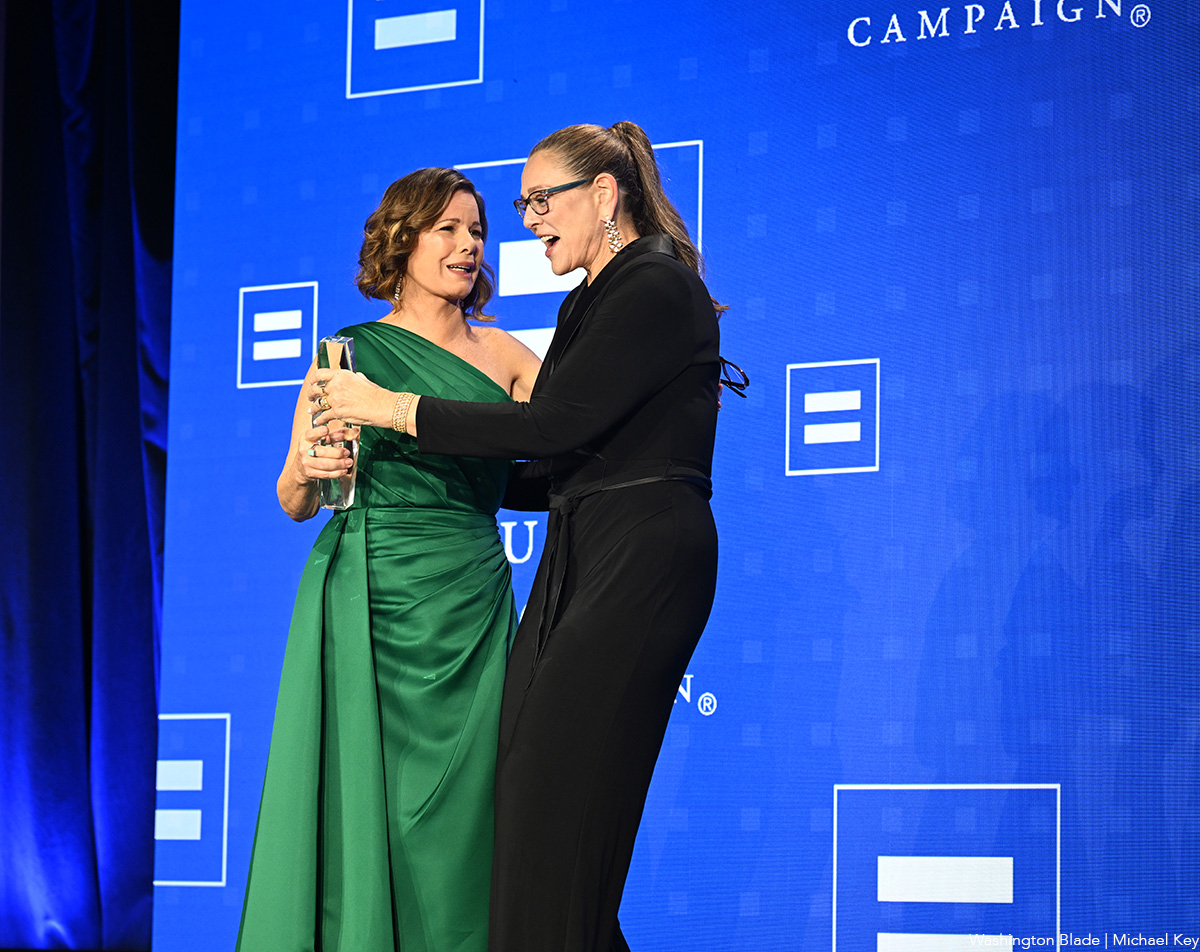
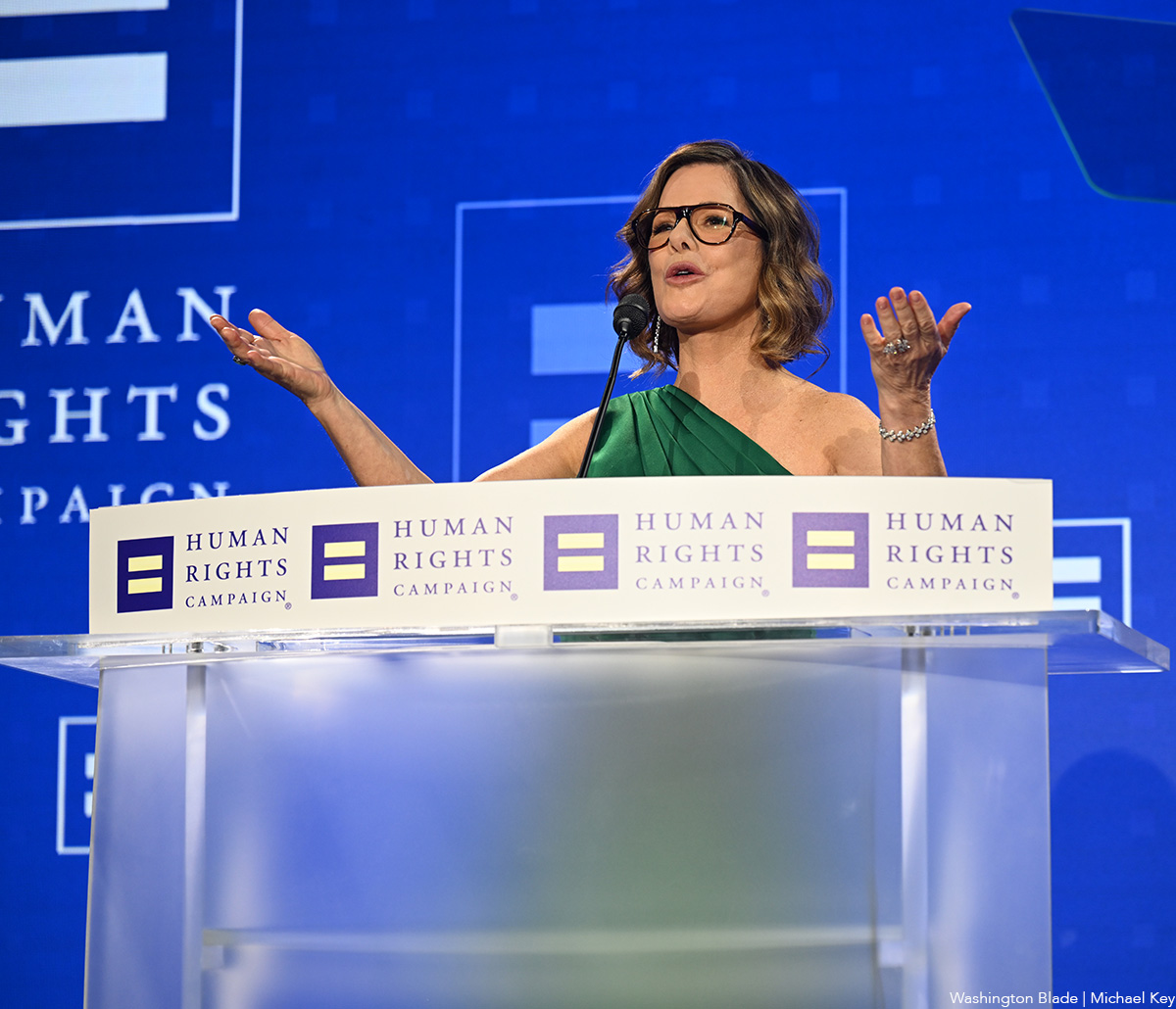
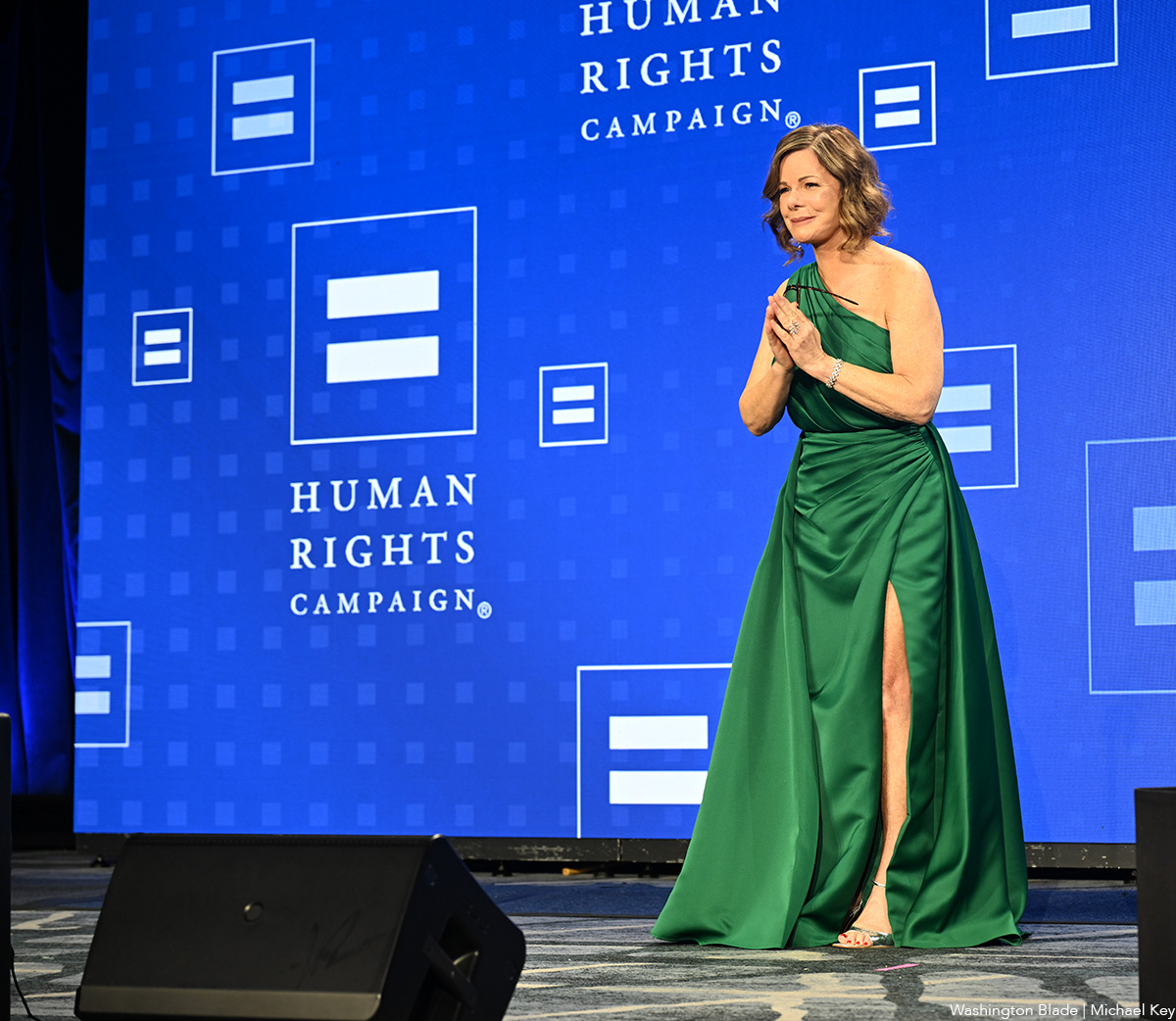
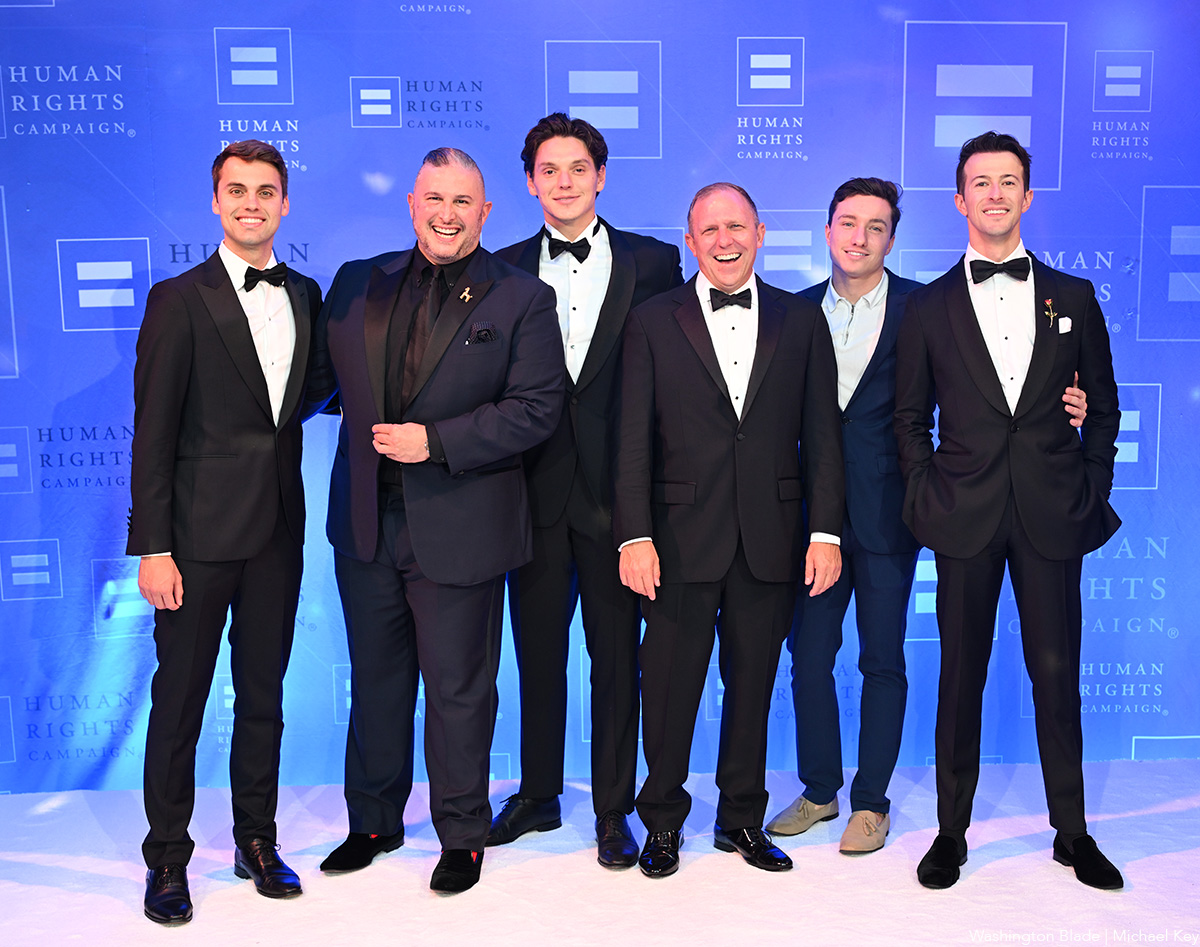
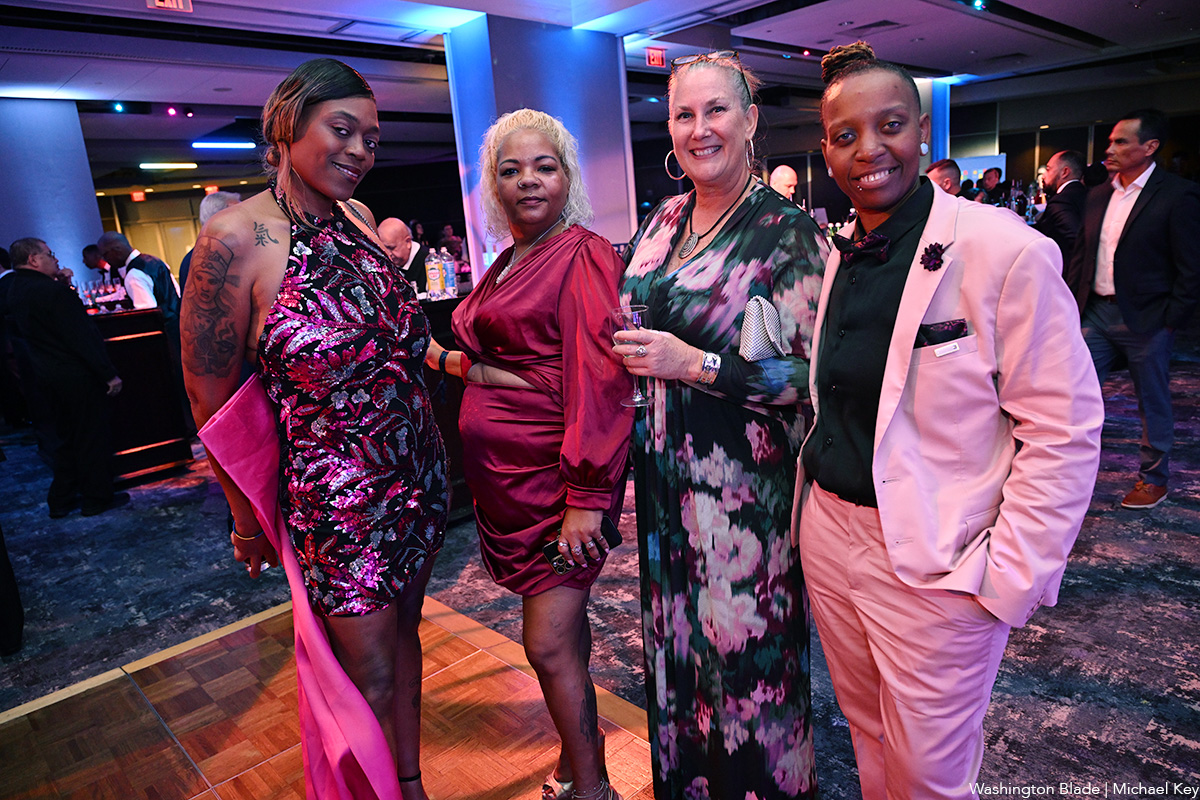
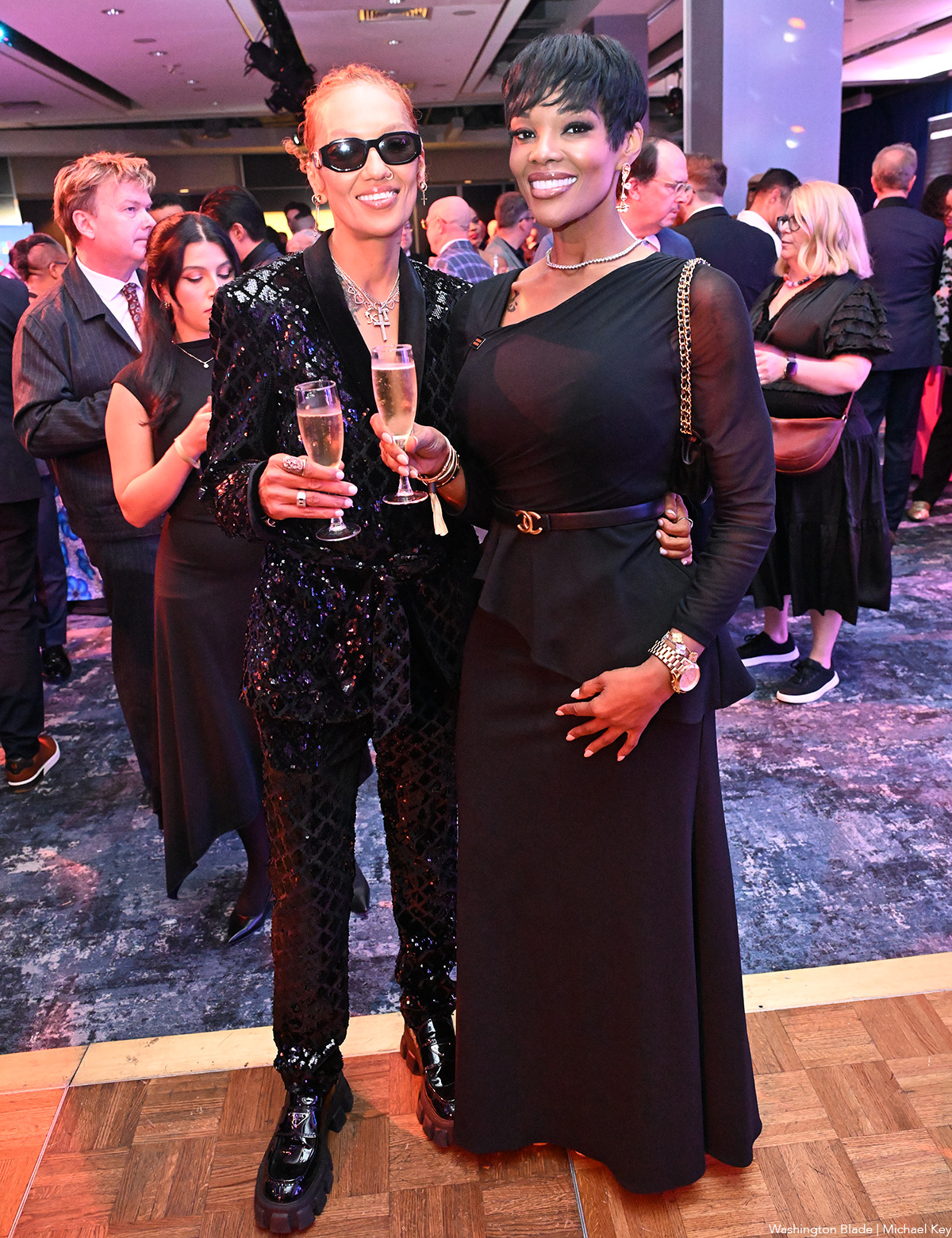
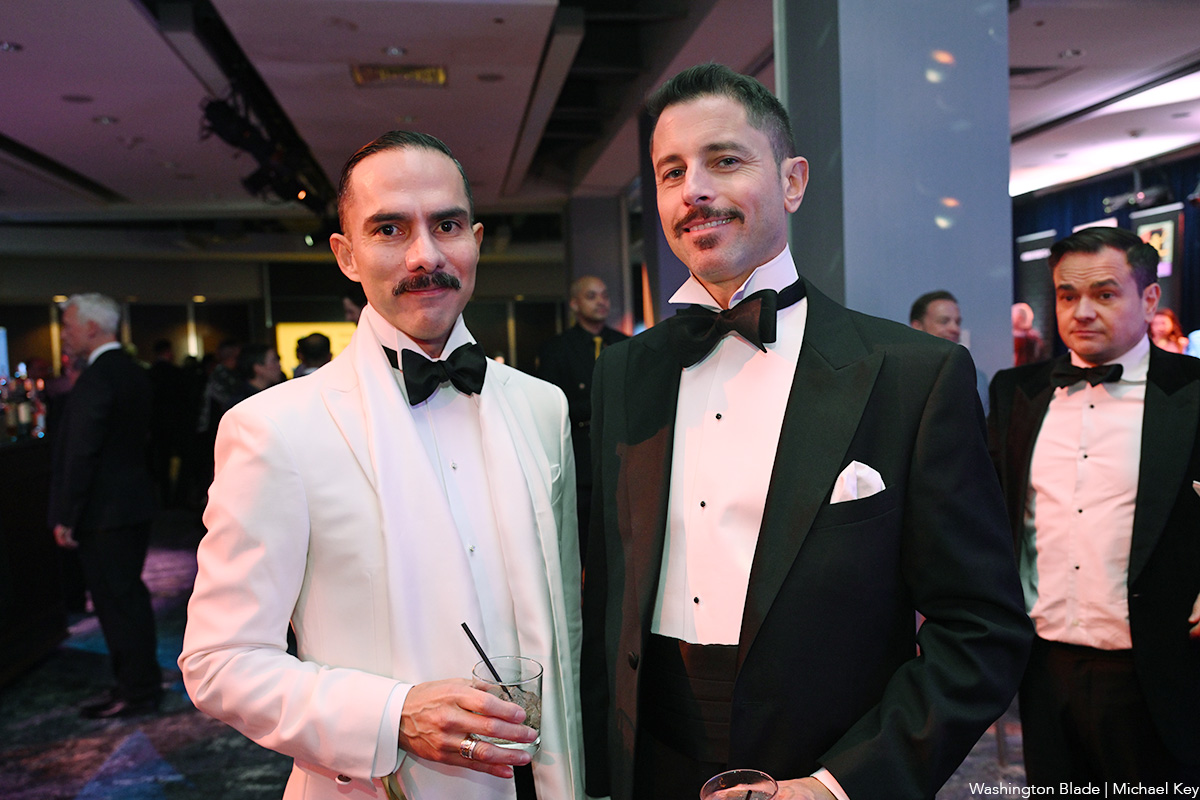
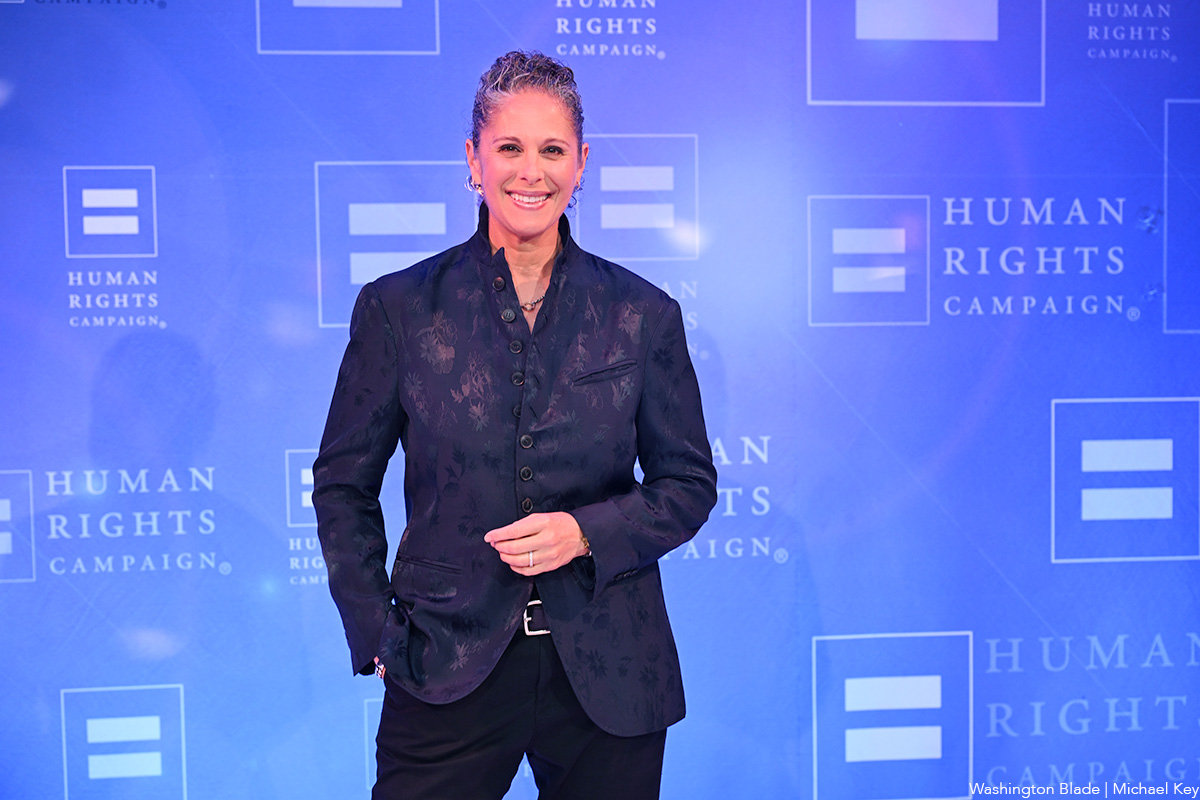
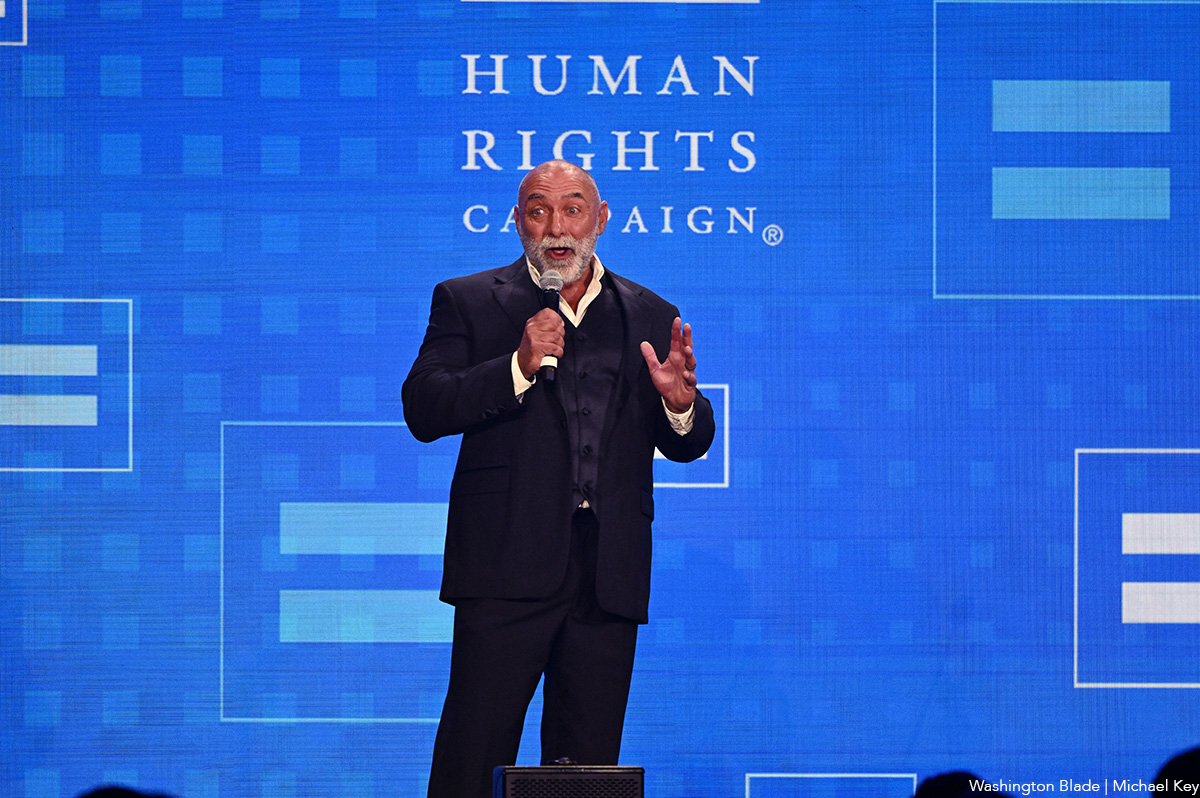
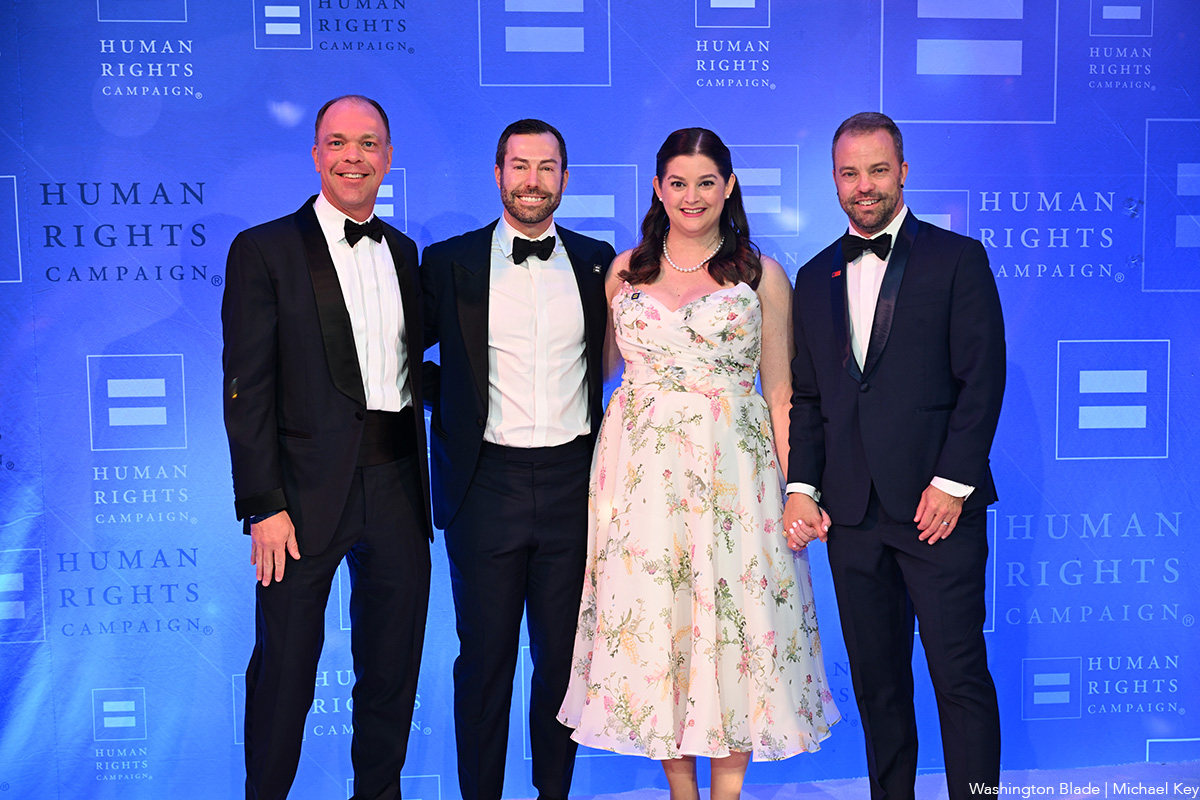
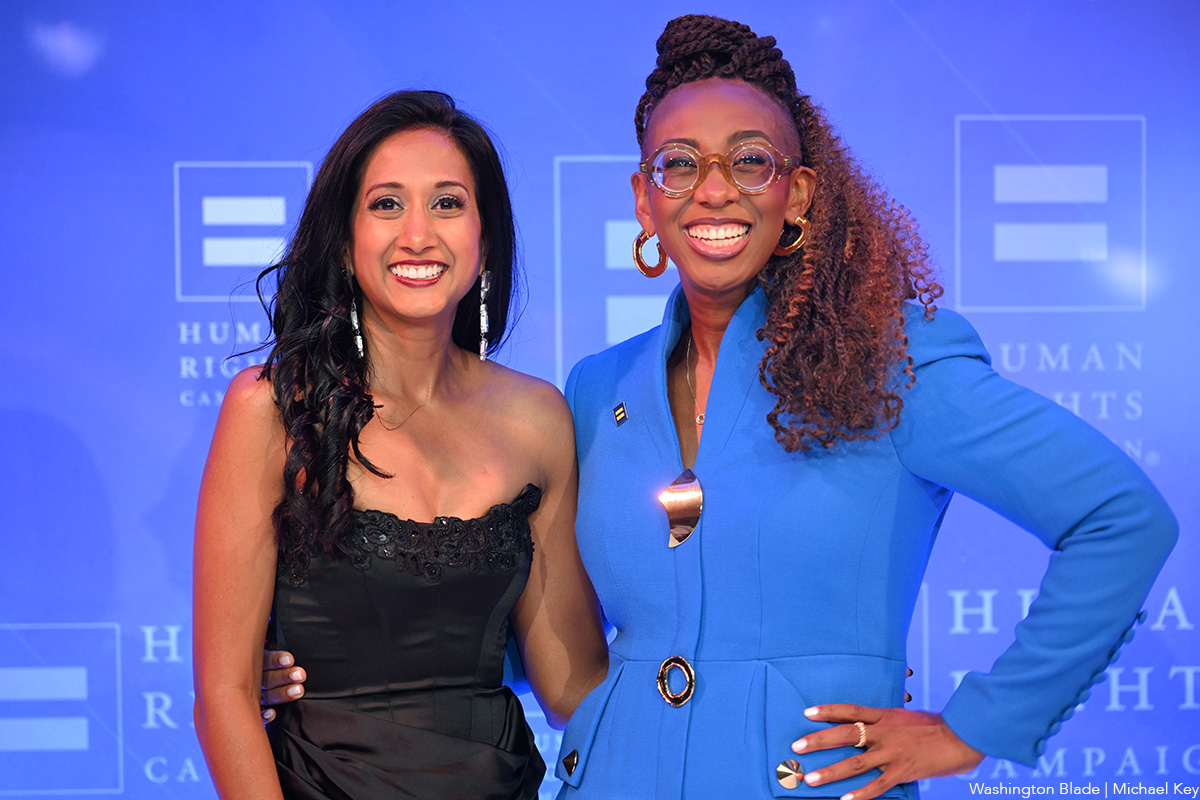
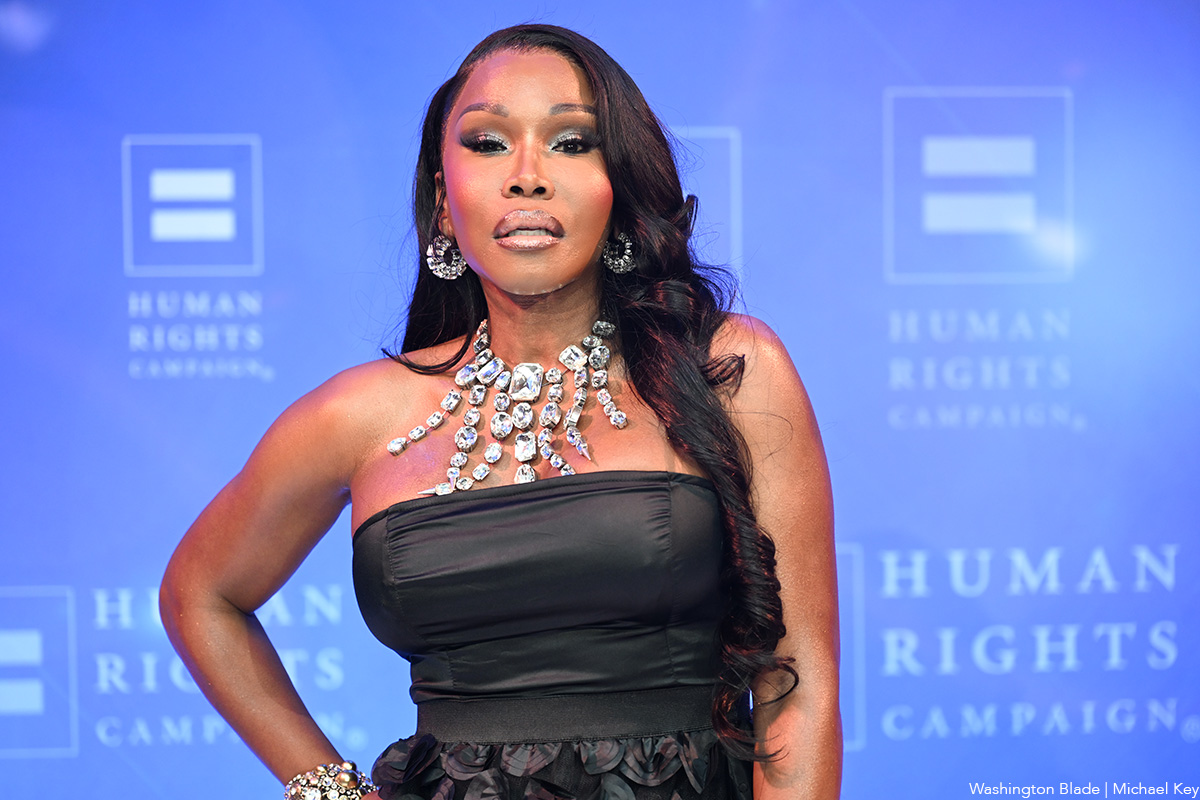
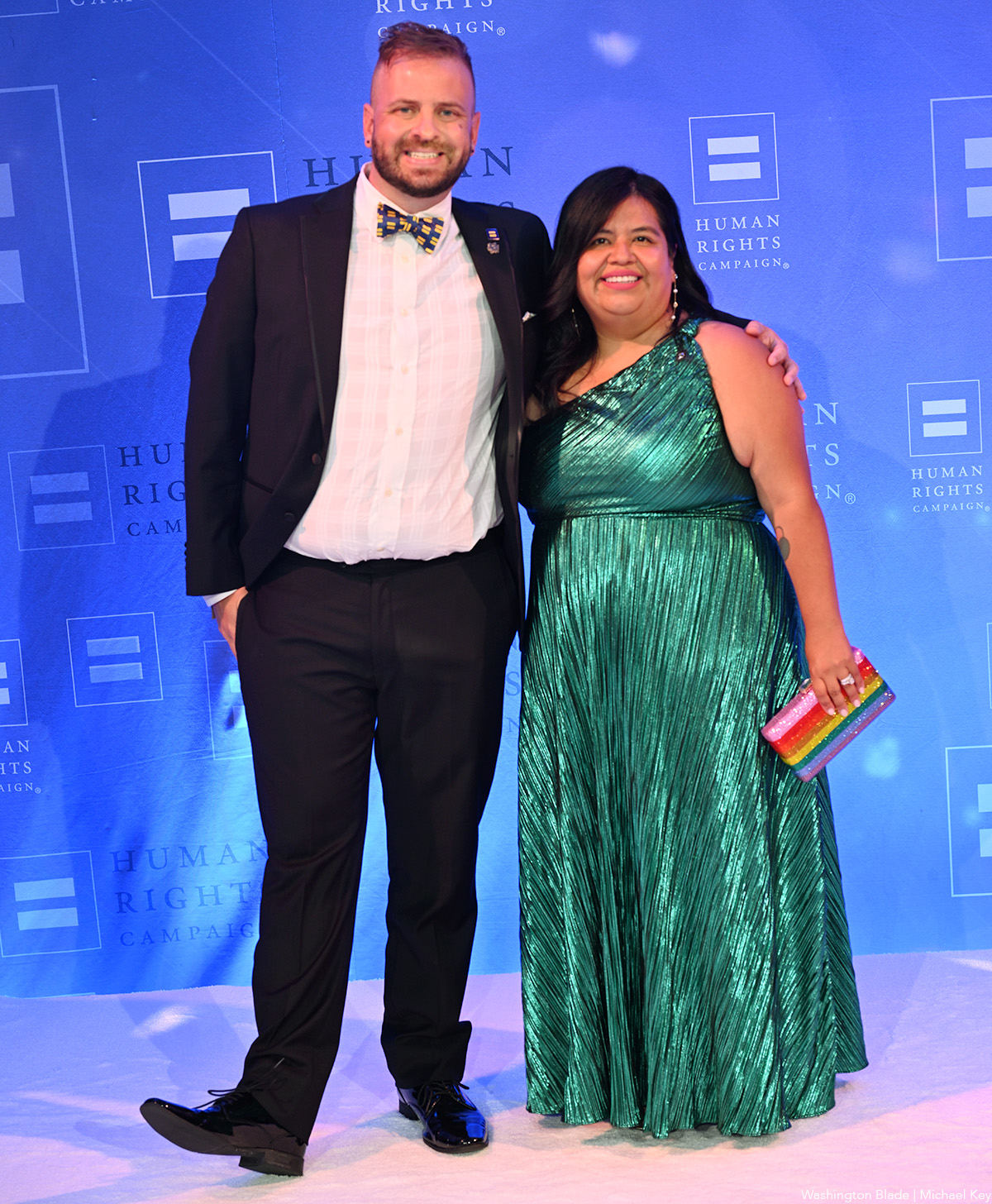
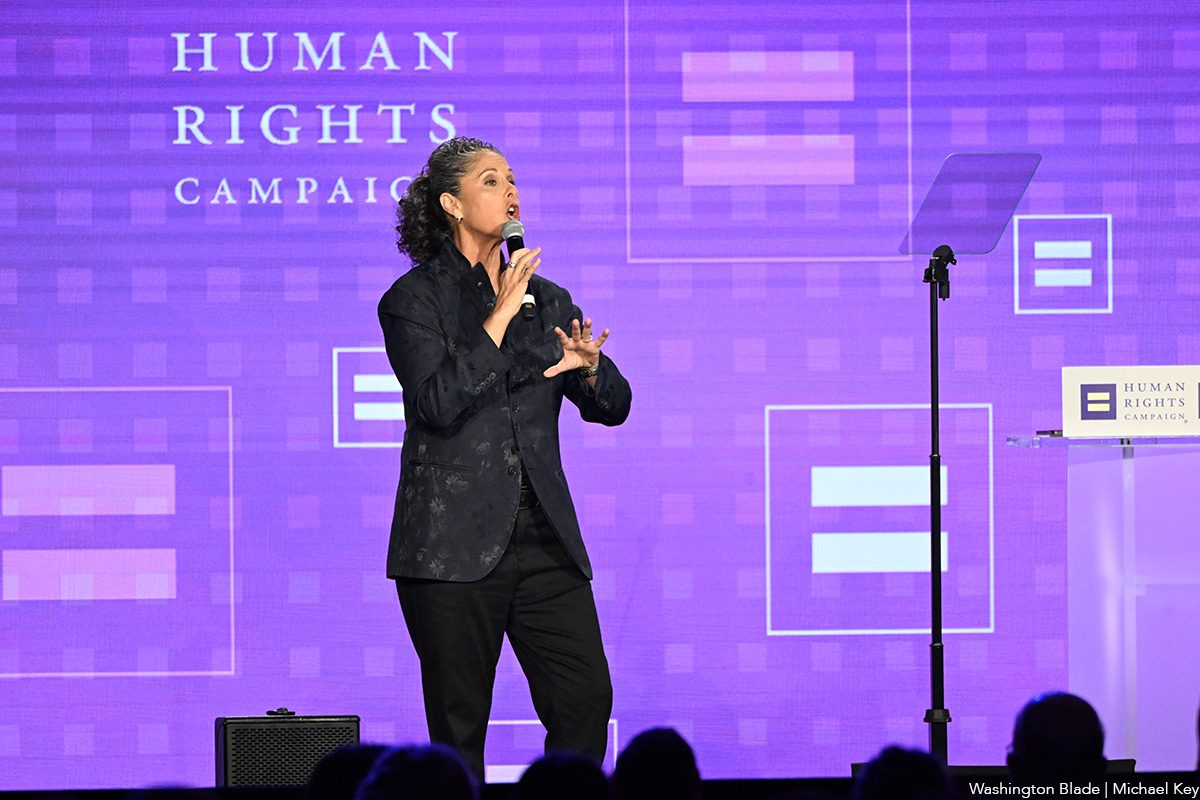
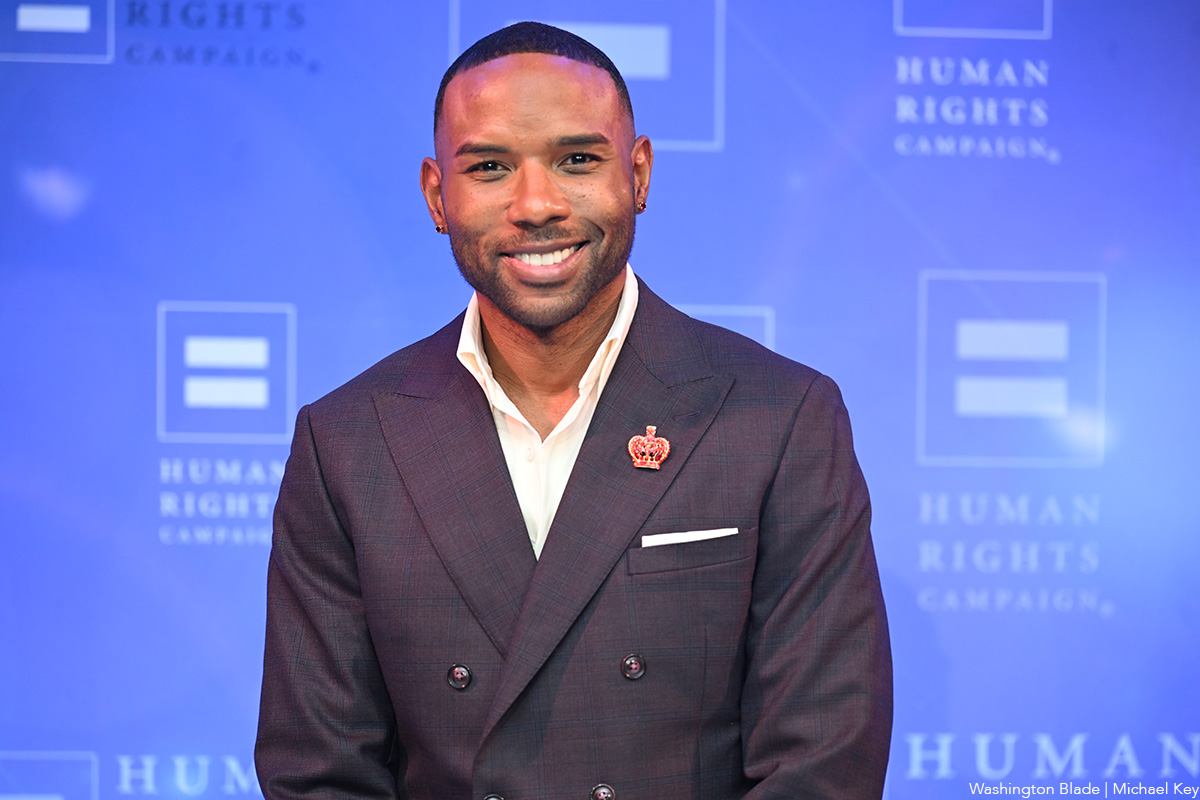
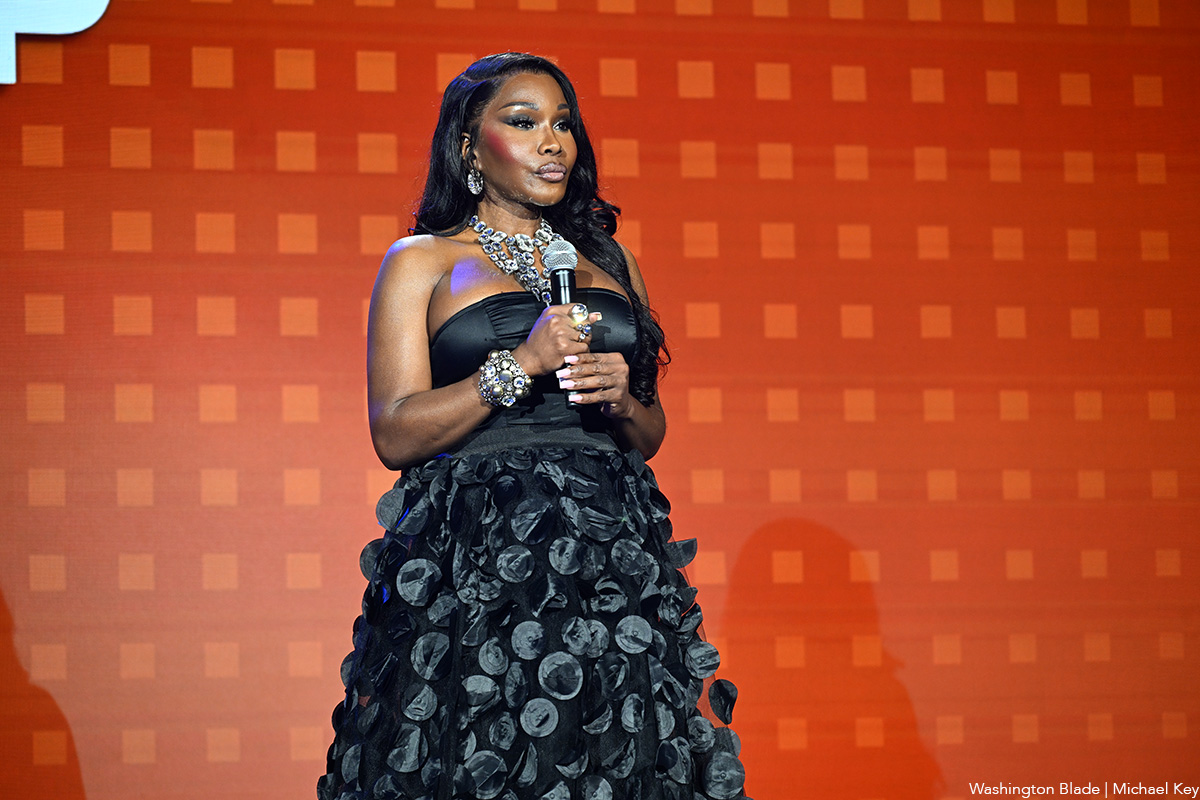
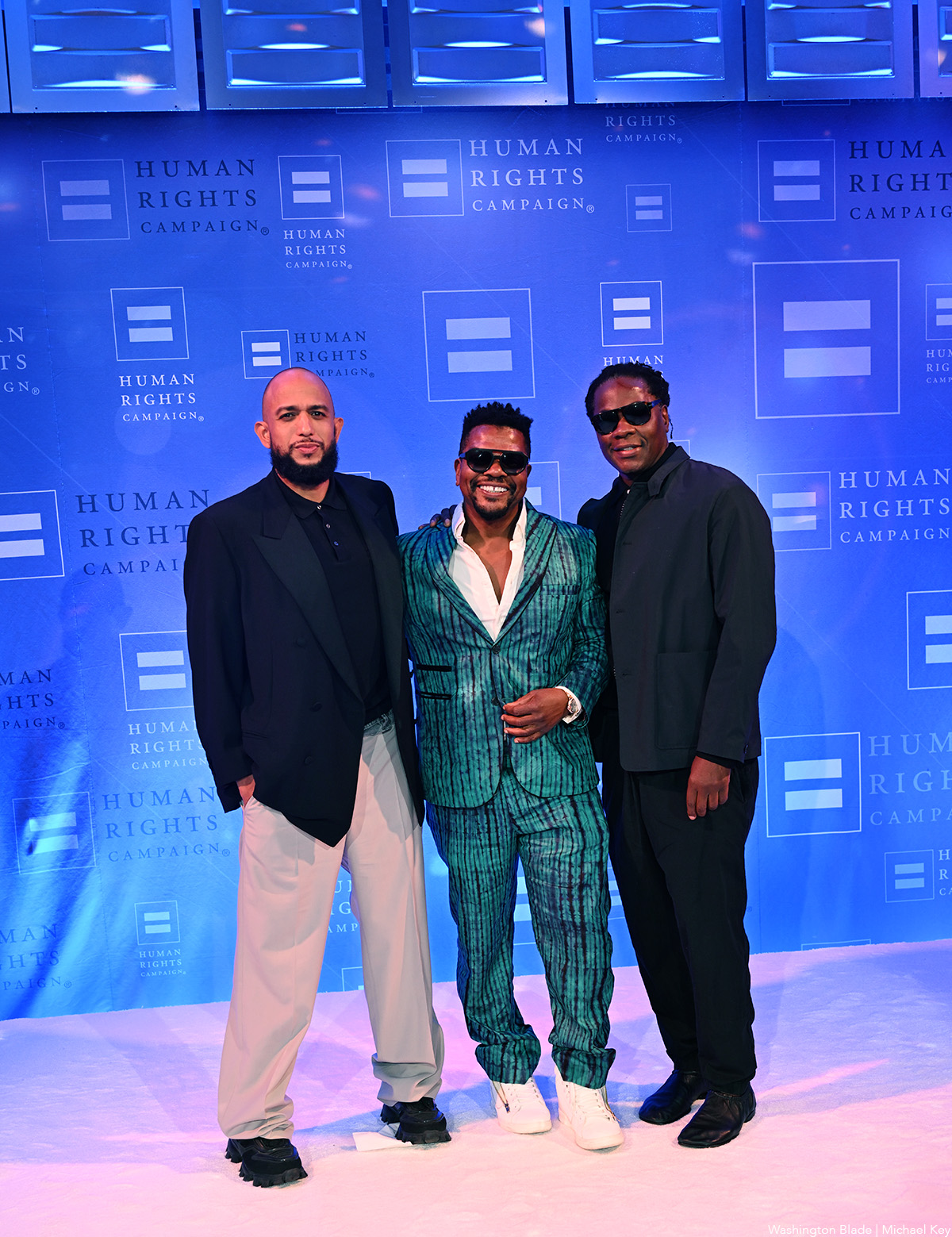
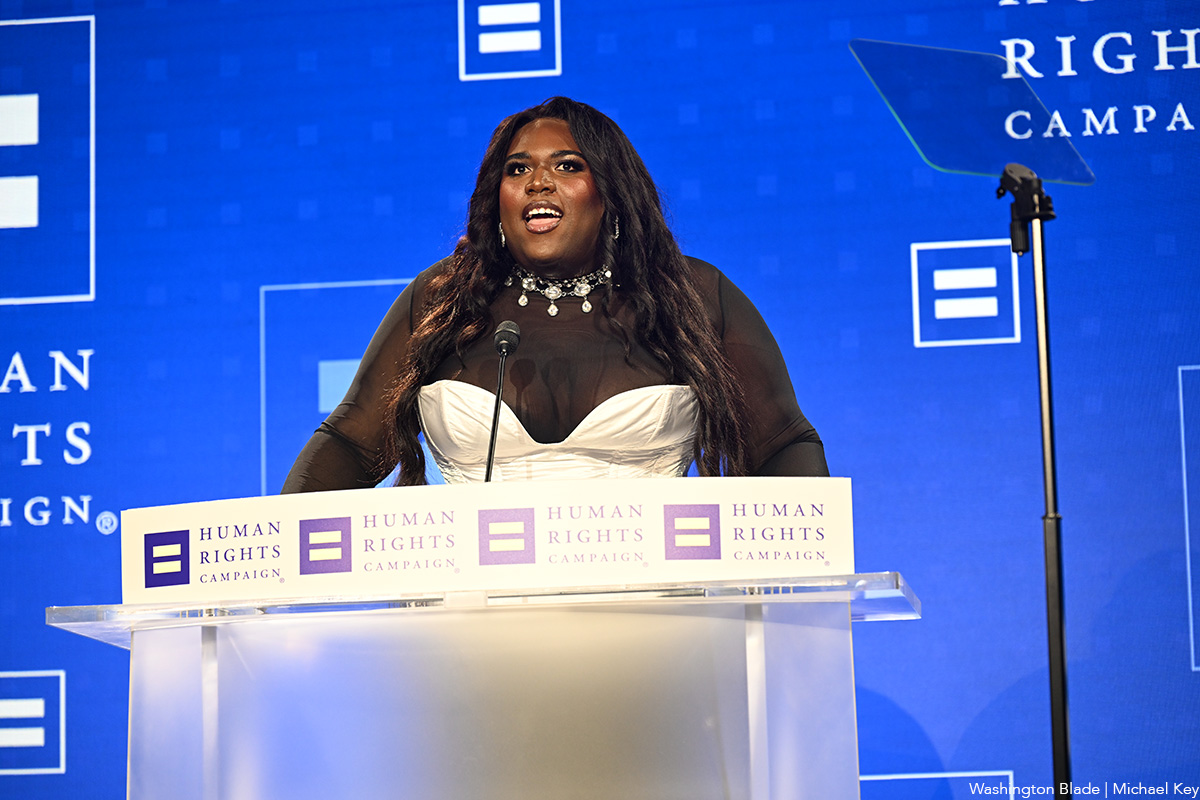
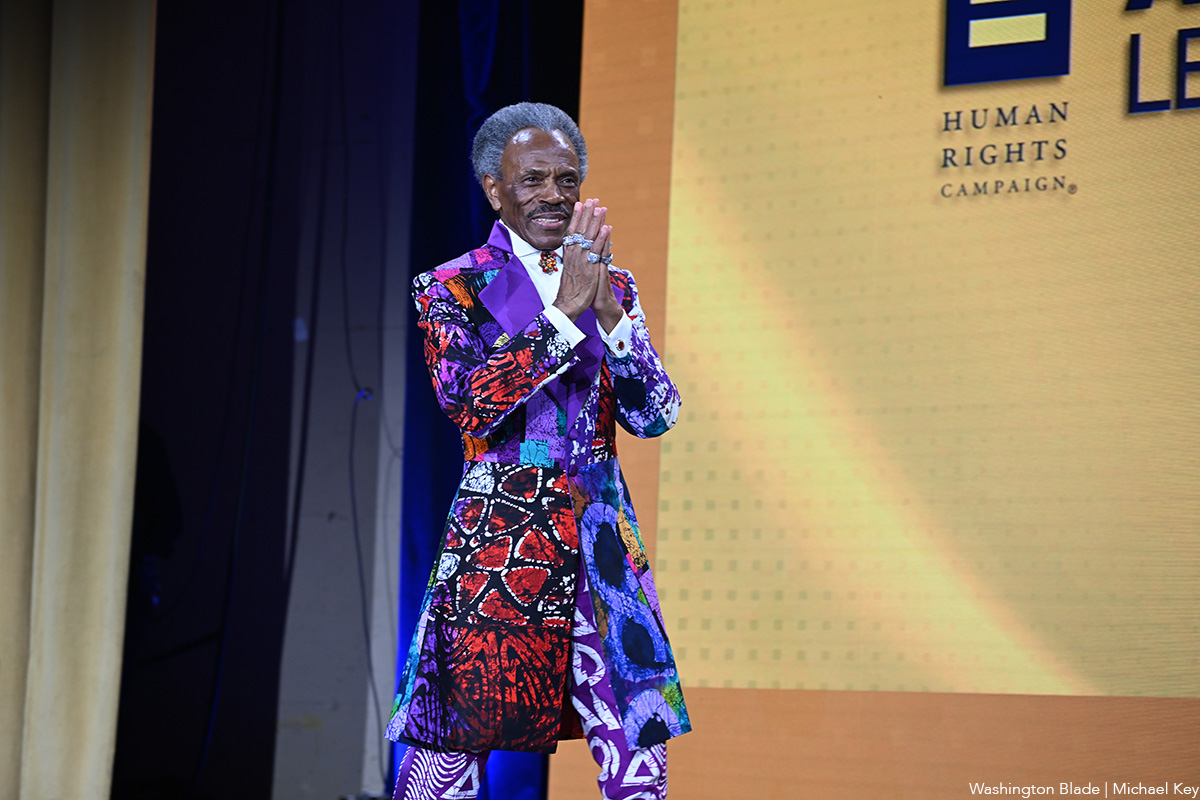
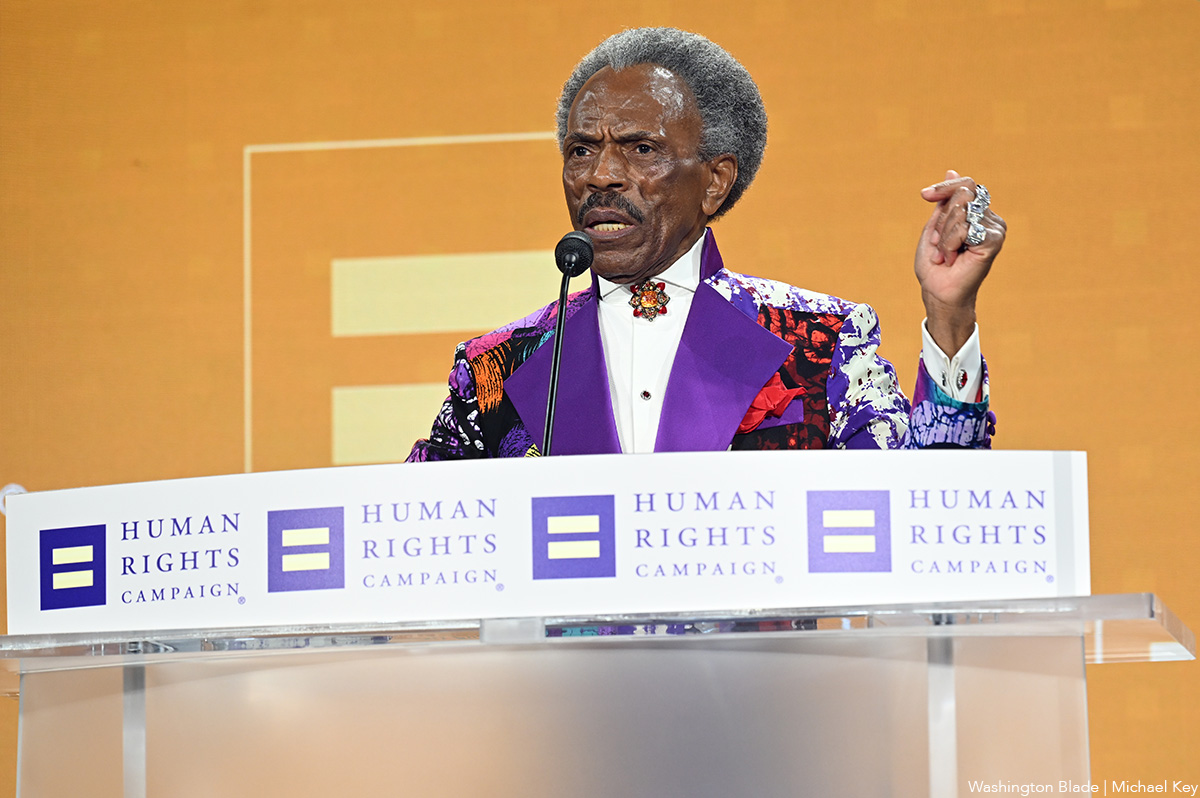
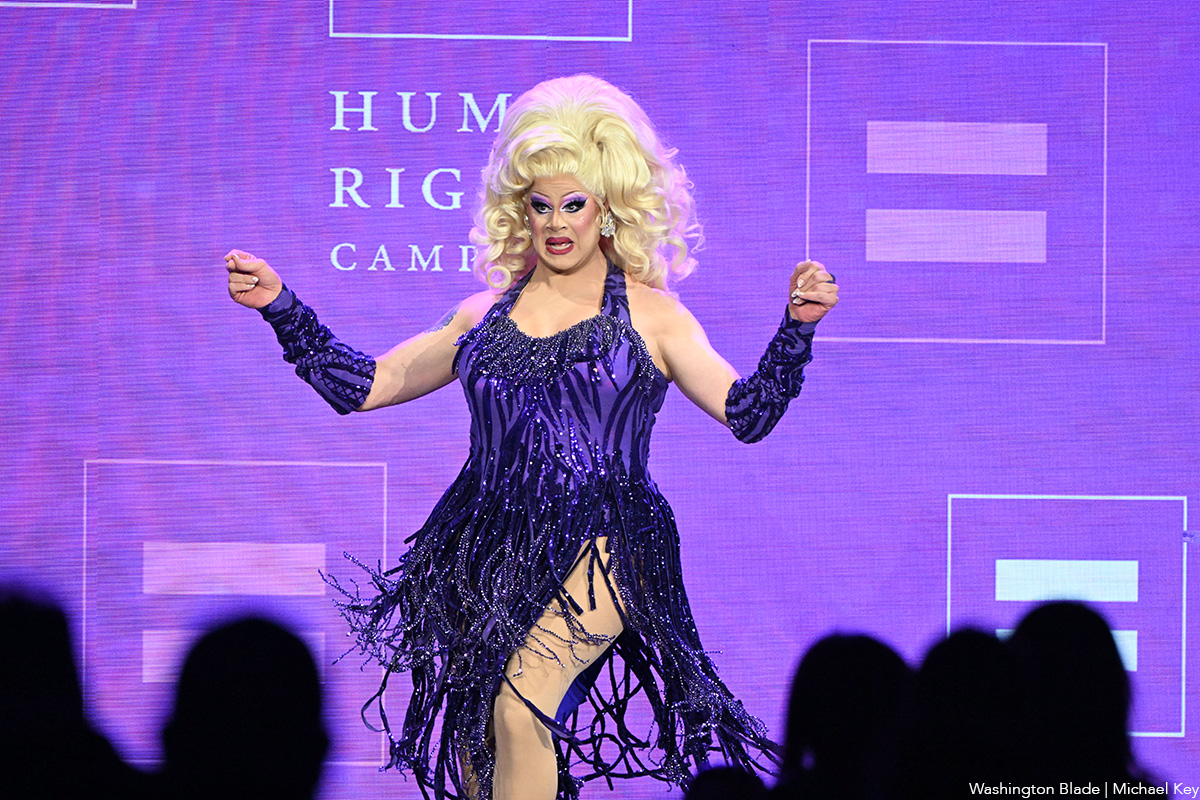
The Human Rights Campaign National Dinner was held at the Washington Hilton on Saturday, Sept. 26. Gov. Gretchen Whitmer (D-Mich.) was the keynote speaker. Awards were presented to Marcia Gay Hardin, Junior LaBeija and André De Shields. Nina West of ‘RuPaul’s Drag Race’ performed.
(Washington Blade photos by Michael Key)

View on Threads


View on Threads
View on Threads
Theater
What’s frightening is also funny in ‘Venus’
Don’t miss spectacular Woolly Mammoth production from out director
‘Venus’
Through Oct. 4
Woolly Mammoth Theatre Company
641 D St., NW
$20– $105
Woollymommoth.net
Meet Beth. She’s an art-house film projectionist. Cocky yet awkward, and a bit of a player, she’s exceedingly fond of international cinema and women. Her current interest is Nicole, a pretty librarian with an obsession for order and safety. Romance seems unlikely.
Written by Los Angeles-based playwright Steve Yockey, “Venus” pits odd against odder, and similar to some of his past works, what’s frightening is also funny.
When Beth (Kimberly Gilbert) crashes a “not fun” book club (currently reading Faulkner’s “As I Lay Dying”), she succeeds in bagging a date with the group’s poised, and –according to Beth – “imminently fuckable” member Nicole (Regina Aquino).
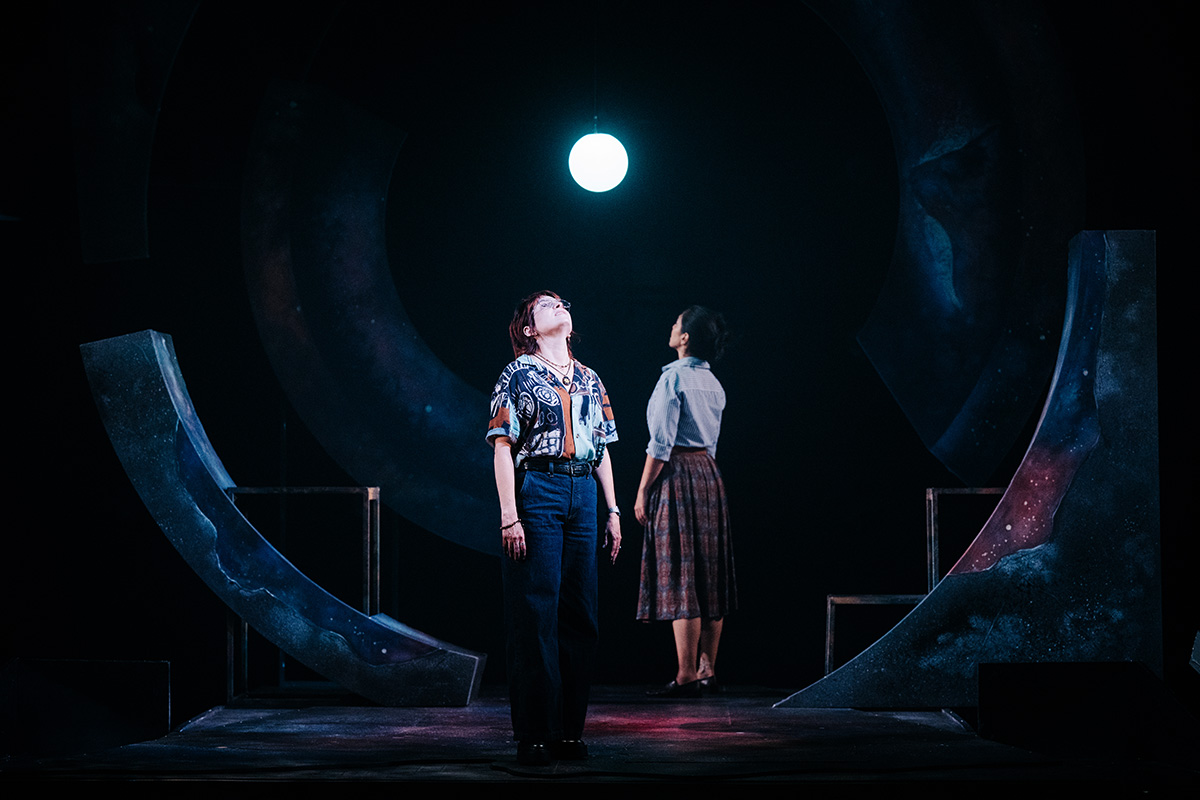
The pair climbs into Beth’s beloved vintage gold Mercedes (or “sort of rust colored,” says Nicole) and head into the night. They reach an isolated hilltop to star gaze and share a Thermos of spiced rum. Charmed by the surprise outing, Nicole warms up to her new friend, but that soon changes when Beth corrects Nicole on some planetary specifics, and lets it slip that she’s taken other women on this same exact date.
Away from age (40 or so), the pair couldn’t be more ill matched. Whether it’s personal style, temperament, approach to dating, they’re chalk and cheese. Beth’s romantic M.O. is spontaneous, whereas Nicole’s dating app profile is “always clean, organized, and up to date with recent pictures and current information.” And she never makes the first move.
“Venus” is perceptively staged by out director Reggie D. White who specifically selected Yockey’s newest play for his directorial debut as Woolly’s new artistic director, and it’s a spectacular launch. The out playwright and director, and the terrific two-person cast, successfully lean into the work’s dark comedy without denying past heartbreaks.
The actors play off each other compellingly, capturing precisely what’s both disturbing and funny about Yockey’s creations. Nicole (Aquino) isn’t particularly concerned about the horrors she visits upon her date, and while Gilbert’s Beth might fall into the most dreadful situations, she handles them with detached wit. It’s hilarious.
The dialogue is spoken to each other, to us, to themselves. Words might switch from conversational to rapidly delivered monologues about varied things like well-meant instructions that Nicole once received from her father on how to box and bury things that upset her.
Costume designer Danielle Preston captures the women’s carefully chosen attire. Nicole is dressed boho prep with a conservative silhouette, flat shoes, and interesting artisanal jewelry. Beth is a bit hit or miss: wide-legged pants, black thick-soled, black boots, and on trend frames– all the sort of things that might look cool.
After the date, Beth drops Nicole at her immaculate, meticulously mid-century curated house. Beth tells us that she’s not averse to a clean home, but other than Susanna, a goldfish in the kitchen, this house with its collection of precisely placed handstitched pillows, looks entirely unlived in; other than the alarming contents of a mysterious drawer, it might be a show home.
And while Beth has made a few moves that her date didn’t entirely dodge, the evening has come to an end. Nicole has a Scholastic book fair in the morning, so she gives Beth the old heave-ho. Nicole likes a clean exit.
What ensues is a one-sided obsession with grand floral gestures, incessant texts, and some stalking. Just when you think one couldn’t grow any madder and that the other is the voice of reason, the script flips. They take turns at being the most neurotic or easily triggered.
Also, each in turn encounters an unseen woman wearing a red raincoat, a sort of physical manifestation of fear. How said interactions work differently for each of the daters, explains a lot.
But to say more would be a spoiler. With its myriad twists and turns, there are so many possible spoilers, scores of them, that might ruin the experience of an absolutely glorious 90-minute uninterrupted traipse through the madly unexpected.
So ably written and acted, you’ll leave believing that you’ve seen the vintage car, been inside a pristine house, and visited a hilltop. But you didn’t.
Giselda Esstrada’s scenic design includes a raised black platform backed by a dark circle broken into segments, above hang lanterns, globes, pendant lights, and lamps raised and lowered to great effect by lighting designer Nic Vincent. One of the more significant orbs is singled out as a green-hued celestial body. The ground is a blanket of clunky gray gravel.
Even with its two, or maybe three, particularly (and personally) dreaded scenarios, it’s unstoppably pleasing. There’s nothing not to like about “Venus.”
Television
‘Lizzie Borden’ might be the best ‘Monster’ yet
Exquisitely realized, shrewdly written with outstanding performances
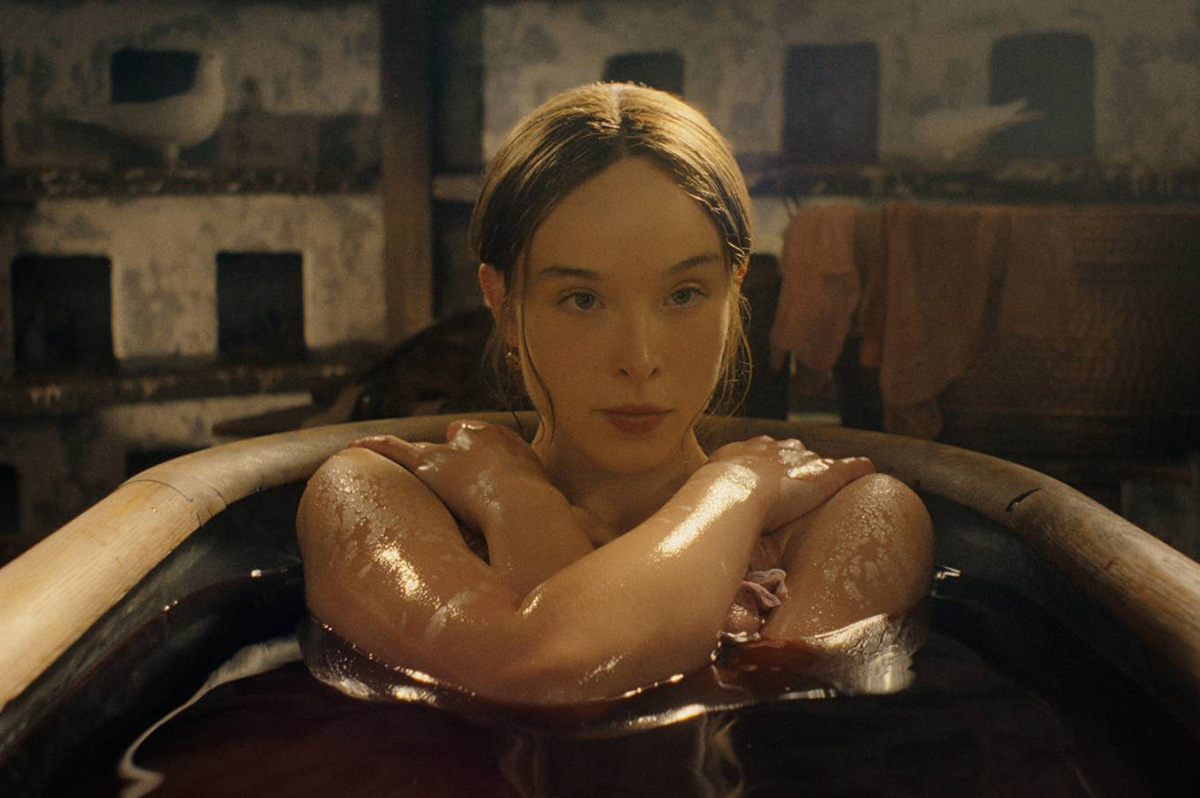
“When the legend becomes fact, print the legend.”
That famously cynical quote from the 1962 Western movie “The Man Who Shot Liberty Valance” could easily have been the mission statement behind the latest season of Ryan Murphy’s controversial anthology series, “Monster,” which retells the story of America’s most famous axe murderer – Lizzie Borden, who, in 1892, “took an axe” to her father and stepmother at their family home in Fall River, Mass.
Except, officially, she didn’t. Borden was acquitted of the killings in a trial that was a national sensation; the crime remained unsolved, and despite rumors and theories that have proliferated over the last century, nobody really knows what actually happened nor who was responsible for it.
Yet in the popular imagination, Lizzie is still remembered as a killer who got away with one of the most notorious murders in American history. Though she walked free and lived a life of wealth and high social position for another three decades after her trial, she never truly escaped the scandal; she would be forever branded as guilty, her alleged crime even immortalized in a children’s schoolyard rhyme, and all but a few die-hard theorists assume, unequivocally, that she was the killer. In other words, the legend of Lizzie Borden, axe-murderer, has “become fact.”
“Monster: The Lizzie Borden Story,” like most other retellings of this gruesome crime saga, “prints” the legend – and indeed, goes even further to canonize her into something like a radical feminist saint.
With Ella Beatty (daughter of Hollywood royalty Warren Beatty and Annette Bening) in the title role, the show frames Lizzie as the repressed and disregarded adult child of wealthy businessman Andrew Borden (Charlie Hunnam) and stepmother Abigail (Rebecca Hall), who married her father after her mother’s death; both of them treat her – and indeed, almost everyone around them – with dismissive cruelty. Andrew is an alcoholic who openly disdains both wife and daughter, while Abigail takes out her own frustration with the marriage on Lizzie, whom she has branded as a “simple” child that she never wanted to have – and a difficult one at that.
The arrival of a new household maid — Bridget Sullivan (Vicki Krieps), who goes by the name “Maggie” — changes Lizzie’s outlook and her destiny. Well-traveled, worldly, and deeply independent, Maggie befriends her and becomes both her companion and mentor, introducing her to new ideas and cultivating her sense of self-worth; they become lovers, their bond deepened by a dissatisfaction with the cultural limits imposed upon them by their status as women. As conditions within the household grow increasingly unbearable, they formulate a gruesome plan which, if they can succeed, will liberate them from the patriarchal subjugation that relegates them to the level of chattel while puffing a pipe full of expensive tobacco.
From there, writer/creator Ian Brennan takes us through an effectively grisly re-enactment of the famous murders and onward through the trial in which Lizzie, ironically benefitting from stereotyped male assumptions about what women are or are not capable of doing, is ultimately acquitted of the gruesome crime she absolutely DID commit. It then follows her – and Bridget – into the aftermath of the scandal, where a kind of imprisonment awaits them both, anyway.
Boldly crafted with cinematic flourish (six episodes were directed by Max Winkler, the two others by Sarah Adina Smith) and continuing the series’ tradition of lavishly depicted violence, one can’t deny that it’s a wild ride. It flaunts its contemporary attitude through fiercely eclectic musical choices in the soundtrack, from the lushly romantic classical tones of its late 19th-century period to ferociously feminist ‘90s punk; it includes graphic sex both tender and aggressive, juxtaposed with scenes of pastoral beauty and genteel refinement; and, as always in Ryan Murphy’s “true story” productions, it plays fast-and-loose with the facts, choosing instead to lean into artistic license in order to expand on the “hotbed” themes woven into the narrative.
In this case, Brennan’s version of Lizzie’s tale mines the historical record to incorporate lesser-known factual details while veering into speculation to fill the blanks elsewhere; it creates incidents that didn’t happen, alters incidents that did, and embellishes what’s known of its characters’ private lives with details that no one could know; and, like other seasons of “Monster” have done, it finds a way to introduce extra real-life killers into the mix – blood-bathing 16th-century Countess Elizabeth Báthory (also played by Krieps) and hitchhiking 20th-century serial murderer Aileen Wournos (Sarah Paulson) – for good measure. The result, of course, is a work of complete fiction.
These are the things that have consistently made “Monster” one of Murphy’s most controversial television franchises. The excesses of gore and brutality, though they might seem gratuitous to some and are certainly hard to watch for many, are arguably justified by the show’s branding as a “horror” series; less easy to write off, however, is the criticism of many detractors that the series spreads false information and perpetuates myths, whether to “push” an agenda or in the name of “artistic interpretation.”
“The Lizzie Borden Story,” consequently, has already been met with such objections – though in today’s political climate, it’s hard to know if they are really about the blending of fact and fiction or the feminist social commentary that runs through the show like a vein of molten lava. Brennan’s vision of Lizzie’s presumed crime casts her as woman suffering from a life of psychological torment by her parents, and Bridget – who has experienced more than her own fair share of mistreatment at the hands of aggressively toxic men – as her savior; the crime they concoct and execute together is a radical act of defiant rebellion against an ingrained system of patriarchal domination, and we are set up from the start to be completely on their side.
That radical feminist thread pops up everywhere: through Lizzie’s stepmother (despite her own monstrosity), who is granted a share of empathy for the sake of her own stifled existence; through famous actress Nance O’Neil (Jessica Barden), who steps in to become an ally at a crucial juncture of Lizzie’s trial; even through her estranged sister (Billie Lourd), who sets aside her own doubts to support Lizzie in sisterly solidarity. Brennan even imagines Lizzie as an activist in the fight for women’s suffrage.
Of course, if one is inclined to view “Monster” as a documentary crime series, occupied with discerning facts and providing an objective overview of the case, that’s a perfectly good reason not to watch its latest installment. For those who realize that it is instead a vehicle for artistic expression, a series devoted to finding the kind of truth that transcends facts and challenges viewers to examine the cultural conditions that create these “monsters” in the first place, this might be its best season yet.
Exquisitely realized, shrewdly written, and featuring outstanding performances across the board, it’s not really a crime story, nor really even horror: it’s an exhilarating, satisfying, and thoroughly transgressive fantasia on an American legend that puts the blame for the Borden family murder squarely where it belongs – on the oppressive cruelty that drives otherwise good-hearted women to commit unspeakable acts.

Baltimore’s oldest gay bar to reopen this week

Dr. Fauci ‘honored to be part of’ LGBTQ history

Factors to consider when hiring an interior designer

PHOTOS: HRC National Dinner

The LGBTQ real estate map is being redrawn

Washington Blade responds to concerns over White House pool duties

Caso Karlina: Una sentencia histórica contra las terapias de «conversión»

Young people should know history of the fight for human rights

Colombia withdraws from Equal Rights Coalition

Trump-appointed judge restores White House TV pool access
-

 Commentary5 days ago
Washington Blade responds to concerns over White House pool duties
-
Ecuador5 days ago
Caso Karlina: Una sentencia histórica contra las terapias de «conversión»
-
Opinions5 days ago
Young people should know history of the fight for human rights
-
Colombia4 days ago
Colombia withdraws from Equal Rights Coalition