News
Romney clinches GOP presidential nomination
Mitt Romney clinched the Republican presidential nomination with a win in the Texas GOP primary

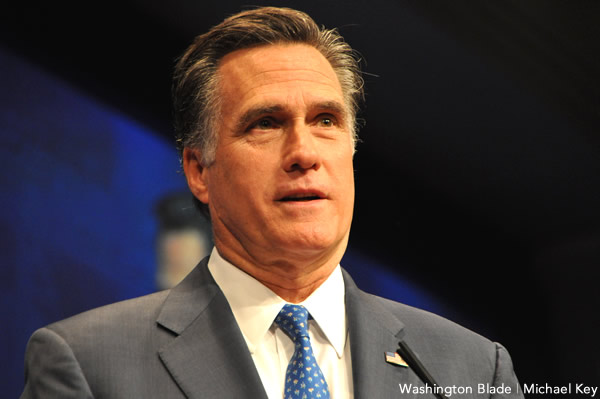
Republican presidential candidate Mitt Romney (Blade file photo by Michael Key)
Former Massachusetts Gov. Mitt Romney on Tuesday clinched the Republican presidential nomination with his win in the Texas GOP primary.
“I am honored that Americans across the country have given their support to my candidacy and I am humbled to have won enough delegates to become the Republican Party’s 2012 presidential nominee,” he said in a statement posted on his campaign website. “Our party has come together with the goal of putting the failures of the last three and a half years behind us. I have no illusions about the difficulties of the task before us. But whatever challenges lie ahead, we will settle for nothing less than getting America back on the path to full employment and prosperity. On Nov. 6, I am confident that we will unite as a country and begin the hard work of fulfilling the American promise and restoring our country to greatness.”
The Texas contest caps off a contentious Republican primary season during which Romney often clashed with his GOP challengers.
The former Massachusetts governor repeatedly expressed support for a federal constitutional amendment that would define marriage as between a man and a woman–National Organization for Marriage President Brian Brown endorsed Romney because of what he described as his “commitment to the nation to take specific actions as president to preserve and protect marriage as the union of one man and one woman.” Romney has previously said that he opposes anti-gay discrimination, but activists have consistently criticized the former Massachusetts governor for what they perceive are inconsistent positions on “Don’t Ask, Don’t Tell,” the Employment Non-Discrimination Act and other LGBT-specific measures and issues.
The Romney campaign in late April tapped gay former Bush administration official Richard Grenell as its national security spokesperson. He resigned earlier this month after his appointment sparked outrage among social conservatives.
“During the primaries, Gov. Romney distinguished himself as the best in a field of worsts on issues of equality for LGBT Americans,” Human Rights Campaign spokesperson Fred Sainz told the Blade. “Now that he’s clinched his party’s nomination, we hope that he’ll give careful reconsideration to the most basic issues of equality that he previously opposed.”
Jimmy LaSalvia, executive director of GOProud, welcomed Romney’s presumptive nomination.
“All Americans—including gay Americans—will now decide if we are willing to continue to hope for change, or we will vote to elect Mitt Romney, a proven leader who can bring America back,” he said.
R. Clarke Cooper, executive director of Log Cabin Republicans, had a slightly more tepid reaction.
“Mitt Romney now has the votes to clinch the Republican nomination this August,” he told the Blade. “If the Romney campaign wants make clear that the Republican candidate believes in a society where Americans are judged solely on their ability to perform, now is the time to prove it by showing unambiguous support for federal protections from workplace discrimination.”
Cooper further noted that 66 percent of registered GOP voters now support these legal provisions.
“If Mitt Romney were to stand up tomorrow and declare that no American should ever fear for their job because of who they are, it would be a win for all of us, including the candidate himself,” he said.


Kenya
Kenyan advocacy groups launch LGBTQ voter mobilization campaign
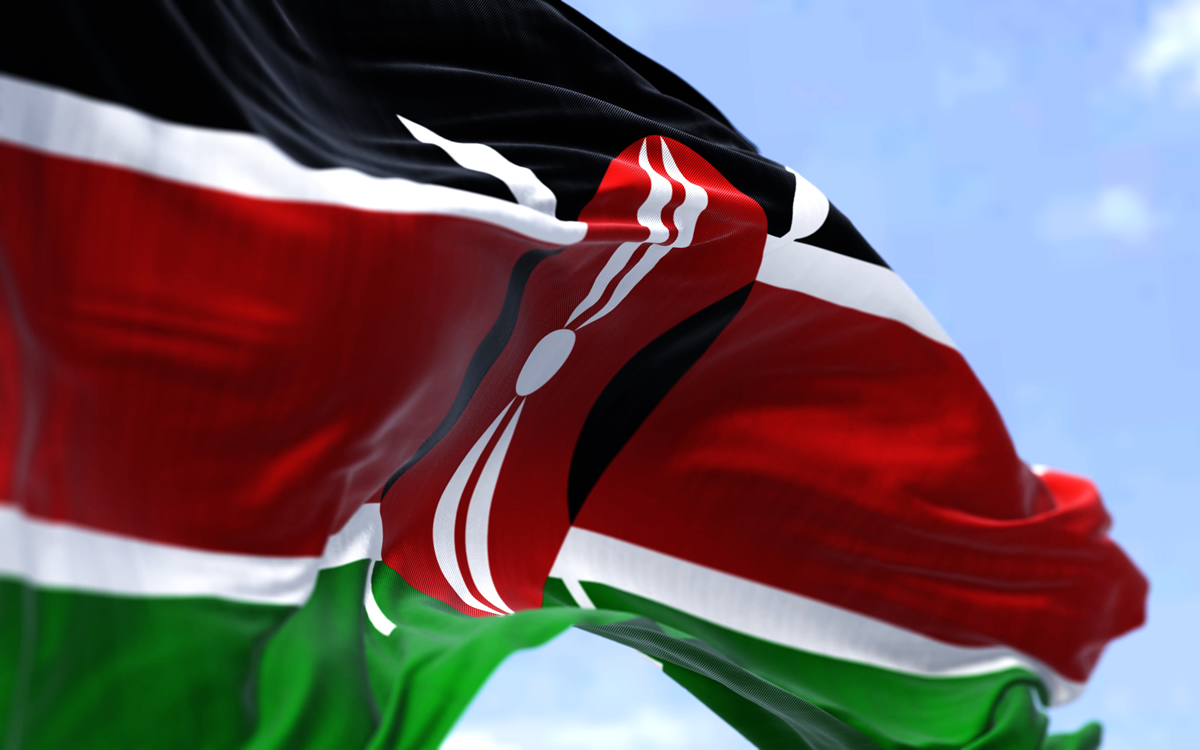
As Kenya prepares for next year’s August general election, local queer rights groups have joined Gen Zers in also mobilizing their members to register as voters.
The groups’ drive began ahead of the electoral commission’s official launch of a one-month nationwide mass voter registration on March 30, targeting 6.5 million new voters to bring the total to more than 28 million.
The groups — led by the Initiative for Equality and Non-Discrimination (INEND) and Galck+ — note that politics is not optional, but rather it is “our responsibility” to use the ballot to put an end to bad leadership and discriminatory laws against them.
“Voting is one of the most powerful ways we exercise our autonomy and remind the State that our human rights are not ‘Western imports’; our struggles for housing, employment, safety, and dignity are fundamentally Kenyan issues,” INEND states.
It reminds queer individuals that the nation entrusts them with an identity card at age 18 as a recognition of their ability to make decisions, follow laws, and take responsibility for the country’s future.
INEND also notes that despite this honor, LGBTQ people get kicked out of their homes due to homophobia, are discriminated against at work, and face violence in public places due to the punitive laws that the same State legislates.
“As queer Kenyans, our vote matters,” INEND states. “Our voice belongs in the democratic and governance conversations, and true democracy includes everyone.”
Some voter mobilization initiatives the queer lobby groups have been using include ‘Queering the Ballot’ Podcasts on civic participation, dubbed ‘Your Vote is Your Future’. The topics explored include how laws shape their lives, the relationship between lived experiences of common citizens, discrimination fatigue, distrust in government systems, and voter apathy.
The groups through the mobilization drive hope to create a queer voting bloc to actively participate in restructuring and reconstructing the existing governance system they argue has been a problem for them. They maintain the queer community navigates a system that was not built for them from its questioning of their right to exist, yet the Kenyan Constitution clearly states that no citizen should be discriminated against based on sexual orientation or gender identity.
The Court of Appeal next month will hear a case challenging the constitutionality of provisions in Kenya’s Penal Code that criminalize consensual same-sex relationships among adults. The appeals court postponed the case after adjourning on Feb. 4, its first substantive hearing since the High Court judgement in 2019.
“Change requires more than pointing fingers. It requires reflection, action, and showing up, especially at the ballot box as LGBTQ Kenyan citizens and declaring that this is our country, our business, and we can no longer watch from the sidelines,” INEND states.
The group notes that they want a governance system that embraces queer people as they go about their daily lives without any form of homophobic discrimination, harassment, or arrests. Queer people are therefore urged to pick the right leaders who listen to them in Kenya’s six elective positions, from the president down to the local government representatives, as their decisions while in power affect them.
“It is very irresponsible for any human being, even around the world, to assume that they don’t have political responsibility. It is easy and sounds fancy to say ‘I don’t like politics,’ but it does not make one good as it makes one abandon their political responsibility as a citizen,” INEND states.
The groups are also concerned with the existing homophobia among Kenyans, especially whenever they join them in street protests against the government’s punitive measures or advocating for change. However, they maintain that the LGBTQ community won’t be left behind despite being marginalized in society, yet they are the most affected group when the government raids people’s pockets for taxes.
“Now we are moving from the margins to the centre of this political conversation early enough to ensure that our community sees the sense because if we live in a country that doesn’t work, we will be the most affected,” INEND states.
INEND, with the National Gay and Lesbian Human Rights Commission and Galck+, last November launched the second Queering the Ballot Campaign and the 2024 Situation Report on queer participation in Kenya’s democracy.
The report surveyed 14 of the country’s 47 local governments, whose key findings affirm that queer Kenyans are not outsiders to democracy but its heartbeat.
“The title ‘Our Vote, Our Future: LGBTQ+ Inclusion in Democratic and Governance Processes’ in Kenya is an ode to the spirit of the queer movement in Kenya; unshaken in the face of adversity, determined in its pursuit of justice, and unrelenting in demand to be seen, heard and counted in democratic and political processes,” reads the report forwarded by former Chief Justice Willy Mutunga.
The report calls on Parliament, the Independent Electoral and Boundaries Commission, the County Assemblies, and every Kenyan to make inclusion not symbolic but systemic.
District of Columbia
Mayor Bowser signs bill requiring insurers to cover PrEP
‘This is a win in the fight against HIV/AIDS’

D.C. Mayor Muriel Bowser on March 20 signed a bill approved by the D.C. Council that requires health insurance companies to cover the costs of HIV prevention or PrEP drugs for D.C. residents at risk for HIV infection.
Like all legislation approved by the Council and signed by the mayor, the bill, called the PrEP D.C. Amendment Act, was sent to Capitol Hill for a required 30-day congressional review period before it takes effect as D.C. law.
Gay D.C. Council member Zachary Parker (D-Ward 5) last year introduced the bill.
Insurance coverage for PrEP drugs has been provided through coverage standards included in the Affordable Care Act, known as Obamacare. But AIDS advocacy organizations have called on states and D.C. to pass their own legislation requiring insurance coverage of PrEP as a safeguard in case federal policies are weakened or removed by the Trump administration, which has already reduced federal funding for HIV/AIDS-related programs.
Like legislation passed by other states, the PrEP D.C. Amendment Act requires insurers to cover all PrEP drugs approved by the U.S. Food and Drug Administration.
Studies have shown that PrEP drugs, which can be taken as pills or by injection just twice a year, are highly effective in preventing HIV infection.
“I think this is a win for our community,” Parker said after the D.C. Council voted unanimously to approve the bill on its first vote on the measure in February. “And this is a win in the fight against HIV/AIDS.”
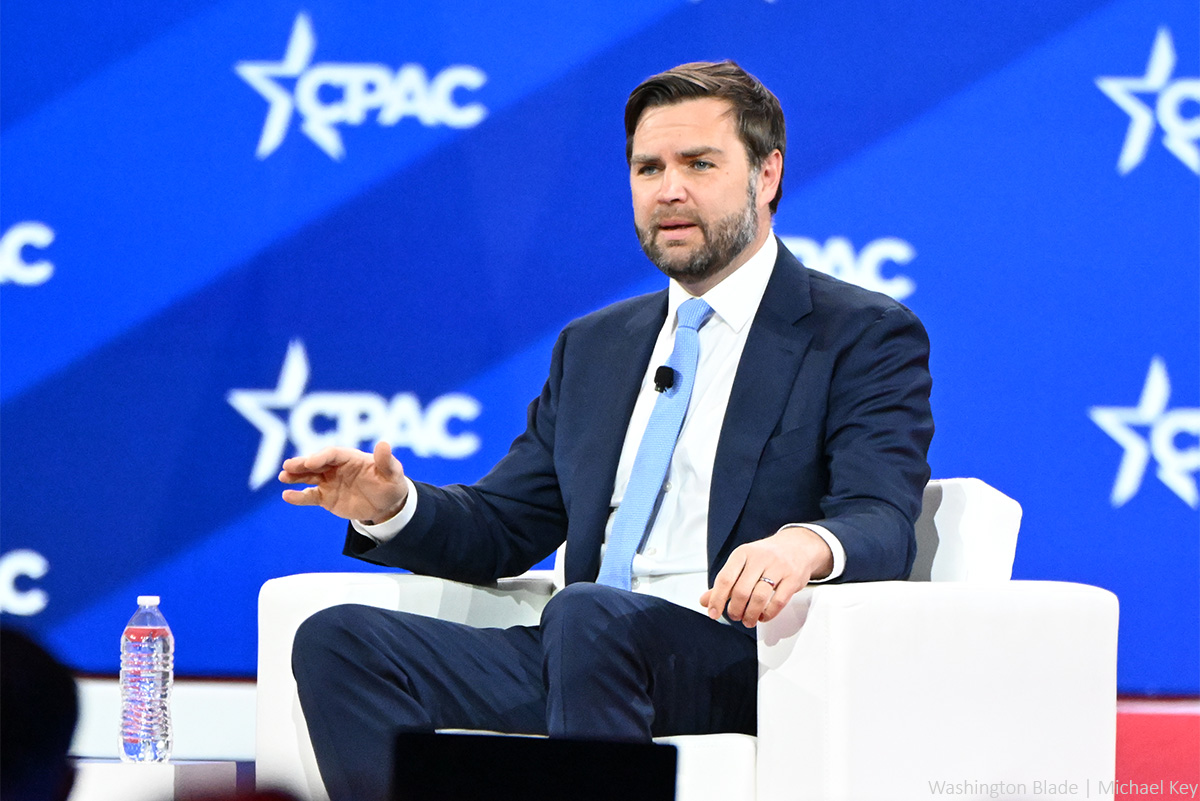
Vice President JD Vance and his wife, second lady Usha Vance, will visit Hungary next week.
An announcement the White House released on Thursday said the Vances will be in Budapest, the Hungarian capital, from April 7-8.
JD Vance “will hold bilateral meetings with” Hungarian Prime Minister Viktor Orbán. The announcement further indicates the vice president “will also deliver remarks on the rich partnership between the United States and Hungary.”
The Vances will travel to Hungary less than a week before the country’s parliamentary elections take place on April 12.
Orbán, who has been in office since 2010, and his Fidesz-KDNP coalition government have faced widespread criticism over its anti-LGBTQ crackdown.
The Associated Press notes polls indicate Orbán is trailing Péter Magyar and his center-right Tisza party.

Kenyan advocacy groups launch LGBTQ voter mobilization campaign

Mayor Bowser signs bill requiring insurers to cover PrEP

JD Vance to travel to Hungary next week

Pam Bondi ousted as attorney general

VIDEO: Gay journalist detained for booing Trumps at ‘Chicago’ opening night

‘Out for McDuffie’ event held at D.C. gay bar

‘Jonah’ an undeniably compelling but unusual memory play

The Oscar-losing performance that’s too good to miss

Thousands attend ‘No Kings’ protests in D.C.