Arts & Entertainment
Shifting ‘Shape’
World premier depdicts married Vaudevillians on tour
‘Shape’
force/collision
Atlas Performing Arts Center
1333 H Street, NE
$10-$25
202-399-7993, ext. 2
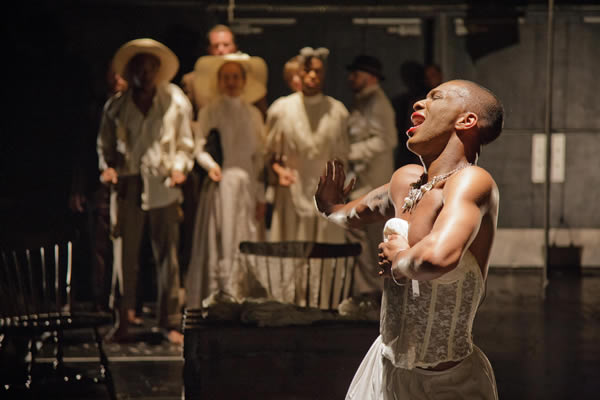
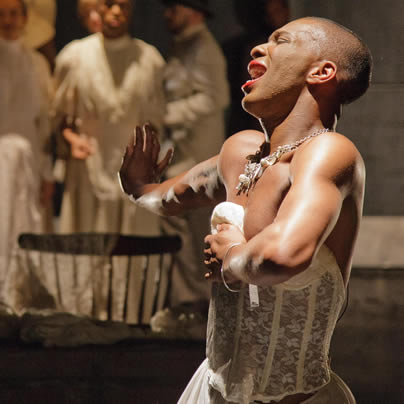
Dane Figueroa Edidi in ‘Shape,’ a force/collision production. If you want to see it, act fast — it closes Saturday. (Photo by C. Stanley Photography)
Young local company force/collision isn’t afraid to take on tough material.
Their last production was a site-specific project inspired by the Washington Navy Yard performed over a nippy spring weekend in outdoor fountains at a park on the Southwest Waterfront. Now, the ensemble is tackling very different-but-equally challenging work by experimental dramatist Erik Ehn titled “Shape” (currently nearing the end of a world premiere run at Atlas Performing Arts Center). In both cases, the productions have proved intriguing and visually compelling.
Roughly based on the lives African-American vaudevillians Billy and Cordelia McClain, “Shape” follows the married couple’s experiences over time as they move from place to place.
As the lights come up, the scene is set by Survivor (the excellent Dexter Hamlett), a narrator who’s big on lyricism but short on concrete detail (thank goodness for program notes). It’s turn-of-the-century Ambrose Park, Brooklyn where Billy (Frank Britton) and Cordelia (Dane Figuero Edidi) are headlining in “Black America,” a true life spectacle in which about 500 black entertainers glorified plantation life in the Old South.
After the Brooklyn show closes, the couple sojourns to Europe where they eschew their usual daily dose of minstrelsy for racier entertainments — Cordelia introduces a new sexy Jazz Age act while Billy finds adventure in the arms of myriad other women. The marriage crumbles and they return to the states where Billy is on hand for the Tulsa Race Riots of 1921, a hideous episode in American history that left thousands of black families homeless and scores dead.
Director John Moletress, who is gay, leads a talented design team in admirably presenting Ehn’s sometimes puzzling play.
Collin Ranney (also gay) transforms Atlas’ black box theater into an enchanted place. Above a lawn of excelsior hang tiny glowing fairy houses that rise and fall like the vaudevillians fortunes. In the center sits a stump; nearby there’s an old steamer trunk. At either end of the space are billowy sails, bookending a small world both redolent of the past, of suggestive voyage and escape.
Ariel J. Benjamin’s dramatic lighting and Derek V. Knoderer’s equally evocative soundscape add to the overall effect.
And while the production is visually appealing, and boasts inventive staging (random chairs and a few actors magically morph into a railroad passenger car) and a strong cast, its lack of linear narrative can be frustrating at times, especially since Ehn is tying historical facts to larger themes. (“Shape” is part of Ehn’s “Soulographie,” a series of 17 plays about genocide and reconciliation.)
Mostly, it’s best to sit back and let Ehn’s dreamlike prose wash over you; enjoy the production’s haunting songs, stirring, avian-inspired movement and the dedicated cast. Figueroa Edidi’s Cordelia is sublime: a diva with a sense of humor. She’s resilient but not wholly inured to life’s hardships. In one of his stronger performances, Britton captures Billy as the charming philanderer. Other standouts include Karin Rosnizek’s clueless French reporter and Luci Murphy as a soulful, singing vaudevillian.
The parts of Cordelia and her maid (S. Lewis Feemster) have been cast with male actors, heightening theatricality and a focus on identity. The choice also pays homage to black vaudevillians of the early 20th century who often played cross-gendered roles.
With “Shape,” force/collision strikingly fulfills its mission to create new performance works. And while “Shape” is sometimes hard to follow, it’s always beautiful to watch.




Baltimore
This John Waters interview has been edited for readability — but perhaps not human decency
Pope of Trash dishes on Trump, plane etiquette, last meal, and more
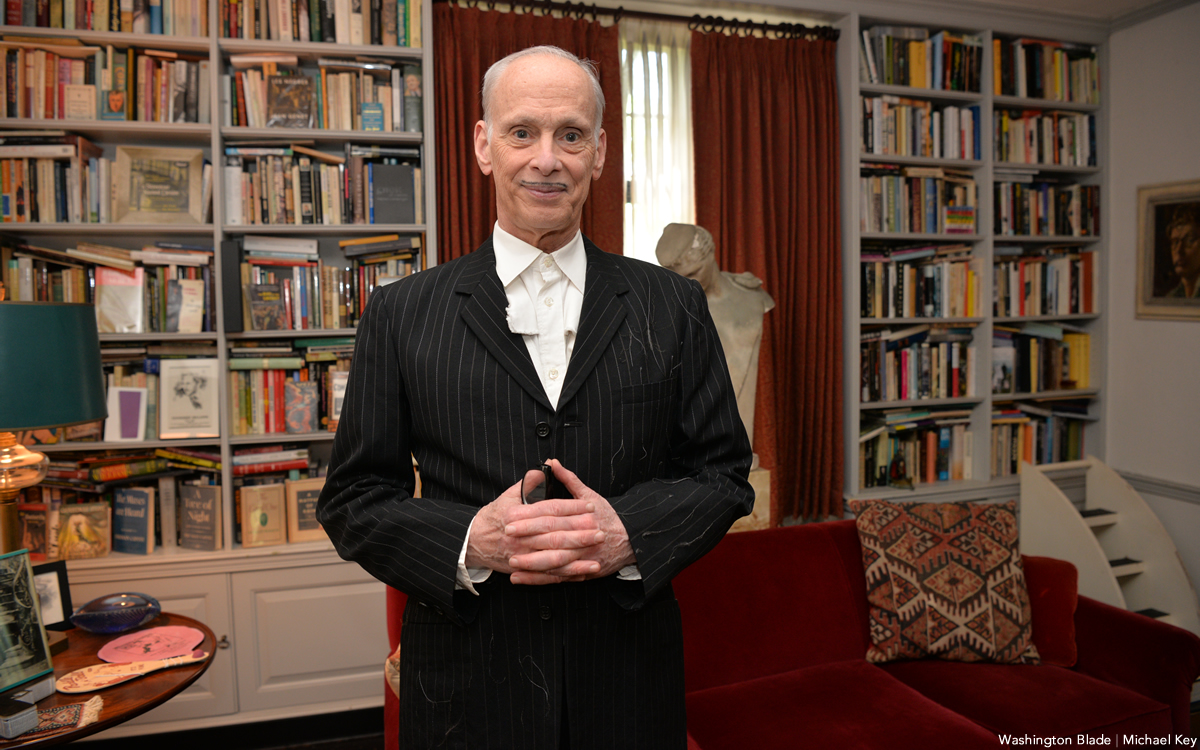
By WESLEY CASE | At 80 years old, John Waters is still the ideal dinner guest — incisively sharp, quick-witted and funny as hell.
The chic Baltimore native proved it again and again in a recent Zoom interview, calling from his summer home in Provincetown, Mass.
The occasion was the Blu-ray releases of two of his movies — the 1977 dark comedy “Desperate Living” and his enduring 1988 musical “Hairspray” — on June 23 by the Criterion Collection, which publishes restorations of films it deems culturally important. The Criterion stamp of approval has become the gold standard among cinephiles.
“It’s like getting an award,” said Waters, who wrote and directed both films.
The rest of this article can be read on the Baltimore Banner’s website.

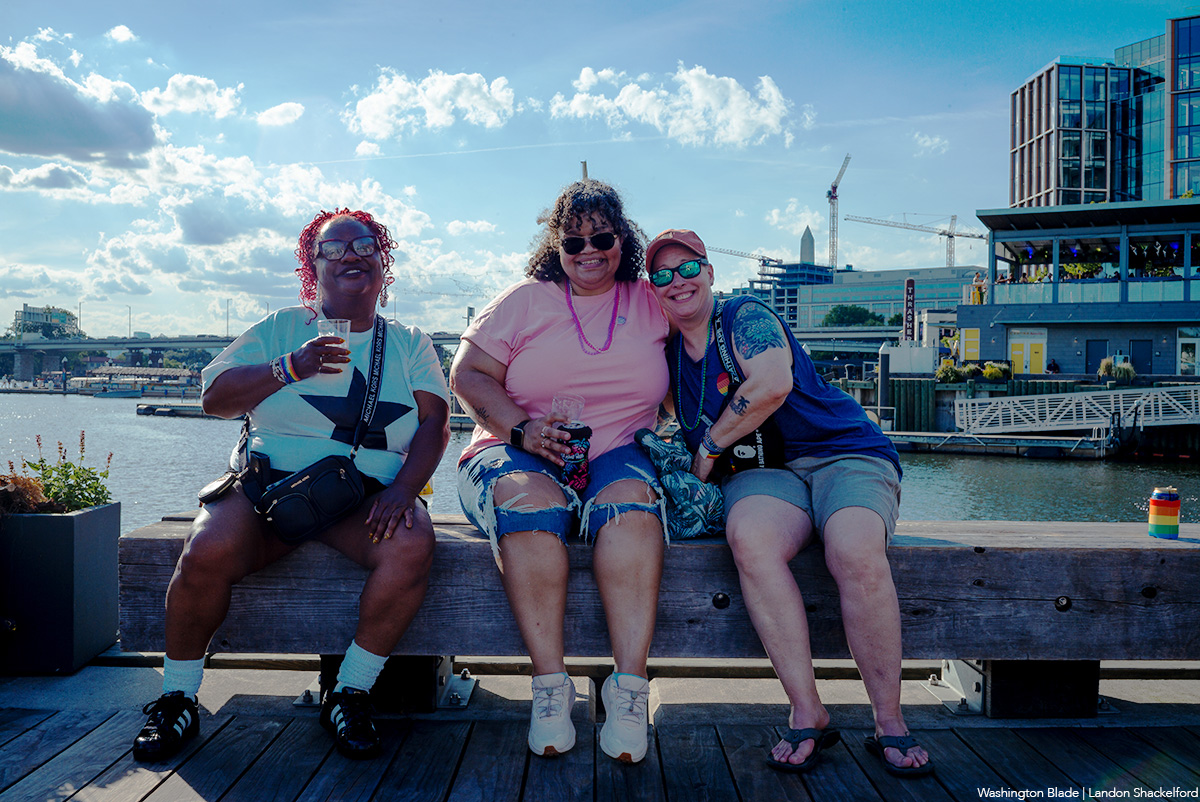
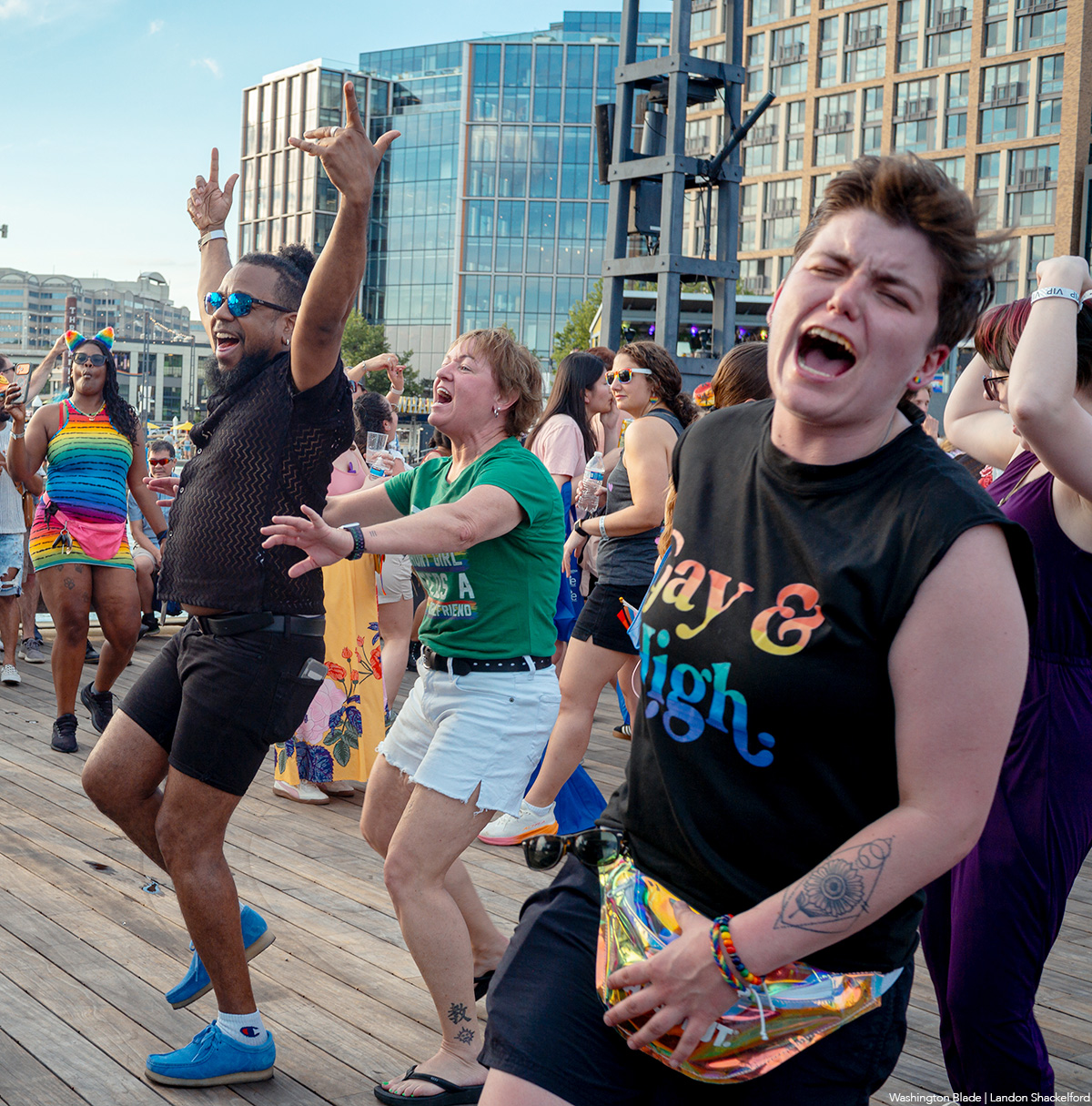
The Washington Blade held the seventh annual Pride on the Pier at The Wharf DC on Saturday, June 13.
(Washington Blade photos by Landon Shackelford)







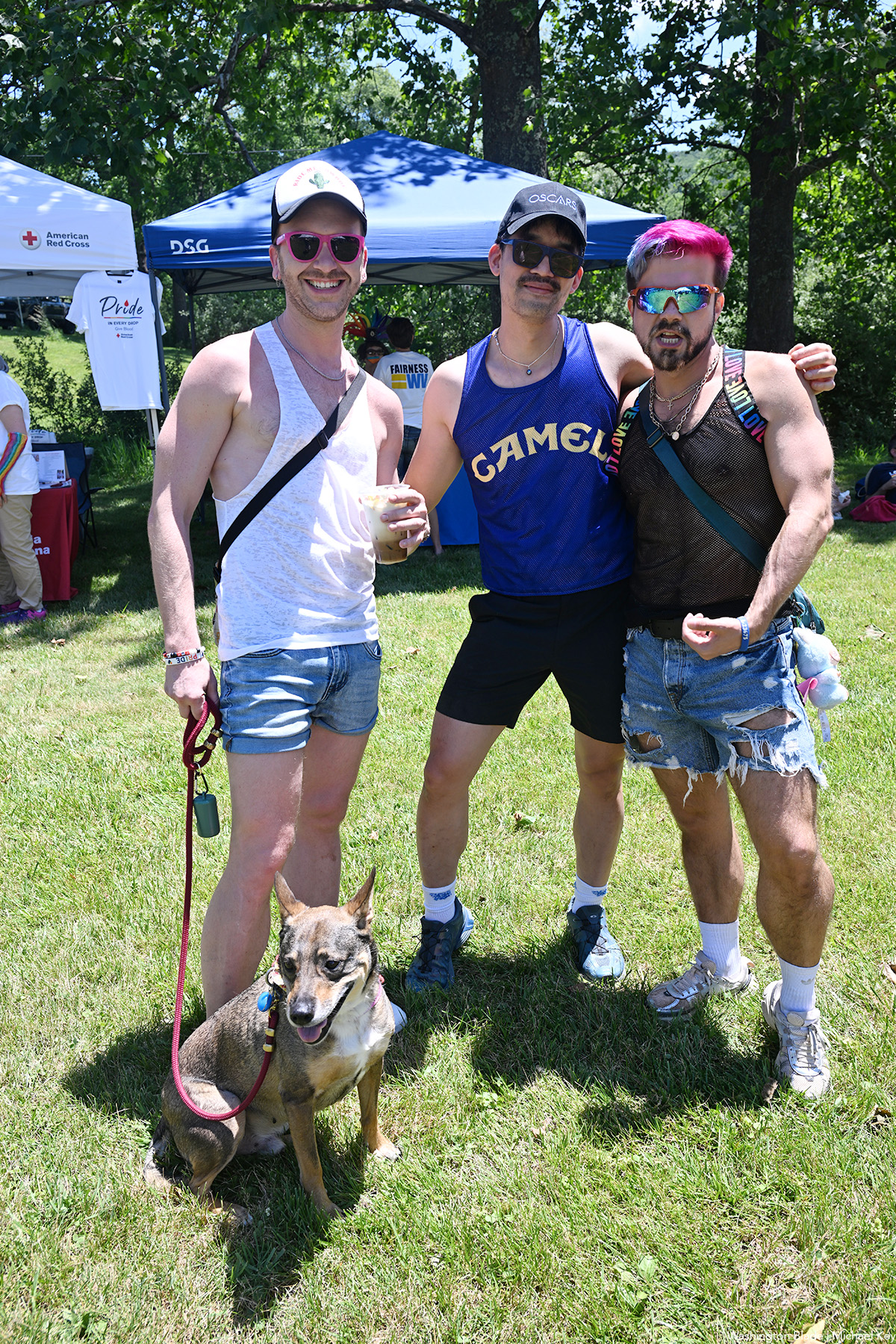
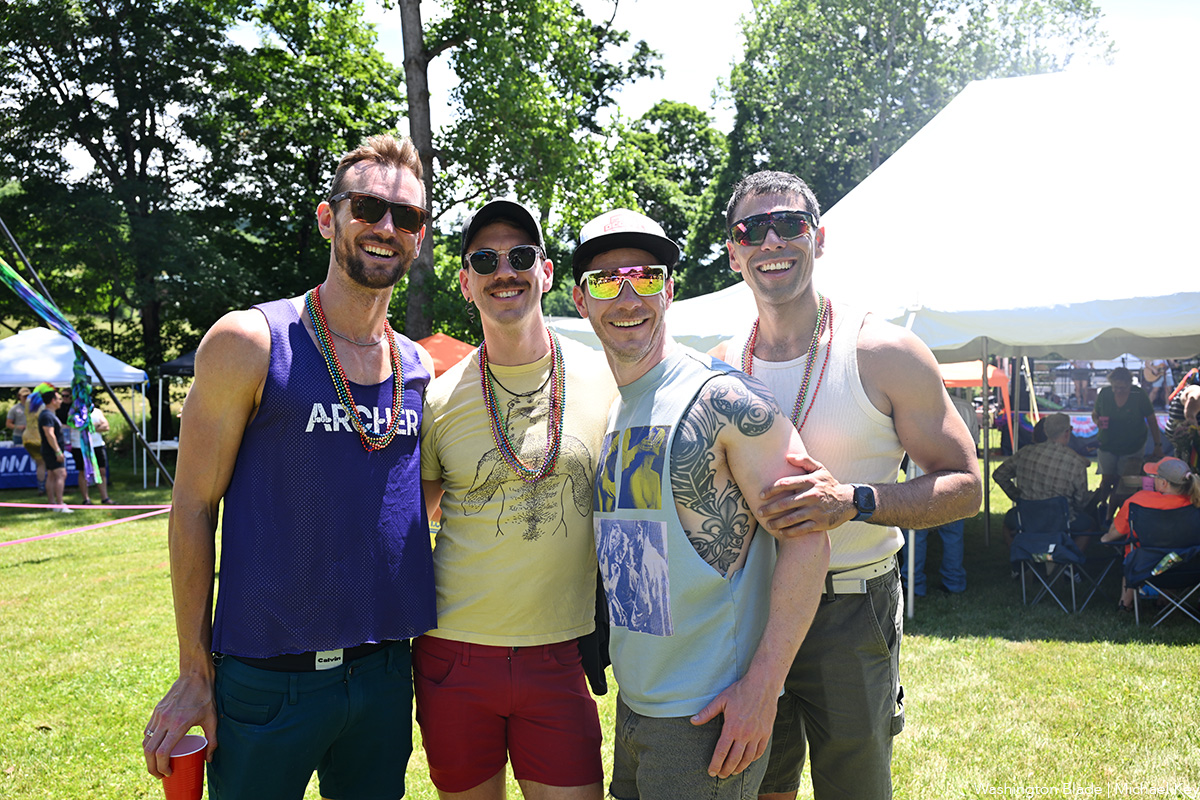
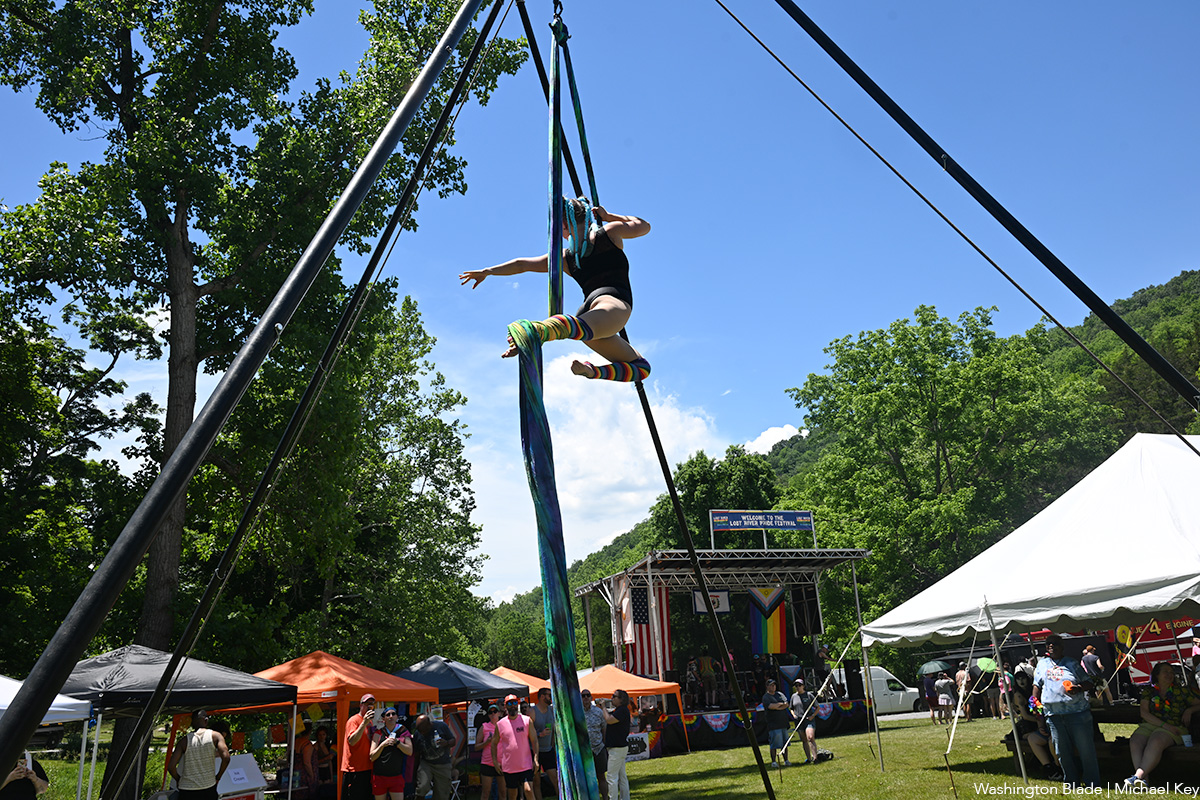
The 2026 Lost River Pride Festival was held on the scenic grounds of the Lost River Farmers Market in Lost City, W.Va. on Saturday, June 13. Headliner Tom Goss performed at the festival and gave a second performance at the nearby Guesthouse Lost River.
(Washington Blade photos by Michael Key)











View on Threads

Gay San Diego mayor elected US Conference of Mayors president

Calif. governor’s race spotlights Becerra’s LGBTQ advocacy

UFC fighter says ‘Michelle Obama is a man’ at White House event

This John Waters interview has been edited for readability — but perhaps not human decency

There is no Pride in detention

Gay 1920s-era Hollywood star to be honored in Staunton, Va.

Blade reporters reflect on covering Pulse massacre 10 years ago

Vote Kenyan McDuffie for D.C. mayor

Your queer D.C. voting guide