Local
NAACP president: Md. same-sex marriage law guarantees religious freedom
Benjamin Jealous spoke at Baltimore press conference on same day Julian Bond ad debuted on D.C. television stations
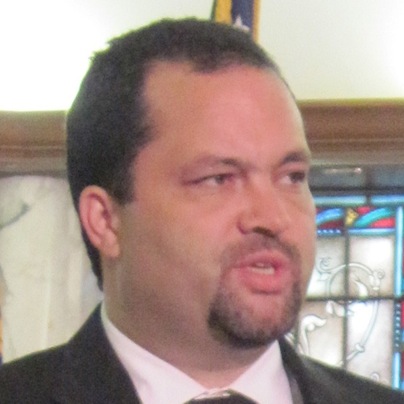
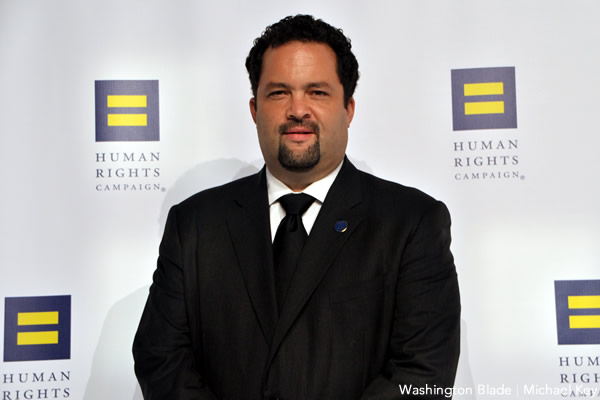
NAACP President Benjamin Jealous (Washington Blade photo by Michael Key)
The head of the National Association for the Advancement of Colored People stressed on Monday that Maryland’s same-sex marriage law guarantees religious freedom.
“We’re pleased that Question 6 is very clear: This is about civil marriage,” said Benjamin Jealous during a press conference at his organization’s Baltimore headquarters. “Question 6 goes on to be very clear that every church, every house of worship, every synagogue in the state can have faith that everything will be respected and protected not only by the U.S. Constitution but by Question 6 itself.”
Jealous, whose parents traveled from Baltimore to D.C. to get married in 1966 because Maryland did not allow interracial marriages, reaffirmed his support of Question 6 on the same day a Marylanders for Marriage Equality television ad that features NAACP Chair Emeritus Julian Bond began airing in the D.C. media market.
“I know a little something about fighting for what is right and just. Maryland’s gay and lesbian families share the same values and they should share in the right to marry,” says Bond. “I believe people of faith understand this isn’t about any one religious belief. It’s about protecting the civil right to make a lifelong commitment to the person you love. Join me in supporting Question 6. It’s the right thing to do.”
Reverend Dr. Todd Yeary of Douglass Memorial Community Church in Baltimore echoed Bond.
“I affirm the NAACP’s position that civil marriage is indeed a civil right,” he said. “This really is not a religious issue. The wording of Question 6 is very specific in accepting religious protections. All persons can honor their own personal convictions without imposing them on anyone else.”
A Gonzales Research poll last month indicates 44 percent of black Marylanders back marriage rights for same-sex couples, compared to 52 percent who oppose nuptials for gays and lesbians. A Hart Research Associates survey conducted in late July found that 44 percent of black Marylanders would support Question 6, compared to 45 percent who would vote against it. A Public Policy Polling poll in May found 55 percent of the state’s black voters support marriage rights for same-sex couples.
The NAACP Board of Directors in May passed a resolution in support of nuptials for gays and lesbians after President Obama publicly backed the issue for the first time during an interview with ABC News’ Robin Roberts. Bishop Harry Jackson of Hope Christian Church in Beltsville remains one of the most prominent opponents to Maryland’s same-sex marriage law, but the first Marylanders for Marriage Equality television ads in support of Question 6 that began airing last week on WBAL in Baltimore feature Rev. Delman Coates of Mount Ennon Baptist Church in Clinton in Prince George’s County and Rev. Donté Hickman of Southern Baptist Church in Baltimore.
Jealous acknowledged that the NAACP is concerned that same-sex marriage opponents are “duping” black Marylanders to vote against Question 6. He further cited previously confidential National Organization for Marriage documents that indicate the group sought to use the issue to divide black and LGBT voters.
“The NAACP has fought for civil rights for over 103 years and we recognize civil marriage as a civil right,” said NAACP Maryland State Conference President Gerald Stansbury during today’s press conference. “When we speak of civil marriages, we speak of it in a context of a civil issue and not a religious one. We understand the difference between a civil marriage and a religious marriage.”
Maryland NAACP Youth and College President Chizoba Ukairo agreed.
“We are clear that equal access to legal marriage for same-sex couples is a basic issue of fairness and equality,” she said.
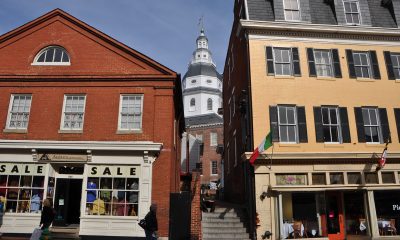


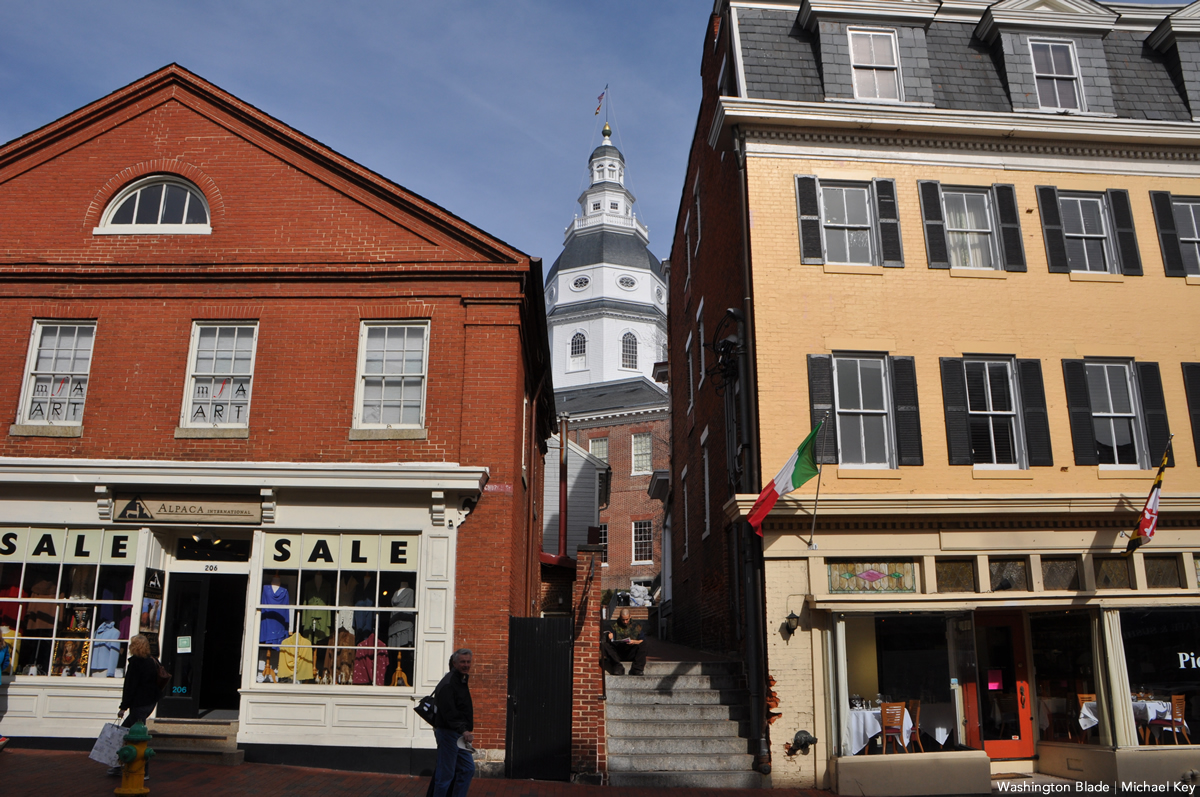
Maryland’s legislative caucuses outlined their legislative priorities heading into the final weeks of the 2026 General Assembly during a joint press conference on March 24.
The press conference was titled “We are Maryland,” where a representative for each of the legislative caucuses outlined priorities.
State Del. Kris Fair (D-Frederick County) of the LGBTQ+ Caucus opened the press conference with a statement on the unity of Maryland’s caucus.
“Together we can show our state and our community a different world, one where we mutually support one another and through that support uplift every Marylander,” he said.
In a press conference on March 5, the LGBTQ+ Caucus outlined its top legislative priorities. Fair highlighted two of those bills again during the “We are Maryland” press conference.
The first of the two highlighted pieces of legislation was Senate Bill 626 and House Bill 1589.
The bills would simplify the process of updating an individual’s birth certificate and align the Department of Health and DMV systems to reflect those changes. The bill is being led by state Sen. Clarence Lam (D-Anne Arundel and Howard Counties) and state Del. Ashanti Martinez (D-Prince George’s County).
The second piece of legislation is Senate Bill 950 and House Bill 1209, which would update and modernize laws and regulations around so-called conversion therapy. The bills have failed to pass either chamber thus far. They are being led by state Sen. Cheryl Kagan (D-Montgomery County) and state Del. Bonnie Cullison (D-Montgomery County).
(The U.S. Supreme Court on Tuesday ruled against a Colorado law that bans so-called conversion therapy for minors. Maryland is among the U.S. jurisdictions that prohibit the widely discredited practice for anyone under 18.)
Martinez and Lam have introduced bills in their respective chambers that would expand PrEP access in Maryland. Martinez did not attend the press conference, and Fair did not mention it when he spoke.
State Del. N. Scott Phillips (D-Baltimore County) represented the Black Caucus during the press conference. State Del. Dana Jones (D-Anne Arundel County) spoke on behalf of the Women’s Caucus, State Del. Teresa Woorman (D-Montgomery County) represented the Latino Caucus, and State Del. Lily Qi (D-Montgomery County) represented the Asian-American and Pacific Islander Caucus. State Del. Jared Solomon (D-Montgomery County) represented the Jewish Caucus, and state Del. Sean Stinnett (D-Baltimore County) represented the Muslim Caucus during the press conference.
Solomon ended the press conference by explaining the importance of all the caucuses coming out together.
“We are stronger when we’re together, and many of these issues that we have talked about, again, impact all of us,” said Solomon.
District of Columbia
Blade contributor, husband exchange vows in D.C.
Yariel Valdés and Kevin Vega held ceremony at Jefferson Memorial on March 23

Washington Blade contributor Yariel Valdés and his husband, Kevin Vega, exchanged vows at the Jefferson Memorial on March 23.
The couple married in Fort Lauderdale, Fla., on Nov. 24, 2025. The Jefferson Memorial ceremony — which Blade International News Editor Michael K. Lavers and Samy Nemir Olivares officiated — coincided with the third anniversary of Yariel and Kevin’s first date.
Yariel in 2019 asked for asylum in the U.S. because of the persecution he suffered as a journalist in his native Cuba. He spent nearly a year in U.S. Immigration and Customs Enforcement custody before his release on March 4, 2020.
Yariel wrote a series of articles about his time in ICE custody that the Blade published. The series was nominated for a GLAAD Media Award in 2022.
Yariel and Kevin live in South Florida.
District of Columbia
‘Out for McDuffie’ event held at D.C. gay bar
Mayoral candidate cites record of longtime support for LGBTQ rights
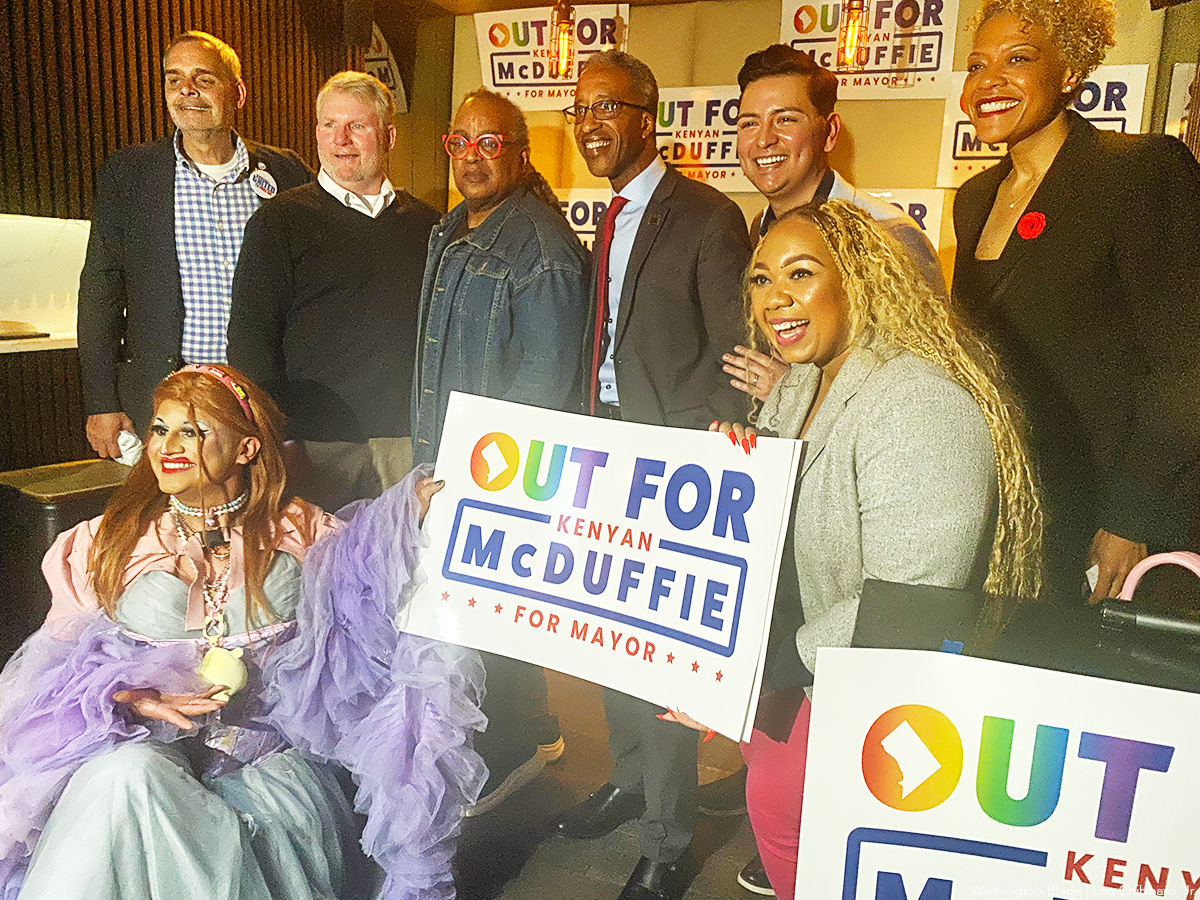
More than 100 people filled the upstairs room of the D.C. gay bar Number 9 on Thursday night, March 26, to listen to D.C. mayoral candidate Kenyan McDuffie at an event promoted as an “Out for McDuffie” meet and greet session.
Several local LGBTQ activists who attended the event said they support McDuffie, a former D.C. Council member, in his run for mayor while others said they had not yet decided whom to vote for in the June 16 D.C. Democratic primary election.
As of March 27, eight other Democrats were competing against McDuffy in the June 16 primary, including D.C. Council member Janeese Lewis George (D-Ward 4), considered McDuffie’s lead opponent. Lewis George also has a record of strong support on LGBTQ issues.
Most political observers consider McDuffie and Lewis George the two lead candidates in the race, with the others having far less name recognition.
The two lead organizers of the Out for McDuffie event were LGBTQ rights advocates Courtney Snowden, a former D.C. deputy mayor in the administration of Mayor Muriel Bowser, and Cesar Toledo, a local LGBTQ youth housing services advocate.
“I’m a candidate for mayor of Washington, D.C. and I’m running for mayor because I love this city,” McDuffie told the gathering after being introduced by Snowden. “And now more than ever we need leadership to take us to the future,” he said, adding that he and his administration would “stand up and fight” against President Donald Trump’s efforts to intervene in local D.C. affairs.
“Our strength is in the 700,000 beautifully diverse residents of Washington, D.C.” he told the gathering. “And as Courtney said, I didn’t just show up and run for mayor and then start saying that I’m going to be an ally for the queer community, for the LGBTQ+ community,” he said, “I’ve lived my entire professional life fighting for justice and fighting for fairness.”
Following his speech, McDuffie told the Washington Blade, “We’re going to fight to protect our LGBTQ+ community every single day. That’s what I’ve spent my career doing, making sure we have a beautifully diverse and inclusive city.”
He remained at Number 9, located at 1435 P St., N.W., for nearly an hour after he spoke, chatting with attendees.

The cost of speaking one’s mind

Senegalese president signs bill that further criminalizes homosexuality

Md. lawmakers reaffirm legislative priorities

Supreme Court rules against Colo. law banning conversion therapy for minors

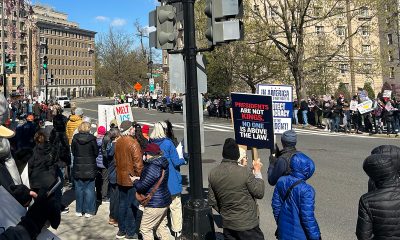
Thousands attend ‘No Kings’ protests in D.C.

Celebrate cherry blossoms the drag way

Lorato ke Lorato: marriage equality, democracy, and the unfinished work of justice in Botswana

Japanese Supreme Court to consider marriage equality

The outrage economy is not the LGBTQ community

Anti-trans visa ruling echoes Nazi regime destroying trans documents
-

 Out & About4 days ago
Celebrate cherry blossoms the drag way
-
Botswana4 days ago
Lorato ke Lorato: marriage equality, democracy, and the unfinished work of justice in Botswana
-
Japan4 days ago
Japanese Supreme Court to consider marriage equality
-
Opinions4 days ago
The outrage economy is not the LGBTQ community