Living
Best of Gay D.C. 2012: Community
Readers pick the winners in 11th annual poll
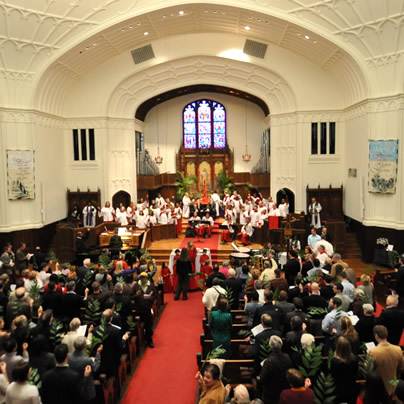
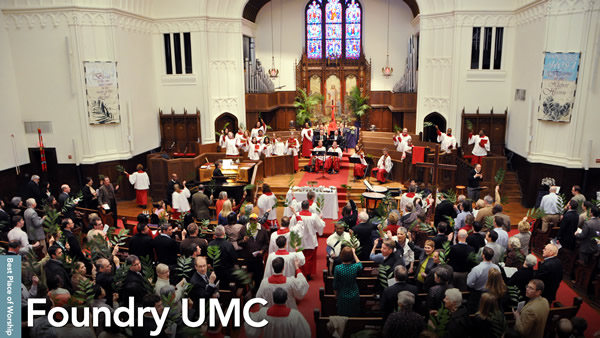
Best Place of Worship: Foundry United Methodist Church (Washington Blade photo by Michael Key)
Best House of Worship: Foundry United Methodist Church
1500 16th Street, NW
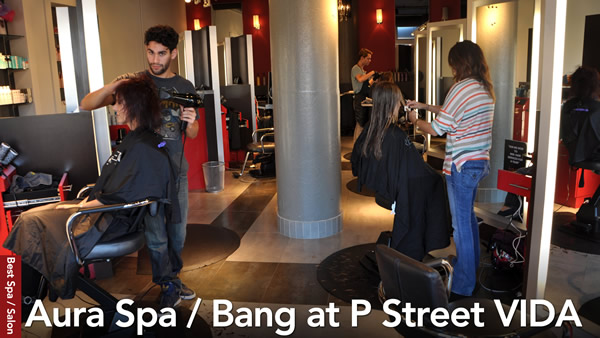
Best Spa/Salon: Aura Spa/Bang Salon (Washington Blade photo by Michael Key)
Best Spa/Salon: Bang Salon/Aura Spa
1519 15th Street, NW
Aura Spa/Bang Salon Metropole
1517 15th Street, NW
auraspa.net

Best Men’s Clothing Store: Universal Gear (Washington Blade photo by Michael Key)
Best Men’s Clothing Store: Universal Gear
1529 14th Street, NW
202-319-0136
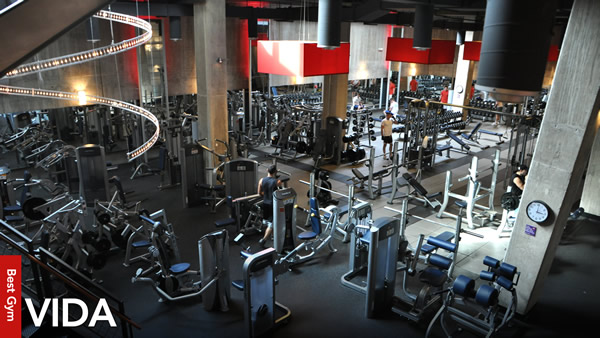
Best Gym: VIDA (Washington Blade photo by Michael Key)
Best Gym: Vida Fitness
Various locations

Best Theater: Arena Stage (Washington Blade photo by Michael Key)
Best Theater: Arena Stage
1101 6th Street, SW
202-488-3300

Best LGBT-Owned Business: Hank’s Oyster Bar (Washington Blade photo by Michael Key)
Best LGBT-owned Business: Hank’s Oyster Bar
Various locations

Best LGBT Social Group: Burgundy Crescent (Washington Blade photo by Michael Key)
Best LGBT Social Group: Burgundy Crescent Volunteers
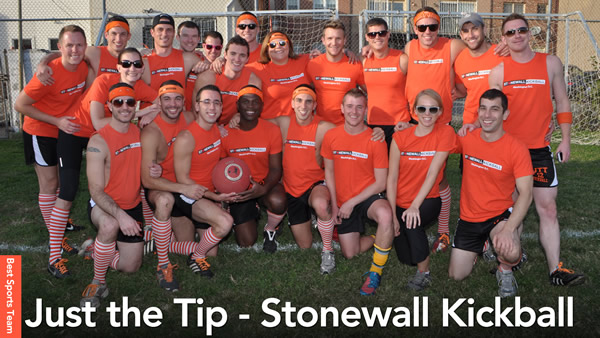
Best Sports Team: Just the Tip of Stonewall Kickball. (Washington Blade photo by Michael Key)
Best Sports Team: Just the Tip Stonewall Kickball
Just the Tip is one of many hilariously named teams in the Stonewall Kickball league.
Stonewall Kickball, led by Martin Espinoza and Mark Gustafson, gives about 470 participants a chance to play and raise money for the D.C. Center for the LGBT Community. The league was started after Espinoza and Gustafson were turned off by other leagues because of their competitiveness and homophobia.
Games are played on Sunday afternoons in Stead Park with drinks before at JR.’s (1519 17th St., N.W.), and afterward at Cobalt (1639 R St., N.W.). Wednesday nights are devoted to Open Bar and Penny Wars, a fund-raising competition between teams.
Stonewall Kickball is holding an All-Starts Game on Saturday at 2:30 p.m. between JR.’s Bar and Cobalt. The teams’ rosters are posted on the Facebook event page. One of the refs will be from Just the Tip and JR.’s will feature two Just the Tip players.
For more information on Stonewall Kickball, visit the league’s page, stonewallsports.com/kickball or their Facebook group. (JE)
Best Art Gallery: Phillips Collection
Originally called the Phillips Memorial Art Gallery, The Phillips Collection was opened to the public in 1921 by Duncan Phillips and his mother Eliza, in memory of his father and brother.
Phillips served as the museum’s director until he died in 1966. His wife, Marjorie, an artist herself, took over as director after his death and their son, Laughlin, succeeded her.
The museum’s permanent collection features more than 3,000 works ranging from masterpieces of French impressionism and American modernism to contemporary art from artists such as Edgar Degas, Henri Matisse and Georgia O’Keeffe. The Phillips has the world’s largest, most significant collection of works by Arthur Dove and the largest American collection of works by Pierre Bonnard. (JE)
Phillips Collection
1600 21st Street, N.W.
Best Comedy Club: D.C. Improv
D.C. Improv hasn’t changed a lot since it opened its doors 20 years ago. And that’s not necessarily a bad thing. It’s the place you go if you’re looking for the old school comedy club experience. The venue is tight, the bar food is unremarkable and the drinks are fine. Luckily the talent can be amazing. Of course, there’s always the chance that a comic will bomb. But that’s part of the fun, right?
Located on Connecticut Avenue below Dupont Circle, D.C. Improv has drawn big names over the years (Ellen DeGeneres, Dave Chappelle), and continues to book established and emerging comics. Upcoming acts include Chris Coccia and Ari Shaffir. It also consistently promotes gay acts and gay-themed shows.
Note to the bashful: The place is small, so sit as far from the stage as possible. These comics will make you part of their act (reporter speaks from experience). (PF)
D.C. Improv
1140 Connecticut Ave. NW
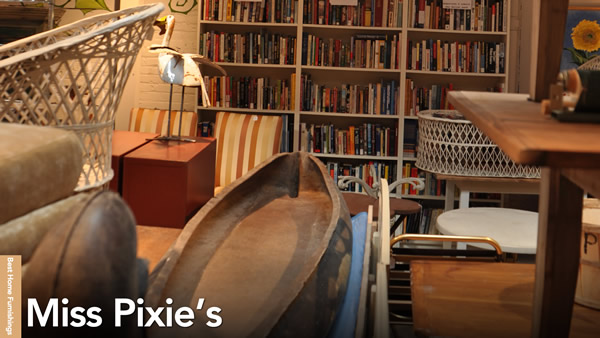
Best Home Furnishings: Miss Pixie’s (Washington Blade photo by Michael Key)
Best Home Furnishings: Miss Pixie’s
Pixie Windsor opened Miss Pixie’s in Adams Morgan in 1997; in 2005 she settled into the current location and just finished a renovation after signing a new five-year lease.
The renovation, among other things, opened up the sightlines in the store allowing customers to more easily see and shop the treasures she brings into the store.
“The back room no longer looks like a place to put the tables, instead it is welcoming and encourages the customer to continue shopping,” she says.
The one thing that hasn’t changed is the bright pink storefront. And while the contents of the store always change, it will always be filled with off-the-beaten-path items that appeal to 20-40 something Washingtonians who don’t necessarily want the same old same old in every room of the house.
Windsor recommends keeping an eye on the Miss Pixie’s website (misspixies.com) for fun and exciting things, like design seminars, a chance to decorate the store bathroom and she may have let it slip that HGTV may have emailed recently. (JH)
Miss Pixie’s
1626 14th Street NW
202-232- 8171
Best Second-Hand Shop: Buffalo Exchange
Buffalo Exchange offers a distinctly New Age slant to the traditional used clothing store.
Buyers and sellers get a fair price for a wide variety of vintage and contemporary fashions. But founders Kerstin and Rebecca Block also emphasize the environmental advantages of the resale fashion industry. Buffalo Exchange promotes itself as a sustainable business that protects the environment by reusing and recycling clothing.
LGBT customers also value Buffalo Exchange for its sense of fun and are staggering to the store to be part of the Celebrity Zombie Invasion now underway at the store. (BTC)
Buffalo Exchange
1318 14th Street Northwest
202-299-9148
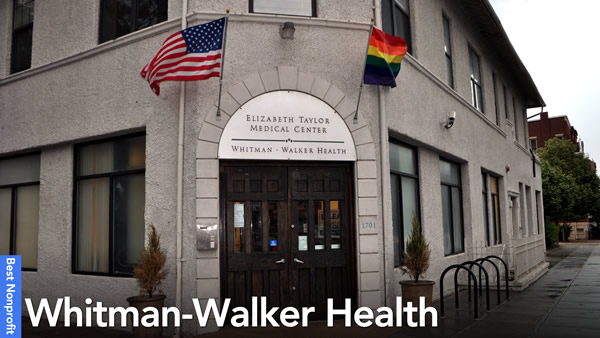
Best Nonprofit: Whitman-Walker Health (Washington Blade photo by Michael Key)
Best Nonprofit: Whitman-Walker Health
Since 1973, Whitman-Walker Health has been providing high-quality and culturally sensitive care to Washington’s LGBT and HIV/AIDS community. It began operations as an offshoot of the Washington Free Clinic and offered services in the basement of the Georgetown Lutheran Church. Today, it offers medical and legal services to thousands of clients from state-of-the-art medical facilities in the District.
The clinic gets its name from two queer Civil War-era health activists — celebrated gay 19th century poet Walt Whitman who came to Washington in December 1862 to care for his wounded brother George and remained for several years to tend to injured soldiers and veterans and Dr. Mary Edwards Walker who graduated from Syracuse Medical College in 1855, the only woman in her class. Denied an officer’s commission because of her gender, Walker volunteered her services as a surgeon and worked in a variety of Army hospitals. She wore a modified military uniform that included trousers, a man’s coat and two pistols. (BTC)
Whitman-Walker Health
1701 14th St., NW
202-745-7000
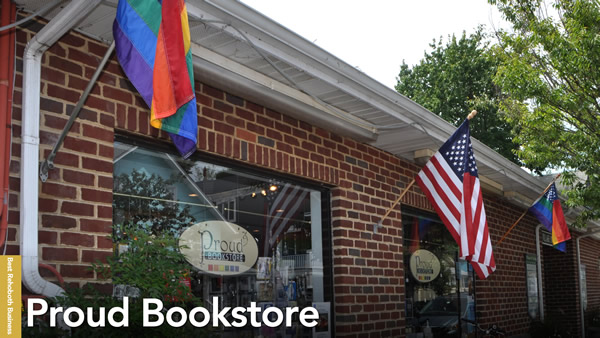
Best Rehoboth Business: Proud Bookstore (Washington Blade photo by Michael Key)
Best Rehoboth Business: Proud Bookstore
Opening and operating a small business is never easy — especially in recent years with the economic downturn — so congratulations to all of this year’s nominees in this category: Annie’s Bananies, Frogg Pond, Royal Treat and Stingray Sushi.
And hats off to winner Jacques LeClair, owner of Rehoboth’s Proud Bookstore, for opening a gay bookstore and not only surviving the recession, but thriving. Not long after opening, the store moved into a larger space and is filled with LGBT-themed books, gifts, cards, T-shirts and more. Jacques himself is usually behind the counter ready with a friendly welcome for visitors and locals alike. The store has quickly become a gathering place for locals to grab a newspaper and catch up on the latest happenings. (KN)
Proud Bookstore
149 Rehoboth Ave.
Rehoboth Beach, DE 19971
Best Local Blog: DCist
Everybody loves DCist.com. Or so it seems. The local blog has won readers’ favorite from Washington City Paper, the Washingtonian and now the Blade.
“Generally speaking, I’m incredibly flattered,” says DCist editor-in-chief Martin Austermuhle. “As simple as it sounds, I like it when people read what we do and enjoy it. It’s very nice coming from the Blade too — it’s a paper I’ve always liked a lot.”
Around since 2005, DCist gets about 50,000 unique hits a day. With two full-time employees and about 30 contributors, the blog covers everything from news to food to the arts. Its staff supported same-sex marriage in D.C.
“As much as D.C. is seen as a center of influence, at heart it’s a small town,” says Austermuele. “That said, there’s never a day that we’re not learning something about a city that we’re convinced we’ve already figured out. (PF)
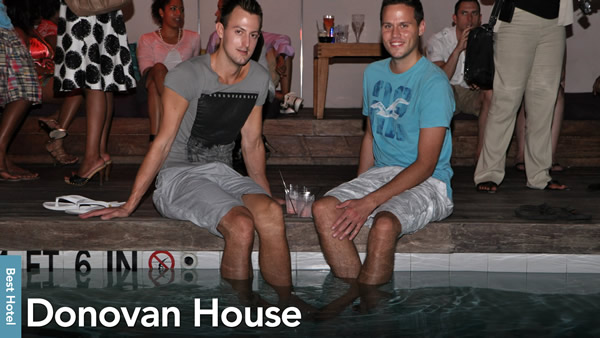
Best Hotel: Donovan House (Washington Blade photo by Michael Key)
Best Hotel: Donovan House
Located on Thomas Circle, Donovan House projects sophistication and urban panache in a sea of more style-challenged accommodations.
But Donovan House is more than a pretty face. As a Kimpton Hotel, the gay-friendly Donovan House enjoys a longstanding relationship with the LGBT community, and can boast a 100 percent score on the Human Rights Campaign Equality Index for the last 10 years.
Founded in San Francisco in 1981 at the height of the gay Mecca’s AIDS crisis, Kimpton Hotels lost a lot of employees to the disease, prompting the company to support LGBT organizations prior to other corporations, says Donovan House General Manager Mark Jennings. Kimpton Hotels regularly partners with the Red Ribbon Campaign in raising money to help nonprofit groups nationwide promote HIV awareness and prevention. (PF)
Donovan House
1155 14th Street, NW
202-737-1200
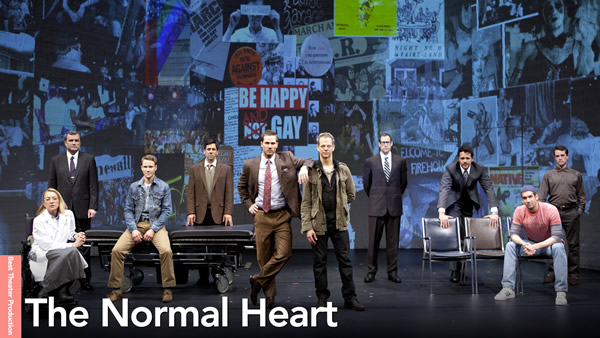
Best Theater Production: The Normal Heart (Photo courtesy of Arena Stage)
Best Theater Production: ‘The Normal Heart’
“The Normal Heart” by playwright-cum-activist Larry Kramer came to Arena Stage this summer. To see a faultless production of Kramer’s very political account of the harrowing early days of the AIDS crisis performed so close to the Capital building was thrilling.
Staged by New York director George C. Wolfe, it featured inspired performances by Patrick Breen as Ned Weeks (a slightly less angry onstage version of Kramer) and handsome Luke Macfarlane as Felix, Ned’s beatific dying lover. TV’s Patricia Wettig was frustration incarnate as the dying men’s doctor, furious with the establishment’s refusal to fund those on the front line. Chris Dinolfo, a local actor who is gay, made an impact as young David, the first character in the play to die from AIDS.
Almost three decades after its premiere, Kramer’s beautiful protest/memorial conjures up the terror and devastation surrounding the onset of what was then informally called the gay plague. Today Kramer’s play feels less angry. Mostly it’s heartbreakingly sad. (PF)
Best Yoga Studio: Yoga District
Whether you’re looking to do the downward dog for the first time or hone already considerable yogi skills, there’s something for you at Yoga District. With numerous classes focusing on everything from toning to alignment to flexibility, Yoga District promises practices that are relevant to your needs whatever your experience level.
Founded by Jasmine Chehrazi, Yoga District is a local cooperative of yoga studios located in Dupont Circle; H Street, NE; Bloomingdale; 14th Street Corridor and downtown. The studios are famously no frills and their classes respect both the needs of the individuals as well as the group.
Popular with vast swathes of yoga loving locals, Yoga District offers affordable and by-donation classes in community-run yoga centers committed to eco-friendly practices led by knowledgeable instructors. Since its inception, Yoga District’s mission has been that every being deserves the holistic benefits of yoga as a practical tool of empowerment, health and physical fitness. (PF)
Yoga District
1635 Connecticut Ave., NW
(and other locations)
202-265-9642

Best Women’s Clothing Store: Proud Threads (Photo courtesy of Proud Threads)
Best Women’s Clothing Store: Proud Threads
Misty Branch says she and her girlfriend, Sarah Moecker, saw a need for high-quality, non-rainbow-themed LGBT clothing.
“So we decided to do something about it,” the owner of online women’s clothing store Proud Threads says.
For now, Proud Threads primarily sells T-shirts mostly for gay women online and at Pride festivals. Their website (proudthreads.com) shows a selection of cute T-shirts and baseball shirts featuring clever slogans and graphics, playfully celebrating LGBT pride in a hip, quirky way.
Up and running since May, Proud Threads is still in its early days. Branch says getting started has had its bumps. “We began with a lot of designs that we’ll never, never show anyone. Sarah is the designer and I’m her ruthless critic. At first she didn’t like it but later she stopped taking it personally and the product has improved.” (PF)






One of the biggest headaches of the new home process is the actual moving part. By the time someone is buying a home, most people are beyond the “I just need a pickup truck, a pizza and a case of beer for my friends.”
If that is still someone’s preferred way to move, that’s great. However, many people find they need a much more robust plan. It can also trigger a lot of feelings about items one owns, what to do with them, do they have too much, should I keep this memento that I never use? Etc.
Moving is a chance for a person to “clean house” literally, figuratively, spiritually and energetically. A person can figure out which items they want to keep, and which need to go. As someone who recently moved across the country, I can speak to this experience. It’s also time for what people call “the fresh start effect.” This phenomenon, according to psychologists, can happen in little moments (like the start of a new work week) and bigger moments (such as moving from one home to the next).
The fresh start effect offers these benefits often mentioned by psychologists:
- Mental Accounting: Dates act as chapter breaks, letting you put past failures into a previous period.
- Psychological Distance: You separate your flawed past self from your aspirational future self (“That was the old me”).
- Optimism Boost: New beginnings clear mental clutter and increase your sense of agency and control
Does this mean that “the new you” will be the perfect version you envisioned? Probably not. We are humans. But it might mean you get a chance to “leave some of the old you behind” within the walls you used to live in, and now have a chance to have a new layout, a new décor, a new color pattern, new wallpaper, donate old furniture and books or magazines, throw out clothes you no longer use or fit in, and enjoy the opportunity to literally use the, “Does this spark joy?” method that was made so popular by Marie Kondo in her Netflix series.
So, for all its hassle and headache, moving is a chance to shake off the “old you” and try on the new you, to incorporate the items you would like to keep and use more of, and shed the items, habits, and ways of thinking that you feel no longer serve you.
I can speak to the experiences that several of my clients had when they moved from a previous residence to a newer one. It usually coincided with a change in relationship status, a change in employment, a change in family size, but sometimes it just seemed to correlate to a new attitude and perspective that the client was really hoping for.
I have literally had clients come to me after the fact, in tears, that they were so happy they made the decision to move out of a situation that no longer served them, and move into one that felt like a much better fit.
Change can be annoying and overwhelming at times, but usually most people come out the other side, not wanting to return to the way they were before.
Joseph Hudson is a referral agent with RLAH. Reach him at 703-587-0597 or [email protected].

Despite a U.S. political climate that has made electric vehicles about as welcome as a vegan at a Texas barbecue, automakers haven’t gotten the memo. The 2027 BMW iX3 and Rivian R2—in showrooms soon—prove the point. But think of them as distant cousins: one arrives impeccably dressed; the other probably has a kayak strapped to the roof.
BMW iX3
$62,000
Range: Up to 434 miles
0 to 60 mph: 4.7 seconds
Cargo space: 30.4 cu. ft.
PROS: Huge driving range. Distinctive styling. Cutting-edge interior.
CONS: Quirky digital controls. Only one U.S. trim level. Pricey options.
WHAT’S NEW: This is BMW’s first production model on its state-of-the-art Neue Klasse platform, radically changing the technology, cabin and electric drivetrain.
The iX3 arrives on our shores in one trim level, the iX3 50 xDrive. Load it up with options and you can sail well past $80,000.
Depending on configuration, this luxe EV delivers an astonishing range before recharging. And a dual-motor, all-wheel-drive system produces 463 horsepower, which allows you to tootle around as fast as a Porsche 718 sportster.
The new “Panoramic iDrive” spreads information across the base of the windshield, supplemented by a central display and steering-wheel controls. An available 3D head-up display adds even more info. It’s futuristic, busy and unmistakably BMW—like someone decided the dashboard needed its own coming-out party.
Then there’s the “Heart of Joy” computer, which coordinates the motors, braking and steering for sharper responses and smoother control. The name may sound like something from a self-help retreat, but the innovation makes the iX3 seriously entertaining to drive.
You also can charge the iX3 from 10 percent to 80 percent in just 21 minutes. Nice.
This isn’t merely an electric X3 with the gasoline bits removed. It’s a tech reset for BMW. Compared with the R2, the iX3 is more polished, more luxurious…but, alas, considerably pricier.
RIVIAN R2

$45,000
Range: Up to 345 miles
0 to 60 mph: 5.9 seconds
Cargo space: 28.7 cu. ft.
PROS: Affordable luxury. Rugged looks. Clever storage.
CONS: No smartphone integration. No glass-roof shade. Touchy touchscreen.
WHAT’S NEW: Everything—the R2 is Rivian’s all-new, smaller electric SUV, and it brings the brand’s adventure-first attitude to a price point far below the larger R1S.
If the BMW iX3 is wearing a beautifully tailored jacket, the Rivian R2 has its sleeves rolled up.
With edgy styling, this is no anonymous crossover wearing an EV costume. Chunky details. Upright proportions. Distinctive lighting all give off an outdoorsy vibe without turning the R2 into a rolling REI catalog.
There are four configurations, with pricing from $45,000 to $58,000. That’s a big difference from the BMW—and potentially the R2’s biggest weapon.
The stats aren’t shabby, either. Driving range is from 275 to 345 miles. The dual-motor, all-wheel-drive setup produces between 350 horsepower and a frankly bonkers 656 horsepower. And the high-performance model lets you zip from 0-to-60 mph in just 3.6 seconds.
Drag-racing credentials? Absolutely!
Inside, there is lots of clever packaging, with flexible seating and generous storage. This EV is designed to carry actual stuff, not merely impress your neighbors.
Yes, there are quirks. Rivian skips Apple CarPlay and Android Auto, while everyday controls—some of which are less than intuitive—live on the touchscreen. And the panoramic glass roof lacks a conventional shade. Huh?
For some owners, those will be minor annoyances. For others, they’ll become daily reminders that Rivian marches to its own beat.
Perhaps that’s not a bad thing, though. The R2 feels less buttoned-up, more mischievous. It’s the automotive equivalent of Billy Porter ignoring the dress code and somehow looking better than everyone who followed it.
Advice
We’re getting married but our parents object
Will their disapproval and shortcomings derail our hopes for a happy life?

Dear Michael,
My girlfriend and I are getting married! We’re really excited, but we’ve got some big concerns as well.
All of our parents have had multiple marriages. I think 10 between the four of them. So we don’t have much in the way of role models for a successful marriage.
Also, we don’t have any parental support. Except for one of my ex-stepmothers whom I’m close to, none of our parents are happy that their daughter is getting married to another woman. That’s an understatement. Religious objections, moral objections, being angry that we’re “embarrassing them,” these are some of the things we’ve been told.
We do have some supportive siblings and step-siblings, which is great, although they’re getting pushback from parents about attending our wedding.
Given all this, what suggestions do you have for how we can make a go of our marriage? The divorce rate is over 50 percent for everyone. With all this baggage, we’re worried that we have even less of a chance. Thank you.
Michael replies:
First, congratulations!
Regarding your lack of family support: I’m sorry that you both have to deal with so much criticism, disdain, and judgment. Please don’t let your parents’ negativity influence your own views of yourselves and your relationship. Focus instead on the love and caring you will get from friends, community and the family who are present on your big day (I hope your siblings are brave enough to make it!). Being the recipients of that support is one of the sweetest parts of getting married.
Don’t worry about the high divorce rate. While some couples really shouldn’t stay married, lots of people get divorced because they don’t know what is required to have a good marriage, or don’t put in the effort to do so. That does not have to be your fate.
Similarly, your parents’ terrible track record doesn’t mean you have to repeat their marital histories. The skills to have a strong marriage are learnable.
To that end, here are the best tips I can offer the two of you:
- If you want a loving marriage, be a loving partner. Don’t snipe, sulk, or do the silent treatment when you’re mad. Unconditional love is largely a myth. Even our dogs won’t love us if we are mean to them.
- Don’t spend much time or effort focusing on what your spouse is doing wrong or how she is letting you down. Doing so leads to resentment and feeling like you’re a powerless victim. Instead, ask yourself what your own contribution is to the problem, and what you can do to make things better. You don’t have much power over your partner, but you have a lot of power over yourself.
You can certainly ask your spouse for what you’d like from her, but don’t expect to always get it. And don’t base your own wellbeing or good behavior on what your partner does or doesn’t do.
- Because any two people are always different in some important ways, there is no way that you both can always want the same things, or think the same way, or have the same priorities. Accept this! There has to be room for each of you to be an individual, not only part of a couple.
- Be generous as often as you can be, and have a boundary when it’s important for you to have one.
- When your spouse states that she has a boundary, respect it. Do not push her to back off from something that is important to her.
- Don’t keep score, including how much more you do or how often you don’t get your way. Instead, work together to have a collaborative marriage where you work together to make decisions and get things done.
- Strive not to weigh the relationship down with neediness. Once we’re grownups, it’s mainly our own job to soothe ourselves. You don’t want to burn out your partner’s empathy.
Of course you can ask for a hug, love, reassurance, support, advice, and a shoulder to cry on when you’re down. Just aim be the first person you turn to when you’re upset, and do your best to keep your own mood steady.
- Do not wait for your significant other to go first. Not on planning a date, not on apologizing, not on loading the dishwasher or cleaning the bathroom. If you wait for her to make the first move, you will have a resentful relationship where nothing good ever happens.
Keeping these principles part of your operating system, even — and especially — at those moments when your spouse isn’t doing her best, will go a long way toward helping you build and maintain a loving and happy marriage.
Michael Radkowsky, Psy.D. is a licensed psychologist who works with couples and individuals in D.C., Maryland, Virginia, New York, and all PSYPACT states. He can be found online at michaelradkowsky.com. All identifying information has been changed for reasons of confidentiality. Have a question? Send it to [email protected].

PHOTOS: Walk and 5K to End HIV

PHOTOS: Wanda Alston Foundation Fall Reception

Moving presents a chance to ‘clean house’

EV ecstacy: BMW iX3, Rivian R2

Curl up with a good book this fall

Trump’s Cabinet: Dumb, dumber, dumbest, and evil

More than 150 people detained outside Istanbul courthouse

Virginia Anti-Violence Project struggles to fill federal funding gaps

Gay man sues Delaware AG for not prosecuting partner in domestic violence case

D.C.’s fall theater season is already well underway
-

 Opinions5 days ago
Trump’s Cabinet: Dumb, dumber, dumbest, and evil
-
Turkey5 days ago
More than 150 people detained outside Istanbul courthouse
-
Virginia5 days ago
Virginia Anti-Violence Project struggles to fill federal funding gaps
-
Delaware5 days ago
Gay man sues Delaware AG for not prosecuting partner in domestic violence case