Arts & Entertainment
Young, out and proud
Team D.C. scholarship recipients share experiences
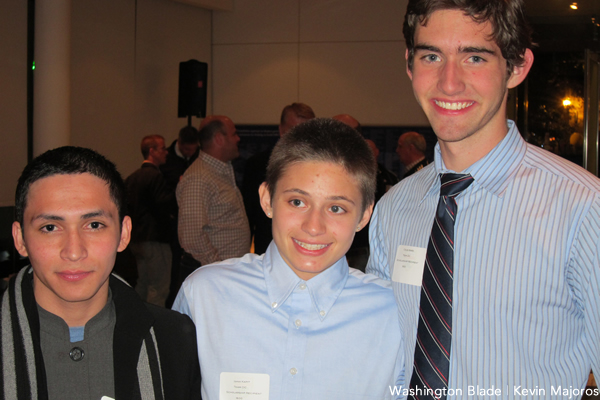
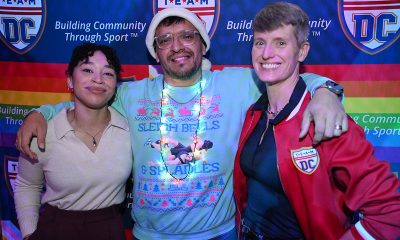
From left, Luis Vasquez, Ilana Kapit and Colin Ward. (Photo by Kevin Majoros)
Team D.C., Washington’s gay sports connection, recently announced six scholarship awards to local openly gay student athletes ranging from $500-$2,000. The Blade caught up with three of the recipients to pose a few questions: Luis Vasquez is attending Montgomery College, Ilana Kapit is attending Barnard College and Colin Ward is attending the University of North Carolina.
Washington Blade: What kind of sports did you play growing up?
Vasquez: I have been in the United States for three years and played varsity soccer at Bowie High School. In my senior year, we won the Maryland state championships. I was also on the modeling team of my school since I love fashion and participated in some dance recitals.
Kapit: I’ve played soccer since I was very young. My parents wanted me to have an athletic outlet and I picked that one. I played on several different classic and rec teams throughout school, as well as on my JV team for two years of high school, one of which I was the captain. It’s an incredible sport and has definitely had a huge positive impact on my life.
Ward: I did not play for any team at my high school. Growing up I played basketball, baseball and tennis. However, I didn’t continue these at the high school level. At college I row for the UNC Men’s Crew team.
Blade: Any positive or negative stories to tell about your teammates finding out that you were gay?
Vasquez: Most of my teammates here in the United States never paid attention to my preferences and they were always super cool to me. When I was living in El Salvador, my teammates made fun of me and I was bullied for being gay. At one point, I stopped playing soccer, which was very frustrating.
Kapit: I was on a rec team with people I had known since kindergarten and on my classic team since it started, so with both teams I had a family and no one really seemed to care when I came out. Most of them had already guessed. With my school soccer team, unfortunately, it was a little bit different. My teammates didn’t have much of a negative reaction, but my coach really didn’t appreciate the way that I dressed or wore my hair. He was only openly rude about it a few times and those times hurt. Once he wouldn’t put me in the goal simply because I had my hair gelled into a Mohawk for a school spirit day. That sucked.
Ward: I originally was anxious about how my teammates would perceive me, but these guys surprised me I think as much as I surprised them. I didn’t fit into preconceived notions of what it means to be gay. By doing workouts with the team, as we push each other to be faster and stronger, the idea of me as a “gay athlete” falls away and I become just another teammate. When I started with crew, I wouldn’t have thought my future teammates would also become my closest friends.
Blade: In what way did playing sports contribute to the person you are today?
Vasquez: Sports helped me to be free to be who I am. I am not afraid of anyone. I know what I want in life and I am motivated to continue playing soccer and pursue a career in fashion. I am currently recovering from a soccer injury, but sometimes I play with the Federal Triangles Soccer Club to keep myself in the sport.
Kapit: Playing soccer definitely shaped my ability to work with other people. Soccer isn’t one of those sports in which a team can be successful while relying on one person; it really does take everyone’s contributions. I learned to really work with my friends in a much different way than I was used to from school. I learned when I needed to step up and take action, and when I needed to step back and let someone else take the ball up the field. The concepts I learned in soccer are way more applicable to real life than I realized when I started playing back when I was four.
Ward: Because of crew, I’m healthier, happier and am able to push myself farther in all aspects of my life.
More information on the Team D.C. Scholarship program is at teamdc.org.




Friday, March 27
Center Aging Monthly Luncheon With Yoga will be at 12 p.m. at the DC Center for the LGBT Community. Email Mac at [email protected] if you require ASL interpreter assistance, have any dietary restrictions, or questions about this event.
Go Gay DC will host “LGBTQ+ Happy Hour” at 7 p.m. at Dupont Italian Kitchen. This is a chance to relax, make new friends, and enjoy happy hour specials at this classic retro venue. Attendance is free and more details are available on Eventbrite.
Trans and Genderqueer Game Night will be at 7 p.m. at the DC Center for the LGBT Community. This is a relaxing, laid-back evening of games and fun. All are welcome and there’ll be card and board games on hand. Feel free to bring your own games to share. For more details, visit the DC Center’s website.
Trans Discussion Group will be at 7 p.m. on Zoom. This event is intended to provide an emotionally and physically safe space for trans people and those who may be questioning their gender identity/expression to join together in community and learn from one another. For more details, email [email protected].
Saturday, March 28
Go Gay DC will host “LGBTQ+ Community Brunch” at 11 a.m. at Freddie’s Beach Bar & Restaurant. This fun weekly event brings the DMV area LGBTQ+ community, including allies, together for delicious food and conversation. Attendance is free and more details are available on Eventbrite.
The DC Center for the LGBT Community will host “Sunday Supper on Saturday” at 2 p.m. It’s more than just an event; it’s an opportunity to step away from the busyness of life and invest in something meaningful, and enjoy delicious food, genuine laughter, and conversations that spark connection and inspiration. For more details, visit the Center’s website.
Black Lesbian Support Group will be at 1 p.m. on Zoom. This is a peer-led support group devoted to the joys and challenges of being a Black Lesbian. For more details, email [email protected].
Monday, March 30
“Center Aging: Monday Coffee Klatch” will be at 10 a.m. on Zoom. This is a social hour for older LGBTQ adults. Guests are encouraged to bring a beverage of choice. For more information, contact Adam ([email protected]).
“Tea Time! A Local DC Drag Comedy Show” will be at 3 p.m. at Spark Social. This is a live drag comedy show where drag legends TrevHER & Tiara Missou Sidora host spill all the tea in the DMV. This event is free and more details are available on Eventbrite.
Tuesday, March 31
Visibili-TEA Party will be at 6 p.m. at Restoration Station. Guests are encouraged to come sip, celebrate, and shine together. This event is a Trans Day of Visibility celebration and a special collaboration between Auntie’s Home and Damien Ministries. This is a boozy tea party with intention and the dress code reflects the vibe. More details are available on Eventbrite.
Wednesday, March 1
Job Club will be at 6 p.m. on Zoom upon request. This is a weekly job support program to help job entrants and seekers, including the long-term unemployed, improve self-confidence, motivation, resilience and productivity for effective job searches and networking — allowing participants to move away from being merely “applicants” toward being “candidates.” For more information, email [email protected] or visit thedccenter.org/careers.
Thursday, April 2
The DC Center’s Fresh Produce Program will be held all day at the DC Center for the LGBT Community. People will be informed on Wednesday at 5 p.m. if they are picked to receive a produce box. No proof of residency or income is required. For more information, email [email protected] or call 202-682-2245.
Virtual Yoga Class will be at 7 p.m. on Zoom. This free weekly class is a combination of yoga, breathwork and meditation that allows LGBTQ+ community members to continue their healing journey with somatic and mindfulness practices. For more details, visit the DC Center’s website.

Unconventional Diner will host “Cherry Blossom Drag Bingo Party” on Friday, April 3, at 6:30 p.m.
Guests will be treated to an unforgettable night of drag performances, bingo, food and drink and prizes. Highlights of the evening include themed cocktails, drag performances and bingo prizes.
Tickets can be secured via Resy.
Sports
New IOC policy bans trans women from Olympics
New regulation to be in effect at 2028 summer games in Los Angeles
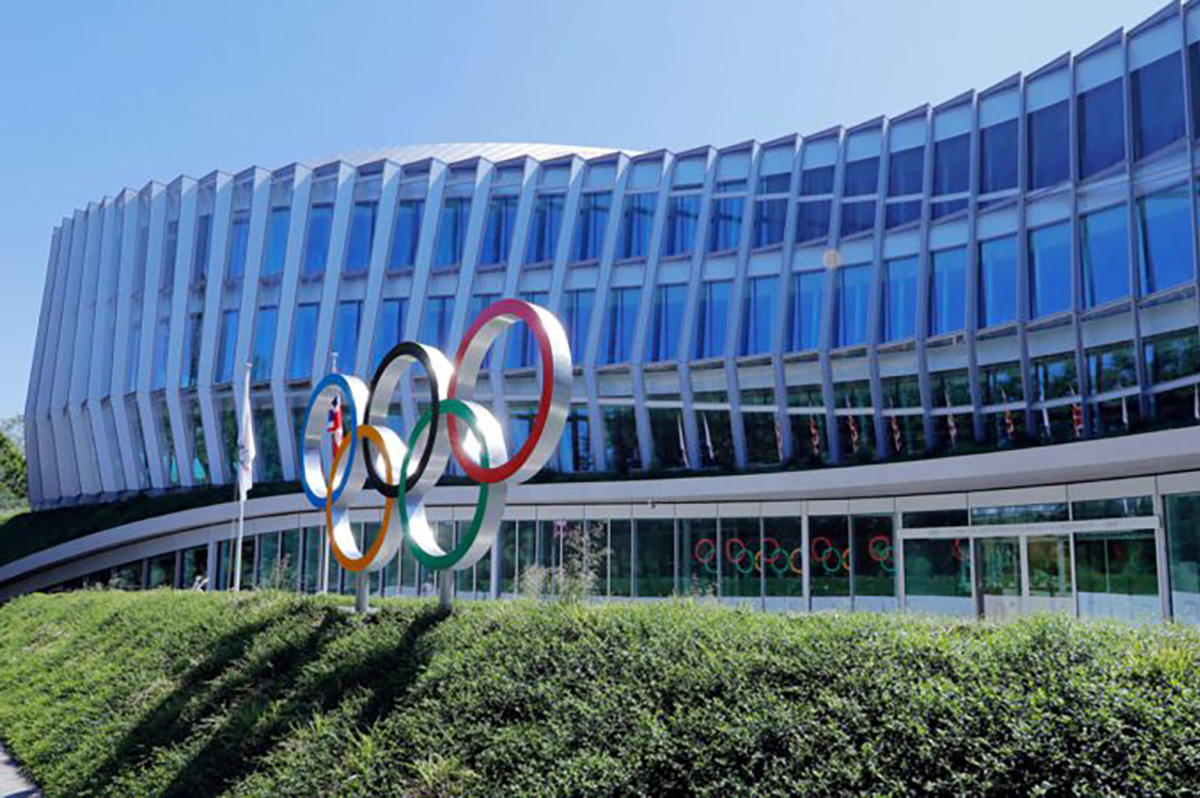
The International Olympic Committee on Thursday announced it will not allow transgender women from competing in female events at the Olympics.
“For all disciplines on the Sports Program of an IOC event, including individual and team sports, eligibility for any Female Category is limited to biological females,” reads the new policy.
The policy states “eligibility for the Female Category is to be determined in the first instance by SRY Gene screening to detect the absence or presence of the SRY Gene.”
“On the basis of the scientific evidence, the IOC considers that the SRY (sex-determining Region Y) Gene is fixed throughout life and represents highly accurate evidence that an athlete has experienced or will experience male sex development,” it reads. “Furthermore, the IOC considers that SRY Gene screening via saliva, cheek swab or blood sample is unintrusive compared to other possible methods. Athletes who screen negative for the SRY gene permanently satisfy this policy’s eligibility criteria for competition in the Female Category.”
The policy states the test “will be a once-in-a-lifetime test” unless “there is reason to believe a negative reading is in error.”
The new regulation will be in place for the 2028 Summer Olympics in Los Angeles.
“I understand that this a very sensitive topic,” said IOC President Kirsty Coventry on Thursday in a video. “As a former athlete, I passionately believe in the rights of all Olympians to take part in fair competition.”
“The policy that we have announced is based on science and it has been led by medical experts with the best interests of athletes at its heart. The scientific evidence is very clear: male chromosomes give performance advances in sport that rely on strength, power, or endurance,” she added. “At the Olympic Games, even the smallest margins can be the difference between victory and defeat. So, it is absolutely clear that it would not be fair for biological males to compete in the female category. In addition, in some sports it would simply not be safe.”
(Video courtesy of the IOC)
Laurel Hubbard, a weightlifter from New Zealand, in 2021 became the first trans woman to compete at the Olympics.
Imane Khelif, an Algerian boxer, won a gold medal at the 2024 Summer Olympics in Paris. Khelif later sued JK Rowling and Elon Musk for cyberstalking after they questioned her gender identity.
Ellis Lundholm, a mogul skier from Sweden, this year became the first openly trans athlete to compete in any Winter Olympics when he participated in Milan Cortina Winter Olympics in Italy.
President Donald Trump in February 2025 issued an executive order that bans trans women and girls from female sports teams in the U.S.
The U.S. Olympic and Paralympic Committee last July banned trans women from competing in female sporting events. Republican lawmakers have demanded the IOC ban trans athletes from women’s athletic competitions.
“I’m grateful the Olympics finally embraced the common sense policy that women’s sports are for women, not for men,” said U.S. Sen. Tom Cotton (R-Ark.) on X.
An IOC spokesperson on Thursday referred the Washington Blade to the press release that announced the new policy.

Trump tells Fox News he won the ‘gay vote’ — but polls tell a different story

Anti-trans visa ruling echoes Nazi regime destroying trans documents

Japanese Supreme Court to consider marriage equality

The outrage economy is not the LGBTQ community

Calendar: March 27-April 2

PHOTOS: Capital Stonewall Democrats 50th anniversary

Polish court rules country must recognize same-sex marriages from EU states

Capital Stonewall Democrats 50th anniversary gala draws sold out crowd

Trans Day of Visibility events planned

Virginia General Assembly’s 2026 legislative session ends
-

 Photos4 days ago
PHOTOS: Capital Stonewall Democrats 50th anniversary
-
Poland4 days ago
Polish court rules country must recognize same-sex marriages from EU states
-
District of Columbia4 days ago
Capital Stonewall Democrats 50th anniversary gala draws sold out crowd
-
District of Columbia3 days ago
Trans Day of Visibility events planned