Opinions
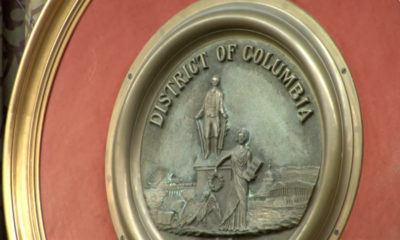
‘Pompous Circumstances’ at the D.C. Council
Pursuing petty privileges provides fodder for growing public disfavor

You’d think that D.C. elected officials could manage to get through a presidential inauguration without embarrassing District residents.
You’d be wrong.
The quadrennial ceremony focuses the nation’s attention on Washington. These days, and for good reason, much of the country hates this place.
Some D.C. Council members have now provided locals with reason to hang heads in dismay of peevish public antics.
At a briefing by federal agencies last week for the D.C. Council regarding inaugural security preparations and protocols, whining immediately ensued. Vehemently voiced by Jack Evans, legislators argued that arrangements bestowed them insufficient special accommodations. They were also disgruntled about a single ticket allotment each for the outdoor oath-taking event.
Evans complained that deference for city lawmakers allowing them to arrive by private car and park within the security perimeter wasn’t good enough. Security officials wanted them to arrive early, after street closures but before the crowds arrived. This would have necessitated getting up early to advantage this special privilege.
This child-like foot stomping, accompanied by declarations of being “totally unacceptable” by Evans on behalf of his colleagues, later won them a three-hour schedule concession from federal officials. Residents likely thought that they should have been sent to bed without dinner.
Impinging public safety and adding to security requirements is apparently secondary to their personal convenience.
Goddess forbid they be required to catch a cab, or – the horror of it all – use public transportation like the plebeian citizenry. Perhaps residents could be enlisted to transport them on covered litters for those last few steps beyond security checkpoints.
Of course, there’s also their desire for extra tickets for swearing-in seats. The public is left only to wonder how they would travel from their parking spots all the way down the Mall. Cue those elevated palanquins again, the local royalty is ready to move.
As it turns out, most Council members are now planning to skip the actual event on the U.S. Capitol steps. Understandable, as they have exclusive use of a glass-enclosed and heated temporary building constructed in front of the Wilson Building from which to view the subsequent parade. It wasn’t merely the recessed interior lighting that brought the structure’s cost to more than $350,000.
Transportation was also of concern when D.C. Council member Mary Cheh, to be accompanied by Council Chair Phil Mendelson, made plans to travel the two blocks from her Council office to the White House by car.
They had scheduled a meeting with an administration functionary to plead that the White House display the city’s “Taxation Without Representation” slogan-adorned license plate on the presidential limousine during the Inaugural Parade. The Council had busied itself unanimously approving such a resolution earlier in the week.
Better to have arranged car service utilizing Uber. A fool’s errand, after all, should arrive in style.
In anticipation of the five-minute trip by government sedan, Cheh had asked police officials about a siren-and-lights escort. The police balked at the suggestion, according to news reports, and Cheh is said to have dropped the inquiry.
When the duo traversed the short distance last Friday under clear skies to the White House gate, visible from their office building, a city employee drove them in a government car. Despite Cheh’s prior concern that they might be followed by a “trail of people” if they walked, their trip went unnoticed by the public. If only Lindsay Lohan had it so good.
The stupefying aspect of these behaviors is the sense of elite entitlement they represent. Council members appear so taken with their self-importance that they no longer exhibit any self-consciousness or regard for public perception concerning the pursuit of perks. Lest they forget, such notions of privilege are what resulted in two of their number having resigned office in disgrace.
Allegations of unethical behavior, possible fundraising violations and other lurking potential scandals continue to taint their collective reputation and fuel disrepute. The defeat of an incumbent colleague only two months ago by an insurgent self-styled reformer should have served as warning.
Continuing unseemly displays of inflated self-regard will only result in needing to worry about making arrangements for one last ride home.
Mark Lee is a local small business manager and long-time community business advocate. Reach him at [email protected].



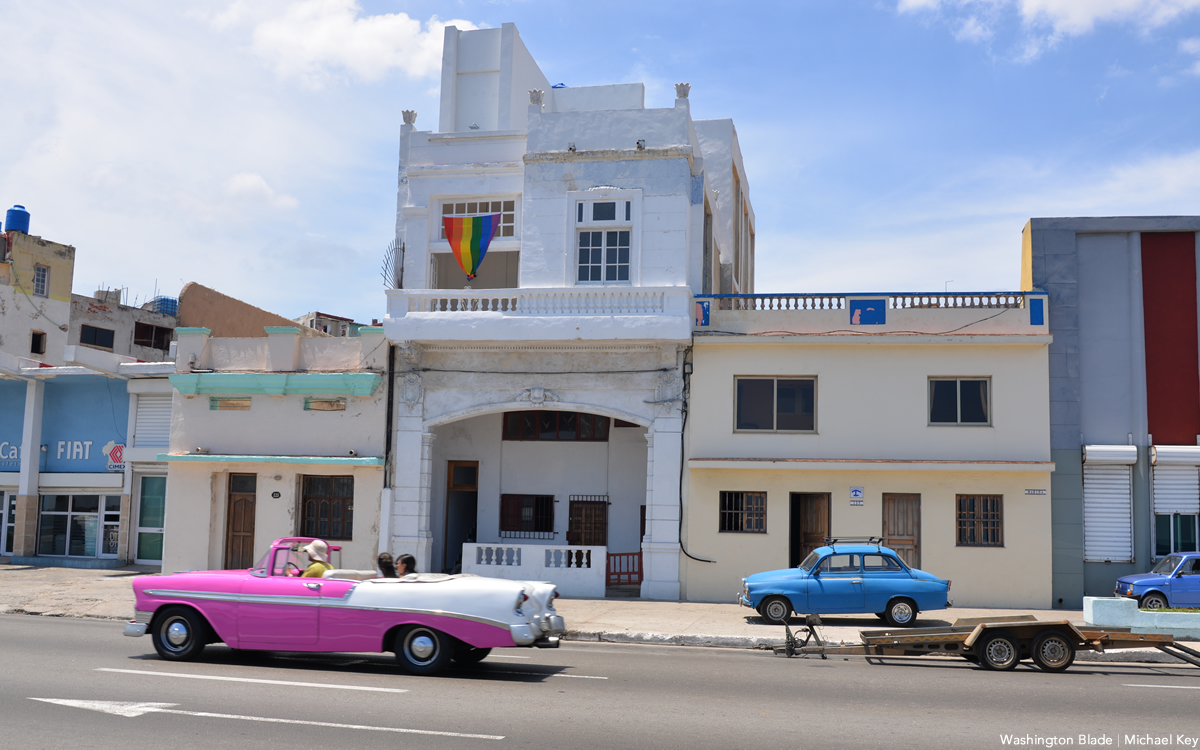
Tensions between the U.S. and Cuba are rising again. This is not new, but the current moment feels different. Recent measures from Washington aim to further restrict the Cuban government’s financial channels, limit its sources of revenue, and apply pressure to key sectors of the economy. This is not symbolic. It is a deliberate policy.
From the U.S. perspective, the message is clear. The goal is to force change that has not happened in more than six decades. There is also a domestic political dimension, shaped by sectors of the Cuban exile community that have long demanded a tougher stance. All of this is part of the landscape.
But that is only one side.
On the Cuban side, the response follows a familiar script. The government speaks of external aggression, economic warfare, and a tightening embargo. Each new measure becomes an opportunity to reinforce that narrative and close ranks. There is no room for public self-criticism. The blame always points outward.
Meanwhile, life on the island follows a different logic.
The energy crisis Cuba is facing today did not begin with these recent measures. It has been building for years. The electrical system is deteriorated, poorly maintained, and increasingly unreliable. Blackouts are not new. What has changed is how severe and how constant they have become.
For years, oil entered Cuba, especially from Venezuela. There were supply agreements. There were resources. And yet, the daily life of ordinary Cubans did not improve. Electricity remained unstable. Fuel was rationed. Transportation was still a daily struggle.
So the question is not new.
If the oil was there, why didn’t anything change?
Where did those resources go?
Where is the money that was generated?
Today, restrictions on oil are often presented as the main cause of the current crisis. They are not. They make an already fragile situation worse, but they do not fully explain it.
There is a deeper, longer story that cannot be ignored.
The same applies to Cuba’s international medical missions.
For years, they were presented as acts of solidarity. And in many cases, they were. Cuban doctors worked in difficult conditions, saving lives and supporting health systems abroad. That is real.
But they also functioned as one of the Cuban state’s main sources of income.
Many of these professionals did not receive the full salary for their work. A significant portion was retained by the government. In some cases, they had little or no control over the money they generated.
And there is a harsher reality.
If a doctor chose not to return to Cuba, that income often did not reach their family. It was withheld.
Today, several countries are reevaluating or canceling these agreements. Once again, the official response is to point outward. But the same question remains.
Is this the loss of international cooperation, or the collapse of a system built on control over its own professionals?
Inside Cuba, the conversation sounds very different.
People are not speaking in geopolitical terms. They are talking about survival. About getting through the day. About blackouts, food shortages, transportation problems, and a life that keeps getting harder.
Some see the new U.S. measures as a form of pressure that could lead to change. Not because they want more hardship, but because they feel the system does not change on its own. There is a deep sense of stagnation.
But that sense of expectation exists alongside a harsh reality.
Sanctions do not hit decision-makers first. They hit ordinary people. The ones standing in line. The ones losing food during power outages. The ones who cannot move because there is no fuel.
That is the contradiction.
The Cuban government calls for international solidarity. And it receives it. Countries send aid. Organizations mobilize. Public voices defend the island.
But another question is also present.
Does that aid actually reach the people?
The lack of transparency in how resources are distributed is part of the problem. Because this is not only about what enters the country, but about what actually reaches those who need it.
Reducing Cuba’s reality to a dispute between two governments avoids the core issue.
There are shared responsibilities, but they are not equal.
The U.S. exerts external pressure with real economic consequences. That cannot be denied. But inside Cuba, there is a system that has had decades to reform, to respond, to open, and it has not done so.
That part cannot continue to be ignored.
I write this as a Cuban. From what I lived. From what I know. From the people who are still there trying to make it through each day.
Because at the end of the day, beyond what governments say or decide, the reality is something else.
Cuba today is under more pressure, yes. But it has also spent years carrying problems that no one has seriously confronted.
And as long as that remains the case, it does not matter what comes from outside. The problem is still inside.
Opinions
D.C. is the place for the Democratic Socialists of America
Our endorsed candidates hold their affiliation as a badge of honor
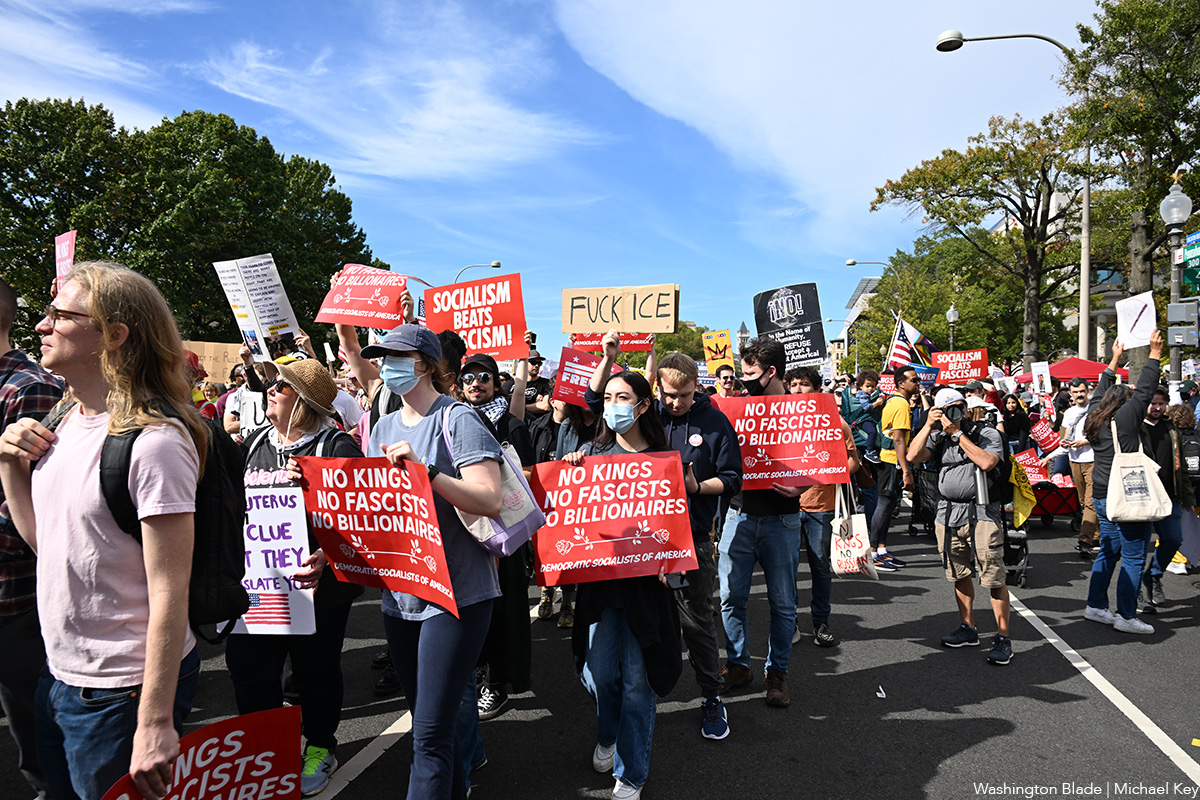
D.C. is the place for the Democratic Socialists of America (DSA). We believe in a District where everyone can live a happy and dignified life. That means housing, healthcare, transit, education, and safety are treated as guarantees rather than privileges reserved for the wealthy and well-connected.
Our endorsed candidates do not hide what they believe. They engage in the democratic process openly, explain their politics clearly, and ask their fellow members to spend long nights and weekends doing the hard work of campaigning. And as the last six years of local elections have shown, including three successful D.C. Council campaigns and the overwhelming passage of Initiative 82, D.C. voters are often a great deal more interested in the endorsement of Metro DC DSA than in the handwringing of the Washington Post editorial board.
That is what makes Peter Rosenstein’s April 2 op-ed in the Blade so revealing. His piece was not just wrong. It was smug, unserious, and politically disconnected from the actual lives of queer people in this city. Worse, he used the platform of our local LGBTQ outlet to disregard Palestinian humanity while scolding democratic socialists for refusing to join him in that moral failure. Put plainly, Rosenstein has been publishing crank op-eds for years, and this one was no exception.
My name is Hayden Gise. I am a transgender, lesbian, Jewish, Democratic Socialist, and I am a union organizer. I do not speak on behalf of the national DSA organization, the local chapter, or any campaign. But I will not sit quietly while Rosenstein wraps himself in the mantle of queer Jewishness to sell the lie that anti-Zionism is antisemitism.
He packages that lie in the same kind of pinkwashing rhetoric used by Benjamin Netanyahu, who mocked solidarity with Palestinians by saying, “Some of these protesters hold up signs proclaiming ‘Gays for Gaza.’ They might as well hold up signs saying ‘Chickens for KFC.’” Rosenstein’s liberal Zionism is not thoughtful, brave, or nuanced. It is just a more polished way of telling Palestinians their lives matter less and telling queer people we should be grateful for the empire so long as it flies a rainbow flag. Which, by the way, is showing itself to be a losing strategy.
The ongoing genocide in Gaza is not some tragic deviation from the history of an otherwise peaceful Israel. The Nakba was the mass expulsion and displacement of Palestinians during Israel’s establishment in 1947–49, when hundreds of thousands were driven from their homes. My Jewish values tell me that is wrong. Rosenstein’s politics treat anti-Zionist Jews like me as illegible. No serious person should treat that accusation as an argument.
But the deeper problem with Rosenstein’s piece is that he has no real understanding of why Democratic Socialism resonates here. For queer people in D.C., Democratic Socialism is not an abstract theory. It is rent that does not consume half your paycheck, a union on your job, childcare you can actually afford, public transit that works, and a city where working-class Black and brown queer people are not displaced so developers and donors can cash in. Queer politics is not only about recognition. It is also about whether ordinary people can afford to survive.
That is why D.C. is fertile ground for Democratic Socialism. In the race for mayor, one of the leading candidates is Kenyan McDuffie, whose campaign already looks like a focus-grouped merger of Andrew Cuomo’s slogan and Donald Trump’s graphic design instincts, backed by big business interests and the super PAC money that follows them. The other has the endorsement of the major labor unions in the District. Who has a cohesive vision to make D.C. more affordable and childcare universal. Who puts people over profit and human rights over political expediency. Our next mayor, and our first Democratic Socialist Mayor: Janeese Lewis George.
D.C. is exactly the kind of city where Democratic Socialism should grow: working-class, queer, tenant-heavy, union-minded, and tired of being told that dignity is too expensive. Which side are you on? I know what side the queer people of the District of Columbia will be on.
Hayden Gise is a union organizer in Washington, D.C.
Peter Rosenstein responds:
I am responding to a column by Hayden Gise who says in her column she is a transgender, lesbian, Jewish, Democratic Socialist, and supports having the Democratic Socialists of America (DSA) in Washington, D.C. She is definitely as entitled to her view on this, as I am to mine. However, I was surprised she clearly felt it important in her column to attack me personally, without even knowing me.
What she didn’t do is respond to the issues in the DSA platform I have a problem with and I asked candidates endorsed by the DSA to respond to. Are they for the abolition of the State of Israel? What is their definition of a Zionist? What is their definition of antisemitism? Will they meet with Zionist organizations? Do they support BDS? The DSA is also clear no person can be a member of a local DSA without being a member of the national organization.
Just so Gisa has a better idea of who I am she should know: I was a teacher and a union member. I worked for the most progressive member of Congress at the time, Bella S. Abzug (D-N.Y.), and supported her when she introduced the Equality Act in 1974, to protect the rights of the LGBTQ community, and have fought for its passage ever since. I have spent a lifetime fighting for civil rights, women’s rights, disability rights, and LGBTQ rights. I have no idea what Hayden Gise’s background is, or what her history of working for the causes she espouses is. But I would be happy to meet with her to find out. She should know, I take a backseat to no one in the work I have done over my life fighting for equality, including economic equality, for all. So, I will not attack her, as I don’t know her, and contrary to her, don’t personally attack people I don’t know much about.
I have, and will continue to attack, what the government of Israel is doing to the Palestinian people, and now to those in Lebanon and Iran. I will also attack the government of my own country, and the felon in the White House, and his sycophants in Congress, for what they are doing to our own people, and people around the world, and will continue to work hard to change things.
However, I will also continue to stand for a two-state solution with the continued existence of the State of Israel, calling for a different government in Israel. I also strongly support the Palestinian people and believe they must have the right to their own free state.

For half a century, the arc of LGBTQ progress in America has bent—slowly, imperfectly—toward justice. We fought for visibility, for legal protections, for the right to marry, serve openly, and live with dignity. Each generation built on the courage of the last.
And yet today, that progress is in peril. Across the country, lawmakers are rolling back protections, demonizing LGBTQ people for political gain, and trying to erase us from public life.
Opponents of our equality are working to erase us from the Constitution, and indeed, public life. In moments like this, based on my personal involvement working with one of the most effective leaders for LGBTQ rights I find myself asking a simple question: What would Jeffrey do?
Jeffrey Montgomery—the focus of a new documentary “America You Kill Me” and a long time Michigan activist and founder of the Triangle Foundation—was never content with quiet advocacy or compromise. He was a rabble-rouser, a strategist, and a relentless thorn in the side of powerful bigots. When politicians tried to marginalize LGBTQ people, Jeffrey didn’t politely ask for scraps. He forced the issue.
Jeffrey Montgomery started with his own determined voice and turned it into a movement. His story is living proof that personal courage can spark national conversations about justice and inclusion.
At a moment when the LGBTQ movement again faces hostility and regression, Jeffrey’s playbook offers lessons we would be wise to remember.
First, Jeffrey understood the importance of punching above our weight. In the early days of LGBTQ organizing, our movement was small, underfunded, and politically marginalized. But Jeffrey refused to let opponents see us that way. Through visibility, media savvy, and relentless organizing, he made LGBTQ advocates appear larger, stronger, and more unified than our numbers alone might suggest.
That perception mattered. Political opponents think twice before attacking a movement that looks organized, energized, and capable of mobilizing public pressure. Jeffrey knew that power is partly about reality—but also about what your opponent believes your power to be.
Second, Jeffrey never compromised on the value of our lives. Movements make compromises all the time. Politics often requires it. But Jeffrey understood that some things are not negotiable. The basic humanity of LGBTQ people is one of them. You can’t put our basic rights on the ballot. You don’t tell people to wait their turn. There are no turns. It’s now. It’s always now.
Too often, our opponents frame equality as something to be bargained over—as if the dignity and safety of queer people were a policy preference rather than a fundamental right. Jeffrey rejected that premise entirely.
You can negotiate strategy. You can negotiate timelines. But you cannot negotiate the worth of human lives.
And finally, Jeffrey understood the power of coalition. Today, one of the most effective tactics used against marginalized communities is division. If LGBTQ people can be fractured—by identity, ideology, generation, or strategy—our collective strength weakens.
Jeffrey instinctively resisted that trap. He worked with civil rights groups, labor leaders, faith communities, civic leaders and allies across movements. He understood that the fight for LGBTQ equality was never isolated from the broader fight for justice.
When opponents try to divide us, the answer is not retreat into smaller camps. The answer is to build broader ones.
If Jeffrey Montgomery were here today, he would not be discouraged by the backlash we are seeing. He would recognize it for what it is: the predictable response of those who feel their power slipping away.
And he would remind us that progress has never been linear. It has always required courage, persistence, and a willingness to challenge power directly.
So, when the moment feels uncertain, when the political winds shift against us, and when our opponents try to make us feel small, the question remains a useful one: What would Jeffrey do?
If history is any guide, the answer would be simple. He would make some noise. And making noise, today, means refusing to let fear, fatigue, or false unity quiet us when our lives are on the line.
Sean Kosofsky was director of policy at the Triangle Foundation.

Report: Grenell wants Russian ambassadorship
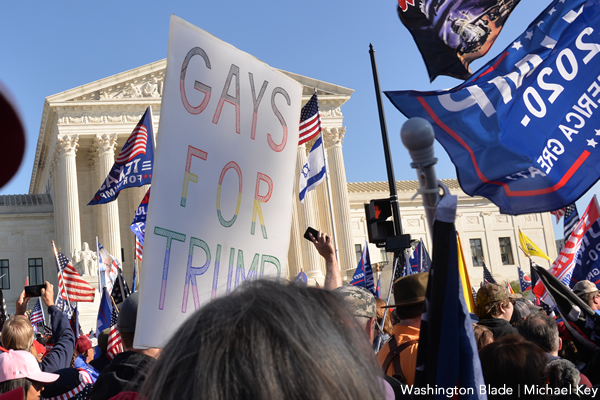
Log Cabin Republicans to honor Scott Presler

Cuba bajo presión y sin respuestas
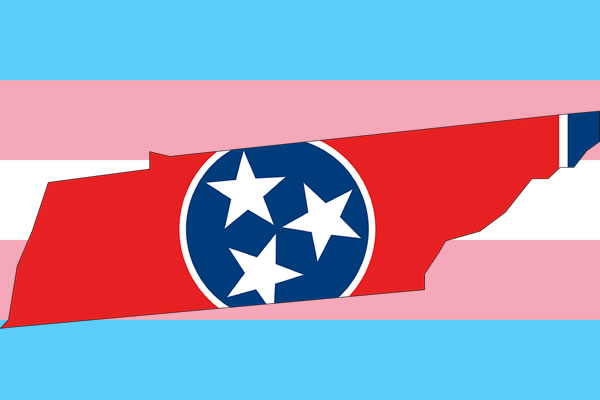
Tenn. lawmakers pass transgender “watch list” bill