World
European court finds Austria’s gay second-parent adoption ban discriminatory
Judges ruled on behalf of a lesbian couple

The European Court of Human Rights (Photo by CherryX via Wikimedia Commons)
The European Court of Human Rights on Tuesday ruled Austria’s ban on second-parent adoption for same-sex couples is discriminatory.
Two women who have been raising a son born to one of them in 1995 submitted an adoption application to a local court in early 2005. The couple also requested the Austria Constitutional Court, which is the country’s highest tribunal, declare the portion of the civil code that prevents the same-sex partner of a parent to adopt his or her child.
The Constitutional Court in June 2005 rejected the couple’s petition, and the local court four months later refused to approve the women’s application. A regional court in Feb. 2006 rejected the women’s appeal.
The couple in April 2007 brought their case to the European Court of Human Rights, which is located in Strasbourg, France, after the Constitutional Court ruled against them. The judges heard it last October.
“This is a very significant and important victory for rainbow families in Europe,” Martin K. I. Christensen, co-chair of ILGA-Europe’s Executive Board. “We hope that this judgment will pave the way towards the removal of the remaining legal barriers for these families in Europe.”
Belgium, the Netherlands, Spain and the United Kingdom are among the European countries that currently allow second-parent adoption for same-sex couples.
The French National Assembly earlier this month approved a bill that would extend both adoption and marriage rights to gays and lesbians. Lawmakers in Luxembourg and Switzerland are currently considering second-parent adoption measures.
“We feel very hopeful that this case will lead to our children’s rights gaining better recognition throughout Europe,” Juha Jämsä, vice president of the Network of European LGBT Families Associations, said in a statement. “No group of children should be discriminated against because of their parents’ sexual orientation, gender identity or gender expression.”
Souhayr Belhassen, president of the International Federation for Human Rights, agreed.
“This is an important step forward towards the application of the principle of non-discrimination based on the sexual orientation and strengthening legal security and certainty for children,” she said. “This ruling should guide not only domestic courts, but also the legislator in European states that have not yet amended their legislation in that direction.”




Belarus
Belarusian lawmakers approve bill to crackdown on LGBTQ rights
Country’s president known as ‘Europe’s last dictator’
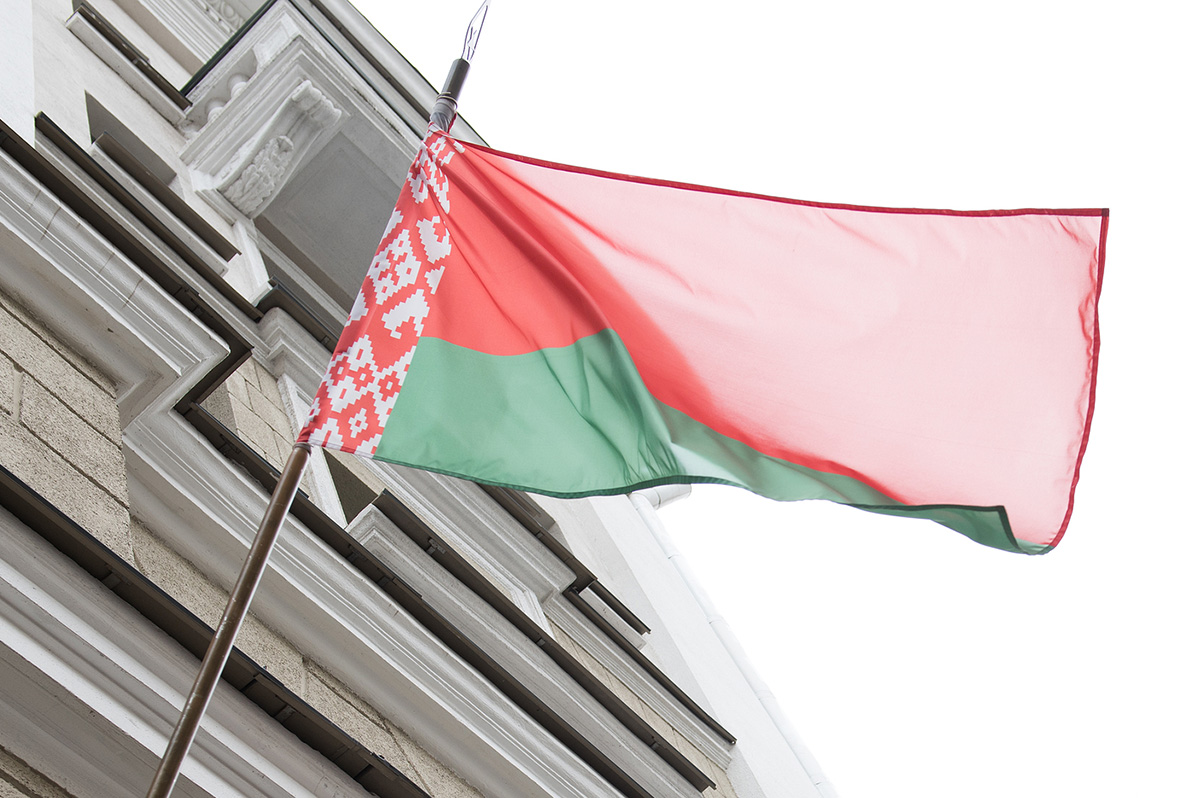
Lawmakers in Belarus on Thursday approved a bill that would allow the government to crack down on LGBTQ advocacy.
The Associated Press notes the bill would punish anyone found guilty of “propaganda of homosexual relations, gender change, refusal to have children, and pedophilia” with fines, community labor, and 15 days in jail.
The House of Representatives, the lower house of the Belarusian National Assembly, last month approved the bill. The Council of the Republic, which is the parliament’s upper chamber, passed it on Thursday.
President Alexander Lukashenko is expected to sign it.
Belarus borders Poland, Ukraine, Russia, Latvia, and Lithuania. Lukashenko — known as “Europe’s last dictator” is a close ally of Russian President Vladimir Putin.
Kazakhstan is among the countries that have enacted Russian-style anti-LGBTQ propaganda laws in recent years.
Vika Biran, a Belarusian LGBTQ activist, is among those arrested during anti-Lukashenko protests that took place in 2020 after he declared victory in the country’s presidential election.
Kenya
Kenyan advocacy groups launch LGBTQ voter mobilization campaign
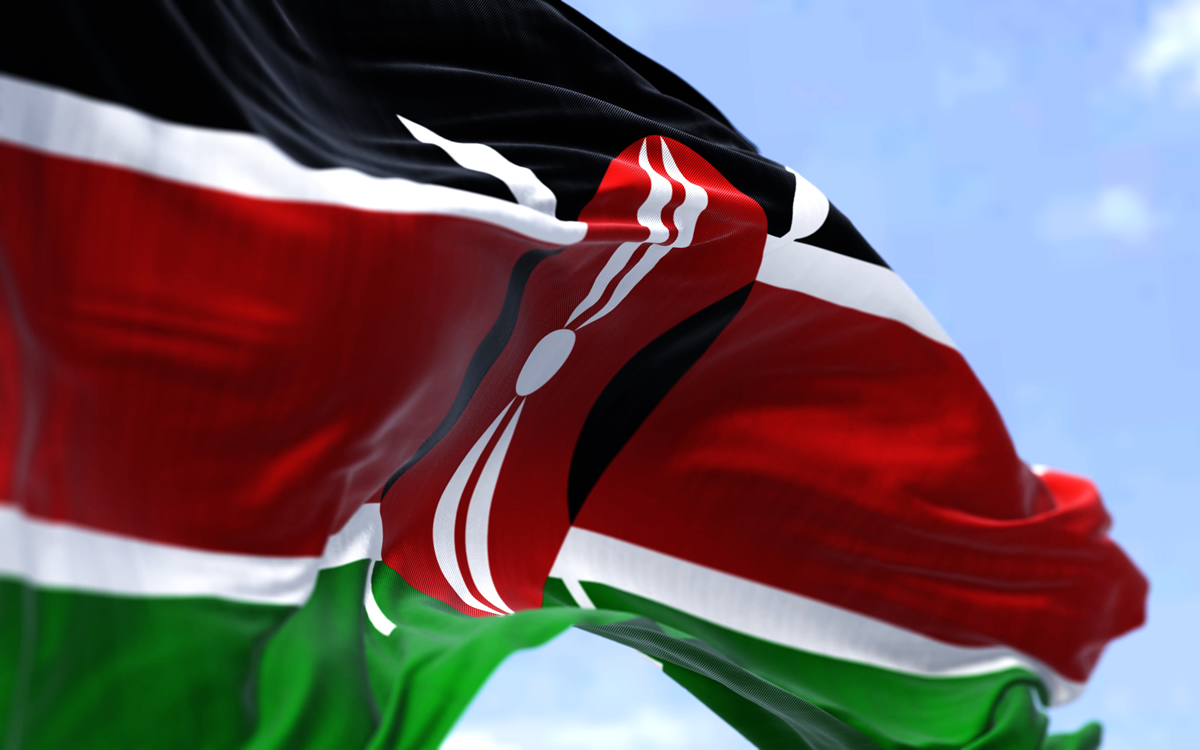
As Kenya prepares for next year’s August general election, local queer rights groups have joined Gen Zers in also mobilizing their members to register as voters.
The groups’ drive began ahead of the electoral commission’s official launch of a one-month nationwide mass voter registration on March 30, targeting 6.5 million new voters to bring the total to more than 28 million.
The groups — led by the Initiative for Equality and Non-Discrimination (INEND) and Galck+ — note that politics is not optional, but rather it is “our responsibility” to use the ballot to put an end to bad leadership and discriminatory laws against them.
“Voting is one of the most powerful ways we exercise our autonomy and remind the State that our human rights are not ‘Western imports’; our struggles for housing, employment, safety, and dignity are fundamentally Kenyan issues,” INEND states.
It reminds queer individuals that the nation entrusts them with an identity card at age 18 as a recognition of their ability to make decisions, follow laws, and take responsibility for the country’s future.
INEND also notes that despite this honor, LGBTQ people get kicked out of their homes due to homophobia, are discriminated against at work, and face violence in public places due to the punitive laws that the same State legislates.
“As queer Kenyans, our vote matters,” INEND states. “Our voice belongs in the democratic and governance conversations, and true democracy includes everyone.”
Some voter mobilization initiatives the queer lobby groups have been using include ‘Queering the Ballot’ Podcasts on civic participation, dubbed ‘Your Vote is Your Future’. The topics explored include how laws shape their lives, the relationship between lived experiences of common citizens, discrimination fatigue, distrust in government systems, and voter apathy.
The groups through the mobilization drive hope to create a queer voting bloc to actively participate in restructuring and reconstructing the existing governance system they argue has been a problem for them. They maintain the queer community navigates a system that was not built for them from its questioning of their right to exist, yet the Kenyan Constitution clearly states that no citizen should be discriminated against based on sexual orientation or gender identity.
The Court of Appeal next month will hear a case challenging the constitutionality of provisions in Kenya’s Penal Code that criminalize consensual same-sex relationships among adults. The appeals court postponed the case after adjourning on Feb. 4, its first substantive hearing since the High Court judgement in 2019.
“Change requires more than pointing fingers. It requires reflection, action, and showing up, especially at the ballot box as LGBTQ Kenyan citizens and declaring that this is our country, our business, and we can no longer watch from the sidelines,” INEND states.
The group notes that they want a governance system that embraces queer people as they go about their daily lives without any form of homophobic discrimination, harassment, or arrests. Queer people are therefore urged to pick the right leaders who listen to them in Kenya’s six elective positions, from the president down to the local government representatives, as their decisions while in power affect them.
“It is very irresponsible for any human being, even around the world, to assume that they don’t have political responsibility. It is easy and sounds fancy to say ‘I don’t like politics,’ but it does not make one good as it makes one abandon their political responsibility as a citizen,” INEND states.
The groups are also concerned with the existing homophobia among Kenyans, especially whenever they join them in street protests against the government’s punitive measures or advocating for change. However, they maintain that the LGBTQ community won’t be left behind despite being marginalized in society, yet they are the most affected group when the government raids people’s pockets for taxes.
“Now we are moving from the margins to the centre of this political conversation early enough to ensure that our community sees the sense because if we live in a country that doesn’t work, we will be the most affected,” INEND states.
INEND, with the National Gay and Lesbian Human Rights Commission and Galck+, last November launched the second Queering the Ballot Campaign and the 2024 Situation Report on queer participation in Kenya’s democracy.
The report surveyed 14 of the country’s 47 local governments, whose key findings affirm that queer Kenyans are not outsiders to democracy but its heartbeat.
“The title ‘Our Vote, Our Future: LGBTQ+ Inclusion in Democratic and Governance Processes’ in Kenya is an ode to the spirit of the queer movement in Kenya; unshaken in the face of adversity, determined in its pursuit of justice, and unrelenting in demand to be seen, heard and counted in democratic and political processes,” reads the report forwarded by former Chief Justice Willy Mutunga.
The report calls on Parliament, the Independent Electoral and Boundaries Commission, the County Assemblies, and every Kenyan to make inclusion not symbolic but systemic.

Vice President JD Vance and his wife, second lady Usha Vance, will visit Hungary next week.
An announcement the White House released on Thursday said the Vances will be in Budapest, the Hungarian capital, from April 7-8.
JD Vance “will hold bilateral meetings with” Hungarian Prime Minister Viktor Orbán. The announcement further indicates the vice president “will also deliver remarks on the rich partnership between the United States and Hungary.”
The Vances will travel to Hungary less than a week before the country’s parliamentary elections take place on April 12.
Orbán, who has been in office since 2010, and his Fidesz-KDNP coalition government have faced widespread criticism over its anti-LGBTQ crackdown.
The Associated Press notes polls indicate Orbán is trailing Péter Magyar and his center-right Tisza party.

Surviving spring cleaning

Iconic Eddie Izzard takes on 23 characters in ‘Hamlet’

How Pepper the courthouse dog helps victims of abuse

Women’s FEST returns to Rehoboth Beach next week

Belarusian lawmakers approve bill to crackdown on LGBTQ rights

Supreme Court rules against Colo. law banning conversion therapy for minors

Senegalese president signs bill that further criminalizes homosexuality

Trans activists gather on National Mall for Transgender Day of Visibility

Md. lawmakers reaffirm legislative priorities

Kristi Noem ‘devastated’ as husband’s alleged fetish spending surfaces
-

 U.S. Supreme Court5 days ago
Supreme Court rules against Colo. law banning conversion therapy for minors
-
Senegal5 days ago
Senegalese president signs bill that further criminalizes homosexuality
-
District of Columbia5 days ago
Trans activists gather on National Mall for Transgender Day of Visibility
-
Maryland5 days ago
Md. lawmakers reaffirm legislative priorities