Arts & Entertainment
Visiting virtuoso
Organist Cameron Carpenter makes D.C.-area debut next weekend

Cameron Carpenter, organist
Music Center at Strathmore
5301 Tucker Lane
North Bethesda, MD
April 12
8 p.m.
$25-40
301-581-5100
Strathmore.org
Cameroncarpenter.com

Organist Cameron Carpenter. (Photo by Heiko Laschitzki; courtesy Bucklesweet Media)
Organist Cameron Carpenter is a tangle of apparent contradictions.
On one hand, he’s made a slightly daring fashion sensibility a central component of his stage persona, yet in stage speech (banter is way too light a term for it) and conversation, he comes off as deadly earnest. But perhaps this says more about us — why do we tend to think that mohawks and sequins might indicate a less-than-intellectual musical mind?
Perhaps because he takes — in some ways — a rock star approach to being a serious (Juilliard-trained) classical musician and seems to delight in unorthodox and even iconoclastic approaches (his transcriptions of piano and orchestral works to the organ have elicited everything from critical awe to “is-this-a-joke?” reactions), Carpenter is a polarizing figure.
But get to know the queer, Berlin-based organist, follow his career over several years and play devil’s advocate with him — as we’ve done here — and you realize the creativity and talent he brings to it all far supercedes the reductions of dozens of articles and TV profiles around the world that have reduced him to little more than a “bad boy” or “modern-day Liberace.” Yes, there’s grumbling in more staid organ-world circles (one often notices a trend of rather bemused expressions when his name is uttered), but try to think of young organists who are sparking the kind of raves and career he has managed, and the list gets really, really short. He makes his Washington-area debut April 12 at the Strathmore.
Carpenter, in Georgia with a friend who’s having him give a private recital at a pipe organ this person has installed in his house, says he feels little pressure generally speaking. We chatted for about an hour in mid-March by phone.
“I am conscious of it at times and I sometimes have the sudden realization of deadlines coming up but though this may sound supremely arrogant, when I later manage to pull it off, I realize I should never have had any self doubt. I think this theory is sound … I try to stay away from getting too caught up in pressure and luckily I don’t get stage fright.”
Carpenter remains — a recurring theme — frustrated by constantly having to adapt to the organs in various concert halls around the world. Purists are skeptical, but Carpenter expects a touring organ he’s been working on for several years will be “built and launched” next year.
Of the grand tradition of grand organ building, Carpenter says what he’s trying to do doesn’t diminish those achievements.
“It’s not how many rooms full of wooden pipes there are or how many degrees someone has or how many works one has written for the organ,” he says. “It’s only interesting in terms of human emotion and how it makes us feel to be alive.”
He says constantly having to get accustomed to new organs has become maddening.
“The closest analogy I can come up with is if you made a film and every time you screened it, you had to recut the edit. There’s a staggering amount of work that goes into each minute of film. It would be almost unsustainable. That’s why touring for me is so very hard.”
Although it’s highly likely to change — Carpenter has been known to have programs printed, then play nothing listed on them — he says his Strathmore performance may contain an organ adaptation of Leonard Bernstein’s “Candide” Overture, perhaps some Marcel Dupre variations, a reimagining of a scherzo by Tchaikovsky and “maybe” some Liszt Transcendental Etudes.
“It all depends on the organ, which is as yet unknown,” he says.
Carpenter says he can’t relay details just yet, but an announcement about a new recording deal is imminent. His last album was 2010’s “Cameron Live!” release (a CD/DVD double album). A feature-length documentary on his life and work is also “very much in the planning stages,” he says.
“I don’t really see myself as someday having a recorded legacy of 70 CDs, but I do think it would be great if each of them … is something really personal and strong. … I’ve also wanted to wait until the right recording instrument would be available so I’ve been focusing most of my energy on that for now. I don’t have any particular compulsion to record just for its own sake.”
He says he appreciates media coverage immensely so objecting to superficial comparisons of performers from bygone eras isn’t necessarily a bad thing.
“It is kind of knee-jerk and wildly reductive, but they can’t be blamed for trying to sell tickets,” he says. “I wouldn’t mind if I never hear the phrase ‘bad boy of the organ’ ever again but it’s a sad truism I guess.”
And of the Mohawk he’s been sporting of late, Carpenter says it’s here to stay at least for now.
“I think I’ve settled on something that hits a visual balance of elegance and style. It’s also the haircut of a warrior which is not inappropriate.”





Photos
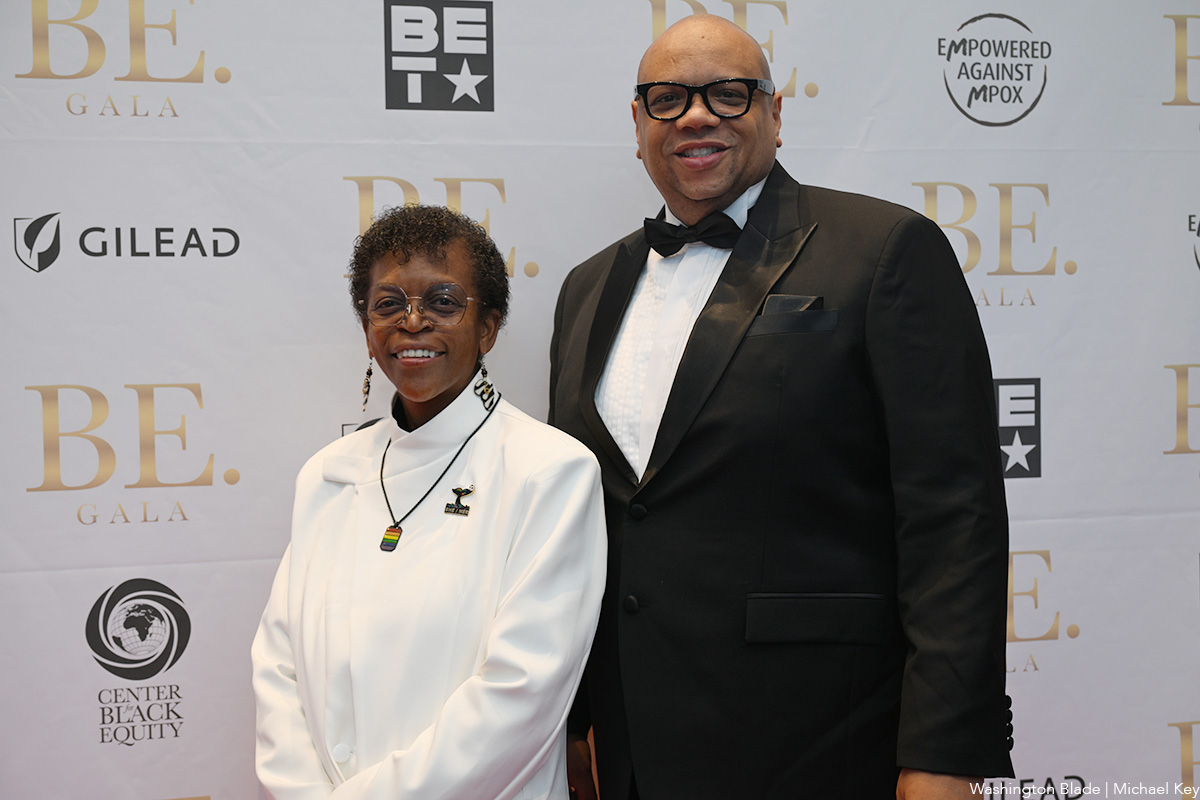
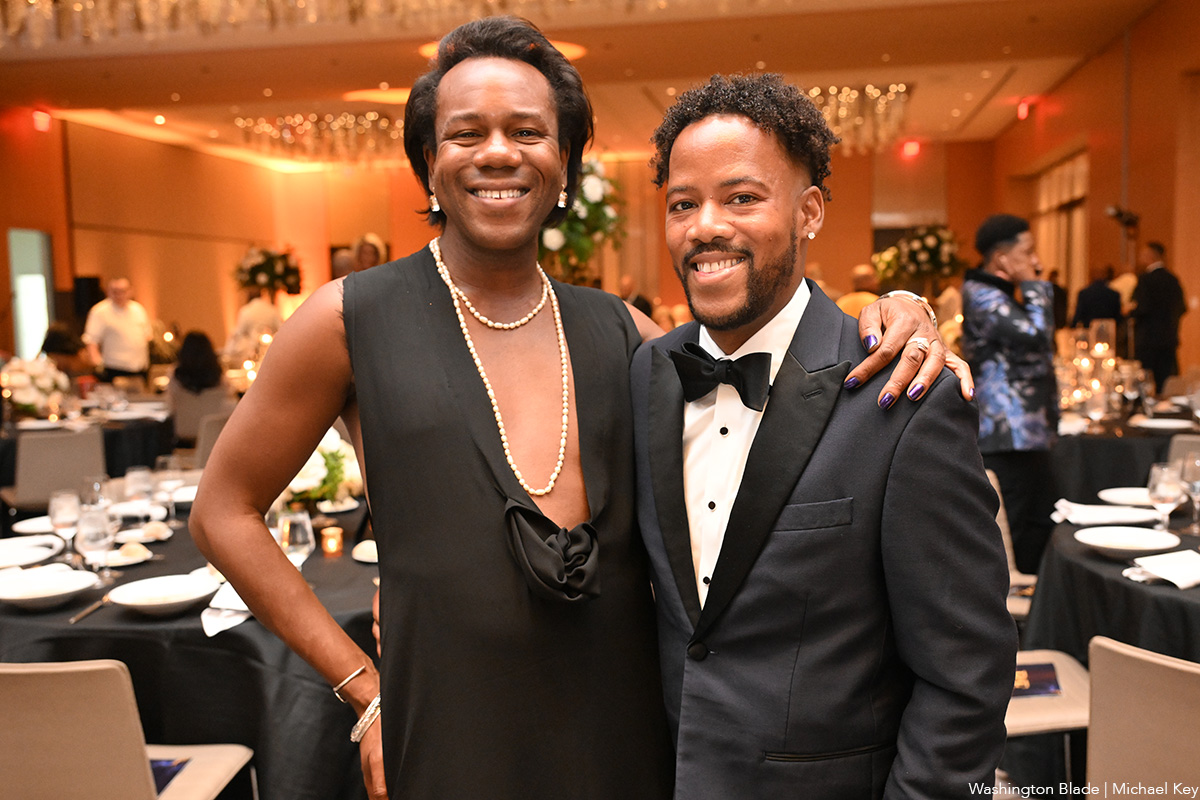
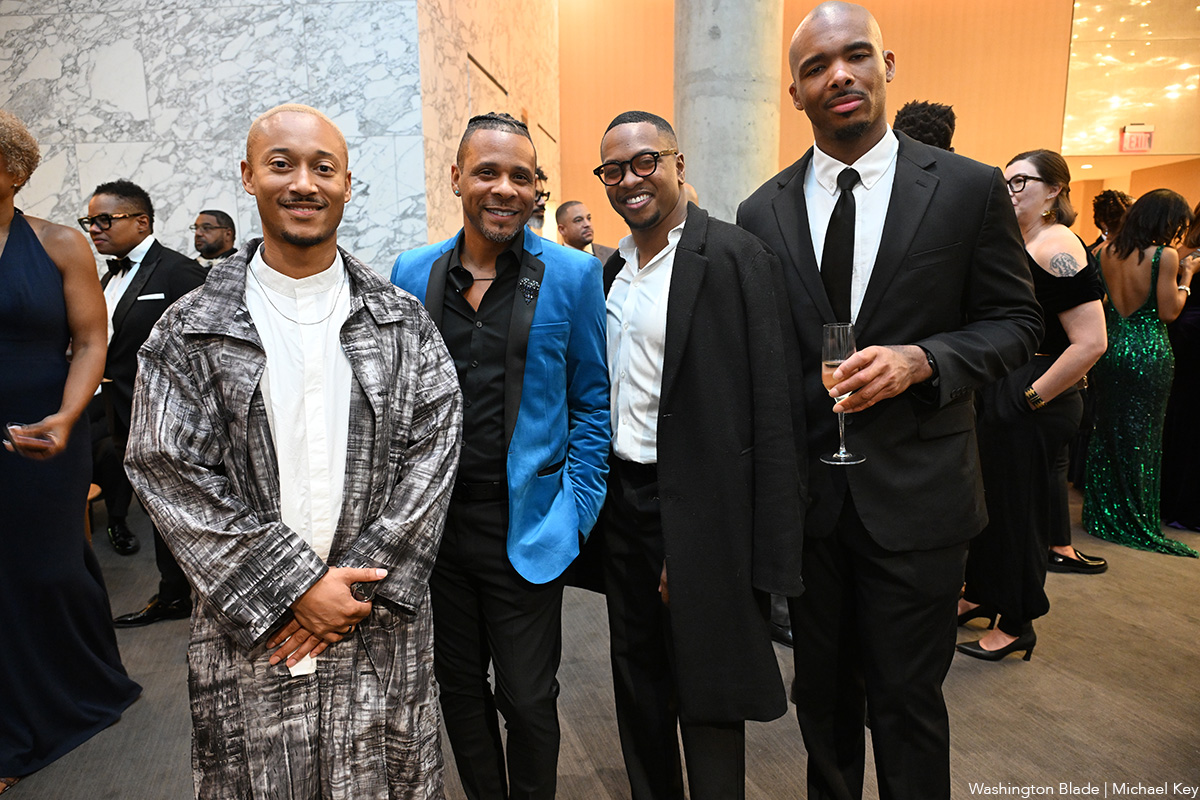
Center for Black Equity honors leaders, activists at BE. Gala
Miyake-Mugler, Oakes co-host annual awards ceremony

The Center for Black Equity held its annual BE. Gala at Conrad Washington, D.C. on Saturday, Oct. 5. Lolita Leopard Miyake-Mugler and Anthony Oakes co-hosted the awards ceremony.
Honorees included journalist and producer Justin Stewart; nonprofit leader Nikki Alexander; HIV advocate Marlene McNeese; the nonprofit organization FreeLux Project; actress Monroe Alise; public health advocate Tori Cooper; Manassas Park Vice Mayor Darryl G. Moore; Rev. Dr. Carmarion D. Anderson; Bishop Steven Sawyer; government relations professional Courtney Snowden; Senior Deputy Director of HAHSTA at D.C. Health, Clover Barnes; and Texas state Rep. Venton C. Jones.
The event was sponsored by Gilead.
(Washington Blade photos by Michael Key)



























Books
In ‘The Lost Brontë,’ a complicated lie can lead to danger
New book features sweetly romantic girl-meets-girl twist

‘The Lost Brontë’
By Catherine Friend
c.2026, Bywater Books
$22.95/335 pages
Mom always said to tell the truth.
One lie leads to another and another and you have to remember them all until pretty soon, you’re caught. Fibs are hard, mistruths are messy, even little white social lies can destroy trust. Worst of all, as in the new novel, “The Lost Brontë” by Catherine Friend, a complicated lie can lead to danger.

Though Lilianne Loxley was very young when she lost her parents, she understood that her uncle didn’t really want her. As time passed, though, Lily made herself useful to Uncle, writing and signing letters for him and she became a good companion, helping him with his collection of Brontë memorabilia. Uncle was a keen enthusiast.
She had no idea that his obsession was out of control and he was deeply in arrears. The day Lily learned of his debt was the day she learned that he’d agreed to send her to his debtor’s home to work off the money owed.
It was so sudden. One minute, Lily was at Loxley House, happy and loved by Uncle’s staff … and five hours later, she was at Crag Thorn Manor, home of Lord Bexton, who informed her that she’d be working on his ledgers – work that seemed routine, but Lily tackled it.
Uncle always did say she was headstrong.
But would headstrong be enough to survive, when she was restricted from most of the Manor, when she was forced to dine with Brexton and his slimy friend, or – the worst! – when Brexton told Lily that her next task was to forge a letter from Emily Brontë? And then an entire manuscript?
Lily struggled to do what was right. She had to get Uncle out of debt but this last order horrified her. Did she dare refuse Brexton’s orders and commit a crime? It was unthinkable!
The only brightness in the whole situation was Wren, the ladies’ maid assigned to Lily’s room. Wren was adorable with freckles and the sweetest smile. But with everything else happening at Crag Thorn Manner, could Lily act upon her feelings?
This time of year, you may come to crave dark, spooky stories, and “The Last Brontë” fits those needs perfectly with its Gothic deliciousness. Think: Daphne du Maurier-type, stormy-night squirms with a dangerously chaste, sweetly romantic girl-meets-girl twist for fun.
If it’s been awhile since you’ve read a Gothic novel, you’re in for a nice reminder of why you love them here. You can almost tick off the must-haves: a novel like this is nothing without a foreboding stone manor with damp walls; stone steps to a dank basement; a mysterious portrait; and a nearby bog, and author Catherine Friend gives readers every one of them. You’d be disappointed if there was no ghost, wouldn’t you? Ha. You can practically feel the cold blow through the attic, right? Yeah, it’s that kind of book.
If you’re a fan of the Brontës, you’ll like this novel. If you love Gothic mysteries or Victorian romances, ditto. “The Lost Brontë” is good, no lie.
The Blade may receive commissions from qualifying purchases made via this post.
Out & About
CAMP Rehoboth Block Party returns Oct. 18
Expect performances, vendors and more at annual celebration

CAMP Rehoboth will host its annual Block Party celebration on Sunday, Oct.18 at 11 a.m. on the second block of Baltimore Avenue in downtown Rehoboth Beach.
CAMP Rehoboth invites all community members to join in the festivities and to expect magnificent performances and dozens of vendors, including artists, craftspeople, non-profits, businesses, and more.
The event started in 2015 in celebration of CAMP Rehoboth’s 25th anniversary. This year, attendees can expect to shop sea glass art, pottery, jewelry, Pride merch, body care, clothing, and learn more about local non-profit causes and businesses.
Attendance is free. For more details, visit CAMP Rehoboth’s website.

Center for Black Equity honors leaders, activists at BE. Gala

In ‘The Lost Brontë,’ a complicated lie can lead to danger

CAMP Rehoboth Block Party returns Oct. 18

Essential queer horror classics for Halloween

Solidarity beyond the parade: the actual cost of Pride

10 years later, we still can’t shake Barry Jenkins’s ‘Moonlight’

‘Some Like It Hot’ a wild ride at renovated Bernard Family Theatre

D.C.’s LGBTQ homeless facilities face possible hit from Trump funding cuts

Trump uses anti-trans slur against Democratic Senate candidate

U.S. int’l trade negotiator, consultant James Bedore dies at 82
-

 Movies5 days ago
10 years later, we still can’t shake Barry Jenkins’s ‘Moonlight’
-
Theater5 days ago
‘Some Like It Hot’ a wild ride at renovated Bernard Family Theatre
-
District of Columbia5 days ago
D.C.’s LGBTQ homeless facilities face possible hit from Trump funding cuts
-
2026 Midterm Elections5 days ago
Trump uses anti-trans slur against Democratic Senate candidate