Politics
Gay black judicial nominee held up in the Senate
Are Florida’s senators delaying the process?
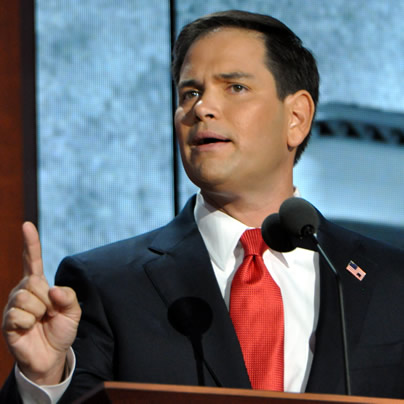
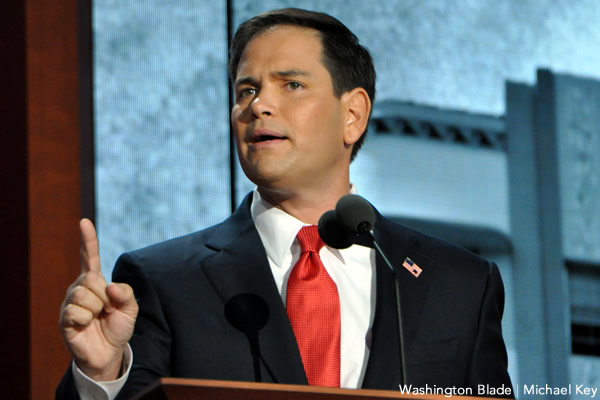
Sen. Marco Rubio is holding up the nomination of a judicial nominee who’d be the first openly gay black male to serve on the federal bench. (Blade file photo by Michael Key).
More than eight months after President Obama first made the nomination, the process for confirming the first openly gay black male to sit on the federal bench appears to have stalled amid finger pointing in the Senate over the reason why.
The confirmation of William Thomas, who was named for a seat on the U.S. District Court for the Southern District of Florida, hasn’t yet passed the first step in the process, which is having the home senators in his state — Sens. Bill Nelson (D-Fla.) and Marco Rubio (R-Fla.) — return the “blue slips” for the nomination.
In effect, these senators are placing a hold on the nomination, even though both lawmakers had recommended Thomas after he made it through Florida’s Federal Judicial Nominating Commission, which makes recommendations to the state’s senators.
Meanwhile, the Thomas nomination has become entangled in a dispute between the Congressional Black Caucus and Rubio over the hold he’s placed on Thomas as well as Brian Davis, another black judicial nominee who was nominated for a seat on the U.S. District Court for Middle District of Florida.
During a Congressional Black Caucus news conference on Wednesday, Rep. Alcee Hastings (D-Fla.) fumed over Rubio’s decision to hold up the Thomas nomination, according to The Huffington Post.
“I know this much: William Thomas was here before Marco Rubio’s family came here,” Hastings said. “It would seem to me that Marco Rubio could pick up the telephone and call me and ask me a little bit more about William Thomas if he needs to know something more about him.”
Obama first nominated Thomas for the seat in November and renominated him to the bench at the start of the 113th Congress as part of a group of 33 nominations. But Thomas hasn’t been yet confirmed, even though three other gay nominees — Pamela Ki Mai Chen, Michael McShane and Nitza Quiñones Alejandro — have since that time received Senate approval.
Rubio’s office didn’t immediately respond to the Washington Blade’s request for comment. But according to the Tampa Bay Times, Rubio has concerns about Thomas’s involvement in a controversial case in which a man was given a sentence of just 364 days in jail for the hit-and-run death of a cyclist.
As for why Nelson continues to withhold the blue slips for the nomination, the reasoning seems to be different. Ryan Brown, a Nelson spokesperson pointed to the Senate Judiciary Committee when asked why the Florida senator hasn’t yet returned the blue slips for the nominee.
“Sen. Nelson submitted Judge William Thomas’s name to the president,” Brown said. “And we are now waiting on the results of a background investigation being done by the Judiciary Committee.”
It’s up to the senator in each state to determine when it’s appropriate to submit a blue slip. Brown added it’s customary for Nelson to wait until the background investigation before he submits his blue slips.
Jessica Brady, a Senate Judiciary Committee spokesperson, said she couldn’t provide much information about the background investigation, but added Nelson “has been advised” about the nominations of both Thomas and Davis.
“A background review occurs for all nominees by majority and minority staff,” Brady said. “This is a separate process than the blue slip process, which is the responsibility of home state senators. Sen. Nelson has been briefed by Judiciary Committee staff about both nominations. The background review is confidential, and so I cannot provide any guidance on that.”
Thomas has experience both as a defense attorney and as a judge. He’s served as a Circuit Judge in Florida’s 11th Judicial Circuit since 2005, where he has presided over both civil and criminal matters. Previously, he was an assistant federal public defender in the Southern District of Florida and represented indigent clients in federal criminal cases.
The Thomas nomination was facilitated through the Presidential Appointment Project, an initiative led by the Gay & Lesbian Victory Fund to help qualified LGBT individuals receive appointments in the federal government.
Denis Dison, a spokesperson for the Victory Fund, said the time has come for the Senate to move forward with the Thomas nomination.
“Judge Thomas was nominated by the president, through a process endorsed by Florida’s senators, because he is well-qualified,” Dison said. “He deserves a confirmation hearing.”
The White House didn’t respond to a request to comment on the hold up of the Thomas nomination — even though it’s Obama’s nominee.
Although Thomas would be the first openly gay black male to serve on the federal judiciary, U.S. District Judge Deborah Batts — who was appointed by President Clinton in 1994 — is black and a lesbian.



Congress
EXCLUSIVE: Pelosi reflects on four decades of LGBTQ advocacy
Blade spoke with House speaker emerita before her 2027 retirement
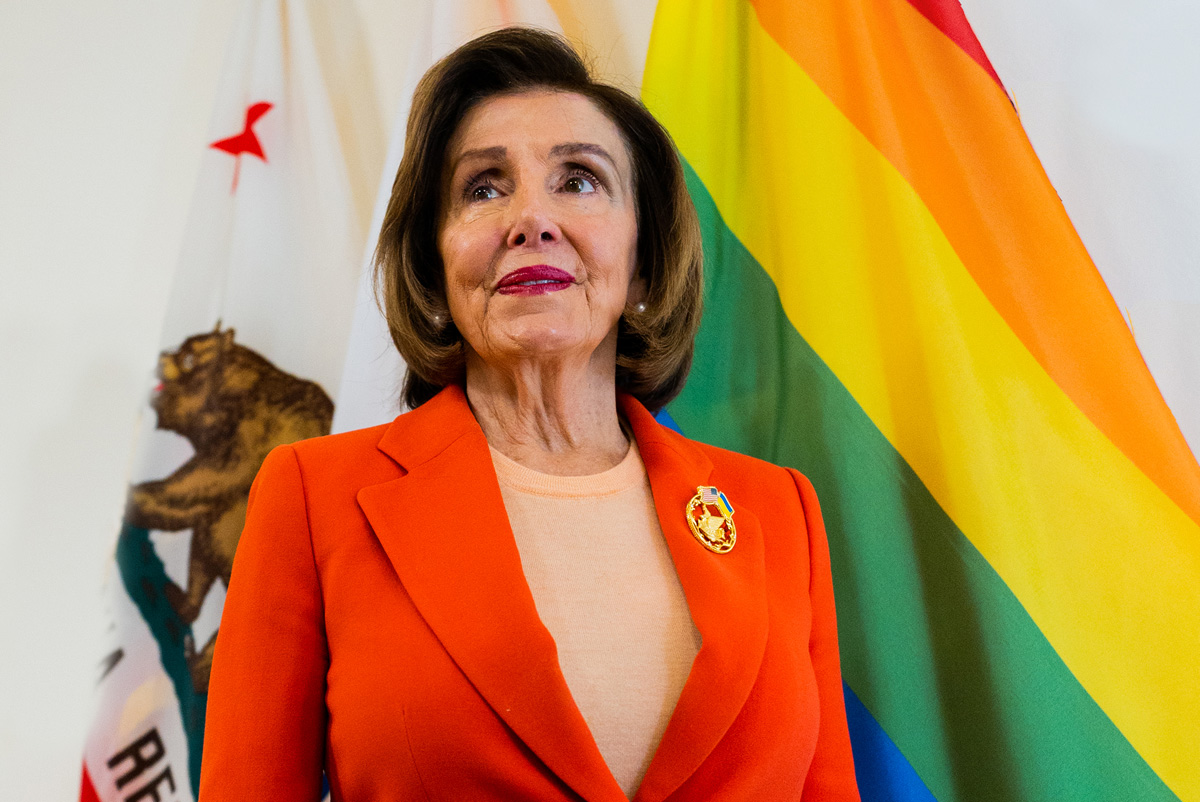
For nearly four decades, House Speaker Emerita Nancy Pelosi (D-Calif.) has been one of the most influential champions of LGBTQ rights in American politics.
The former U.S. House of Representatives speaker helped lead landmark LGBTQ legislation through Congress; including the repeal of “Don’t Ask, Don’t Tell,” passage of the Matthew Shepard and James Byrd Jr. Hate Crimes Prevention Act, and multiple House approvals of the Equality Act. She also played a central role in congressional efforts to combat HIV/AIDS and oppose restrictions targeting transgender Americans.
In an exclusive interview with the Washington Blade; Pelosi reflected on those accomplishments, the role grassroots activists played in achieving them, and the ongoing challenges facing the LGBTQ community during President Donald Trump’s second term.
When asked which LGBTQ-related achievement she is most proud of, Pelosi pointed not to a specific bill, but to the movement that made those victories possible — and the loud, strong-willed grassroots believers in a better America than the one they had found themselves in.
“Anything that we accomplished, whether it was fighting HIV and AIDS, ending discrimination, passing hate crimes legislation, or ending ‘Don’t Ask, Don’t Tell,’ would never have happened without outside mobilization,” Pelosi said, expressing gratitude for those who saw a problem and dared to speak its solution into existence. “Our inside maneuvering was important, but we couldn’t do our best job without the community. Every chance I get, I thank them for their patriotism because they make democracy function.”
Pelosi explained that her initial LGBTQ advocacy efforts were directly shaped by the LGBTQ community in the San Francisco area and by the HIV/AIDS epidemic that decimated the community during the 1980s.
The former speaker recalled arriving in Congress in 1987 and making HIV/AIDS a centerpiece of her agenda from the start.
“My first words on the House floor were that I had come here to fight HIV and AIDS,” Pelosi told the Blade. “People asked why I would make that my first statement. To me, that reaction showed just how much discrimination still existed and how much work remained to be done.”
She continued, explaining that advocating for San Francisco — with its once-vibrant LGBTQ community that was dying more with every passing day — became a joint effort between community-driven activists and government officials trying to manage and mitigate the crisis that claimed more American lives than the Vietnam War.
“When we were trying to bring the Democratic convention to San Francisco, people were saying they couldn’t come because of HIV/AIDS,” she said. “What emerged from that moment was community-based advocacy, community-based care, prevention, and research. Every success we had sprang from the community itself.”
Multiple times during the interview, Pelosi returned to those four pillars of the effort to combat HIV/AIDS: community-based advocacy, community-based care, prevention, and research.
She argued that the epidemic, despite its horrific toll, ultimately helped many Americans better understand and accept LGBTQ people in a society that had not been as tolerant.
“When families learned that a son or daughter was HIV-positive and gay, barriers started to break down,” Pelosi said. “Love prevailed in many cases. I actually give HIV/AIDS some credit for the acceptance of marriage equality because people began seeing these issues through the lens of family.”
Pelosi also highlighted the passage of federal hate crimes legislation as one of her — and the LGBTQ rights movement’s — most defining victories.
“Matthew Shepard’s mother came and spoke to members. (The late-former Massachusetts Congressman) Barney Frank told his story. We had to convince people that leadership means leading, not following,” Pelosi said. “That legislation was incredibly important because it forced people to confront the real consequences of hate.”
She said she refused pressure to remove transgender protections from the bill, despite promises from others that it would pass more easily if lawmakers only protected what they viewed as the least vulnerable groups.
“People told me, ‘You can pass this in a minute if you take out trans,'” Pelosi recalled. “I said, ‘I won’t pass it in 100 years because I’m not ever taking out trans.’ We passed it with trans protections included.”
The Blade also asked Pelosi about the stalled passage of the Equality Act — which would add federal protections for LGBTQ people through amendments to the Civil Rights Act of 1964 that would explicitly prohibit discrimination based on sex, sexual orientation, and gender identity. She expressed confidence that the Equality Act will eventually become law, though she acknowledged the political obstacles that have persisted since its creation in the 1970s.
In her office, among bowls of Ghirardelli chocolates and prints depicting national parks in her district, a large photo hangs on the wall showing Pelosi standing at the House rostrum with LGBTQ advocates beneath the words “#EQUALITY ACT” — photographic proof that she had already passed the landmark legislation in the House, if only the U.S. Senate had agreed.
“We passed it in the House again and again,” she said. “The Senate is more difficult because of the procedural hurdles, but we’re not stopping. We’ll stick with it until the job is done.”
The longtime Democratic leader also credited civil rights icon John Lewis with helping build support for the legislation when others argued the growing LGBTQ rights movement was, as one California Democratic legislator put it, “too fast, too much, too soon.”
“There were people who worried about opening up the Civil Rights Act to include LGBTQ protections,” Pelosi said. “John Lewis told us, ‘We can’t wait. We must do it now.’ He was instrumental in helping move that effort forward.”
Much of the conversation eventually turned to the Trump-Vance administration’s policies affecting trans Americans.
Pelosi argued that Executive Order 14183, “Prioritizing Military Excellence and Readiness,” which puts restrictions on trans military service weakens national security, and efforts to limit gender-affirming healthcare for trans children with the Executive Order “Protecting Children From Chemical and Surgical Mutilation” ignores the needs of families.
“When they diminish the ability of transgender people to serve in the military, they diminish our national security,” she said. “At the same time, families are being told they can’t get the care their children need. That is deeply troubling.”
She recounted hearing testimony from conservative parents whose views changed after their own children came out as trans — a transformation she said changed hearts and minds, even among people she had once seen wearing red MAGA hats.
“One mother told us she was a Trump supporter until her child needed medical care and her state wouldn’t allow it,” Pelosi said. “She said she had to leave Texas to care for her child. Hearing stories like that reminds people that these are families, not political talking points.”
Pelosi described efforts to restrict healthcare access for trans youth as both discriminatory and morally wrong.
“Some of the things they’re doing by refusing to support clinics that meet the needs of trans kids are sinful,” she said. “I’m a religious person, and I believe every child is God’s child. We have a responsibility to meet their needs.”
Asked what she would say to people who oppose LGBTQ equality, Pelosi returned to a theme that surfaced throughout the interview: love.
“I’ve seen families completely transform when these issues become personal,” she said. “People who once opposed HIV/AIDS funding became advocates when someone they loved was affected. Love has a way of changing hearts.”
As for how she hopes history remembers her role in the movement, Pelosi again shifted attention away from herself and toward activists.
“People were dying, and the community demanded action,” she said. “I hope people remember that the progress we made came from the very vocal participation of LGBTQ people and their allies. I was honored that they trusted me to carry that fight in Congress.”
Pelosi, who has announced she will not seek reelection and plans to retire from the House in 2027, said the struggle for equality is far from over.
“Every major expansion of rights in this country has been a long struggle,” she said. “We’ve laid a foundation, but there is still more work to do. We still have to pass the Equality Act.”
When asked what she credits for the change in public understanding and the growth of the LGBTQ movement, she said respect lies at its foundation.
“This month, Pride Month, people would say to me, ‘It’s easy for you because you’re from San Francisco, and San Francisco is so tolerant,'” Pelosi said. “And I would say to them, ‘Tolerant to me is a condescending word.’ Tolerance is a good word writ large, but in terms of the subject, it’s not about tolerance — it’s about respect. Respect is what made it almost inevitable that I would have nothing but enthusiasm for what I was doing. We don’t just respect — we take pride in our community. But that pride springs from respect that people have to have for everything, including the differences that they see.”
Congress
Ogles faces bipartisan backlash over anti-gay social media post
Tenn. congressman blamed the comment on staffer
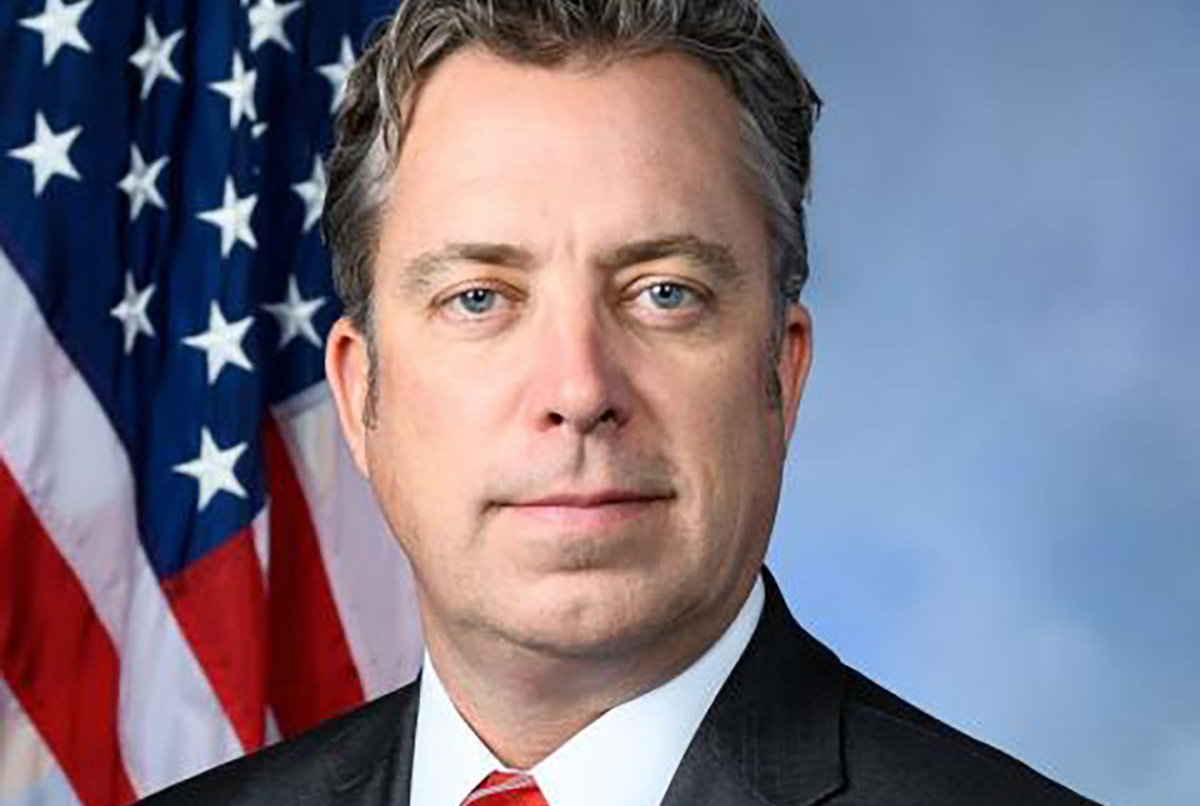
U.S. Rep. Andy Ogles (R-Tenn.), who represents Tennessee’s 5th Congressional District, is facing backlash from LGBTQ advocates and fellow Republicans after a social media post declared that “homosexuality has no place in America.”
“Homosexuality has no place in America. Happy Nuclear Family Month,” the congressman wrote in a post on X that was later deleted.
According to the Williams Institute at UCLA School of Law, an estimated 6.3 percent of U.S. adults identify as LGBTQ.
Following widespread criticism, Ogles removed the post and blamed it on a staff member.
“The post was stupid, hurtful and a complete distraction from my America First focus. The employee has been reprimanded,” Ogles said in a statement.
The Washington Blade reached out to Ogles’s office for comment but did not receive a response by press time.
Among those condemning the message was U.S. Rep. Mike Lawler (R-N.Y.), who called it “absolutely idiotic” in a social media post.
“Homosexuality exists. In America,” Lawler wrote on X. “In fact, Andy, you have family, friends, neighbors, colleagues, and constituents who are gay and lesbian. It doesn’t make them less than or somehow unworthy of being an American.”
U.S. Sen. Ted Cruz (R-Texas) also criticized Ogles’s remarks.
“For all of recorded history, homosexuals have been a part of humanity,” Cruz told TMZ DC. “I think the behavior of consenting adults is their business.”
Chris Sanders, the executive director for the Tennessee Equality Project and Tennessee Equality Project Foundation provided a statement to the Blade about Ogles’s comment.
“The Tennessee Nuclear Family Month resolution has really backfired on conservatives by ensnaring Congressman Ogles in scandal. He used the resolution as a pretext to say that our community doesn’t belong in America, resulting in incredible backlash from across the partisan divide,” Sanders said. “It is a good opportunity for him to pause and reflect on whether it’s time for him to resign. Fighting one’s own constituents is not the purpose of serving in Congress.”
Human Rights Campaign Senior Press Secretary Jarred Keller provided a statement to the Blade regarding Ogles’s comments.
“LGBTQ+ people are woven into the fabric of America, and any politician who questions that is severely out of touch with reality. When so many people are worried about whether they can afford gas to get to work or groceries for their families, the last thing we need is right-wing Republicans targeting marginalized communities with hateful attacks,” Keller said. “Representative Ogles should spend less time attacking LGBTQ+ people and start addressing the issues that actually matter, because last I checked, our community isn’t the reason families are struggling to make ends meet.”
The controversy comes as Tennessee continues to advance legislation affecting LGBTQ residents. The state already has several laws on the books that LGBTQ advocates have criticized, including the Adult Entertainment Act, enacted in 2023, which restricts certain “adult cabaret performances.”
Lawmakers have also introduced additional measures this legislative session, including the “No Pride Flag or Month Act,” which would prohibit state employees, volunteers, and agents from displaying Pride flags or participating in Pride observances while acting in an official capacity.
Another proposal, the “Banning Bostock Act” would seek to limit the application of state anti-discrimination protections based on the U.S. Supreme Court’s decision in Bostock v. Clayton County. Tennessee lawmakers have also passed other measures restricting LGBTQ rights and access to gender-affirming health care.
Congress
10 HIV/AIDS activists arrested on Capitol Hill
Protesters interrupted Secretary of State Marco Rubio during hearing

U.S. Capitol Police on Tuesday arrested 10 HIV/AIDS activists who protested Secretary of State Marco Rubio during a Senate Foreign Relations Committee hearing.
The activists from Housing Works, Health GAP, the Treatment Action Group, and ACT UP held signs and chanted “Rubio’s Cuts Kill People with AIDS, PEPFAR Saves Lives!” before officers removed them from Dirksen Senate Office Building room where the hearing took place.
A media advisory the Washington Blade received before the protest noted “mounting evidence of Rubio’s attempts to sabotage PEPFAR (the President’s Emergency Plan for AIDS Relief, U.S. bilateral AIDS program) and vital global health programs.” The press release specifically highlighted three specific points:
• Eliminating Centers for Disease Control’s (CDC) lifesaving PEPFAR programs, which currently support approximately 12 million people on HIV treatment across 51 countries. Instead, Rubio intends to dismantle CDC’s current PEPFAR role and stamp out their global footprint in disease outbreak and surveillance for pandemics beyond HIV. Experts including eight former CDC Directors under Republican and Democratic administrations have spoken out against this effort to dismantle PEPFAR. Recent PEPFAR data showed sharp decreases in the numbers of people newly tested, diagnosed, and treated for HIV, but these data would have been even worse if not for CDC’s PEPFAR programs.
• Withholding $2 billion in Congressionally appropriated FY25 funding, including $330 million to combat HIV, $250 million to fight malaria, $320 million for maternal and child health programs, and nearly $650 million in global health security programs.
• Negotiating secret bilateral deals blackmailing African governments by demanding access to critical mineral wealth as a condition of access to HIV treatment and prevention funding.
The groups have staged several protests against the Trump-Vance administration’s HIV/AIDS policies since it took office.
Rubio on Jan. 28, 2025, issued a waiver that allowed PEPFAR and other “life-saving humanitarian assistance” programs to continue to operate during a freeze on nearly all U.S. foreign aid spending. HIV/AIDS service providers around the world with whom the Blade has spoken say PEPFAR cuts and the loss of funding from the U.S. Agency for International Development, which officially closed on July 1, 2025, has severely impacted their work.
The State Department last September announced PEPFAR will distribute lenacapavir in countries with high prevalence rates.
The New York Times last summer reported Vought “apportioned” only $2.9 billion of $6 billion that Congress set aside for PEPFAR for fiscal year 2025. (PEPFAR in the coming fiscal year will use funds allocated in fiscal year 2024.)
Bipartisan opposition in the U.S. Senate prompted the Trump-Vance administration last July withdraw a proposal to cut $400 million from PEPFAR’s budget. Vought a few weeks later said he would use a “pocket rescission” to cancel $4.9 billion for HIV/AIDS prevention and global health programs and other foreign aid assistance initiatives that Congress had already approved.
The White House in January expanded the global gag rule to ban U.S. foreign aid for groups that promote “gender ideology.” President Ronald Reagan in 1985 implemented the original regulation, also known as the “Mexico City” policy, which bans U.S. foreign aid for groups that support abortion and/or offer abortion-related services. Advocacy groups insist the expanded rule will adversely impact HIV prevention efforts around the world.
“Congress must stop Secretary Rubio before he dismantles PEPFAR,” said Treatment Action Group’s Kendall Martinez-Wright. “Rubio continues to defy the will of Congress and the American people who want this program restored and repaired. Under his leadership he is diverting funding and trying to eliminate the essential role of technical experts in global HIV and global health, while program performance is flailing.”

German group slams White House’s LGBTQ rights record ahead of World Cup

Gay 1920s-era Hollywood star to be honored in Staunton, Va.

Why I’m supporting Gary Goodweather for D.C. mayor

Don’t just vote for change — vote for Hope Solomon for mayor

Vote Kenyan McDuffie for D.C. mayor

PHOTOS: ‘Soul Divas’

‘Mighty Real’ explores history of LGBTQ music

D.C.’s housing reality: Cautious optimism meets landlord strain

Hundreds of thousands expected to attend D.C. Pride events