Sports
Expanding horizons
Night OUT series moves into college basketball


Last year’s BB&T Classic at the Verizon Center. (Photo courtesy BB&T Classic)
Recently added to Team D.C.’s Night OUT series is the Night OUT at the BB&T Classic Basketball Tournament to be held at the Verizon Center Dec. 8 at 1 p.m. The event marks the Night OUT series’ first venture into collegiate sports.
“We think the tournament will offer members of the LGBT community a chance to have a different kind of experience other than a happy hour at a bar,” says Brent Minor, executive director of Team D.C. “College basketball games have a completely different vibe than professional basketball games.”
The BB&T Classic has been held annually since 1995 and has served over the years to showcase some of the best college basketball programs in the D.C. metro area. This year’s event will be a double header and will feature three local colleges and the Oklahoma Sooners.
Rookie Atlantic 10 Conference members, George Mason University will take on Big 12 Conference powerhouse, Oklahoma, which made its first NCAA Tournament appearance since 2009 last season at March Madness 2013.
In the other game at the Verizon Center, future Big 10 members, the University of Maryland will clash with Atlantic 10 Conference team, George Washington University. The Maryland Terrapins last made it to the season ending NCAA Tournament in 2010.
The BB&T Classic is a fundraiser for the Children’s Charities Foundation and came to fruition after Former U.S. Ambassador Peter Teeley and a group of Washington-area business and professional leaders founded the Children’s Charities Foundation in 1994.
The Children’s Charities Foundation has distributed nearly $9 million to charities in the Washington metropolitan area including the District, Montgomery and Prince George’s Counties in Maryland; Fairfax and Arlington Counties in Virginia and in the city of Alexandria.
In an effort to beef up the spectator numbers of the BB&T Classic, which saw attendance of 10,200 in 2012, the Tournament has applied for “exempt” status within the NCAA. That is, NCAA Bylaw 17.3.5.1.1, also known as the “qualifying regular-season multi-team event.”
An adjustment to the rule governing “exempt” tournaments was created in 2006 allowing up to four games played under the funding of a single multi-team event to count as just one against the NCAA-prescribed maximum of 28 regular-season games. Teams not participating in a multi-team event can play a total of 29 regular season contests.
Teeley is confident that an “exempt” D.C. tournament can draw teams away from exotic locales such as Alaska, Hawaii and Puerto Rico.
“The rich history that Washington, D.C. has to offer is a big draw for college-age kids,” Teeley says. “I am confident that the exempt status will enable us to draw good teams to the area.”
Another popular notion of the multi-team event format is that teams get to play on neutral courts and prepares them for the kind of atmosphere they can expect in the postseason.
The “tip-off” event for the 19th annual BB&T Classic Tournament is the black-tie 2013 BasketBALL Gala, to be held at the Washington Hilton Dec. 7 at 6:30 p.m.
As a special bonus to all Night OUT attendees who buy a ticket through Team D.C., media sponsor the Washington Blade and Ciroc will host a private party between the two games on Dec. 8 in the Acela Lounge at the Verizon Center. Ciroc will provide the first 100 people with a free drink and the party will remain open through the second game.
Tickets for the doubleheader are $30 and can be purchased at teamdc.org.
Children’s Charities Foundation is online at ccfdc.org.




Sports
New IOC policy bans trans women from Olympics
New regulation to be in effect at 2028 summer games in Los Angeles
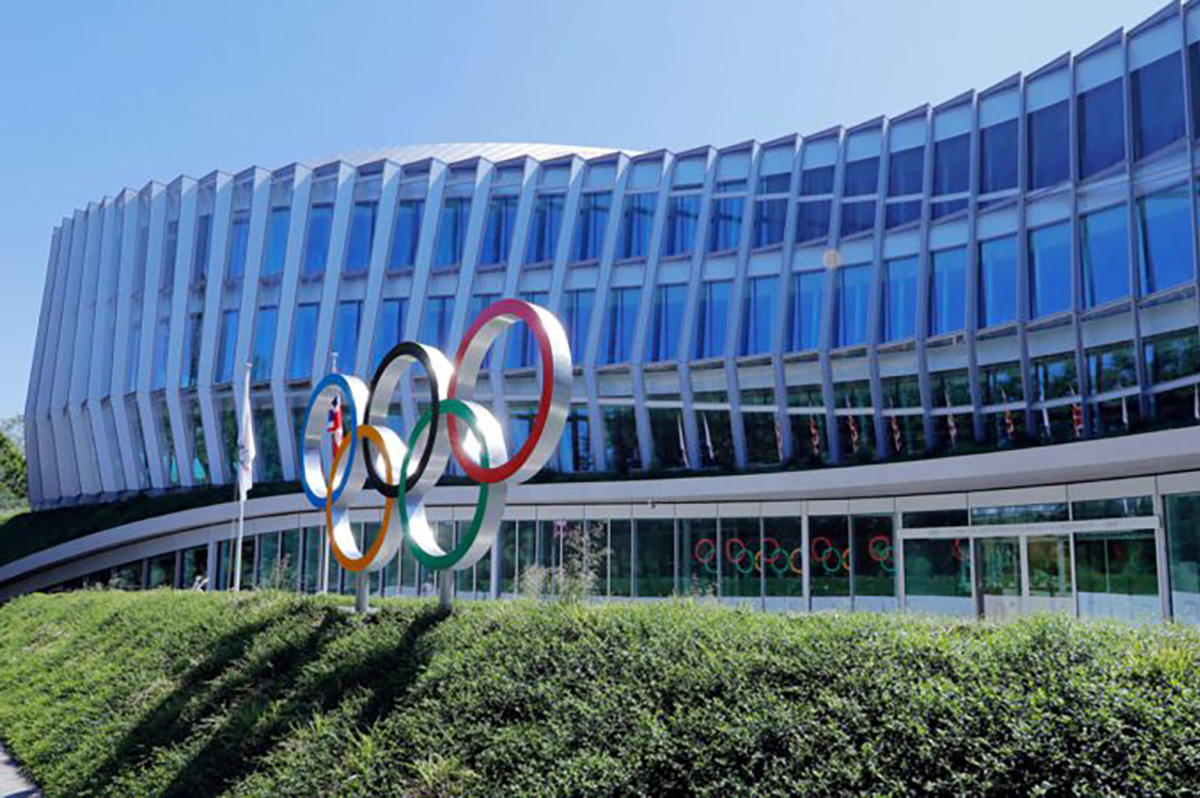
The International Olympic Committee on Thursday announced it will not allow transgender women from competing in female events at the Olympics.
“For all disciplines on the Sports Program of an IOC event, including individual and team sports, eligibility for any Female Category is limited to biological females,” reads the new policy.
The policy states “eligibility for the Female Category is to be determined in the first instance by SRY Gene screening to detect the absence or presence of the SRY Gene.”
“On the basis of the scientific evidence, the IOC considers that the SRY (sex-determining Region Y) Gene is fixed throughout life and represents highly accurate evidence that an athlete has experienced or will experience male sex development,” it reads. “Furthermore, the IOC considers that SRY Gene screening via saliva, cheek swab or blood sample is unintrusive compared to other possible methods. Athletes who screen negative for the SRY gene permanently satisfy this policy’s eligibility criteria for competition in the Female Category.”
The policy states the test “will be a once-in-a-lifetime test” unless “there is reason to believe a negative reading is in error.”
The new regulation will be in place for the 2028 Summer Olympics in Los Angeles.
“I understand that this a very sensitive topic,” said IOC President Kirsty Coventry on Thursday in a video. “As a former athlete, I passionately believe in the rights of all Olympians to take part in fair competition.”
“The policy that we have announced is based on science and it has been led by medical experts with the best interests of athletes at its heart. The scientific evidence is very clear: male chromosomes give performance advances in sport that rely on strength, power, or endurance,” she added. “At the Olympic Games, even the smallest margins can be the difference between victory and defeat. So, it is absolutely clear that it would not be fair for biological males to compete in the female category. In addition, in some sports it would simply not be safe.”
(Video courtesy of the IOC)
Laurel Hubbard, a weightlifter from New Zealand, in 2021 became the first trans woman to compete at the Olympics.
Imane Khelif, an Algerian boxer, won a gold medal at the 2024 Summer Olympics in Paris. Khelif later sued JK Rowling and Elon Musk for cyberstalking after they questioned her gender identity.
Ellis Lundholm, a mogul skier from Sweden, this year became the first openly trans athlete to compete in any Winter Olympics when he participated in Milan Cortina Winter Olympics in Italy.
President Donald Trump in February 2025 issued an executive order that bans trans women and girls from female sports teams in the U.S.
The U.S. Olympic and Paralympic Committee last July banned trans women from competing in female sporting events. Republican lawmakers have demanded the IOC ban trans athletes from women’s athletic competitions.
“I’m grateful the Olympics finally embraced the common sense policy that women’s sports are for women, not for men,” said U.S. Sen. Tom Cotton (R-Ark.) on X.
An IOC spokesperson on Thursday referred the Washington Blade to the press release that announced the new policy.
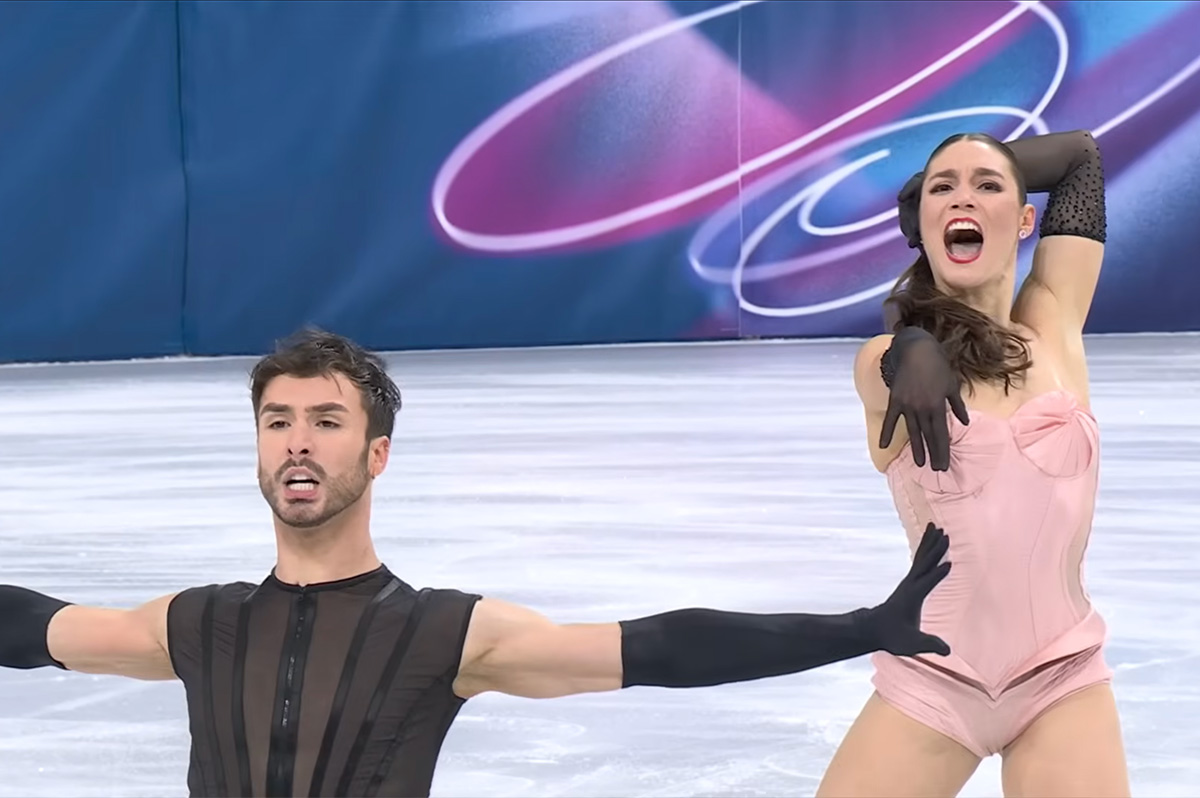
More than a dozen LGBTQ athletes won medals at the Milan Cortina Winter Olympics that ended on Sunday.
Cayla Barnes, Hilary Knight, and Alex Carpenter are LGBTQ members of the U.S. women’s hockey team that won a gold medal after they defeated Canada in overtime. Knight the day before the Feb. 19 match proposed to her girlfriend, Brittany Bowe, an Olympic speed skater.
French ice dancer Guillaume Cizeron, who is gay, and his partner Laurence Fournier Beaudry won gold. American alpine skier Breezy Johnson, who is bisexual, won gold in the women’s downhill. Amber Glenn, who identifies as bisexual and pansexual, was part of the American figure skating team that won gold in the team event.
Swiss freestyle skier Mathilde Gremaud, who is in a relationship with Vali Höll, an Austrian mountain biker, won gold in women’s freeski slopestyle.
Bruce Mouat, who is the captain of the British curling team that won a silver medal, is gay. Six members of the Canadian women’s hockey team — Emily Clark, Erin Ambrose, Emerance Maschmeyer, Brianne Jenner, Laura Stacey, and Marie-Philip Poulin — that won silver are LGBTQ.
Swedish freestyle skier Sandra Naeslund, who is a lesbian, won a bronze medal in ski cross.
Belgian speed skater Tineke den Dulk, who is bisexual, was part of her country’s mixed 2000-meter relay that won bronze. Canadian ice dancer Paul Poirier, who is gay, and his partner, Piper Gilles, won bronze.
Laura Zimmermann, who is queer, is a member of the Swiss women’s hockey team that won bronze when they defeated Sweden.
Outsports.com notes all of the LGBTQ Olympians who competed at the games and who medaled.
Sports
US wins Olympic gold medal in women’s hockey
Team captain Hilary Knight proposed to girlfriend on Wednesday
The U.S. women’s hockey team on Thursday won a gold medal at the Milan Cortina Winter Olympics.
Team USA defeated Canada 2-1 in overtime. The game took place a day after Team USA captain Hilary Knight proposed to her girlfriend, Brittany Bowe, an Olympic speed skater.
Cayla Barnes and Alex Carpenter — Knight’s teammates — are also LGBTQ. They are among the more than 40 openly LGBTQ athletes who are competing in the games.
The Olympics will end on Sunday.

Trump tells Fox News he won the ‘gay vote’ — but polls tell a different story

Anti-trans visa ruling echoes Nazi regime destroying trans documents

Japanese Supreme Court to consider marriage equality

The outrage economy is not the LGBTQ community

Calendar: March 27-April 2

Markwayne Mullin confirmed as next DHS secretary

D.C. goes gaga for Gaga

HRC to host National Rainbow Seder

Menaka Guruswamy celebrated as India’s first openly LGBTQ MP