New York
N.Y. lawmaker vows ‘Pride flag will fly again’ at Stonewall Monument
After a Jan. 21 policy shift, Pride flags were banned at national parks, prompting backlash from Bottcher and LGBTQ advocates.
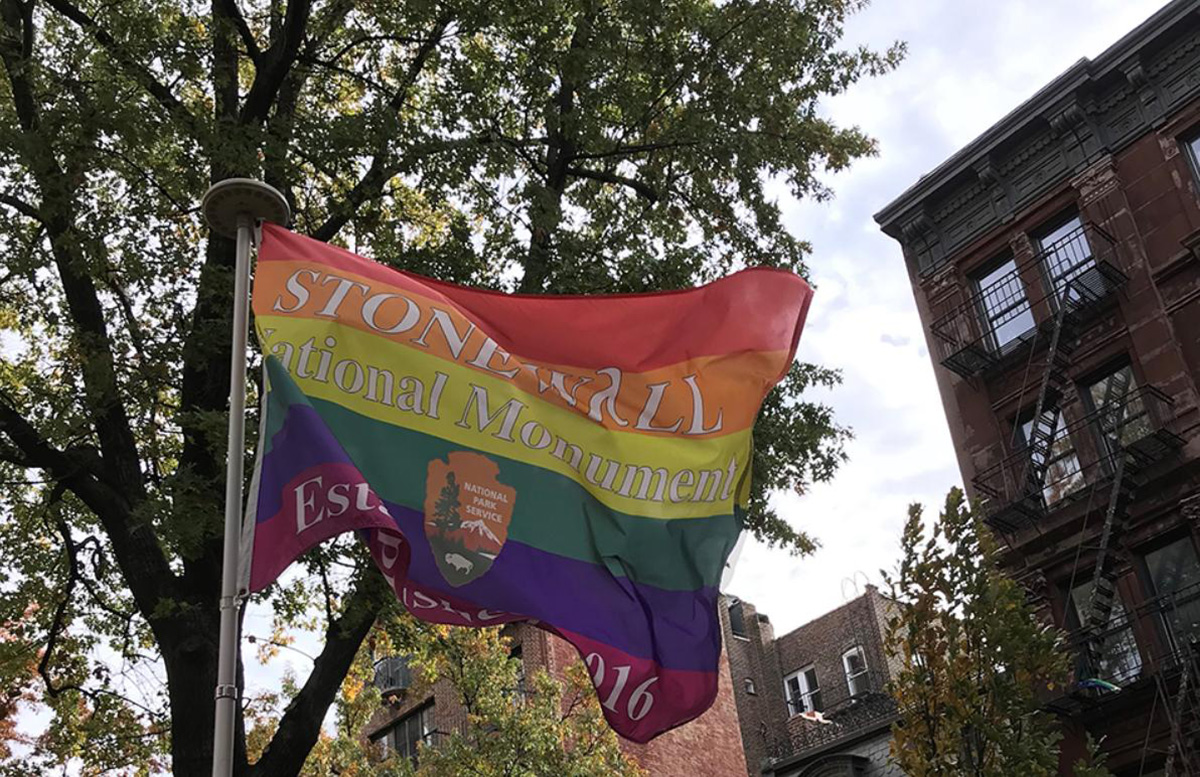
Hours after news broke that the National Park Service would no longer allow Pride flags to fly at the Stonewall National Monument — the birthplace of the modern LGBTQ rights movement in the United States — the Washington Blade spoke with New York State Sen. Erik Bottcher, who represents the area surrounding the Stonewall Inn and the national monument.
During the interview, Bottcher, who is gay, spoke about the policy change and outlined steps he plans to take in the coming days to push for its reversal.
“This is another act of erasure,” Bottcher told the Blade. “It’s a cowardly attempt to rewrite history and to intimidate our community. This is Stonewall — it’s where we fought back, where we ignited a global movement for equality — and we refuse to go back. We’re not going to accept these acts of erasure.”
The Stonewall Inn became a flashpoint in 1969 after NYPD officers raided the bar, part of a longstanding pattern of police harassment of LGBTQ spaces. The raid sparked days of protest and resistance along Christopher Street, now widely recognized as the catalyst for the modern LGBTQ rights movement.
While the events are often referred to as the “Stonewall Riots,” many activists and historians prefer the term “Stonewall Uprising,” emphasizing that the resistance was a response to systemic oppression rather than senseless violence. LGBTQ patrons and community members fought back — shouting “Gay Power!” and “Liberate Christopher Street!” — as crowds grew and frustration with police abuse boiled over.
Since the uprising, LGBTQ people and allies have gathered annually in June to commemorate Stonewall and to celebrate Pride, honoring the movement that placed LGBTQ voices at the center of the fight for equality.
In June 2016, then President Barack Obama officially designated the space as the Stonewall National Monument, making it the United States’s first national monument designated for an LGBTQ historic site.
Now, nearly 10 years later, President Trump’s appointed NPS acting director Jessica Bowron changed policy on Jan. 21 regarding which flags are allowed to be flown in national parks. Many, including Bottcher, say this is part of a larger targeted and deliberate attempt by the administration to erase LGBTQ history.
“It’s clear they’re making a conscious decision to erase the symbols of our community from a monument to our community’s struggle,” he said. “This is a calculated and premeditated decision, and it could be — and should be — reversed.”
“Let’s be clear,” Bottcher added, “they wish we didn’t exist … But we’re not going anywhere. We refuse to go back into the shadows.”
When asked why it is critical to challenge the policy, Bottcher emphasized the importance of visibility in preserving LGBTQ history.
“This is why it’s so important that we not let this stand,” he said. “Visibility is critical. When people see us, learn about us, and get to know us, that’s how we break down prejudice and stereotypes. We cannot allow them to push us back into the shadows.”
Other LGBTQ leaders and elected officials were quick to condemn the removal of the Pride flag, which had flown since the site’s official designation as a national monument.
New York City Mayor Zohran Mamdani called the decision “outrageous.”
“I am outraged by the removal of the Rainbow Pride Flag from Stonewall National Monument,” Mamdani said in a statement. “New York is the birthplace of the modern LGBTQ+ rights movement, and no act of erasure will ever change or silence that history.”
“Our city has a duty not just to honor this legacy, but to live up to it,” he added. “I will always fight for a New York City that invests in our LGBTQ+ community, defends their dignity, and protects every one of our neighbors — without exception.”
Senate Minority Leader Chuck Schumer also condemned the move.
“The removal of the Pride Rainbow Flag from the Stonewall National Monument is a deeply outrageous action that must be reversed immediately,” Schumer said in a statement to The Advocate. “Stonewall is a landmark because it is the birthplace of the modern LGBTQ rights movement, and symbols of that legacy belong there by both history and principle.”
Cathy Renna, communications director for the National LGBTQ Task Force, said the flag’s removal will not erase the movement it represents.
“They can take down a flag, but they can’t take down our history,” Renna said. “Stonewall is sacred ground rooted in resistance, liberation, and the legacy of trans and queer trailblazers who changed the course of history.”
Human Rights Campaign National Press Secretary Brandon Wolf echoed that sentiment.
“Bad news for the Trump administration: these colors don’t run,” Wolf said. “The Stonewall Inn and Visitors Center are privately owned, their flags are still flying high, and that community is just as queer today as it was yesterday.”
Tyler Hack, executive director of the Christopher Street Project, said the removal was aimed squarely at LGBTQ visibility.
“The Pride flag was removed from Stonewall for one reason: to further erase queer and trans people from public life,” Hack said. “Stonewall marks the moment when queer and trans people fought back and demanded dignity. Our history is not theirs to erase.”
Bottcher closed with a promise to his constituents — and to the broader LGBTQ community — that the Pride flag’s removal would not be permanent.
“We will not be erased. We will not be silenced,” he said. “And the Pride flag will fly again at the birthplace of our movement.”



New York
Grace Meng sharply criticizes DOJ over hospital settlements
N.Y. congresswoman spoke with the Blade this week
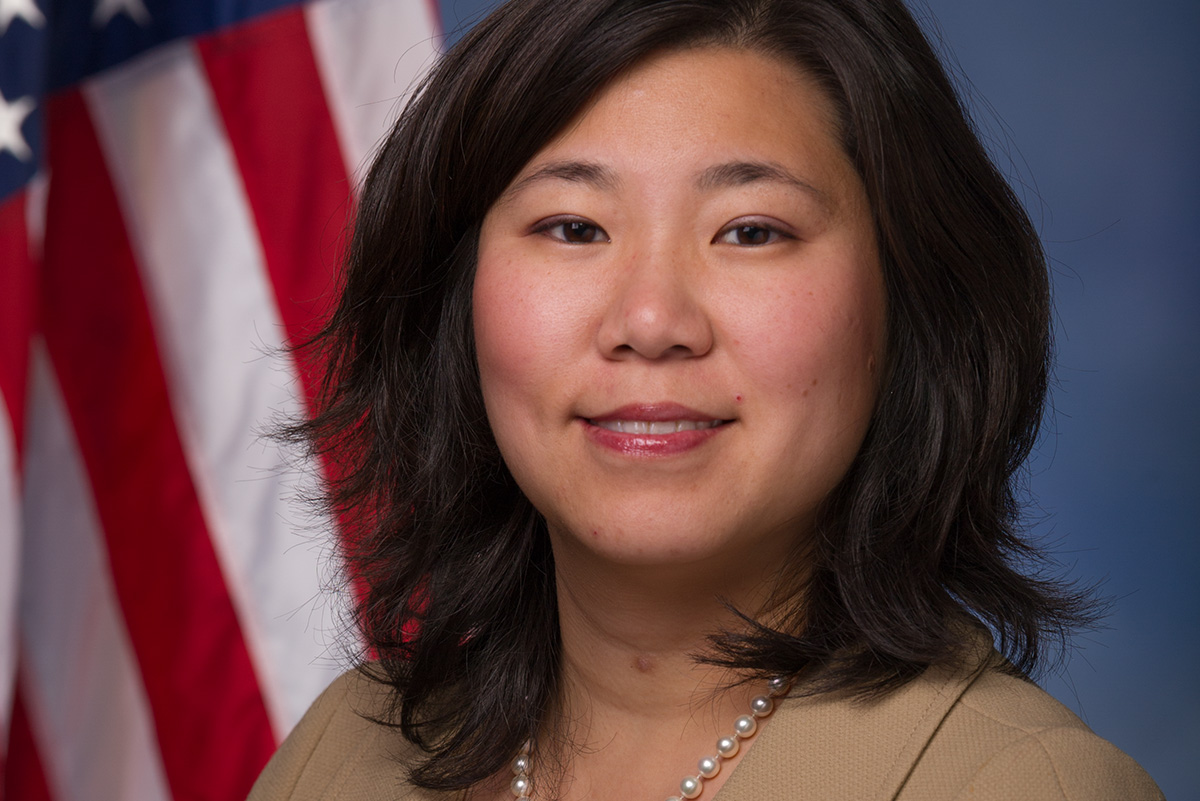
Few things have riled up Republicans in power like the ongoing fight to restrict gender-affirming care for minors.
The Trump-Vance administration has been clear in making the fight against transgender rights, healthcare, and visibility a priority as they enter their “lame duck” phase of the presidency.
With the midterms looming, they are hoping scapegoating trans children — as they did in 2020, only for it to grow into a core national party strategy in the following elections — will save them from a less-than-secure control of the federal government like they’ve had since Trump took office.
In the past year, numerous deals have been struck between hospitals that have provided gender-affirming care to minors and the Justice Department to halt any further care.
While Republican pundits and conservative voices continue to accuse these hospitals — like NYU Langone and Mount Sinai Health System — of committing what they contend are atrocities against these children, large portions of gender-affirming care for minors involve social transitions and puberty blockers, which are reversible.
The Washington Blade spoke with Congresswoman Grace Meng, who represents New York’s Sixth Congressional District and is the ranking member of the House Appropriations Subcommittee on Commerce, Justice, Science, and Related Agencies, to discuss whether these ongoing settlements between hospitals and the Trump-run Justice Department are legal.
In her role as the ranking member of the House Appropriations Subcommittee on Commerce, Justice, Science, and Related Agencies, Meng oversees funding for Justice Department and a slew of other federal agencies. The position gives her the power to look behind the coercion, examine how things are being done, and question the policies and actions of these federal powers in a way many other members of Congress cannot.
Meng said the Justice Department’s actions against hospitals providing gender-affirming care are part of what she sees as a broader pattern of institutions — under the control of this president — targeting LGBTQ people.
“Unfortunately this is not the first time that the DOJ is weaponizing the agency to target our communities, and our LGBTQ+ community, especially our young people, are unfortunately yet another victim of that,” Meng told the Blade. “The real victims are the actual patients and families who are losing a trusted provider.”
She argued that one prong of this ongoing situation is the way the DOJ is going about these “wins” — through pressure rather than through going to court to find actual wrongdoings.
“This DOJ knows that they can’t win in the courts based on the merit of these types of actions, so they are just working by bullying and using coercion to cheat their way through getting what they want,” she said.
She pointed to the use of litigation, subpoenas, and reputational damage against the hospitals as part of that pressure campaign.
“They know that they can’t prove any wrongdoing in court, so they’re just using the threat of prolonged litigation, subpoenas for patients’ records and trying to damage reputations of these institutions as they’ve been cutting funding for them.”
The hospitals involved so far include NYU Langone Hospitals in New York, University of Pittsburgh Medical Center in Pennsylvania, the Mount Sinai Health System in New York, the Cleveland Clinic Foundation in Ohio, Connecticut Children’s Hospital in Connecticut, and Texas Children’s Hospital in Texas.
Meng said the settlements are part of a broader strategy by the Justice Department.
“This is a part of their larger deliberate strategy across the country. They’ve obviously gone after NYU Langone. They’ve gone after Mount Sinai in my state, and they’re doing this in other states as well.”
When asked about the agreements being reached between the Justice Department and hospitals, Meng was direct.
“I think these are forced settlements. Absolutely,” Meng said.
Meng described the federal government’s involvement in individual trans healthcare decisions as an intrusion into private medical decisions.
“This is cruel. It’s a cruel form of coercion. It’s a form of cheating,” she went on, comparing this to the ongoing fight for reproductive freedom in the country. “Just like when we’re talking about reproductive rights, right? It’s an invasion of privacy. These are confidential patient records.”
Meng said the federal government should not be involved in decisions between families and their doctors.
“President Trump and the federal government do not belong in a hospital, helping to make decisions that are very personal and sensitive to every single family. They should not be involved in these decisions.”
She said the settlements could leave families without access to healthcare they need.
“Their way of forcing these settlements and leaving so many without the healthcare that they really need is really just devastating.”
Meng said the impact is already being felt by families in her district and across New York.
“The human impact, the impact on our families, on our constituents here in Queens and throughout New York, is really hurtful.”
Meng framed the issue as part of what she described as a larger pattern within the Trump-Vance administration of attacking the most vulnerable.
“If you ask me to sum up this administration in one word, it would be cruelty,” she said. “They feel like they have a right to decide who is American enough in this country, and who is good enough, and who is deserving enough.”
She went further, saying Trump is “literally acting as a dictator.”
She contrasted his leadership with that of a traditional public servant.
“Most public servants wake up every day thinking of ways that they can make people’s lives better, how they can help people. This administration and this action is no different. It wakes up and thinks of a new way to target a different community every day.”
As the ranking member of the House Appropriations Subcommittee on Commerce, Justice, Science, and Related Agencies, Meng said Congress has tools available to examine how the Justice Department operates and spends federal money.
“The purpose of our 12 subcommittees is to have direct oversight and leverage as Congress members, as the third branch of government, over how the Department of Justice spends our taxpayers’ money.”
One crucial thing Meng pointed out about being on this committee is the fact that much of the work of appropriations is bipartisan and is entirely within the power of Congress via the Constitution.
“We need the White House to respect the constitutional process that the Appropriations Committee goes through,” she said. “We write the Appropriations Law. It’s between Republican and Democratic Congress members.”
When asked about the funding from the settlements — and the continued funding for an increasingly looked-down-upon DOJ — she said she is seeking greater transparency into how federal money is being spent.
“I think that both sides will end up wanting more transparency into the money, how the money is spent.”
Meng said Congress has the legal authority to place requirements on the Justice Department through appropriations legislation.
“We have the legal authority to include language that helps write the DOJ and other agencies, but the DOJ’s budget, and so we will certainly exercise that authority whether or not we’re in the majority.”
She also pointed to the possibility of Democrats taking control of the U.S. House of Representatives after the midterms.
“Hopefully, as we’re in the majority after November, we will be able to have more teeth and more ability to apply that pressure and to write the bill in a way that is transparent and doesn’t harm our families.”
Despite the growing public agitation and disappointment over these settlements, Meng said there is not yet a specific schedule for congressional hearings on the issue, but that it may come after the midterms.
“We don’t have a timeline of hearings and specific topics, but CJS is everything under Commerce, Justice, and Science-related agencies,” she said. “Hopefully, when House Democrats control the House and maybe even the Senate, that we’ll be able to claw back some of their overreach.”
Meng also criticized what she described as a Justice Department operating outside the traditional boundaries of the agency.
“They can’t operate as a rogue agency or as a personal law firm of this president, in the way that they’re doing now. Using subpoenas, threatening prosecutions, these settlements — they are tools that are being used, I believe, unethically and illegally.”
Meng said trans children and their families could continue to face the consequences of the administration’s actions as the Justice Department expands its efforts.
“These are maybe low-hanging fruit or easy targets for the administration, but I can see them going after institutions in other states as they started to do as well.”
She said members of Congress have a responsibility to reassure affected families that they are not alone.
“Our job, whether it’s a representative for my Queens families, but for families across America too, is to let them know that I and my colleagues, many of my colleagues, are standing with them.”
“We are still with them, especially with the patients and the families affected by the NYU Langone deal, but any of these institutions and how they’re hurting them.”
Meng said she wants to achieve that through partnerships outside of government.
“We’re gonna do our best to expand partnership with organizations on the ground to make sure that they’re getting the support and the care that they need.”
While talking to the Blade, Meng also raised broader concerns about the relationship between Congress and the executive branch.
“This administration has definitely not followed the Constitution, and I know that there are pending lawsuits,” she said.
Just this week, the Trump-Vance administration was taken to court over what CNN, POLITICO and MS NOW alleged were violations of their First Amendment rights.
Meng said the administration has not treated Congress as an independent branch of government.
“They [the president] do not act as if Congress is a third branch of government. They think and act like Congress works for them, like they’re a part of their agencies that they’re weaponizing.”
Meng said she believes the public has become more aware of the administration’s actions, but that there is still work to do in explaining how those actions unfold.
“I think that the American people’s eyes have been opened a little more under this administration than in past ones … There’s definitely more room to continue to educate the public as to what this administration is doing.”
For Meng, the debate over trans healthcare ultimately comes down to the families affected by the decisions being made in Washington.
“What’s most important is not just the legalese that everyone’s debating these days when news like this comes out. We have to remember that there are real human beings, real families that are being impacted,” she said. “There are people crying behind closed doors in their homes, and they don’t know literally what they can do or where they will call next to get the care that they need and that they want.”
Meng said lawmakers have a responsibility to address the issue legislatively while also supporting families in their communities.
“It’s our job in Washington, in the capital, to fight these fights legislatively. But in our home districts and in our communities, it’s our job to reassure these families that we’re there for them, and that we’re going to be creative, and we’re going to find new partnerships and expand existing ones to make sure that our families have a path forward.”
She said local and state governments are also being forced to find ways to respond — and, in many cases, end up being some of the only places where protections can happen.
“Our local legislators and many of our communities, on the city level, municipal level, and the state level, they’re looking for more funding options, and a lot of them, including in New York, have had to step up in major ways.”
“Everyone has to step up in newer and more creative ways.”
Ultimately, Meng said the focus should remain on the families affected by the decisions.
“But at the end of the day, it’s the families that are impacted that we’re doing this for,” she said.
The Human Rights Campaign, the largest LGBTQ advocacy group in the U.S., issued a statement this week following the announcement of more settlements.
“This is nothing less than a crisis for families and transgender youth. Since day one, Trump and his callous administration have used the full force of the federal government to come after transgender young people, their families and their doctors — and far too many hospitals are complying and abandoning their patients. Now, even in states with policies that protect transgender people, the options for parents to get their children best-practice, and potentially life-saving healthcare, are dwindling day by day,” HRC President Kelley Robinson said.
“This is the exact outcome Trump wants to see — and this cruelty shouldn’t be lost on anyone who has ever had to make difficult decisions about how to safeguard their child’s health and well-being. Our thoughts are with the countless families across the country who feel scared and under siege. We will not stop fighting until everyone can have access to the healthcare they need.”
While the Blade had her, they also asked about House Speaker Mike Johnson (R-La.), and his decision to send members of Congress home rather than hold a vote on impeaching Defense Secretary Pete Hegseth, in part over his trans military ban, which has left thousands of highly skilled, ready and able workers sitting on the sidelines awaiting the courts to tell them if they are guaranteed the right to fight on behalf of the country.
“I can’t take credit for this, but someone called it the Hegseth holiday,” Meng said. “This speaker, every time there’s a tough vote, instead of acting as a leader and a speaker, he just calls it quits and he sends us home.”
“I believe — and I’m sure he does — that we had enough votes to impeach Hegseth, and he didn’t want to do it. So off we go.”
Netherlands
Dutch prime minister visits Stonewall Inn
Rob Jetten is the Netherlands’ first openly gay prime minister
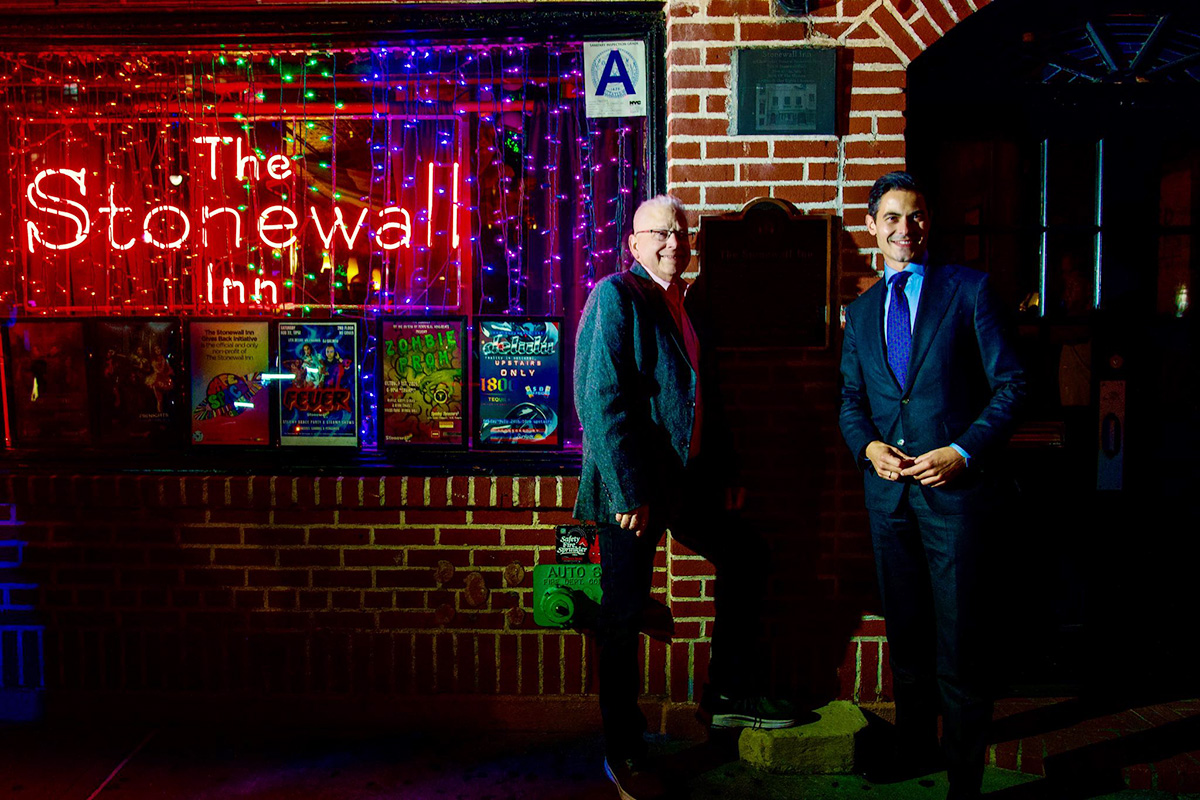
Dutch Prime Minister Rob Jetten on Monday visited the Stonewall Inn in New York.
“The Stonewall Inn is not just a gay bar in New York, but the place where in 1969 riots took place as a reaction to years of discrimination and police violence,” wrote Jetten on X. “This is seen as the starting point of the global LGBTIQ+ emancipation and activism. Nowadays, the bar is a national monument, dedicated to the LGBTIQ+ rights movement.”
“For me, it is impressive and moving to be here tonight. And also fitting, because the defense of human rights is an important part of our foreign policy,” he added. “The Netherlands stands alongside the Stonewall Inn community when it comes to everyone’s right to live openly, safely, and with pride, no matter who you are or who you love.”
De Stonewall Inn is niet zomaar een gay bar in New York, maar de plaats waar in 1969 rellen plaatsvonden als reactie op jarenlange discriminatie en geweld van de politie. Dit wordt gezien als startpunt van de wereldwijde lhbtiq+-emancipatie en activisme. Tegenwoordig is de bar… pic.twitter.com/hJmFYjF91Z
— Rob Jetten (@MinPres) September 23, 2026
Jetten in February became the Netherlands’s first openly gay prime minister.
He opened last month’s World Pride Human Rights Conference in Amsterdam. Jetten also participated in a panel with former Irish Prime Minister Leo Varadkar, former San Marino Captain Regent Paolo Rondelli, and other current and former heads of government who are gay or lesbian.
Jetten is scheduled to speak to the U.N. General Assembly on Thursday.
(Editor’s note: Jetten visited New York’s LGBT Community Center with New York City Mayor Zohran Mamdani before he left the city.)
New York
NYC lawmakers seek to repeal bathhouse ban
Current policy enacted in 1980s in response to AIDS crisis
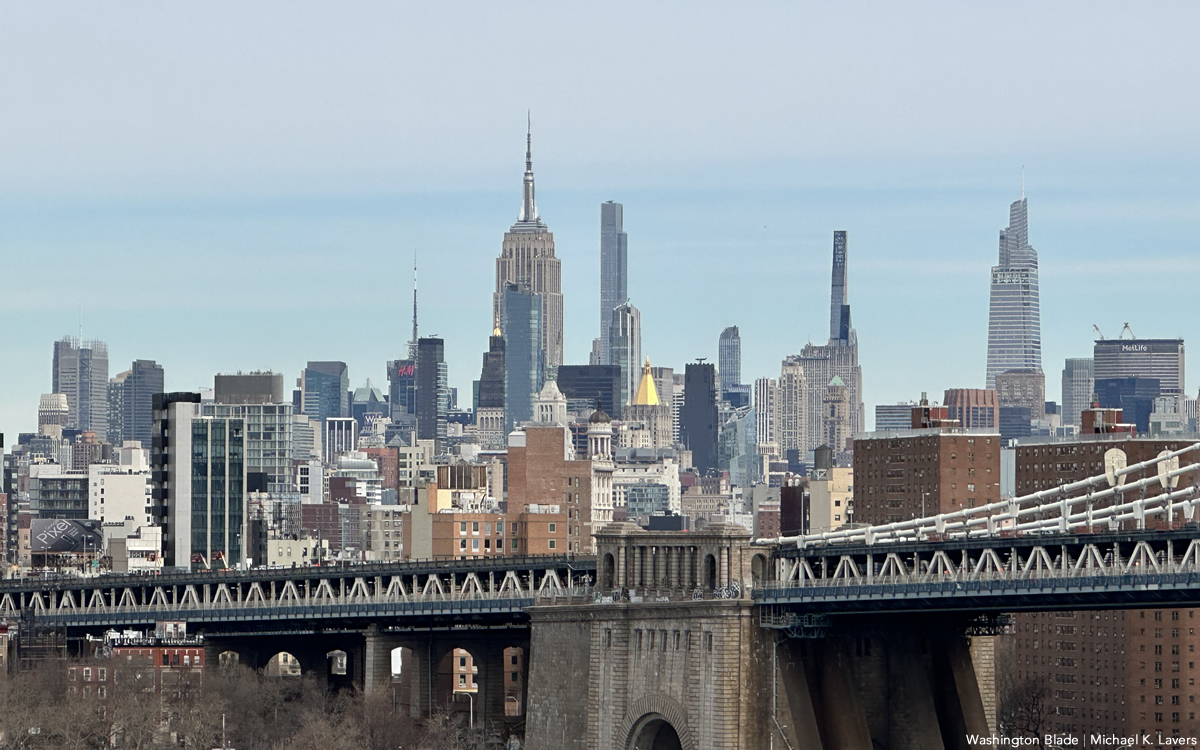
New York City lawmakers are pushing to repeal a decades-old prohibition on adult bathhouses, arguing the regulation was created during the height of the AIDS crisis and no longer reflects modern science or public health practices.
Erik Bottcher, the openly gay New York state senator who represents the 47th District that includes the Upper West Side, Chelsea, Hell’s Kitchen and portions of the West Village in Manhattan, is leading the charge to remove the decades-old ban. (Openly gay state Assemblymember Tony Simone has sponsored the repeal bill in the New York State Assembly.) Bottcher sat down with the Washington Blade to discuss why he is advocating for more bathhouses in New York City.
“This is simply about ensuring that our public health policy is in line with today’s science,” he told the Blade. “The prohibition on adult bathhouses was put into place in 1985 at the height of the the AIDS epidemic, when there was very little information, very little treatment options, few treatment options, and great deal of fear. Science has changed. Treatment has changed, and the laws need to change too.”
The proposed legislation would direct the New York State Department of Health to repeal the 1985 regulation and establish a new framework for regulating bathhouses.
“Municipalities around the country and all around the world allow for adult bathhouses. There’s no reason why New York City alone needs to maintain this outdated prohibition. Our bill orders the New York State Department of Health to strike the 1985 regulation and replace it with a regulated public health framework that’s grounded in science.”
Under the proposal, bathhouses would operate as licensed and regulated facilities subject to health and safety standards. Backers of the proposal say that framework could also give public health officials greater access to people who may otherwise be difficult to reach through traditional health care settings.
“What the Department of Health would do is work with public health experts and advocates to develop a regulatory framework that allows licensed regulated facilities to operate under clear health and safety standards — and under this — it would allow public health agencies to have greater opportunities to provide STI and HIV prevention resources, connect people to testing and treatment, conduct instructions, and address legitimate health concerns.”
Supporters of the repeal also argue banning bathhouses does not eliminate the sexual activity that takes place in them or elsewhere. Instead, they say, it pushes those activities into the shadows, where public health officials have fewer opportunities to provide life-saving services that include STI and HIV testing.
“This is also about a safer alternative than pushing activity into unregulated settings where there’s little opportunity for public health engagement because these activities are happening, but they’re happening in the shadows,” Bottcher continued. “We know that the best public health policy is to establish clear public safe public health guidelines that allow for public health intervention.”
Demetre Daskalakis, a physician and longtime HIV prevention advocate who has worked to create sexual healthcare opportunities in bathhouses, also worked with Bottcher on the proposal.
Daskalakis was a high level Centers for Disease Control and Prevention employee until 2025, when he left federal health landscape after the Trump-Vance administration ousted then-CDC Director Susan Monarez. There he worked as director of the National Center for Immunization and Respiratory Diseases and was director of the Division of HIV Prevention at the National Center for HIV/AIDS, Viral Hepatitis, STD, and TB Prevention.
Daskalakis explained his experience has shown him the potential for these spaces to become points of contact for people who do not regularly access traditional health care.
“I’ve seen what happens when you push sex into the underground,” he said. “From my perspective, this is a great opportunity to be able to reach people who really will not come to normal clinical care and won’t go to normal routine places for testing or screening.”
“As a public health person, I look at it as a great opportunity,” added Daskalakis. “If there’s like regulation of those venues, and if there’s like a prevention plan that sort of sprouts in those places with really solid public health and clinical partners, I think it’s a great opportunity for public health good.”
Daskalakis said a regulated bathhouse could offer more than HIV and STI testing, potentially creating spaces where people could access prevention medications and other health services.
“The bottom line is if there is a good relationship between the government and the venues, we can develop spaces in the venues to actually deliver services,” he said. “It’s not just infectious disease services — I mean yes, you can do HIV testing, STI testing. You can provide doxypep and pre-exposure prophylaxis for people who are HIV negative and at risk for HIV.
“As an example, at Callen-Lorde Community Health Center (in New York City), where I’m the chief medical officer, we developed a prevention pack in a very low threshold way. We gave people enough doxypep and prep to get through Pride. You can also have Narcan and other things to reduce the risk of overdose.”
Daskalakis said that approach reflects what public health should be striving for: meeting the community where they are.
“If you have this sort of relationship with the government that’s not antagonistic, and the government, as New York is one to do, provides some regulatory oversight to these venues, I think what you’re going to have is a place that supports LGBTQ culture — which also which does include sexuality, and also creates a platform to be able to do like very solid prevention work.”
The public health landscape surrounding HIV has changed dramatically since the bathhouse regulation was adopted, Daskalakis said, pointing to advances in treatment and prevention.
“The bottom line is that HIV treatment and prevention have really converged. If you are someone living with HIV and you’re on HIV medicines and your viral load is undetectable, you don’t transmit HIV. That’s called undetectable is equal to untransmittable, or U = U. People who are on prep also have very low risk of acquiring HIV, and so you know the world is very different,” he said.
“Back in the 80s, when there was no way to impact transmission of HIV because we didn’t have effective ways to prevent it — or didn’t know very much about it at that point. It’s a very different world where we know a lot about HIV and have a lot of tools to be able to prevent transmission. Same with STIs,” added Daskalakis. “If you create a holistic strategy for prevention that is sex positive and aligned to these venues, you’re going to prevent HIV and STIs. Period.”
For supporters of the legislation, that public health argument is central to the effort to repeal the ban. Bottcher also sees the proposal as a way to restore LGBTQ community spaces at a time when many queer venues have disappeared and social interaction increasingly takes place online.
“In this era of social isolation created by social media and streaming services, people are desperate for third spaces,” Bottcher said. “Places for people to come together in person, to be together in person. That’s what this would help provide.”
Daskalakis echoed Bottcher’s point that bathhouses could transform from underground, tabooed spaces into venues that combine sexual health services with broader LGBTQ culture.
“When you make them illegal, they become seedy and dark. When you make them something that is allowed, they actually then become sites that may have sex on premises but also support other sorts of cultural things, and in a universe where people are trying to make LGBT folks seem invisible, creating a safe space for them is exactly what we need right now.”
That community-space argument is also tied to health disparities, Bottcher said, arguing that greater access to health education and prevention services could help people who are less likely to seek care through traditional medical settings.
“Creating opportunities for in-person public health education, prevention, treatment that will help improve health outcomes when you push people into less safe settings without any opportunities for education, prevention tools, or treatment. That’s when we see these disparities, these health disparities grow. So it’s very important that we be laser focused on opportunities to address these disparities and reduce them.”
He continued, explaining the proposed change is ultimately about updating public health policy as medical science evolves, just as other practices are updated when new information comes out.
“This is a matter of an outdated public health regulation and the government has a responsibility to continually revisit its public health regulation and ensure that they’re in line with modern day science,” Bottcher said. “Science and healthcare are continually evolving, and the HIV/AIDS prevention and treatment landscape has changed tremendously in the last few years. Our public health regulations need to keep pace with science.”
For LGBTQ New Yorkers who lived through the AIDS crisis, however, changing the policy could carry a different meaning.
Bottcher says the experiences of those who lived through the epidemic — one that killed nearly 300,000 gay men since the 1980s — should inform how any new system is implemented, rather than being dismissed.
“These are in order to help prevent the spread of HIV and AIDS and other STIs,” Bottcher said. “We have to bring people engaging in these activities out of the shadows and into safe settings that provide the opportunity for public health entities to engage with education, treatment, prevention — that’s what this would do.”
Daskalakis said those concerns should be approached through what he described as trauma-informed care.
“My response is that of trauma-informed care,” Daskalakis said. “We have totally been through it, but we need to sort of move past the trauma and realize that the science has changed. I’s not it’s not the ’80s anymore, but we definitely need to look at those folks who have gone through the experience (of the HIV/AIDS crisis) to make sure that what we’re building, from a public health perspective, are effective programs.”
“There’s a great opportunity to learn from folks with experience rather than to alienate them,” he added.
Bottcher also pointed out this policy revision and effort to bring regulations in line with modern science is not only happening in New York. Multiple other cities across the U.S. have moved away from bathhouse prohibitions.
“Minneapolis just passed their ordinance in June,” he said. “San Francisco, despite the fact that they repealed their prohibition some years ago, they are still working to change the policy … However, around the country, even in red states, they have bathhouses … and they haven’t presented a detriment to public health in any way.”
The proposed change could also revive a part of New York’s LGBTQ cultural history, Bottcher said.
“Bathhouses were a big part of gay culture for decades. We all know the legendary stories of Bette Midler and Barry Manilow performing at the Continental Baths. I envision a resurgence of bathhouse culture that includes things like live music, arts, and entertainment. So it’s exciting to think about.”
And if that resurgence happens, Bottcher already has a dream performer in mind to be the first to take the stage.
“Oh, that’s such a good question … Cher.”
Daskalakis picked a similarly essential female singer of gay culture that he’d like to see in the bathhouses of today.
“I feel like my list could be so long, but I think that would be a great place for Madonna.”
The debate over New York’s bathhouse regulation ultimately reflects a broader question about how public health policy should respond as science, medicine, and LGBTQ communities change.
For Bottcher, regulation, rather than prohibition, would give health officials more opportunities to provide prevention and treatment while allowing LGBTQ people to gather openly.
For Daskalakis, the central lesson from his extensive healthcare work in bathhouses is that pushing sexual activity underground will make public health outreach more difficult — the opposite of what the government and healthcare providers should be doing.
“The opportunity to create safe spaces means that we’ll have more opportunities to reach people, not just for public health, but for so many other things … The strategy of banning things that are natural really doesn’t tend to help you very much. It ends up creating misalignment between the community and policymakers.”

529 openly LGBTQ candidates running in Brazilian election

Lesbian Bar Project co-founder: purity politics could destroy our remaining spaces

HRC report: LGBTQ students face ‘far greater challenges’ in non-supportive states

HRC National Dinner 2026: A night of music, activism, LGBTQ history

Trump asks Supreme Court to allow restrictions on gender-affirming care in prisons

‘Star Trek: Strange New Worlds’ star Celia Rose Gooding breaks down that finale time travel twist

Center for Black Equity’s annual gala to take place Oct. 3

Grace Meng sharply criticizes DOJ over hospital settlements

Tyler Clementi Foundation to host fundraiser in Rehoboth

Calendar: September 25-October 1
-

 Television5 days ago
‘Star Trek: Strange New Worlds’ star Celia Rose Gooding breaks down that finale time travel twist
-
 District of Columbia5 days ago
Center for Black Equity’s annual gala to take place Oct. 3
-
New York4 days ago
Grace Meng sharply criticizes DOJ over hospital settlements
-
Out & About4 days ago
Tyler Clementi Foundation to host fundraiser in Rehoboth