Television
‘Lizzie Borden’ might be the best ‘Monster’ yet
Exquisitely realized, shrewdly written with outstanding performances
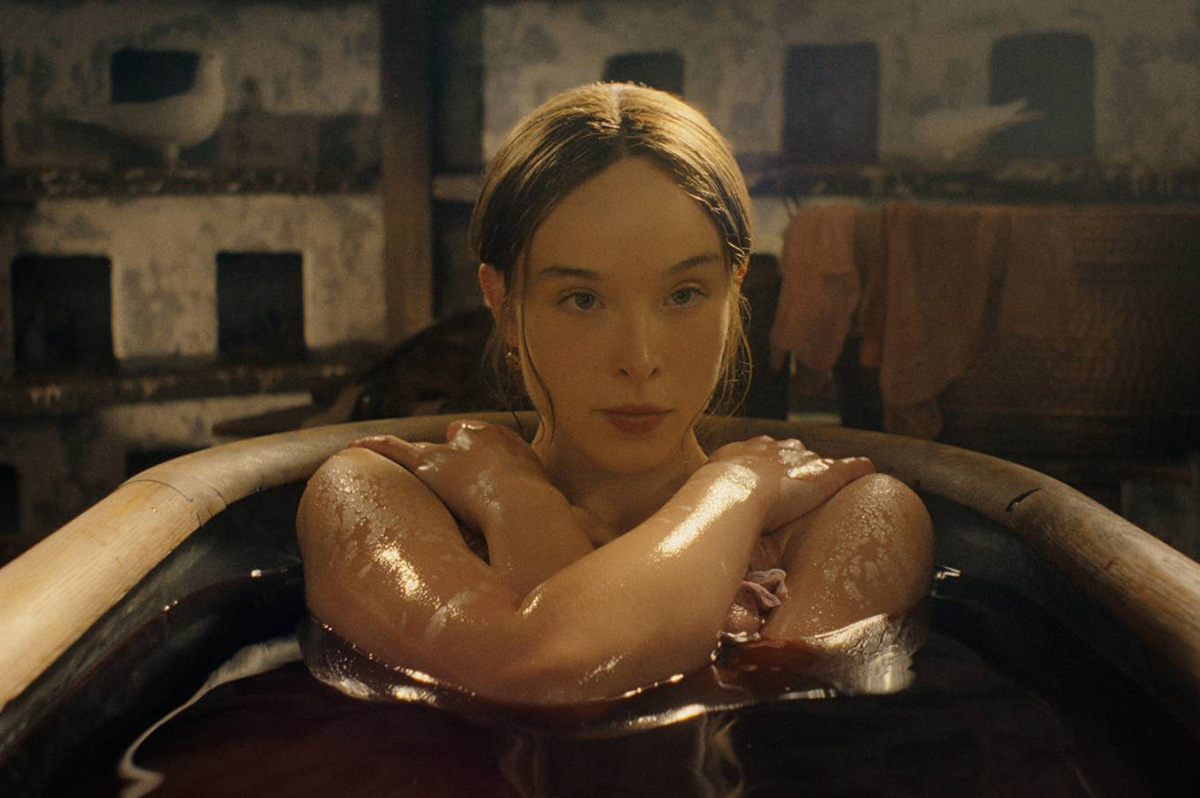
“When the legend becomes fact, print the legend.”
That famously cynical quote from the 1962 Western movie “The Man Who Shot Liberty Valance” could easily have been the mission statement behind the latest season of Ryan Murphy’s controversial anthology series, “Monster,” which retells the story of America’s most famous axe murderer – Lizzie Borden, who, in 1892, “took an axe” to her father and stepmother at their family home in Fall River, Mass.
Except, officially, she didn’t. Borden was acquitted of the killings in a trial that was a national sensation; the crime remained unsolved, and despite rumors and theories that have proliferated over the last century, nobody really knows what actually happened nor who was responsible for it.
Yet in the popular imagination, Lizzie is still remembered as a killer who got away with one of the most notorious murders in American history. Though she walked free and lived a life of wealth and high social position for another three decades after her trial, she never truly escaped the scandal; she would be forever branded as guilty, her alleged crime even immortalized in a children’s schoolyard rhyme, and all but a few die-hard theorists assume, unequivocally, that she was the killer. In other words, the legend of Lizzie Borden, axe-murderer, has “become fact.”
“Monster: The Lizzie Borden Story,” like most other retellings of this gruesome crime saga, “prints” the legend – and indeed, goes even further to canonize her into something like a radical feminist saint.
With Ella Beatty (daughter of Hollywood royalty Warren Beatty and Annette Bening) in the title role, the show frames Lizzie as the repressed and disregarded adult child of wealthy businessman Andrew Borden (Charlie Hunnam) and stepmother Abigail (Rebecca Hall), who married her father after her mother’s death; both of them treat her – and indeed, almost everyone around them – with dismissive cruelty. Andrew is an alcoholic who openly disdains both wife and daughter, while Abigail takes out her own frustration with the marriage on Lizzie, whom she has branded as a “simple” child that she never wanted to have – and a difficult one at that.
The arrival of a new household maid — Bridget Sullivan (Vicki Krieps), who goes by the name “Maggie” — changes Lizzie’s outlook and her destiny. Well-traveled, worldly, and deeply independent, Maggie befriends her and becomes both her companion and mentor, introducing her to new ideas and cultivating her sense of self-worth; they become lovers, their bond deepened by a dissatisfaction with the cultural limits imposed upon them by their status as women. As conditions within the household grow increasingly unbearable, they formulate a gruesome plan which, if they can succeed, will liberate them from the patriarchal subjugation that relegates them to the level of chattel while puffing a pipe full of expensive tobacco.
From there, writer/creator Ian Brennan takes us through an effectively grisly re-enactment of the famous murders and onward through the trial in which Lizzie, ironically benefitting from stereotyped male assumptions about what women are or are not capable of doing, is ultimately acquitted of the gruesome crime she absolutely DID commit. It then follows her – and Bridget – into the aftermath of the scandal, where a kind of imprisonment awaits them both, anyway.
Boldly crafted with cinematic flourish (six episodes were directed by Max Winkler, the two others by Sarah Adina Smith) and continuing the series’ tradition of lavishly depicted violence, one can’t deny that it’s a wild ride. It flaunts its contemporary attitude through fiercely eclectic musical choices in the soundtrack, from the lushly romantic classical tones of its late 19th-century period to ferociously feminist ‘90s punk; it includes graphic sex both tender and aggressive, juxtaposed with scenes of pastoral beauty and genteel refinement; and, as always in Ryan Murphy’s “true story” productions, it plays fast-and-loose with the facts, choosing instead to lean into artistic license in order to expand on the “hotbed” themes woven into the narrative.
In this case, Brennan’s version of Lizzie’s tale mines the historical record to incorporate lesser-known factual details while veering into speculation to fill the blanks elsewhere; it creates incidents that didn’t happen, alters incidents that did, and embellishes what’s known of its characters’ private lives with details that no one could know; and, like other seasons of “Monster” have done, it finds a way to introduce extra real-life killers into the mix – blood-bathing 16th-century Countess Elizabeth Báthory (also played by Krieps) and hitchhiking 20th-century serial murderer Aileen Wournos (Sarah Paulson) – for good measure. The result, of course, is a work of complete fiction.
These are the things that have consistently made “Monster” one of Murphy’s most controversial television franchises. The excesses of gore and brutality, though they might seem gratuitous to some and are certainly hard to watch for many, is arguably justified by the show’s branding as a “horror” series; less easy to write off, however, is the criticism of many detractors that the series spreads false information and perpetuates myths, whether to “push” an agenda or in the name of “artistic interpretation.”
“The Lizzie Borden Story,” consequently, has already been met with such objections – though in today’s political climate, it’s hard to know if they are really about the blending of fact and fiction or the feminist social commentary that runs through the show like a vein of molten lava. Brennan’s vision of Lizzie’s presumed crime casts her as woman suffering from a life of psychological torment by her parents, and Bridget – who has experienced more than her own fair share of mistreatment at the hands of aggressively toxic men – as her savior; the act they concoct and execute together is a radical act of defiant rebellion against an ingrained system of patriarchal domination, and we are set up from the start to be completely on their side.
That radical feminist thread pops up everywhere: through Lizzie’s stepmother (despite her own monstrosity), who is granted a share of empathy for the sake of her own stifled existence; through famous actress Nance O’Neil (Jessica Barden), who steps in to become an ally at a crucial juncture of Lizzie’s trial; even through her estranged sister (Billie Lourd), who sets aside her own doubts to support Lizzie in sisterly solidarity. Brennan even imagines Lizzie as an activist in the fight for women’s suffrage.
Of course, if one is inclined to view “Monster” as a documentary crime series, occupied with discerning facts and providing an objective overview of the case, that’s a perfectly good reason not to watch its latest installment. For those who realize that it is instead a vehicle for artistic expression, a series devoted to finding the kind of truth that transcends facts and challenges viewers to examine the cultural conditions that create these “monsters” in the first place, this might be its best season yet.
Exquisitely realized, shrewdly written, and featuring outstanding performances across the board, it’s not really a crime story, nor really even horror: it’s an exhilarating, satisfying, and thoroughly transgressive fantasia on an American legend that puts the blame for the Borden family murder squarely where it belongs – on the oppressive cruelty that drives otherwise good-hearted women to commit unspeakable acts.



Television
‘Star Trek: Strange New Worlds’ star Celia Rose Gooding breaks down that finale time travel twist
Season 4 finale gives actress ultimate showcase as a performer
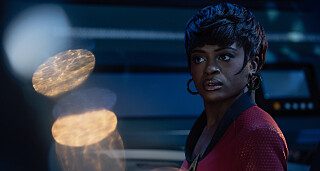
At long last, Celia Rose Gooding can talk about the “Star Trek: Strange New Worlds” Season 4 finale. And it’s a finale that belongs almost exclusively to her.
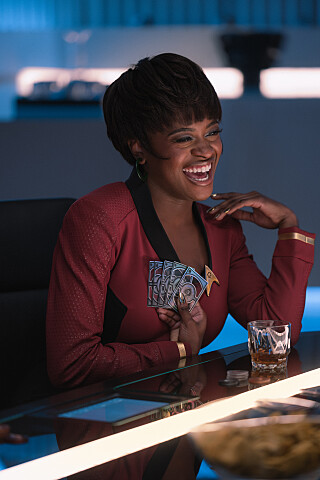
In the finale episode, now available to stream on Paramount+, communications officer Nyota Uhura (Gooding) comes face-to-face with an older version of herself.
In order to save Scotty (Martin Quinn), Uhura must uncover a mystery and confront the leader she was always destined to be.
It’s one step closer to “Strange New Worlds” closing the gap between “The Original Series,” where fans were first introduced to Uhura through Nichelle Nichols’s iconic performance back in 1966.
“We see them confront each other and love each other in a way that can only breed more self-acceptance, self-understanding and self-actualization, which is what fans have been hungry for this whole time,” Gooding says of Uhura’s interaction between past and future self.
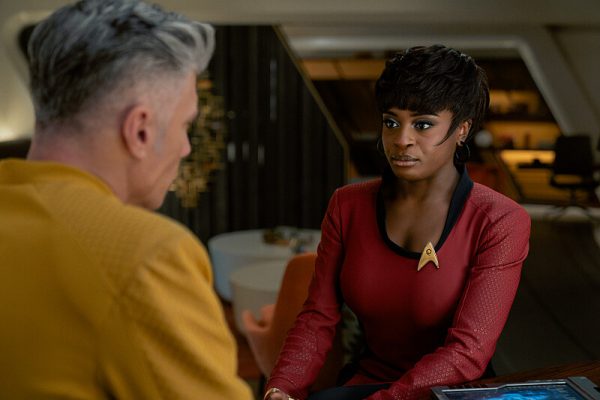
Gooding spoke with the Washington Blade to break down the emotional final episode, why she was hesitant to pay homage to Nichols’s beehive hairdo, and her hopes for the future of Black and queer representation on “Star Trek” amid the Paramount-Warner Bros. merger. This interview has been edited and condensed.
I know you’ve already finished filming the upcoming fifth and final season, so first of all, congratulations! This finale is such an exciting showcase for you. Can you break down this time travel twist and how you approached playing these two different versions of Uhura?
So much of what this episode meant to me was about honoring everything Uhura means — not just to me, but to Trekkies across the world, to people who’ve seen themselves in Uhura, and most importantly to Nichelle Nichols. I didn’t get the opportunity to meet her, although I’m desperate to have had that. But I think there’s something really special and unique about being able to have a conversation with a version of yourself that you no longer recognize in the past, and also a version of yourself that you do not recognize in the future. So much of the conversation between the two Uhuras in the beginning is filled with tension; they’re not super fond of each other just because they are so different. There’s so much growth and separation between their two mentalities. Given the stakes of the episode, “Strange New Worlds” is hearing things and is called on in a way that she does not understand. And so much of Uhura’s job, as a communications officer, is to understand — especially the things that she’s hearing, the conversations that are going on. When she is detached from that understanding, she’s left floating in this really uncomfortable space. The first thing that she can reach out and grab onto is something that should not be happening; she should not be able to speak to a version of herself that exists in the future. It breaks so many directives; she is breaking a lot of rules about time travel and temporal anomalies.
And then on the flip side, we have “TOS [The Original Series]” Uhura, who gets back on this mission, and something has gone terribly wrong. That tenacity, that perseverance, that reminiscent characteristic between both of these Uhuras is that they’re not going to give up. I love that in Uhura’s mind, if something doesn’t make sense to her, it’s because something is wrong. And not because she is incapable of understanding what’s happening; it’s that something has happened and it must be corrected. I love the confidence that we see in “TOS” Uhura of talking to her friends and crewmates and being like, “You aren’t listening to me. You need to listen to me!”
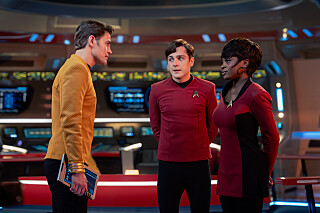
What was the most challenging part of playing these two parts?
The time jump between the two of them. Originally, it was three years, but now in the edit it’s just one. And playing “Strange New Worlds” Uhura, who knows all of this time has passed but doesn’t know what’s in it that makes her future self so unrecognizable — at first, I was trying really hard to make sense of that tension, trying to establish something. I kept coming up against the obstacle of, “How can I make this make sense?” Even when we only had 16 hours until shooting, I was down to the wire. I had conversations with director Chris Fisher, and he really implored me to not focus so hard on trying to make it make sense; the moment it makes sense is the moment we don’t have a story anymore. So much of the tension and conflict is that we don’t understand how this has happened; these two characters have to make it make sense together, and they do, because they always do! But it was a real challenge as an actor to live in that liminal, unknown, uncharted space and let that discomfort be the fuel for the engine that is the story. Even as I talk about it now, I fear that I’m not making any sense!
Finally, I think fans of Uhura have been so hungry for her to just inch closer and closer and close that gap, and I think while [the Season 4 finale] doesn’t completely close that gap all the way, we see them confront each other and love each other in a way that can only breed more self-acceptance, self-understanding, and self-actualization, which is what fans have been hungry for this whole time.
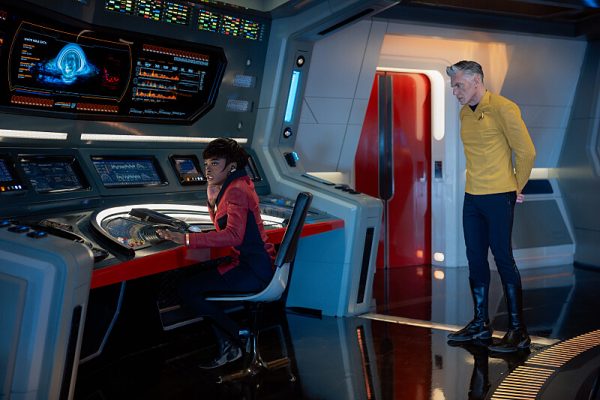
And you get to pay homage to Nichelle Nichols with that iconic beehive hairdo.
Story-wise, it was important for us to give the audience a way to immediately recognize who was talking because they’re both me, with my face. And it wasn’t just my hair that established the timeline change — it was the lighting, color grading, and everyone else’s different looks and costume changes. But the conversation around that iconic beehive- at first, I was a little resistant. I’m not gonna lie to you. I didn’t love the idea of recreating this iconic hairstyle because I have such admiration for Nichelle Nichols. God, I owe her so much for this era of my career. It is all thanks to her and what she has done, and so it felt like blasphemy, sacrilege. I was like, “I don’t know if this is right, guys; I think some things are just meant to be precious.” And then I saw it on camera, and I was like, “You know what? Maybe there’s a reason why they’re the showrunner, and maybe I should just do my part and let everybody else do their part.” It’s so recognizable, iconic, and immediately present.
I’m just filled with pride. I’ve been holding on to this episode for so long. I’ve been dying to talk about this episode because we shot it a year and four months ago, in June 2025. And I’m just really excited for fans to see it. It was a labor of love. It is an ode to Nichelle, but it’s also an ode to the version of Celia that said yes to playing Uhura because she had no idea what she was fucking in for. She had no idea, and just as Uhura held her hands and said, “You’re doing great,” I just want to hug that version of myself who was so hard on themselves, the same way the “Strange New Worlds” Uhura is, and just tell her to exhale and be like, “Baby, you got it. The hard part is behind you now. You get to just show up, do your job, and learn the lessons day-by-day.
As we’re celebrating “Star Trek”’s 60th anniversary this year, it’s been a moment to recognize the show’s diversity and inclusion. There are, naturally, some fears about what the future of the show will look like considering where the industry is going amid the Paramount merger. As a queer person, how do you feel about the potential for the show to continue embracing diversity and perspective?
I know my publicist is holding her breath right now! I am really excited to be surprised about the future of “Trek” because right now, realistically, there is no “Trek” in production. We have another season of “Starfleet Academy” to release, and another season of “Strange New Worlds” to release, and then it gets quiet for live-action “Star Trek.” I know there’s a Nickelodeon show coming; there’s a lot of animated “Trek” happening, but when it comes to Gene Roddenberry’s vision, I don’t know what the future holds. The unknown can mean so many different things, and I am really excited about what I’ve been able to donate to this franchise. I’m so excited about what it means as a dark-skinned, Black queer individual to exist in Trek, to have my vessel that Uhura lives on in, and what it means for me and my community.
I can’t imagine that “Strange New Worlds” is going to be the last of “Trek.” I hope that is not the case because “Trek” has done so much for how people think about the future and how people embrace the future. There is so much positivity and diversity embraced in “Trek,” and the world is only going to get more diverse, despite what the powers that be want you to believe. We’re not going back, and I am excited for “Star Trek” to continue to be at the forefront of the stories that are told about how we do not go back, about how we move forward and embrace each other and embrace the unknown, embrace the diversity of opinion and experience. I’m just really excited to be surprised. I want to wake up one day and be like, “I could never have imagined this for ‘Trek’!”
Nominations for the 78th Primetime Emmy Awards are here — and they are so, so queer!
With the year we’ve seen in LGBTQ media, this isn’t very surprising; whether it be jaw-dropping new series or the ends of fan-favorite classics, every month offered a new project or performer for queer audiences to fall in love with. There were some pleasant surprises — and shocking snubs — with these nominations that have left the many TV fanatics in our community excited, hopeful that their favorite actor or series can take home at least one award at this year’s ceremony.
Will this be the gayest Primetime Emmy Awards that the Television Academy has ever seen? Let’s take a look at some of the biggest, absolutely queerest nominations for this year and find out!
Leading the pack (and making history) for queer television is “Hacks,” with the final season of this HBO Max comedy earning a massive 25 nominations — breaking “Schitt’s Creek”’s record for the maximum number of nominations for a comedy series’ final season! Following an established comedienne (Jean Smart) and her bisexual, thoroughly Gen Z comedy partner (Hannah Einbinder), the series has been applauded for not only its portrayals of queer identity but also for how it showcases the generational divide in a way anyone can laugh at. Smart and Einbinder are both nominated for Outstanding Lead Actress and Outstanding Supporting Actress, respectively, with their fellow performers Meg Stalter, Paul W. Downs, Kaitlin Olson, and more also earning nominations for their time on the show. These, along with the numerous nominations for “Hacks”’ writing, directing, and all-around production, make it one of the most nominated programs at this year’s Emmys.
And this isn’t the only sapphic program being celebrated at this year’s awards! When “Pluribus” premiered, it took the (thankfully non-hive-minded) world by storm; it follows a lesbian author (Rhea Seehorn) who becomes one of the only people left with autonomy when an alien virus takes over the Earth. Seehorn — who offers an impeccably bitter performance as protagonist Carol Sturka — is being honored with an Outstanding Lead Actress nomination, with the show itself receiving 18 nominations overall in categories ranging from Outstanding Supporting Actor to Casting for a Drama. One extremely fun, thoroughly queer fact about these nominees: the actresses behind both of Carol’s onscreen love interests, Karolina Wydra and Miriam Shor, have earned their first Emmy nominations ever due to their work on the series!
While these queer TV shows are earning massive praise, the Emmys also made sure to honor the LGBTQ+ and ally celebrities who’ve graced our screens this year.
When he isn’t exciting audiences all over the world in “Heated Rivalry,” Connor Storie was making viewers laugh on “Saturday Night Live,” a hosting spot which earned him a nomination for Guest Actor in a Comedy. And though Jeff Hiller (who is coming off a 2025 Emmy win for “Somebody, Somewhere”) has proven to be one of the best parts of new hit “Widow’s Bay,” it was his turn as a mind-controlled, bicycle-short-wearing drone in “Pluribus” that earned the openly gay actor an Outstanding Guest Actor in a Drama nomination. Along with these, the always immaculate Zendaya received a nomination for Outstanding Lead Actress for her role as queer recovering drug addict Rue in “Euphoria,” and long-time ally Claire Danes will be competing for Lead Actress in a Limited Series for her role as troubled lesbian writer Aggie Wiggs in “The Beast in Me.”
When it comes to scripted television, the 2026 Emmy Nominations are filled with nominations for queer performers and stories alike. But, to the shock of nobody who loves nothing more than a good confessional and shocking table flip, there was one category where queer performers absolutely dominated: Reality Television.
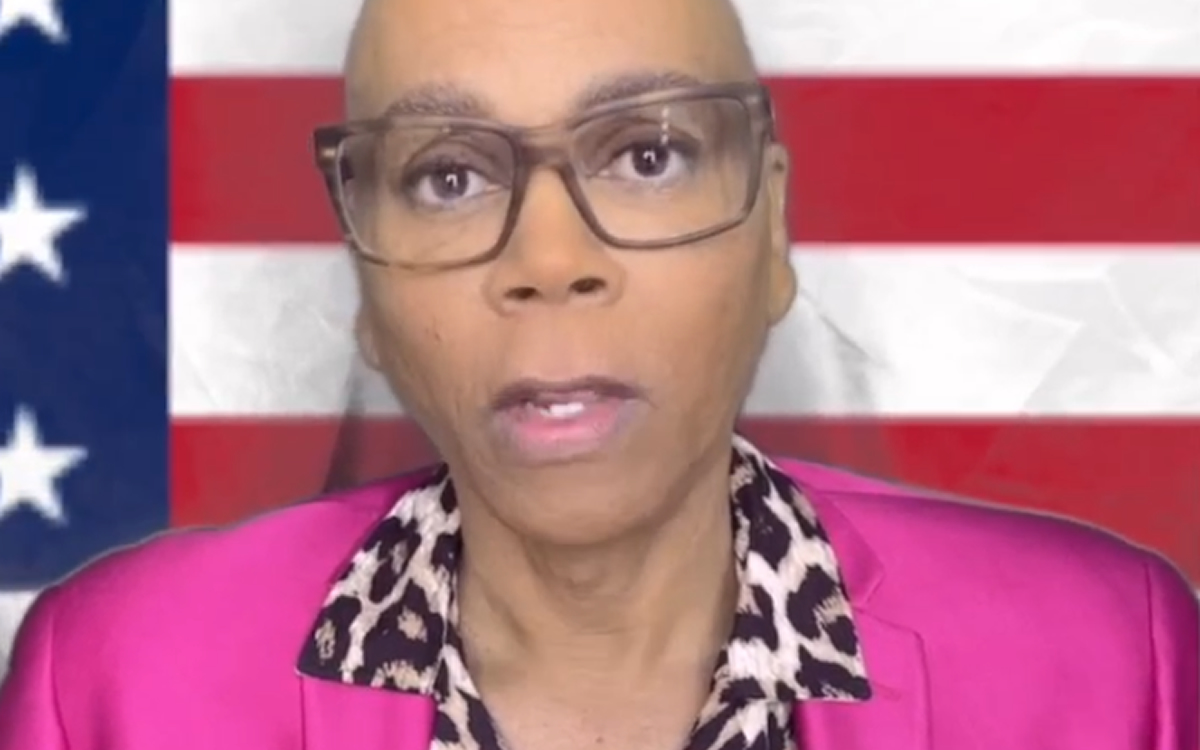
The Outstanding Host for a Reality/Competition Program is one of this year’s most competitive categories — and not just because four of the five nominees are queer! The hilarious RuPaul Charles and Alan Cumming have both received nominations in this category, with their shows “RuPaul’s Drag Race” and “The Traitors” also being nominated for Best Reality Competition Program. They’re joined by lesbian heartthrob Kristen Kish, who, for the third year in a row, has been nominated for Outstanding Host right alongside her series, “Top Chef,” for Best Reality Program!
And, finally, making her debut in the world of Emmy nominations is Ariana Madix, who just earned her first nomination for Outstanding Host thanks to her work on “Love Island USA”! An alum of reality TV herself, her guiding sexy singles along the path to love has helped this reality series take the country by storm. An openly bisexual host — who has stated that she wants her own show to be more queer — she joins this amazing group of leaders helping to innovate this genre today.
While these are some of the biggest LGBTQ+ nominees at this year’s Emmys, they don’t include the countless queerr editors, writers, costume designers, and more who have also been nominated in the ceremony’s 100+ categories. They all deserve a huge round of applause for their tireless work this year, and each of them should remember that they’ve each won just by being nominated.
And even if they don’t take home that illustrious trophy, in the words of a particular Queen of Drag who’s nominated for Outstanding Reality Host, always remember: losing is the new winning!
You can watch the 78th Primetime Emmy Awards on Sept. 14 at 8 p.m. EST on NBC and Peacock.
Television
‘Big Mistakes’ an uneven – but worthy – comedic showcase
In the years since “Schitt’s Creek” wrapped up its six season Emmy-winning run, nostalgia for it has grown deep – especially since the still painfully recent loss of its iconic leading lady, Catherine O’Hara, whose sudden passing prompted a social media wave of clips and tributes featuring her fan-favorite performance as the deliciously daft Moira Rose. Revisiting so many favorite scenes and funny moments from the show naturally reminded us of just how much we loved it, even needed it during the time it was on the air; it also reminded us of how much we miss it, and how much it feels now like something we need more than ever.
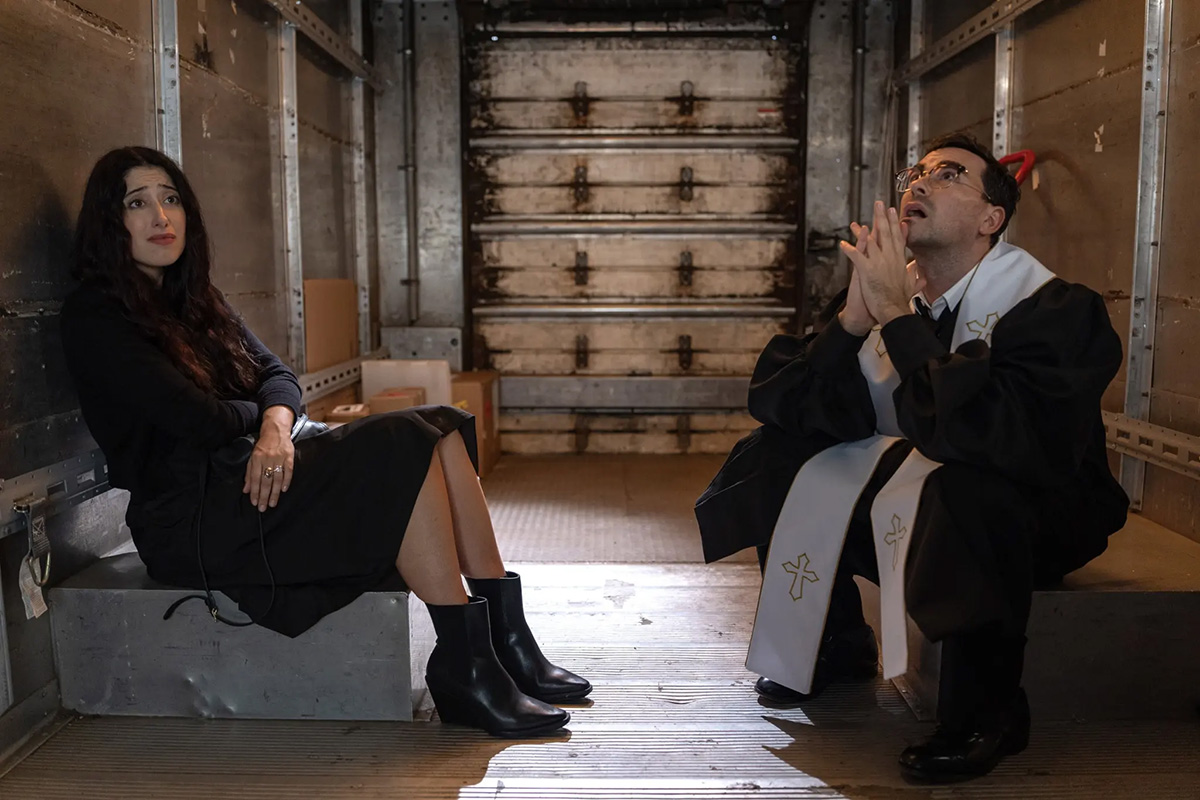
That, perhaps more than anything else, is why the arrival of “Big Mistakes” – the new Netflix series starring, co-created and co-written by Dan Levy – felt so welcome. We knew it wouldn’t be the Roses, but it seemed cut from the same cloth, and it had David Rose (or at least someone who seemed a lot like him) in the middle of a comically dysfunctional family dynamic, complete with a mother who gets involved in town politics and a catty sibling rivalry with his sister, and still nebbish-ly uncomfortable in his own gay shoes. Only this time, instead of running a charmingly pretentious boutique, he’s the pastor of the local church, and instead of a collection of kooky small town neighbors to contend with, there are gangsters.
As it turns out, it really does feel cut from the same cloth, but the design is distinctly different. Set in a fictional New Jersey suburb, it centers on Nicky (Levy) and his sister Morgan (Taylor Ortega) – he openly gay with an adoring boyfriend (Jacob Gutierrez), yet still obsessive about keeping it all invisible to his congregation, and she drudging aimlessly through life as an underpaid schoolteacher after failing to achieve her New York dreams of show biz success – who inadvertently become enmeshed in a shady underworld when a gesture for their dead grandmother’s funeral goes horribly awry.
They’re surrounded by a crew of equally compromised characters. There’s their mother Linda (Laurie Metcalf), whose campaign to become the town’s mayor only intensifies her tendency to micromanage her children’s lives; Yusuf (Boran Kuzum), the Turkish-American mini-mart operator who pulls them into the criminal conspiracy yet is himself a victim of it; Max (Jack Innanen), Morgan’s live-in boyfriend, who pushes her for a deeper commitment and is willing to go to couples’ therapy to prove it; Annette, his mother (Elizabeth Perkins), who lends her society standing toward helping Linda’s campaign against a misogynistic opponent (Darren Goldstein); and Ivan (Mark Ivanir), the seemingly ruthless crime boss who enslaves the siblings into his network but may really be just another slave himself. It’s a well-fleshed out assortment of characters that helps our own loyalties shift and adapt, generating at least a degree of empathy – if not always sympathy – that keeps everyone from coming off as a merely “black-and-white” caricature of expectations and typecasting.
To be sure, it’s an entertaining binge-watch, full of distinctive characters – all inhabiting familiar, even stereotypical roles in the narrative – who are each given a degree of validation, both in writing and performance, as the show unspools its narrative. At the same time, it makes for a fairly bleak overall view of humanity, in which it’s difficult to place our loyalties with anyone without also embracing a kind of “dog eat dog” morality in which nobody is truly innocent – but nobody is completely to blame for their sins, anyway.
In this way, it’s a show that lets us off the hook in the sense that it places the idea of ethical guilt within a framework of relative evils, as it permits us to forgive our own trespasses by accepting its “lovably” amoral characters, each of whom has their own reasons and justifications for what they do. We relate, but we can’t quite shake the notion that, if all these people hadn’t been so caught up in their own personal dramas, none of them would have ended up in the compromised morality that they’re in.
However, it’s not some bleak morality play that Levy and crew undertake; rather, it’s more an egalitarian fantasy in which even “bad” choices feel justified by inevitability. Everybody’s motivations make enough sense to us that it’s hard to judge any of the characters for making the choices – however unwise – that they do. In a system where everyone is forced to compromise themselves in order to achieve whatever dream of self-fulfillment they may have, how can anybody really blame themselves for doing what they have to do to survive?
Of course, all things considered, this is more a relatable comedy than it is a morality play. As a comedy of errors, it all works well enough on its own without imposing an ideology on it, no matter how much we may be tempted to do so. Indeed, what is ultimately more to the point is how well this pseudo-cynical exercise in the normalization of corruption – for that is what it really about, in the end – succeeds in letting us all off the hook for our compromises.
In the end, of course, maybe all that analysis is too deep a dive for a show that feels, in the end, like it’s meant to be mostly for fun. Indeed, despite its focus on being dragged into the shady side of life, the arc of its messaging seems to be less about a moralistic urge toward making the “right” choice than it is a candid recognition that all of us are compromised from the outset, often by choices we only force upon ourselves, and that’s a refreshing enough bit of honesty that we can easily get on board.
It helps that the performances are on point, especially the loony and wide-eyed fanaticism of Metcalf – surely the MVP of any project in which she is involved – and the directly focused moral malleability of Ortega; Levy, of course, is Levy – a now-familiar persona that can exist within any milieu without further justification than its own queer relatability – and, in this case, at least, that’s both the icing on the cake and substance that defines it. That’s enough to make it an essential view for fans, queer or otherwise, of his distinctive “brand,” even if he – or the show itself – doesn’t quite satisfy in the way that “Schitt’s Creek” was able to do.
Seriously, though, how could it?

‘Lizzie Borden’ might be the best ‘Monster’ yet

Comings & Goings

Tyler Clementi Foundation to host fundraiser in Rehoboth

Calendar: September 25-October 1

Former Capital Pride board member reiterates sexual harassment allegation

PHOTOS: Shenandoah Valley Pride

White House press pool pushes back after Trump bars three outlets

For lesbian victims of domestic violence, competent care is scare

United States Conference on HIV/AIDS grapples with federal budget cuts

UN human rights chief sounds alarm over ‘comprehensive onslaught’ against LGBTQ rights
-

 Photos5 days ago
PHOTOS: Shenandoah Valley Pride
-
White House5 days ago
White House press pool pushes back after Trump bars three outlets
-
National4 days ago
For lesbian victims of domestic violence, competent care is scare
-
Health4 days ago
United States Conference on HIV/AIDS grapples with federal budget cuts