News
Medicare to examine ban on gender reassignment surgery
Rationale for policy ‘not complete and adequate’

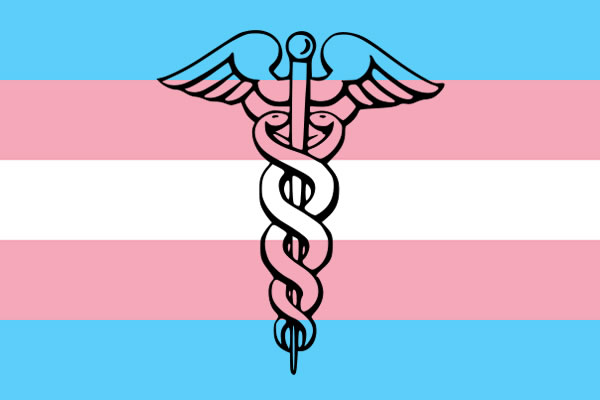
HHS is set to reconsider the ban on Medicare-provided gender reassignment surgery. (Image public domain)
The Obama administration is set to re-examine the ban that prohibits Medicare from covering gender reassignment surgery, according to a memorandum obtained Tuesday by the Washington Blade.
The document from the Department of Health & Human Services, dated Dec. 2, finds that the reasoning for the ban is “not complete and adequate” to support denying Medicare coverage for transgender people seeking the procedure.
The HHS Department Appeals Board states the ban — which is codified as National Coverage Determination 140.3 — “fails to account for development in the care and treatment” for transgender people over the course of the last 30 years.
The next step, the memo states, is proceeding into a “discovery” phase for the taking of evidence to determine whether the ban can be justified.
Mara Keisling, executive director of the National Center for Transgender Equality, said “there really isn’t that much to say” at this point in the process.
“This is really a preliminary step,” Keisling said. “It’s a good sign, but we have more to go on this.”
Masen Davis, executive director of the Transgender Law Center, was optimistic the ban would be lifted following the discovery process.
“Current Medicare standards are based on science from the 1960s, so it’s about time for a review,” Davis said. “Because the current scientific evidence overwhelmingly shows that sex-reassignment surgeries are effective and medically necessary treatments for some transgender individuals, we are hopeful the board will find the exclusion is not supported.”
The DAB initiated the review of the ban on Medicare-provided gender reassignment surgery in response to a request filed in March by a quartet of LGBT advocates: the National Center for Lesbian Rights, the American Civil Liberties Union, Gay & Lesbian Advocates & Defenders and civil rights attorney Mary Lou Boelcke.
The challenge was filed on behalf of Denee Mallon, a 73-year-old transgender woman in Albuquerque, N.M. A Medicare recipient, Mallon was recommended to have gender reassignment surgery by doctors to treat her gender dysphoria
In a joint statement provided to the Washington Blade in response to the HHS memorandum, the ACLU, NCLR and GLAD expressed optimism that DAB would come to the conclusion after discovery that the ban on Medicare-provided gender reassignment surgery should be lifted.
“Because the current evidence overwhelmingly shows that sex-reassignment surgeries are effective and medically necessary treatments for some individuals with gender dysphoria, we are hopeful the Board will find the exclusion is not supported,” the statement says.
According to the memorandum, the ban was put in place in 1989 as a result of a 1981 report from the National Center for Health Care Technology, an arm of HHS. The report concluded “transsexual surgery not be covered by Medicare at this time” because of the high rate of complications and questions about whether it was effective in treating gender identity disorder.
“Transsexual surgery for sex reassignment of transsexuals is controversial,” the regulation states. “Because of the lack of well controlled, long term studies of the safety and effectiveness of the surgical procedures and attendant therapies for transsexualism, the treatment is considered experimental. Moreover, there is a high rate of serious complications for these surgical procedures. For these reasons, transsexual surgery is not covered.”
Despite the institution of this policy, the American Medical Association and the American Psychological Association support gender reassignment surgery for transgender people as a means to treat gender identity disorder.
Notably, the Centers for Medicare & Medicaid didn’t put up a fight in response to the request from LGBT advocates to lift the ban. According to the memo, CMS notified the board in June that it wouldn’t submit a response to their request to lift the ban.
Neither HHS nor CMS responded to the Blade’s request for comment on the determination or why it declined to defend the ban.
It’s unclear when the discovery period for reevaluating the ban on Medicare-provided gender reassignment surgery will come to an end. Shawn Jain, a spokesperson f0r the ACLU, said his organization doesn’t know when the process will be complete.





North Carolina
Authorities investigate officer-involved shooting outside Asheville gay bar
Incident took place near Shakey’s on Wednesday

An officer-involved shooting outside of a gay dive bar, Shakey’s, in downtown Asheville, N.C., left one man dead Wednesday.
The bar released a statement the following morning regarding the incident, stating that bar staff had asked a patron to leave earlier in the night citing concerning behavior. The bar said that later the man was spotted with a gun in the parking lot.
The bar proceeded to call 911, locked the doors to the establishment, and followed dispatcher instructions on how to keep patrons of the bar safe while officers arrived. These protocols included getting patrons away from the windows and staying low to the ground.
According to Shakey’s, shots were fired outside of the business. When the Asheville Police Department officers arrived, they fired back. The individual died from their injuries, according to the police.
“Because of everyone’s quick actions, cooperation, and concern for one another, every customer and every employee inside Shakey’s made it home safely. We are incredibly thankful,” Shakey’s said on their Instagram page. They thanked Asheville police, emergency dispatchers, EMS, and all first responders who were on scene.
On Thursday, a spokesperson for the North Carolina State Bureau of Investigation, Chad Flowers, stated that the suspect involved in the shooting was Arturo Castillo Palomar.
The Washington Blade reached out to the North Carolina State Bureau of Investigation for a comment regarding the possibility of the event being considered a hate crime. They said the issue is currently under investigation and that the findings would be turned over to the district attorney for review.
Baltimore
Popular Mount Vernon gay bar Leon’s to temporarily close after owner’s death
Ron Singer passed away on July 7
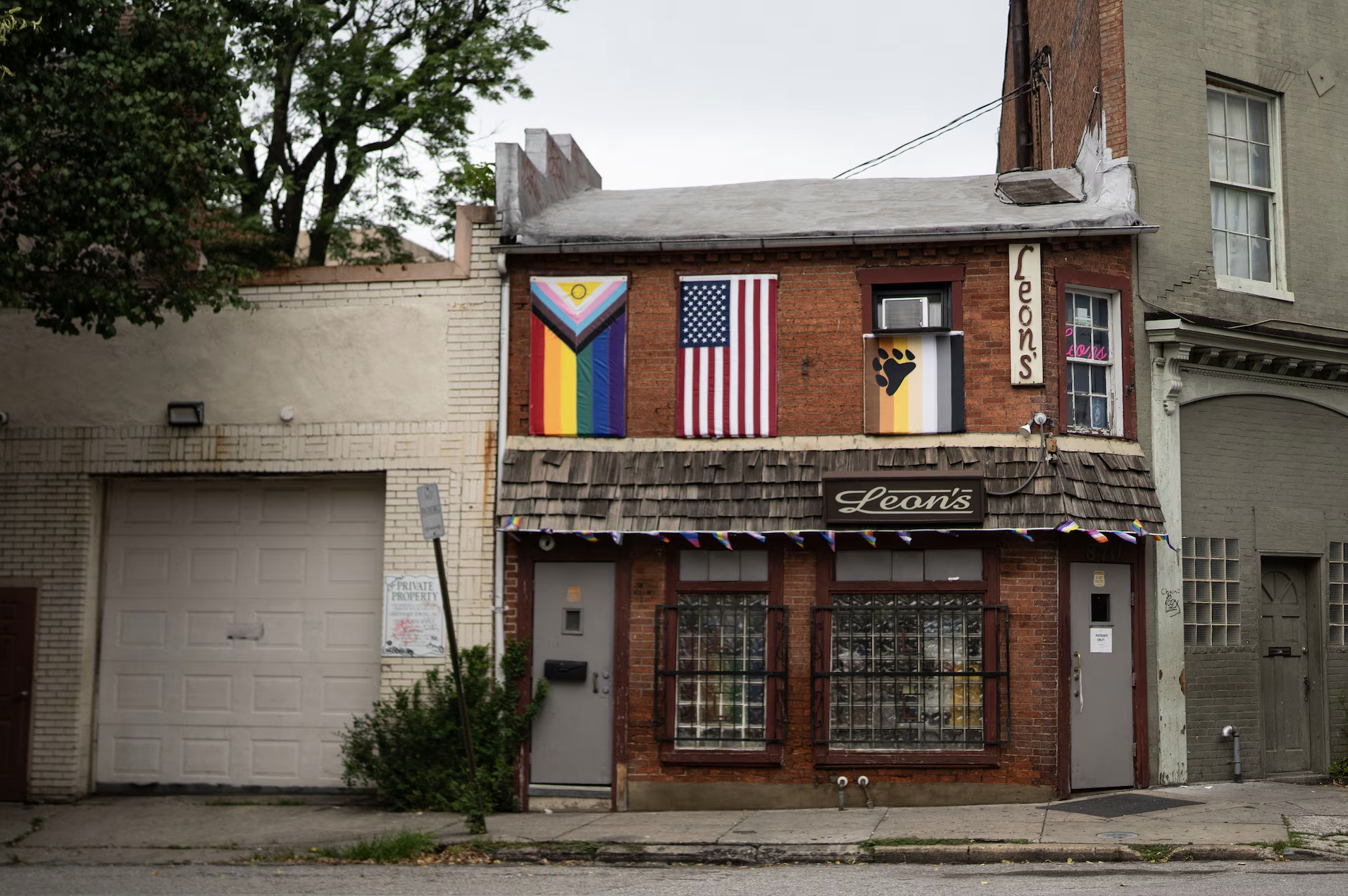
By WESLEY CASE | Leon’s Backroom, Baltimore’s oldest gay bar, temporarily shut down after service on Wednesday night, according to a post on the business’s Instagram page.
The announcement comes a little more than a week after the death of the Mount Vernon bar’s owner, Ron Singer, who died at 66 on July 7.
The rest of this article can be found on the Baltimore Banner’s website.

The Comings & Goings column is about sharing the professional successes of our community. We want to recognize those landing new jobs, new clients for their business, joining boards of organizations and other achievements. Please share your successes with us at [email protected].
Congratulations to Stuart Ortel and Scott Marker, and Dave Lyons and Rick Hardy, on the recent opening of their garden center on Route 1 in Rehoboth Beach, in the former Farmer Girl site. It is called Bay Laurel Home and Garden and debuted earlier this year. The four owners are all well known to the denizens of Rehoboth Beach.
Stuart and Scott have been active members of the Rehoboth Beach community since 1999. Stuart is a landscape architect, and has established relationships with many local folks in the building and landscape industry. When this opportunity for Bay Laurel Home & Garden presented itself, and they had the perfect team of people in place, he and Scott were committed to making it a reality. So, when Scott and Stuart introduced this opportunity to create a new garden center to Dave and Rick, they embraced the chance to cultivate a business where beautiful plants, inspiring home and garden products, and outstanding customer service come together. Dave and Rick knew about owning a business in Rehoboth as they previously owned Coho’s Market, where they discovered firsthand the value of serving their community, and the rewards of running a locally owned business.
The garden center launched with a refreshed brand identity, updated merchandising, and expanded product lines, all designed to create an inspiring and welcoming environment for your home. Bay Laurel Home & Garden offers a beautifully appointed garden center and curated home and gift shop.
The new center features a full nursery with annuals, perennials, shrubs, trees, and seasonal selections; a garden center offering pottery, fountains, and garden ornamentation, and essential tools and garden supplies. It has a garden shop featuring unique indoor/outdoor furnishings and accessories, and a gift shop featuring botanical and coastal style items for home and entertaining.

PHOTOS: Vitamin C at JR.’s

PHOTOS: Rehoboth Beach Pride Festival

Liza’s book a tale that’s better than most celebrity memoirs

Hot hatchbacks: Honda Civic, Subaru Impreza

When buying a home, it’s decisions, decisions, decisions

Celebrate Pride in Rehoboth Beach this weekend

Expected India Supreme Court ruling could shape future LGBTQ rights cases

Christa Tichy hopes to preserve LGBTQ representation in Md. House of Delegates

Advocacy groups join Venezuela earthquake relief efforts

Rehoboth’s Aqua to celebrate 20th anniversary Sunday
-

 Rehoboth Beach5 days ago
Celebrate Pride in Rehoboth Beach this weekend
-
India5 days ago
Expected India Supreme Court ruling could shape future LGBTQ rights cases
-
Maryland5 days ago
Christa Tichy hopes to preserve LGBTQ representation in Md. House of Delegates
-
Venezuela5 days ago
Advocacy groups join Venezuela earthquake relief efforts