News
Advocates seek LGBT inclusion in State of the Union
A call for ENDA passage sought yet again
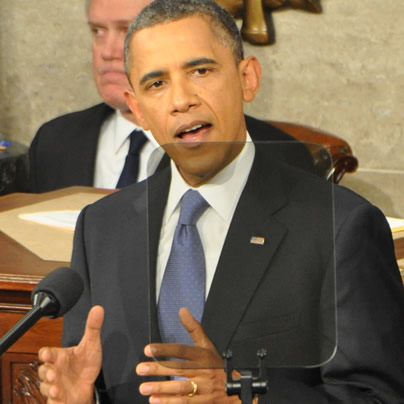
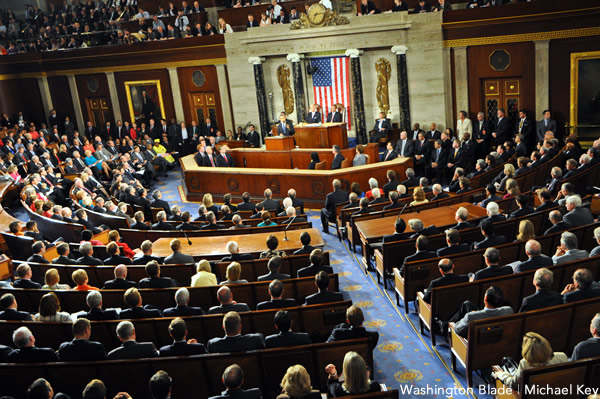
Advocates are calling on President Obama to mention LGBT workers during his upcoming State of the Union address. (Washington Blade file photo by Michael Key)
Amid expectations that President Obama will issue a national call to address income equality in his upcoming State of the Union address, some advocates are asking him to take the opportunity to speak out against anti-LGBT workplace discrimination.
With no explicit federal language in place protecting LGBT workers from job discrimination, advocates are calling on Obama to incorporate as part of his speech a call to pass the Employment Non-Discrimination Act and a pledge to sign an executive order prohibiting anti-LGBT discrimination among federal contractors.
The details of the speech are under wraps, but Obama already hinted earlier this month the address — which will be delivered Tuesday before a joint session of Congress — will seek to mobilize the country to ensure “the economy offers every American who works hard a fair shot at success.”
Fred Sainz, vice president of communications for the Human Rights Campaign, said including the executive order or ENDA in the speech would fit right in with the president’s larger theme.
“The president is going to spend much of his State of the Union talking about economic inequalities and it’s important that he highlight those faced by the LGBT community,” Sainz said. “There are many ways to address these issues including signing a federal contractor non-discrimination executive order and calling on Congress to send ENDA to him for his signature.”
The call for inclusion of the executive order and ENDA in the State of the Union is the same request that LGBT advocates made early in 2013 prior to that year’s speech. Instead, Obama made a veiled reference to gay people when he said the economy should work for Americans “no matter…who you love” and gave himself props for starting the process to secure partner benefits for gay troops.
But the situation has changed this time around. The Senate last year passed ENDA on a bipartisan basis by a 64-32 vote. The only thing stopping ENDA from reaching Obama’s desk is House Republican leadership. House Speaker John Boehner (R-Ohio) has repeatedly said he opposes the bill when asked if he’ll allow a vote on it.
Tico Almeida, president of Freedom to Work, said including ENDA in the State of the Union would place significant pressure on Boehner to move forward.
“By explicitly calling on Speaker Boehner to allow ENDA to come to a vote, and by explaining the current gaps in employment law to the American people, President Obama can help build political momentum and do important public education to help correct the fact that 80 or 90 percent of Americans mistakenly think ENDA is already law,” Almeida said. “The president’s words would be a catalyst for millions of important conversations around the country.”
Almeida pointed to Obama’s words in his previous State of the Union speech calling for reauthorization of the Violence Against Women Act as “model language” for what he could say about ENDA. Following that speech, the House voted to send an LGBT-inclusive VAWA reauthorization to Obama’s desk after a version without the protections failed on the House floor.
The White House didn’t respond to a request for comment on whether Obama will include a reference to ENDA or the executive order in the State of the Union address.
If Obama calls for passage of ENDA during the State of the Union, it wouldn’t be the first time that a president has mentioned the legislation during the annual speech. In 1999, then-President Clinton said discrimination based on factors such as sexual orientation “is wrong and it ought to be illegal,” calling on Congress to turn ENDA as well as hate crimes protections into law.
As for the executive order, Obama has recently threatened to take executive action if Congress fails to act on legislation important to his agenda. White House Press Secretary Jay Carney said he had no updates when asked by the Blade if the use of the pen applies to non-discrimination protections for LGBT workers, but suggested Obama would take the route only for other agenda items.
Still, the lingering issue of LGBT workplace discrimination isn’t the only issue advocates want addressed during the State of the Union.
Rea Carey, executive director of the National Gay & Lesbian Task Force, said ENDA and the executive order are part of a group of agenda items Obama should mention during his speech “to build on his stellar track record in the area of LGBT freedoms and justice.”




District of Columbia
‘No Kings’ protests set for D.C.
Anti-Trump demonstrations to take place across country on Saturday

As President Donald Trump and his administration escalate rhetoric targeting transgender youth and student athletes, push efforts to restrict voting access for millions of Americans, and pursue foreign policy decisions that critics say bypass congressional authority, organizers across the country are once again mobilizing in protest.
For many LGBTQ advocates, the moment feels especially urgent.
In recent months, activists have pointed to a surge in anti-trans legislation, attacks on gender-affirming care, and efforts to roll back nondiscrimination protections as direct threats to the safety and visibility of queer and trans communities. Organizers say the demonstrations are not just about policy, but about defending the right of LGBTQ people — particularly trans youth and people of color — to live openly and safely.
Thousands of “No Kings” protests are planned nationwide, with multiple demonstrations set to take place in D.C.
One of the primary events, “No Kings Washington,” will be held in Anacostia, an overwhelmingly Black area of D.C. that is often at the center of conversations around racial justice, policing, and access to resources in the nation’s capital.
The protest in Anacostia is focused on what organizers describe as the “power behind the throne,” specifically Stephen Miller, the White House Deputy Chief of Staff for Policy and Homeland Security Advisor. Miller has been closely associated with the administration’s “zero tolerance” immigration policy, including the family separation practice that resulted in thousands of children being separated from their parents at the Southern border.
Activists have also linked immigration enforcement policies to broader concerns about LGBTQ migrants, including queer asylum seekers who often face heightened risks of violence and discrimination both in their home countries and within detention systems.
Anacostia protest details:
Participants are asked to gather starting at 1:30 p.m. on the southeast side of the Frederick Douglass Bridge. The closest Metro station is Anacostia on the Green Line, about an 8-minute walk from the starting point. Organizers strongly encourage attendees to use public transportation, as street parking is limited.
The march will proceed past Fort McNair and conclude near the Waterfront Metro station.
D.C. icon and LGBTQ activist Rayceen Pendarvis is set to speak at the protest around 2 p.m.
Kalorama protest details:
A separate protest will take place earlier in the day in Kalorama, a neighborhood long associated with political power and home to presidents, cabinet officials, and foreign ambassadors. Demonstrators are expected to gather at 10 a.m., with a march running until approximately noon near the intersection of Connecticut Avenue and Kalorama Road.
Arlington/National Mall protest details:
Another group is expected to assemble at Memorial Circle near Arlington National Cemetery at 10 a.m. before crossing the Memorial Bridge into D.C., passing the Lincoln Memorial and continuing on to the Washington Monument. Organizers say the march is intended to defend “American democracy, the rule of law, and a healthy planet.”
Unlike last June — when organizers discouraged large-scale demonstrations in D.C. due Trump’s military/birthday parade — activists are now explicitly calling on people to show up in the nation’s capital and surrounding areas.
The protests also coincide with Transgender Day of Visibility weekend, which includes additional gatherings and celebrations on the National Mall. At the same time, peak bloom for the National Cherry Blossom Festival is expected to draw large crowds to the city. With multiple major events happening simultaneously, officials and organizers anticipate significant congestion, increased traffic, and crowded public transit throughout the weekend.
Organizers are urging participants to plan ahead and come prepared.
“Bring your signs, noisemakers, music, and creative ideas, and gather in joyful, nonviolent protest,” they said. “Children are very welcome.”
For more information, visit nokings.org.
Pennsylvania
Pa. House passes bill to codify marriage equality in state law
Governor supports gay state Rep. Malcolm Kenyatta’s measure
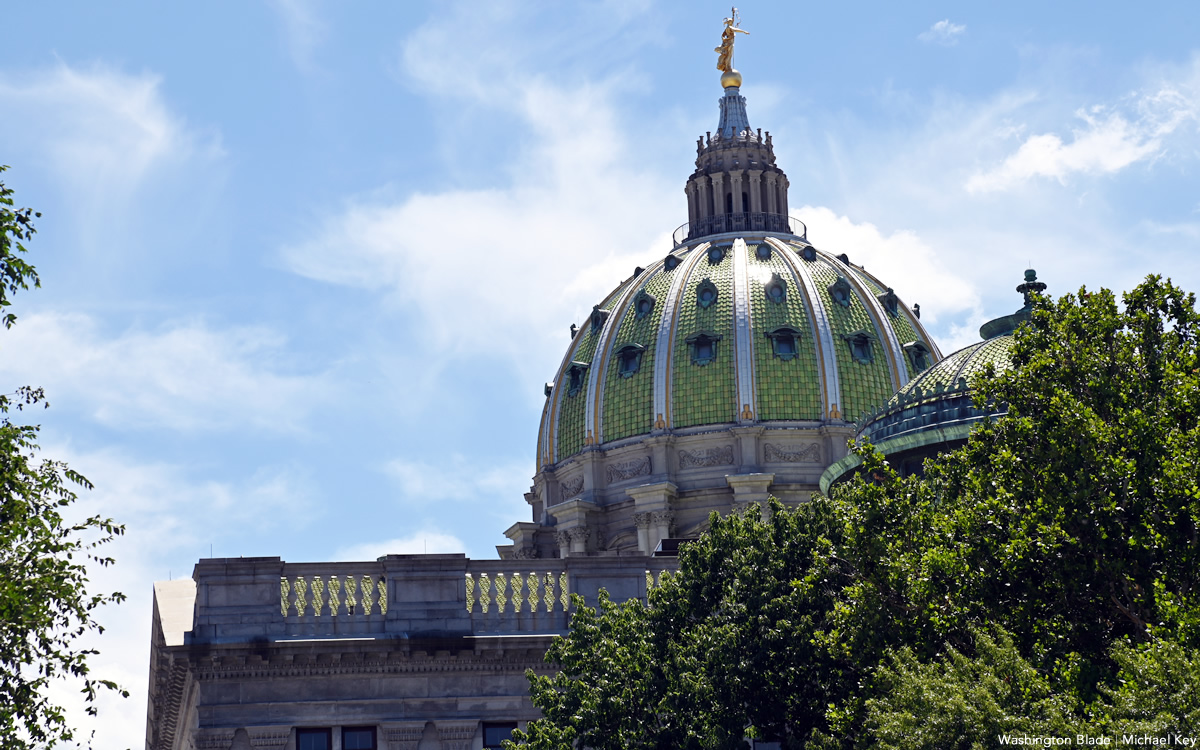
The Pennsylvania House of Representatives on Wednesday passed a bill that would codify marriage equality in state law.
House Bill 1800 passed by a 127-72 vote margin. Twenty-six Republicans voted for the measure.
The Republican-controlled Pennsylvania Senate will now consider the bill that state Rep. Malcolm Kenyatta (D-Philadelphia), who is the first openly gay person of color elected to the state’s General Assembly, introduced. Democratic Gov. Josh Shapiro supports the measure.
“Here in Pennsylvania, we believe in your freedom to marry who you love,” said Shapiro on Wednesday. “Today, the House has stepped up to protect that right.”
BREAKING: The Pennsylvania House just passed @RepKenyatta's bill to codify marriage equality into law in PA — and they did it with broad bipartisan support.
— Governor Josh Shapiro (@GovernorShapiro) March 25, 2026
Here in Pennsylvania, we believe in your freedom to marry who you love. Today, the House has stepped up to protect that…
Florida
DeSantis signs emergency bill that restores Fla. ADAP funding
Temporary funds to last through June 30
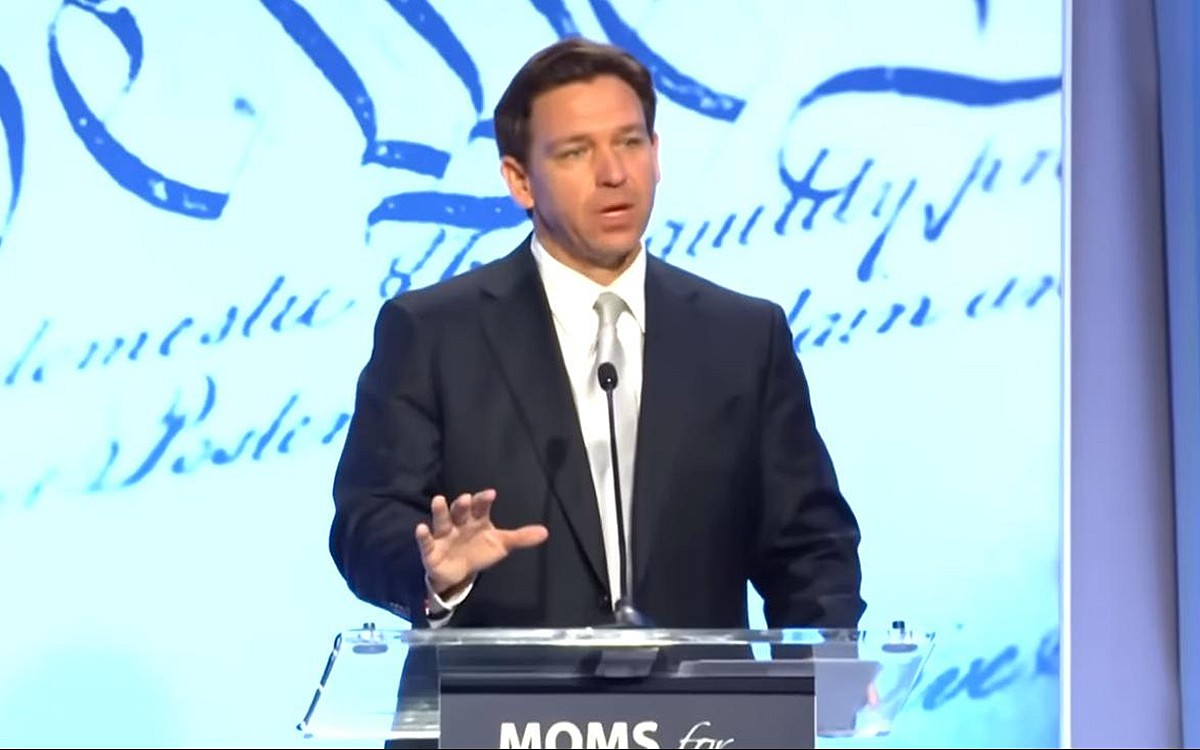
After the Florida Department of Health made huge cuts to the AIDS Drug Assistance Program in January, Republican Gov. Ron DeSantis has signed emergency legislation restoring HIV access to more than 12,000 Floridians.
Two months ago, as the Washington Blade reported, the Sunshine State cut the vast majority of those in ADAP by shifting the income levels required for eligibility — without following standard procedure when changing government policy outside of legislative or executive action.
The bill, signed by DeSantis on Tuesday, passed both chambers of the Florida Legislature unanimously and appropriates $30.9 million in emergency bridge funding through June 30, 2026. It restores Florida’s ADAP income eligibility to 400 percent of the Federal Poverty Level — the level it was prior to the January cuts. The legislation also requires the FDOH to submit detailed monthly financial reports to legislative leadership beginning April 1.
Under the old policy, eligibility would have been limited to those making no more than 130 percent of the federal poverty level, or $20,345 per year.
“For 10 weeks, 12,000 Floridians living with HIV did not know if they could fill their next prescription. Today, they can,” Esteban Wood, director of advocacy and legislative affairs at AIDS Healthcare Foundation, said in a statement.
The detailed reports now required to be sent to legislative leadership must include all federal revenues and expenditures, including manufacturer rebates; enrollment figures by county and insurance status; prescription utilization by drug class; and any projected funding shortfalls. This is the first time the Legislature has required this level of financial transparency from the program.
DeSantis signed the legislation one day after a Leon County Circuit Court judge denied AIDS Healthcare Foundation’s request for an injunction to block the significant changes the DeSantis administration is making to the program, which it claims faces a $120 million shortfall for calendar year 2026.
AIDS Healthcare Foundation, a national organization focused on protecting and expanding HIV healthcare access and prevention methods, filed a lawsuit over the change in eligibility, arguing the Florida Department of Health did not follow the laid out path for formally changing policy and was acting outside established procedures.
Typically, altering eligibility for a statewide program requires either legislative action or adherence to a multistep rule-making process, including: publishing a Notice of Proposed Rule; providing a statement of estimated regulatory costs; allowing public comment; holding hearings if requested; responding to challenges; and formally adopting the rule. According to AIDS Healthcare Foundation, none of these steps occurred.
The long-term structure of ADAP will be determined by the 2026–2027 fiscal year state budget, something that lawmakers have until June 30 to finish.

‘No Kings’ protests set for D.C.

Border to border: modern slavery and human trafficking in refugee movements across East Africa

New IOC policy bans trans women from Olympics

Introducing the Torchbearers Awards honoring queer, trans women and nonbinary people

Pa. House passes bill to codify marriage equality in state law

PHOTOS: Capital Stonewall Democrats 50th anniversary

‘Inherit the Wind’ isn’t about science vs. religion, but the right to think

Small is beautiful: subcompact SUVs

Polish court rules country must recognize same-sex marriages from EU states

Capital Stonewall Democrats 50th anniversary gala draws sold out crowd
-

 Photos4 days ago
PHOTOS: Capital Stonewall Democrats 50th anniversary
-
Theater5 days ago
‘Inherit the Wind’ isn’t about science vs. religion, but the right to think
-
Autos5 days ago
Small is beautiful: subcompact SUVs
-
Poland4 days ago
Polish court rules country must recognize same-sex marriages from EU states