News
Wisconsin latest state to face marriage lawsuit
‘Evasion’ statute prohibits couples from going elsewhere to wed

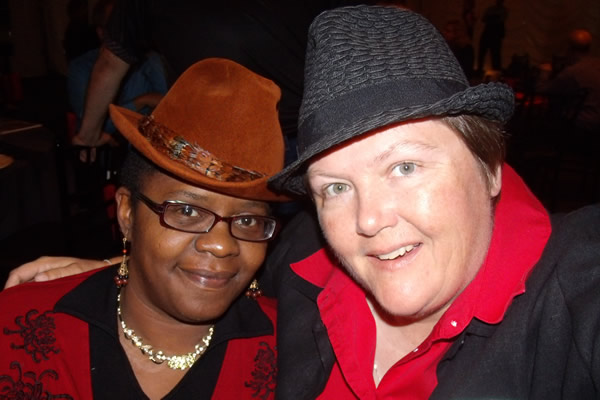
Charvonne Kemp (left) and Marie Carlson filed a lawsuit in Wisconsin seeking marriage rights. (Photo courtesy of the American Civil Liberties Union)
Same-sex couples in Wisconsin joined others throughout the country on Monday in filing a lawsuit seeking same-sex marriage, but efforts there are unique because of the penalties for marrying in another jurisdiction.
The litigation seeks not only to overturn the state’s 2006 constitutional amendment barring same-sex marriage, but also to enjoin state official from enforcing a “marriage evasion law” prohibiting couples — gay and straight — from going elsewhere to marry if the marriage would be prohibited in the state.
The penalties of violating the marriage evasion law in Wisconsin, which is the only state to have such a statute, include up to $10,000 in fines and nine months in prison.
For Marie Carlson, one-half of one of the couples participating in the lawsuit, the marriage evasion law is of concern as she seeks recognition of her relationship with Charvonne Kemp.
“It’s illegal in the state Wisconsin to go another state and get married if you live here,” Carlson said. “I know that it’s not really all that enforced; it’s still something that hangs over your head.”
The marriage evasion law is particularly problematic for same-sex couples in Wisconsin because the Obama administration in most cases has elected to recognize same-sex marriages even if the state doesn’t recognize them — provided these couples are able to marry in a jurisdiction that allows it.
John Knight, a staff attorney with the American Civil Liberties Union’s LGBT project, called the marriage evasion law a “Catch-22” for same-sex couples living in Wisconsin who want to marry.
“Wisconsin is unique in that sense, and so we think that argument particularly exemplifies the harm or the animus toward same-sex couples in some parts of the country,” Knight said.
But for Kemp, it’s not the fear of prosecution for marrying elsewhere that compels her to seek the right marry in Wisconsin, but the ability to wed in the state where she’s lived with her partner for seven years and raised two sons.
“We’re completely in love, and we’d like to be married in the state that we live in,” Kemp said. “We do have options where we could obviously leave the state and go to other states and get married, but we want to be legally recognized where we live.”
The lawsuit, Wolf and Schumacher v. Walker, was filed by the ACLU, the ACLU of Wisconsin and Mayer Brown LLP and is pending before the U.S. District Court for the Western District of Wisconsin.
Like other lawsuits filed throughout the country, the 29-page complaint filed by the groups in Wisconsin alleges the state’s ban on same-sex marriage violates equal protection and due process under the Fourteenth Amendment to the U.S. Constitution.
“Although Wisconsin and this country have taken some steps to reduce discrimination against lesbians and gays, Wisconsin’s ban on marriage for same-sex couples is a striking and continuing vestige of the long history of discrimination toward lesbians and gay men,” the complaint says.
The lawsuit was filed on behalf of four same-sex couples seeking to marry in Wisconsin. Along with Kemp and Carlson, who reside in Milwaukee, they are: Virginia Wolf and Carol Schumacher, who reside in Eau Claire, Wis.; Roy Badger and Garth Wangemann, who live in Milwaukee; and Judith “Judi” Trampf and Katharina “Katy” Heyning, who live in Madison.
Although Wisconsin offers same-sex couples the ability to join in a domestic partnership, enacted in the state in 2009, they don’t offer same the legal rights as marriages.
Carlson said the union isn’t enough because that union provides little assistance beyond certain health insurance benefits — and that’s only if the insurance company recognizes the partnership.
“It also goes along with the fact that last like year, Charvonne’s mother passed away, and we all had to go to New Jersey for a week,” Carlson said. “I had to use vacation time because…the company I work for didn’t recognize she was legally my partner, so I didn’t get bereavement to be able to go. So, I had to use a week of my vacation.”
The office of Wisconsin Gov. Scott Walker (R) didn’t immediately respond to the Washington Blade’s request to comment on the lawsuit.
Wisconsin Attorney General J.B. Van Hollen, however, pledged in a statement to the Blade that he would the defend the marriage amendment.
“This constitutional amendment was approved by a large majority of Wisconsin residents,” Van Hollen said. “I believe the amendment is constitutional, and I will vigorously defend it.”
The Wisconsin litigation is among 40 pending lawsuits in 22 states throughout the country seeking marriage rights for gay couples.
Amid expectations that one will soon reach the U.S. Supreme Court for a final ruling on marriage equality, Knight said it’s possible, but he wouldn’t bet on it.
“It’s one of the possibilities it might go to the Supreme Court, but the chance of that in light of all the other cases out there is probably fairly small,” Knight said. “But it could be.”
Nonetheless, if Walker continues to fight the lawsuit and a high court ruling doesn’t happen before the case is resolved, Kemp said she’s willing to take her case to the Supreme Court to fight for marriage rights across the country if necessary.
“I’m willing to go to the Supreme Court to fight for the right for everyone to be able to get married if that’s what they choose to do,” Kemp said. “It’s about marriage equality for all, not marriage equality for some, or for just us.”
For Kemp, the ability to marry in Wisconsin is not just about the legal rights that marriage would afford, but the dignity of having the access to the same union as other couples.
“However, I want to be married just like everyone else. I want it to be legal, not just for if one of us should get sick and having rights where we’re in the hospital with the other one, but also taxes, all the things that come with marriage, good and bad,” Kemp said.



Kansas
ACLU sues Kansas over law invalidating trans residents’ IDs
A new Kansas bill requires transgender residents to have their driver’s licenses reflect their sex assigned at birth, invalidating current licenses.
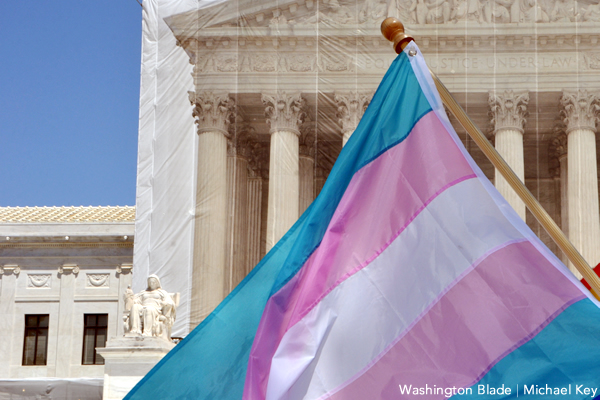
Transgender people across Kansas received letters in the mail on Wednesday demanding the immediate surrender of their driver’s licenses following passage of one of the harshest transgender bathroom bans in the nation. Now the American Civil Liberties Union is filing a lawsuit to block the ban and protect transgender residents from what advocates describe as “sweeping” and “punitive” consequences.
Independent journalist Erin Reed broke the story Wednesday after lawmakers approved House Substitute for Senate Bill 244. In her reporting, Reed included a photo of the letter sent to transgender Kansans, requiring them to obtain a driver’s license that reflects their sex assigned at birth rather than the gender with which they identify.
According to the reporting, transgender Kansans must surrender their driver’s licenses and that their current credentials — regardless of expiration date — will be considered invalid upon the law’s publication. The move effectively nullifies previously issued identification documents, creating immediate uncertainty for those impacted.
House Substitute for Senate Bill 244 also stipulates that any transgender person caught driving without a valid license could face a class B misdemeanor, punishable by up to six months in jail and a $1,000 fine. That potential penalty adds a criminal dimension to what began as an administrative action. It also compounds the legal risks for transgender Kansans, as the state already requires county jails to house inmates according to sex assigned at birth — a policy that advocates say can place transgender detainees at heightened risk.
Beyond identification issues, SB 244 not only bans transgender people from using restrooms that match their gender identity in government buildings — including libraries, courthouses, state parks, hospitals, and interstate rest stops — with the possibility for criminal penalties, but also allows for what critics have described as a “bathroom bounty hunter” provision. The measure permits anyone who encounters a transgender person in a restroom — including potentially in private businesses — to sue them for large sums of money, dramatically expanding the scope of enforcement beyond government authorities.
The lawsuit challenging SB 244 was filed today in the District Court of Douglas County on behalf of anonymous plaintiffs Daniel Doe and Matthew Moe by the American Civil Liberties Union, the ACLU of Kansas, and Ballard Spahr LLP. The complaint argues that SB 244 violates the Kansas Constitution’s protections for personal autonomy, privacy, equality under the law, due process, and freedom of speech.
Additionally, the American Civil Liberties Union filed a temporary restraining order on behalf of the anonymous plaintiffs, arguing that the order — followed by a temporary injunction — is necessary to prevent the “irreparable harm” that would result from SB 244.
State Rep. Abi Boatman, a Wichita Democrat and the only transgender member of the Kansas Legislature, told the Kansas City Star on Wednesday that “persecution is the point.”
“This legislation is a direct attack on the dignity and humanity of transgender Kansans,” said Monica Bennett, legal director of the ACLU of Kansas. “It undermines our state’s strong constitutional protections against government overreach and persecution.”
“SB 244 is a cruel and craven threat to public safety all in the name of fostering fear, division, and paranoia,” said Harper Seldin, senior staff attorney for the ACLU’s LGBTQ & HIV Rights Project. “The invalidation of state-issued IDs threatens to out transgender people against their will every time they apply for a job, rent an apartment, or interact with police. Taken as a whole, SB 244 is a transparent attempt to deny transgender people autonomy over their own identities and push them out of public life altogether.”
“SB 244 presents a state-sanctioned attack on transgender people aimed at silencing, dehumanizing, and alienating Kansans whose gender identity does not conform to the state legislature’s preferences,” said Heather St. Clair, a Ballard Spahr litigator working on the case. “Ballard Spahr is committed to standing with the ACLU and the plaintiffs in fighting on behalf of transgender Kansans for a remedy against the injustices presented by SB 244, and is dedicated to protecting the constitutional rights jeopardized by this new law.”
National
After layoffs at Advocate, parent company acquires ‘Them’ from Conde Nast
Top editorial staff let go last week
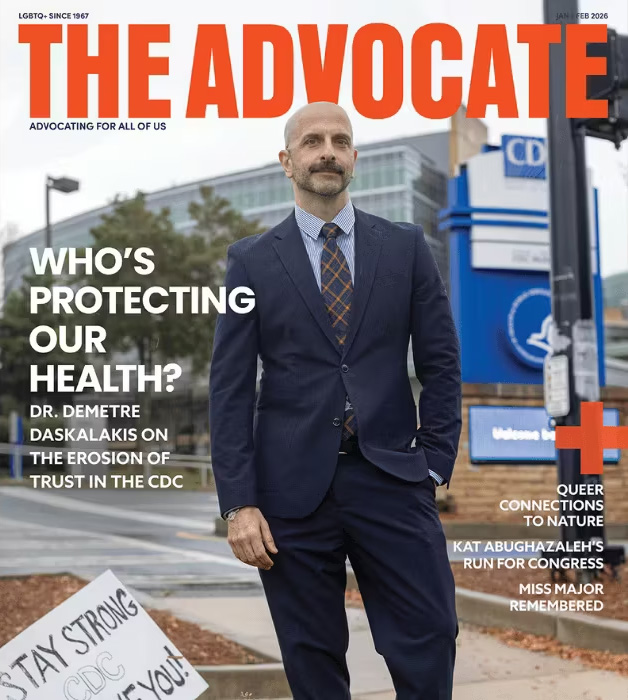
Former staff members at the Advocate and Out magazines revealed that parent company Equalpride laid off a number of employees late last week.
Those let go included Advocate editor-in-chief Alex Cooper, Pride.com editor-in-chief Rachel Shatto, brand partnerships manager Erin Manley, community editor Marie-Adélina de la Ferriére, and Out magazine staff writers Moises Mendez and Bernardo Sim, according to a report in Hollywood Reporter.
Cooper, who joined the company in 2021, posted to social media that, “Few people have had the privilege of leading this legendary LGBTQ+ news outlet, and I’m deeply honored to have been one of them. To my team: thank you for the last four years. You’ve been the best. For those also affected today, please let me know how I can support you.”
The Advocate’s PR firm when reached by the Blade said it no longer represents the company. Emails to the Advocate went unanswered.
Equalpride on Friday announced it acquired “Them,” a digital LGBTQ outlet founded in 2017 by Conde Nast.
“Equalpride exists to elevate, celebrate and protect LGBTQ+ storytelling at scale,” Equalpride CEO Mark Berryhill said according to Hollywood Reporter. “By combining the strengths of our brands with this respected digital platform, we’re creating a unified ecosystem that delivers even more impact for our audiences, advertisers, and community partners.”
It’s not clear if “Them” staff would take over editorial responsibilities for the Advocate and Out.
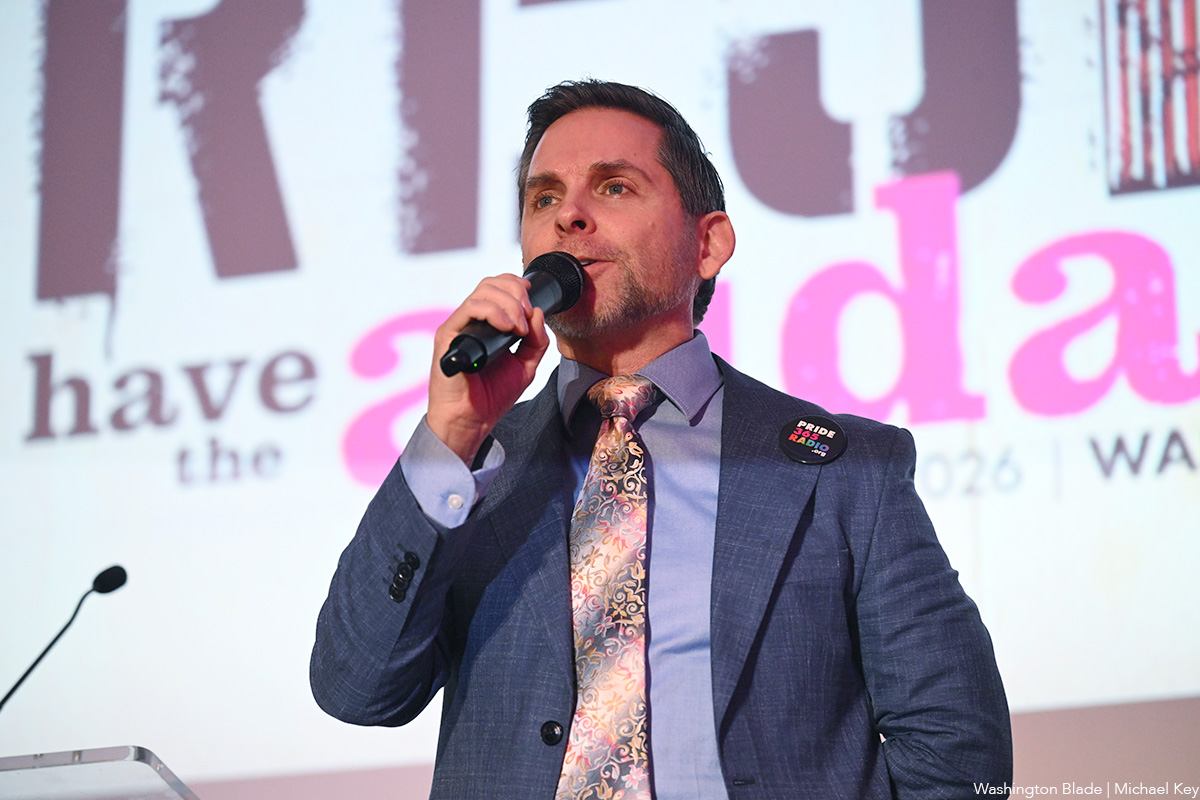
In an official statement released at the reveal event Capital Pride Alliance described its just announced 2026 Pride theme of “Exist, Resist, Have the Audacity” as a “bold declaration affirming the presence, resilience, and courage of LGBTQ+ people around the world.”
The statement adds, “Grounded in the undeniable truth that our existence is not up for debate, this year’s theme calls on the community to live loudly and proudly, stand firm against injustice and erasure, and embody the collective strength that has always defined the LGBTQ+ community.”
In a reference to the impact of the hostile political climate, the statement says, “In a time when LGBTQ+ rights and history continue to face challenges, especially in our Nation’s Capital, where policy and public discourse shape the future of our country, together, we must ensure that our voices are visible, heard, and unapologetically centered.”
The statement also quotes Capital Pride Alliance CEO and President Ryan Bos’s message at the Reveal event: “This year’s theme is both a declaration and a demand,” Bos said. “Exist, Resist, Have Audacity! reflects the resilience of our community and our responsibility to protect the progress we’ve made. As we look toward our nation’s 250th anniversary, we affirm that LGBTQ+ people have always been and always will be part of the United States’s history, and we will continue shaping its future with strength and resolve,” he concluded.
ACLU sues Kansas over law invalidating trans residents’ IDs

After layoffs at Advocate, parent company acquires ‘Them’ from Conde Nast

Spring into sold

Plan your wedding the LGBTQ way

Calendar: February 27-March 5

US Embassy in Mexico issues shelter in place order for Puerto Vallarta

Rob Jetten becomes first gay Dutch prime minister

More than a dozen LGBTQ athletes medal at Olympics

New book profiles LGBTQ Ukrainians, documents war experiences

PHOTOS: Queen of Hearts
-

 Mexico5 days ago
US Embassy in Mexico issues shelter in place order for Puerto Vallarta
-
Netherlands4 days ago
Rob Jetten becomes first gay Dutch prime minister
-
Sports4 days ago
More than a dozen LGBTQ athletes medal at Olympics
-
Books3 days ago
New book profiles LGBTQ Ukrainians, documents war experiences